

Best aquarium thermometers help beginners confirm that their fish tank temperature is actually stable, not just what the heater dial claims. A simple thermometer can catch temperature swings early, protect tropical fish from stress, and make small aquariums easier to manage.
A thermometer isn’t the most exciting piece of aquarium equipment.
Yet it’s often one of the most important.
Even the best aquarium heater can occasionally drift from its intended temperature. Without a thermometer, it’s difficult to know whether your aquarium is actually staying within a healthy range.
A reliable thermometer gives you confidence that your fish are living in stable conditions.
In this guide, we’ll explore the most common aquarium thermometer types, their advantages and disadvantages, and how to choose the right one for your setup.
Quick Answer
The best aquarium thermometer for most beginners is a simple digital thermometer with an easy-to-read display and a separate probe inside the tank. Stick-on thermometers can be okay for a quick estimate, but they are usually less precise because they read glass temperature more than the actual water. For small tropical tanks, always confirm the water stays stable with a separate thermometer instead of trusting the heater dial alone.
As an Amazon Associate, PetYeti earns from qualifying purchases. This comes at no additional cost to you and helps support the site. We only recommend products we genuinely believe can help create healthier and more enjoyable aquariums.
Why Every Aquarium Should Have a Thermometer
A thermometer does more than display a number.
It helps you:
- Verify heater performance
- Detect temperature swings
- Monitor seasonal changes
- Prevent fish stress
- Identify equipment problems early
Many aquarium problems begin gradually.
A thermometer helps catch issues before fish show signs of stress.

Common Types of Aquarium Thermometers
Several thermometer styles are available to aquarium owners.
Each has strengths and weaknesses.
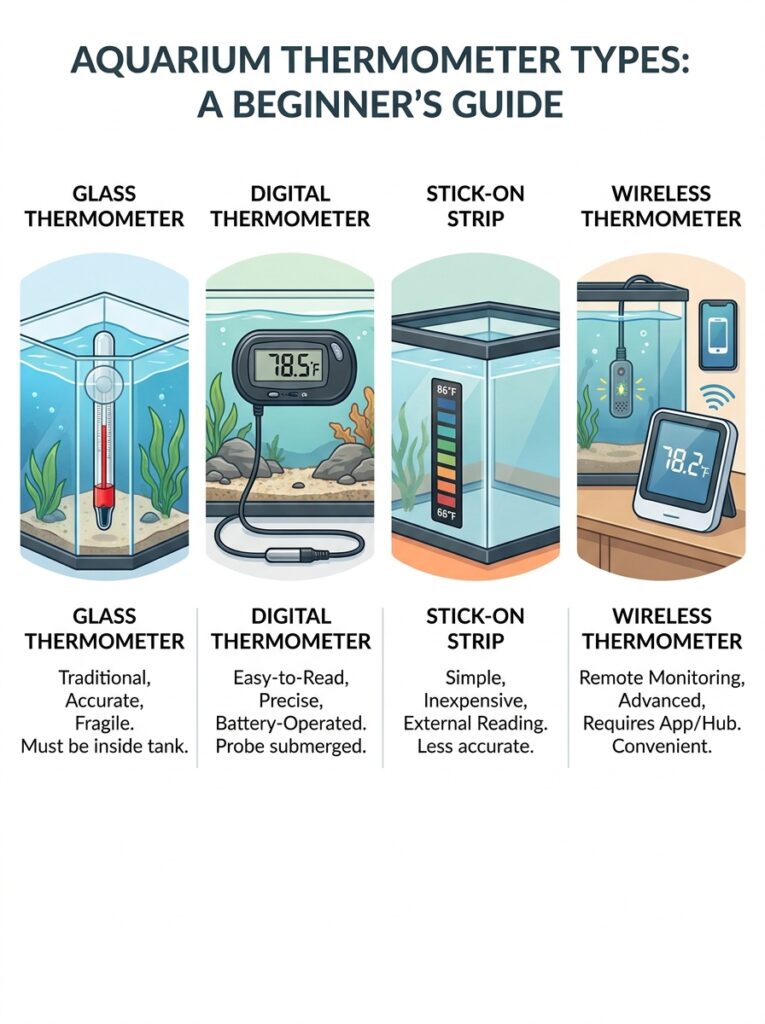
Glass Thermometers
Traditional and inexpensive.
Budget-Friendly Option
Recommended Option: Glass Aquarium Thermometer
Best For:
✓ Budget-conscious setups
✓ Nano aquariums
✓ Backup temperature monitoring
Why We Like It:
✓ No batteries required
✓ Affordable
✓ Reliable long-term use
PetYeti Take:
Many experienced aquarium keepers still use glass thermometers because of their simplicity and consistency.
Many hobbyists appreciate their simplicity.
Digital Thermometers
Easy to read and often highly accurate.
Helpful Add-On: Stick-On Thermometer
Affordable and simple but sometimes less precise.
Wireless Thermometers
Provide convenient monitoring but generally cost more.
Digital vs Glass Thermometers
This is one of the most common beginner questions.
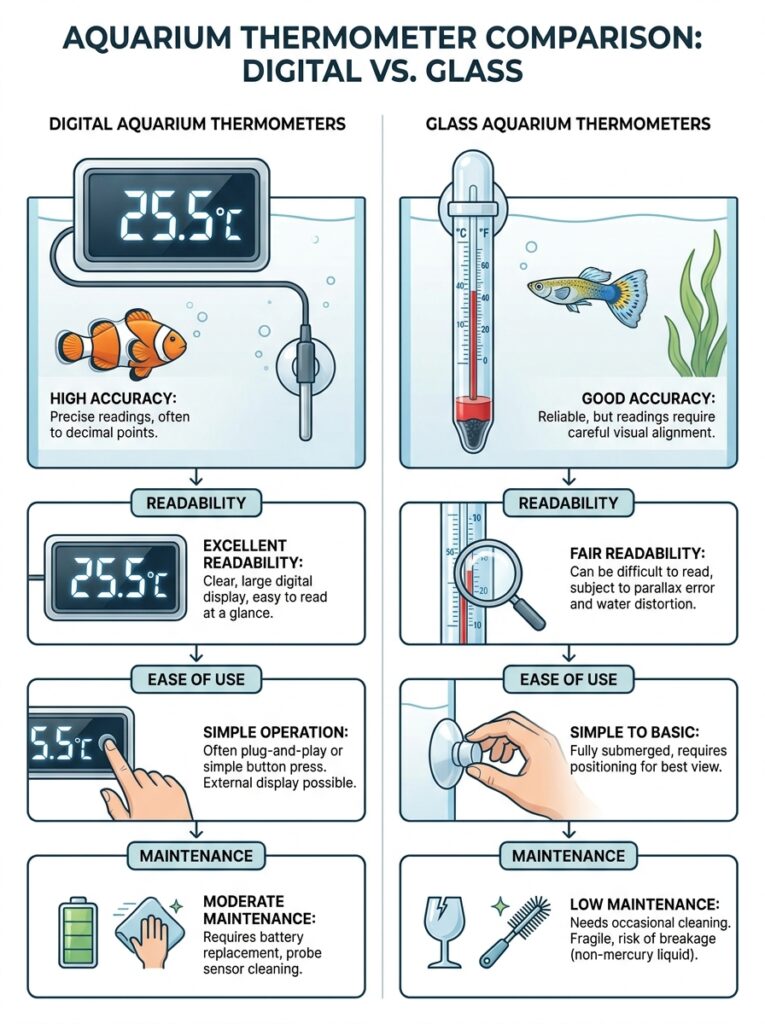
Digital Thermometers
Pros:
- Easy to read
- Quick temperature checks
- Modern appearance
Cons:
- Battery dependence
- Higher cost
Glass Thermometers
Pros:
- Affordable
- No batteries
- Reliable
Cons:
- Smaller display
- Can be harder to read
For many beginners, a quality digital thermometer provides the easiest experience.
⭐ PetYeti Pick: Easy Digital Thermometer
Recommended Option: Digital Aquarium Thermometer
Best For:
✓ Beginner aquariums
✓ Betta tanks
✓ Community tanks
✓ Small planted setups
Why We Like It:
✓ Easy-to-read display
✓ Quick temperature checks
✓ Compact design
✓ Beginner-friendly setup
PetYeti Take:
For many new hobbyists, digital thermometers remove the guesswork. Large displays make quick daily checks easy, especially in busy households.
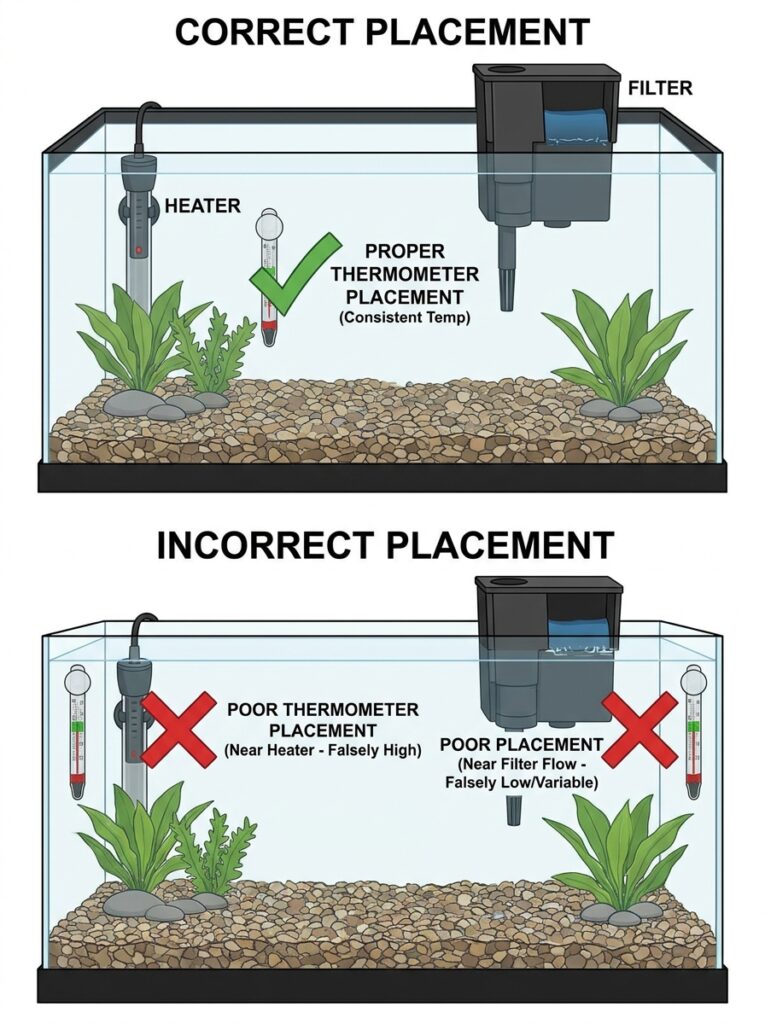
Where Should You Place an Aquarium Thermometer?
Placement matters.
A thermometer should generally be positioned:
- Away from the heater
- In an area with good water circulation
- Where it can be easily viewed
Poor placement may produce misleading readings.
Signs Your Aquarium Temperature Is Fluctuating
Watch for:
- Fish becoming sluggish
- Reduced appetite
- Increased hiding
- Heater running constantly
- Large temperature differences between day and night
A thermometer allows you to spot these changes before they become serious problems.
Which Thermometer Would We Choose?
For most beginners:
A simple digital aquarium thermometer strikes an excellent balance between accuracy, convenience, and readability.
However, many successful hobbyists continue using traditional glass thermometers.
The best thermometer is often the one you’ll actually check regularly.
Consistency matters more than complexity.
Helpful Pairing: Adjustable Aquarium Heater
Why We Like It:
✓ Stable temperatures
✓ Adjustable settings
✓ Helps reduce stress for tropical fish
PetYeti Take:
Thermometers tell you what’s happening. Heaters help maintain it. Together they create a much more stable aquarium environment.
👉 Check Current Price
Related PetYeti Guides
A thermometer is most useful when it helps you spot temperature swings before they stress your fish.
Need a steady heater? Read our guide to small aquarium heaters.
Not sure whether your tank needs heat? See our guide on whether you really need an aquarium heater.
Heater acting strangely? Read why your aquarium heater is not working.
Setting up a betta tank? See our guide to setting up a beautiful betta fish tank for beginners.
Want a calmer betta setup? Read how to create a stress-free betta fish tank.
CONCLUSION
An aquarium thermometer may seem like a small piece of equipment, but it plays a major role in maintaining stable conditions.
Whether you choose a digital, glass, or wireless model, the goal remains the same:
Understanding what is happening inside your aquarium.
When temperature remains stable, fish experience less stress and aquariums become easier to manage over time.
FAQs
Are digital aquarium thermometers accurate?
Many quality digital thermometers provide excellent accuracy for beginner aquariums.
Where should an aquarium thermometer be placed?
Away from the heater and in an area with good water circulation.
Do I need a thermometer if I have a heater?
Yes. A thermometer confirms that the heater is maintaining the desired temperature.
Which thermometer is easiest for beginners?
Many beginners prefer digital thermometers because they are easy to read.
Can water temperature change overnight?
Yes. Seasonal changes and room temperature fluctuations can affect aquarium water.