
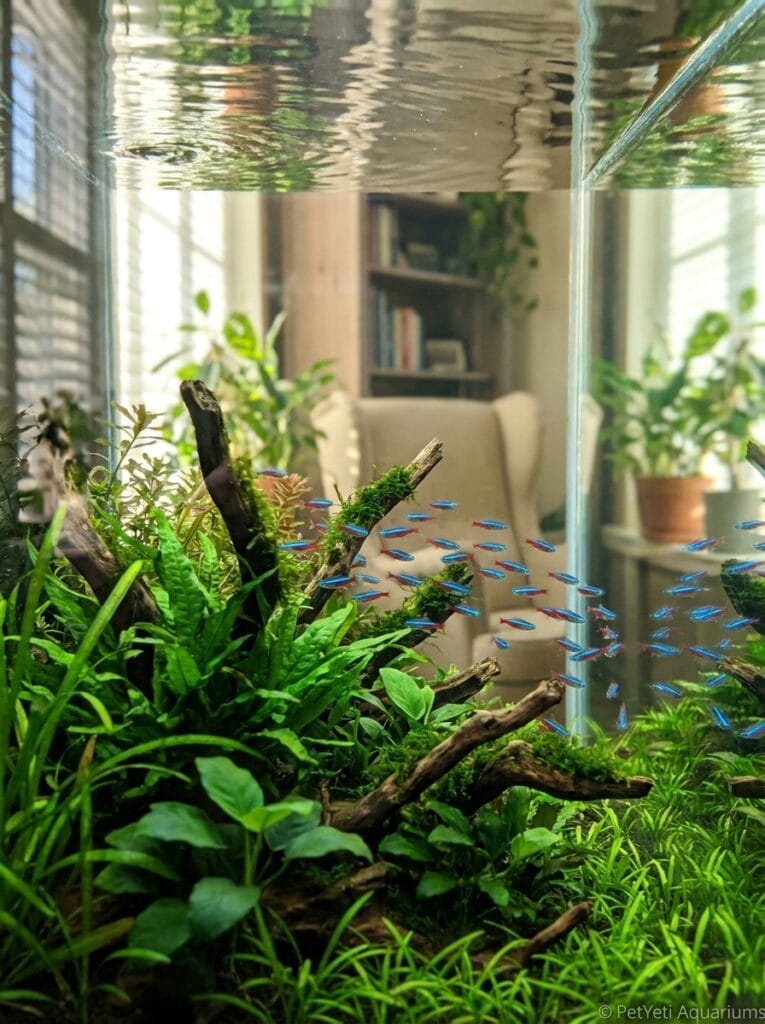
Some aquariums feel calm and natural the moment you look at them.
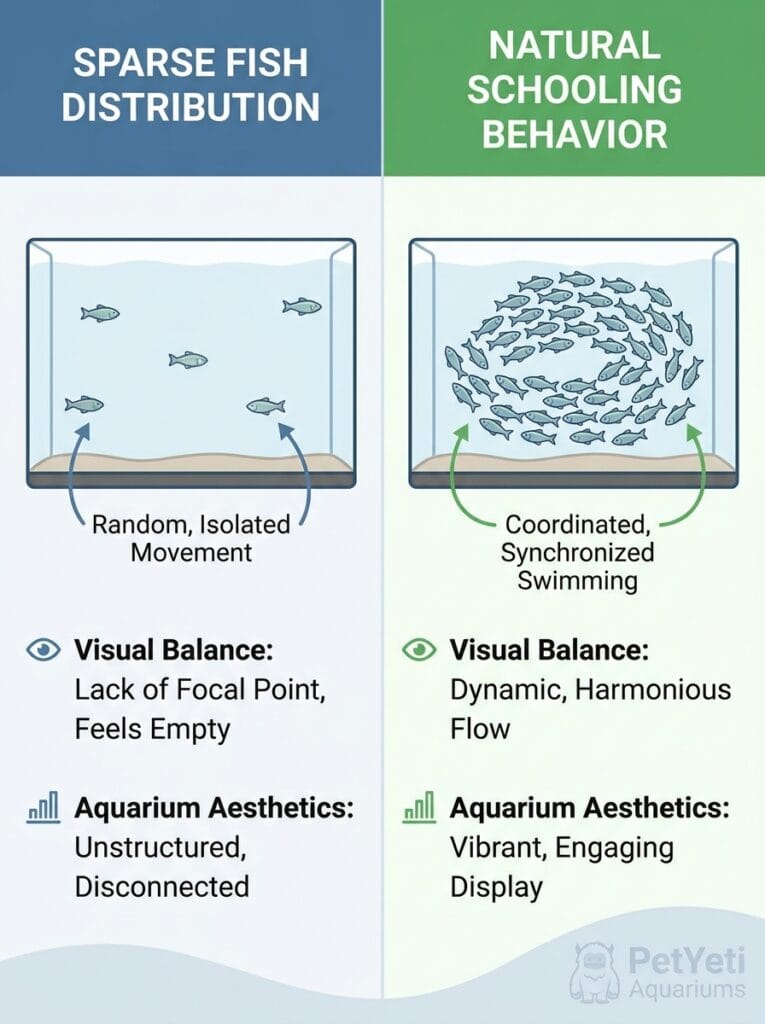
Others feel empty, even when they contain plenty of fish.
One of the biggest differences is often the presence of schooling fish.
When kept in appropriate groups, schooling fish move together through the aquarium, creating the flowing, natural behavior many people imagine when they first enter the hobby.
They’re often colorful, peaceful, and beginner-friendly, making them ideal for community tanks.
In this guide, we’ll look at some of the best schooling fish for peaceful aquariums and explain why they can transform the overall appearance of your tank.
What Makes a Fish a Schooling Fish?
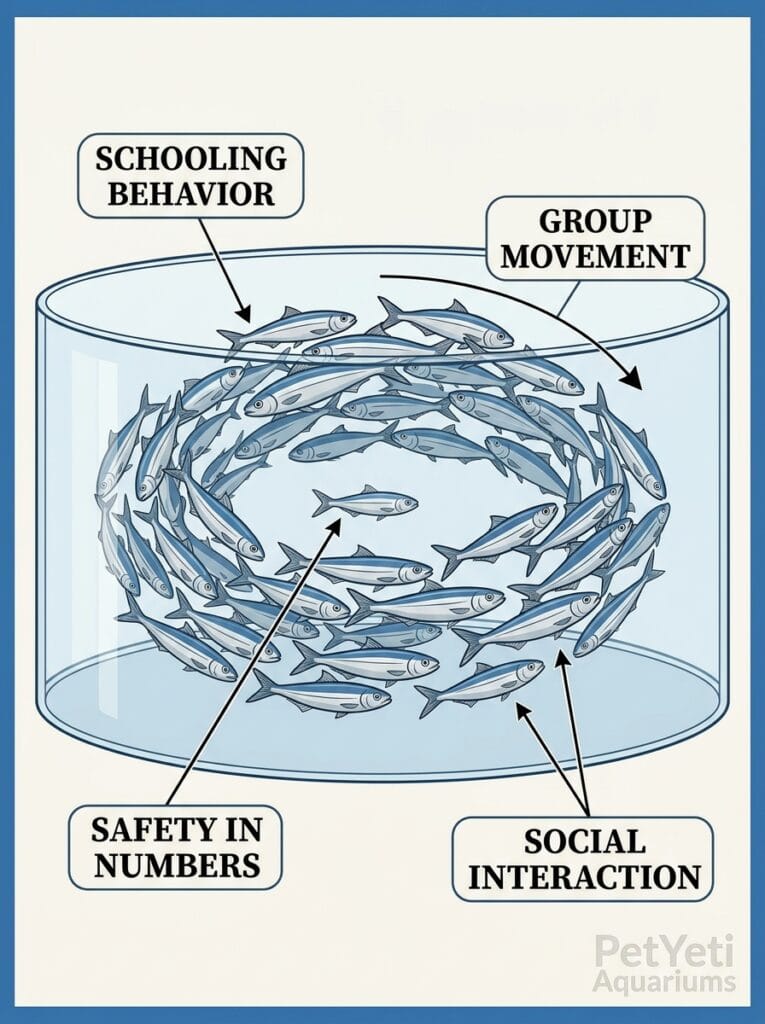
Schooling fish naturally live in groups.
In the wild, this behavior helps provide protection and improves their ability to find food.
In home aquariums, schooling behavior often creates a more natural and visually appealing display.
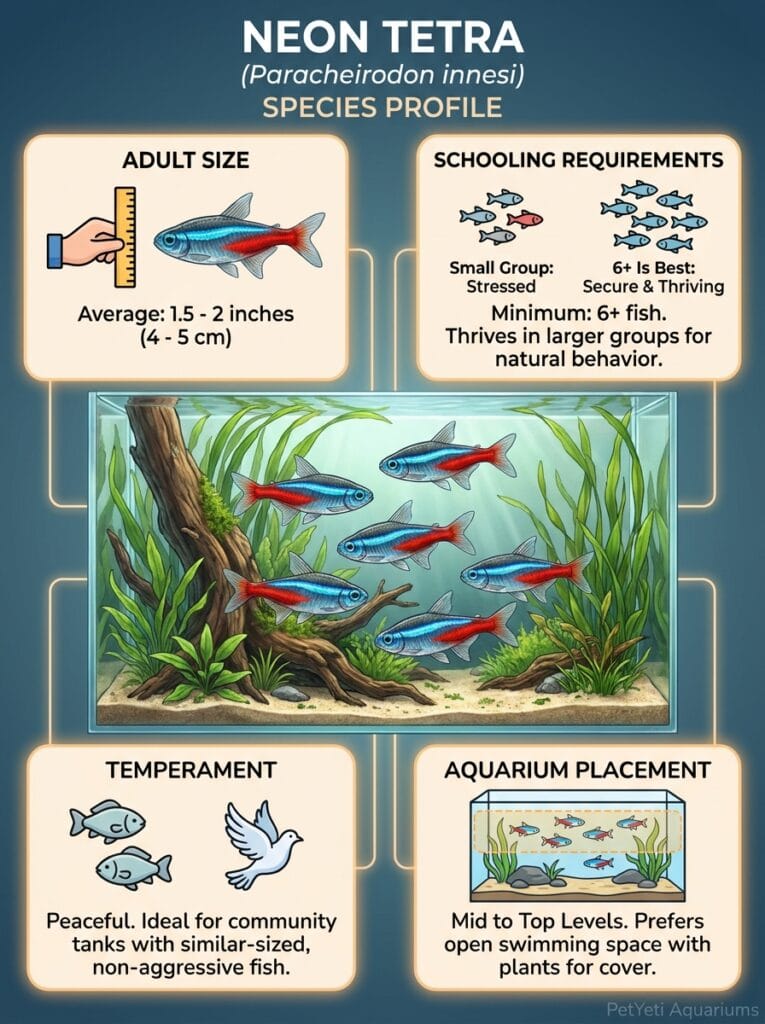
Most schooling species feel more secure when kept in groups rather than individually.
Quick Reference
| Small Group | Larger School |
|---|---|
| More hiding | More confidence |
| Less natural behavior | More natural behavior |
| Reduced activity | Better group movement |
| Increased stress | Greater security |
Real-Life Example
Many hobbyists notice dramatic changes after increasing a school from six fish to ten or more. The fish often become more confident and visible throughout the aquarium.
What to Expect
Schooling fish generally display their most interesting behavior when kept in appropriately sized groups.
Why Schooling Fish Make Aquariums Look More Natural
A school of fish creates motion that feels organized rather than random.
Instead of individual fish drifting around the tank independently, a school moves together as a living part of the aquascape.
For many aquarium owners, this is one of the most relaxing aspects of fishkeeping.
Real-Life Example
A planted aquarium with a large school of small fish often appears larger, more balanced, and more professionally designed than a tank containing only a few unrelated species.
Why It Matters
Schooling fish help create the peaceful atmosphere many PetYeti readers want in their homes.
Neon Tetras Remain a Classic Favorite
Neon Tetras have remained popular for decades because they combine color, peaceful behavior, and strong schooling instincts.
Their bright blue and red coloration stands out beautifully against live plants and dark backgrounds.
Fish Snapshot
| Trait | Rating |
|---|---|
| Beginner Friendly | ★★★★★ |
| Peaceful | ★★★★★ |
| Schooling Behavior | ★★★★★ |
| Color | ★★★★★ |
| PetYeti Fit | ★★★★★ |
Why We Like Them
They’re affordable, widely available, and create beautiful movement throughout the aquarium.
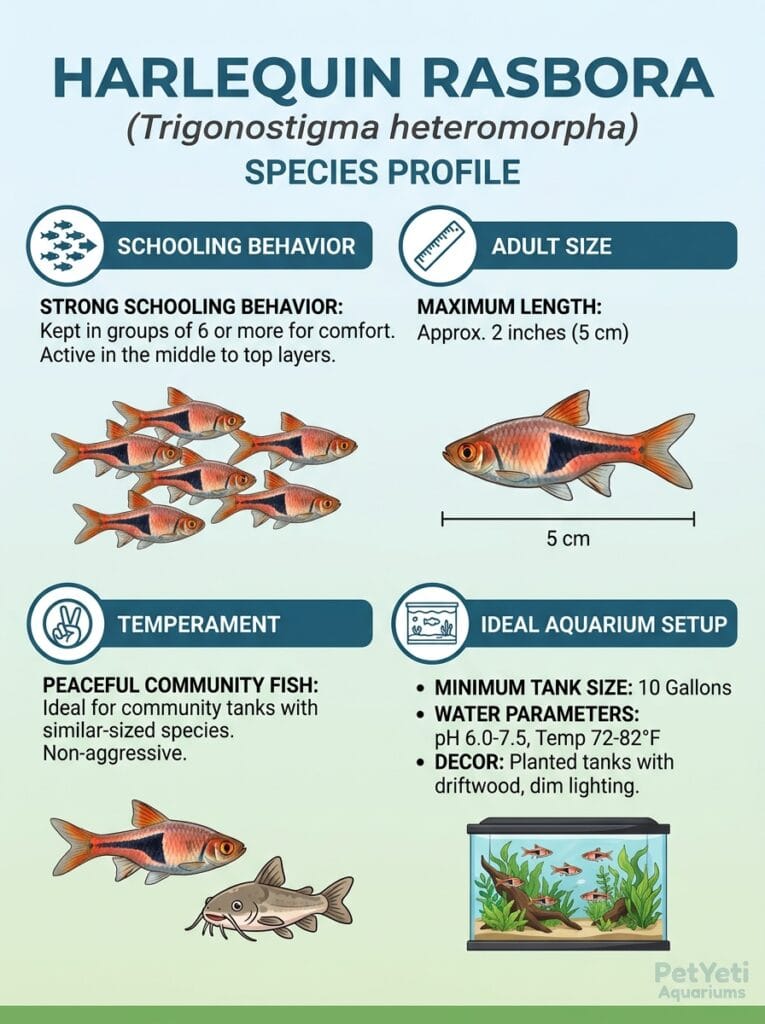
Harlequin Rasboras Are Calm and Reliable
Harlequin Rasboras are often recommended to hobbyists who want peaceful community fish without excessive activity.
Their gentle behavior and attractive copper coloration work well in planted aquariums.
Fish Snapshot
| Trait | Rating |
|---|---|
| Beginner Friendly | ★★★★★ |
| Peaceful | ★★★★★ |
| Schooling Behavior | ★★★★★ |
| Community Compatibility | ★★★★★ |
| PetYeti Fit | ★★★★★ |
Real-Life Example
Many aquarists describe Harlequin Rasboras as one of the easiest schooling fish to maintain successfully over the long term.
Why We Like Them
They bring calm movement and excellent compatibility to community tanks.
Ember Tetras Add Warmth to Planted Aquariums
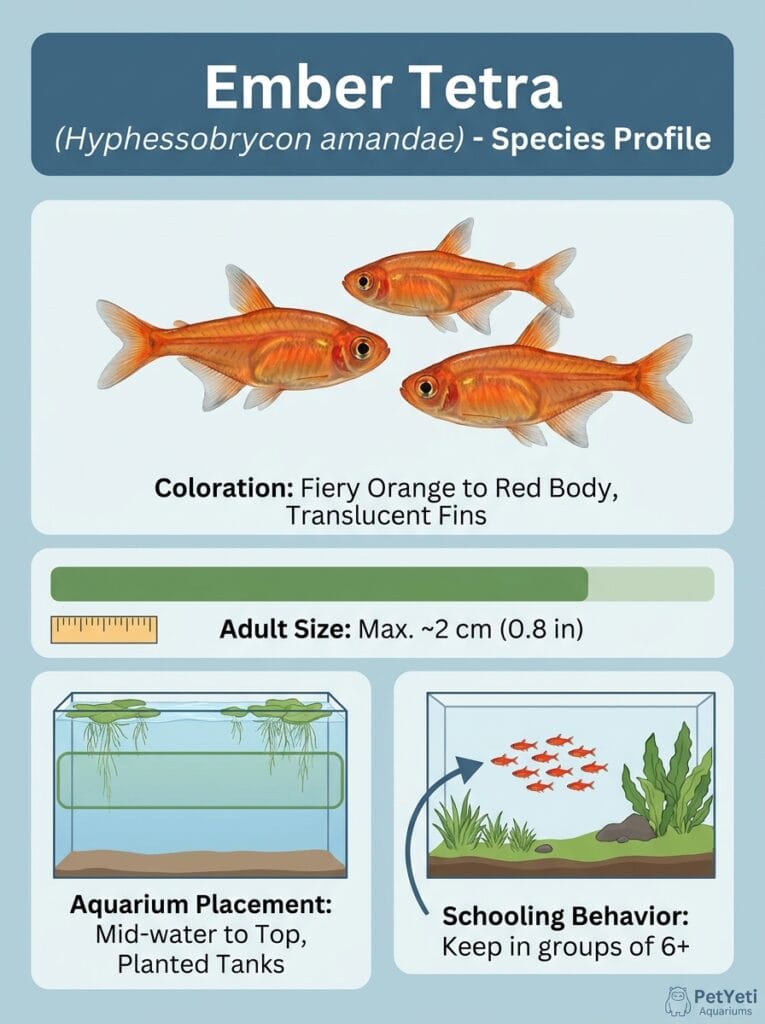
Ember Tetras may be small, but they create a surprisingly strong visual impact.
Their glowing orange coloration contrasts beautifully against green plants and darker aquascaping materials.
Because they remain small, a 20-gallon aquarium can comfortably accommodate a larger school, creating a more impressive display.
Fish Snapshot
| Trait | Rating |
|---|---|
| Beginner Friendly | ★★★★★ |
| Peaceful | ★★★★★ |
| Schooling Behavior | ★★★★★ |
| Color | ★★★★★ |
| PetYeti Fit | ★★★★★ |
Real-Life Example
Many planted-tank hobbyists choose Ember Tetras because a larger school can create a stunning visual effect without making the aquarium feel crowded.
Why We Like Them
They’re colorful, peaceful, and ideal for aquariums designed around plants and natural aquascaping.
Rummy Nose Tetras Create Incredible Schooling Displays
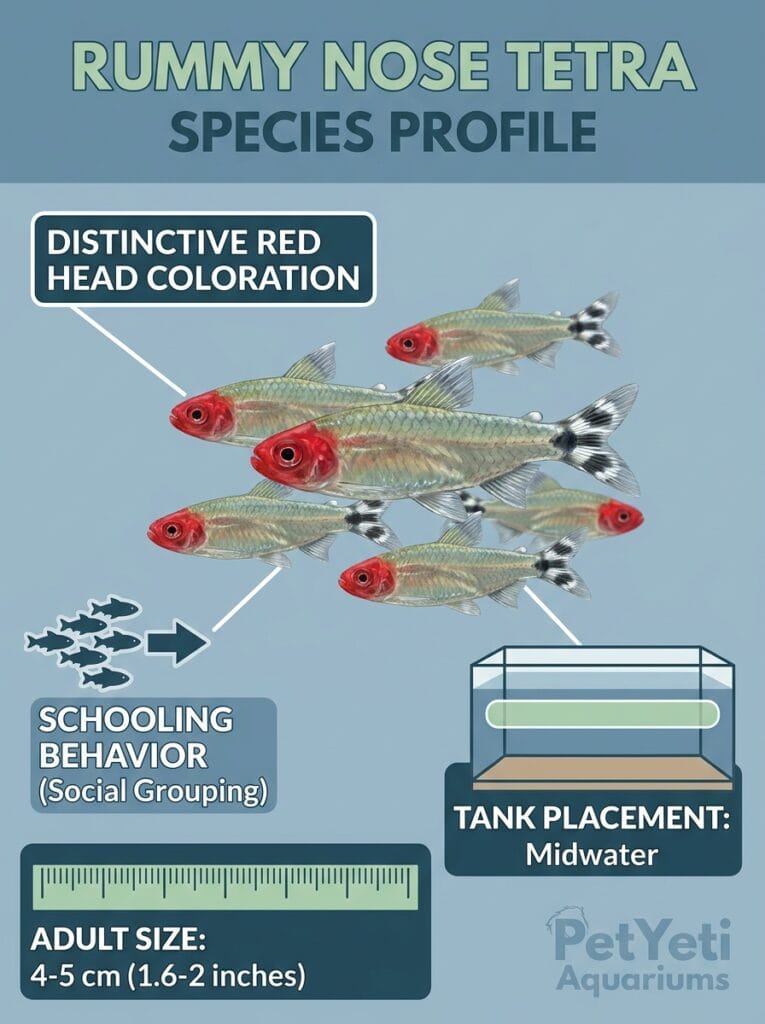
Few aquarium fish school as tightly as Rummy Nose Tetras.
When comfortable, they often move through the aquarium as a coordinated group, creating one of the most natural schooling displays available in freshwater fishkeeping.
Their bright red noses and striped tails also make them easy to identify.
Fish Snapshot
| Trait | Rating |
|---|---|
| Beginner Friendly | ★★★★☆ |
| Peaceful | ★★★★★ |
| Schooling Behavior | ★★★★★ |
| Color | ★★★★★ |
| PetYeti Fit | ★★★★★ |
Real-Life Example
Aquascapers frequently use Rummy Nose Tetras because their synchronized movement draws attention without distracting from the overall design of the aquarium.
Why We Like Them
Their schooling behavior is among the best you’ll find in a community aquarium.
Cardinal Tetras Offer Bigger Color Impact
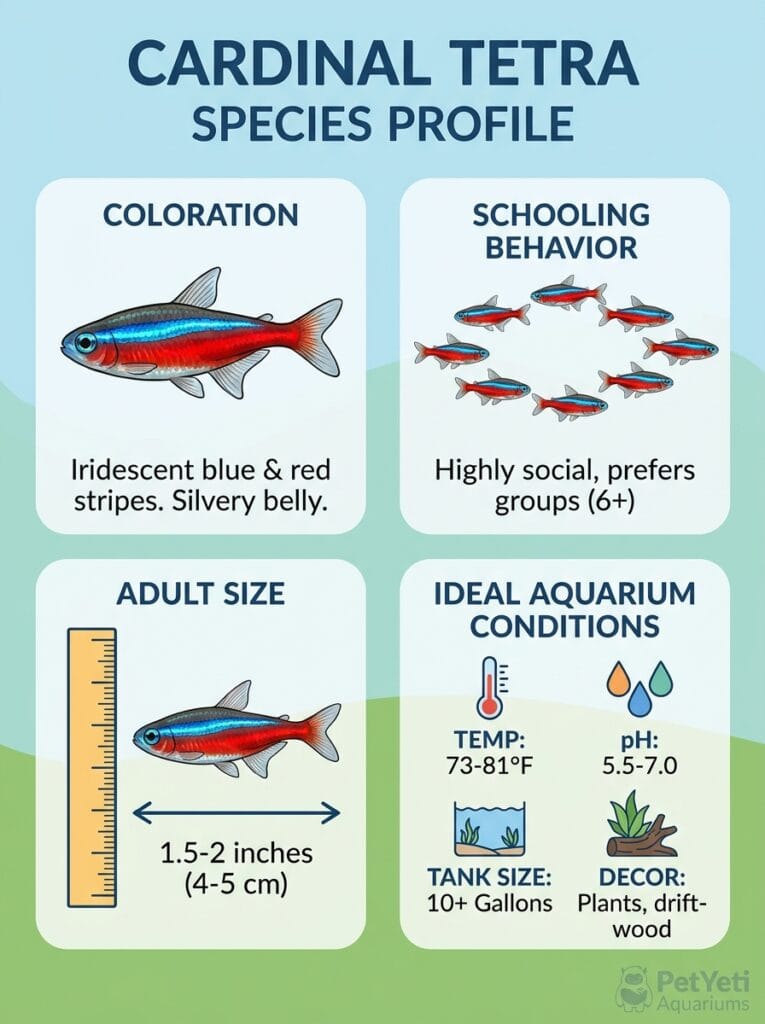
Cardinal Tetras are often compared to Neon Tetras because of their similar appearance.
However, Cardinals typically display more red coloration along their bodies, creating an even stronger visual impact.
In planted aquariums, a healthy school can become the centerpiece of the entire tank.
Fish Snapshot
| Trait | Rating |
|---|---|
| Beginner Friendly | ★★★★☆ |
| Peaceful | ★★★★★ |
| Schooling Behavior | ★★★★★ |
| Color | ★★★★★ |
| PetYeti Fit | ★★★★★ |
Why We Like Them
They combine vibrant color with peaceful community behavior.
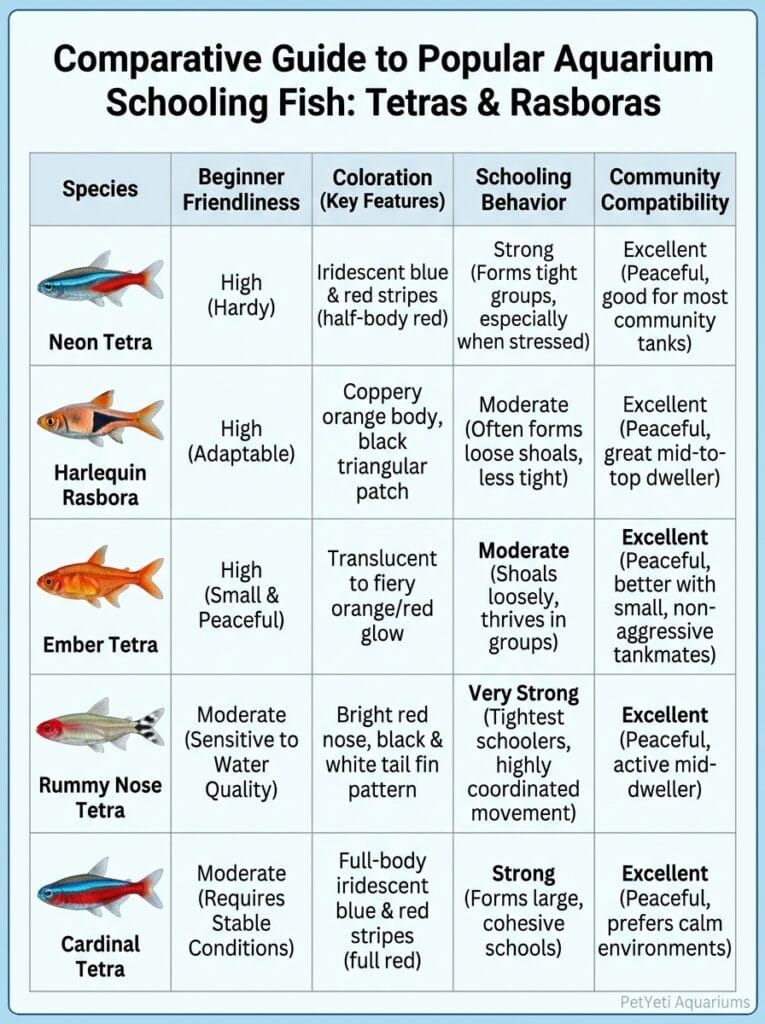
Best Schooling Fish Comparison Table
If you’re trying to decide between several species, this quick comparison can help.
| Fish | Beginner Friendly | Color | Schooling Strength | Community Compatibility |
|---|---|---|---|---|
| Neon Tetra | ★★★★★ | ★★★★★ | ★★★★★ | ★★★★★ |
| Harlequin Rasbora | ★★★★★ | ★★★★☆ | ★★★★★ | ★★★★★ |
| Ember Tetra | ★★★★★ | ★★★★★ | ★★★★★ | ★★★★★ |
| Rummy Nose Tetra | ★★★★☆ | ★★★★★ | ★★★★★ | ★★★★★ |
| Cardinal Tetra | ★★★★☆ | ★★★★★ | ★★★★★ | ★★★★★ |
There isn’t a single “best” choice.
The right species depends on your aquarium style, aquascape, and personal preferences.
Common Mistakes When Keeping Schooling Fish
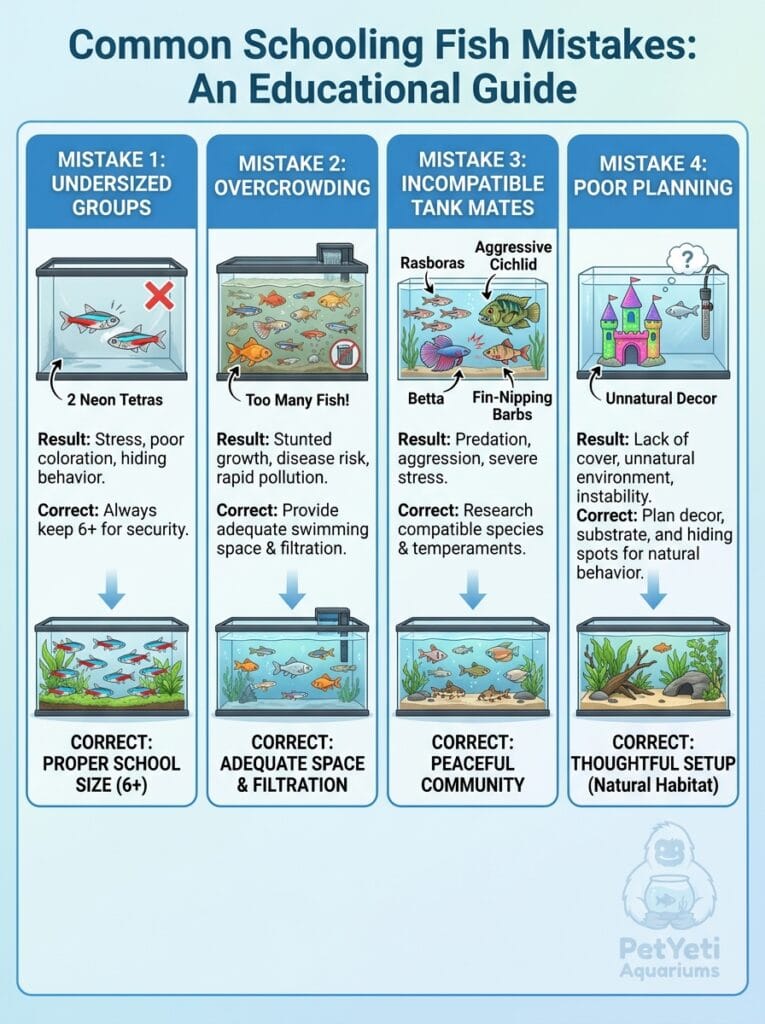
Schooling fish are generally easy to care for, but several common mistakes can prevent them from displaying their best behavior.
Common Problems
❌ Keeping too few individuals
❌ Mixing aggressive tank mates
❌ Overstocking the aquarium
❌ Choosing species without researching adult size
❌ Expecting immediate schooling behavior after introduction
Real-Life Example
A hobbyist initially kept four Neon Tetras and rarely saw them swimming together. After increasing the group size, the fish became more confident and displayed much stronger schooling behavior.
What to Expect
Most schooling fish become more active and visible when kept in appropriate group sizes.
CONCLUSION
Schooling fish bring life, movement, and balance to community aquariums.
Their natural group behavior creates the flowing, peaceful appearance many hobbyists hope to achieve when designing an aquarium.
Whether you choose Neon Tetras, Harlequin Rasboras, Ember Tetras, Rummy Nose Tetras, or Cardinal Tetras, the key is providing enough companions for them to feel secure and display their natural behavior.
In many cases, a healthy school of fish can completely transform the look and feel of an aquarium.
For hobbyists who want a calm, beautiful display that feels alive without being chaotic, schooling fish are often one of the best additions they can make.
FAQ
What is the best schooling fish for beginners?
Neon Tetras, Ember Tetras, and Harlequin Rasboras are among the easiest schooling fish for beginners.
How many schooling fish should I keep together?
Most schooling species should be kept in groups of at least six, although larger groups often display more natural behavior.
Do schooling fish need live plants?
No, but many schooling fish look and behave especially well in planted aquariums.
Can different schooling fish be mixed together?
Yes, provided they’re compatible and the aquarium has enough space for each species.
Why aren’t my schooling fish swimming together?
Small group sizes, stress, recent introduction, or unsuitable tank conditions can all affect schooling behavior.
Are schooling fish good for community aquariums?
Yes. Most schooling species are peaceful and work very well in community setups.