
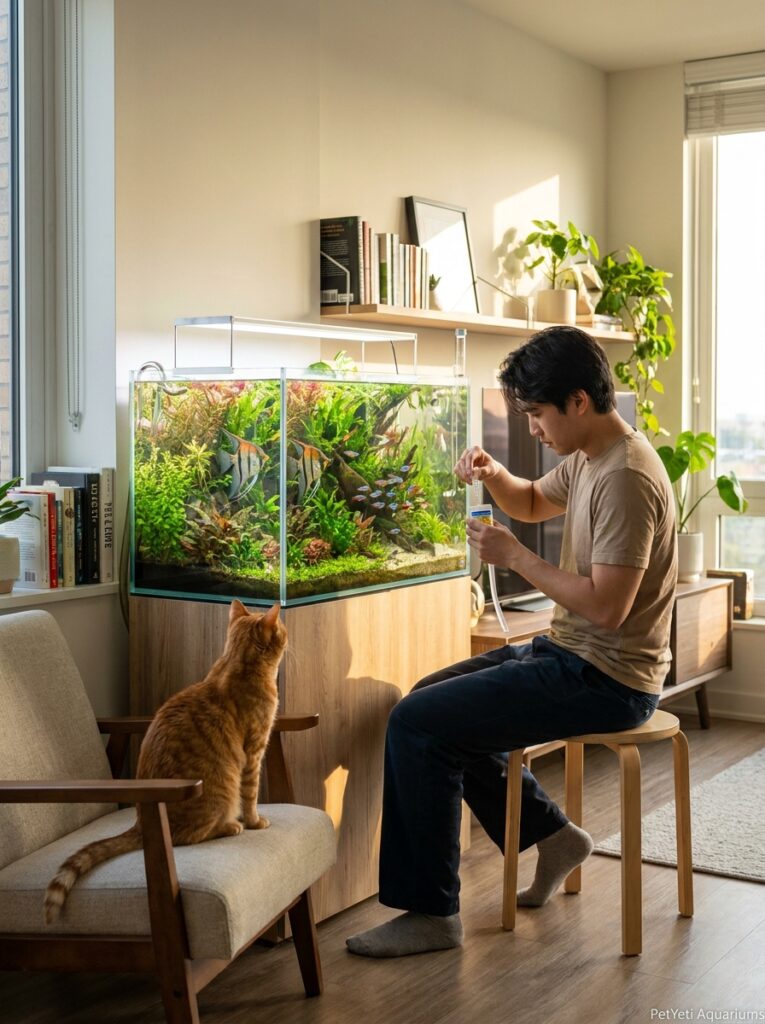
Best aquarium test kits help beginners understand what is happening in the water before fish show serious stress signs.
Water quality is one of the biggest reasons new aquariums succeed or fail. Fish can appear healthy one day and stressed the next because of changes you cannot see, even when the water looks crystal clear.
In this guide, we’ll explain what aquarium test kits measure, which types are best for beginners, and how often you should test your water.
In this guide, we’ll explain what aquarium test kits measure, which types are best for beginners, and how often you should test your water.
Quick Answer
The best aquarium test kit for most beginners is a liquid test kit that checks ammonia, nitrite, nitrate, and pH. Test strips are faster and easier, but liquid kits are usually better when you need more reliable results during cycling, fish illness, cloudy water, or sudden aquarium problems.
WHAT TO CHECK FIRST
Before choosing a test kit, make sure it can check the water problems beginners deal with most often:
- Ammonia — most urgent in new or stressed tanks
- Nitrite — dangerous during cycling
- Nitrate — useful for knowing when water changes are needed
- pH — helpful for checking stability
- Freshwater compatibility — choose a kit made for your tank type
As an Amazon Associate, PetYeti earns from qualifying purchases. This comes at no additional cost to you and helps support the site. We only recommend products we genuinely believe can help create healthier and more enjoyable aquariums.
Why Water Testing Matters
Fish live in their environment 24 hours a day.
Even small changes in water quality can affect their health.
Testing helps identify issues before fish show visible symptoms.
Regular testing can help:
- Prevent fish stress
- Detect cycling problems
- Improve plant health
- Avoid sudden fish losses
- Build confidence as a beginner
Think of water testing as preventive maintenance for your aquarium.
Helpful Habit
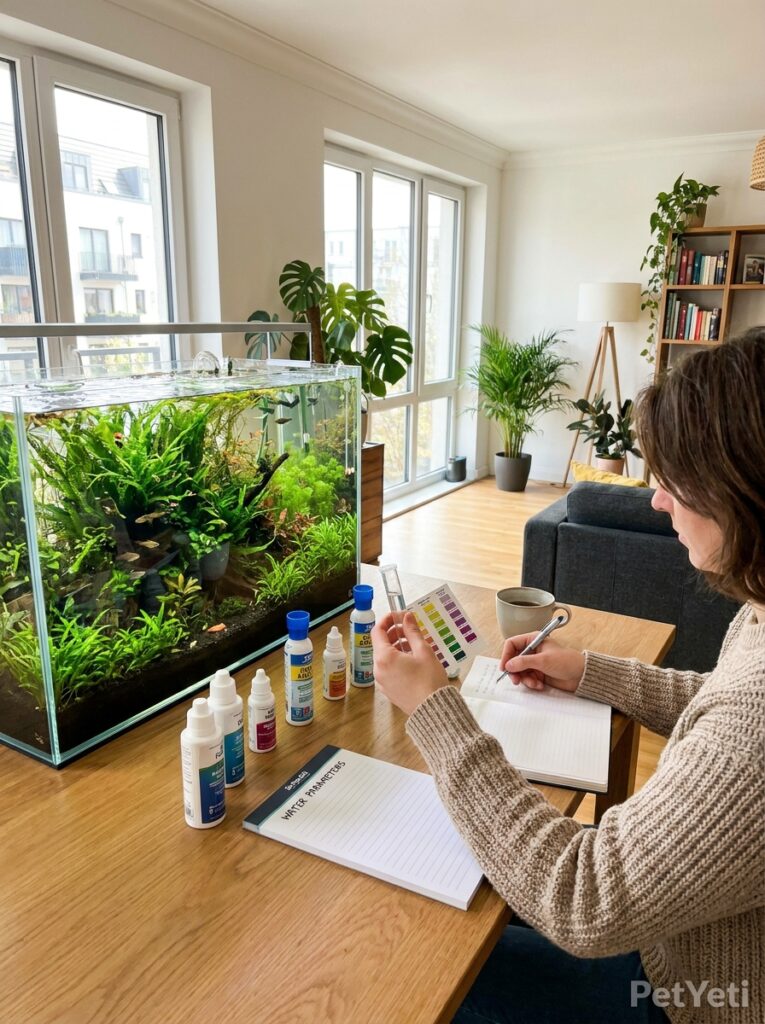
Many successful aquarium keepers keep simple notes of:
• Ammonia readings
• Nitrite readings
• Nitrate readings
• Water changes
Tracking patterns over time often makes troubleshooting much easier.
👉 View Aquarium Log Book Options
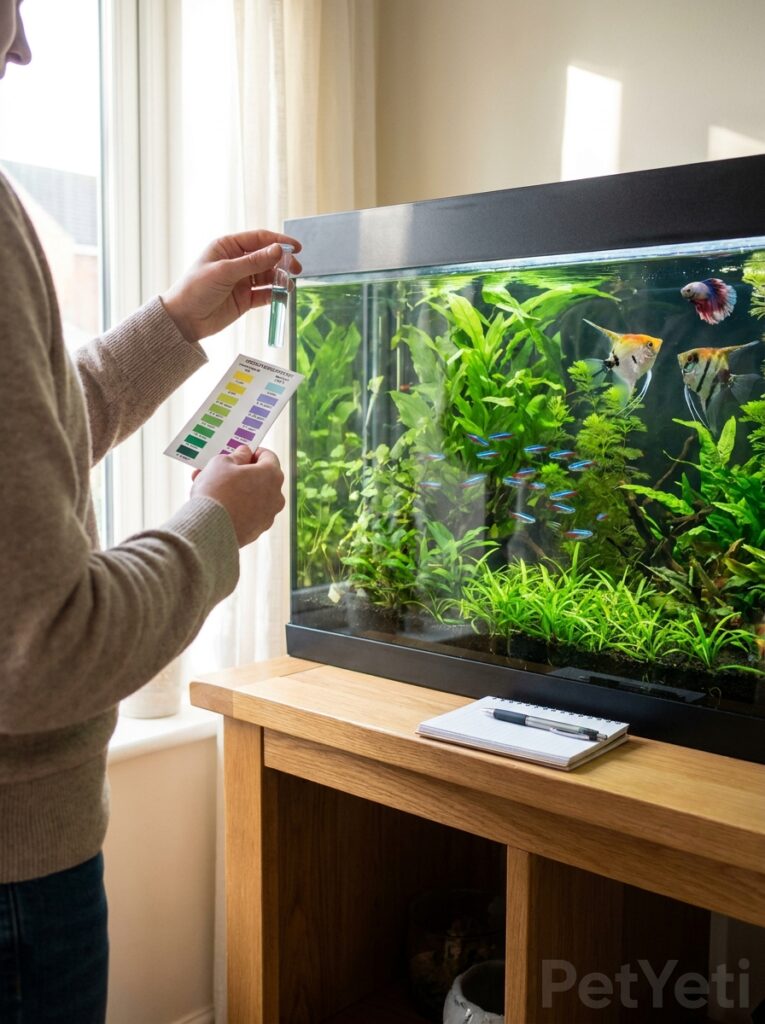
What Does an Aquarium Test Kit Measure?
Most beginner test kits focus on several important water parameters.
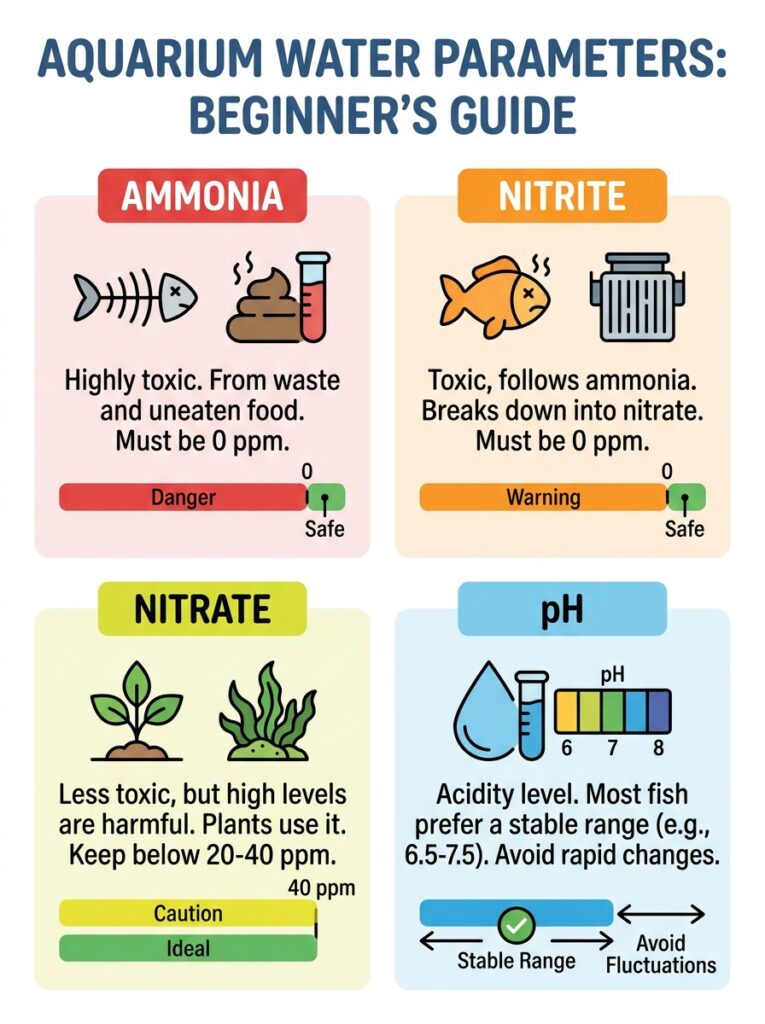
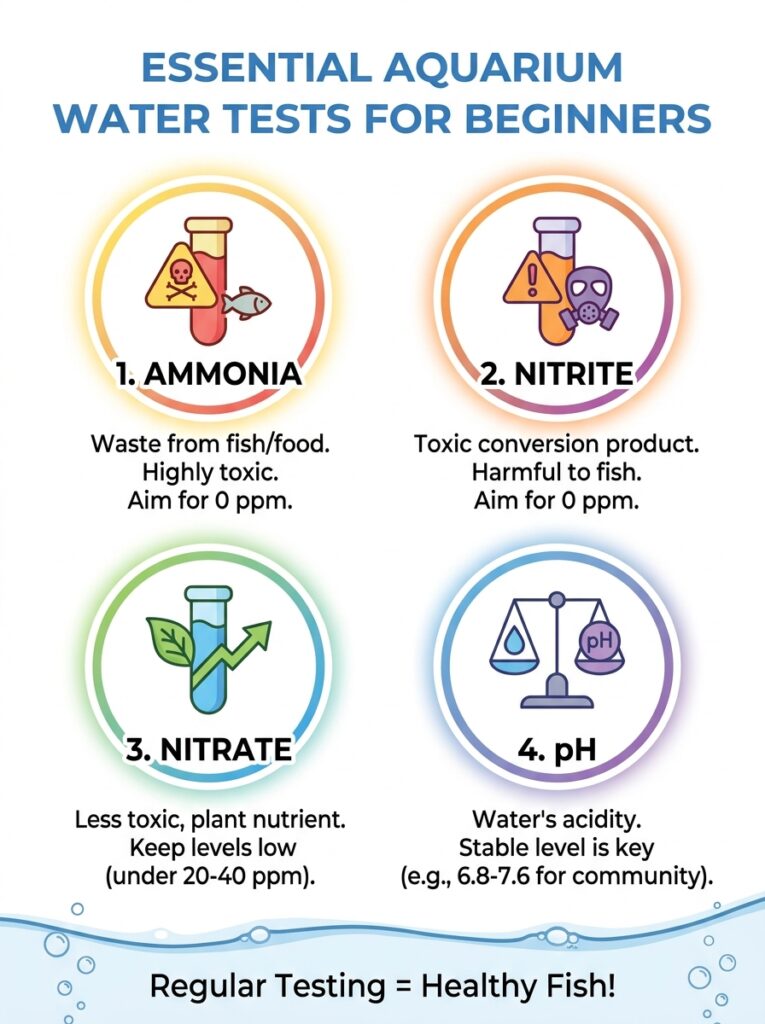
Ammonia
One of the most dangerous substances in aquariums.
Even small amounts can stress or harm fish.
Nitrite
Produced during the nitrogen cycle.
Also harmful to fish.
Nitrate
Less toxic than ammonia and nitrite but should still be monitored.
pH
Measures water acidity or alkalinity.
Different fish species prefer different ranges.
Liquid Test Kits vs Test Strips
This is one of the most common beginner questions.
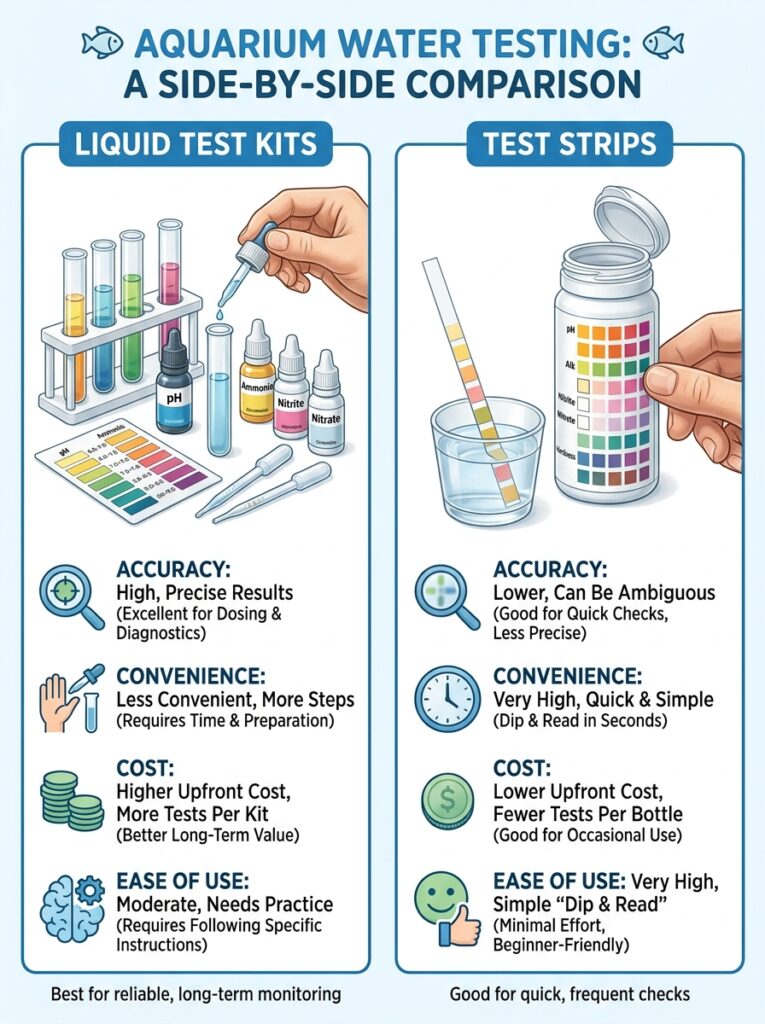
Liquid Test Kits
Pros:
- More accurate
- More detailed readings
- Trusted by experienced hobbyists
Cons:
- Slightly slower
- More steps involved
Test Strips
Pros:
- Fast
- Easy to use
- Convenient
Cons:
- Often less precise
⭐ PetYeti Pick: Beginner Water Test Kit
Recommended Option: API Freshwater Master Test Kit
Best For:
✓ New aquariums
✓ Cycling tanks
✓ Community aquariums
✓ Long-term fishkeeping
Why We Like It:
✓ Tests ammonia, nitrite, nitrate, and pH
✓ Trusted by hobbyists for years
✓ More detailed readings than most strips
✓ Excellent long-term value
PetYeti Take:
If we could recommend only one test kit to a beginner, this would usually be our first choice because it teaches you what’s happening inside the aquarium instead of relying on guesswork.
Quick-Check Option
Recommended Option: Aquarium Test Strips
Best For:
✓ Fast routine checks
✓ Busy aquarium owners
✓ Quick weekly monitoring
Why We Like It:
✓ Fast results
✓ Beginner-friendly
✓ Convenient storage
PetYeti Take:
While we generally prefer liquid test kits for accuracy, test strips can be useful when convenience is the priority.
For many beginners, liquid test kits provide the best long-term value.
When Should Beginners Test Aquarium Water?
Testing schedules vary depending on the aquarium.
New Aquariums
Test frequently during the cycling process.
Established Aquariums
Weekly or biweekly testing is often enough.
When Problems Appear
Increase testing whenever fish behavior changes unexpectedly.
Examples include:
- Loss of appetite
- Hiding
- Gasping at the surface
- Unusual swimming patterns
Which Water Parameters Should Beginners Focus On?
Many new hobbyists become overwhelmed by advanced testing options.
For most beginner aquariums, focus on:
- Ammonia
- Nitrite
- Nitrate
- pH
These measurements provide the most useful information for day-to-day fishkeeping.
As your experience grows, additional testing may become relevant.
Common Water Testing Mistakes
Many beginners make a few predictable mistakes.
Only Testing When Fish Look Sick
Testing works best as prevention.
Ignoring Results
Numbers only help when they lead to action.
Overreacting To Small Changes
Stable trends matter more than tiny fluctuations.
Skipping Water Testing Entirely
Many aquarium problems become harder to solve when water quality is unknown.
Which Test Kit Would We Choose?
If we were helping a beginner set up their first aquarium, we’d prioritize:
- Accuracy
- Ease of use
- Ability to measure ammonia, nitrite, nitrate, and pH
The goal isn’t buying the most advanced kit available.
The goal is building confidence and understanding how your aquarium behaves over time.
A simple, reliable test kit can teach you more about your aquarium than almost any other piece of equipment.
Related PetYeti Guides
A test kit is most helpful when you know what the results mean and when to test your aquarium water.
Need a simple testing routine? Read our guide on how to test aquarium water correctly.
Still learning ammonia, nitrite, and nitrate? Start with Aquarium Cycling Explained for Beginners.
Wondering when a new tank is ready? See our guide on how long it takes for an aquarium to cycle.
Thinking about adding fish soon? Read our guide on adding fish after setting up a tank.
Cloudy water problem? See why your betta fish tank looks cloudy.
CONCLUSION
Aquarium test kits may not be the most exciting purchase, but they’re among the most valuable.
Water quality affects every fish, every plant, and every part of the aquarium ecosystem.
By regularly testing key parameters, beginners can identify problems early, make informed decisions, and create a healthier environment for their fish.
Understanding your water is one of the fastest ways to become a more confident aquarium keeper.
FAQs
Do beginners really need an aquarium test kit?
Yes. Water testing helps identify issues that cannot be seen by looking at the aquarium.
Are test strips accurate enough?
They can be useful for quick checks, but liquid test kits are generally considered more accurate.
What is the most important aquarium water test?
Ammonia is often considered one of the most critical parameters, especially in new aquariums.
How often should aquarium water be tested?
New aquariums may require frequent testing, while established tanks often benefit from weekly or biweekly checks.
Can clear water still have problems?
Absolutely. Water can appear crystal clear while harmful chemical imbalances are present.