
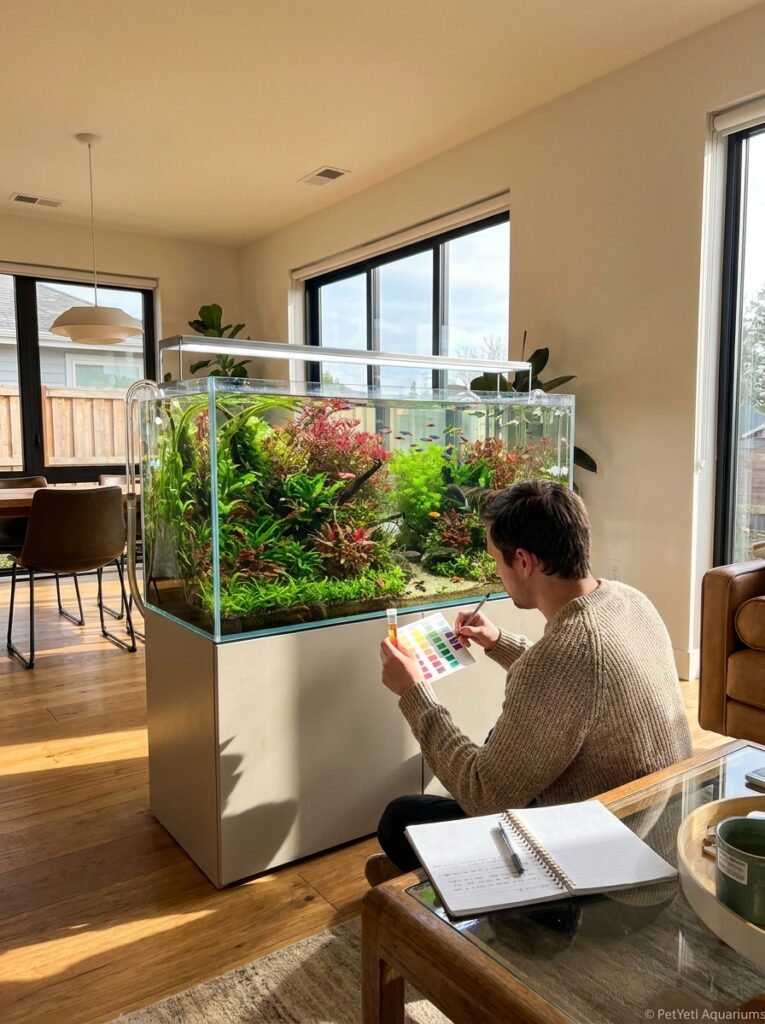
How to test aquarium water correctly is one of the most useful skills beginners can learn for keeping fish healthy.
Buying an aquarium test kit is a great first step.
Knowing how to use it correctly is what actually helps your fish.
Many beginners test their water, see a few numbers, and still feel confused about what those numbers mean or what they should do next.
The good news is that water testing isn’t nearly as complicated as it first appears.
Once you understand the basics, it becomes one of the easiest ways to keep your aquarium healthy and avoid common problems before they affect your fish.
In this guide, we’ll walk through the testing process, explain what the results mean, and highlight the mistakes beginners make most often.
Quick Answer
The best way to test aquarium water correctly is to check ammonia, nitrite, nitrate, and pH with a reliable test kit, then track the results over time. One test result is helpful, but repeated testing gives you a clearer picture of whether the aquarium is stable, cycling, or developing a water quality problem.
- Why Testing Aquarium Water Matters
- The Four Water Parameters Every Beginner Should Understand
- Step 1: Collect a Water Sample
- Step 2: Add the Test Reagents
- Step 3: Wait the Recommended Time
- Step 4: Compare Results to the Color Chart
- How to Interpret Your Results
- Common Water Testing Mistakes
- How Often Should You Test Aquarium Water?
- CONCLUSION
- FAQs
WHAT TO CHECK FIRST
Before testing aquarium water, check these basics:
- Ammonia — should usually be 0 ppm in a healthy tank
- Nitrite — should usually be 0 ppm
- Nitrate — should stay controlled with water changes
- pH — should be stable, not swinging quickly
- Testing method — follow the timing and color-chart instructions carefully
As an Amazon Associate, PetYeti earns from qualifying purchases. This comes at no additional cost to you and helps support the site. We only recommend products we genuinely believe can help create healthier and more enjoyable aquariums.
Why Testing Aquarium Water Matters
Your aquarium may look perfectly healthy on the outside.
The water can be crystal clear.
The fish may appear active.
Yet water chemistry problems can still be developing beneath the surface.
Testing allows you to:
- Detect problems early
- Monitor the nitrogen cycle
- Prevent fish stress
- Make informed maintenance decisions
- Build confidence as a fishkeeper
Think of water testing as a routine health check for your aquarium.
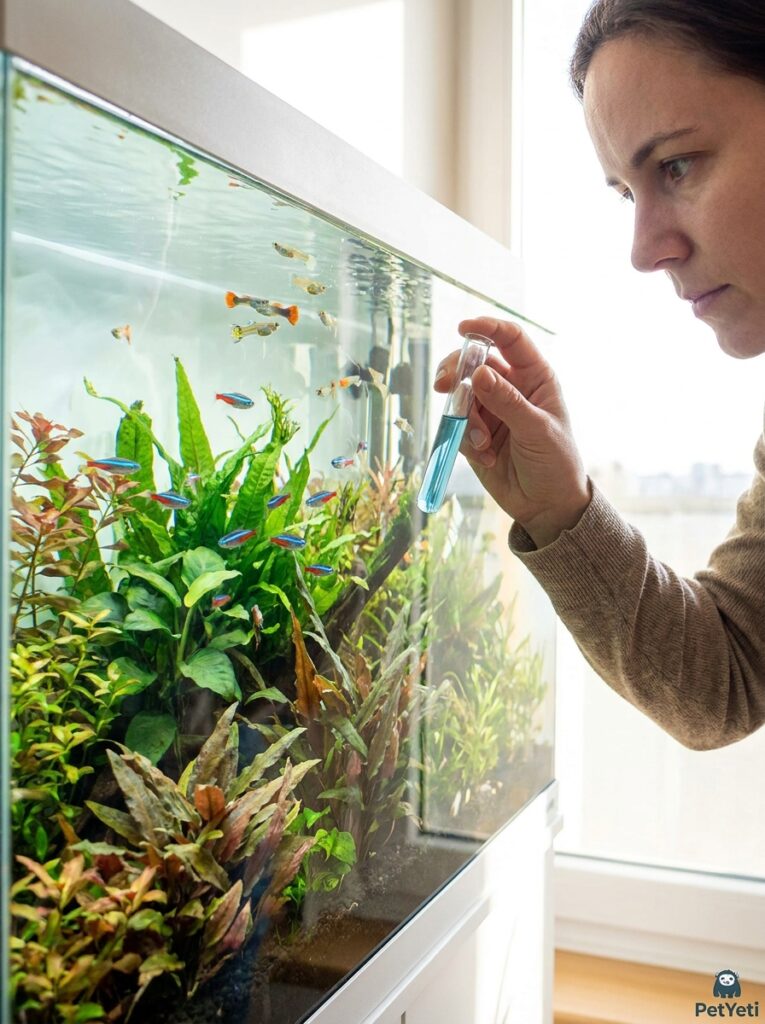
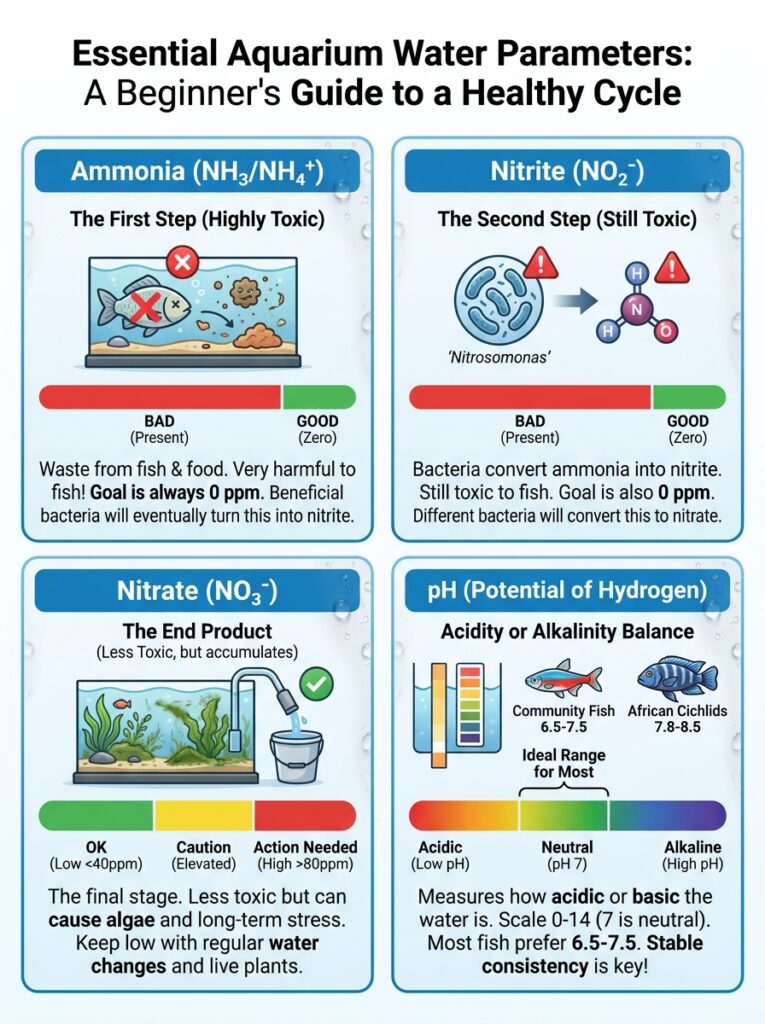
The Four Water Parameters Every Beginner Should Understand
For most beginners, these are the most important numbers.
Ammonia
Should usually be zero in a healthy established aquarium.
Nitrite
Should also typically be zero.
Nitrate
Usually present in small amounts and managed through maintenance.
pH
Measures acidity or alkalinity and should remain stable.
⭐ PetYeti Pick: Liquid Water Test Kit
Recommended Option: API Freshwater Master Test Kit
Best For:
✓ New aquariums
✓ Cycling tanks
✓ Community aquariums
✓ Long-term water monitoring
Why We Like It:
✓ Tests ammonia, nitrite, nitrate, and pH
✓ Gives more detailed readings than most strips
✓ Useful for both new and established aquariums
✓ Excellent long-term value
PetYeti Take:
If a beginner wants to understand what is really happening inside their aquarium, a reliable liquid test kit is usually one of the best tools they can own.
Who Should Skip It:
Skip this if you only want a very fast routine check and do not want to use liquid drops or test tubes.
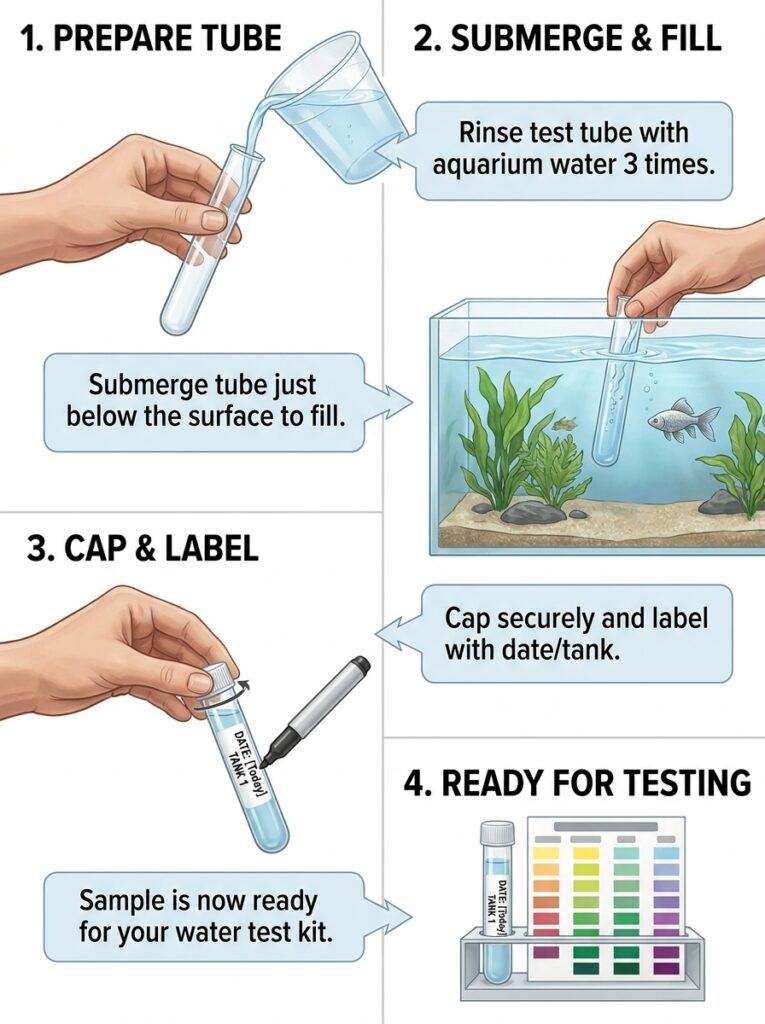
Step 1: Collect a Water Sample
Begin by collecting aquarium water in the test tube provided with your kit.
Avoid:
- Dirty containers
- Soap residue
- Contaminated equipment
Always follow the instructions included with your specific test kit.
Consistency helps improve accuracy.
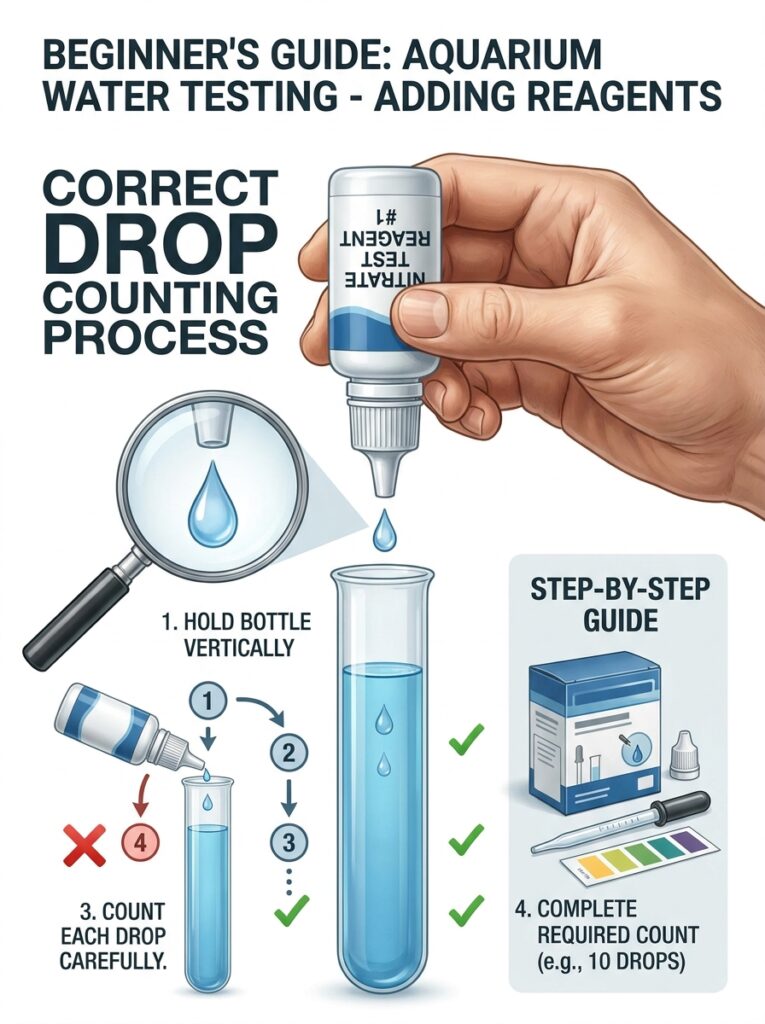
Step 2: Add the Test Reagents
Most liquid test kits require adding a specific number of drops.
Follow the instructions carefully.
Common beginner mistakes include:
- Adding too many drops
- Mixing bottle caps
- Skipping shaking instructions
- Using expired reagents
Small mistakes can affect results.
Step 3: Wait the Recommended Time
Different tests require different waiting periods.
Many beginners rush this step.
The color may continue developing for several minutes.
Always wait the full recommended time before comparing results.
Patience improves accuracy.
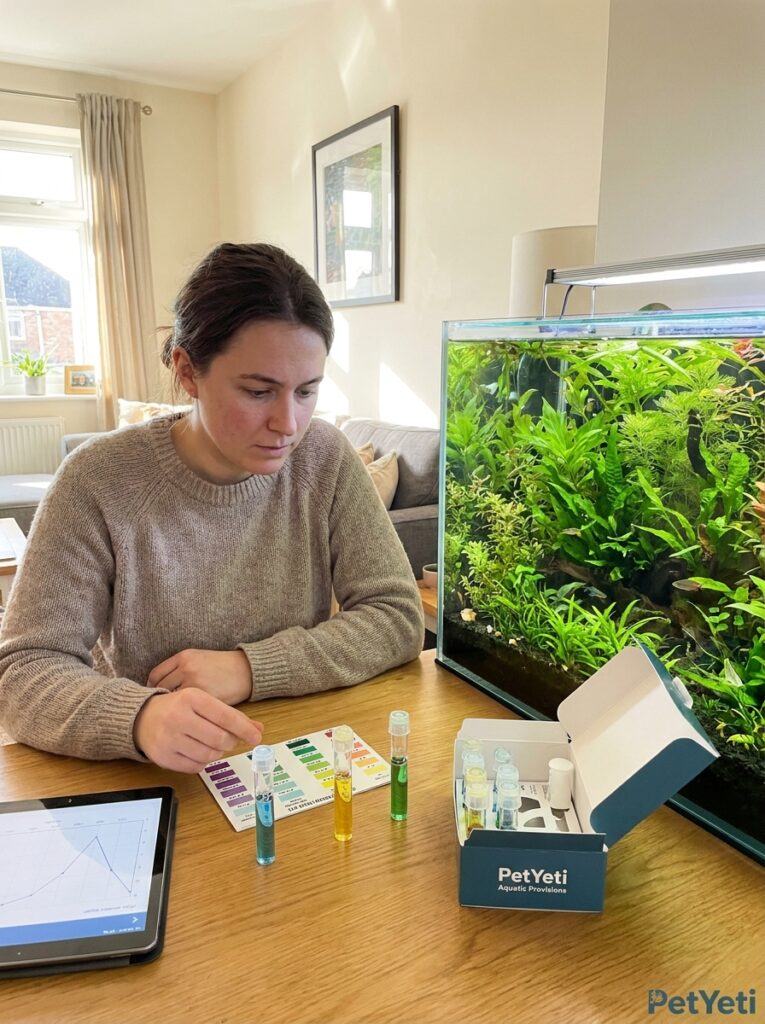
Step 4: Compare Results to the Color Chart
This is where the numbers begin to tell a story.
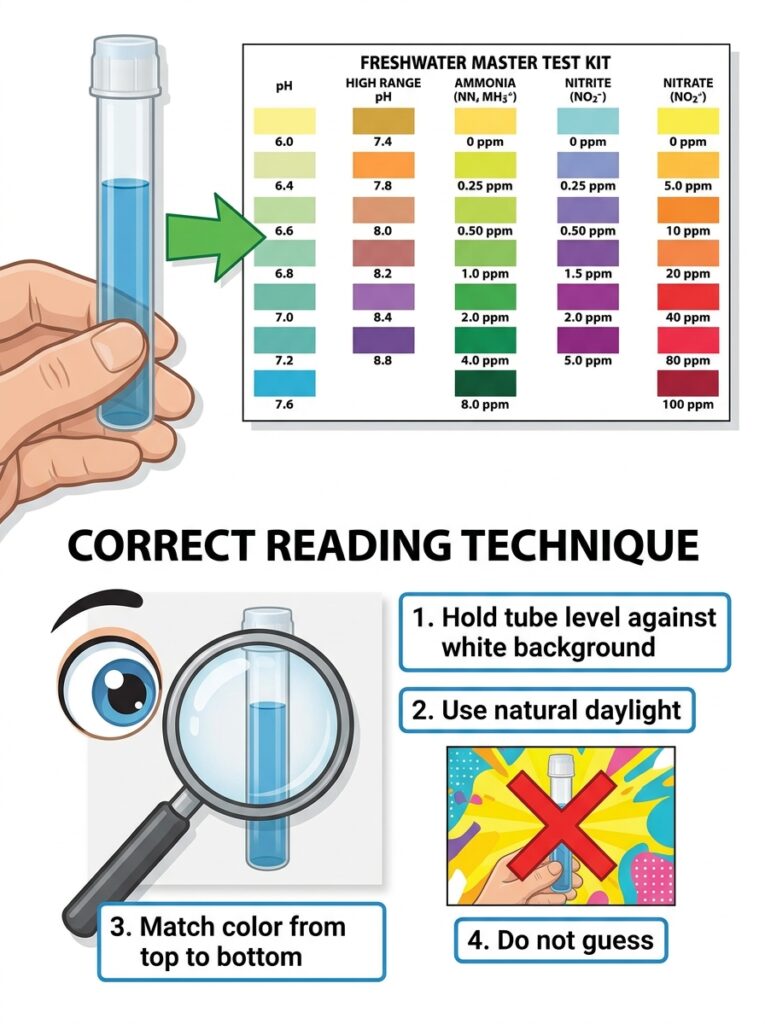
Hold the test tube beside the provided color chart.
Try to:
- Use natural lighting
- Avoid colored room lighting
- Compare carefully
- Take your time
The goal isn’t perfection.
The goal is identifying meaningful trends.
How to Interpret Your Results
Many beginners focus only on the number.
Experienced hobbyists focus on the pattern.
For example:
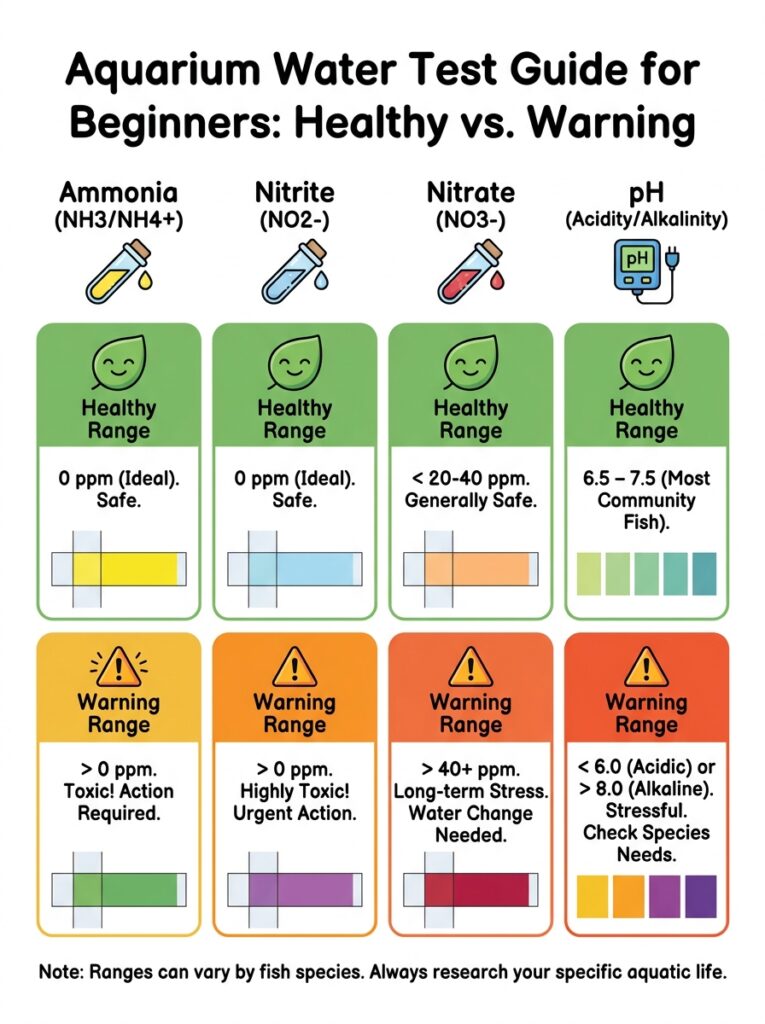
Good Signs
- Stable pH
- Zero ammonia
- Zero nitrite
- Manageable nitrate levels
Warning Signs
- Detectable ammonia
- Detectable nitrite
- Rapid changes
- Unusual spikes
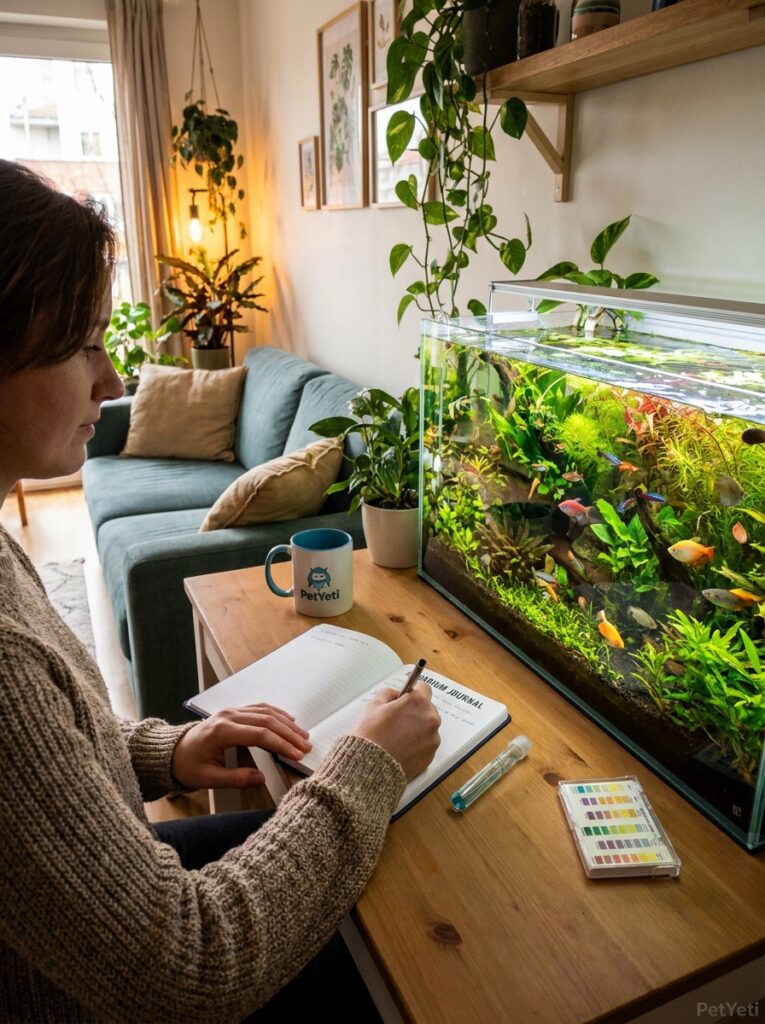
Testing becomes much more useful when results are recorded over time.
Helpful Habit: Aquarium Maintenance Log
Recommended Option: Aquarium Maintenance Log Book
Why We Like It:
✓ Helps track ammonia, nitrite, nitrate, and pH
✓ Makes patterns easier to spot
✓ Useful during cycling
✓ Helps beginners build confidence
PetYeti Take:
Water testing becomes much more useful when you can see trends over time instead of relying on one isolated result.
Who Should Skip It:
Skip this if you already track your aquarium test results in a notebook, spreadsheet, or phone app.
👉 View Aquarium Log Book Options
Want an easier way to keep up with your aquarium routine? CalmTank is a free aquarium-care companion from PetYeti that lets you record water tests, observations, maintenance, and tank changes in one place.
Common Water Testing Mistakes
Testing Only When Something Goes Wrong
Routine testing is more valuable than emergency testing.
Ignoring Trends
One result is useful.
Multiple results over time are even more valuable.
Chasing Perfect Numbers
Stability usually matters more than perfection.
Not Recording Results
Keeping simple notes can reveal patterns that are otherwise easy to miss.
How Often Should You Test Aquarium Water?
New Aquariums
Several times per week during cycling.
Established Aquariums
Weekly or biweekly testing is often sufficient.
Quick-Check Option: Aquarium Test Strips
Recommended Option: Aquarium Test Strips
Best For:
✓ Fast routine checks
✓ Busy aquarium owners
✓ Established aquariums
✓ Quick weekly monitoring
Why We Like It:
✓ Fast results
✓ Easy to use
✓ Convenient for regular checks
PetYeti Take:
Test strips are not our first choice for detailed troubleshooting, but they can be useful for quick routine checks when convenience matters.
Who Should Skip It:
Skip this if you are cycling a new tank, troubleshooting sick fish, or need more detailed ammonia, nitrite, and nitrate readings.
Problem Situations
Test more frequently whenever fish behavior changes unexpectedly.
Related PetYeti Guides
Testing aquarium water is most useful when you know what the results mean and what to do next. These guides can help you connect water testing to cycling, cloudy water, and fish safety:
CONCLUSION
Water testing doesn’t need to feel intimidating.
Once you understand the basic process, it becomes one of the most valuable skills in fishkeeping.
Testing regularly helps you understand your aquarium, identify problems early, and create a healthier environment for your fish.
Over time, you’ll begin to recognize patterns and gain confidence in your maintenance routine.
The goal isn’t becoming a water chemistry expert.
The goal is understanding enough to keep your aquarium stable and your fish healthy.
FAQs
How often should I test aquarium water?
New tanks often require more frequent testing, while established aquariums may only need weekly or biweekly checks.
What is the most important aquarium water test?
Ammonia is one of the most important parameters, especially during cycling.
Can clear water still be unhealthy?
Yes. Water can appear clear while harmful chemical imbalances exist.
Should I write down my test results?
Yes. Tracking results over time helps identify trends and potential problems.
Do I need to test water after every water change?
Not always, but periodic testing can help confirm that water quality remains stable.