
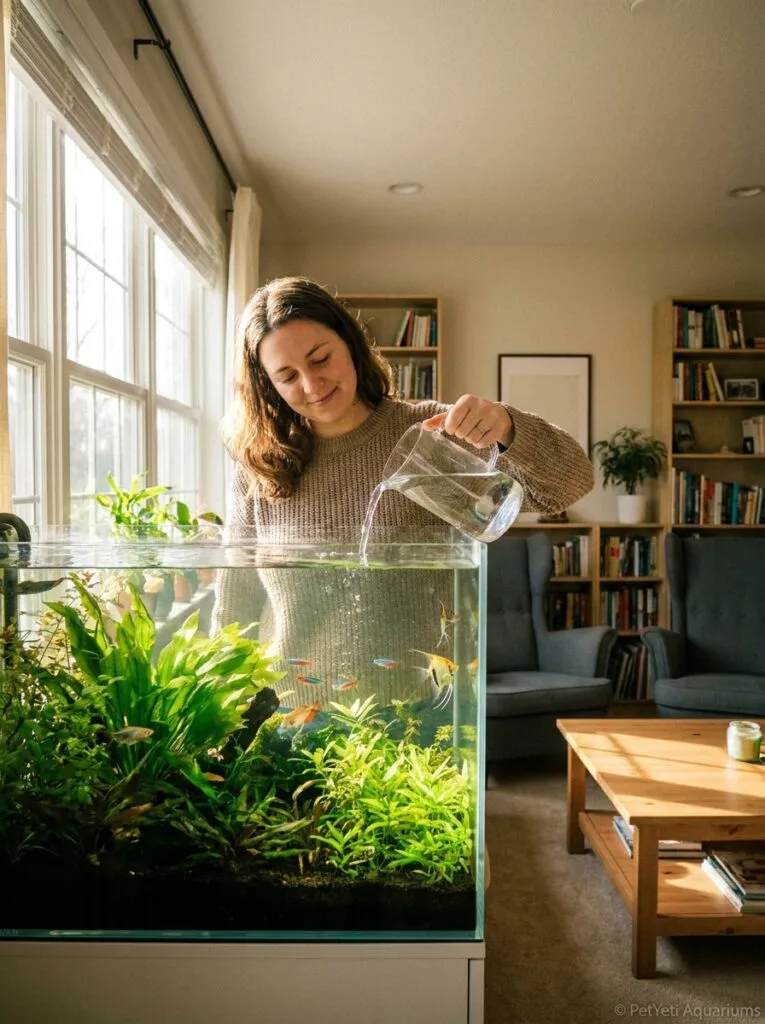
You fill your aquarium to the proper level.
A few days later, the water line has dropped again.
There are no leaks.
The floor is dry.
The filter is working normally.
So where is the water going?
In many cases, the answer is simple:
Evaporation.
Every aquarium loses some water naturally as liquid water turns into water vapor and enters the surrounding air.
The surprising part is how quickly evaporation can sometimes happen.
Factors like room temperature, aquarium heaters, air conditioning, ceiling fans, and even the type of aquarium lid can dramatically affect how much water disappears each week.
The good news is that rapid evaporation is usually easy to explain and often easy to reduce.
In this guide, we’ll explore the most common reasons aquarium water evaporates quickly and what you can do about it.
Some Evaporation Is Completely Normal
One of the biggest misconceptions among beginners is that aquariums should never lose water.
In reality, every aquarium experiences evaporation.
Water molecules at the surface constantly escape into the air.
This process happens 24 hours a day.
The amount of evaporation depends on environmental conditions, but some water loss is expected in virtually every aquarium.
Real-Life Example
A beginner fish keeper became worried after noticing the water level dropping each week. After confirming there were no leaks, they learned that their aquarium was simply experiencing normal evaporation.
What to Expect
A gradual reduction in water level over time is usually nothing to worry about.
The goal is understanding whether the evaporation rate is normal for your setup.
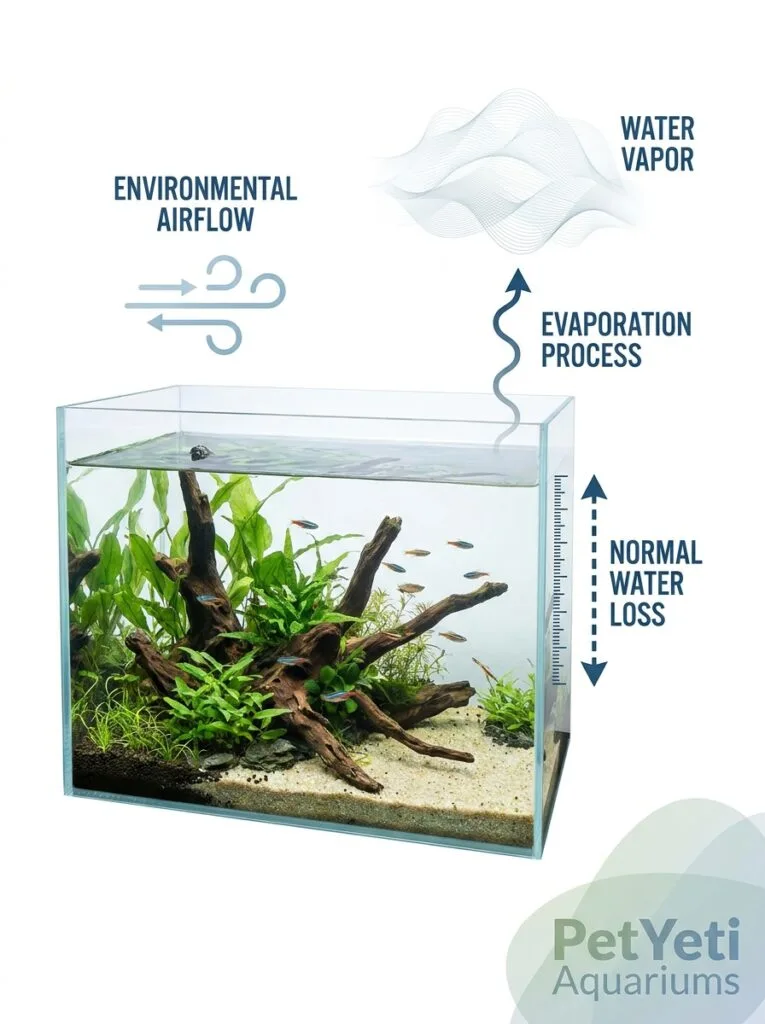
Open-Top Aquariums Evaporate Water Faster
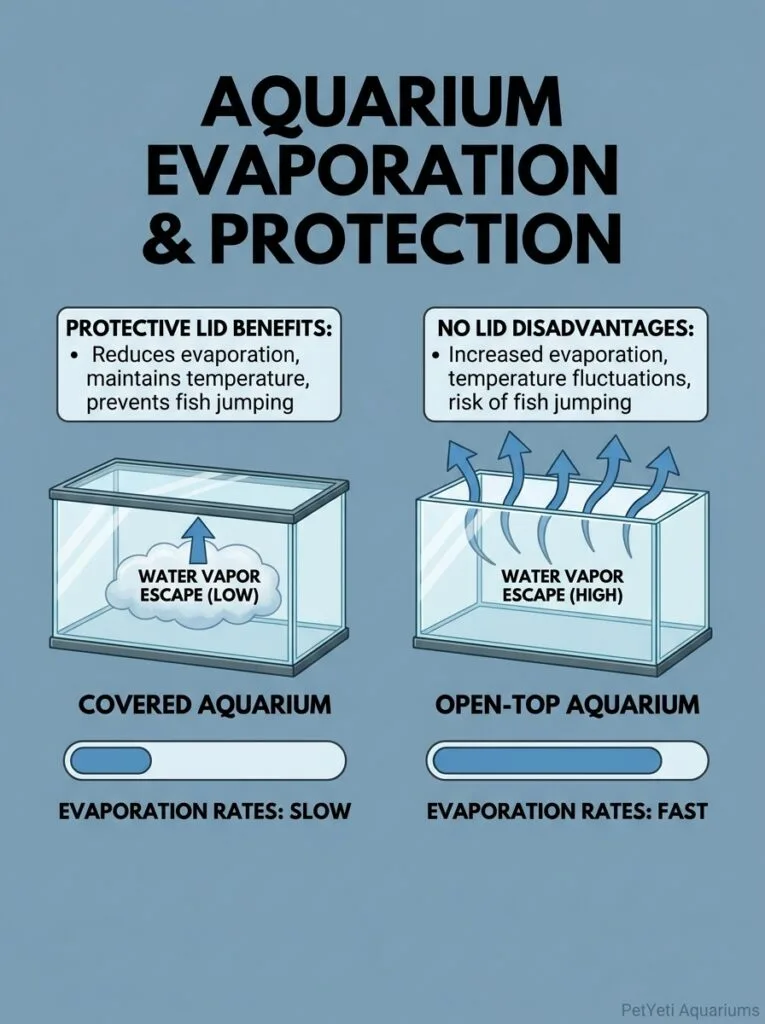
One of the biggest factors affecting evaporation is whether your aquarium has a lid.
Open-top aquariums allow water vapor to escape freely into the room.
Covered aquariums trap some of that moisture and slow the process.
Many aquascapers love the clean appearance of open-top tanks, but increased evaporation is one of the trade-offs.
Real-Life Example
A hobbyist switched from a covered aquarium to an open-top planted tank. Within days, they noticed the water level dropping much faster than before, even though nothing else had changed.
How to Reduce Evaporation
• Install a fitted lid
• Use a glass canopy
• Reduce unnecessary airflow over the surface
What to Expect
Adding a lid is often the single most effective way to reduce evaporation.
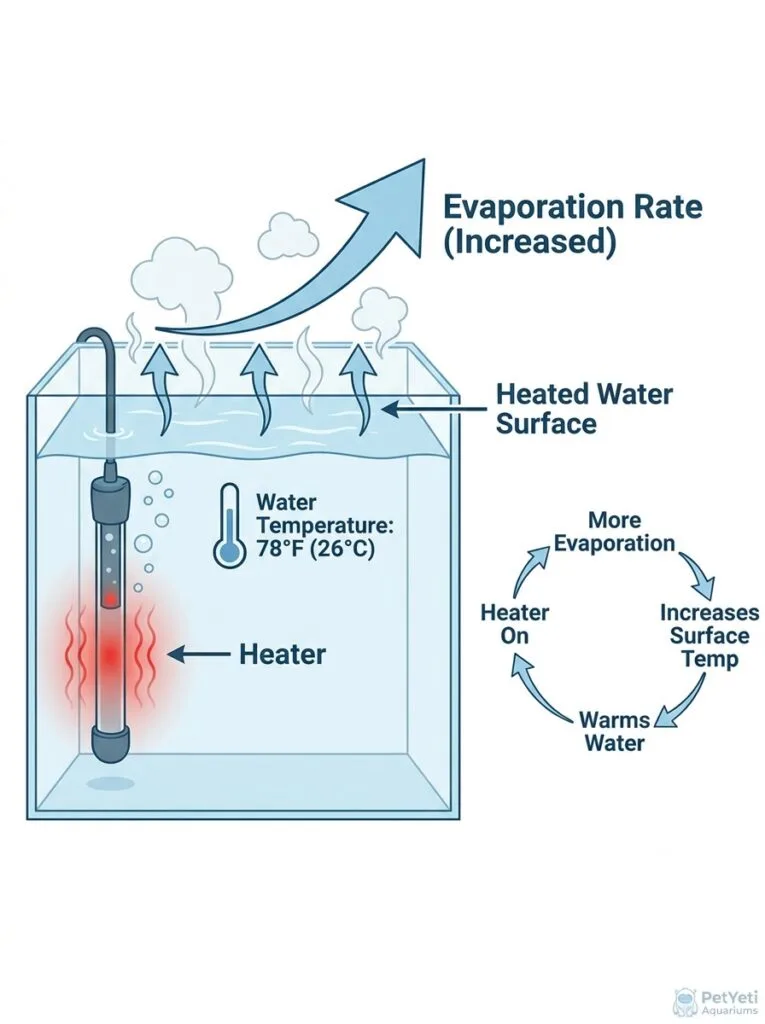
Aquarium Heaters Increase Evaporation
Warm water evaporates more quickly than cooler water.
That’s why heated aquariums often lose water faster than unheated setups.
This doesn’t mean heaters are causing a problem.
They’re simply creating conditions that naturally increase evaporation.
Real-Life Example
A tropical community aquarium maintained at 78°F consistently lost more water than an unheated shrimp tank located in the same room.
How to Reduce Evaporation
• Use a lid when possible
• Avoid overheating the aquarium
• Verify heater settings are appropriate for the species being kept
What to Expect
A heated aquarium will almost always evaporate more water than a cooler aquarium.
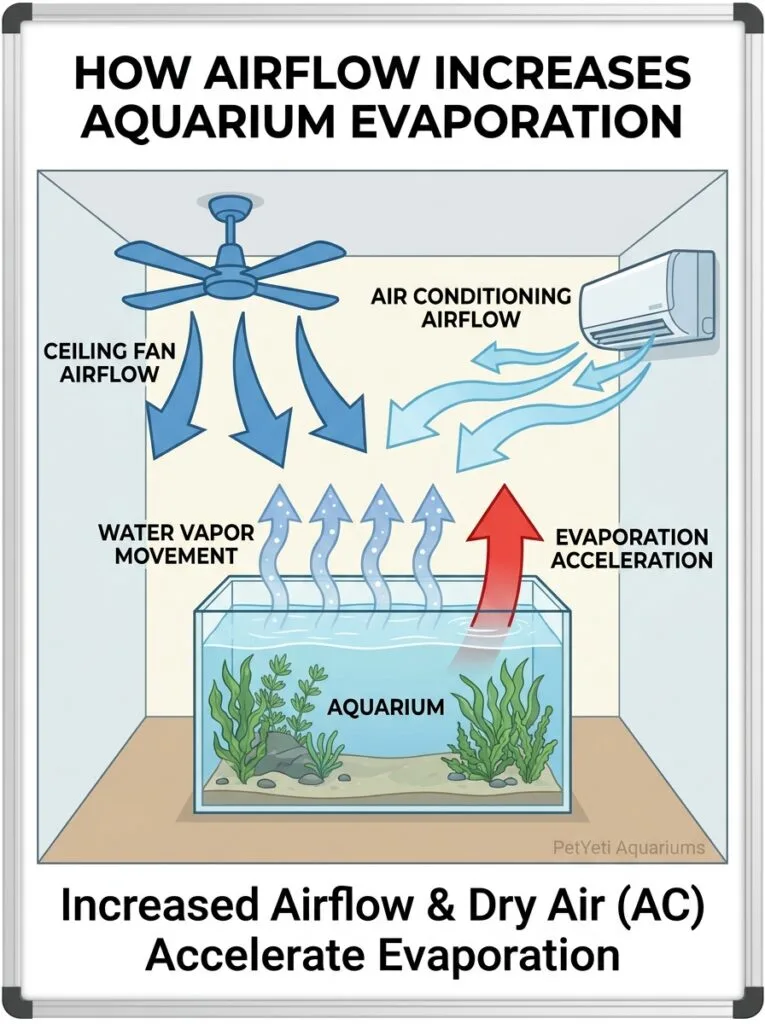
Ceiling Fans and Air Conditioning Can Pull Moisture Away
Moving air accelerates evaporation.
The faster moisture is removed from the surface, the more water can evaporate.
Common contributors include:
• Ceiling fans
• Air conditioning vents
• Portable fans
• Open windows
• HVAC airflow
Real-Life Example
An aquarium located directly beneath an air-conditioning vent consistently required more frequent top-offs than another tank located elsewhere in the home.
How to Reduce Evaporation
• Redirect airflow away from the aquarium
• Move portable fans if possible
• Use a tank cover
What to Expect
Reducing airflow often results in noticeably slower evaporation.
Low Humidity Inside Your Home Can Increase Evaporation
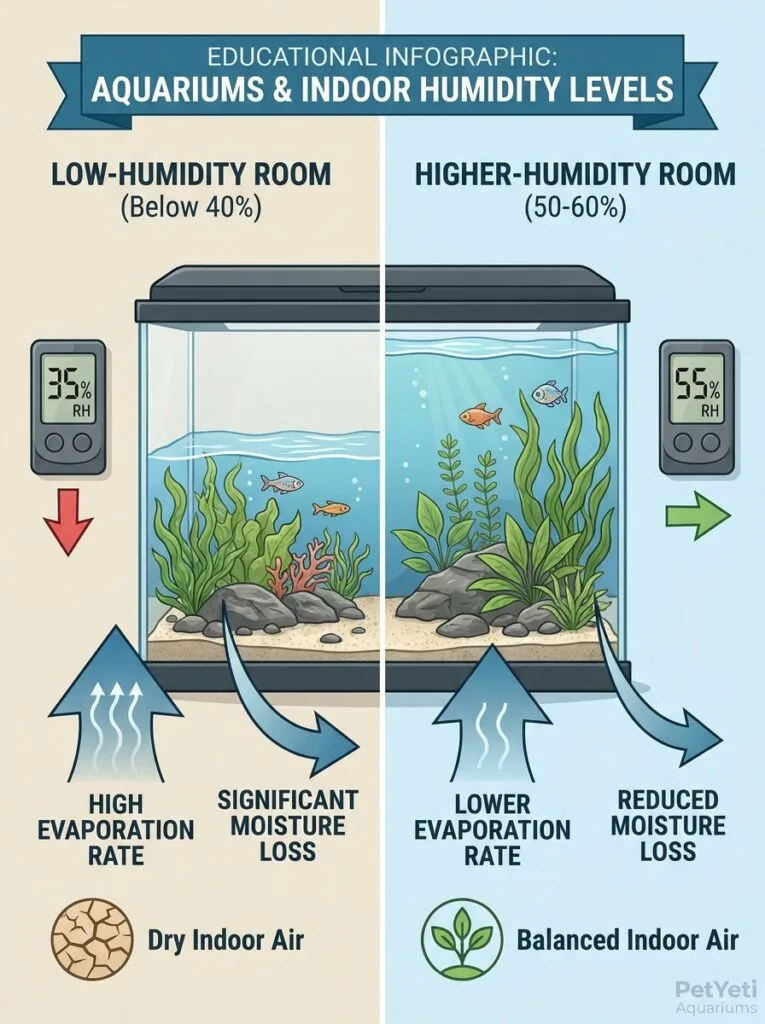
The humidity level inside your home plays a surprisingly important role in evaporation.
When indoor air is dry, it can absorb more moisture from the aquarium.
As a result, water evaporates more quickly.
This is especially common during:
• Winter heating season
• Dry climates
• Air-conditioned homes
• Homes using dehumidifiers
Real-Life Example
A hobbyist noticed significantly more evaporation during winter. The aquarium itself hadn’t changed, but indoor heating had lowered the humidity level throughout the home.
What to Expect
Aquariums often require more frequent top-offs when indoor air becomes unusually dry.
Larger Surface Areas Lose More Water
Many beginners assume larger aquariums always evaporate more water simply because they hold more water.
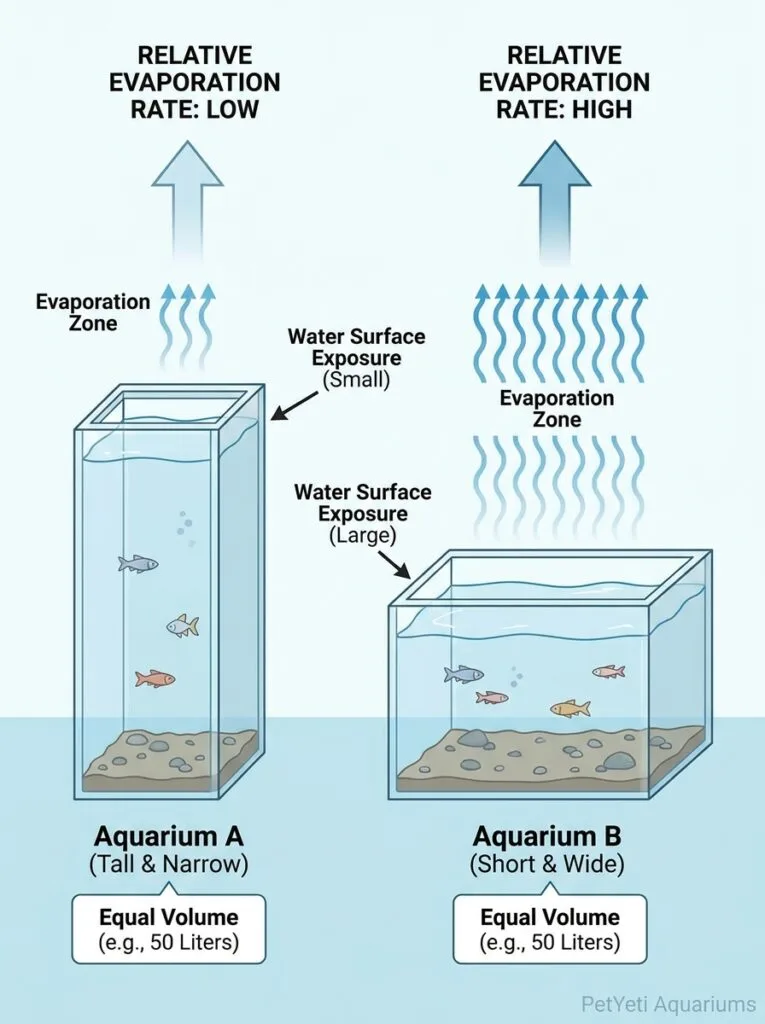
In reality, surface area often matters more than volume.
A long, shallow aquarium exposes more water to the air than a taller aquarium with the same volume.
More exposed water means more opportunity for evaporation.
Real-Life Example
A fish keeper owned both a standard aquarium and a shallow aquascape tank. Even though the water volumes were similar, the shallow aquarium consistently lost water faster because of its larger surface area.
What to Expect
Wide aquariums often experience more noticeable evaporation than tall aquariums.
Strong Surface Agitation Speeds Up Evaporation
Water movement is important for aquarium health.
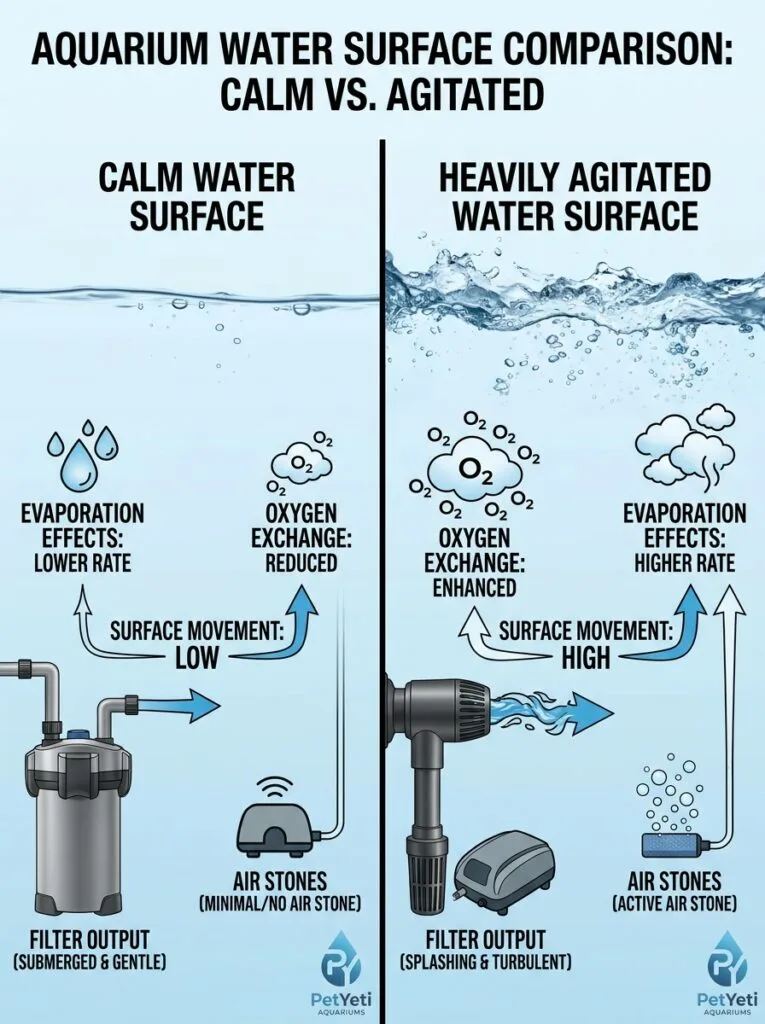
However, stronger surface agitation can increase evaporation.
Common sources include:
• Powerful filter returns
• Air stones
• Bubble walls
• Surface skimmers
• Waterfalls and water features
The more actively the water surface moves, the easier it becomes for water molecules to enter the air.
Real-Life Example
A community aquarium equipped with a strong air stone experienced noticeably faster evaporation than a nearby planted aquarium with gentle surface movement.
How to Reduce Evaporation
• Avoid excessive turbulence
• Position filter outputs appropriately
• Use only the amount of aeration your aquarium needs
What to Expect
A balance between oxygen exchange and evaporation control usually provides the best results.
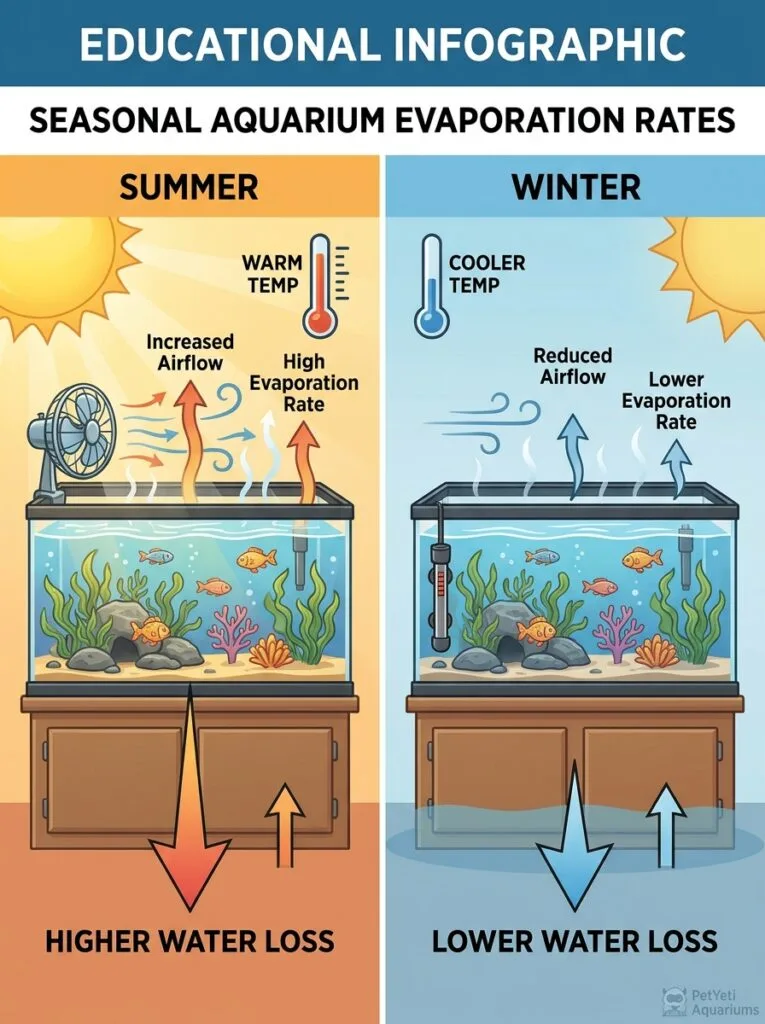
Seasonal Changes Can Make Evaporation Suddenly Increase
One reason evaporation can seem unpredictable is that your aquarium isn’t the only thing changing.
Your home environment changes throughout the year.
Factors that shift seasonally include:
• Indoor temperature
• Humidity levels
• Heating usage
• Air conditioning usage
• Ventilation patterns
As these conditions change, evaporation rates can change as well.
Real-Life Example
A fish keeper who rarely topped off their aquarium during spring suddenly needed to add water every few days during the winter heating season.
What to Expect
Seasonal evaporation increases are completely normal and often surprise new aquarium owners.
Is Aquarium Evaporation Harmful?
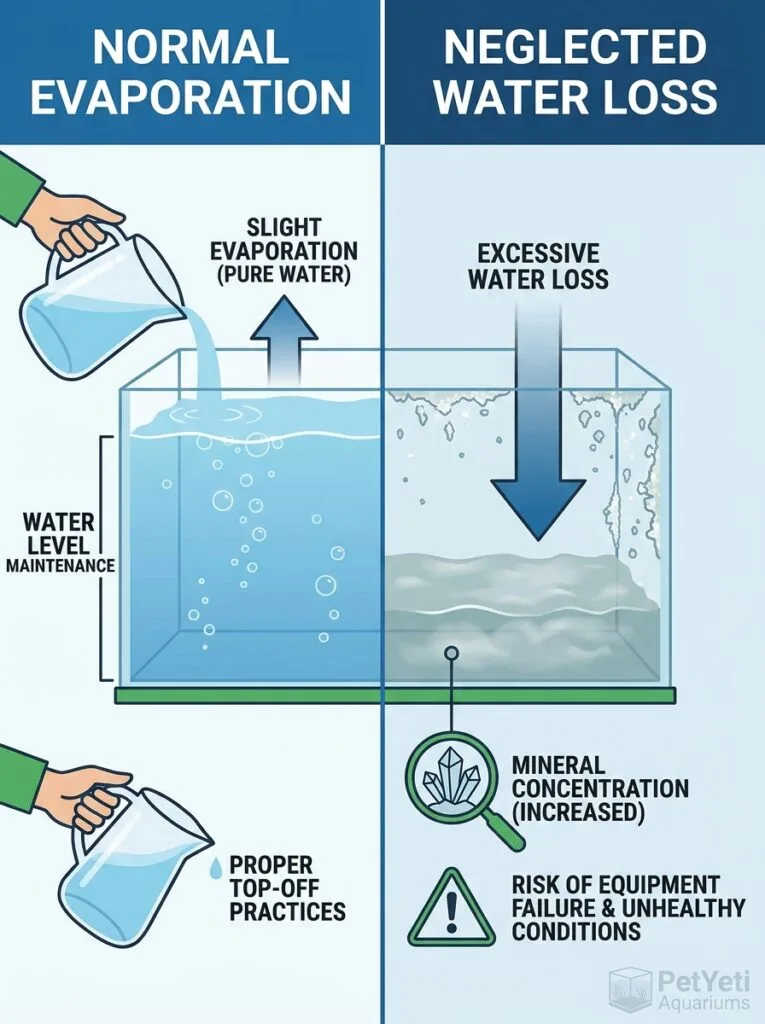
The evaporation itself isn’t harmful.
However, ignoring it for long periods can create problems.
When water evaporates, pure water leaves the aquarium.
Most dissolved minerals remain behind.
Over time, this can gradually change water chemistry.
Evaporation can also:
• Lower water levels around filters
• Increase filter noise
• Affect equipment performance
• Make the aquarium less visually appealing
Real-Life Example
A hobbyist noticed their hang-on-back filter becoming unusually noisy. The problem wasn’t the filter itself—the water level had simply dropped too far because evaporation had been ignored for several weeks.
How to Manage Evaporation
• Top off water regularly
• Monitor water levels
• Watch filter operation
• Keep maintenance routines consistent
What to Expect
Regular top-offs make evaporation a minor maintenance task rather than a major problem.
Quick Troubleshooting Checklist
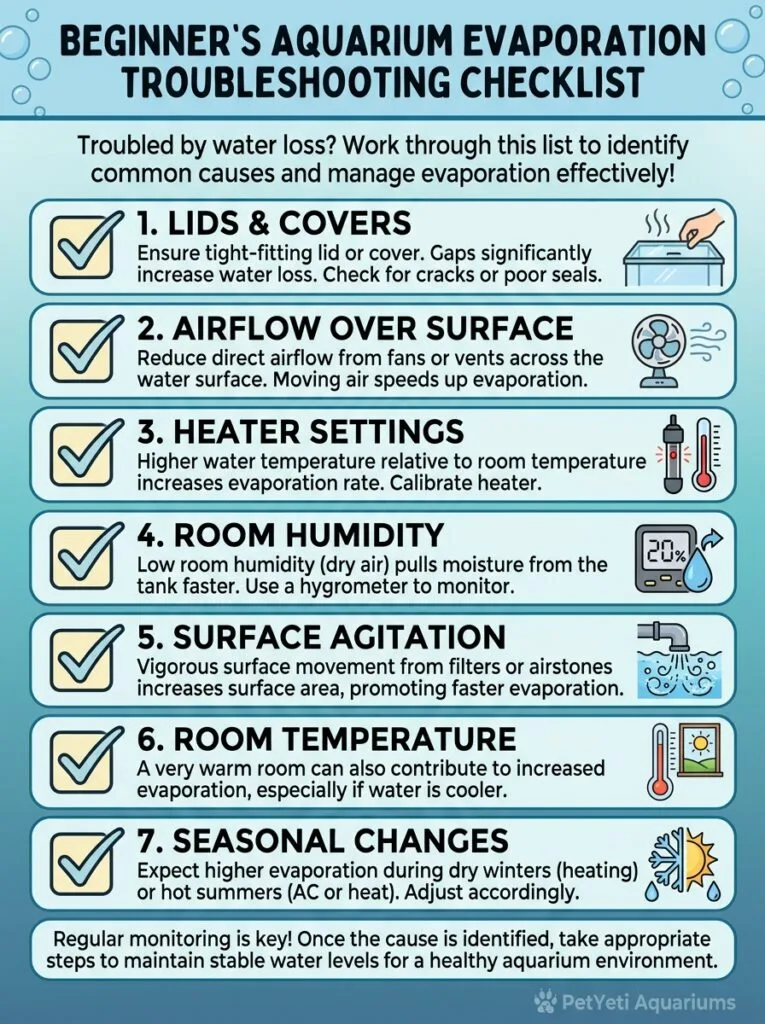
If your aquarium water seems to be evaporating quickly, review the following:
✅ Does the aquarium have a lid?
✅ Is a ceiling fan blowing nearby?
✅ Is the aquarium close to an HVAC vent?
✅ Is the heater set correctly?
✅ Is the room unusually dry?
✅ Is surface agitation excessive?
✅ Have seasonal conditions changed recently?
✅ Is the water loss actually evaporation and not a leak?
Working through this checklist usually reveals why evaporation has increased.
CONCLUSION
Rapid aquarium evaporation can be surprising, especially for new fish keepers.
The good news is that evaporation is a completely normal process and rarely indicates a problem with the aquarium itself.
In most cases, factors such as open-top aquariums, warm water, airflow, low humidity, and strong surface movement are responsible.
The key is understanding what influences evaporation in your particular setup.
Once you identify the cause, small adjustments often make a noticeable difference.
Adding a lid, redirecting airflow, reducing excessive surface agitation, or simply adjusting maintenance habits can help keep water levels more stable.
Most importantly, don’t confuse evaporation with a leak.
A healthy aquarium will naturally lose some water over time.
Knowing the difference can save unnecessary worry and help you focus on maintaining a calm, healthy environment for both fish and plants.
FAQ
How much evaporation is normal in an aquarium?
The amount varies based on temperature, humidity, airflow, tank size, and whether the aquarium has a lid. Some evaporation is normal in every aquarium.
Do open-top aquariums evaporate faster?
Yes. Open-top aquariums allow moisture to escape more easily, which usually increases evaporation.
Can a heater make aquarium water evaporate faster?
Yes. Warmer water evaporates more quickly than cooler water, so heated aquariums typically experience more evaporation.
Does a lid stop evaporation completely?
No. A lid reduces evaporation but does not eliminate it entirely.
Why does my aquarium evaporate more in winter?
Indoor heating often lowers humidity levels, allowing water to evaporate more quickly.
Is it okay to keep topping off evaporated water?
Yes. Regularly replacing evaporated water is a normal part of aquarium maintenance.