

An aquarium filter is usually loud because air is trapped inside the filter, the water level is too low, the impeller is dirty, or the filter is vibrating against the glass. In many cases, the noise can be reduced in just a few minutes without replacing the filter.
The good news is that a noisy filter does not always mean it is broken. Most aquarium filters become louder over time because of trapped air, buildup inside the impeller, loose parts, or a simple setup issue that is easy to fix.
If you’re asking, “Why Is My Aquarium Filter So Loud?” In this guide, I’ll help you figure out what kind of noise your filter is making, what usually causes it, and the quickest way to make it quiet again.
Quick Answer
If your aquarium filter is buzzing, rattling, or gurgling, the most common cause is air trapped in the filter or a dirty impeller. Start by topping off the water level, unplugging the filter, rinsing the impeller and intake tube in old tank water, and making sure the filter is seated firmly against the aquarium. Those four steps solve most noisy-filter problems in small freshwater tanks.
- What to Check First (30-Second Diagnosis)
- Match the Noise You Hear
- First, What Kind of Noise Is Your Filter Making?
- The Most 7 Common Reasons an Aquarium Filter Becomes Loud
- 1. The Water Level Is Too Low
- 2. Air Trapped Inside the Filter
- 3. A Dirty or Worn Impeller
- 4. The Filter Is Vibrating Against the Glass
- 5. Loose Parts or Filter Media
- 6. Worn or Damaged Impeller Parts
- 7. Debris Inside the Motor Chamber
- If Your Filter Is Still Loud, These Are the Quietest Upgrades I’d Consider
- How to Make Your Aquarium Filter Quieter
- Older Filters Naturally Become Louder Over Time
- When Is It Time to Replace the Filter?
- Can a Loud Filter Stress Fish?
- Quick Troubleshooting Checklist for a Noisy Aquarium Filter
- CONCLUSION
- FAQs
What to Check First (30-Second Diagnosis)
Before you take the filter apart, check these four things. They solve a surprisingly large number of noisy-filter problems.
- Is the water level below the filter intake?
- Is the filter vibrating against the glass?
- Did the noise start right after a water change?
- Has the filter gone several weeks without cleaning?
If you answered yes to any of these, there’s a good chance the fix is simple and you won’t need a new filter.
Match the Noise You Hear
Different noises usually point to different problems. This quick guide can help you narrow it down before you start troubleshooting.
| Noise You Hear | Most Likely Cause | Usually Easy to Fix? |
|---|---|---|
| Buzzing | Dirty or worn impeller | Yes |
| Rattling | Loose impeller, lid, or intake tube | Yes |
| Gurgling | Low water level or trapped air | Yes |
| Vibrating | Filter touching the glass or stand | Yes |
| Clicking | Damaged impeller or motor wear | Sometimes |
Most small freshwater aquariums with a loud filter are dealing with trapped air, low water level, or a dirty impeller, so start with those first before replacing any equipment.
As an Amazon Associate, PetYeti earns from qualifying purchases. This comes at no additional cost to you and helps support the site. We only recommend products we genuinely believe can help create healthier and more enjoyable aquariums.
First, What Kind of Noise Is Your Filter Making?
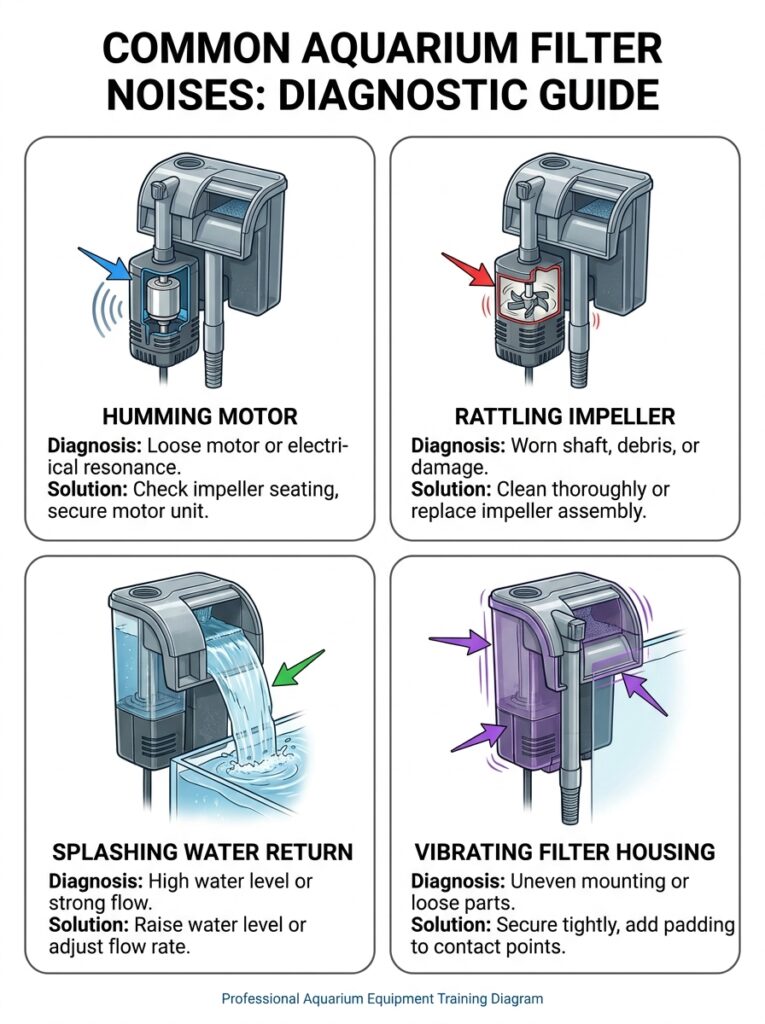
Before taking your filter apart, spend a moment identifying the type of noise you’re hearing. Different sounds often point to different problems.
A rattling noise commonly indicates an impeller issue.
A splashing sound is often caused by a low water level.
A buzzing or vibrating noise may mean the filter is touching the aquarium glass, lid, or stand.
A gurgling sound usually suggests that air is trapped somewhere inside the filter system.
Paying attention to the specific noise can save time and help you find the correct solution more quickly.
When experienced aquarium hobbyists troubleshoot noisy filters, one of the first questions they ask is:
“What kind of noise is it making?”
The answer often reveals the cause right away.
The Most 7 Common Reasons an Aquarium Filter Becomes Loud
1. The Water Level Is Too Low
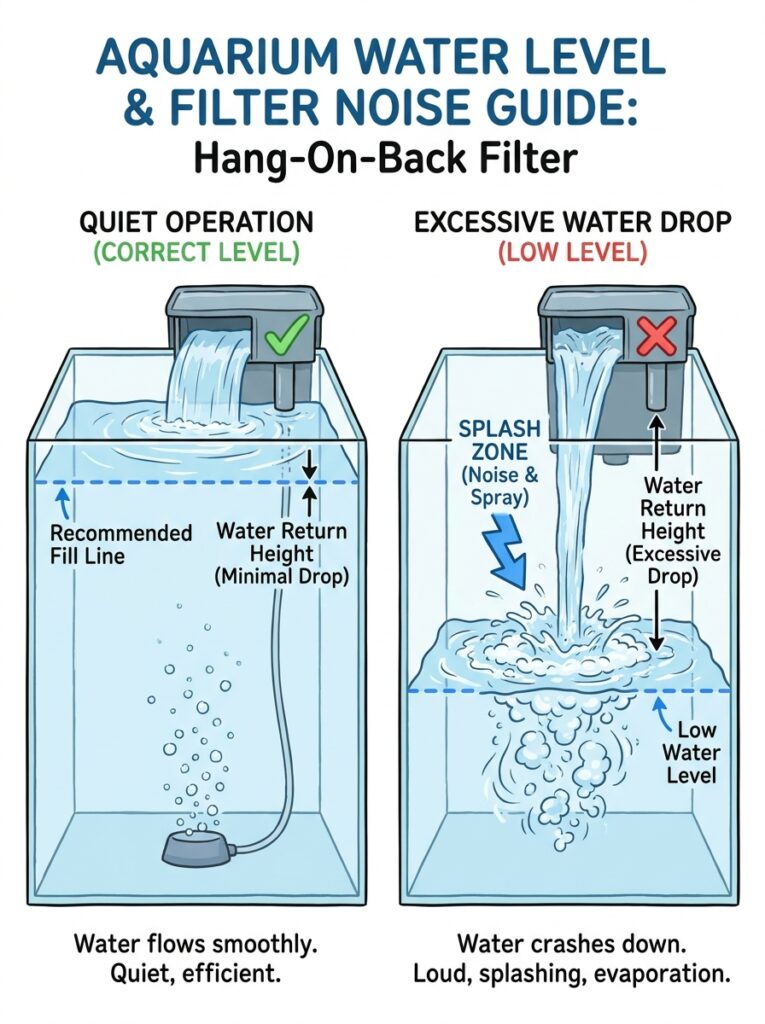
When the water level drops below the filter intake or waterfall return, the filter begins pulling in air. That often causes a loud splashing, trickling, or gurgling sound that can be surprisingly noticeable in a bedroom or living room.
Quick fix:
- Top off the aquarium with conditioned water.
- Keep the water level close to the filter return outlet.
A low water level is one of the easiest noisy-filter problems to solve and takes less than a minute.
2. Air Trapped Inside the Filter
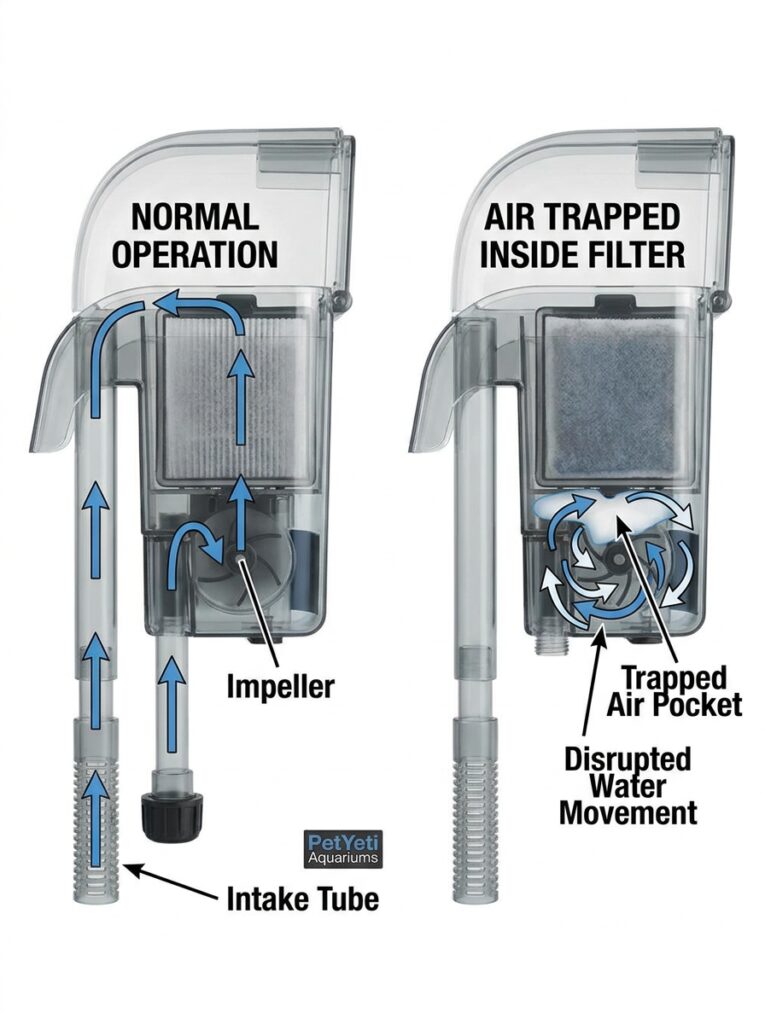
This is the most common cause of a noisy hang-on-back (HOB) filter, especially after a water change, power outage, or filter cleaning. Air gets trapped inside the filter chamber and creates a gurgling or bubbling sound.
Quick fix:
- Unplug the filter.
- Fill the filter chamber with aquarium water.
- Restart the filter.
- Tilt it slightly for a few seconds to help trapped air escape.
If the noise started immediately after maintenance, this is usually the first thing I’d check.
3. A Dirty or Worn Impeller
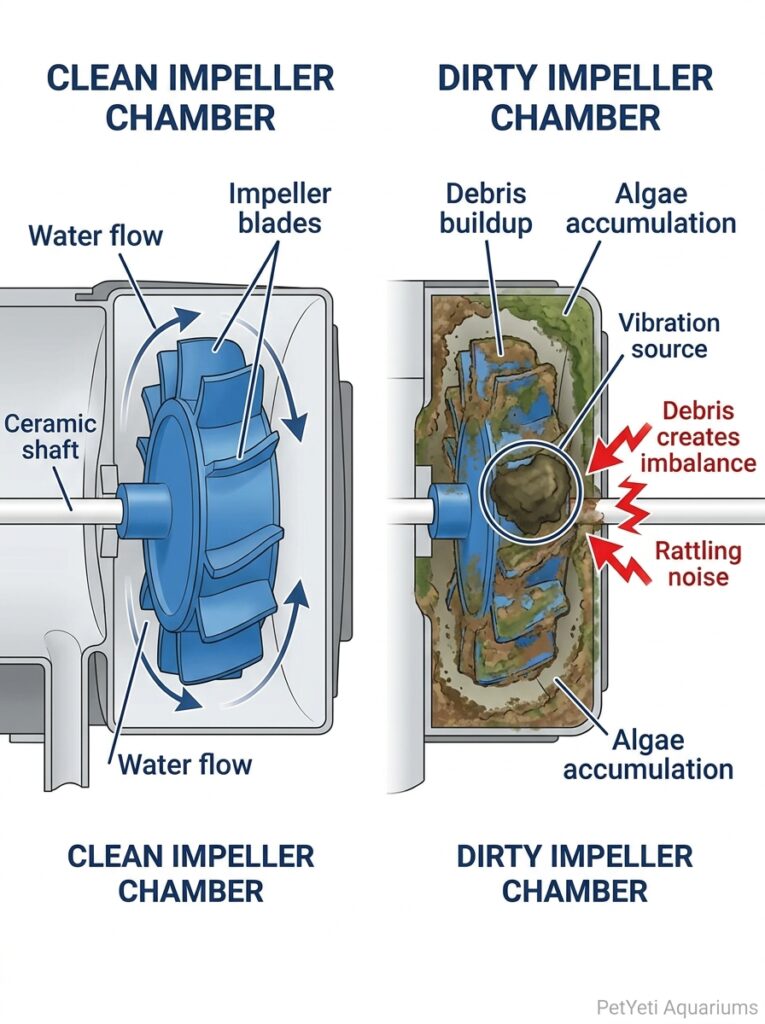
The impeller is the small spinning part inside the filter that moves water through the system. Over time, debris, sand, plant matter, or algae can collect around it and cause a buzzing, grinding, or rattling sound.
Quick fix:
- Turn off and unplug the filter.
- Remove the impeller and rinse it in old tank water (not tap water if you want to preserve beneficial bacteria on nearby filter parts).
- Clean the impeller well and the small impeller chamber with a soft brush or cotton swab.
- Reassemble the filter and restart it.
If the impeller looks chipped, cracked, or unusually loose, replacing it is often cheaper than replacing the entire filter.
Real-Life Example
One of the most common filter noise issues we’ve seen happens after routine tank maintenance. A filter that was running quietly suddenly develops a rattling sound a day or two later. In many cases, the cause turns out to be a small piece of debris lodged near the impeller. Once the impeller is cleaned, the noise usually disappears and the filter returns to normal operation.
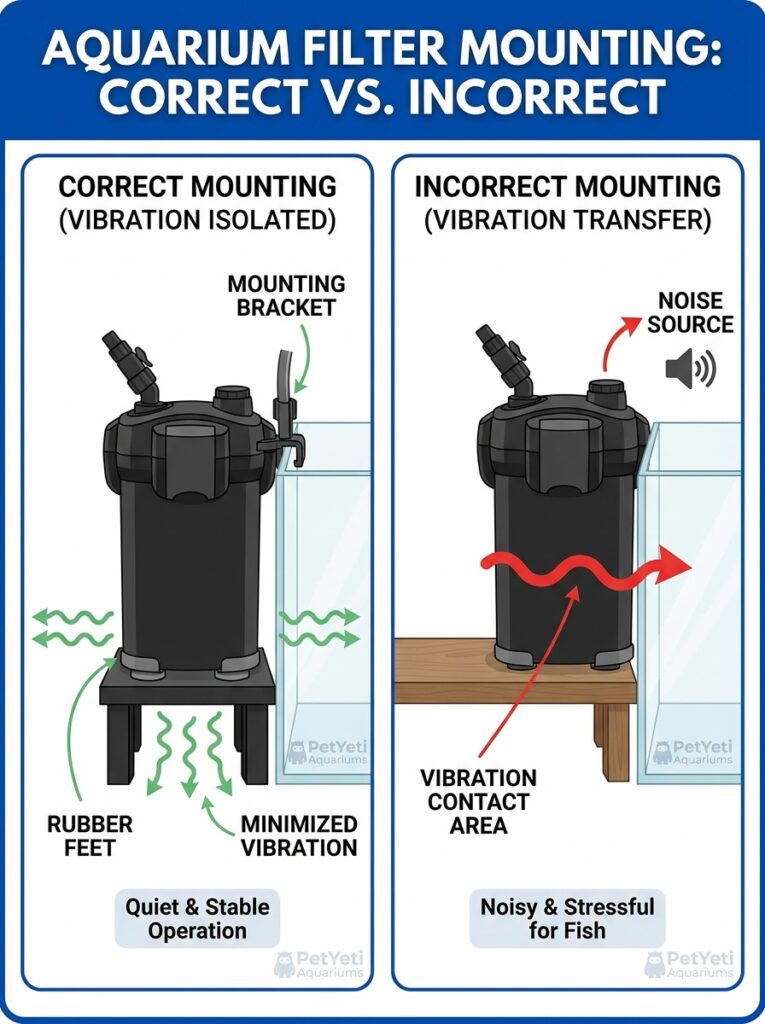
4. The Filter Is Vibrating Against the Glass
A filter can be mechanically quiet but still sound loud if it is touching the aquarium glass, stand, or lid. The vibration travels through the tank and makes the noise seem much worse than it really is.
Quick fix:
- Re-seat the filter so it hangs evenly.
- Make sure the intake tube is fully connected.
- Check that the lid is sitting properly.
- Add a small piece of sponge or rubber padding where the filter contacts the tank if needed.
This is especially common with older HOB filters and inexpensive internal filters.
5. Loose Parts or Filter Media
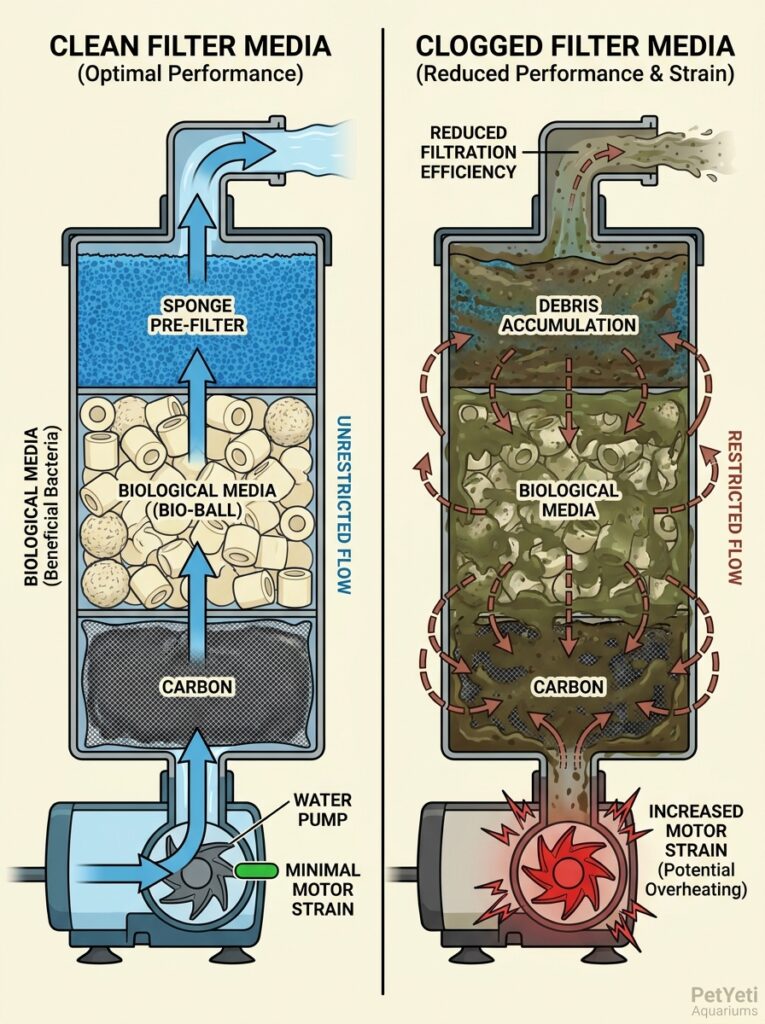
A rattling or clicking sound often comes from something inside the filter that is not sitting securely. Filter cartridges, sponge media, intake tubes, or even the filter lid can vibrate while the motor is running.
Quick fix:
- Remove and reinsert the filter media.
- Check that cartridges and sponges fit snugly.
- Tighten or reconnect any loose intake pieces.
- Make sure the filter lid is fully seated.
A loose cartridge can sound surprisingly similar to a failing motor, so it’s worth checking before replacing the filter.
6. Worn or Damaged Impeller Parts
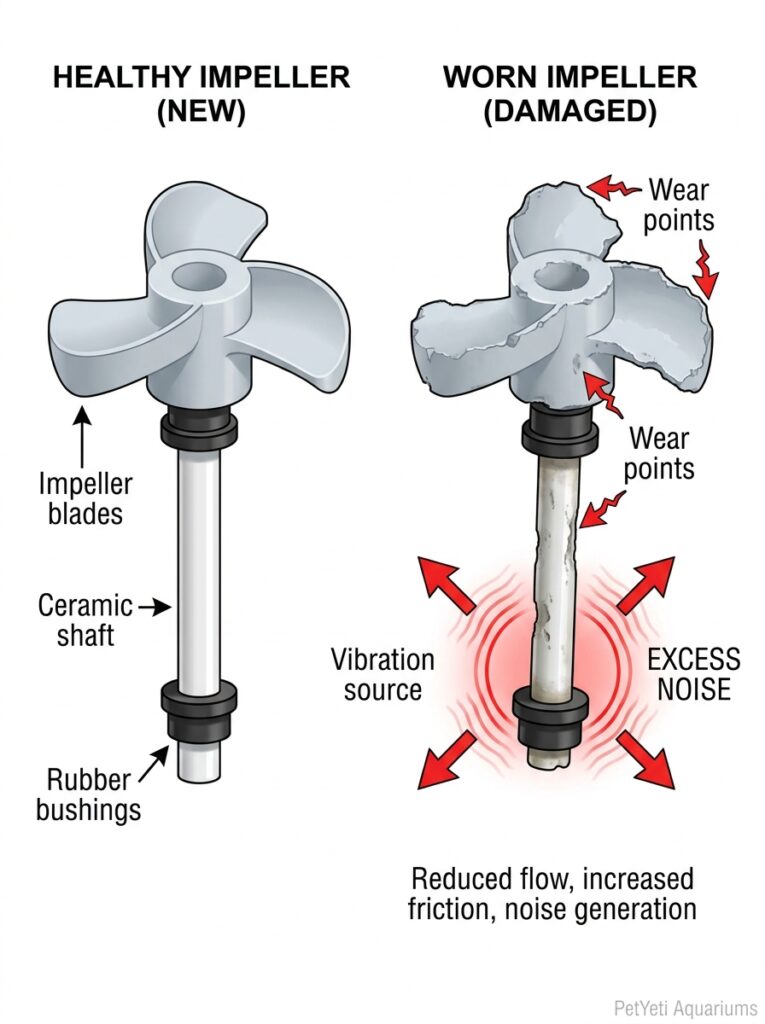
If you’ve cleaned the impeller and the noise is still there, the problem may be wear and tear. Impellers don’t last forever.
After months or years of use, the impeller blades, ceramic shaft, or rubber bushings can wear down. When that happens, the impeller may wobble slightly while spinning, creating rattling, clicking, or grinding sounds. This is especially common in older filters that have been running continuously for a long time.
Real-Life Example
We’ve seen this happen with filters that were otherwise working perfectly. Water flow looked normal, the media was clean, and the motor still ran. But a persistent rattling sound remained. After replacing the worn impeller assembly, the filter became dramatically quieter within minutes.
How to Fix It
Remove the impeller and inspect it closely.
Look for:
• Cracked blades
• Worn ceramic shafts
• Missing rubber bushings
• Excessive side-to-side movement
Many manufacturers sell replacement impellers, which are often much cheaper than replacing the entire filter.
What to Expect
If a worn impeller is causing the problem, replacing it can make the filter sound almost new again.
If troubleshooting doesn’t eliminate the noise, upgrading to one of the quietest aquarium filters for bedrooms will restore complete silence to your setup.
7. Debris Inside the Motor Chamber
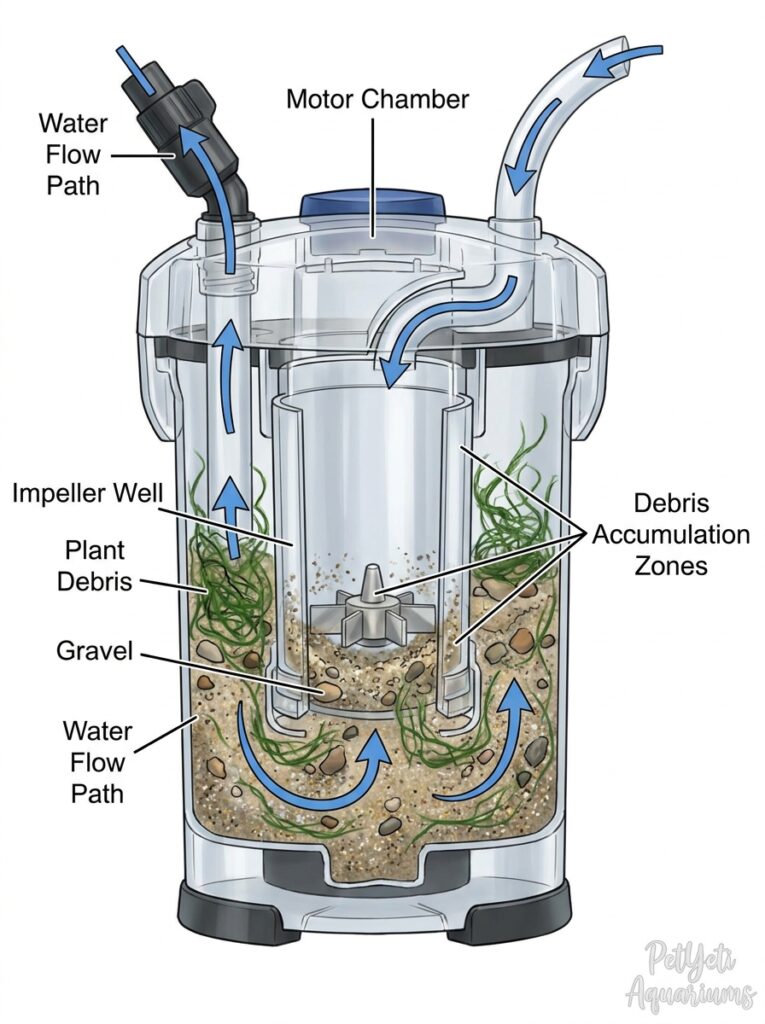
Sometimes the impeller itself isn’t the issue. The problem is what has collected around it.
Small pieces of gravel, sand, snail shells, or plant debris can occasionally make their way into the impeller chamber. Once trapped inside, they may create grinding, clicking, or scraping sounds every time the filter runs.
This tends to happen more often in tanks with:
• Fine sand substrates
• Active digging fish
• Loose plant debris
• Recently cleaned filters
Real-Life Example
One hobbyist thought their filter motor was failing because of a loud grinding sound. After opening the impeller chamber, they discovered a tiny grain of gravel wedged beside the impeller. Removing it took less than a minute, and the noise disappeared immediately.
How to Fix It
Unplug the filter and inspect the impeller chamber carefully.
Use a soft brush or cotton swab to remove debris and buildup.
Pay special attention to corners where small particles can become trapped.
What to Expect
If debris is the cause, the filter often becomes quieter as soon as the obstruction is removed.
If Your Filter Is Still Loud, These Are the Quietest Upgrades I’d Consider
If you’ve cleaned the impeller, topped off the water level, and made sure the filter is seated properly, but the noise is still bothering you, the filter itself may simply be reaching the end of its useful life. Some filters are noticeably quieter than others, especially in bedrooms, apartments, and home offices where even a small buzz can become annoying.
| Best For | Product |
|---|---|
| Best Overall Quiet Filter | AquaClear 20 Power Filter |
| Best Budget Quiet Filter | Tetra Whisper IQ Power Filter |
| Best Silent Setup | Aquaneat Sponge Filter + Pawfly Nano Silent Air Pump |
Best Overall Quiet Filter: AquaClear 20 Power Filter
This is one of the quietest hang-on-back filters I’ve used in the 5–20 gallon range. The motor is smooth, the impeller is easy to clean, and the filter is much less prone to rattling than many budget HOB models.
Best Budget Quiet Filter: Tetra Whisper IQ Power Filter
The “Whisper” name is actually deserved here. It is compact, easy to install, and surprisingly quiet for the price, making it a great option for beginner aquariums.
Best Silent Setup: Aquaneat Sponge Filter + Pawfly Nano Silent Air Pump
If absolute quiet is the goal, a sponge filter paired with a silent nano air pump is hard to beat. Sponge filters have no waterfall noise, and a good air pump can be nearly silent when placed on a soft surface. This setup is especially popular for betta tanks, shrimp tanks, and nano aquariums.
How to Make Your Aquarium Filter Quieter
Once you’ve identified the source of the noise, these are the steps I’d try before replacing the filter. Most noisy aquarium filters become noticeably quieter after a few minutes of maintenance.
Raise the Water Level
Keep the water level close to the filter return outlet. A low water level creates splashing and gurgling sounds that can make even a good filter seem much louder than it really is.
Clean the Impeller Thoroughly
Remove the impeller and clean both the impeller and the small chamber it sits in. A filter cleaning brush set makes this much easier because it can reach areas that a sponge or cloth cannot.
Remove Trapped Air
If the noise started after a water change or filter cleaning, unplug the filter, fill the chamber with aquarium water, and restart it. Tilting the filter slightly for a few seconds can help trapped air escape.
Stop Vibration Against the Glass
Make sure the filter hangs evenly and is not touching the aquarium glass or stand. Replacing worn suction cups or mounting pads can dramatically reduce vibration noise on older filters.
Replace Worn Filter Media
Old cartridges and foam inserts can become misshapen and create extra turbulence or rattling. Replacing them with fresh media often helps restore quieter operation.
PetYeti Tip
The biggest mistake I see is replacing the entire filter before cleaning the impeller and impeller chamber. That small maintenance step solves a surprising number of buzzing and rattling problems, especially in filters that have been running for several months.
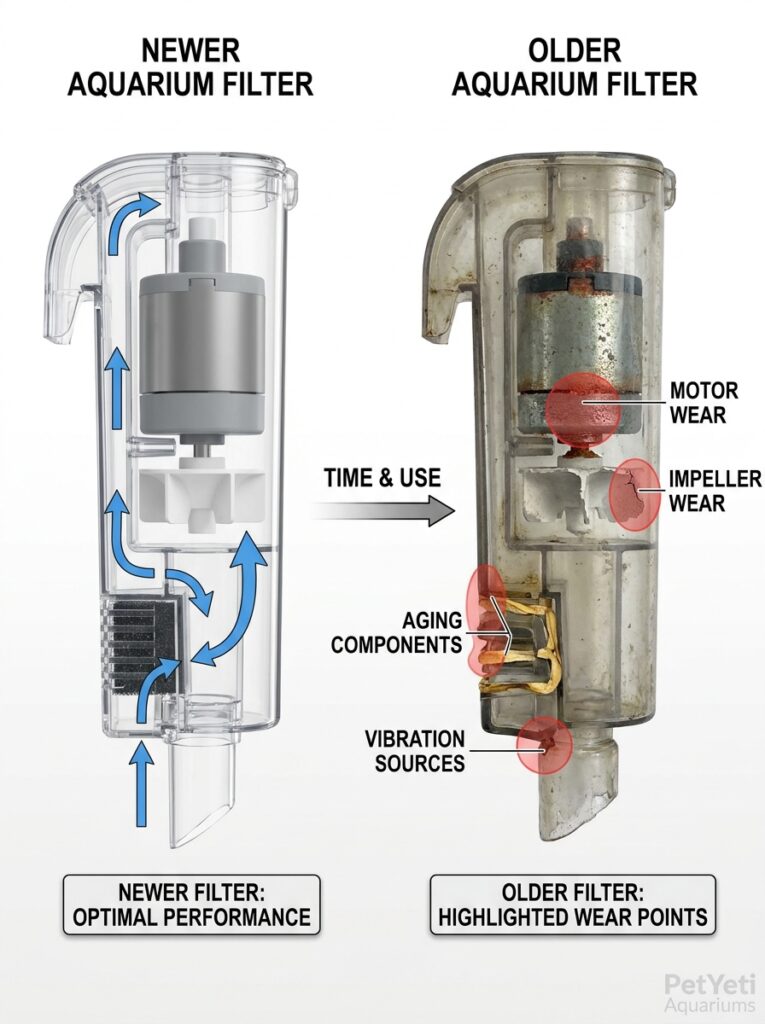
Older Filters Naturally Become Louder Over Time
Even a well-maintained aquarium filter will usually become a little louder as it ages. The impeller wears down, plastic parts develop small amounts of play, and vibration gradually increases after months or years of daily use.
That doesn’t necessarily mean the filter is failing. Many filters continue working for years after they become slightly noisier. The key is whether the noise is gradually increasing or whether it suddenly became loud overnight.
A filter that has become a little louder over time can often be improved by cleaning the impeller, replacing worn filter media, or replacing inexpensive impeller parts. A filter that suddenly starts grinding, clicking, or vibrating aggressively is more likely to have a damaged component.
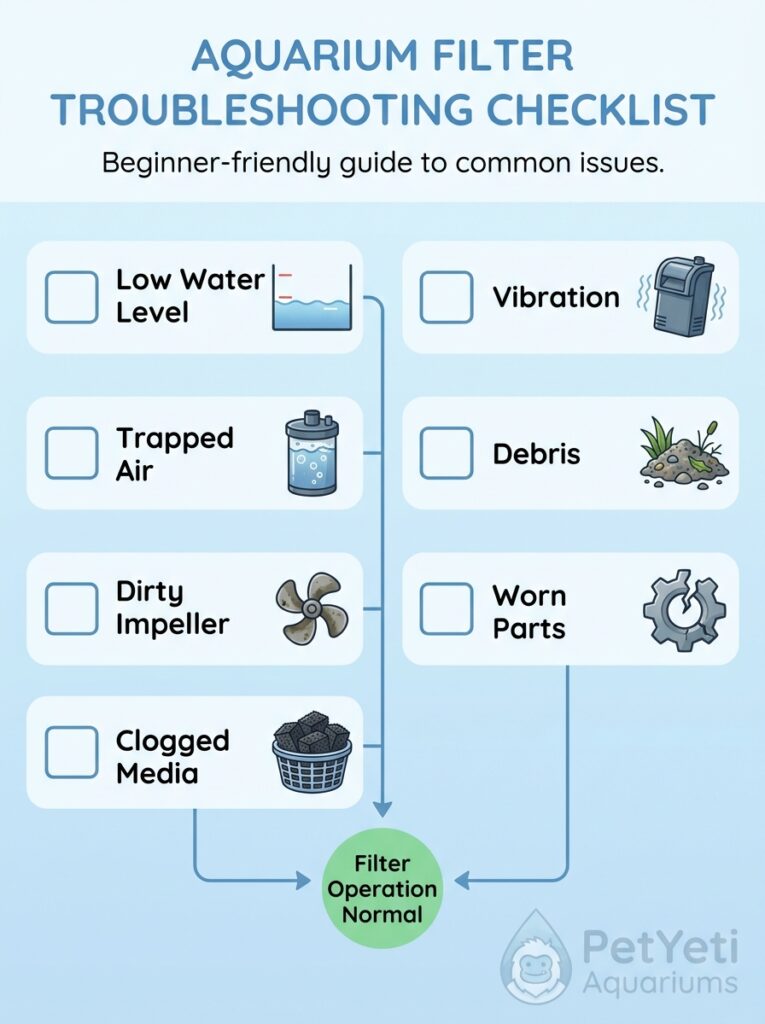
When Is It Time to Replace the Filter?
I’d consider replacing the filter if you’ve already cleaned the impeller and motor chamber, topped off the water level, tightened loose parts, and the filter is still making a loud buzzing, grinding, or rattling noise every day.
A new filter is usually worth considering when:
- the impeller or motor parts are visibly damaged,
- replacement parts are difficult to find,
- the filter has become noticeably louder over several years of use,
- or the noise is loud enough to be distracting in a bedroom, office, or living room.
For most 5–20 gallon freshwater aquariums, I’d choose a quiet hang-on-back filter such as the AquaClear 20 or a sponge filter with a silent air pump if noise is the main concern. Those options are much quieter than many older budget filters and are easier to maintain over the long term.
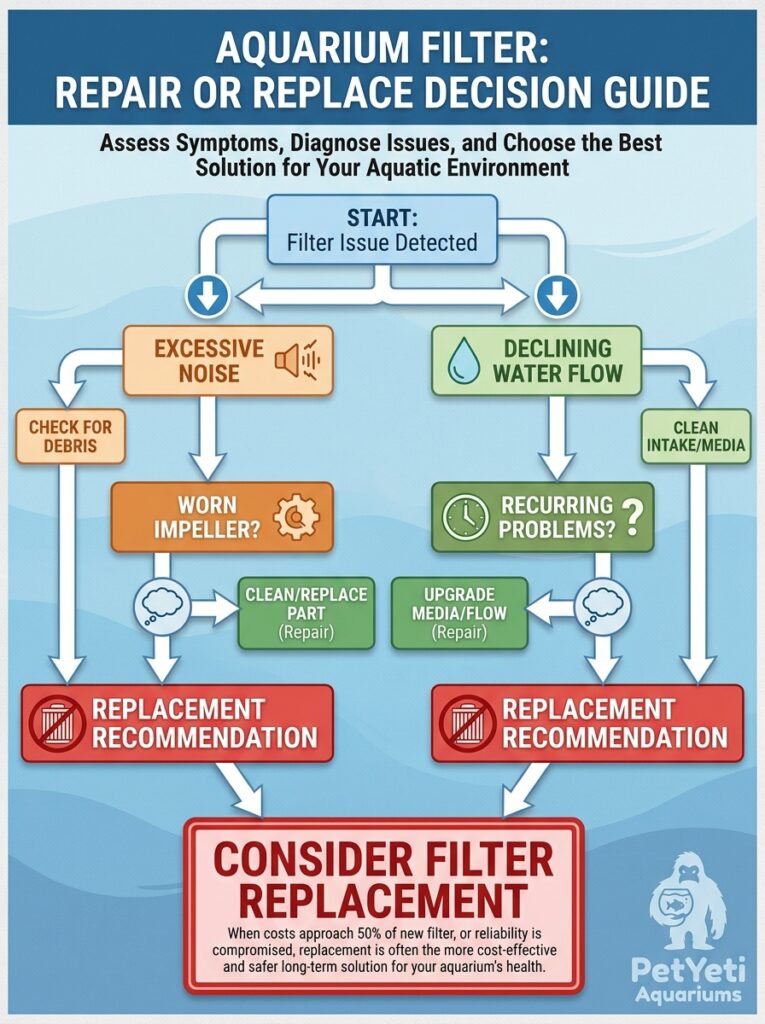
Can a Loud Filter Stress Fish?
A slightly noisy aquarium filter usually does not harm fish by itself. Most fish can tolerate a small amount of motor or water-flow noise, especially if the filter has always sounded that way.
The bigger concern is what the noise may be telling you. A loud filter can be a sign of poor water circulation, a clogged impeller, trapped air, or a filter that is not operating correctly. Those problems can reduce oxygen exchange and water quality over time, which is far more stressful for fish than the sound itself.
If your fish are gasping at the surface, hiding constantly, clamping their fins, or becoming unusually inactive, treat the filter noise as a warning sign and check the filter immediately. In most cases, cleaning the impeller and restoring normal water flow solves the problem before it affects the fish.
Real-Life Example
A hobbyist noticed their betta fish spending more time hiding behind plants shortly after a filter developed a loud buzzing vibration. The water quality was fine, and the fish appeared healthy otherwise. Once the filter was adjusted and the vibration stopped, the betta gradually returned to its normal behavior over the following week.
That doesn’t mean every noisy filter will stress fish, but it’s another good reason to address unusual sounds sooner rather than later.
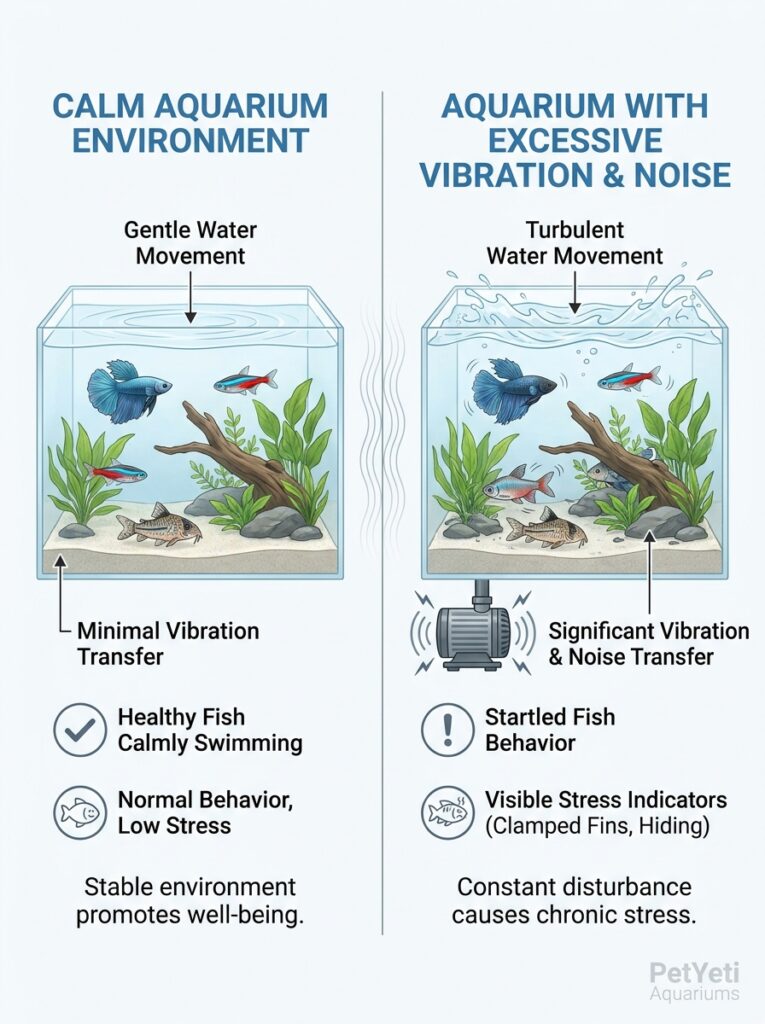
Quick Troubleshooting Checklist for a Noisy Aquarium Filter
If you’re trying to make your filter quiet right now, work through this checklist in order:
- Raise the water level to the normal operating height.
- Remove trapped air from the filter.
- Clean the impeller and impeller chamber.
- Tighten the intake tube, lid, and filter media.
- Check for vibration against the glass or stand.
- Replace worn suction cups or mounting pads.
- Replace damaged impeller parts if necessary.
- Consider a quieter filter if the unit is several years old.
Most aquarium filters become noticeably quieter after cleaning the impeller and restoring the correct water level, so start with those two steps before replacing any equipment.
Related PetYeti Guides
Need to check temperature accurately? Read our beginner aquarium thermometer guide.
Not sure if your heater is working? See why your aquarium heater is not working.
Still choosing the tank size? Read choosing the right aquarium size for beginners.
Setting up a betta tank? See our guide to setting up a beautiful betta fish tank for beginners.
Want fewer betta stress problems? Read how to create a stress-free betta fish tank.
CONCLUSION
A loud aquarium filter is usually fixable, and in most cases the solution is much simpler than replacing the entire unit. The most common causes are low water level, trapped air, a dirty impeller, or vibration against the glass, and those problems can often be solved in just a few minutes.
If you’ve worked through the troubleshooting checklist and the filter is still buzzing, rattling, or grinding every day, it may be time to replace worn impeller parts or upgrade to a quieter filter designed for small freshwater tanks. For most 5–20 gallon aquariums, I’d choose a quiet adjustable hang-on-back filter such as the AquaClear 20 or a sponge filter with a silent air pump if noise is the main concern.
The good news is that once a noisy filter is fixed, the entire aquarium usually feels calmer. A quiet filter is easier to live with, less distracting in a bedroom or living room, and often a sign that your aquarium equipment is running the way it should.
Best quiet filter for most beginners
If you want one filter that is reliable, easy to maintain, and noticeably quieter than many budget hang-on-back filters, we’d choose the AquaClear 20 Power Filter for most 5–20 gallon freshwater aquariums.
FAQs
Why is my aquarium filter buzzing all of a sudden?
A sudden buzzing sound is often caused by a dirty impeller, trapped air, or a loose impeller assembly. Start by unplugging the filter, cleaning the impeller and impeller chamber, and making sure the filter is filled with water before restarting it.
Why is my aquarium filter rattling?
Rattling usually means something inside the filter is loose, such as the impeller, intake tube, filter cartridge, or lid. Re-seating those parts often solves the problem within a few minutes.
Why is my hang-on-back filter making a waterfall noise?
A waterfall or splashing sound is usually caused by a low water level. Keep the water level close to the filter return outlet to reduce noise and improve water circulation.
Can I make a sponge filter completely silent?
A sponge filter itself is nearly silent. Most of the noise comes from the air pump. Using a silent nano air pump and placing it on a soft surface can make a sponge filter setup extremely quiet.
How often should I clean my aquarium filter to keep it quiet?
For most small freshwater aquariums, cleaning the impeller and filter media every 3–4 weeks helps prevent buzzing, rattling, and reduced water flow. Always rinse filter media in old tank water rather than untreated tap water.
Is it better to replace the filter or just the impeller?
If the filter body and motor are still in good condition, replacing the impeller is usually the cheaper and better option. Many noisy filters become quiet again after installing a new impeller assembly.