
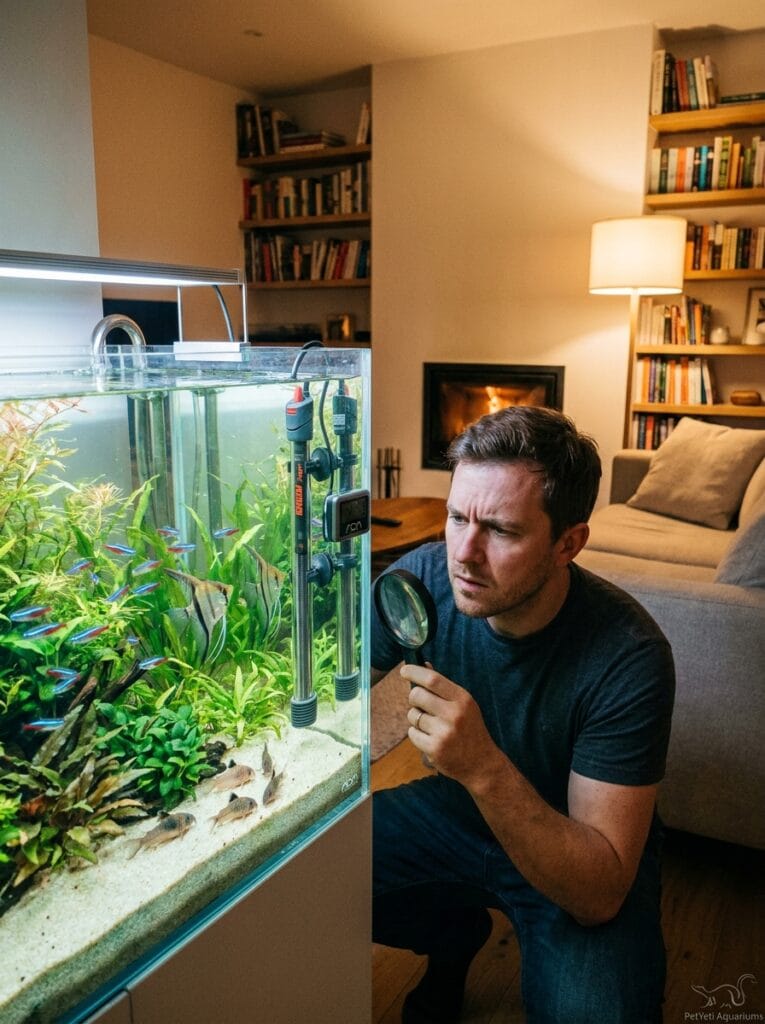
You glance at your aquarium thermometer and immediately notice something isn’t right.
The temperature is lower than usual.
Your fish seem less active.
Maybe the heater light isn’t turning on.
Or perhaps the heater light is on, but the water still feels cold.
Naturally, you start wondering:
“Why is my aquarium heater not working?”
Few aquarium equipment issues create more anxiety than heater problems.
After all, stable water temperature plays an important role in the health and comfort of many aquarium fish.
The good news is that a heater isn’t always broken just because the temperature isn’t where you expect it to be.
Sometimes the issue is surprisingly simple.
In this guide, we’ll walk through the most common aquarium heater problems, how to troubleshoot them safely, and how to determine whether the heater actually needs replacement.
| Heater Problem | Most Common Cause |
|---|---|
| Heater not turning on | Power issue |
| Heater light on but water cold | Heater too small or failing |
| Temperature keeps dropping | Heater can’t keep up |
| Temperature swings | Incorrect placement |
| Heater never shuts off | Thermostat problem |
First, Confirm the Water Temperature Is Actually Wrong
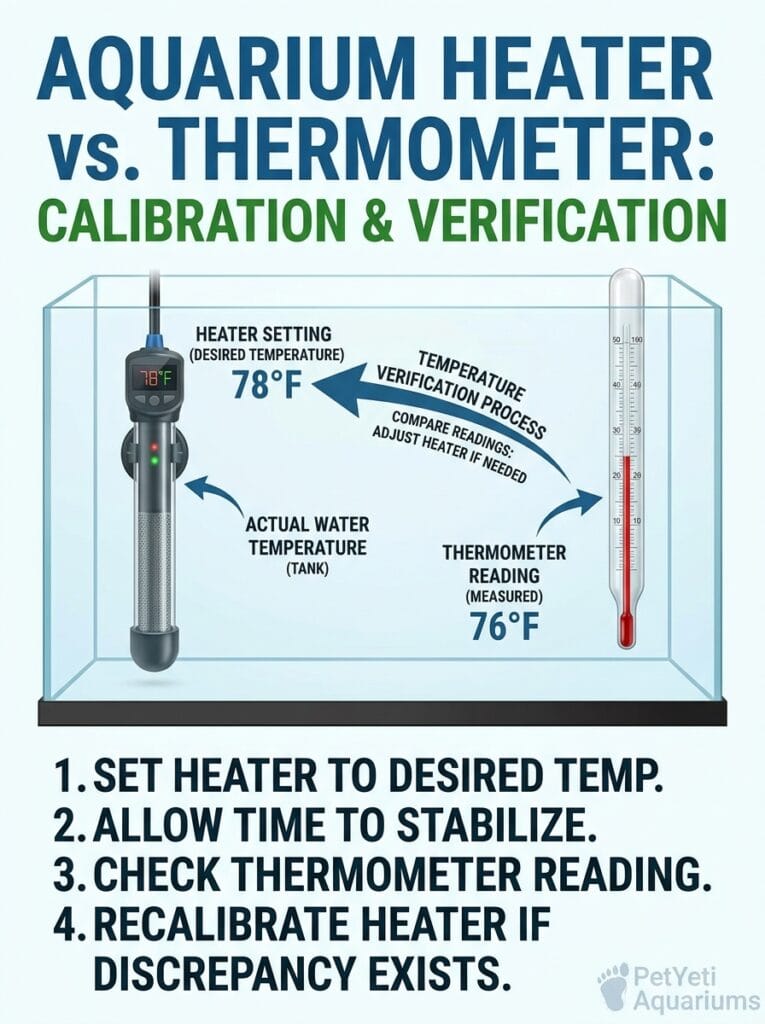
Before assuming the heater has failed, verify the actual water temperature.
Many aquarium problems begin with inaccurate assumptions.
For example:
- The heater may be working normally.
- The thermometer may be inaccurate.
- The heater setting may not match the actual temperature.
Real-Life Example
A hobbyist became convinced their heater had stopped working because the aquarium felt cooler than usual. After checking with a second thermometer, they discovered the original thermometer was giving incorrect readings.
How to Fix It
- Compare readings with another thermometer if possible.
- Verify the heater’s temperature setting.
- Allow enough time after adjustments for temperatures to stabilize.
What to Expect
A reliable temperature reading should always be the first step before troubleshooting the heater itself.
The Heater May Not Be Powerful Enough for the Aquarium
Sometimes the heater works perfectly.
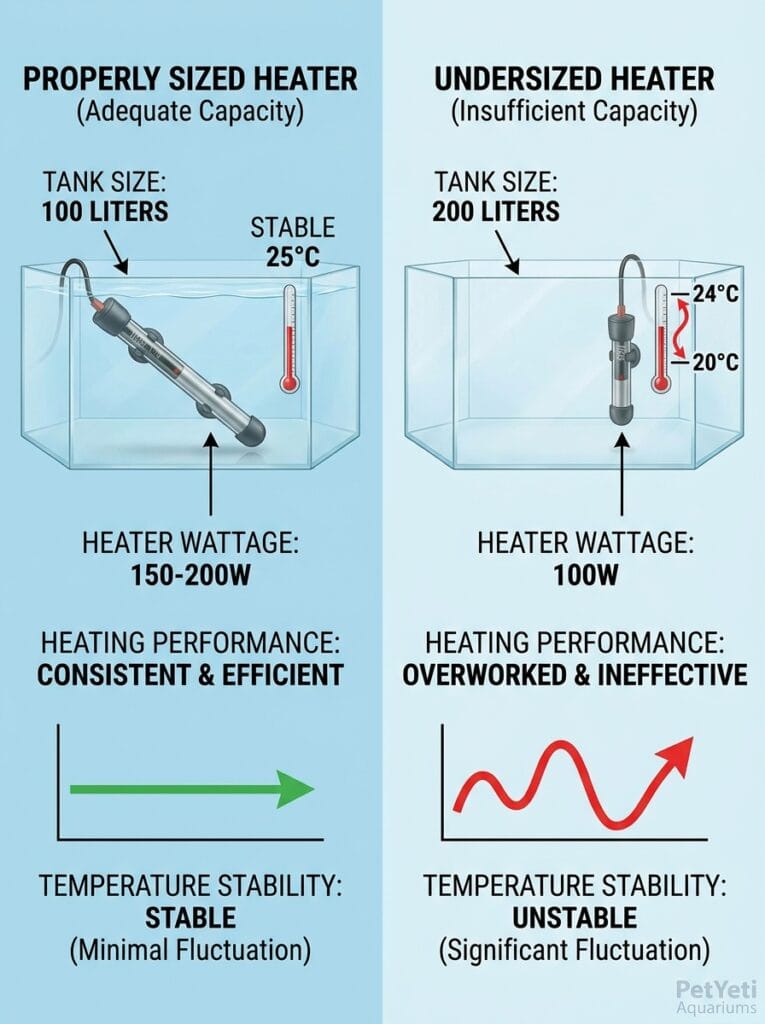
It’s simply too small for the aquarium.
An undersized heater may struggle to maintain temperature when:
- Room temperatures drop
- The aquarium is large
- The aquarium is located near windows
- Seasonal temperatures change
Real-Life Example
A fish keeper successfully used a heater during summer but noticed temperature problems during winter. The heater hadn’t failed—it simply couldn’t keep up with colder room temperatures.
How to Fix It
- Confirm the heater is appropriate for the aquarium size.
- Consider room temperature when evaluating heater performance.
- Monitor temperatures during seasonal changes.
What to Expect
An undersized heater often causes slow temperature declines rather than sudden failures.
The Heater May Need More Time
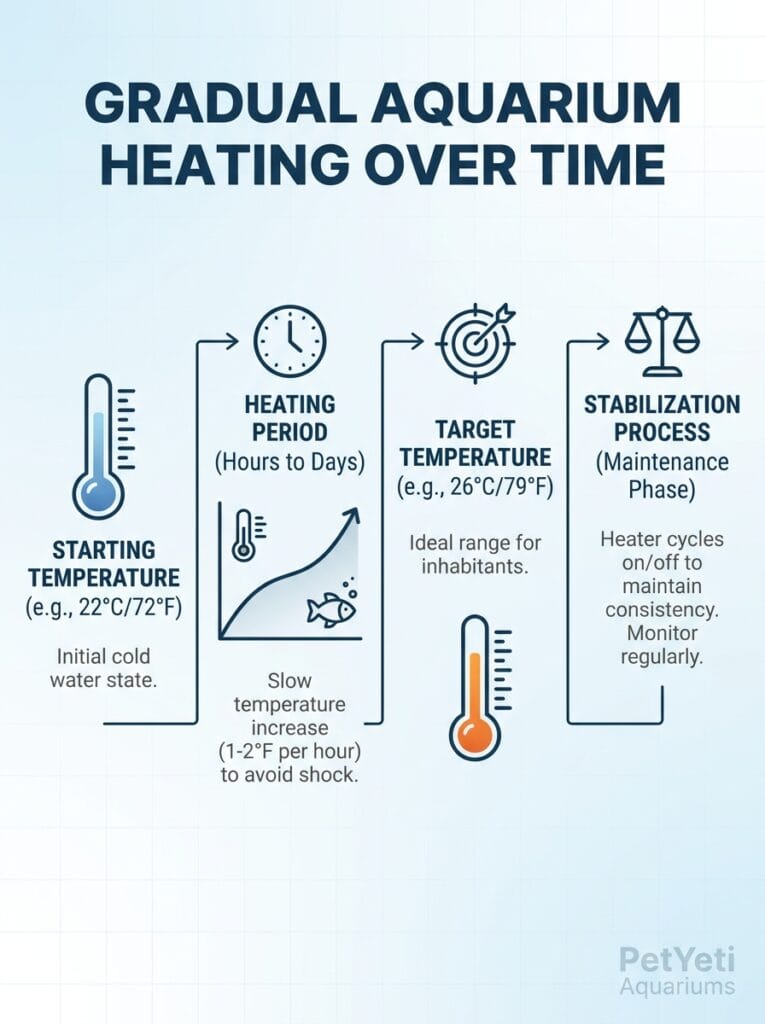
Aquarium heaters do not instantly heat water.
Depending on:
- Tank size
- Heater wattage
- Starting temperature
it may take many hours before the aquarium reaches its target temperature.
Real-Life Example
A beginner installed a new heater and expected immediate results. After several hours, the temperature had only risen slightly. By the following day, the aquarium had reached the correct temperature without any issues.
How to Fix It
- Be patient after installation.
- Avoid making repeated adjustments.
- Monitor temperature gradually.
What to Expect
Most heaters require time to stabilize, especially in larger aquariums.
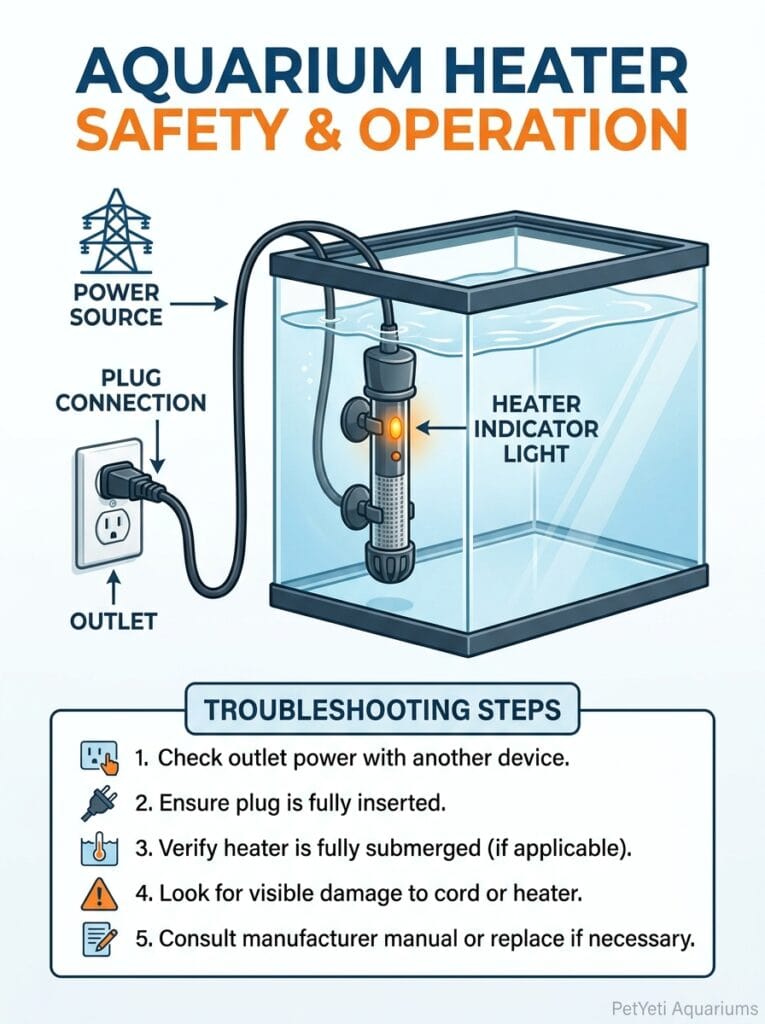
Check for Simple Power Problems First
Before assuming the heater has failed, check the basics.
It sounds obvious, but power-related issues are surprisingly common.
A heater cannot warm the aquarium if it isn’t receiving electricity.
Check:
• Is the heater plugged in securely?
• Is the outlet working?
• Has a power strip been switched off?
• Has a GFCI outlet tripped?
• Is the power cord damaged?
Real-Life Example
A hobbyist spent an hour troubleshooting a heater before discovering that a nearby outlet had tripped during a thunderstorm. The heater itself was perfectly fine.
How to Fix It
• Test the outlet with another device
• Reset tripped outlets if necessary
• Verify all connections
• Inspect the power cord for visible damage
What to Expect
Many apparent heater failures turn out to be simple power issues that can be resolved within minutes.
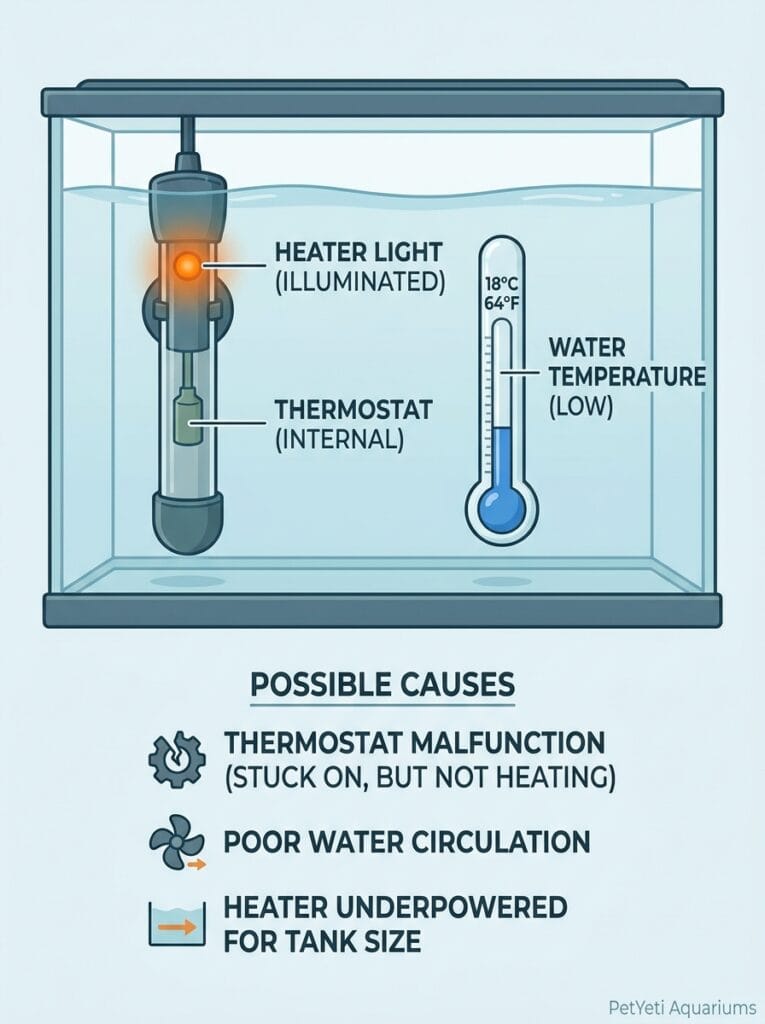
Heater Light Is On but the Water Is Still Cold
One of the most frustrating situations occurs when the heater appears to be working.
The indicator light is on.
The heater seems active.
Yet the water remains colder than expected.
Possible causes include:
• Heater too small for the aquarium
• Faulty thermostat
• Poor water circulation
• Heater struggling against a cold room
Quick Reference Table
| Symptom | Possible Cause |
|---|---|
| Light on, water cold | Undersized heater |
| Light on constantly | Heater struggling to keep up |
| Temperature below setting | Poor circulation |
| No temperature change | Internal heater failure |
Real-Life Example
A 50-watt heater was maintaining a small tank successfully during summer. Once winter arrived, it could no longer maintain the desired temperature because the surrounding room became much colder.
What to Expect
The heater light alone doesn’t confirm that heating is occurring effectively.
Always verify results using a reliable thermometer.
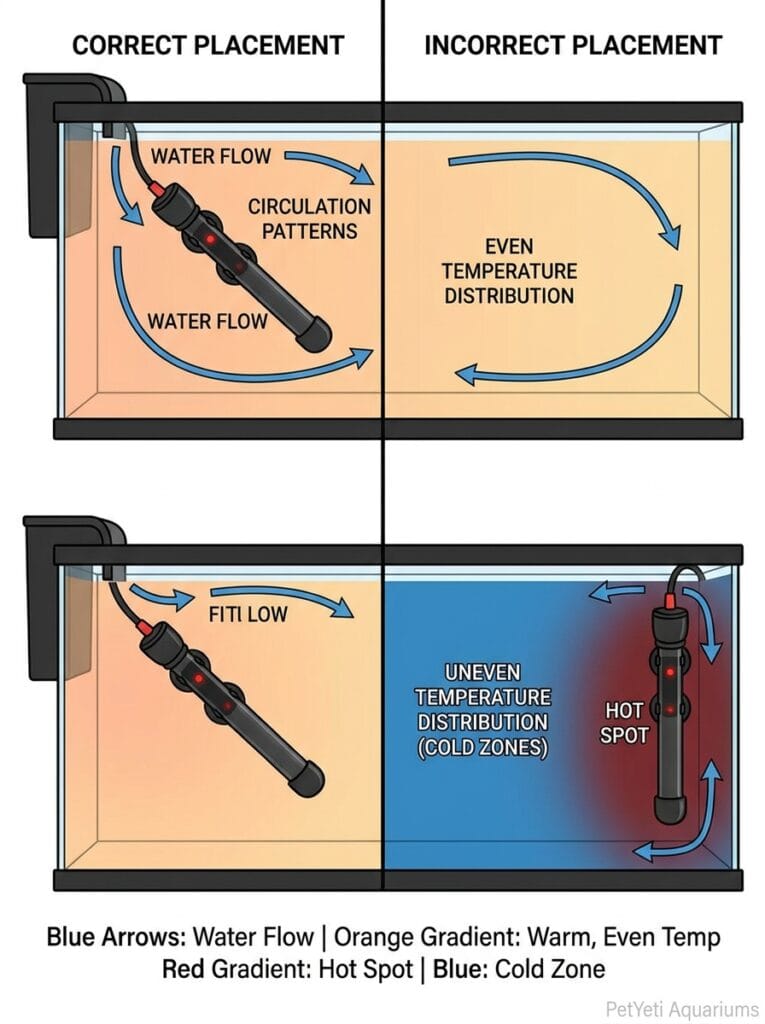
Incorrect Heater Placement Can Affect Performance
Placement matters more than many beginners realize.
A heater works best when warm water can circulate throughout the aquarium.
Poor placement can create temperature inconsistencies.
Common mistakes include:
• Positioning the heater in stagnant areas
• Blocking water flow
• Installing the heater where circulation is minimal
Real-Life Example
An aquarium owner placed a heater behind a large decoration where very little water movement occurred. The area around the heater became warm, but the rest of the aquarium remained cooler than expected.
How to Fix It
• Place heaters near water movement
• Position heaters close to filter flow when appropriate
• Ensure warm water can circulate throughout the tank
What to Expect
Proper placement often improves heating efficiency without changing equipment.
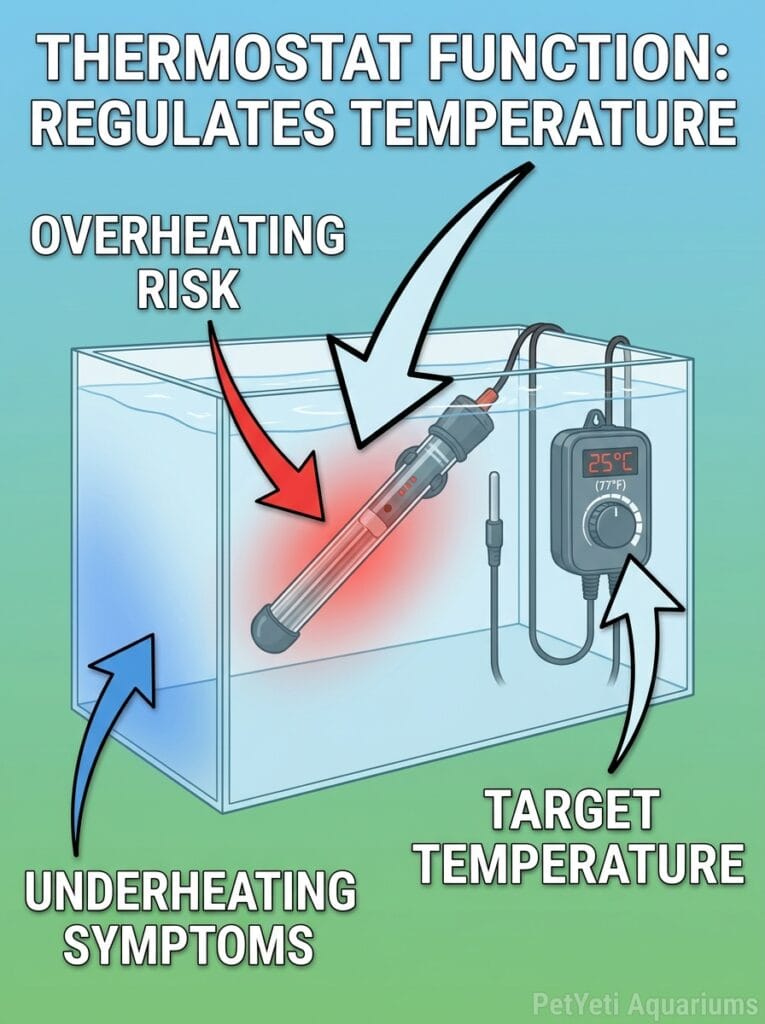
The Thermostat May Be Malfunctioning
Most aquarium heaters contain a thermostat that turns the heater on and off automatically.
When the thermostat begins to fail, unusual behavior can occur.
Possible signs include:
• Temperature constantly below the target
• Temperature constantly above the target
• Frequent temperature swings
• Heater running continuously
Real-Life Example
A hobbyist noticed that their aquarium temperature varied by several degrees every day despite stable room conditions. The heater’s thermostat was no longer regulating properly.
What to Expect
A faulty thermostat often causes inconsistent temperatures rather than a complete loss of heat.
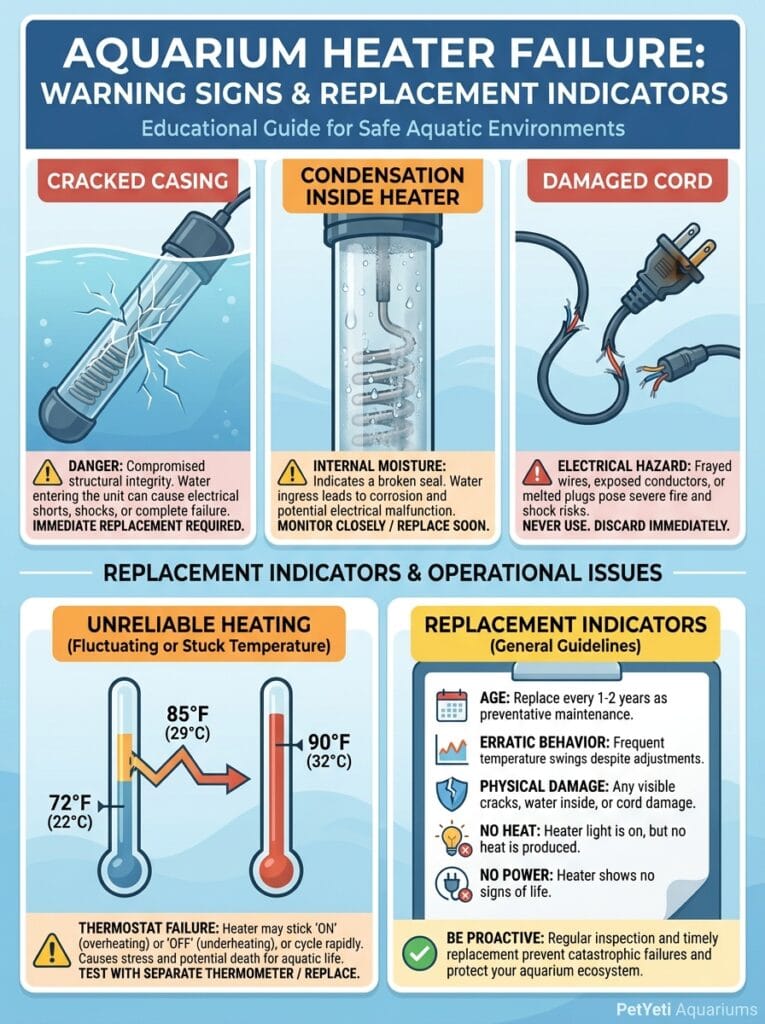
Signs Your Aquarium Heater May Need Replacement
Not every heater problem can be repaired.
Sometimes replacement is the safest option.
Watch for:
• Cracked glass
• Water inside the heater housing
• Damaged cords
• Inconsistent heating
• Heater failing to turn on
• Repeated temperature problems despite troubleshooting
Real-Life Example
An aquarium owner continued troubleshooting a heater for weeks before noticing moisture trapped inside the heater tube. Replacing the heater immediately solved the issue.
What to Expect
Most aquarium heaters eventually wear out and require replacement after years of use.
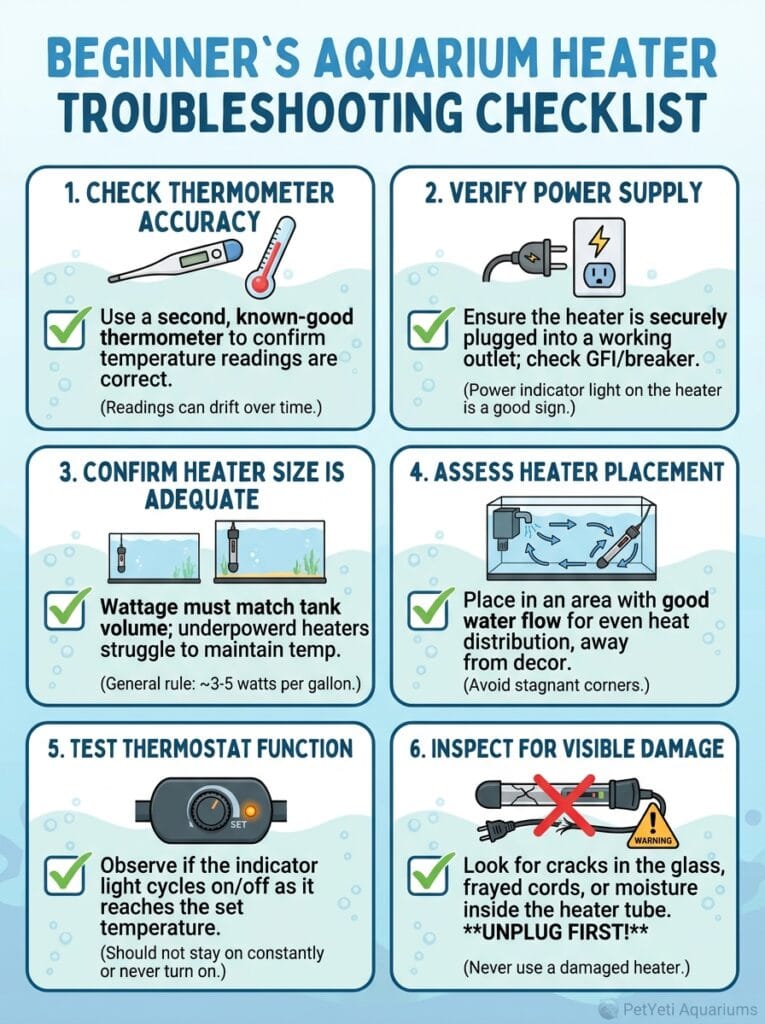
Quick Troubleshooting Checklist
If your aquarium heater doesn’t seem to be working, work through this checklist:
✅ Verify temperature with a reliable thermometer
✅ Check power connections
✅ Confirm the outlet works
✅ Verify heater wattage is appropriate
✅ Inspect heater placement
✅ Look for thermostat problems
✅ Check for visible damage
✅ Monitor temperatures for 24–48 hours
Following these steps often identifies the problem before replacing equipment unnecessarily.
CONCLUSION
A heater that appears to stop working can be stressful, especially when you’re responsible for the health of your fish.
Fortunately, many heater problems aren’t actually heater failures.
Incorrect thermometer readings, power issues, undersized heaters, poor placement, and seasonal temperature changes are all common causes of heating problems.
That’s why it’s important to diagnose the issue carefully before rushing to replace equipment.
Start with the basics.
Verify the temperature.
Check power connections.
Review heater sizing and placement.
In many cases, the solution is simpler than it first appears.
If the heater truly is failing, replacing it promptly helps maintain the stable environment that aquarium fish depend on.
At the end of the day, a reliable heater isn’t just about temperature.
It’s about creating a comfortable, predictable home where your fish can thrive.
FAQ
Why is my aquarium heater not heating the water?
Common causes include power issues, incorrect placement, an undersized heater, thermostat problems, or heater failure.
Why is the heater light on but the water is still cold?
The heater may be too small for the aquarium, struggling against room temperatures, or experiencing an internal malfunction.
How long does it take an aquarium heater to warm the tank?
Depending on tank size and heater wattage, it may take several hours or even a full day to reach the target temperature.
How do I know if my aquarium heater is broken?
Signs include no heat production, inconsistent temperatures, visible damage, condensation inside the heater, or failure to power on.
Can a heater be too small for a fish tank?
Yes. An undersized heater may not maintain stable temperatures, especially during colder months.
Should I replace an old aquarium heater?
If the heater shows signs of damage or unreliable performance, replacement is often the safest option.