
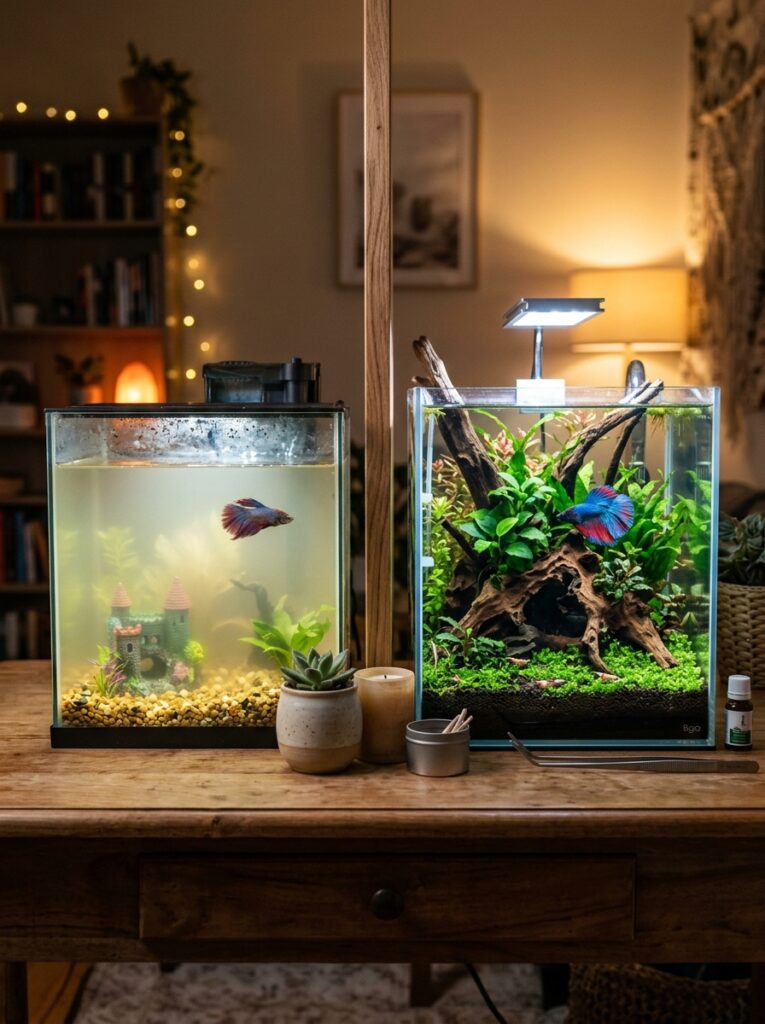
A cloudy betta fish tank is usually caused by new tank bacteria blooms, overfeeding, dirty substrate, weak filtration, or too much organic waste.
Cloudy aquarium water is one of the most common problems beginner betta fish owners experience after setting up a new tank. Many people panic when their aquarium suddenly turns foggy, milky, or slightly hazy, especially after carefully designing a cozy planted setup. In most cases, cloudy water is completely normal and can usually be fixed with a few simple adjustments to the aquarium environment.
In this guide, you’ll learn why betta fish tanks become cloudy, what causes different types of cloudy aquarium water, and how to restore a clean crystal-clear appearance without stressing your fish. From beginner setup mistakes to filtration, lighting, and maintenance habits, these practical tips will help you create a healthier and more visually relaxing aquarium setup.
Cloudy betta fish tanks are usually caused by new tank bacteria blooms, overfeeding, dirty substrate, poor filtration, or excessive organic waste buildup inside the aquarium.
Quick Answer
What causes a cloudy betta fish tank? Most cloudy betta tanks are caused by new tank bacteria blooms, overfeeding, dirty substrate, weak filtration, overcleaning, or excess organic waste. Cloudy water is not always an emergency, but if your betta is breathing fast, staying at the surface, losing color, or acting unusually stressed, check water quality before making big changes.
- Understanding Why Betta Fish Tanks Become Cloudy
- Cloudy Water From New Tank Bacteria Blooms
- Overfeeding and Excess Waste Buildup
- Dirty Substrate and Uneaten Food Problems
- Poor Filtration and Weak Water Circulation
- How Overcrowded Decorations Trap Debris
- Why Overcleaning Can Make Cloudy Water Worse
- Using Live Plants to Improve Water Clarity
- Creating a Balanced Beginner Maintenance Routine
- How to Keep Your Betta Fish Tank Crystal Clear Long Term
- Conclusion
- FAQs
What To Check First
Before trying to clear cloudy water quickly, check whether the tank is new, whether you recently changed or cleaned the filter, how much food is being left behind, and whether your betta is acting normal. If your betta is breathing fast, staying near the surface, clamping fins, or refusing food, test the water for ammonia, nitrite, nitrate, and pH before making major changes.
Understanding Why Betta Fish Tanks Become Cloudy
Cloudy aquarium water is usually a sign that something inside the tank ecosystem is temporarily unbalanced. Many beginner betta fish owners assume cloudy water automatically means the aquarium is dirty, but in reality several different factors can cause water to appear hazy, foggy, or milky. New tank bacteria blooms, excess organic waste, poor filtration, and disturbed substrate are some of the most common reasons beginner aquariums lose their crystal-clear appearance. Understanding the cause of cloudy water is the first step toward fixing the problem without stressing the betta fish unnecessarily.
PetYeti Calm Tip
Cloudy water can look stressful, but sudden overcleaning often makes the tank less stable. Before changing everything at once, check the likely cause first: new tank cycling, overfeeding, dirty substrate, weak filtration, or recent filter cleaning. A calm, steady fix is usually safer for your betta than a full tank reset.
In many cases, cloudy water is completely normal during the early stages of setting up a beginner betta fish tank. Aquarium ecosystems need time to stabilize naturally as beneficial bacteria develop inside the filter and substrate. Instead of making sudden aggressive cleaning changes, most cloudy water issues improve faster when the tank is allowed to rebalance gradually with proper maintenance and consistent care habits.
Cloudy Water From New Tank Bacteria Blooms
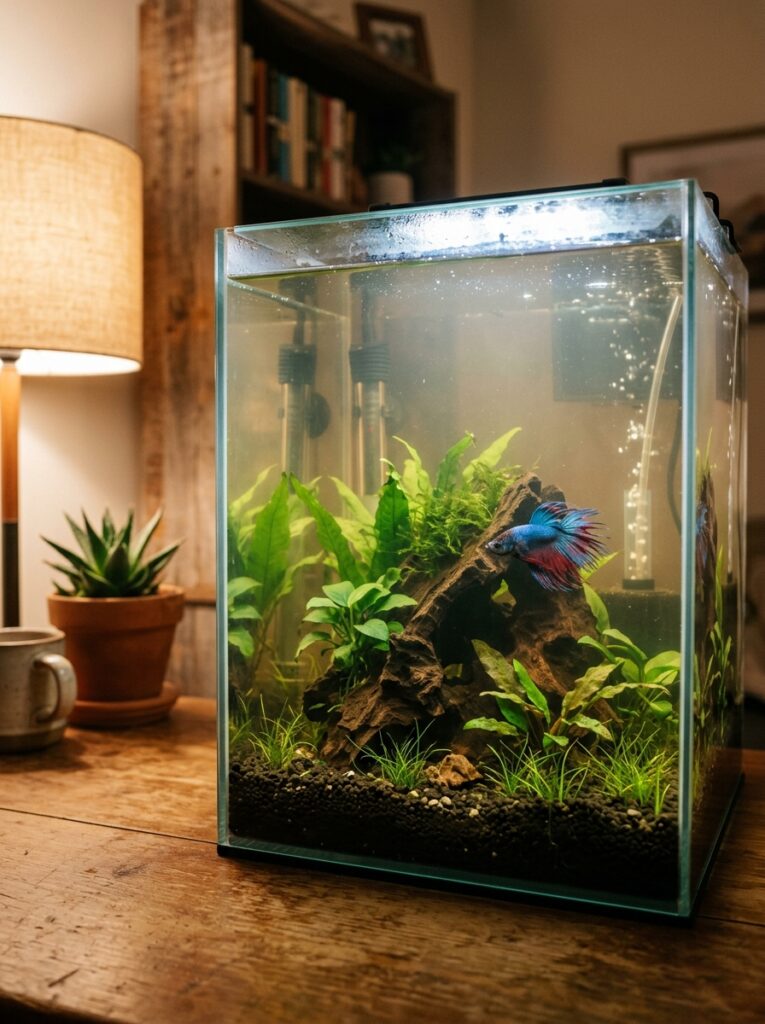
One of the most common reasons beginner betta fish tanks suddenly become cloudy is a harmless bacteria bloom that happens during the early stages of aquarium cycling. This usually appears as a white or slightly milky haze throughout the water and often happens within the first few days or weeks after setting up a new tank. Beneficial bacteria are rapidly multiplying inside the aquarium as the ecosystem begins stabilizing naturally. While cloudy water can look alarming at first, this type of haze is usually temporary and often disappears on its own with patience and consistent care.
Many beginners accidentally make bacteria blooms worse by constantly replacing water, overcleaning filters, or adding too many chemical products at once. A more balanced approach usually works better for restoring water clarity naturally. Gentle maintenance, stable feeding routines, and proper filtration often allow beneficial bacteria colonies to settle more effectively without creating additional stress inside the aquarium environment.
Overfeeding and Excess Waste Buildup
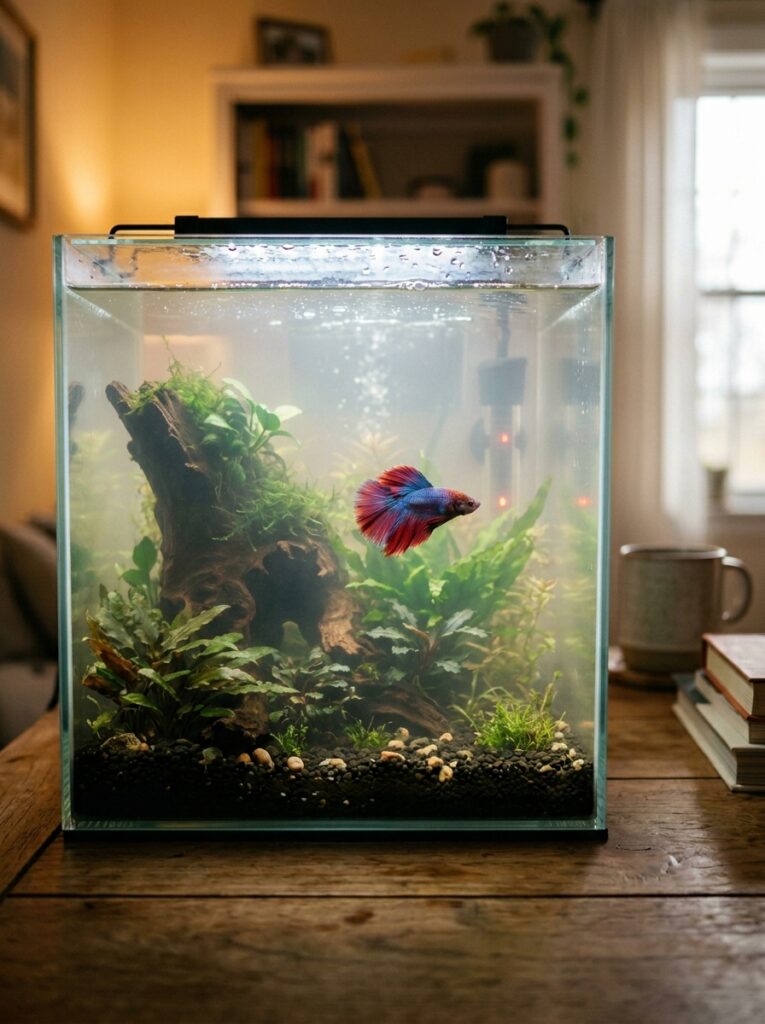
Overfeeding is one of the fastest ways beginner betta fish tanks become cloudy and visually unhealthy. Uneaten food quickly breaks down inside small aquariums, creating excess organic waste that can overwhelm the natural balance of the tank. Many beginners accidentally feed more than necessary because betta fish often appear eager to eat even when they do not need additional food. Excess food particles eventually settle into the substrate, increase bacteria growth, and reduce overall water clarity.
Small consistent feeding portions usually work much better for maintaining clean healthy aquarium water over time. Most cozy planted betta tanks stay visually clearer when feeding routines remain simple and controlled instead of excessive. Removing uneaten food quickly and avoiding overfeeding helps the aquarium ecosystem remain more stable while also reducing unnecessary waste buildup inside filters and substrate areas.
Dirty Substrate and Uneaten Food Problems
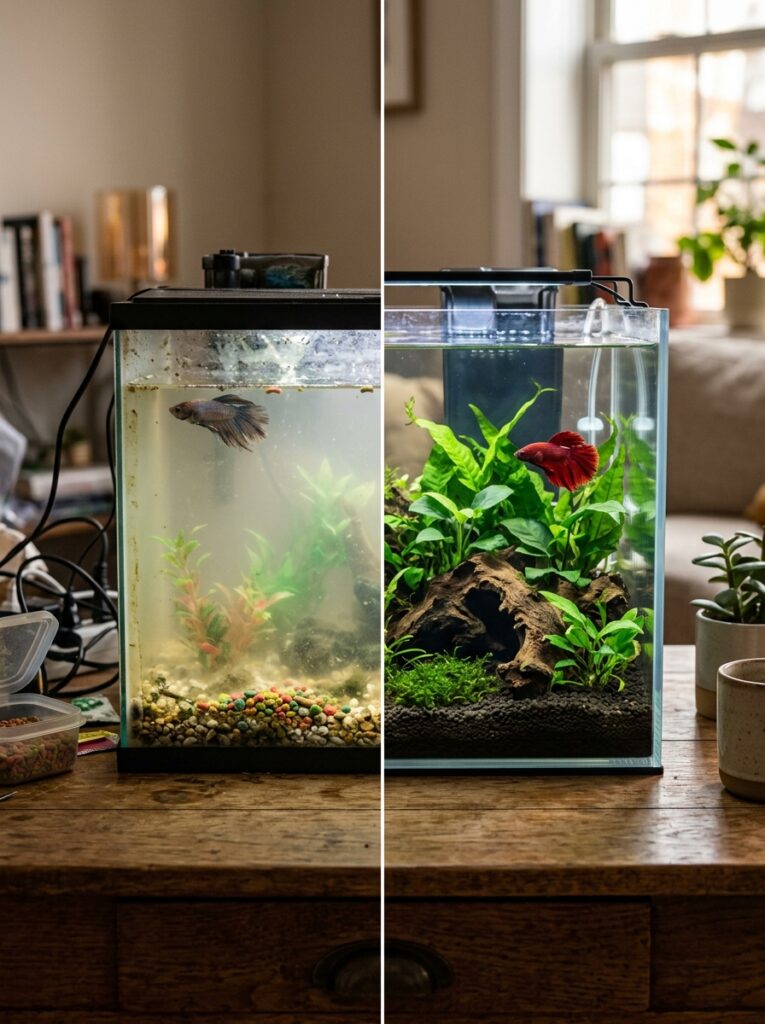
Dirty substrate is another major reason beginner betta fish tanks lose their clean crystal-clear appearance over time. Small food particles, fish waste, and decaying plant debris often settle into gravel or aquarium soil where they slowly break down and increase cloudiness inside the water. Many beginner aquariums look visually healthy on the surface while hidden organic waste continues building underneath decorations and substrate layers. Over time, this trapped debris can affect both water clarity and the overall balance of the aquarium ecosystem.
Gentle substrate cleaning during regular water changes usually helps maintain a cleaner and healthier aquarium environment without disrupting beneficial bacteria too aggressively. Many cozy planted nano aquariums remain visually clear because maintenance routines stay simple, consistent, and balanced over time. Removing uneaten food early and preventing excessive debris buildup often makes a noticeable difference in maintaining a calm crystal-clear aquarium appearance.
Poor Filtration and Weak Water Circulation
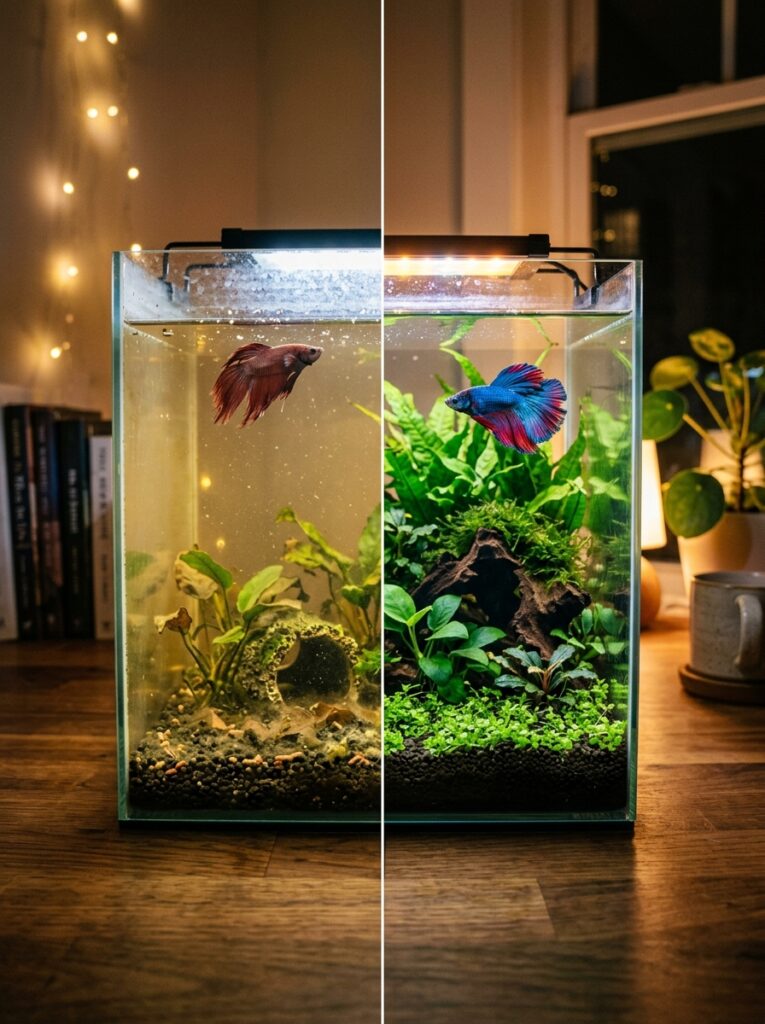
Poor filtration is one of the biggest reasons cloudy water continues returning in beginner betta fish tanks. Filters help remove floating debris, excess organic waste, and tiny particles that would otherwise remain suspended throughout the aquarium. Weak water circulation can also create stagnant areas where waste slowly accumulates behind decorations, plants, and substrate corners. Even visually beautiful aquariums can lose their clean appearance quickly when filtration is not properly balanced for the tank size.
Many cozy planted nano aquariums stay crystal clear because the filtration system quietly maintains gentle but consistent water movement throughout the tank. Betta fish usually prefer calmer flow compared to stronger tropical fish species, so balanced filtration often works best instead of aggressive water current. A properly sized filter combined with regular maintenance can dramatically improve both water clarity and the overall health of the aquarium environment.
How Overcrowded Decorations Trap Debris
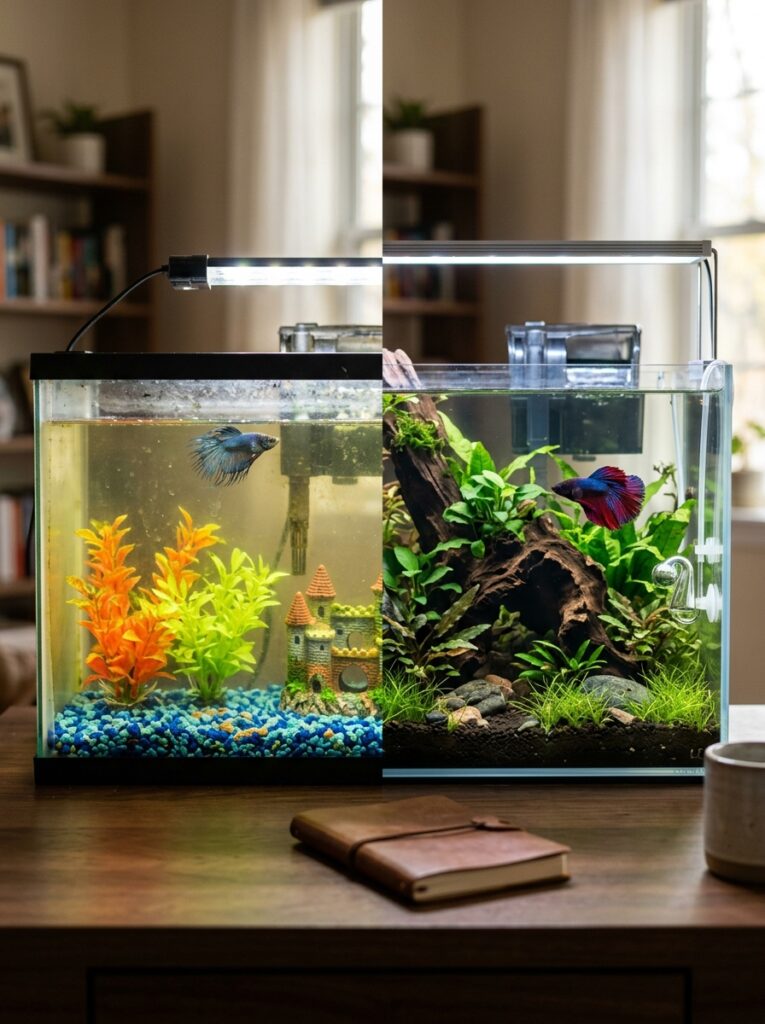
Overcrowded decorations can trap large amounts of hidden waste inside beginner betta fish tanks without owners realizing it. Excess ornaments, artificial caves, and tightly packed decor often block water circulation and create areas where uneaten food, fish waste, and debris slowly accumulate over time. Small aquariums especially become cloudy faster when waste becomes trapped underneath bulky decorations and stagnant corners. Many beginner tanks instantly look cleaner and healthier when unnecessary clutter is reduced and open space is improved.
Minimalist aquascaping usually helps maintain clearer aquarium water because simpler layouts allow debris to remain easier to remove during maintenance. Natural driftwood, balanced plant placement, and open swimming areas often create better circulation throughout nano aquariums while also improving the overall aesthetic. Many cozy modern betta setups intentionally avoid excessive decorations because uncluttered layouts help the aquarium feel calmer, cleaner, and more visually relaxing.
Why Overcleaning Can Make Cloudy Water Worse
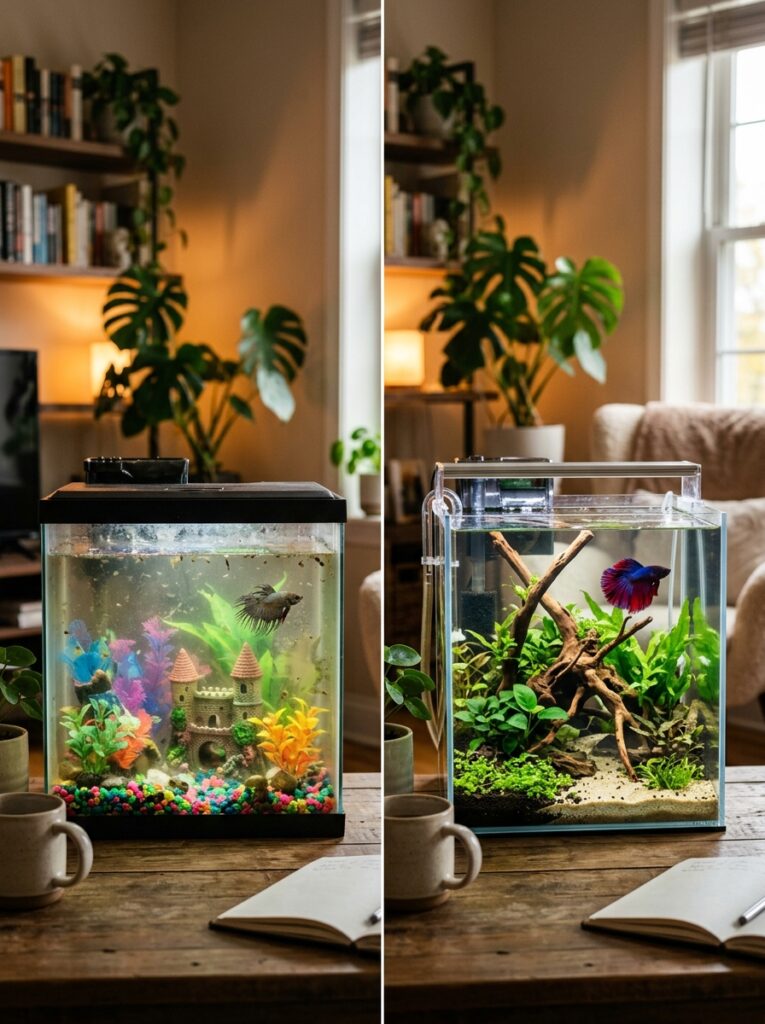
Many beginner betta fish owners accidentally make cloudy water worse by cleaning the aquarium too aggressively. Constantly replacing large amounts of water, washing filters too thoroughly, or deep-cleaning the entire tank at once can disrupt beneficial bacteria that help stabilize the aquarium ecosystem naturally. When these healthy bacteria colonies are disturbed, the tank often struggles to maintain balanced water conditions, leading to recurring cloudy water problems instead of long-term clarity.
Beginner Mistake to Avoid
A common beginner mistake is trying to fix cloudy water by deep-cleaning everything at once. Replacing too much water, scrubbing the filter, rinsing decorations, and disturbing the substrate can remove helpful bacteria that keep the aquarium stable. For most cloudy betta tanks, small steady fixes are safer than a full reset.
Gentle consistent maintenance usually works much better for keeping beginner betta fish tanks clean and visually stable over time. Small regular water changes, light substrate cleaning, and careful filter maintenance often allow the aquarium ecosystem to rebalance naturally without unnecessary stress. Many cozy planted nano aquariums remain crystal clear because maintenance routines stay calm, gradual, and balanced instead of overly aggressive.
Using Live Plants to Improve Water Clarity
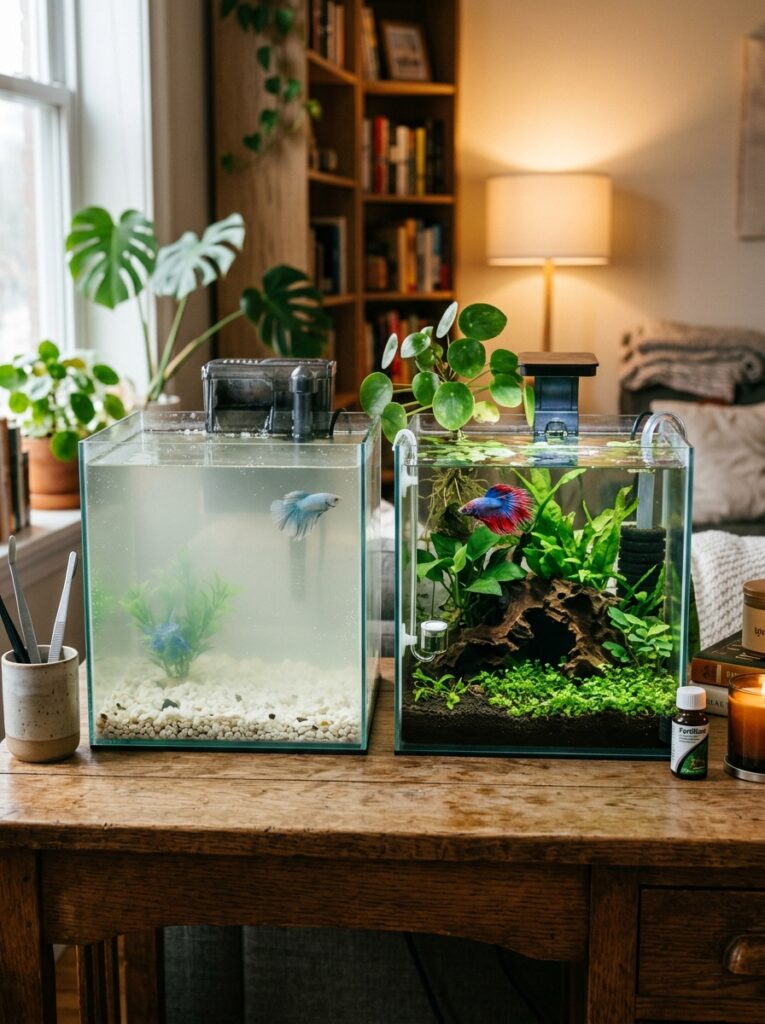
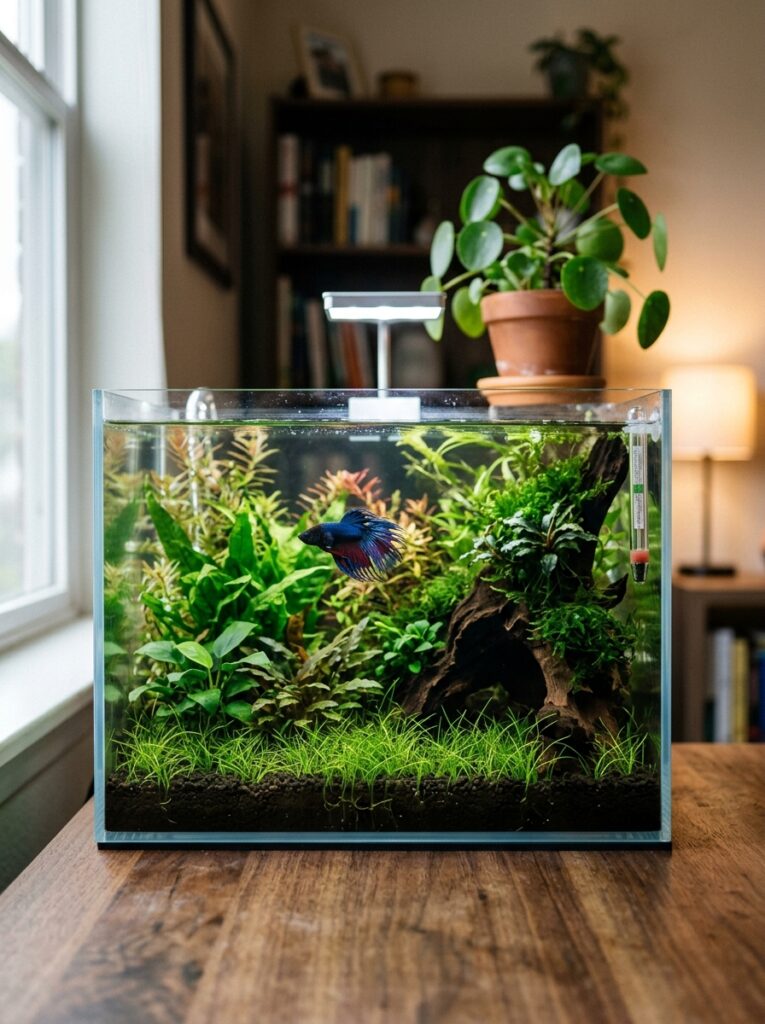
Live plants can play a surprisingly helpful role in improving water clarity inside beginner betta fish tanks. Healthy aquatic plants naturally absorb excess nutrients and organic waste compounds that might otherwise contribute to cloudy water and algae growth. Many cozy planted nano aquariums remain visually clearer because live plants help create a more balanced and stable aquarium ecosystem over time. In addition to improving water quality, natural greenery also makes aquariums feel calmer, softer, and more visually relaxing.
Beginner-friendly plants such as Anubias, Java Fern, floating plants, and mosses often work especially well in low-maintenance betta tanks because they tolerate gentle lighting and simple care routines. Balanced plant growth can also help filters work more efficiently by reducing excess waste buildup inside the aquarium environment. Many minimalist aquascapes intentionally combine natural plants with open swimming space because planted layouts often create cleaner healthier-looking aquariums overall.
Creating a Balanced Beginner Maintenance Routine
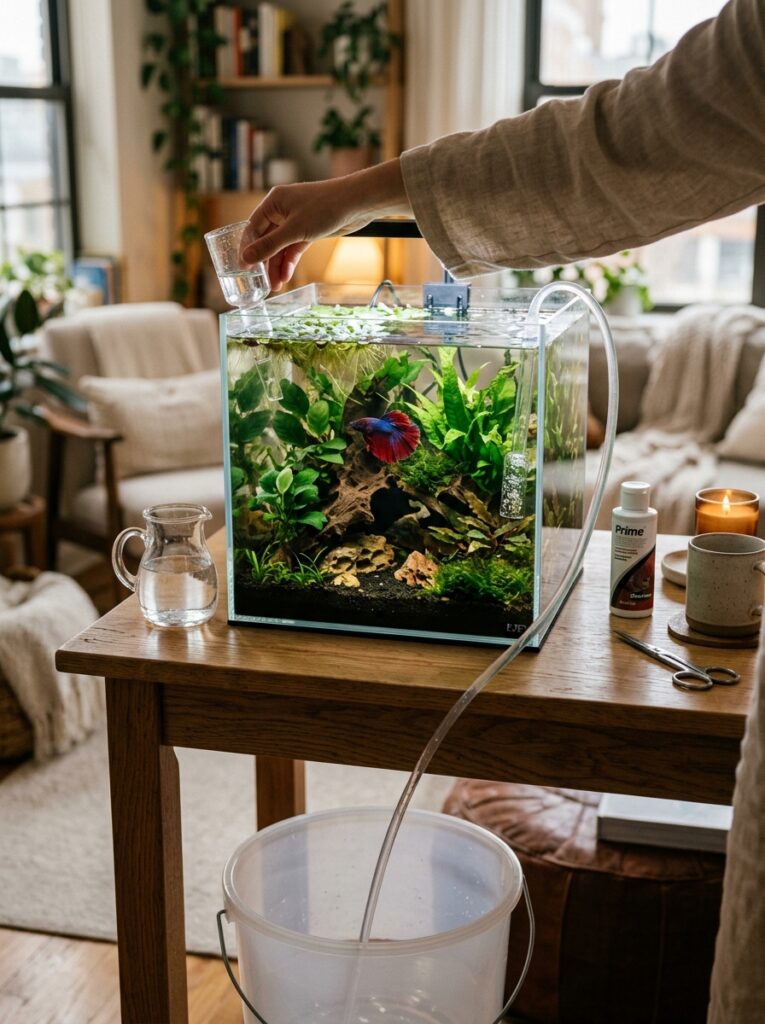
A balanced maintenance routine is one of the most effective ways to keep beginner betta fish tanks clean, healthy, and visually crystal clear over time. Many cloudy water problems develop gradually when aquarium care becomes inconsistent or overly aggressive. Small regular water changes, gentle substrate cleaning, controlled feeding, and light filter maintenance usually create much more stable aquarium conditions compared to infrequent deep cleaning sessions. Consistency often matters far more than perfection when maintaining a beginner-friendly nano aquarium.
Helpful Tools
When cloudy water keeps coming back, a few simple tools can help you avoid guessing. A basic aquarium test kit can show whether ammonia, nitrite, nitrate, or pH problems are involved, while a gentle gravel vacuum can remove trapped debris without tearing apart the whole tank. For most betta tanks, calm testing and light maintenance work better than repeated deep cleaning.
For more help, see our guides on how to test aquarium water correctly and easy betta fish tank cleaning routine for beginners.
Many cozy planted betta tanks stay visually relaxing because maintenance routines remain simple and sustainable instead of complicated or stressful. Creating a calm weekly care routine also helps beginners notice small changes inside the aquarium before larger water quality problems develop. A healthy balanced aquarium ecosystem usually becomes easier to maintain naturally once stable habits are established over time.
How to Keep Your Betta Fish Tank Crystal Clear Long Term
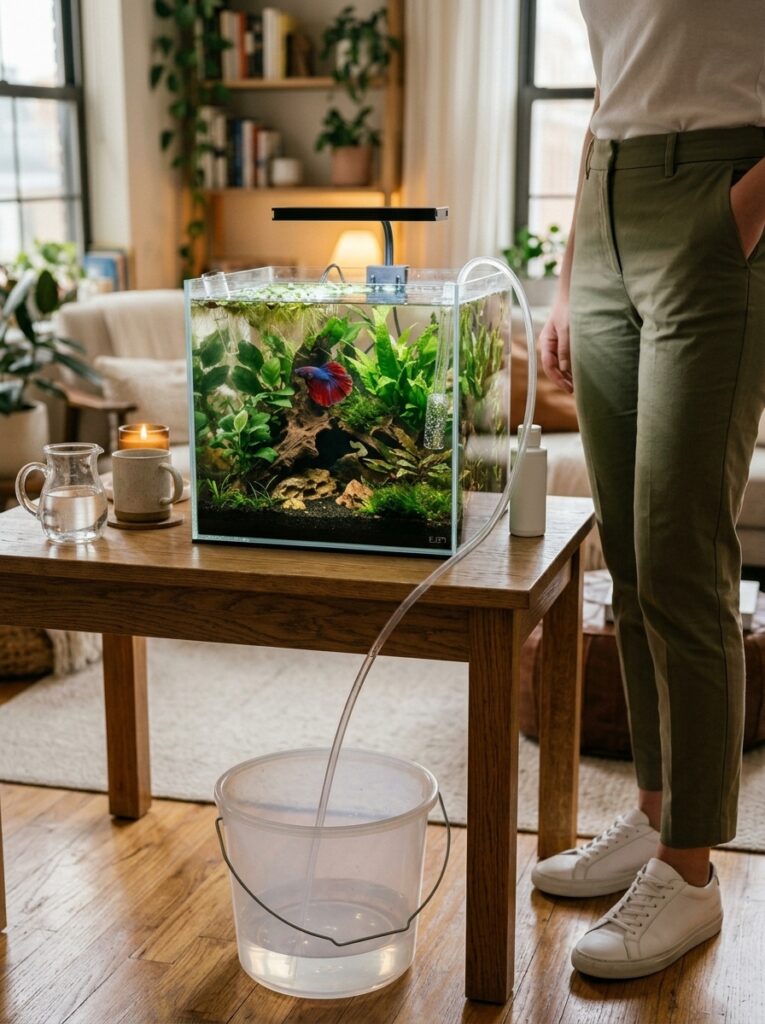
Keeping a betta fish tank crystal clear long term usually comes down to maintaining a stable balanced aquarium environment instead of constantly chasing quick fixes. Most healthy beginner aquariums stay visually clean when feeding remains controlled, filtration works properly, maintenance stays consistent, and the aquascape avoids unnecessary clutter. Cloudy water problems often become far less common once the aquarium ecosystem fully stabilizes and beneficial bacteria colonies mature naturally over time.
Many cozy planted nano aquariums continue looking peaceful and visually relaxing for years because their owners focus on simple sustainable care habits rather than excessive intervention. Stable routines, balanced aquascaping, healthy plants, and gentle maintenance often create the clearest and healthiest aquarium environments overall. A calm well-maintained betta fish tank not only looks beautiful but also creates a more relaxing atmosphere inside everyday living spaces.
Related PetYeti Guides
Cloudy water is usually connected to cycling, water quality, filtration, or cleaning habits. These related guides can help you fix the root cause instead of guessing.
Aquarium Cycling for Beginners
Use this if the tank is new, foggy, or still building healthy bacteria.
How to Test Aquarium Water Correctly
Use this if your betta seems stressed or you are unsure whether ammonia, nitrite, nitrate, or pH is involved.
Best Aquarium Test Kits for Beginners
Use this if you want an easier way to check the main water parameters at home.
Best Aquarium Filters for Beginners
Use this if poor filtration or weak water movement may be contributing to cloudy water.
Easy Betta Fish Tank Cleaning Routine for Beginners
Use this if you want a calmer cleaning routine without overcleaning the tank.
Conclusion
Cloudy water is one of the most common beginner aquarium problems, but in most cases it can be fixed naturally with patience, balanced maintenance, and a stable aquarium environment. Small adjustments such as improving filtration, reducing overfeeding, maintaining cleaner substrate conditions, and avoiding aggressive cleaning often make a huge difference in restoring crystal-clear water over time. Healthy planted betta fish tanks usually become easier to maintain once the aquarium ecosystem stabilizes naturally.
Whether you prefer cozy planted nano aquariums, minimalist aquascapes, or relaxing apartment fish tank setups, maintaining consistent care habits is the key to creating a cleaner and more visually peaceful aquarium environment. A crystal-clear betta fish tank not only looks more beautiful but also helps create a calm relaxing atmosphere that blends naturally into everyday living spaces.
If you are building your first aquarium, learning how to set up a beautiful betta fish tank for beginners can help prevent many cloudy water problems before they start.
Avoiding common beginner betta tank mistakes can also help your aquarium stay cleaner and more visually balanced long term.
FAQs
Why is my betta tank cloudy after a water change?
Cloudy water after a water change is usually caused by disturbed debris or a temporary bacteria bloom. Cleaning the substrate or decorations can release trapped waste into the water, making it look cloudy for a short time. It often clears on its own within a day or two if the tank is otherwise stable.
Is cloudy water dangerous for betta fish?
Cloudy water is not always dangerous by itself, but it should not be ignored. If your betta is still eating, swimming normally, and breathing calmly, the tank may just be going through a temporary balance issue. If your betta is gasping, clamping its fins, losing color, staying at the surface, or acting weak, test the water right away.
How long does cloudy water last in a new betta tank?
Cloudy water in a new betta tank may last a few days to a couple of weeks while the aquarium stabilizes. This is often caused by a bacteria bloom as the tank begins building beneficial bacteria. Avoid deep-cleaning everything during this stage. Gentle maintenance, controlled feeding, and patience usually help the water clear naturally.
Should I do a full water change if my betta tank is cloudy?
No, a full water change is usually not the best first step. Changing too much water at once can disturb beneficial bacteria and make the tank less stable. A partial water change, light substrate cleaning, reduced feeding, and water testing are usually safer. If ammonia or nitrite is present, focus on safe water quality first.
How do I keep my betta fish tank clear long term?
To keep a betta tank clear long term, avoid overfeeding, remove uneaten food, clean the substrate gently, maintain the filter without over-washing it, and do regular partial water changes. A balanced tank with proper filtration, simple feeding habits, and a calm maintenance routine usually stays clearer than a tank that is overcleaned or constantly disturbed.