
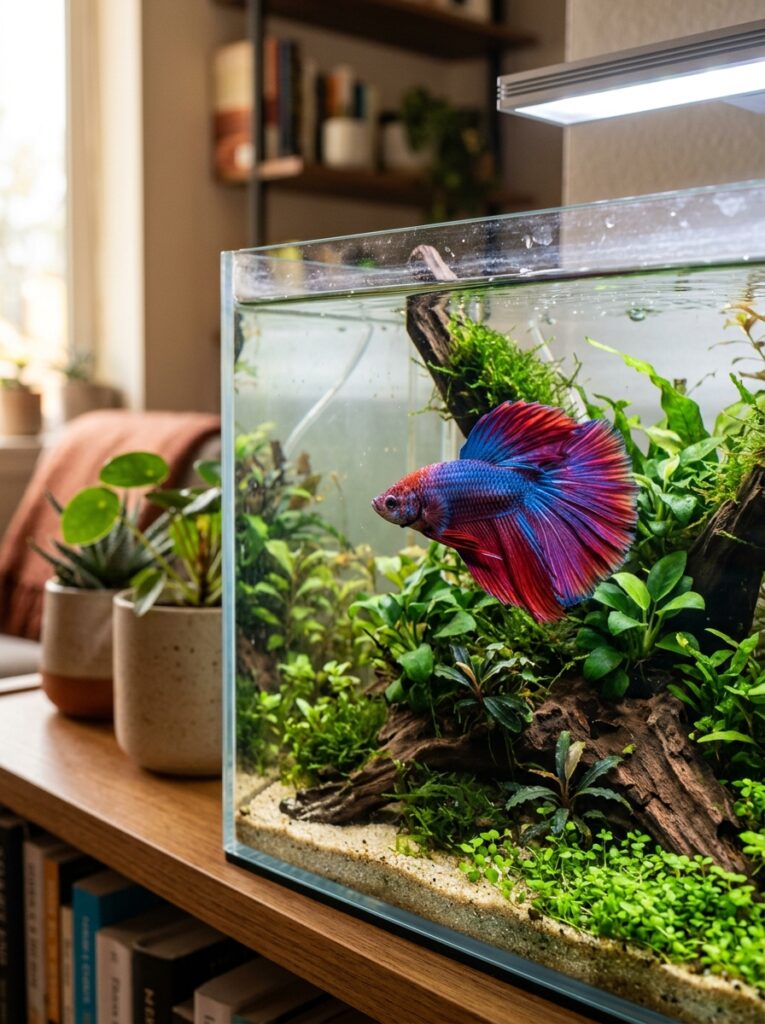
Seeing your betta’s fins looking frayed or damaged can be really worrying, especially when you’ve worked hard to create a beautiful cozy setup. It’s heartbreaking to watch them struggle with torn or clamped fins in what’s supposed to be their peaceful little world.
The good news is that many cases of fin damage in nano tanks can improve naturally with the right gentle care. This guide focuses on calming, beginner-friendly steps that support healing while keeping your aquarium looking lovely and relaxing. Let’s help your betta feel comfortable and confident again.
Discover gentle ways to heal betta fish fins naturally and prevent fin rot in cozy nano tanks. Beginner-friendly tips for clearer water and happier bettas.
Understanding Why Betta Fins Get Damaged
Betta fins are delicate, and damage often starts from everyday things in small tanks. Poor water quality, stress from unstable temperatures, sharp decor, or even aggressive water flow can tear those beautiful fins or invite bacterial issues like fin rot.
In cozy nano setups, these problems show up faster because the water volume is smaller. The encouraging part is that once you address the root causes gently, most bettas show real improvement within a couple of weeks.
Signs It’s Time to Help Your Betta
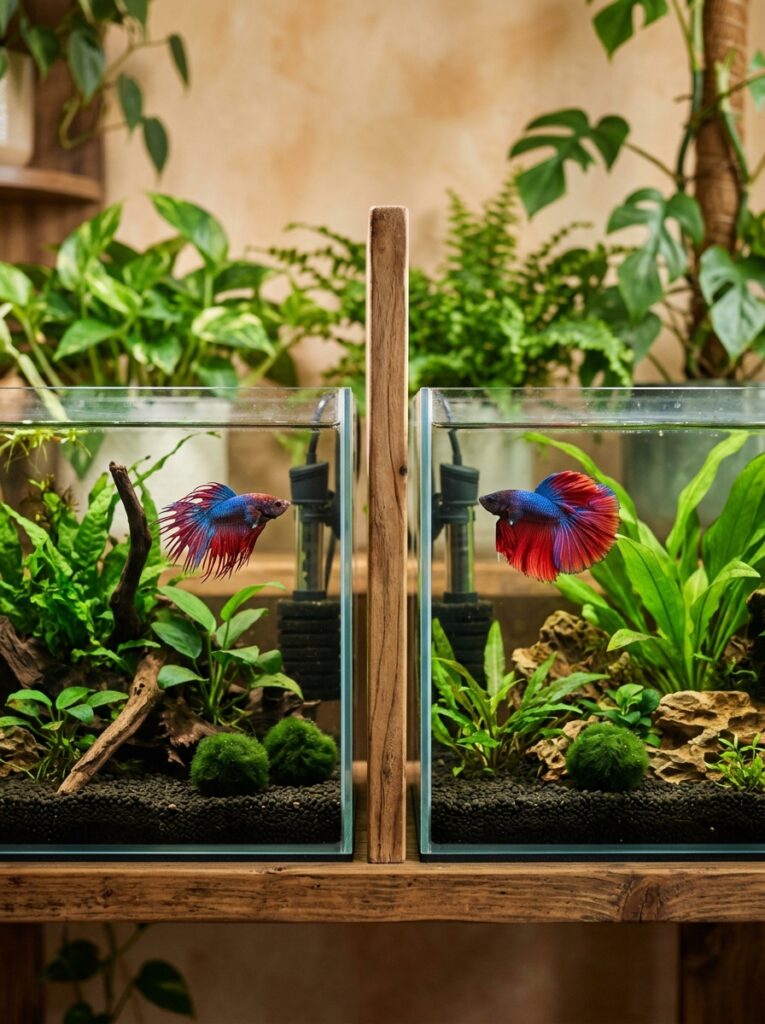
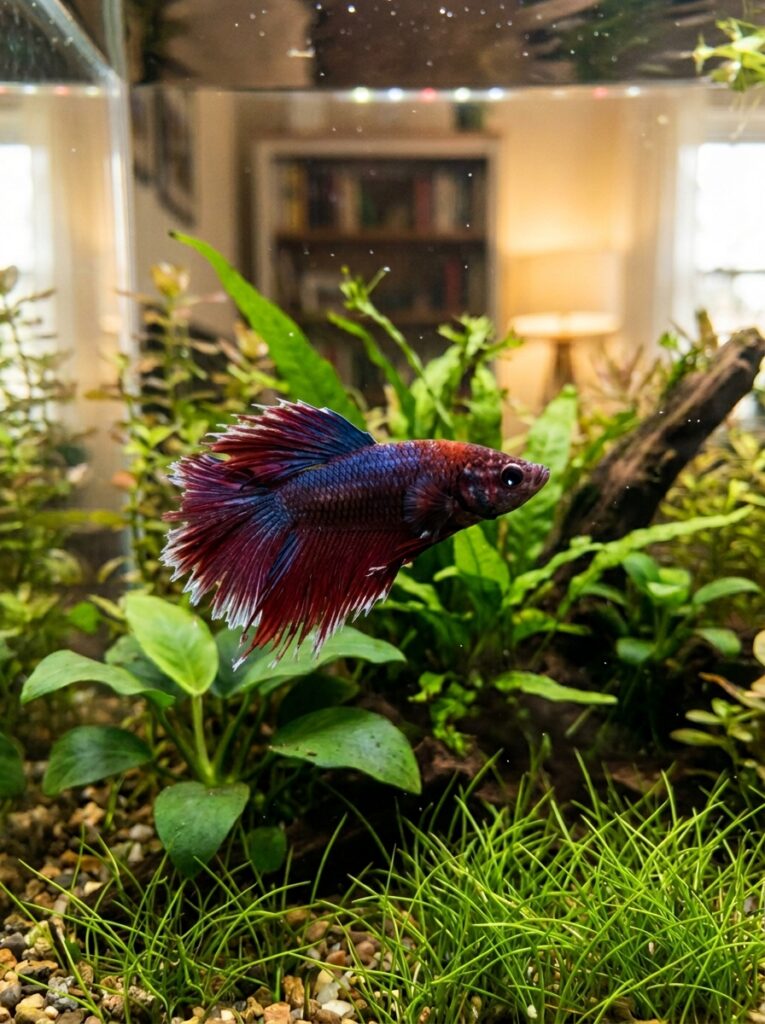
Look for frayed edges, white or cloudy tips on the fins, or fins that stay clamped close to the body. Sometimes you’ll notice your betta hiding more or seeming less active. These are signs he’s uncomfortable and needs some extra care.
Catching it early makes healing much easier and helps you avoid bigger problems down the road.
Creating a Healing Environment in Your Nano Tank
The foundation of natural healing is a calm, stable home. Keep your tank temperature steady between 78–80°F (26–27°C) — this is the sweet spot where bettas feel most comfortable and heal faster.
Reduce stress by dimming bright lights, adding gentle hiding spots, and making sure water flow isn’t too strong. A peaceful environment helps your betta focus energy on healing instead of constantly feeling on edge.
Gentle Water Changes and Quality Improvements
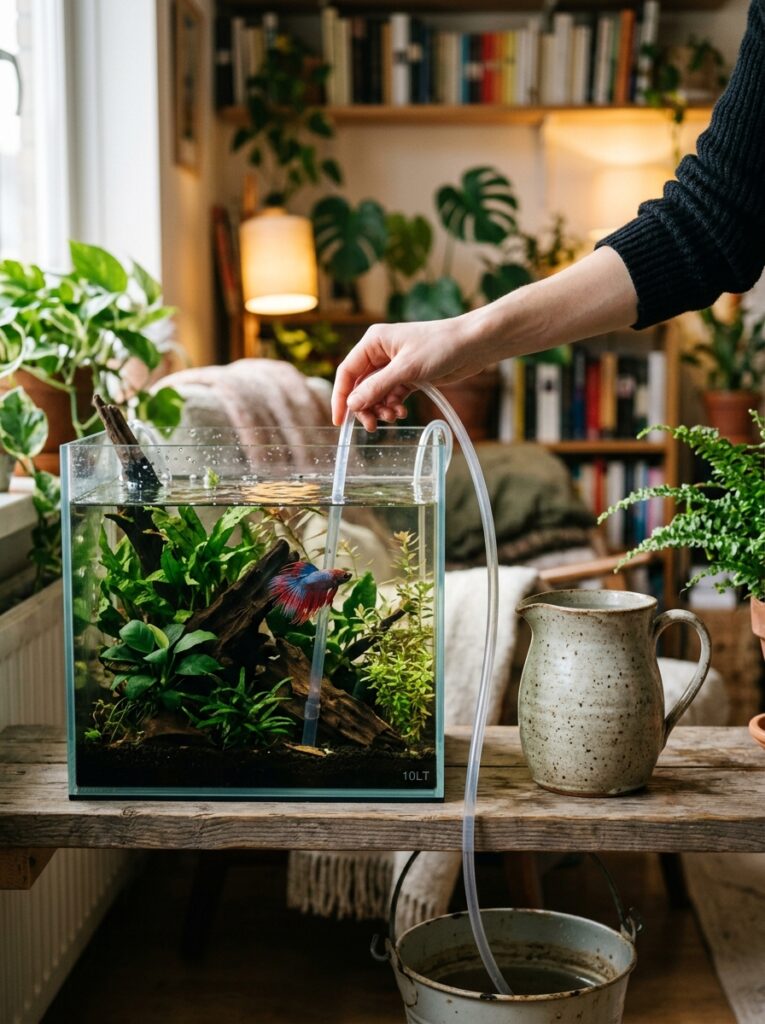
Consistent small water changes (20–25% every 2–3 days) are one of the most effective natural ways to support fin healing. Always match temperature and use a good water conditioner.
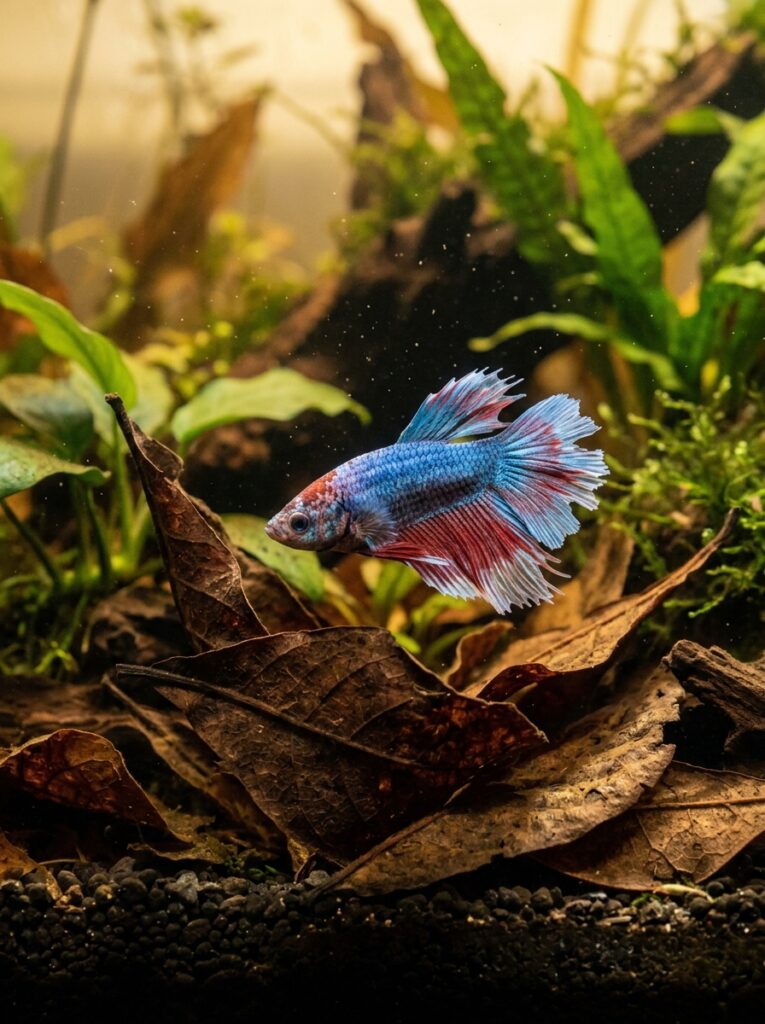
Adding Indian Almond leaves or almond leaf extract can create a natural blackwater effect that many bettas love — it helps reduce stress and has mild antibacterial properties.
Safe Natural Support for Fin Recovery
Many beginners see good results by adding a small amount of aquarium salt (1 teaspoon per 5 gallons) during water changes. This can help reduce bacteria naturally while supporting the healing process.
Combine this with excellent water quality and low stress, and most mild to moderate cases improve beautifully without harsh treatments.
Choosing Safe Decor and Plants for Fin Health
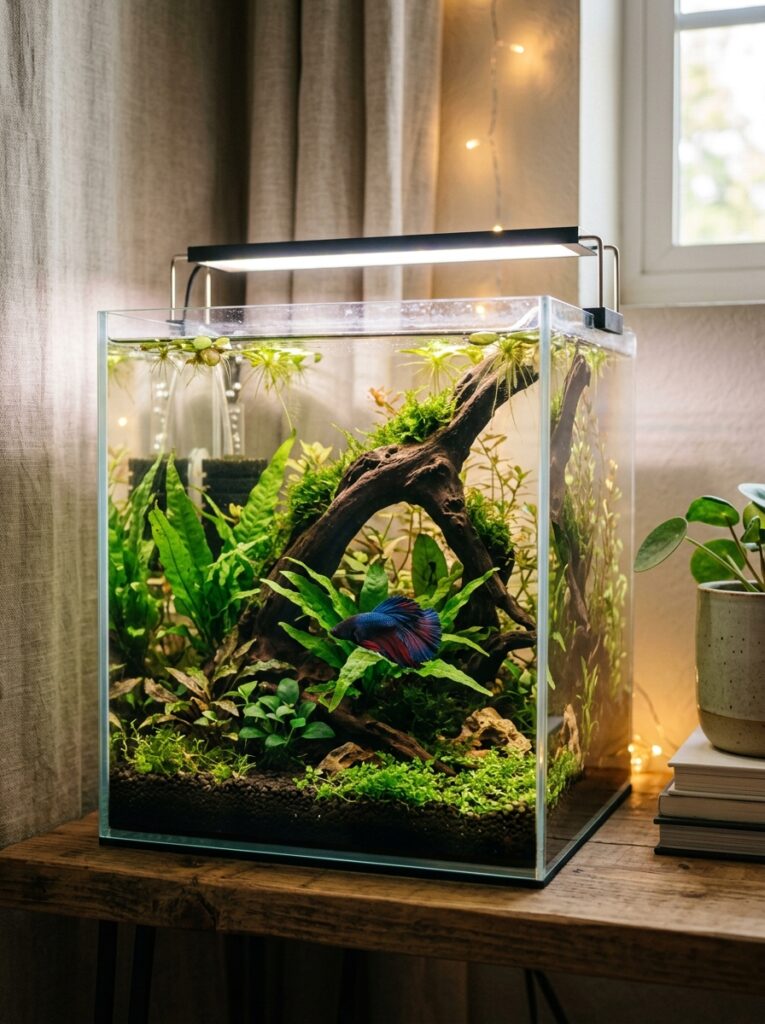
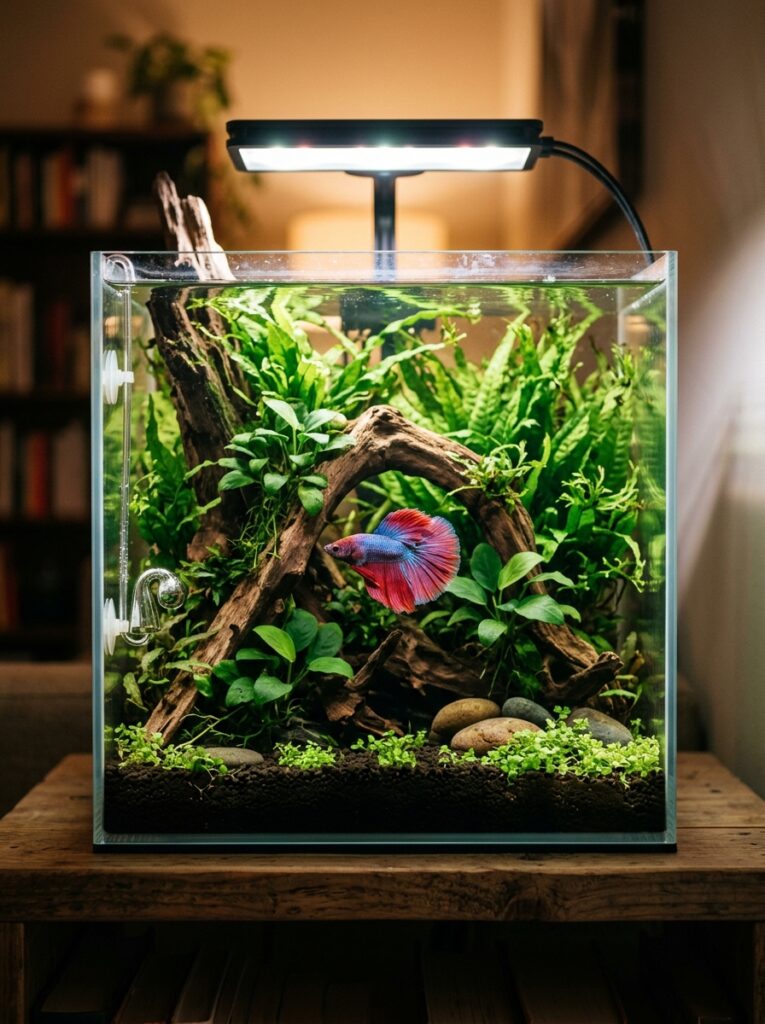
Remove any sharp or rough decorations that could cause new tears. Opt for smooth driftwood, silk or live plants like Java Fern, Anubias, and Moss balls. These create a soft, natural environment that protects those delicate fins.
Maintaining Long-Term Fin Health in Cozy Setups
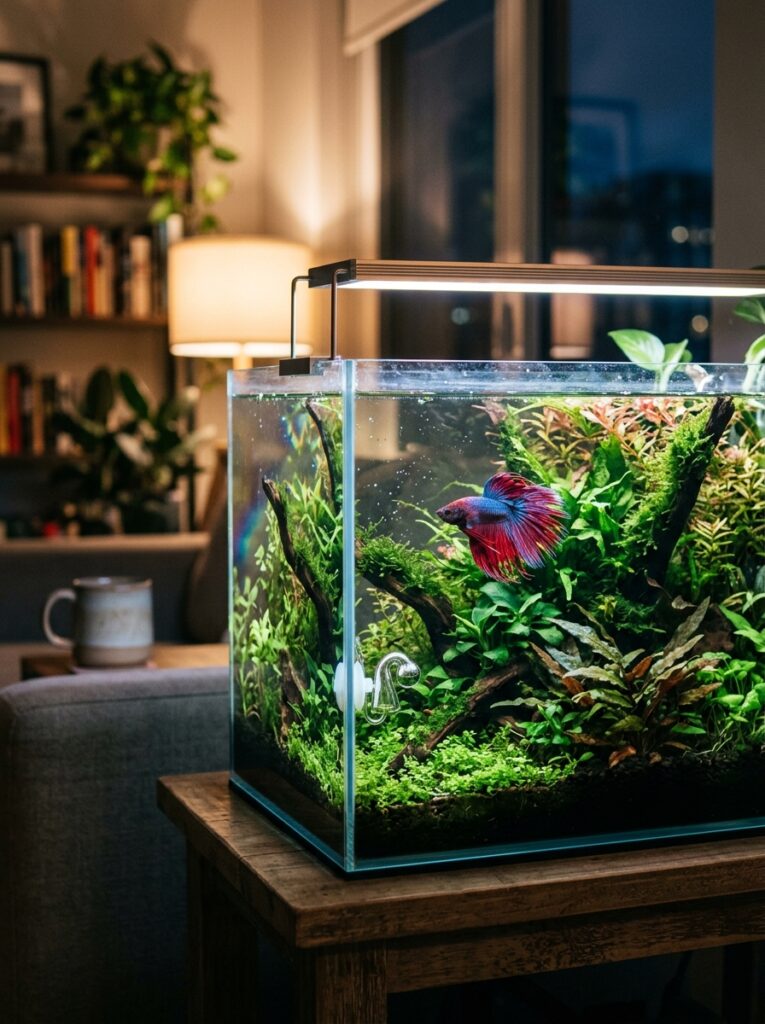
Once your betta’s fins start growing back, focus on consistency. Regular gentle maintenance, proper feeding (only what he eats in 2–3 minutes), and a stable cozy environment prevent most future issues.
Conclusion
Helping your betta heal his fins naturally is really about creating a calmer, more supportive home for him. With patience and these gentle steps, you’ll likely see those beautiful fins slowly come back while your cozy tank stays visually peaceful.
If you’re just starting your aquarium journey, learning how to set up a beautiful beginner betta fish tank can help you avoid many of these issues from the beginning. And for more inspiration on creating relaxing spaces, these 7 cozy betta tank ideas for small living spaces are full of gentle setups that work beautifully with healthy fin care.
You’re doing a wonderful thing by caring so thoughtfully. Take it one day at a time — your betta will thank you with brighter colors and more confident swimming.
Let me know in the comments how your betta is doing!