
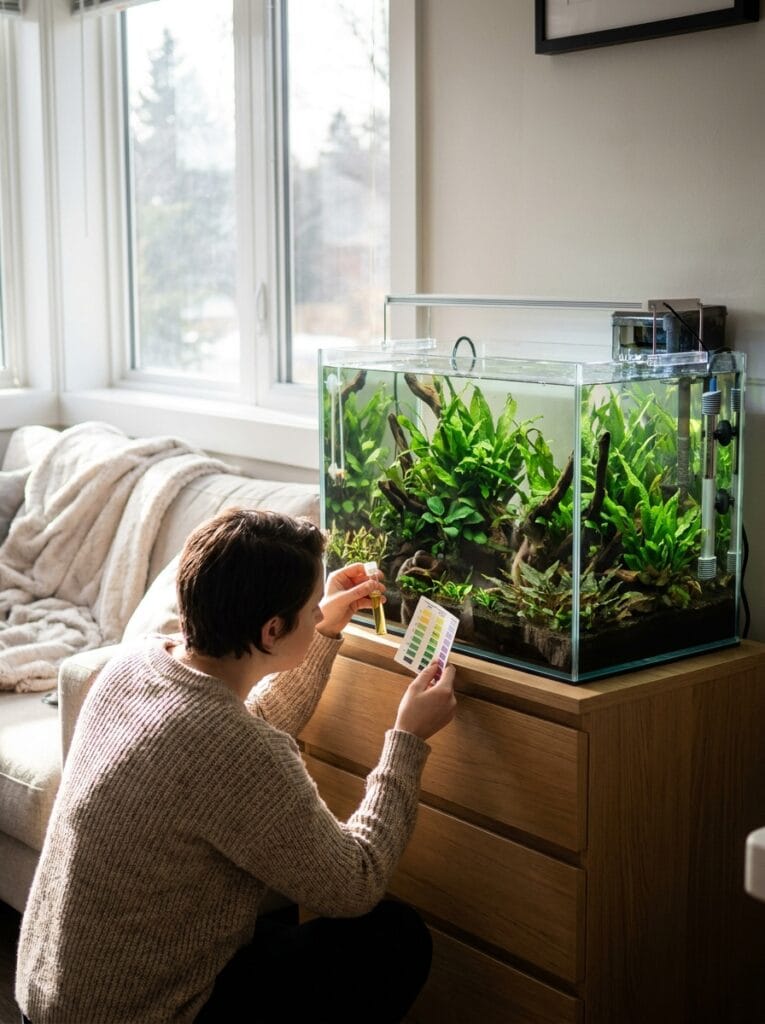
How long does an aquarium take to cycle? One of the hardest parts of starting an aquarium isn’t choosing fish — it’s waiting.
It’s waiting.
You set up the tank.
The water looks clear.
The filter is running.
Everything looks ready.
Then you start wondering:
“How long does it actually take for an aquarium to cycle?”
Many beginners assume a clear aquarium automatically means a safe aquarium.
Unfortunately, that’s not always true.
An aquarium can look perfectly clean while important biological processes are still developing behind the scenes.
The good news is that cycling isn’t something you need to fear.
Once you understand the timeline, the whole process becomes much less stressful.
Let’s walk through what usually happens and what you can realistically expect.
Quick Answer
On average, cycling a new aquarium takes 2 to 6 weeks. The process depends on temperature, filter type, and whether you use beneficial bacteria supplements or seeded filter media from an established tank. A tank is fully cycled when ammonia and nitrite levels drop to 0 ppm while nitrate levels read between 5 and 20 ppm.
How Long Does Aquarium Cycling Usually Take?
For most beginner aquariums:
| Cycling Method | Typical Time |
| Fishless cycle | 2–6 weeks |
| Seeded media cycle | 1–3 weeks |
| Established filter media | A few days–2 weeks |
Some tanks cycle faster.
Some take longer.
Aquariums don’t follow a perfect calendar.
Think of it more like growing a small biological ecosystem than following a countdown timer.
- How Long Does Aquarium Cycling Usually Take?
- Why Does Aquarium Cycling Matter?
- What Happens During The Cycling Process?
- Why Does Cycling Take Time?
- What Can Change Cycling Time?
- How Long Does Aquarium Cycling Usually Take?
- Why Beginners Often Think Their Tank Finished Cycling
- Beginner Rules That Make Cycling Easier
- 5 Signs Your Aquarium May Still Be Cycling
- Helpful Next Reads
- CONCLUSION
- FAQs
Why Does Aquarium Cycling Matter?
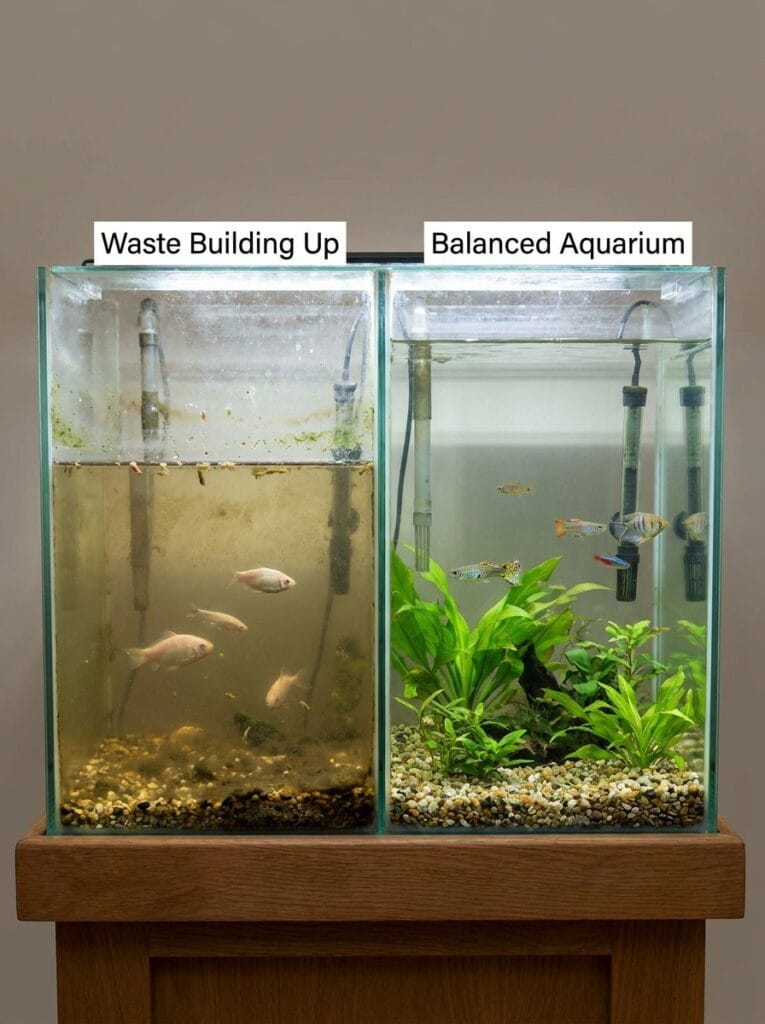
Fish constantly create waste.
Food leftovers also create waste.
Without beneficial bacteria, that waste can quickly build up and create unhealthy water conditions.
Real-Life Example
Imagine setting up a kitchen trash can but never taking the trash outside.
At first everything seems fine.
Then eventually problems start building up.
Aquariums work in a somewhat similar way.
Beneficial bacteria help process waste before it becomes a larger issue.
What To Expect
A properly cycled aquarium usually becomes easier to maintain and more stable over time.
What Happens During The Cycling Process?
Most beginner explanations immediately jump into complicated chemistry.
Let’s keep it simple.
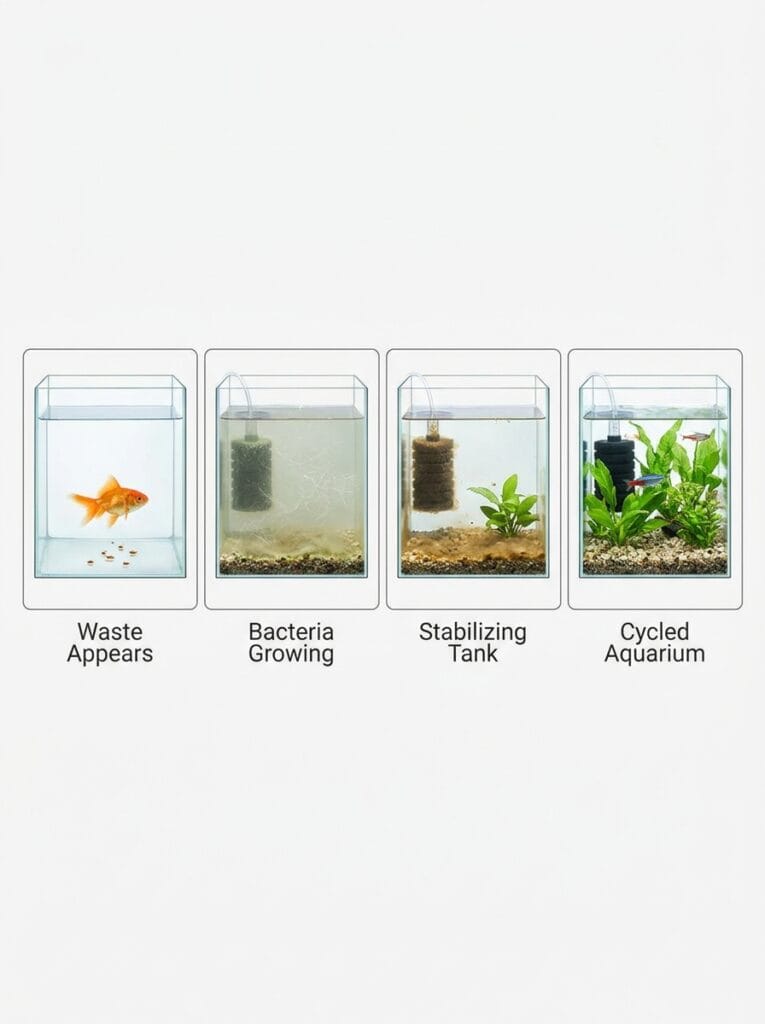
The process generally looks like this:
Fish waste or waste source appears
↓
Beneficial bacteria begin developing
↓
More bacteria gradually grow
↓
Waste processing becomes more stable
↓
Aquarium becomes safer for fish
Real-Life Hobby Moment
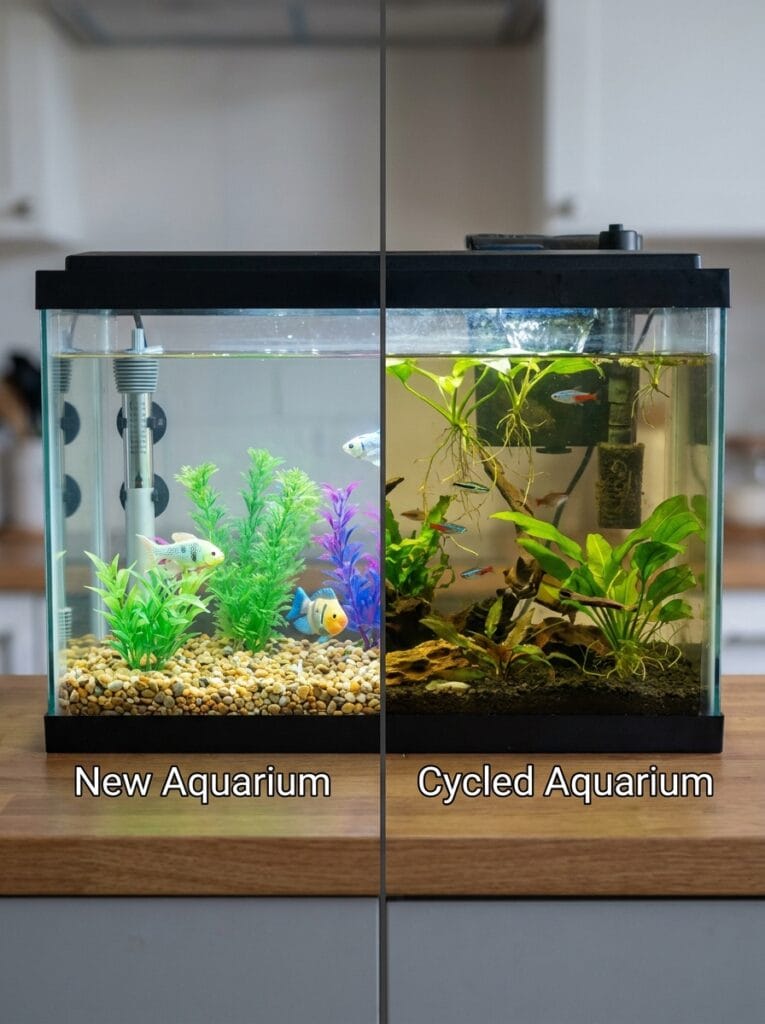
Many beginners set up a new aquarium and look at the crystal-clear water thinking:
“Everything looks finished already.”
Then they discover cycling is still happening quietly in the background.
The tank may look complete before it’s biologically complete.
Why Does Cycling Take Time?
Your aquarium isn’t simply waiting for the water to “settle.”
It’s building colonies of beneficial bacteria that help process fish waste.
These bacteria gradually establish themselves on:
- Filter media
- Substrate
- Decorations
- Plants
- Tank surfaces
Real-Life Example
A beginner sets up a beautiful aquarium on Saturday and looks at the crystal-clear water on Sunday.
Everything appears finished.
But inside the tank, beneficial bacteria are only beginning to establish themselves.
The aquarium may look ready long before it’s actually ready.
What To Expect
Cycling often feels slow in the beginning because most of the important changes are happening where you can’t see them.
Adding live greenery early in the process helps absorb nitrates—pairing your setup with easy low light aquarium plants for beginners supports stable water parameters as beneficial bacteria establish.
What Can Change Cycling Time?
Several things can speed up or slow down the process.
Understanding how long does it take for an aquarium to cycle depends heavily on whether you seed the tank with established filter media or start from scratch.
| Factor | Effect On Cycling |
| Established filter media | Usually speeds up cycling |
| Beneficial bacteria products | May help |
| Temperature | Warmer temperatures often increase bacterial activity |
| Filter quality | Better water movement can help |
| Large water changes | Can affect stability if done incorrectly |
No two aquariums are exactly alike.
That’s why comparing your tank to someone else’s timeline can sometimes create unnecessary stress.
How Long Does Aquarium Cycling Usually Take?
Cycling time varies from tank to tank.
| Cycling Method | Typical Time |
| Fishless cycle | 2–6 weeks |
| Established filter media | A few days–2 weeks |
| Seeded media | 1–3 weeks |
Think of cycling more like growing a garden than setting a timer.
Some tanks establish themselves faster than others.
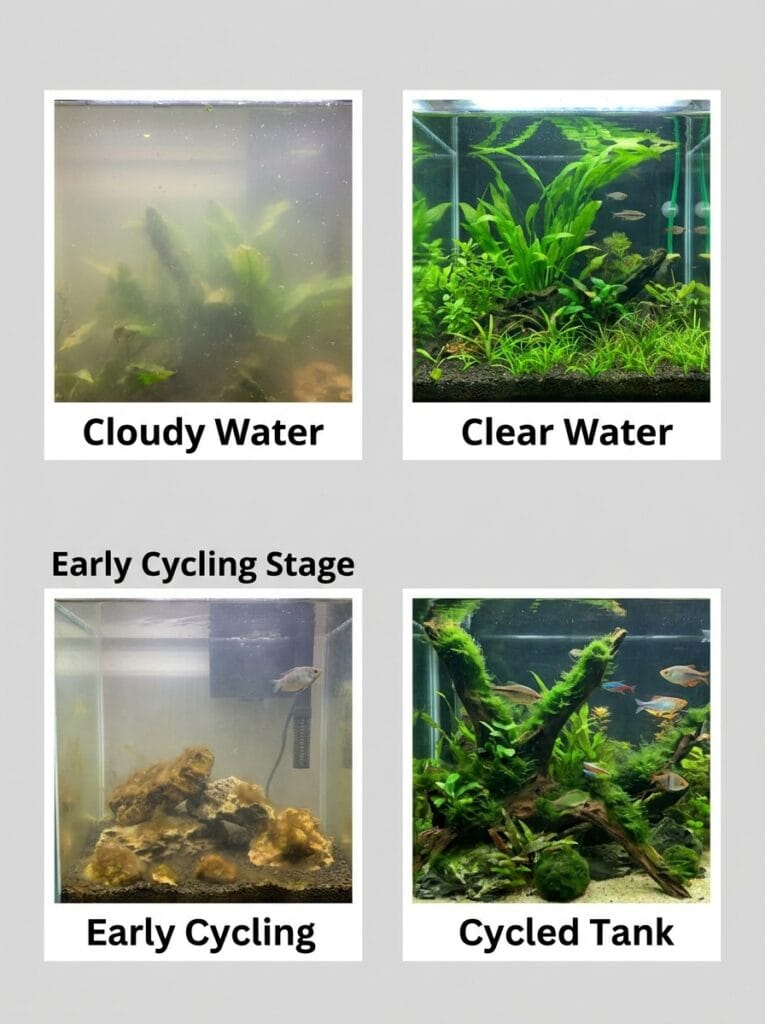
Why Beginners Often Think Their Tank Finished Cycling
This happens all the time.
The water clears up.
Fish seem okay.
Everything looks normal.
So naturally people assume:
“Looks finished to me.”
Real-Life Example
Many beginners become excited when cloudy water disappears after a few days and assume the cycle is complete.
Then fish are added too quickly and problems begin appearing a week later.
Clear water and a completed cycle are not always the same thing.
Beginner Rules That Make Cycling Easier
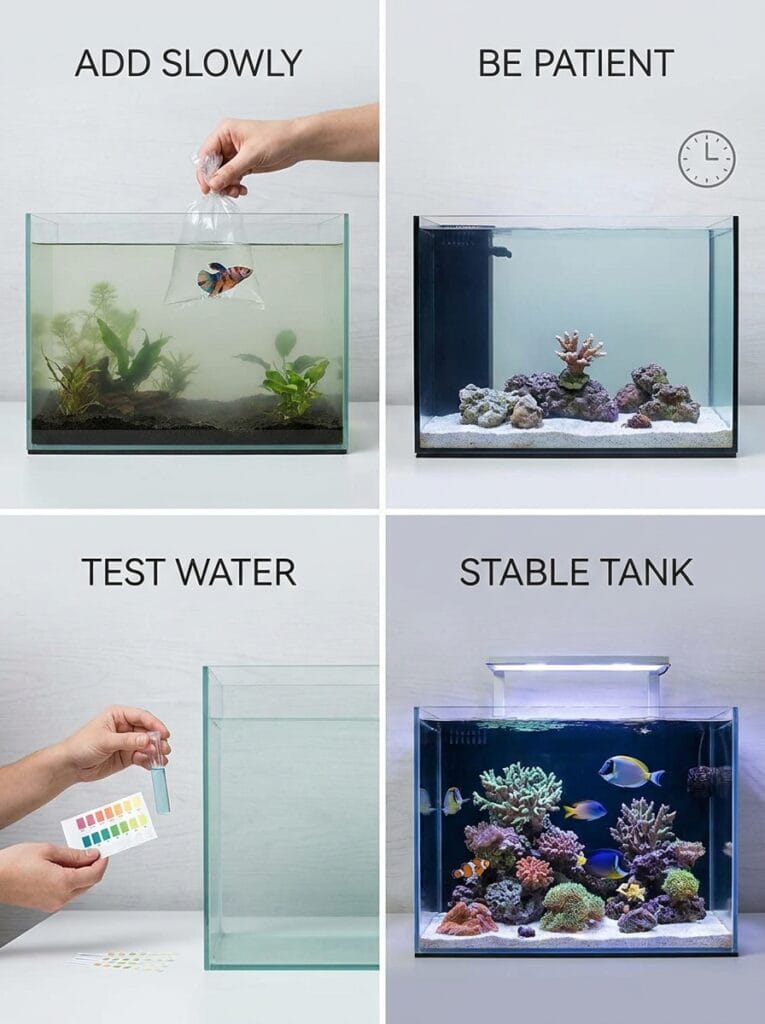
Rule 1: Don’t rush fish additions
Adding too many fish too quickly creates problems later.
If you’re wondering how many fish a tank can comfortably support, our guide on How Many Fish Can I Put in My Aquarium? can help.
Rule 2: Be patient with changes
Constantly adjusting equipment, temperatures, or water conditions often creates confusion.
Rule 3: Focus on stability
Stable conditions usually help aquariums more than constant tinkering.
Real-Life Hobby Moment
Many aquarium owners have had that moment where they stare at a new tank thinking:
“Maybe I can add just one fish today.”
A few days later that “one fish” somehow became several fish.
Excitement is completely normal.
New aquariums just tend to reward patience.
5 Signs Your Aquarium May Still Be Cycling
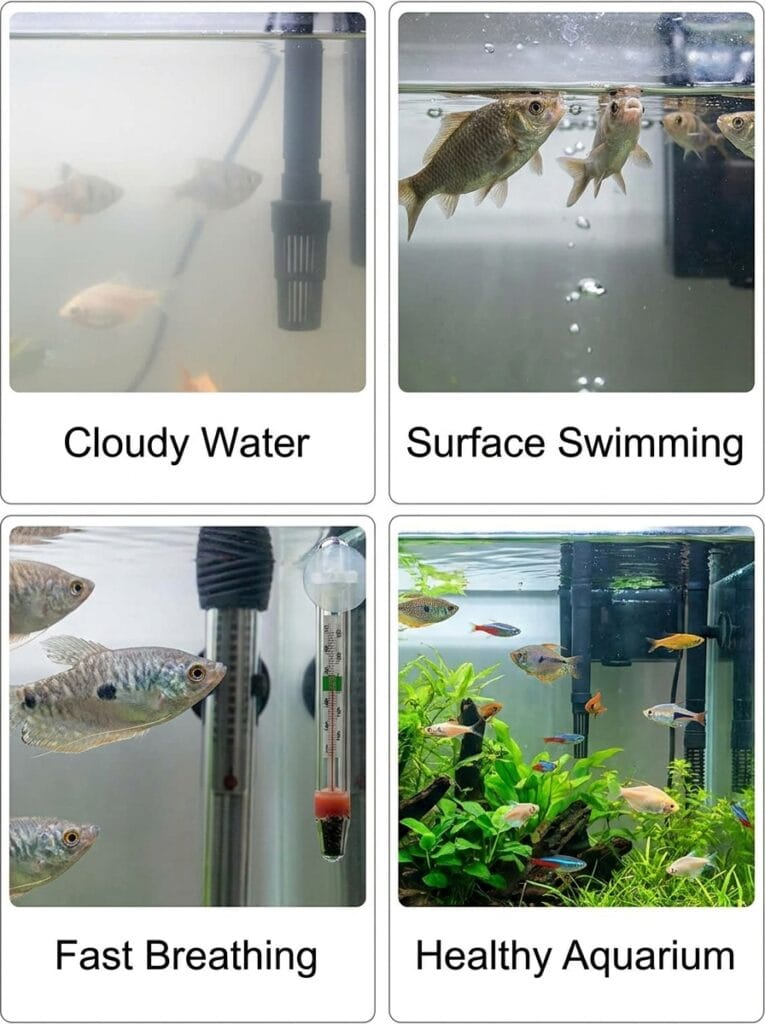
| Sign | What You May Notice |
| Cloudy water | Water appearance changing |
| Fish stress | Reduced activity |
| Surface swimming | Fish seeking oxygen |
| Water changes becoming frequent | Conditions changing quickly |
| Water tests fluctuating | Tank stability developing |
If your fish are spending unusual amounts of time near the surface or breathing faster than normal, your aquarium may still be adjusting.
Helpful Next Reads
Cycling timelines are easier to understand when you track water quality and know when it is safe to add fish.
Still learning the basics? Read Aquarium Cycling Explained for Beginners.
Need to check ammonia, nitrite, and nitrate? Use our guide on how to test aquarium water correctly.
Want a beginner-friendly testing option? See our beginner aquarium test kit guide.
Thinking about adding fish soon? Read our guide on adding fish after setting up a tank.
Planning your fish list? Our guide to how many fish you can put in an aquarium can help you avoid overcrowding.
CONCLUSION
Aquarium cycling usually takes a few weeks, but there isn’t a perfect universal timeline.
The important thing to remember is that clear water doesn’t always mean a tank is biologically ready.
Most beginners feel tempted to speed things up because the aquarium already looks finished.
That’s normal.
But giving your tank time now often prevents much bigger problems later.
Healthy aquariums usually reward patience.
FAQs
Can an aquarium cycle in one day?
Most aquariums will not fully cycle in a single day, although established filter media can sometimes speed things up significantly.
Does clear water mean my aquarium is cycled?
No. Water can look crystal clear while beneficial bacteria are still developing.
Can plants speed up aquarium cycling?
Plants may help create a more stable environment, but they don’t instantly complete the cycle.
What happens if I add fish too early?
Adding fish too early can create water quality problems and stress fish.
If you’ve already added fish immediately after setup, the next guide may help.