
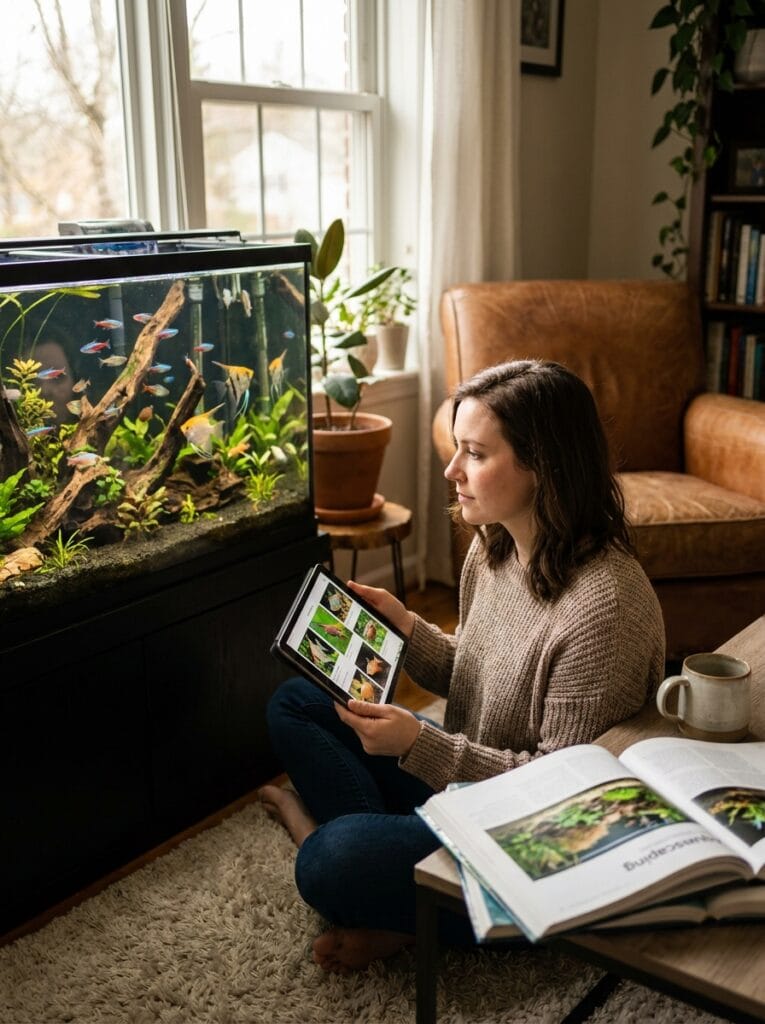
Stocking an aquarium sounds simple at first.
You buy a tank.
You add water.
You visit the fish store.
Then suddenly you’re standing in front of dozens of colorful fish thinking:
“That one looks nice…and that one…and maybe just a few more.”
Many beginners don’t run into problems because they care too little.
Usually it’s the opposite.
They’re excited.
They want their aquarium to look active and full of life.
The problem is that a few small stocking mistakes can quietly create bigger issues later.
Cloudy water.
Stressed fish.
Unexpected aggression.
Maintenance becoming harder than it should be.
The good news?
Most stocking mistakes are completely avoidable once you know what to look for.
Let’s walk through some of the most common ones.
Quick Answer — What Is The Biggest Beginner Stocking Mistake?
If there is one mistake that causes more beginner problems than almost anything else, it’s this:
Adding too many fish too quickly.
Aquariums need time to adjust biologically.
Fish stores can make tiny fish look harmless because, well…they are tiny.
But your aquarium experiences them very differently.
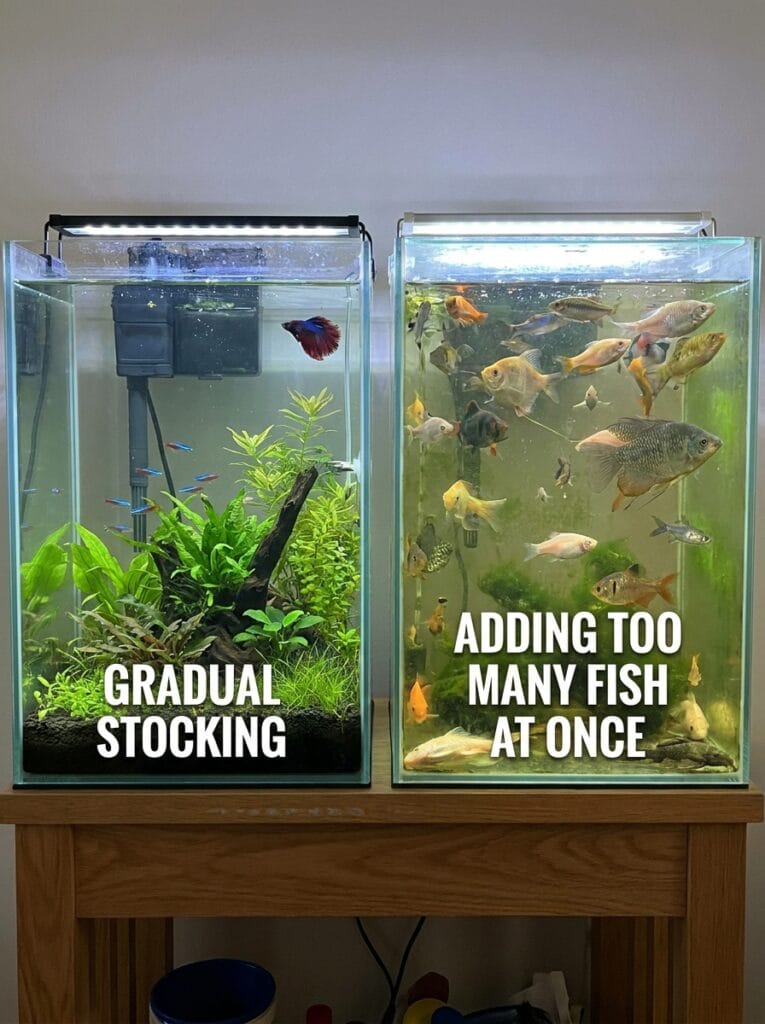
Mistake #1: Adding Too Many Fish At Once
A new aquarium can look surprisingly empty.
And empty space tricks a lot of people.
Real-Life Example
Many beginners walk into a fish store planning to buy two or three fish and somehow leave carrying six or seven because they looked small in the store.
Everything seems fine at first.
Then a week later:
- Water becomes cloudy
- Fish begin acting stressed
- Maintenance suddenly becomes frustrating
The tank wasn’t necessarily too small.
The biological system simply wasn’t ready.
How To Avoid It
- Add fish gradually
- Give your tank time to adjust
- Test water regularly in new setups
What To Expect
A slower approach usually creates a healthier and more stable aquarium.
Mistake #2: Ignoring Adult Fish Size
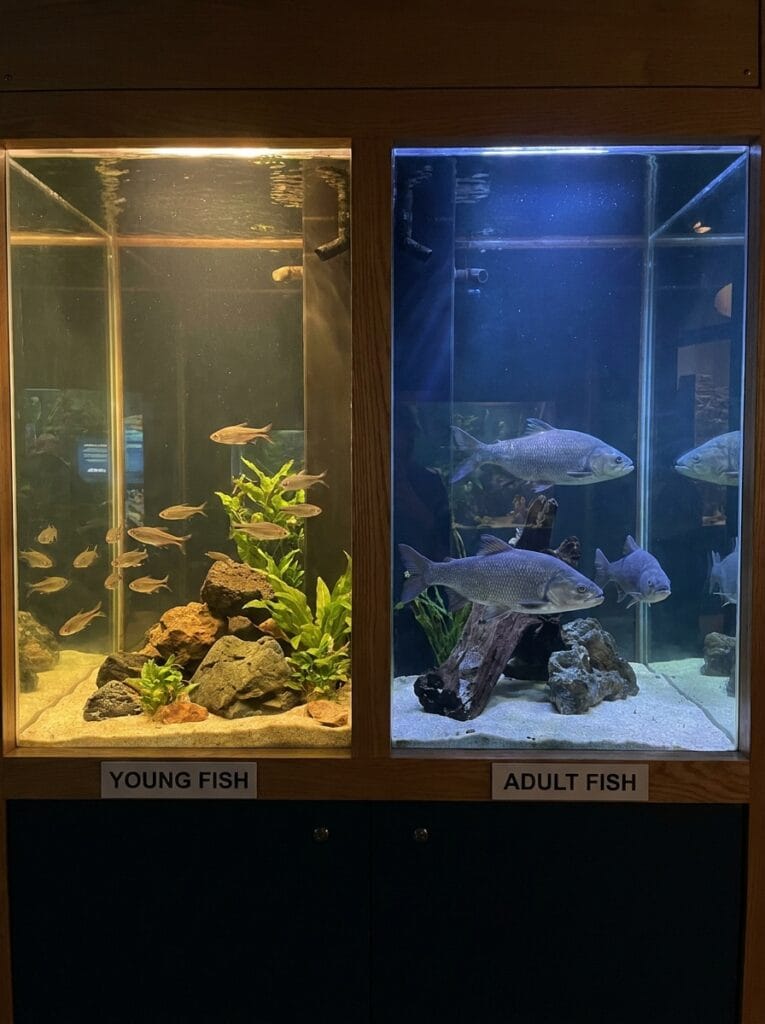
Tiny fish in stores don’t stay tiny forever.
This catches beginners all the time.
A fish that looks perfectly comfortable today may become a completely different situation several months later.
Real-Life Example
A beginner buys several small fish because they seem like perfect additions to a community aquarium.
Months later those “small fish” have doubled in size and suddenly swimming space feels much tighter.
How To Avoid It
Always check:
- Adult size
- Swimming requirements
- Tank recommendations
What To Expect
Planning around adult fish size creates fewer surprises later.
Mistake #3: Choosing Fish That Don’t Actually Belong Together
Fish compatibility isn’t only about aggression.
Different fish prefer different environments.
Some want:
- Fast water movement
- Calm water
- Warm temperatures
- Cooler temperatures
- Schools
- Territories
Two fish may look beautiful together and still make poor tank mates.
How To Avoid It
Research fish compatibility before bringing them home.
A few minutes of planning often prevents a lot of frustration later.
Mistake #4: Chasing A “Full Tank” Look
his one surprises a lot of beginners.
Many experienced hobbyists intentionally leave extra room in their aquariums.
Why?
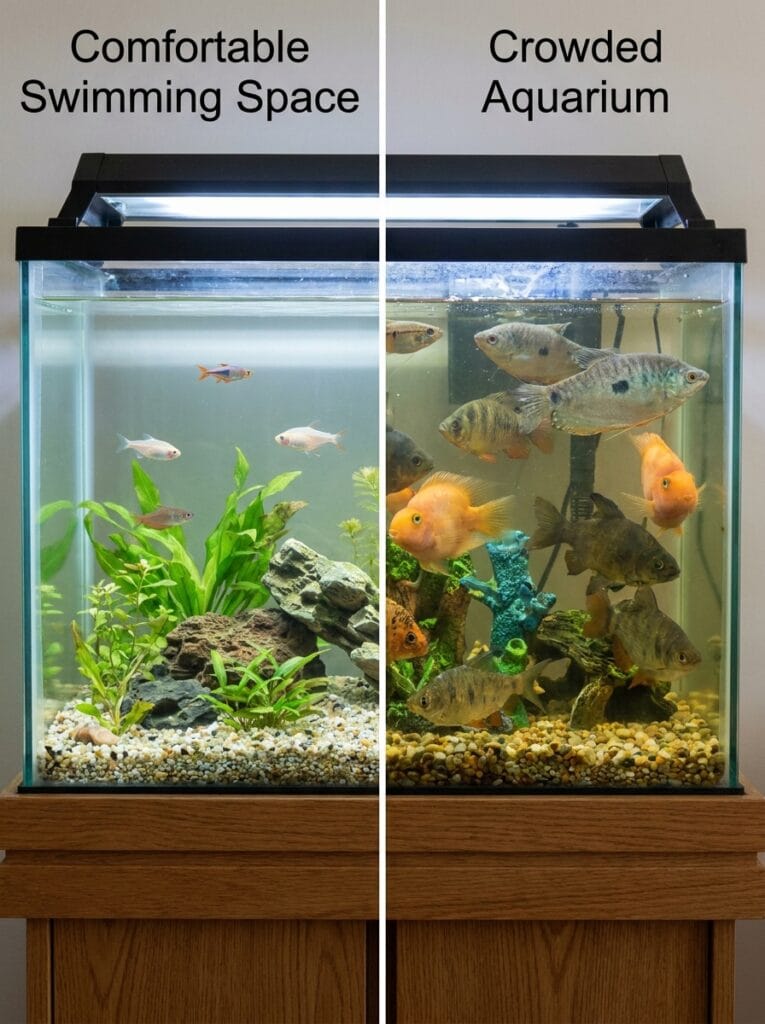
Because fish often behave better when they have space.
Real-Life Example
A lightly stocked aquarium often looks slightly empty during the first few weeks.
But after plants grow in and fish become comfortable, the tank usually starts feeling much more natural.
What To Expect
Sometimes fewer fish create more beautiful aquariums.
Mistake #5: Assuming Bigger Filters Solve Everything
A stronger filter helps.
But it doesn’t magically remove stocking limits.
Filters process waste.
They don’t create unlimited swimming space or eliminate fish stress.
How To Avoid It
Think about:
- Space
- fish behavior
- oxygen levels
- long-term maintenance
Not only filtration.
5 Signs Your Aquarium Might Be Overstocked
| Sign | What You May Notice |
| Fish breathing faster | Fish seem stressed |
| Fish near the surface | Possible oxygen issues |
| Cloudy water | Waste building up |
| Increased aggression | Fish competing for space |
| Frequent maintenance | Filters becoming dirty faster |
If your fish start hanging around the surface more often or breathing unusually fast, your aquarium may already be showing early signs of stress.
You may also want to read:
Helpful Next Reads
Stocking mistakes are easier to avoid when you understand tank size, cycling, and water quality before adding more fish.
Still choosing a tank? Read our guide to choosing the right aquarium size for beginners.
Not sure how many fish is safe? See our guide on how many fish you can put in an aquarium.
New tank still settling? Start with Aquarium Cycling Explained for Beginners.
Need to check water quality first? Use our guide on how to test aquarium water correctly.
Want a beginner-friendly testing option? See our beginner aquarium test kit guide.
CONCLUSION
Almost every aquarium hobbyist has made at least one stocking mistake.
It’s part of learning.
The goal isn’t building a perfect aquarium on day one.
The goal is building a healthy aquarium that becomes easier and more enjoyable over time.
Start slowly.
Give fish room to grow.
And remember that a calm, comfortable aquarium usually looks better than a crowded one.
FAQ
What is the most common beginner stocking mistake?
Adding too many fish too quickly is one of the biggest causes of beginner aquarium problems.
Can a filter fix overstocking?
No. Filters help process waste but do not remove stocking limitations.
Is it better to slightly understock a tank?
For many beginners, yes. Slightly understocked tanks are often easier to maintain.
Why does my aquarium become cloudy after adding fish?
Sudden increases in waste can affect water quality and bacterial balance.