
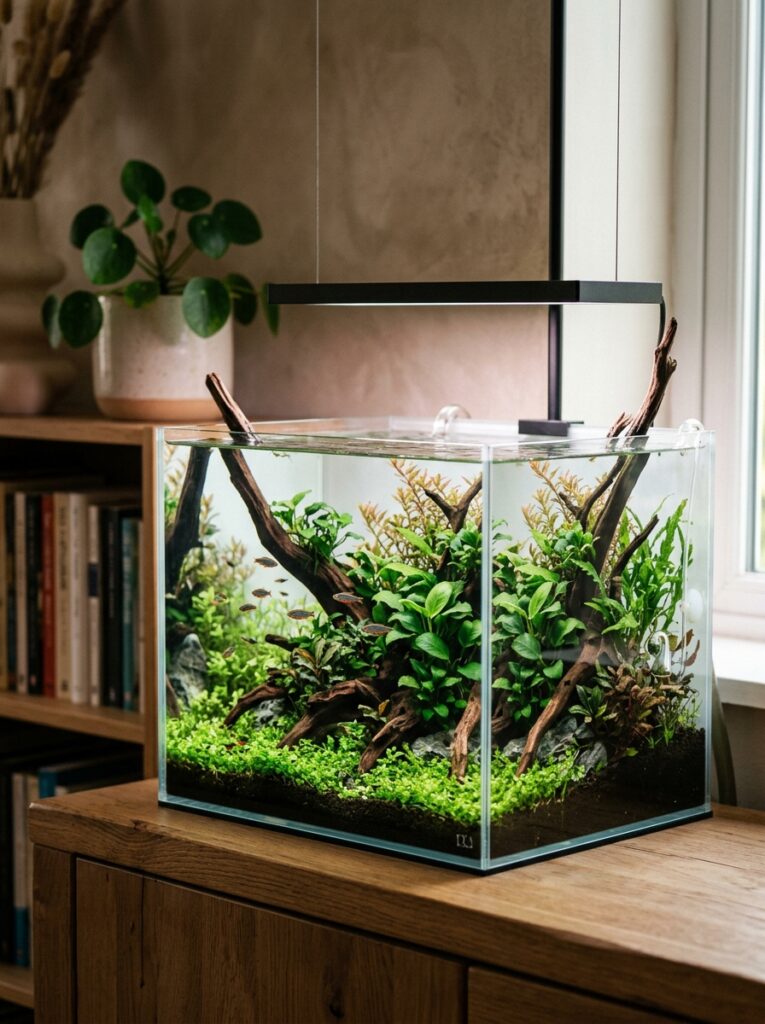
If you’re exploring minimalist aquascaping ideas to bring a touch of nature into your modern apartment, bedroom, or home office, you are on the right track. Traditional planted tanks often require heavy trimming, high-tech CO2 systems, and hours of weekly pruning. Minimalist aquascaping flips that script entirely—focusing on clean lines, intentional negative space, and low-maintenance plants that create a peaceful focal point without becoming a second job.
The secret to a stunning minimalist aquarium isn’t adding more plants or expensive gear. It’s knowing what to leave out so the rest of the tank can breathe.
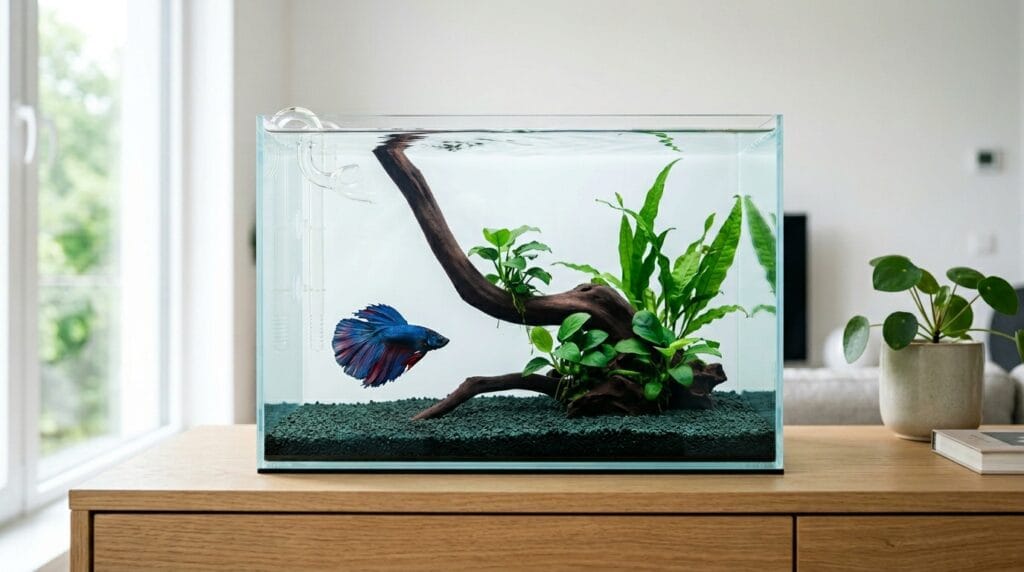
PetYeti 10-Second Minimalist Design Rule
- The 60/40 Space Principle: Keep at least 60% of your tank’s volume open for swimming and water flow, concentrating your plants and hardscape in the remaining 40%.
- One Star Element: Choose either one striking piece of driftwood OR a single dominant stone group as your primary focal point—never compete for attention with too many mixed materials.
- Understand Why Minimalist Aquascaping Feels More Relaxing
- 5 Minimalist Aquascaping Styles for Modern Homes
- 2. The Centered Island Layout
- 3. The Triangular (Corner Slope) Layout
- 4. The "Single Specimen" Feature
- 5. The Concave (U-Shape) Valley Layout
- Choosing the Right Hardscape for a Minimalist Aquarium
- Using Open Space to Create a Balanced Aquascape
- Best Plants for Minimalist Nano Aquariums
- Natural Driftwood and Stone Layout Ideas
- Minimalist Aquascaping Styles for Modern Homes
- Common Minimalist Aquascaping Mistakes to Avoid
- Creating a Calm Aquarium That Feels Timeless
- CONCLUSION
- FAQs
As an Amazon Associate, PetYeti earns from qualifying purchases. This comes at no additional cost to you and helps support the site. We only recommend products we genuinely believe can help create healthier and more enjoyable aquariums.
Understand Why Minimalist Aquascaping Feels More Relaxing
Minimalist aquascaping often feels more calming because it reduces visual clutter and allows natural elements to stand out more clearly. Open swimming space, balanced layouts, and carefully selected plants usually create a softer and more peaceful atmosphere compared to overcrowded aquariums filled with excessive decorations.
Many modern aquascapes focus on simplicity because cleaner compositions naturally blend better with cozy apartments, bedrooms, and workspaces. Instead of trying to fill every inch of the aquarium, minimalist layouts use intentional spacing to create visual balance and a stronger sense of calm.
This style also allows fish movement, plant textures, and natural hardscape details to become the main focus without overwhelming the viewer.
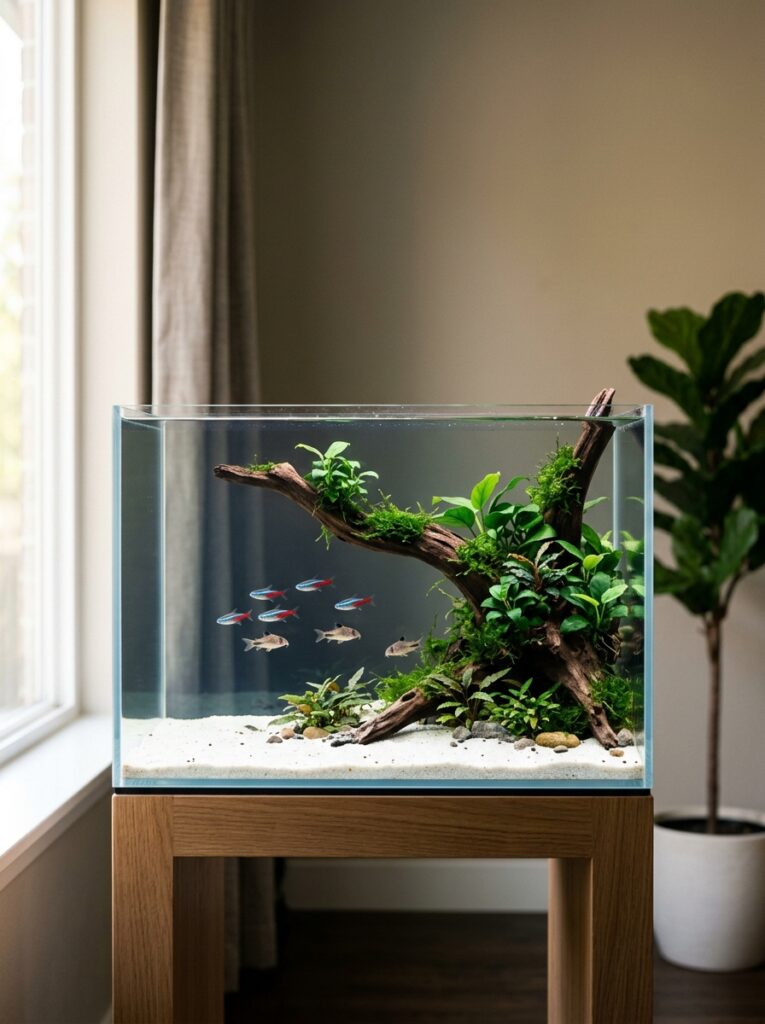
5 Minimalist Aquascaping Styles for Modern Homes
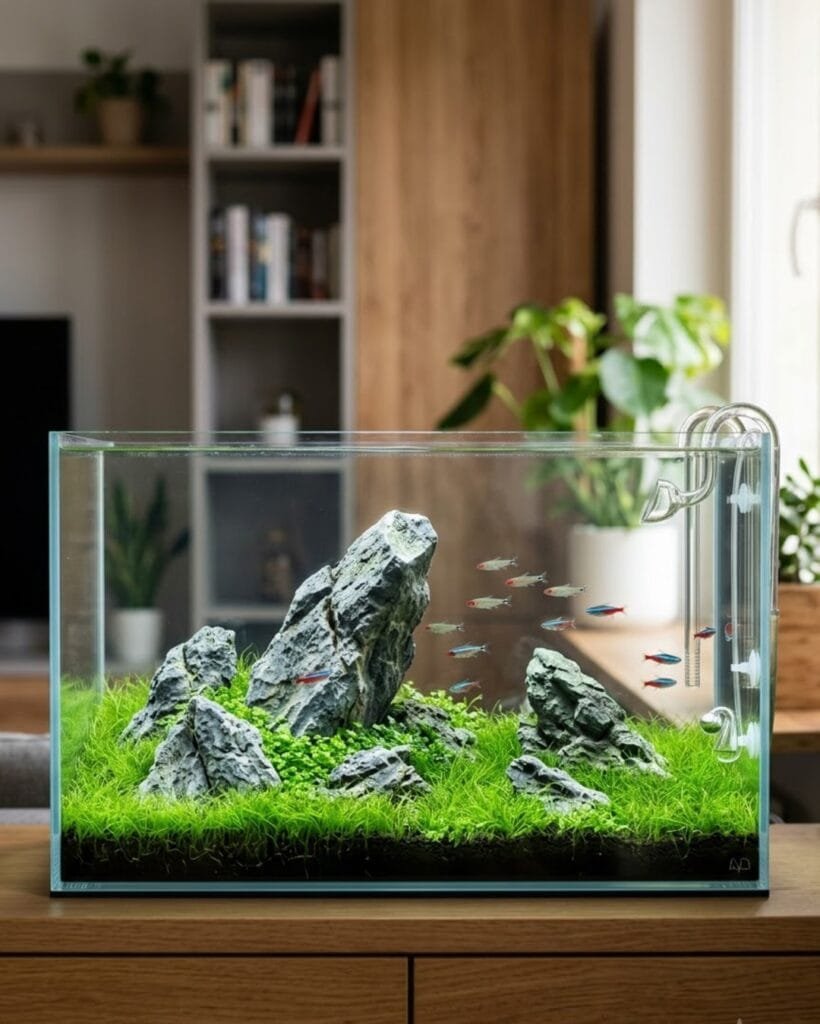
1. The Iwagumi Style (Japanese Stone Garden)
Inspired by traditional Japanese rock gardens, the Iwagumi style uses an odd number of stones (usually 3 or 5) placed deliberately in a carpet of low-growing greenery. The largest stone (Oyaishi) serves as the main anchor, balanced by smaller supporting stones (Fukuseki and Soeishi).
- Best For: Desk aquariums, rimless tanks, and peaceful single-species setups (like a swarm of Cardinal Tetras or Cherry Shrimp).
- Top Plants: Monte Carlo, Dwarf Hairgrass (Eleocharis parvula), or Mini Christmas Moss.
- PetYeti Pick: Natural Seiryu Stones or Dragon Stones offer rich, textured grooves that give small stone layouts instant depth and character.
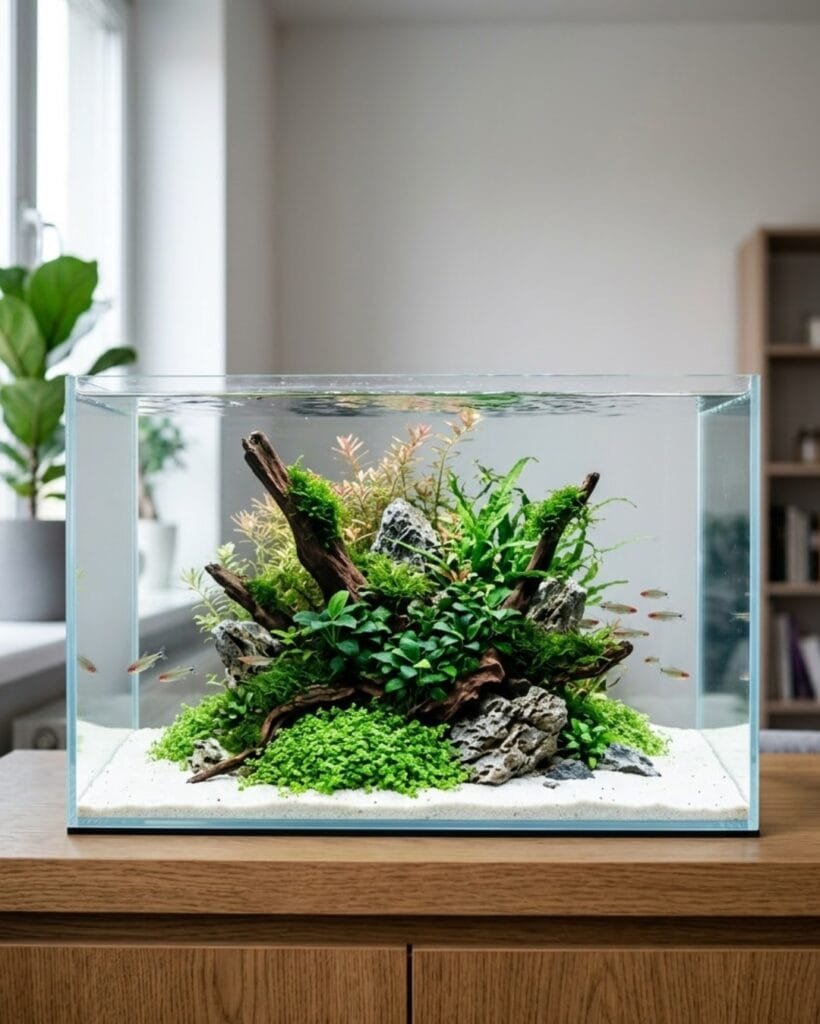
2. The Centered Island Layout
An island layout concentrates all wood, stone, and plants right in the middle of the aquarium, leaving open water and bare sand completely surrounding the center structure. This creates an inviting “floating garden” effect that looks incredible from every angle in living rooms.
- Best For: Square rimless cube tanks (5–15 gallons) and living room coffee tables.
- Top Plants: Anubias Nana Petite, Java Fern Mini, and Buceglandra attached directly to the center wood using thread or gel.
- PetYeti Pick: A single piece of branching Spiderwood or Manzanita Wood serves as an effortless, sculptural centerpiece for an island design.
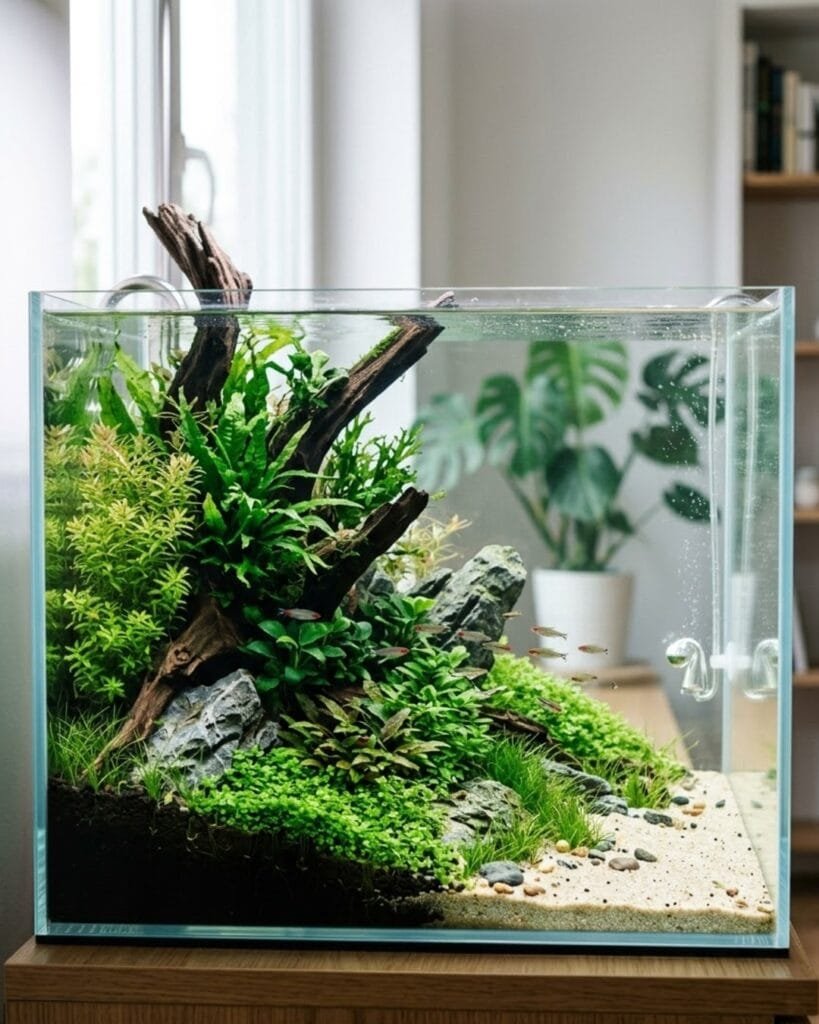
3. The Triangular (Corner Slope) Layout
By building up hardscape and substrate high in one back corner and sloping it downward toward the opposite front corner, you create a dynamic diagonal line. This design directs the eye naturally across the aquarium while leaving a huge open swimming bay for active nano fish.
- Best For: Long rectangular tanks (10–20 gallons) and home office desks.
- Top Plants: Cryptocoryne Parva along the foreground, with Java Moss nestled into the wood crevices.
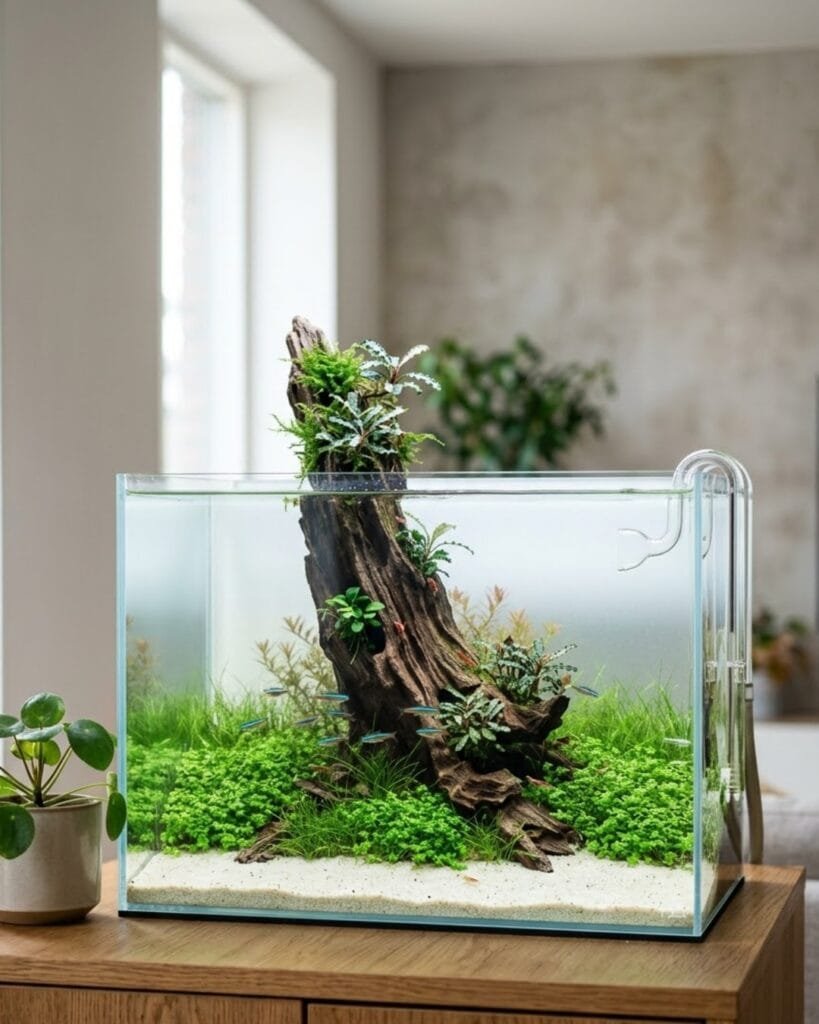
4. The “Single Specimen” Feature
If you want the absolute easiest, zero-stress aquarium imaginable, focus entirely on one beautiful piece of driftwood or one prominent stone covered in slow-growing epiphyte plants. You don’t even need soil substrate—a fine layer of natural river sand is all it takes!
- Best For: Busy professionals, apartment dwellers, and beginner betta keepers.
- Top Plants: Java Fern (Microsorum pteropus) or Anubias Barteri tied to driftwood.
- PetYeti Pick: Use an Ultra-Clear Rimless Glass Tank paired with a slim Clip-on LED Plant Light to elevate a simple layout into high-end home decor.
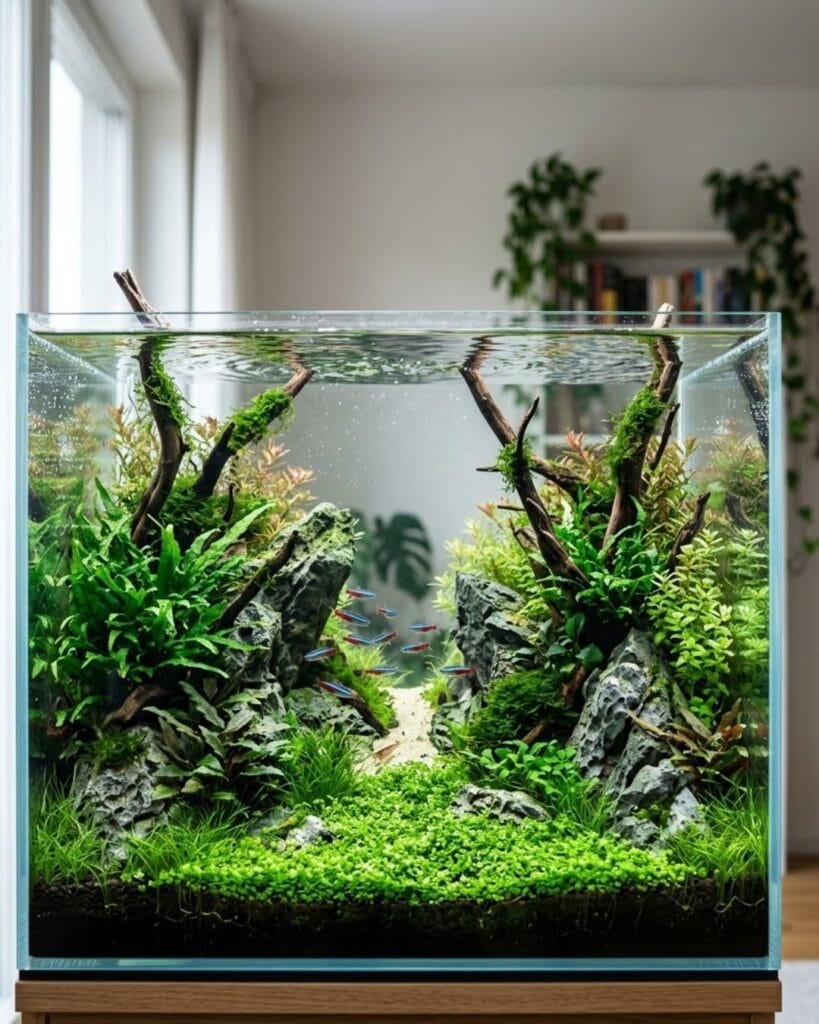
5. The Concave (U-Shape) Valley Layout
In a concave design, tall hardscape elements and plants are placed on both the far left and far right sides, leaving a low, sweeping valley through the middle. This “pathway” draws the viewer’s eye straight toward the back glass, making a small nano tank look remarkably deep.
- Best For: Creating visual depth in shallow or narrow spaces.
- Top Plants: Dwarf Sagittaria in the background corners with a clean cosmetic white sand path through the center.
Choosing the Right Hardscape for a Minimalist Aquarium
Hardscape plays a major role in minimalist aquascaping because driftwood and stones create the structural foundation of the entire layout. In smaller aquariums, carefully chosen hardscape pieces often look more elegant than overcrowded designs with too many competing elements.
Many minimalist aquascapes use natural driftwood with soft flowing shapes or smooth textured stones that create a balanced and calming appearance. The goal is not to create visual complexity, but to build a layout that feels intentional and natural inside the aquarium.
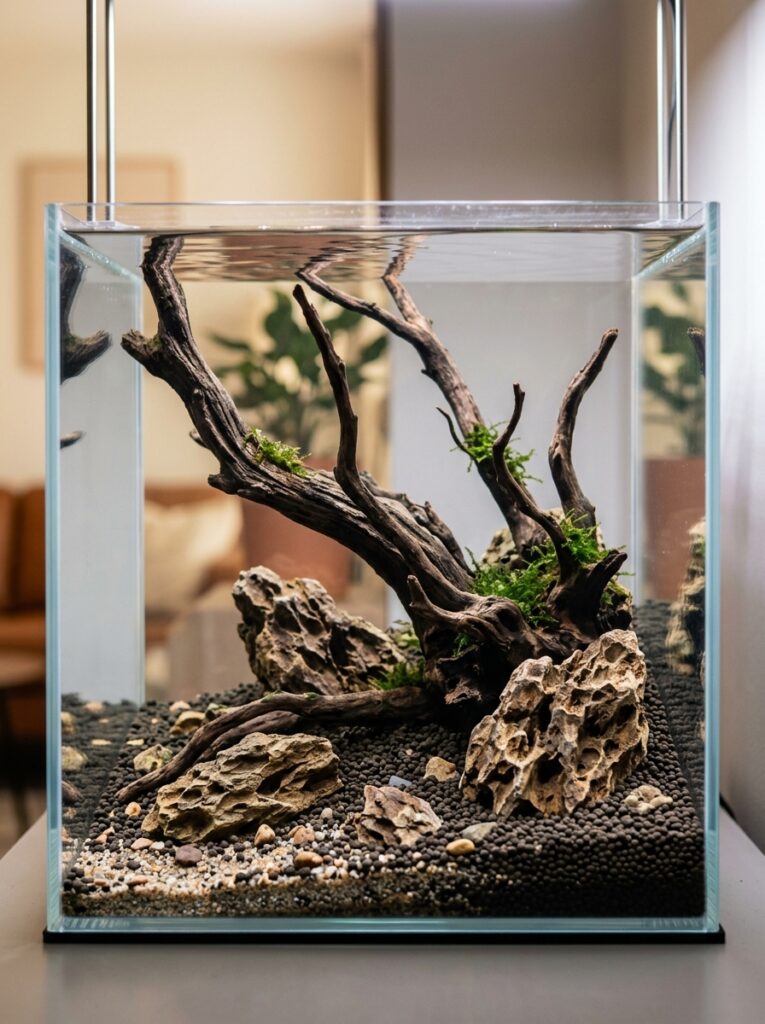
Simple hardscape arrangements usually create stronger visual impact when enough open space is left around the composition.
Using Open Space to Create a Balanced Aquascape
Open space is one of the most important design principles in minimalist aquascaping. Leaving areas of clear swimming space helps aquariums feel calmer, cleaner, and visually lighter instead of overcrowded or chaotic.
Many beginner aquascapers try to fill every area with plants or decorations, but minimalist layouts often become more beautiful when fewer elements are used intentionally. Open space allows fish movement, lighting, and hardscape details to stand out more naturally within the aquarium.
Balanced negative space also helps smaller aquariums feel larger and more peaceful inside modern living spaces.
Best Plants for Minimalist Nano Aquariums
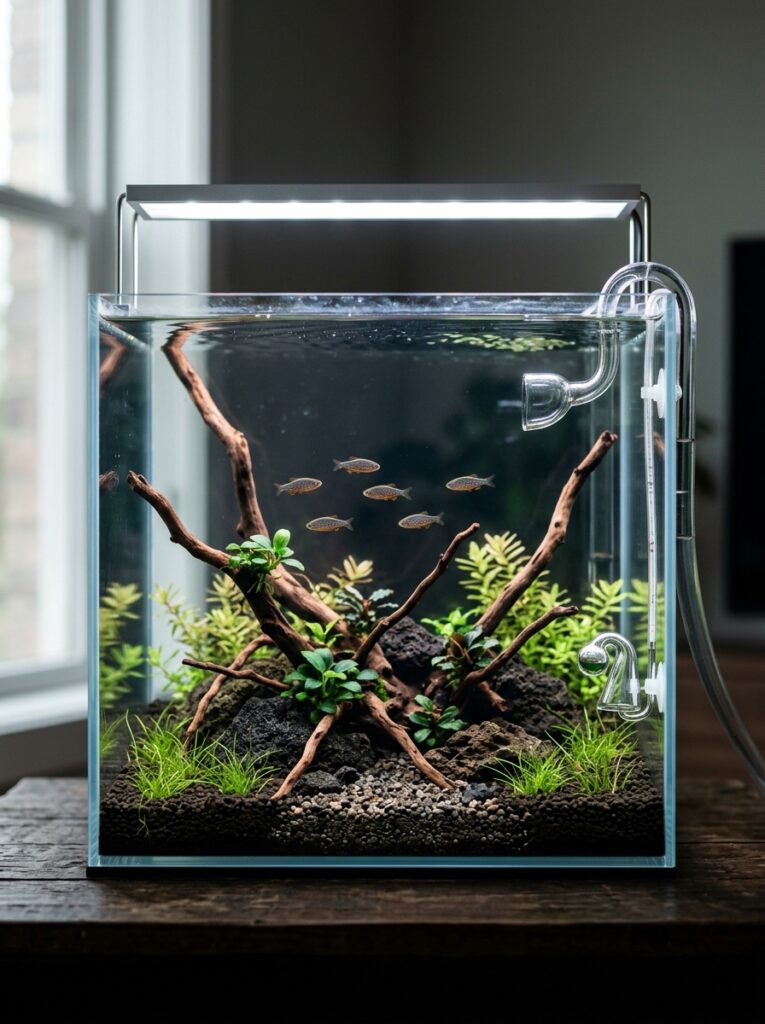
Minimalist nano aquariums usually work best with plants that have clean shapes, natural textures, and slower growth patterns. Instead of creating dense jungle layouts, minimalist aquascaping often focuses on carefully selected plants that support a calm and balanced appearance.
Plants like Anubias, Java Fern, Bucephalandra, and smaller floating plants are especially popular because they create elegant textures without overwhelming smaller aquariums. Moss attached to driftwood can also add softness while maintaining a more natural and minimal visual style.
Using fewer plant species intentionally often creates a cleaner and more timeless aquascape than overcrowding the aquarium with too many competing colors and textures.
To keep a minimalist layout looking sleek without heavy pruning, pair low-tech hardscapes with easy-care foliage like the best midground plants for beginner aquariums.
Natural Driftwood and Stone Layout Ideas
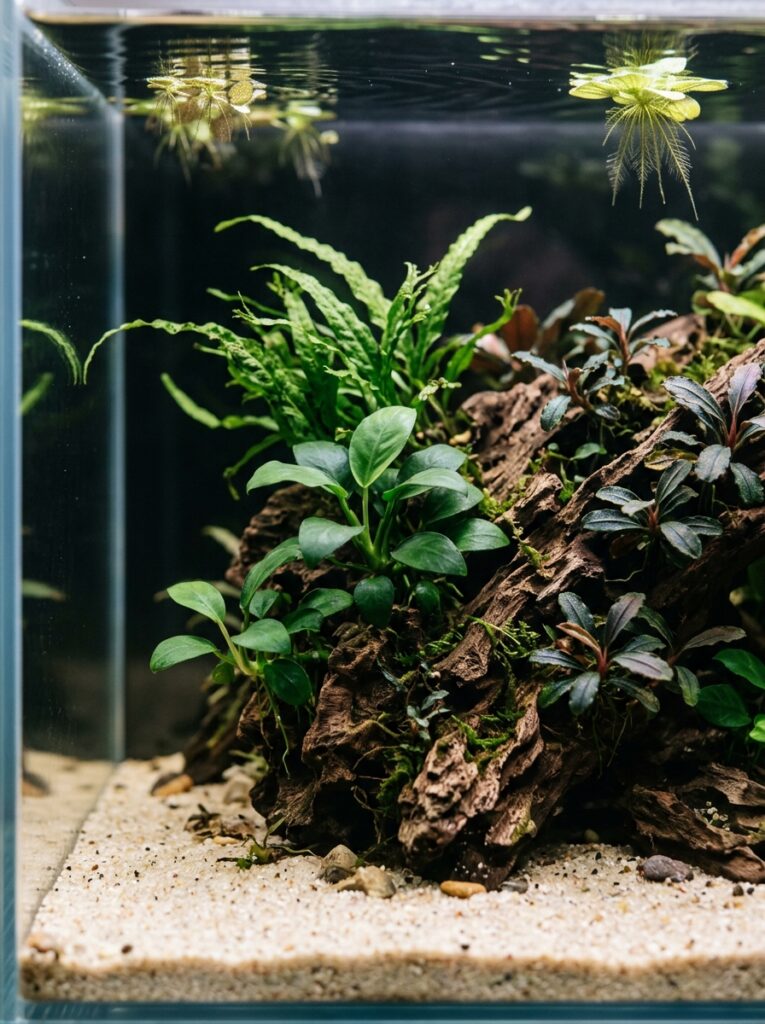
Natural driftwood and stone arrangements are often the visual centerpiece of minimalist aquascaping. Simple layouts using one dominant driftwood structure or a balanced stone composition usually create a stronger sense of calm than highly complicated hardscape designs.
Many minimalist aquascapes use asymmetrical layouts because they feel more natural and visually relaxing inside smaller aquariums. Smooth transitions between driftwood, substrate, and plants help create a softer and more organic appearance throughout the tank.
The goal is not perfect symmetry, but a layout that feels visually balanced and natural over time.
Minimalist Aquascaping Styles for Modern Homes
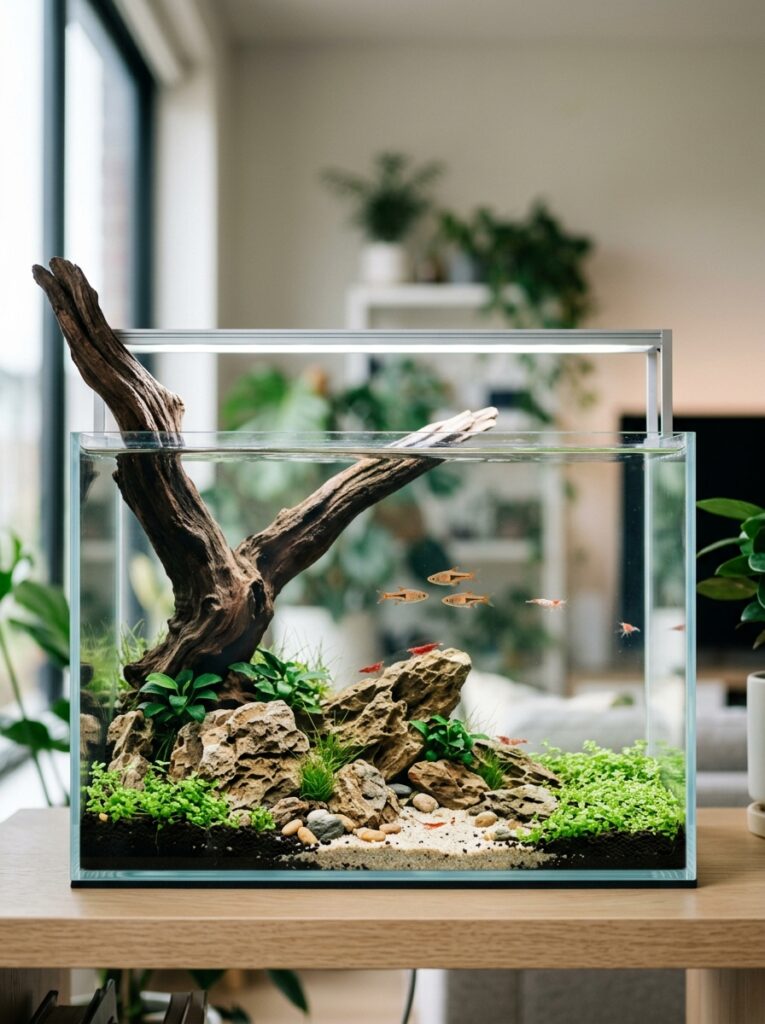
Minimalist aquascaping styles often blend naturally with modern interior design because they focus on simplicity, natural materials, and balanced visual composition. Rimless aquariums with clean layouts tend to work especially well in apartments, bedrooms, and workspaces that already use neutral tones and uncluttered decor.
Many modern homes prefer aquascapes inspired by natural environments rather than brightly colored artificial decorations. Soft lighting, natural driftwood, subtle greenery, and realistic open swimming space usually create a more timeless and calming atmosphere indoors.
If you want a broader starting point before choosing a minimalist layout, explore our aquarium setup ideas hub for beginner-friendly room and style options.
A thoughtfully designed minimalist aquascape often feels less like decoration and more like a peaceful living element integrated into the room itself.
For more real-home styling ideas, our aquarium decor ideas guide shows how plants, lighting, stands, and fish-safe decor can help a tank feel more natural in the room.
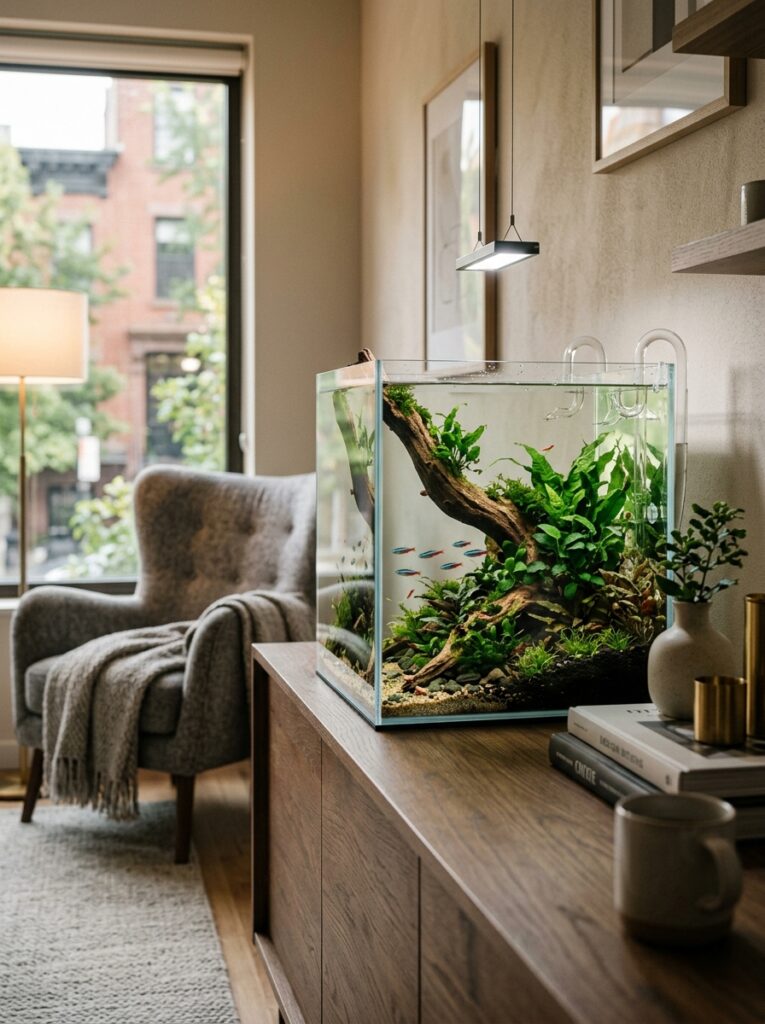
Common Minimalist Aquascaping Mistakes to Avoid
Many beginner aquascapers accidentally make minimalist layouts feel crowded by adding too many plant species, decorations, or competing hardscape elements inside smaller aquariums. Instead of creating a calm atmosphere, overcrowded layouts often feel visually chaotic and less natural over time.
Another common mistake is choosing hardscape pieces that are too large for the aquarium size. Oversized driftwood or excessive stone arrangements can make nano aquariums feel cramped and reduce the balanced open swimming space that minimalist aquascaping relies on.
Some aquascapes also become less relaxing when equipment, bright artificial decorations, or inconsistent layouts distract from the natural composition. Simplicity, intentional spacing, and realistic balance usually create the strongest long-term minimalist aquascape designs.
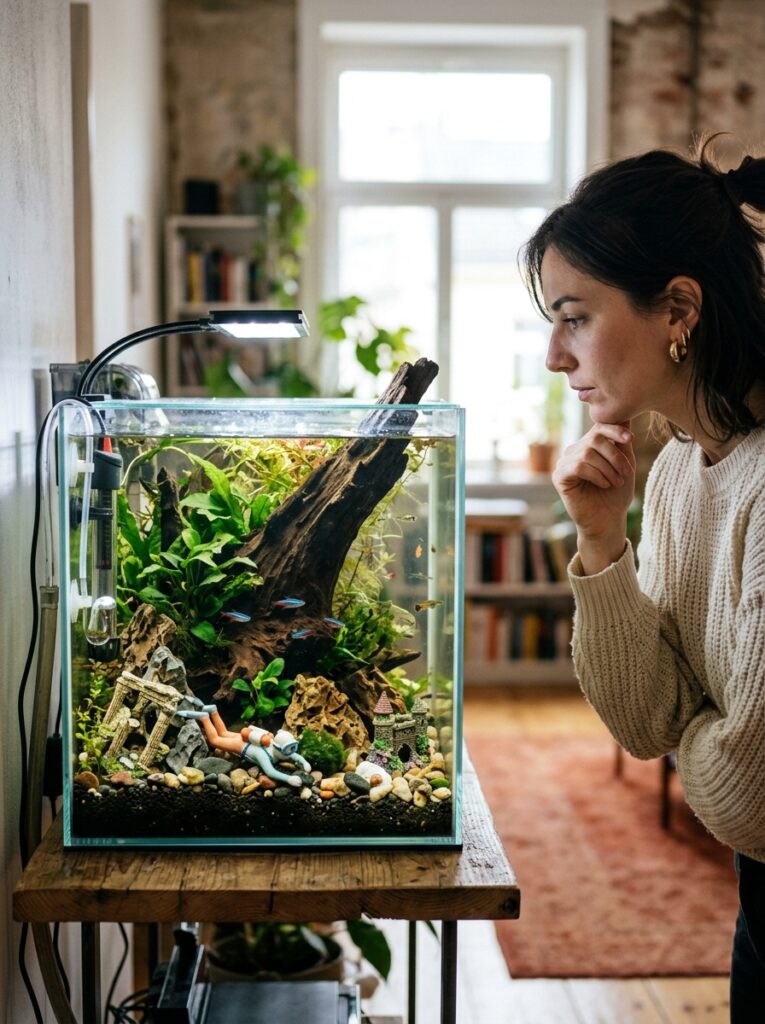
Creating a Calm Aquarium That Feels Timeless
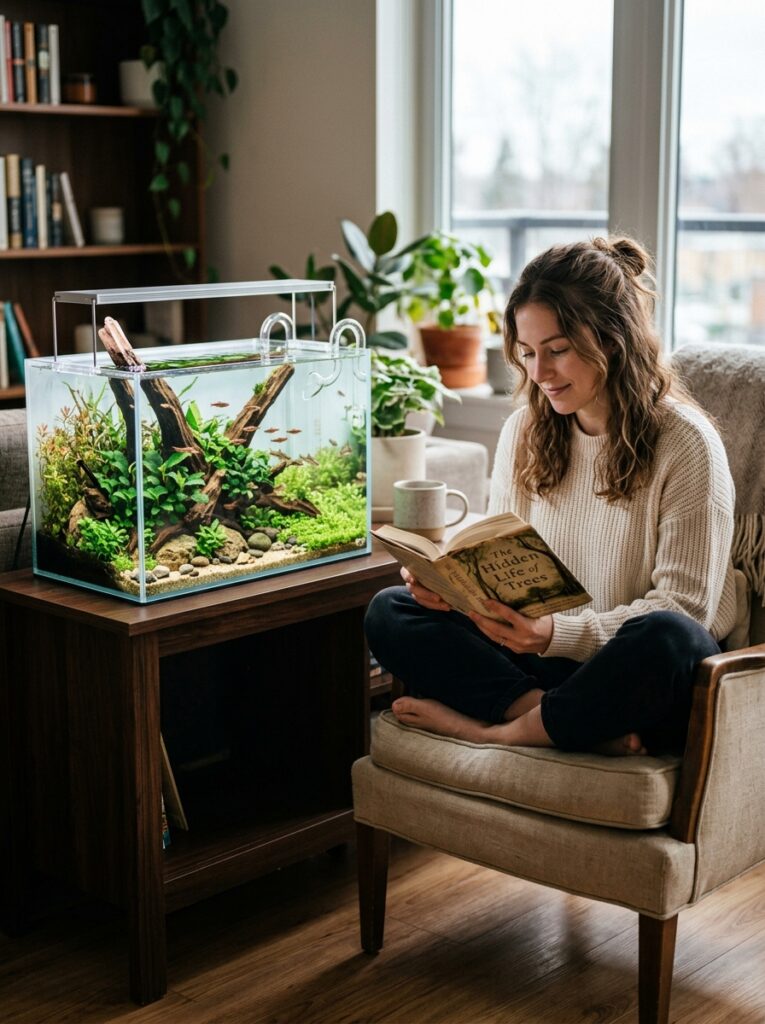
The most beautiful minimalist aquascapes often feel timeless because they focus on natural balance instead of temporary visual trends. Clean layouts, healthy plants, realistic hardscape placement, and open swimming space usually continue feeling calming long after more crowded styles begin to feel visually overwhelming.
Many timeless aquascapes use simple natural materials, softer lighting, and restrained plant selections to create an atmosphere that blends naturally into modern homes. Instead of trying to constantly redesign the aquarium, minimalist layouts often become more beautiful as plants mature and the aquascape develops naturally over time.
A calm aquascape does not need to feel perfect or overly technical. In many cases, the most relaxing aquariums are simply the ones that feel balanced, intentional, and comfortable to live beside every day.
Related PetYeti Guides
Minimalist aquascaping works best when the tank, plants, layout, and room style all feel connected. These guides can help you keep building a simple, natural aquarium look:
CONCLUSION
Minimalist aquascaping proves that you don’t need an overcrowded tank or complex equipment to create an extraordinary living art piece in your home. By embracing open space, focusing on one standout piece of stone or driftwood, and choosing hardy, slow-growing plants, you can enjoy a clean, calming slice of nature right on your desk or living room counter.
Keep it simple, let the water flow breathe, and enjoy the tranquil, low-maintenance beauty of a minimalist aquarium.
PetYeti Quick Recap: The Essentials for a Clean Aquascape
To build an elegant minimalist setup with minimal effort, start with an Ultra-Clear Rimless Glass Tank, a set of natural Dragon Stones or branchy Spiderwood, and a few low-maintenance Anubias Nana Petite plants. Add a slim LED clip light to highlight the clean lines and open swimming space.
FAQs
What is minimalist aquascaping?
Minimalist aquascaping focuses on simple natural layouts, open swimming space, healthy plants, and balanced hardscape design instead of overcrowded decorations.
Are minimalist aquariums beginner-friendly?
Yes. Many minimalist aquascapes use fewer plants and decorations, which can make smaller aquariums easier to maintain and visually less overwhelming for beginners.
What plants work best in minimalist aquascapes?
Plants like Anubias, Java Fern, Bucephalandra, moss, and floating plants are commonly used because they create natural textures without overcrowding the aquarium.
Why do minimalist aquariums feel more relaxing?
Open space, balanced layouts, and natural materials usually create a calmer visual atmosphere compared to heavily crowded aquarium designs.
Do minimalist aquascapes work well in apartments?
Yes. Minimalist aquascaping styles often blend naturally with modern apartment interiors because they feel clean, calming, and visually balanced.
Is minimalist aquascaping easier to maintain than heavily planted tanks?
Yes, significantly easier! Because minimalist aquascapes rely on intentional open space and slow-growing plants (like Anubias, Java Fern, and mosses), you won’t need to spend hours every weekend trimming stems or scraping heavy algae. Simple 15-minute bi-weekly water changes and occasional glass wiping are usually all it takes.
Do I need CO2 injection for a minimalist aquarium?
Not at all. While high-tech competitive aquascapers use pressurized CO2 to create dense carpeting plants, a stunning minimalist home tank can thrive with low-tech, easy-care plants that only require basic LED lighting and liquid fertilizer once a week.
What are the best fish for a minimalist nano tank?
Small, peaceful nano schooling fish work best because their group movements highlight the open swimming space. Great choices include Neon Tetras, Ember Tetras, Celestial Pearl Danios, Chili Rasboras, or a single colorful male Betta paired with a cleanup crew of Amano shrimp.