
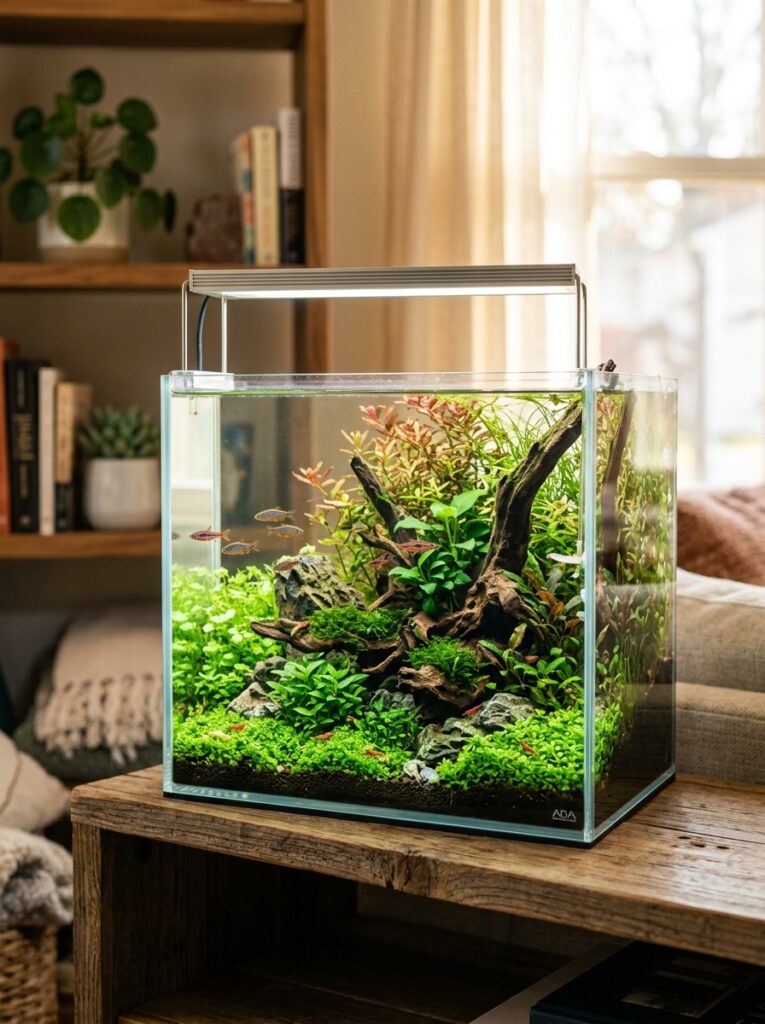
One of the biggest differences between an aquarium that looks good and one that looks professionally designed often comes down to plant placement.
That’s where foreground plants come in.
Foreground plants grow near the front of the aquarium and help create depth, scale, and visual interest. They guide the viewer’s eye through the layout and can make even a small aquarium feel larger than it really is.
The challenge is choosing plants that stay manageable. In small aquariums and nano tanks, oversized plants can quickly overwhelm the layout and hide the details that make aquascaping so enjoyable.
Fortunately, there are several foreground plants that remain compact while adding texture and beauty to the aquarium.
Let’s explore some of the best options for creating a balanced and natural-looking foreground in a small tank.
What Are Foreground Plants in an Aquarium?
Foreground plants are the plants placed near the front of an aquarium layout.
Think of them as the first thing your eyes notice when looking into the tank. Just like landscaping in a garden, foreground plants help frame the scene and create a sense of depth.
In aquascaping, plants are often grouped into three zones: foreground, midground, and background. Foreground plants are usually the shortest of the three and are selected specifically because they stay relatively compact.
Their job isn’t to dominate the aquarium. Instead, they help connect the various elements of the layout, soften hard edges, and create a more natural transition between open areas and larger plants.
In small aquariums, choosing the right foreground plants can have a surprisingly big impact on the overall appearance of the tank.
Even a simple aquarium often looks more complete once a well-planned foreground is added.
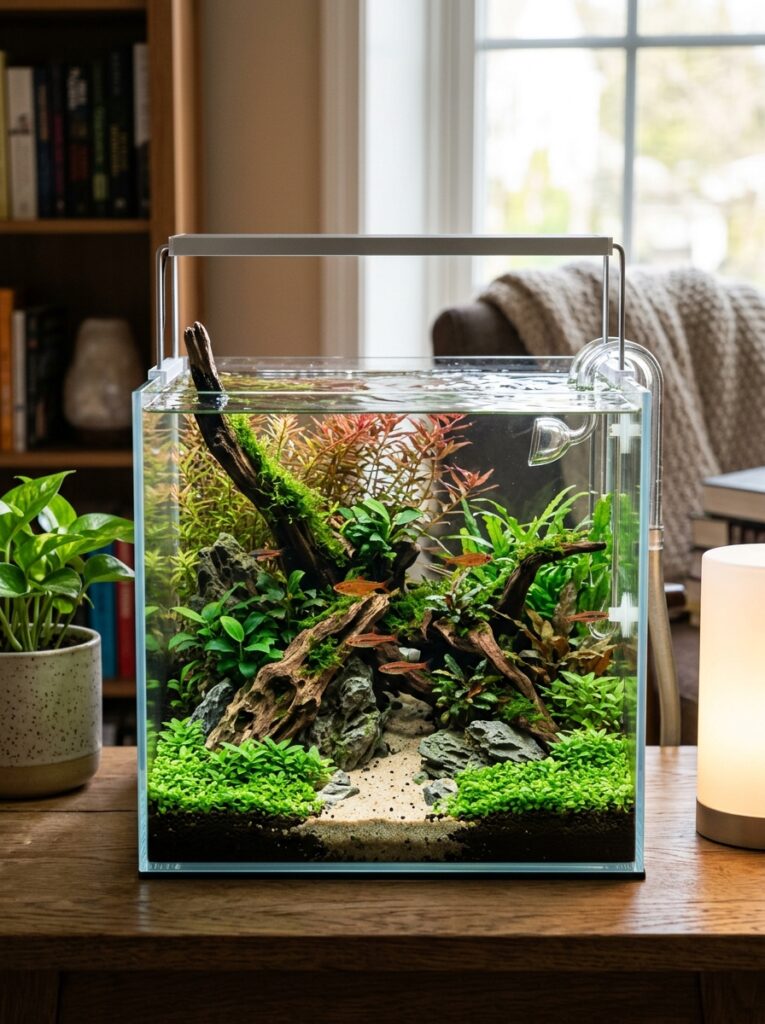
Why Foreground Plants Matter in Small Tanks
In a large aquarium, small design mistakes can sometimes go unnoticed.
In a nano tank or small aquarium, every detail becomes more visible.
That’s why foreground plants play such an important role. They help create the illusion of scale, making a compact aquarium feel deeper and more spacious than it actually is.
Foreground plants also bring attention to the front of the layout, where viewers naturally spend most of their time looking. Without them, the aquarium can sometimes feel unfinished or visually flat.
Another benefit is balance. A thoughtful foreground helps connect hardscape elements such as rocks and driftwood with the rest of the planted layout.
The result is an aquarium that feels more intentional, more natural, and often much more visually appealing.
For hobbyists who enjoy aquascaping, foreground plants are often one of the easiest upgrades they can make to a small tank.
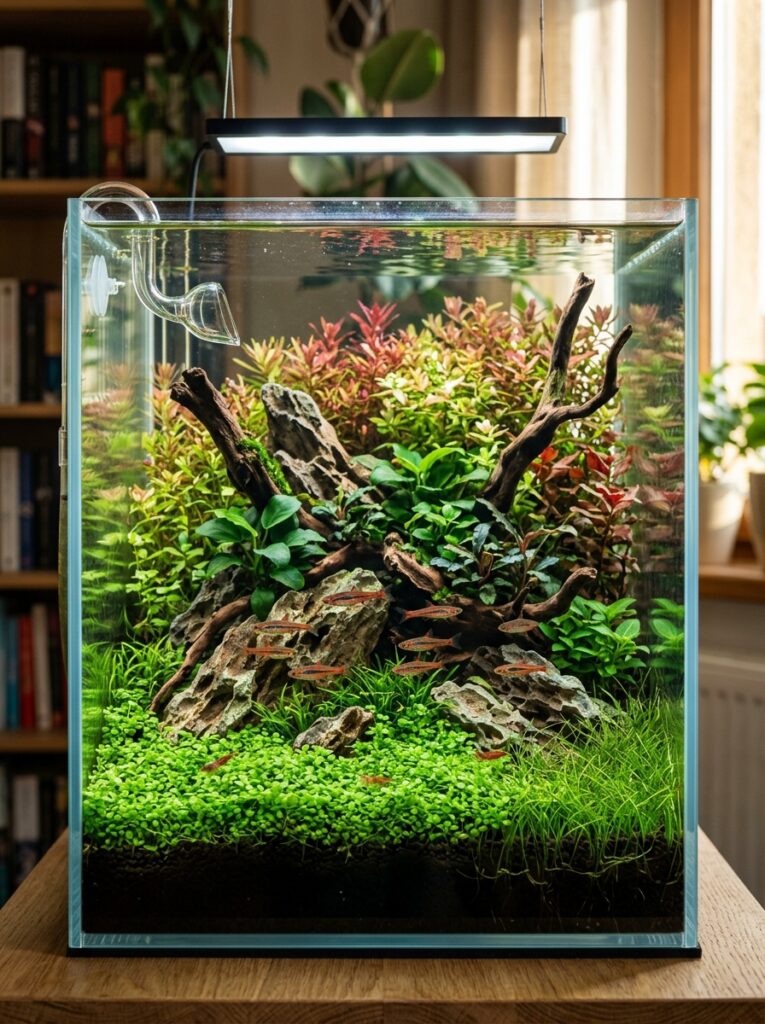
Cryptocoryne Parva: One of the Best Beginner Foreground Plants
If there were a list of foreground plants specifically designed for beginners, Cryptocoryne Parva would be near the top.
One reason hobbyists love this plant is that it stays genuinely small. Many aquarium plants start compact but eventually outgrow the foreground area. Cryptocoryne Parva is different. Its naturally short growth habit helps it maintain the scale needed for small aquariums and nano tanks.
Its narrow green leaves create a clean, tidy appearance that works well in both minimalist and nature-inspired aquascapes.
Another advantage is its manageable growth rate. While it may take time to spread, that slower growth often means less maintenance and fewer trimming sessions.
Because it remains compact and attractive over the long term, Cryptocoryne Parva has become one of the most trusted foreground plants for beginner aquascapers.
If you’re building your first planted aquarium, it’s one of the safest choices you can make.
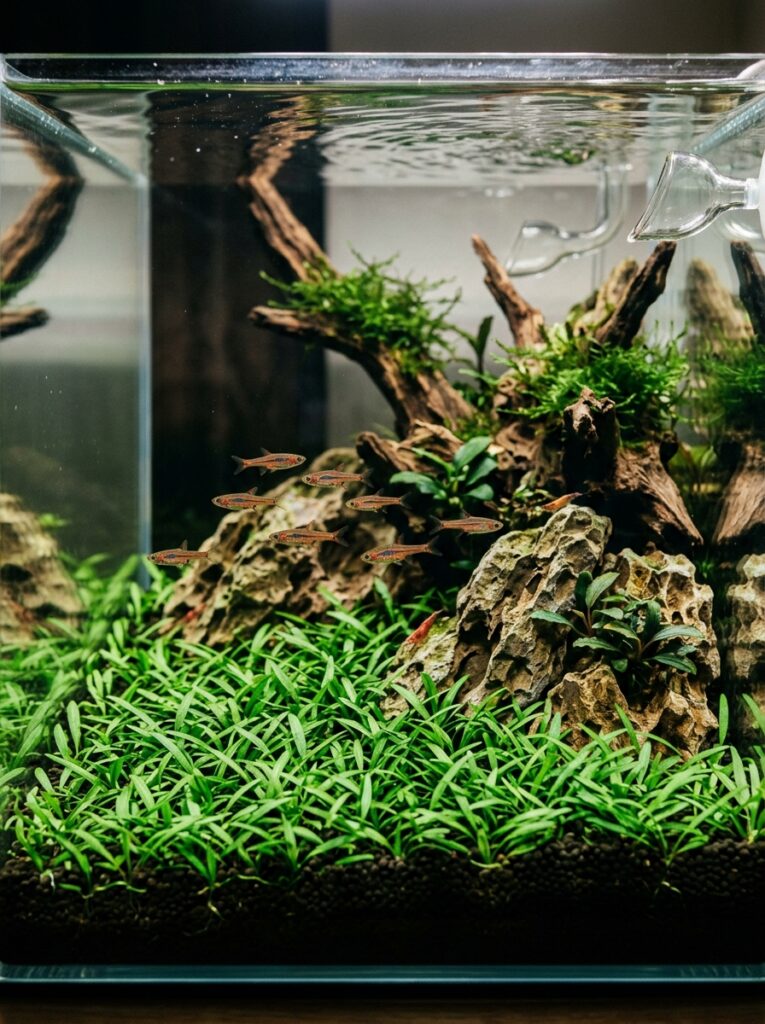
Dwarf Hairgrass for a Natural Carpet Effect
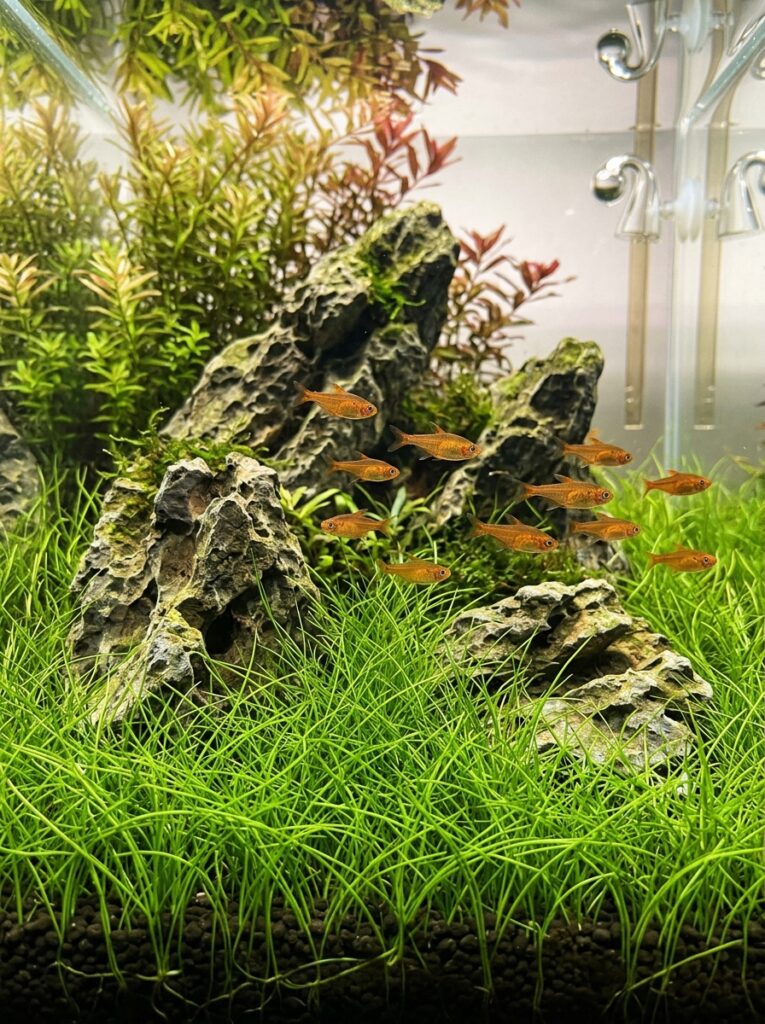
Few foreground plants create the classic aquascaping look quite like dwarf hairgrass.
Its fine, grass-like blades can form a soft green carpet across the front of the aquarium, creating the appearance of an underwater meadow.
That’s one reason it’s so popular in professional aquascapes. A healthy patch of dwarf hairgrass instantly adds texture and depth while making the aquarium feel larger and more open.
In smaller tanks, it can be especially effective because its delicate appearance helps maintain scale. Larger-leaved plants can sometimes feel oversized in nano aquariums, but dwarf hairgrass often looks perfectly proportioned.
Like many carpeting plants, it may require patience while it establishes itself. However, the visual payoff can be impressive once the plant begins spreading across the foreground.
For hobbyists chasing a natural landscape aesthetic, dwarf hairgrass remains one of the most recognizable foreground plants in the hobby.
Monte Carlo for a Lush Green Foreground
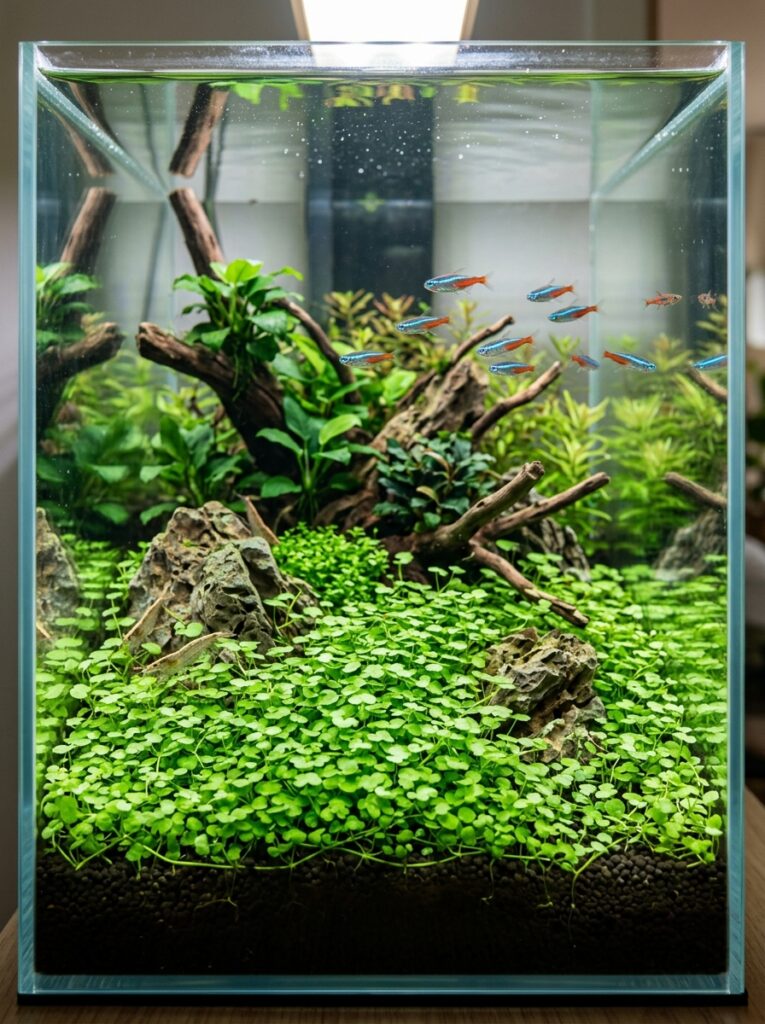
Monte Carlo has become one of the most popular foreground plants in modern aquascaping, and it’s easy to understand why.
Its small, round leaves create a soft, lush appearance that many hobbyists love. When healthy, Monte Carlo can spread across the foreground and form a beautiful green carpet that feels both natural and refined.
One of its biggest strengths is visual impact. Even a relatively simple aquarium can look more polished once a healthy patch of Monte Carlo begins filling the foreground.
In small aquariums, its compact leaf size helps maintain proper scale. The plant adds richness and texture without making the layout feel crowded.
Many aquascapers use Monte Carlo to connect rocks, driftwood, and open areas of the aquarium, creating a more unified design.
Anubias Nana Petite for Compact Aquascapes
Anubias Nana Petite proves that not every foreground plant needs to form a carpet.
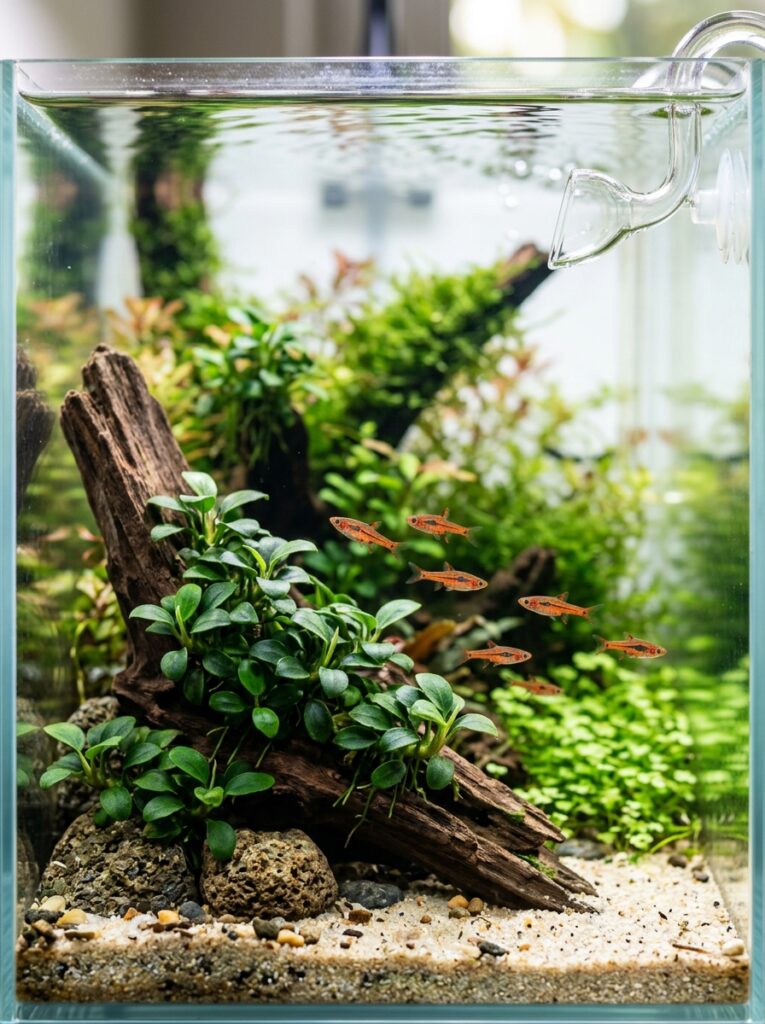
This miniature version of Anubias stays extremely compact, making it an excellent choice for nano aquariums and detailed aquascapes.
Its small, dark green leaves create attractive focal points near the front of the aquarium. Rather than covering large areas, Anubias Nana Petite is often used to highlight specific sections of driftwood, rocks, or hardscape features.
One reason aquascapers appreciate this plant is its versatility. It works beautifully in minimalist layouts, nature-inspired aquascapes, and beginner-friendly planted tanks alike.
Like its larger relatives, Anubias Nana Petite is also known for being durable and relatively easy to care for. That combination of beauty and resilience makes it particularly appealing for hobbyists who are still learning.
If you’re looking for a foreground plant that adds character without requiring constant maintenance, Anubias Nana Petite is a fantastic option.
Choosing the Right Foreground Plant for Your Aquarium
The best foreground plant isn’t always the most popular one.
It’s the one that fits your aquarium, your goals, and your maintenance preferences.
If you enjoy a clean, minimalist look, Cryptocoryne Parva may be a great fit. If you love lush carpeting effects, Monte Carlo or dwarf hairgrass might be more appealing.
Aquarium size matters as well. Some foreground plants look incredible in larger aquascapes but may feel crowded in smaller nano tanks.
It’s also worth considering how much maintenance you’re comfortable with. Slower-growing plants often require less attention, while carpeting plants may need occasional trimming to keep them looking their best.
By choosing a plant that matches both your aquarium and your experience level, you’ll be much more likely to enjoy long-term success.
Common Foreground Plant Mistakes
One of the most common mistakes beginners make is choosing plants that eventually outgrow the foreground area.
A plant may look small when purchased, but some species quickly become too large and disrupt the balance of a carefully planned layout.
Another mistake is overcrowding. Trying to fit too many different foreground plants into a small space can make the aquarium feel busy rather than natural.
Many hobbyists also underestimate the importance of patience. Foreground plants often need time to establish themselves before they reach their full visual potential.
It’s equally important to leave some open space. Not every inch of the aquarium floor needs to be covered. Strategic gaps can help create contrast and make planted areas stand out even more.
In most cases, a simple foreground layout ends up looking cleaner and more professional than an overly complicated one.
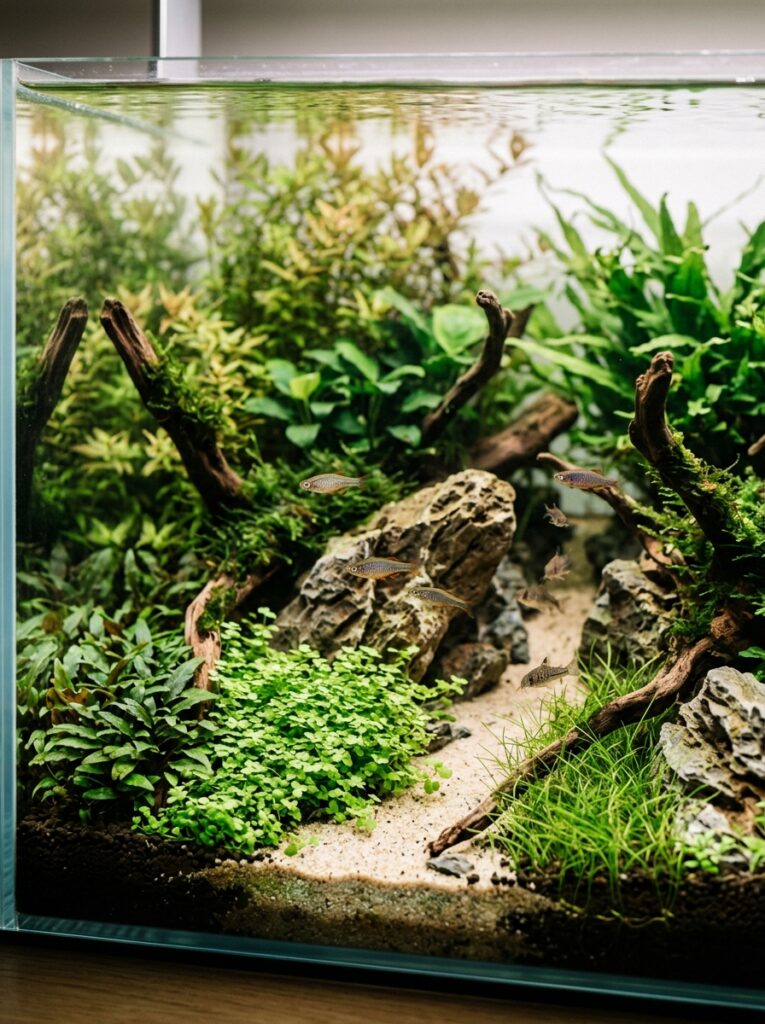
Creating a Balanced Foreground Layout
A great foreground doesn’t draw attention to itself.
Instead, it helps the entire aquarium look better.
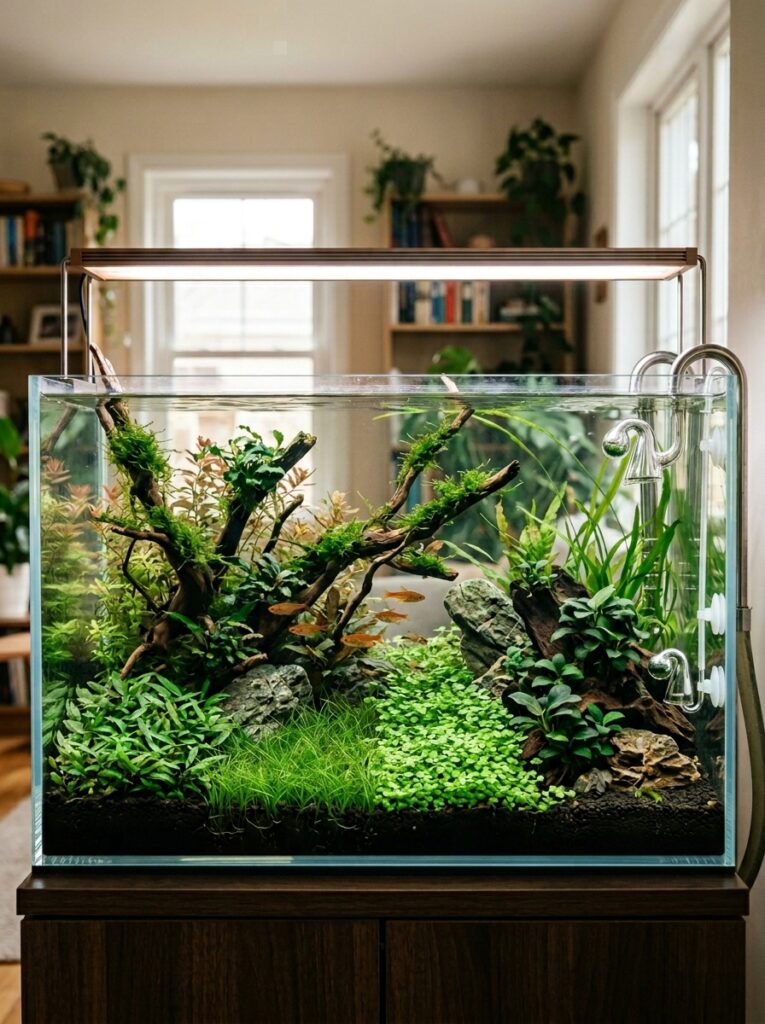
The most successful layouts use foreground plants to guide the eye naturally through the aquascape. They soften transitions, create depth, and make hardscape features feel more integrated into the design.
Whether you choose Cryptocoryne Parva, dwarf hairgrass, Monte Carlo, Anubias Nana Petite, or a combination of several species, the goal is balance.
Foreground plants should complement the aquarium rather than compete with it.
When thoughtfully placed, they can transform a simple planted tank into a layout that feels more natural, more spacious, and far more visually appealing.
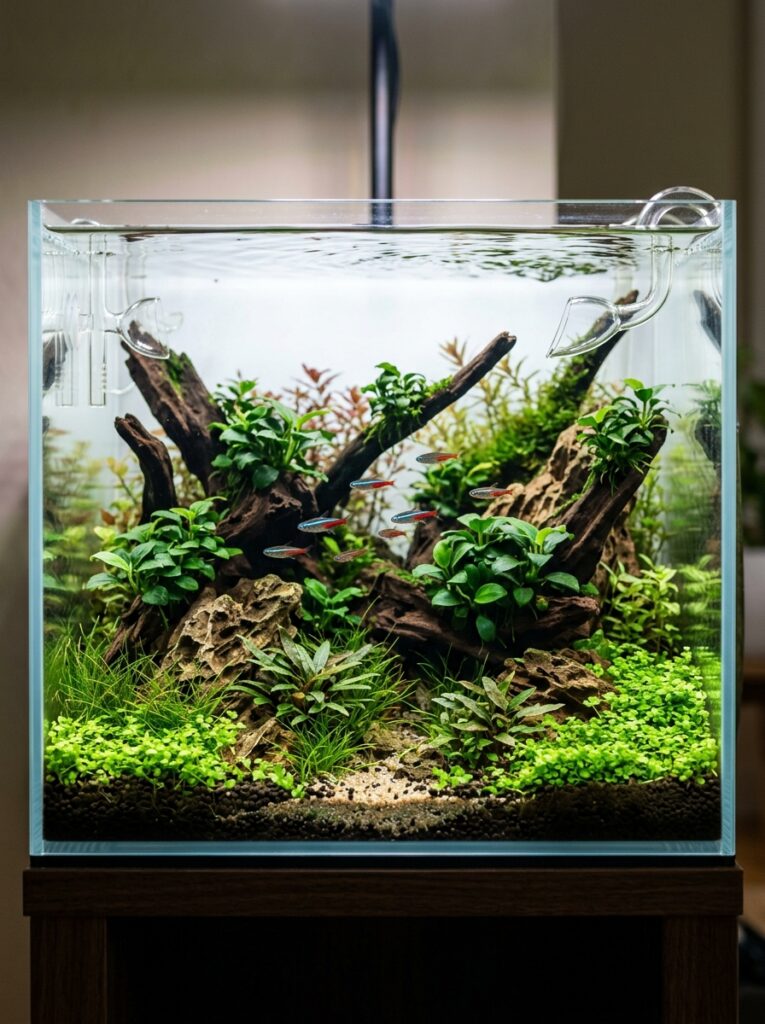
CONCLUSION
Foreground plants may be small, but their impact on an aquarium can be surprisingly large.
They help create depth, improve scale, soften transitions between hardscape elements, and make planted aquariums feel more natural and complete.
Whether you prefer the tidy appearance of Cryptocoryne Parva, the meadow-like effect of dwarf hairgrass, the lush look of Monte Carlo, or the compact charm of Anubias Nana Petite, there’s a foreground plant that can fit almost any aquarium style.
The key is choosing plants that match the size of your tank and the amount of maintenance you’re comfortable providing.
With thoughtful placement and a little patience, foreground plants can transform a simple aquarium into a layout that feels far more polished, balanced, and enjoyable to view.
FAQ
What are foreground plants in an aquarium?
Foreground plants are shorter aquarium plants that grow near the front of the tank and help create depth, scale, and visual interest.
What is the best foreground plant for beginners?
Cryptocoryne Parva and Anubias Nana Petite are often recommended because they stay compact and are relatively easy to maintain.
Can foreground plants grow in small aquariums?
Yes. Many foreground plants are specifically chosen because they remain small and fit naturally in nano tanks and compact aquariums.
Does Monte Carlo make a good foreground plant?
Yes. Monte Carlo is popular for creating a lush green carpet effect and is commonly used in modern aquascaping layouts.
Is dwarf hairgrass suitable for nano aquariums?
Dwarf hairgrass can work very well in nano aquariums because its fine blades help maintain proper scale while creating a natural appearance.
Do all foreground plants form carpets?
No. Some foreground plants, such as Anubias Nana Petite, are used as compact accent plants rather than carpeting plants.