
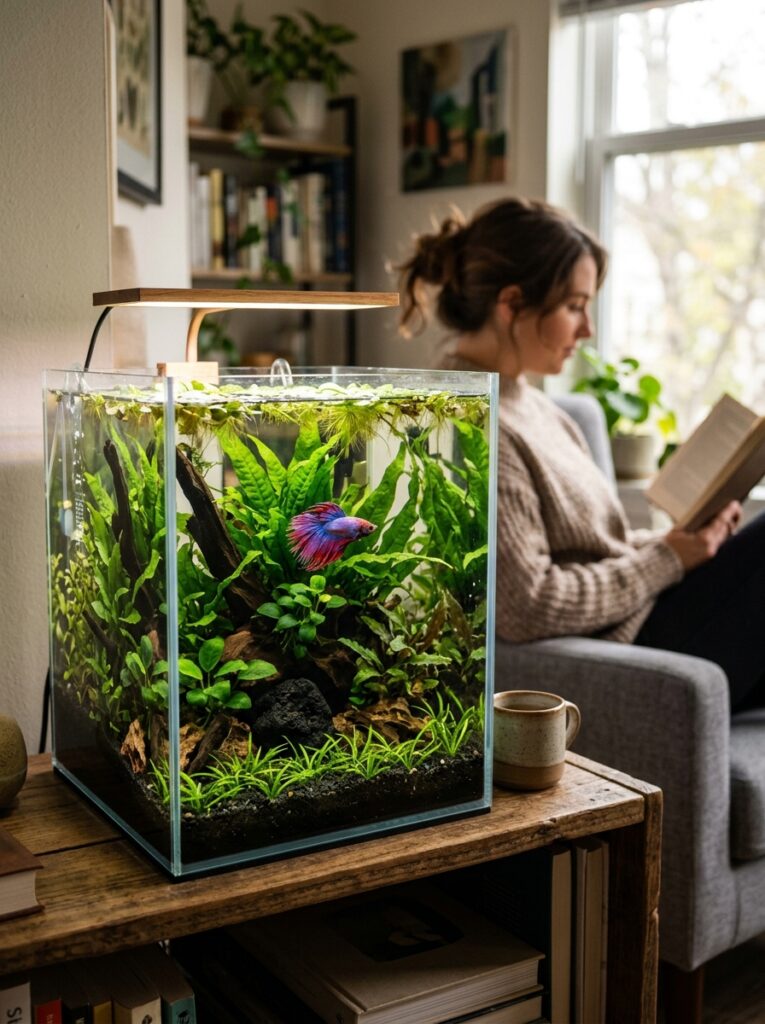
Best plants for beginner betta tanks are easy, soft-leaved plants like Anubias, Java fern, Java moss, and floating plants that help your Betta feel safer without making the tank hard to maintain.
For beginners, choosing easy low-maintenance aquarium plants is one of the best ways to build a healthier and more visually relaxing aquarium setup. In this guide, we’ll explore beginner-friendly plants that work especially well for betta fish tanks while also fitting beautifully into modern planted aquarium aesthetics.
- Why Live Plants Are Good for Betta Fish Tanks
- Best Low-Maintenance Plants for Beginner Aquariums
- Anubias: One of the Easiest Betta Tank Plants
- Java Fern for Calm and Natural Aquascaping
- Floating Plants That Help Betta Fish Feel Safe
- How to Arrange Plants Inside a Small Betta Tank
- Common Beginner Mistakes With Aquarium Plants
- Creating a Relaxing Planted Betta Aquarium at Home
- Conclusion
- FAQs
Why Live Plants Are Good for Betta Fish Tanks
If you have ever watched a betta fish in a bare tank versus one swimming through a lush, green underwater forest, the difference in their behavior is night and day. In the wild, bettas navigate shallow, heavily vegetated waters, rice paddies, and slow-moving streams. They are hardwired to seek out cover.
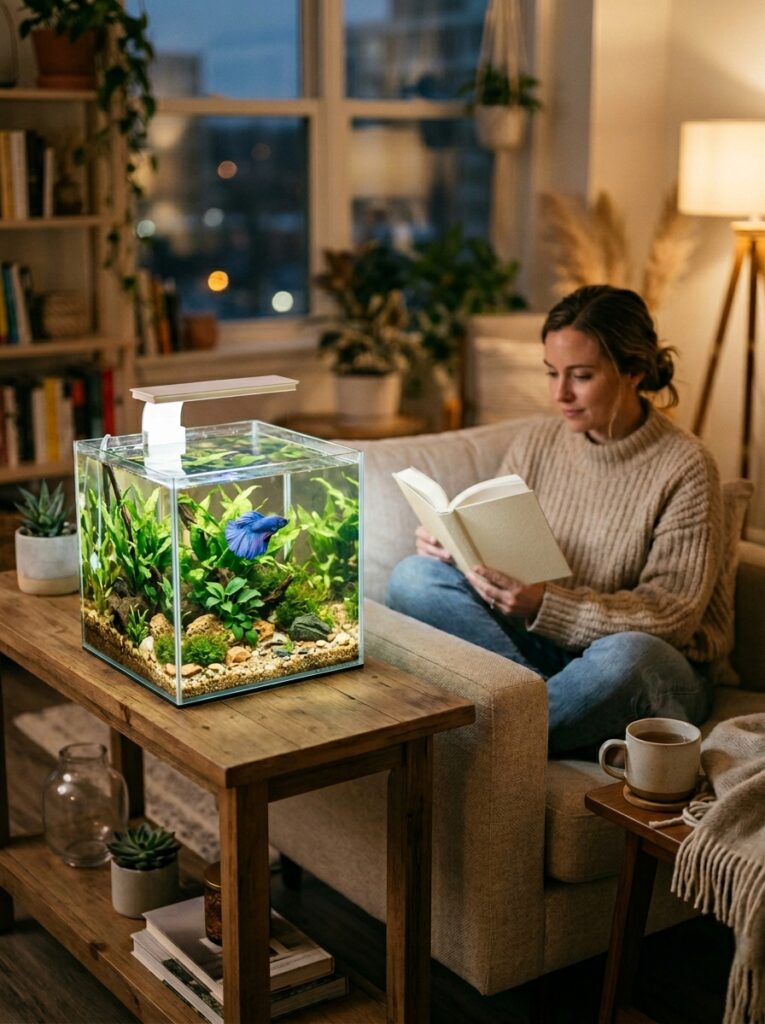
When we add live plants to a nano setup, we aren’t just decorating a room; we are providing essential mental stimulation and physical comfort for the fish. Large, soft leaves act as natural hammocks where your betta can rest near the surface to catch its breath. Visually, live plants diffuse harsh artificial light, creating those soft, dappled shadows that give a room a warm, comforting glow in the evening. Structurally, their roots act as a continuous, silent filtration system, absorbing excess nutrients from the water and naturally keeping stubborn algae at bay.
Best Low-Maintenance Plants for Beginner Aquariums
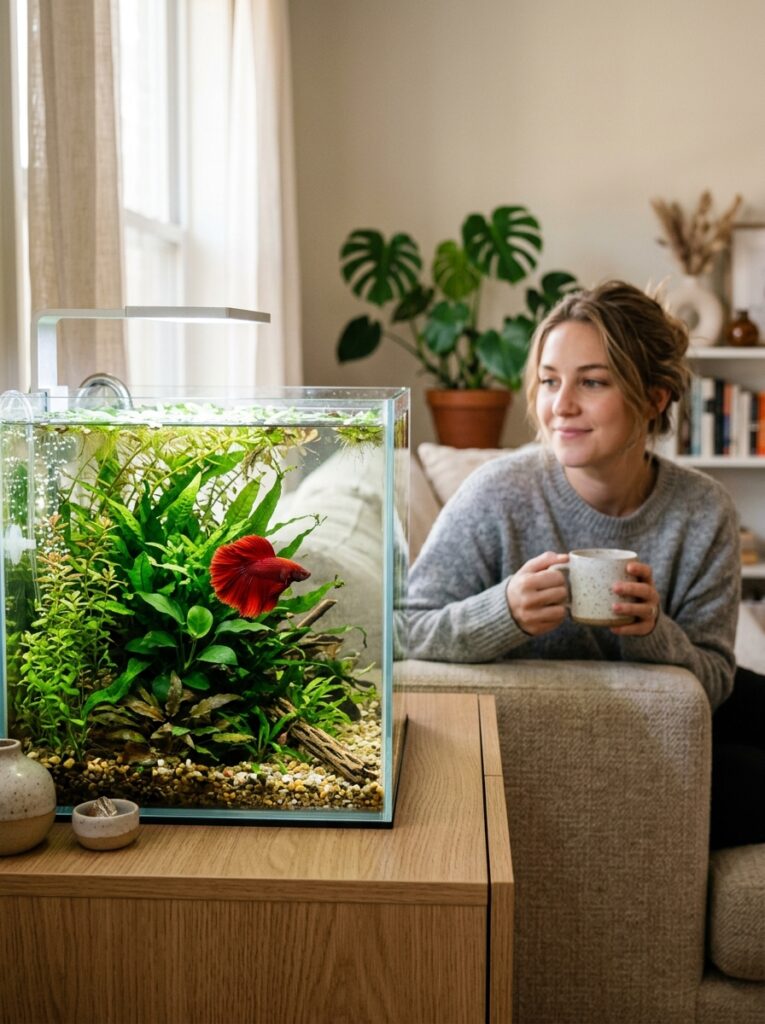
The biggest mistake most beginners make is wandering into a pet store and buying delicate, high-tech carpet plants that require expensive carbon dioxide (CO2) injection systems and intense, blinding lights. When those plants inevitably melt and turn brown, it breaks your confidence and leaves your tank looking cluttered and messy.
Instead, the secret to a successful, cozy nano tank is sticking to hardy, low-light species that are virtually indestructible. These plants don’t care if you forget to add liquid fertilizers every week, and they thrive under the standard, soft LED lighting you already use to create a relaxing atmosphere in your home. Let’s look at the absolute best staples that give you maximum visual reward with almost zero daily effort.
Anubias: One of the Easiest Betta Tank Plants
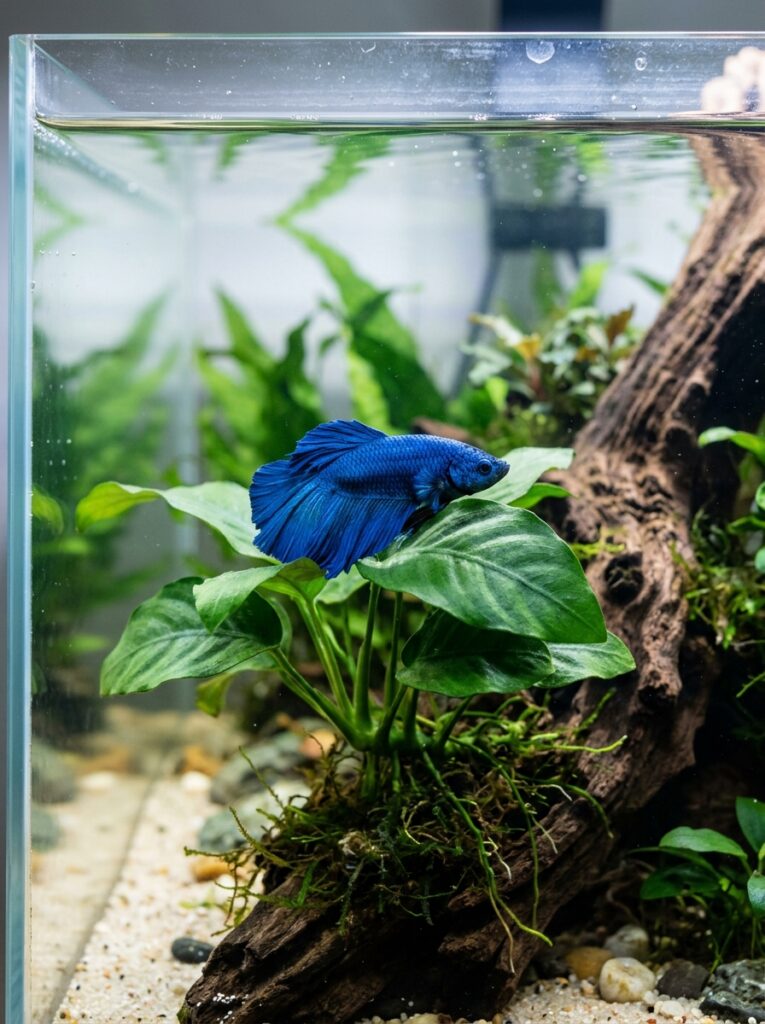
If you want a plant that you can practically set and forget, Anubias is the undisputed king of beginner greenery. Known for its thick, leathery, dark green leaves, Anubias is incredibly robust. Because its leaves are so sturdy and wide, it provides the perfect, smooth resting platform where a heavy-finned betta can lounge throughout the day without any risk of tearing its delicate fins.
The most important thing to know about Anubias is that you should never bury its thick, horizontal stem—called the rhizome—into gravel or soil, or it will slowly rot. Instead, you simply wedge the plant into a crevice of a piece of driftwood or tie it down with a bit of thread. For a seamless, beautiful desktop setup, you can pick up a few loose Anubias Nana Petite plants on Amazon and use a tiny drop of aquarium-safe gel glue to attach them directly to your hardscape features for an instant, clean look.
Java Fern for Calm and Natural Aquascaping
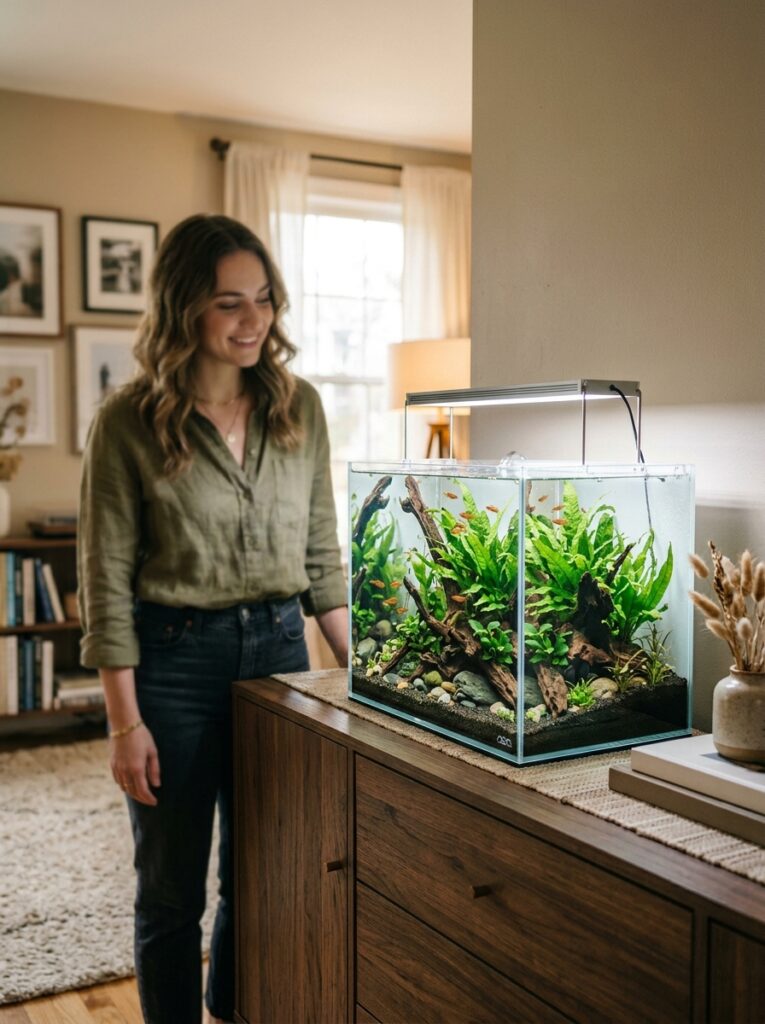
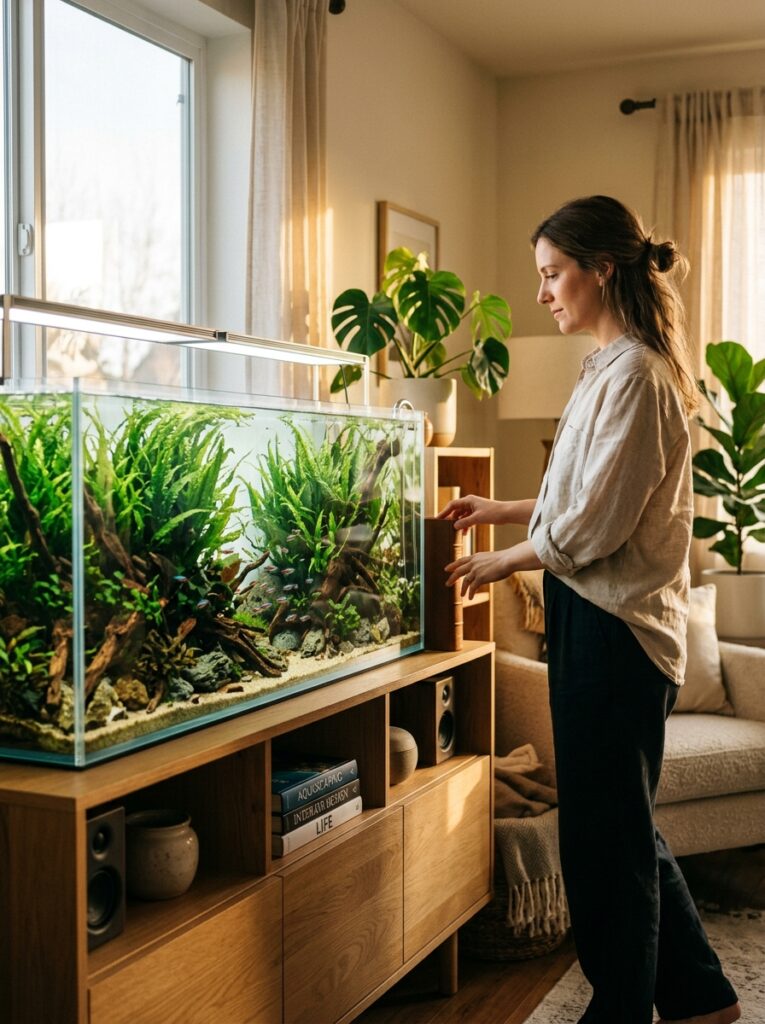
Java Fern is another classic, low-maintenance powerhouse that adds instant height and texture to the background of a small aquarium. It features tall, textured, sword-shaped fronds that sway gracefully with the gentle ripple of your filter current, creating a lovely, rhythmic movement that draws the eye and calms the mind.
Much like Anubias, Java Fern takes its nutrients directly from the water column through a web of fuzzy brown roots rather than feeding from substrate soil. This means you can keep your tank floor completely minimalist and clean by using simple cosmetic sand or smooth river pebbles. You can easily tuck a cluster of hardy Java Fern bundles right behind your center rocks to beautifully hide ugly equipment like heater cords or filter intake pipes.
Floating Plants That Help Betta Fish Feel Safe
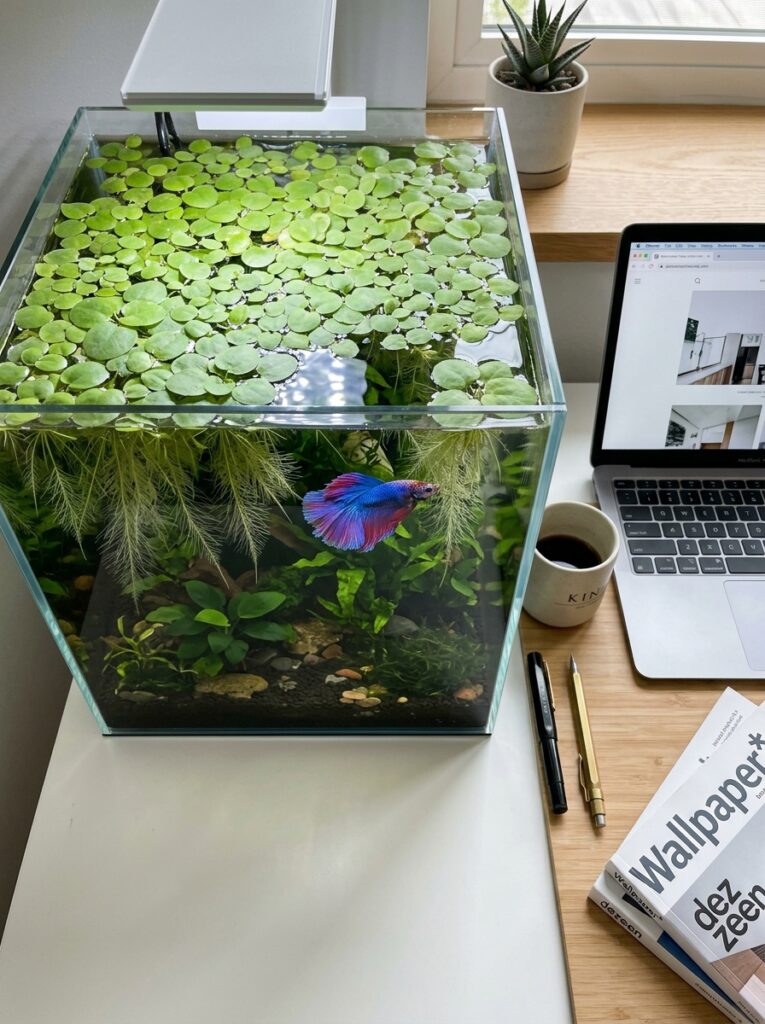
Bettas spend a massive amount of their time exploring the upper levels of the aquarium, which is why floating plants are an absolute game-changer for their well-being. Floating species drift slowly across the surface, extending a beautiful, curtain-like network of soft, fuzzy roots down into the water.
This overhead cover instantly signals safety to a betta fish, reducing their stress and encouraging them to swim openly in the front of the glass. Visually, a layer of floating green creates a stunning, organic canopy that filters the light into warm, moody pockets of shadow throughout the room. To achieve this look easily, adding a handful of low-maintenance Amazon Frogbit or Salvinia Minima will give your tank that mature, high-end botanical look within just a few weeks.
How to Arrange Plants Inside a Small Betta Tank
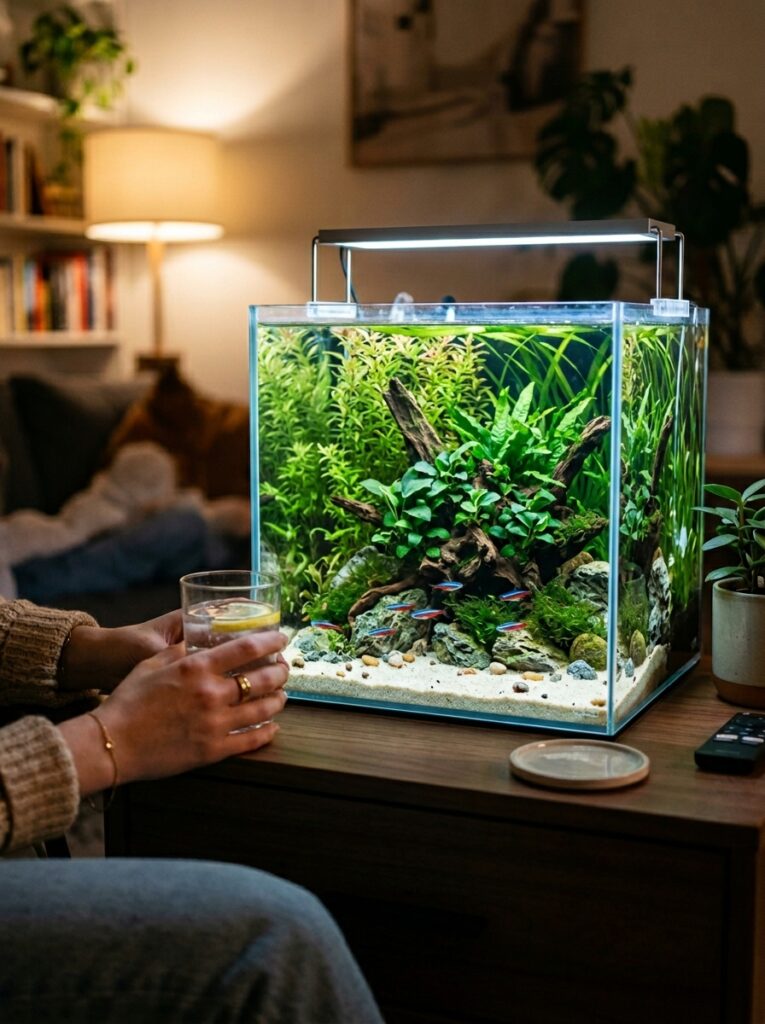
Creating a visually balanced, editorial aquascape in a small 5 or 10-gallon tank comes down to a simple design principle: depth and layering. When you look at your tank from the front, you want your eyes to be drawn through a natural landscape, rather than hitting a flat wall of green.
Always place your tallest, fast-growing plants—like Java Fern—along the back glass of the tank to create a rich, living backdrop. Next, position mid-sized plants like standard Anubias around the base of your central driftwood or stones to soften the hard edges. Finally, leave the very front of the tank open with a clean layer of sand or short mosses. This simple layout gives your betta plenty of open swimming space right up front where you can enjoy watching them, while keeping their cozy hiding spots tucked elegantly in the back.
Common Beginner Mistakes With Aquarium Plants
The fastest way to ruin a beautiful, calming layout is to fall into a few common beginner traps. The number one mistake is buying fake, cheap plastic plants. Plastic edges are notorious for catching and shredding a betta’s delicate, flowing fins, which can lead to painful infections and fin rot. If you aren’t using live plants, always stick to soft silk alternatives.
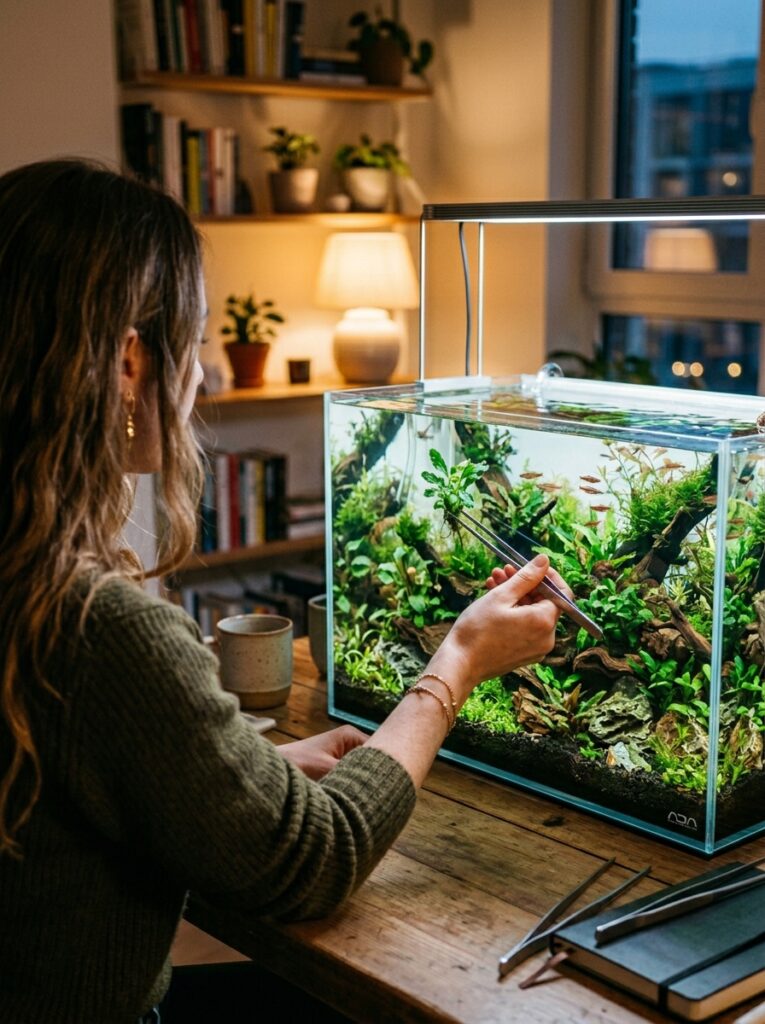
Another common pitfall is over-cleaning. Beginners often panic when they see a small amount of natural brown organic matter on a plant leaf and immediately pull the plant out to scrub it under tap water. This introduces harsh chlorine that kills the plant’s delicate tissues. Instead, invest in a simple, long-handled stainless steel aquascaping tool kit from Amazon. During your weekly water changes, you can use long tweezers or a soft sponge to gently brush away any debris right inside the tank, keeping the ecosystem completely undisturbed.
Creating a Relaxing Planted Betta Aquarium at Home
At the end of the day, building a planted betta tank isn’t about achieving scientific perfection; it’s about creating a peaceful, living sanctuary that brings a sense of calm to your daily routine. Sitting by a glowing, green nano tank at the end of a hectic day offers a wonderful chance to unplug, slow down, and connect with a small piece of the natural world.
By choosing forgiving, low-maintenance live plants like Anubias and Java Fern, you take all the stress out of the hobby. You are left with a reliable, self-sustaining ecosystem that keeps your fish incredibly happy, pairs beautifully with your modern home decor, and provides a quiet, comforting corner of nature right inside your room.
Related PetYeti Guides
Beginner Betta tanks work best with soft, easy plants that create resting spots, shade, and gentle cover. These guides can help you choose plants and build a safer Betta setup:
Conclusion
At the end of the day, building a planted betta tank isn’t about achieving scientific perfection; it’s about creating a peaceful, living sanctuary that brings a sense of calm to your daily routine. Sitting by a glowing, green nano tank at the end of a hectic day offers a wonderful chance to unplug, slow down, and connect with a small piece of the natural world.
By choosing forgiving, low-maintenance live plants like Anubias and Java Fern, you take all the stress out of the hobby. Of course, as a newcomer, it is completely normal to run into a few hurdles along the way. If your tank suddenly loses its crystal-clear look during the setup phase, don’t panic—running into cloudy aquarium water fixes is just a natural part of the cycling process that is incredibly easy to clear up.
Once your tank balances out, keeping it pristine takes very little effort. Striking a rhythm with an easy routine, like performing regular partial water changes once a week, will keep your ecosystem thriving while keeping the glass immaculate.
By starting with hardy live greenery and avoiding the most common beginner aquarium problems, you are left with a reliable, self-sustaining ecosystem. You get a setup that keeps your fish incredibly happy, pairs beautifully with your modern home decor, and provides a quiet, comforting corner of nature right inside your room.
FAQs
What are the best plants for beginner Betta tanks?
The best plants for beginner Betta tanks are easy, soft-leaved plants such as Anubias, Java fern, Java moss, floating plants, and Amazon sword. These plants are beginner-friendly and can give your Betta shade, resting spots, and a more natural-feeling tank.
Do Betta fish need live plants?
Betta fish do not strictly need live plants, but live plants can make the tank feel safer and more comfortable. Plants help create cover, soften bright open spaces, and give Bettas places to rest near the surface.
Are fake plants okay for Betta tanks?
Fake plants can be used, but soft silk plants are usually safer than hard plastic plants. Sharp or rough plastic leaves can damage delicate Betta fins, especially in small tanks where the fish swims close to decorations.
Can Anubias and Java fern grow in a Betta tank?
Yes. Anubias and Java fern are two of the easiest plants for Betta tanks. They do not need strong light, they grow slowly, and they can be attached to driftwood, stones, or decorations instead of being buried deep in the substrate.
How many plants should I add to a beginner Betta tank?
Start with a few easy plants instead of filling the tank all at once. A simple beginner setup might include one or two leafy plants, some moss or floating plants, and enough open swimming space so your Betta can move comfortably.