
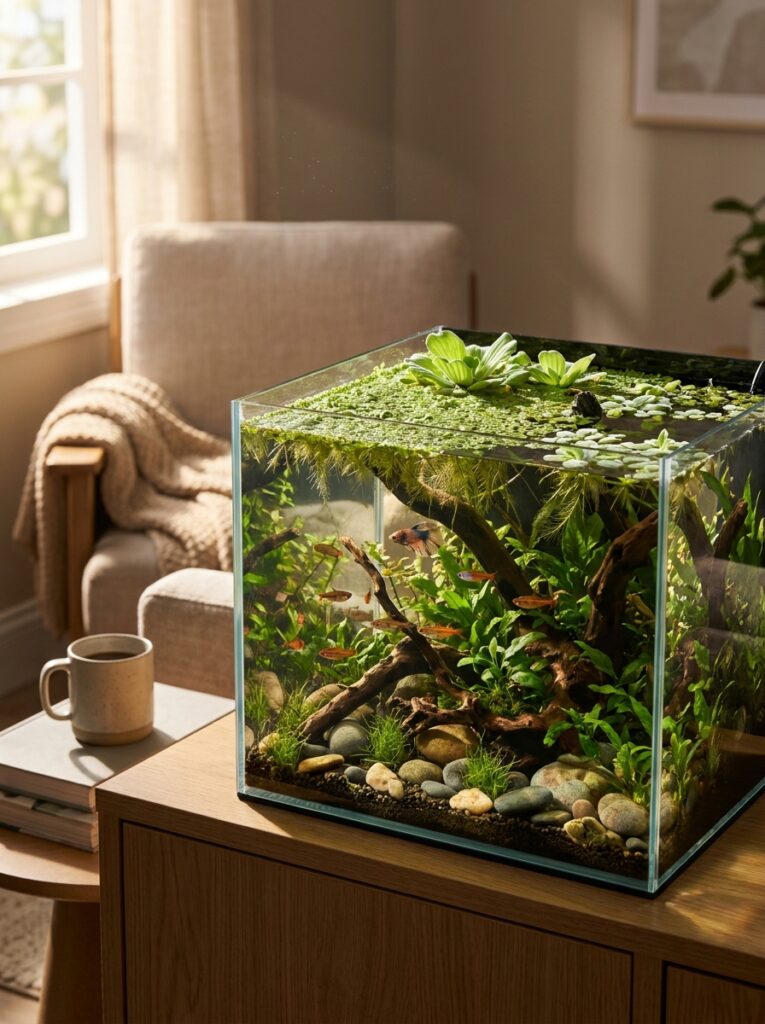
Floating plants can completely change the feel of a small aquarium.
They soften the look of the water surface, create a more natural environment for fish, and add a layer of greenery that many aquariums are missing.
They’re especially popular in betta tanks, nano aquariums, and other small setups where every design choice has a noticeable impact on the overall appearance of the tank.
The best part is that many floating plants are surprisingly beginner-friendly. They often require very little effort while providing shade, shelter, and a more natural atmosphere for aquarium inhabitants.
In this guide, we’ll explore some of the best floating plants for small aquariums and how they can help create a healthier and more beautiful aquatic space.
- Why Floating Plants Work So Well in Small Aquariums
- What to Consider Before Adding Floating Plants
- Amazon Frogbit for a Natural Floating Canopy
- Red Root Floaters for Color and Contrast
- Salvinia for Easy Beginner Success
- Water Lettuce for Larger Small Aquariums
- Floating Plants and Betta Fish
- Common Floating Plant Mistakes
- Creating a Balanced Floating Plant Aquarium
- CONCLUSION
- FAQs
As an Amazon Associate, PetYeti earns from qualifying purchases. This comes at no additional cost to you and helps support the site. We only recommend products we genuinely believe can help create healthier and more enjoyable aquariums.
Why Floating Plants Work So Well in Small Aquariums
Floating plants offer benefits that go far beyond appearance.
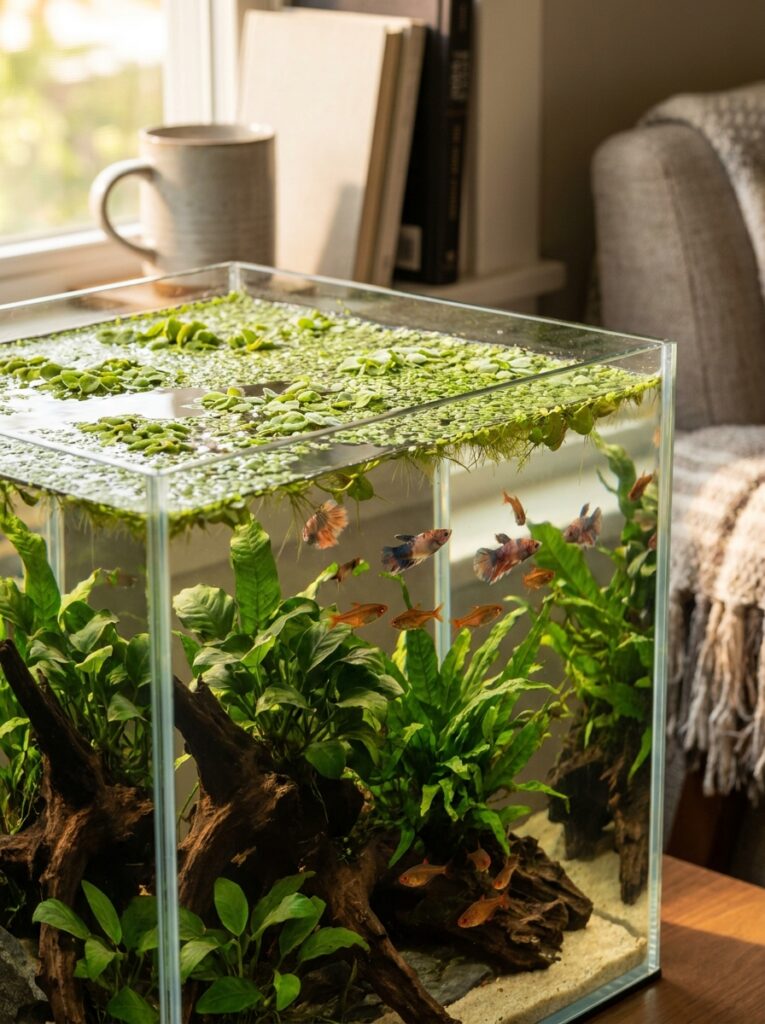
Because they grow directly on the water surface, they help soften bright lighting, create shaded areas, and make many fish feel more secure. This is especially useful in smaller aquariums where fish have fewer places to retreat.
Floating plants can also add visual depth. Instead of all the greenery being rooted in the substrate, the aquarium gains another layer of natural texture near the surface.
Many hobbyists love the relaxed atmosphere floating plants create. A tank with healthy floating greenery often feels more mature, natural, and connected to nature than a bare aquarium.
For small aquariums where space is limited, floating plants can deliver a surprisingly big impact without taking up valuable swimming room.
What to Consider Before Adding Floating Plants
Not every floating plant is the right fit for every aquarium.
Some species grow quickly and can cover the entire surface if left unmanaged. Others stay relatively compact and are easier to control in smaller tanks.
Lighting, water movement, and aquarium size can all influence how well floating plants perform. Strong surface agitation may make certain species struggle, while calmer aquariums often produce better growth.
It’s also worth considering how much surface coverage you want. Most aquariums benefit from a balance between open water and floating greenery rather than allowing plants to completely block the surface.
Helpful Control Tool
Recommended Option: Floating Plant Corral
Best For:
✓ Keeping surface plants contained
✓ Feeding areas
✓ Betta tanks
✓ Small aquariums with floating plants
Why We Like It:
✓ Helps preserve open surface space
✓ Keeps floating plants from spreading everywhere
✓ Useful during feeding
✓ Simple beginner-friendly tool
PetYeti Take:
Floating plants look best when they feel intentional, not overcrowded. A simple plant corral can help keep part of the surface open while still letting you enjoy the natural look of floating greenery.
👉 View Floating Plant Corral Options
A little planning goes a long way. Choosing the right floating plant from the beginning makes maintenance easier and helps create a more balanced aquarium.
Amazon Frogbit for a Natural Floating Canopy
If you’re looking for a floating plant that instantly makes an aquarium feel more natural, Amazon frogbit is often one of the first recommendations hobbyists give.
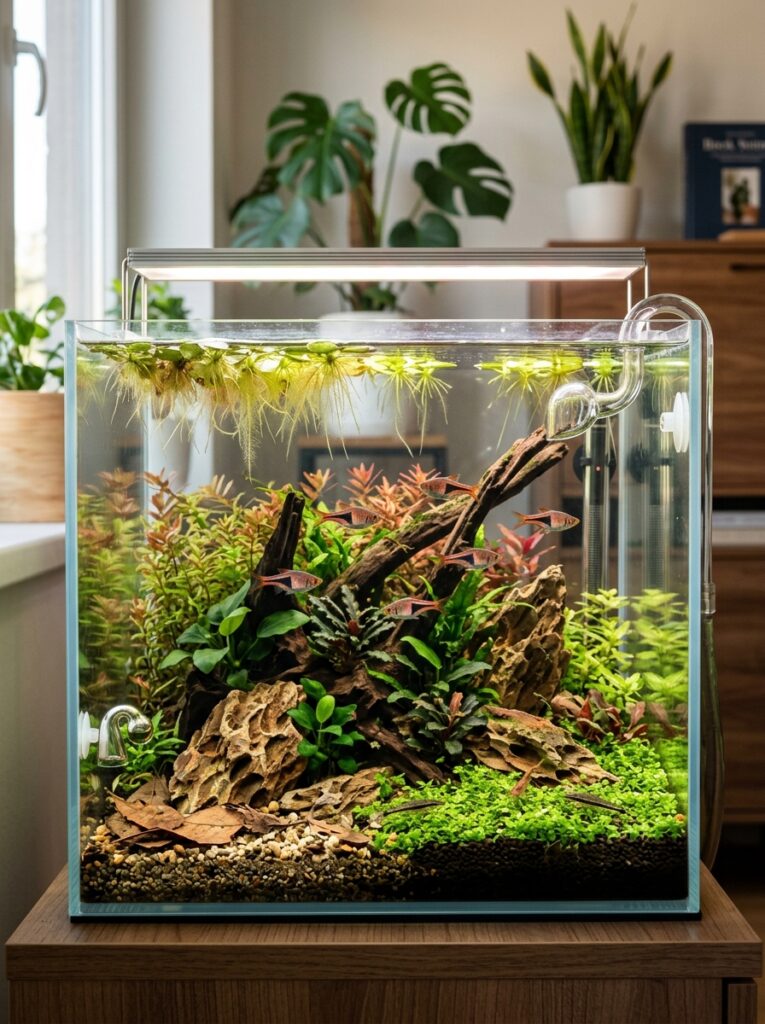
Its round green leaves rest gently on the water surface while long roots hang below, creating a soft, floating canopy effect. Those roots can add a lot of visual interest and also provide fish with extra places to explore and rest.
Many aquarium owners love the way frogbit helps soften bright lighting. The filtered light that reaches the lower parts of the tank often creates a calmer atmosphere, especially in betta tanks and planted nano aquariums.
Another reason frogbit is so popular is its appearance. Even a simple aquarium can start looking more mature and established once healthy floating plants spread across part of the surface.
Like most floating plants, regular trimming may be needed to prevent excessive coverage, but overall it’s considered a beginner-friendly choice that can dramatically improve the look of a small aquarium.
⭐ PetYeti Pick: Natural Floating Canopy
Recommended Option: Amazon Frogbit
Best For:
✓ Betta tanks
✓ Nano aquariums
✓ Calm planted setups
✓ Natural surface coverage
Why We Like It:
✓ Beautiful round leaves
✓ Long decorative roots
✓ Helps soften bright lighting
✓ Creates a natural, peaceful aquarium feel
PetYeti Take:
Amazon frogbit is one of our favorite floating plants for creating that soft, natural canopy effect in small aquariums. Just remember to trim it regularly so fish still have open surface access.
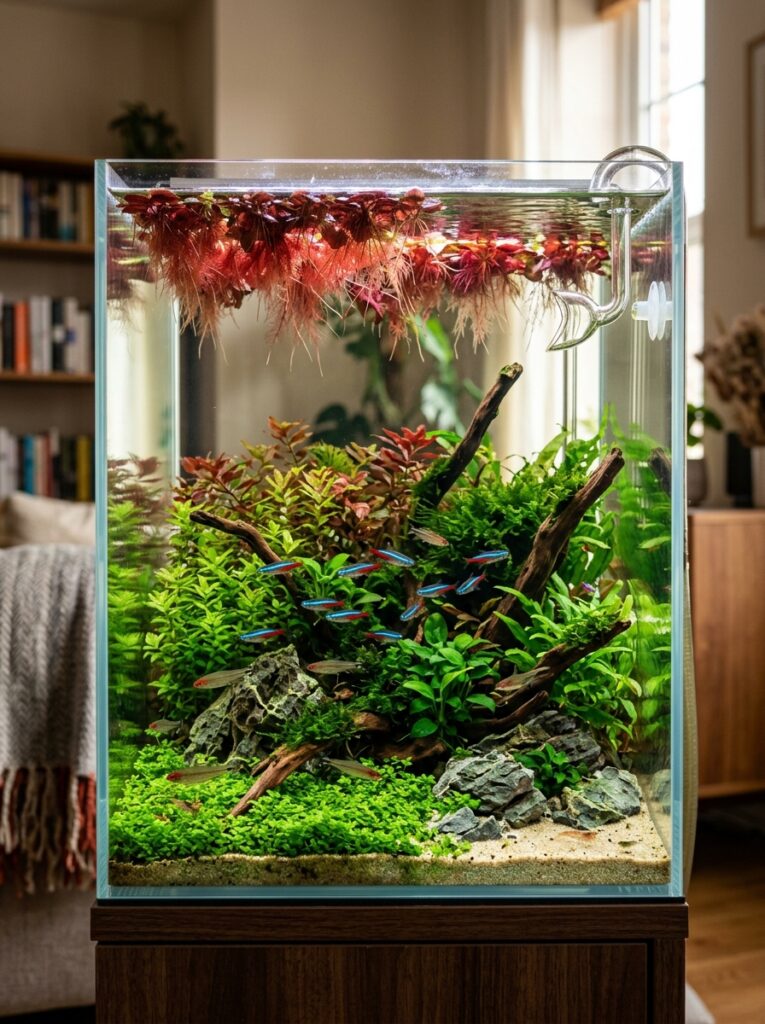
Red Root Floaters for Color and Contrast
Most floating plants are known for their green foliage, which is exactly why red root floaters stand out.
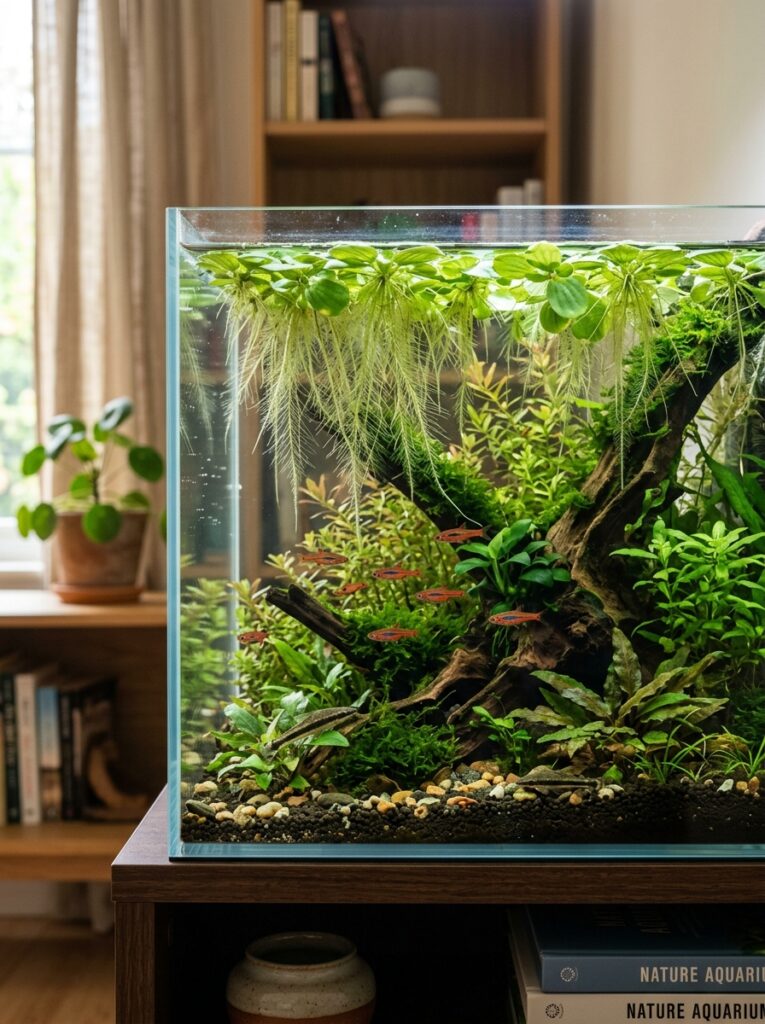
Under suitable conditions, these plants can develop beautiful reddish tones that add contrast to the aquarium surface. That splash of color can make a planted tank feel more dynamic without overwhelming the overall design.
Red root floaters are especially popular among aquascaping enthusiasts because they pair so well with green plants below. The combination creates visual layers that make even a small aquarium feel more interesting.
They’re also a favorite for aquarium photography and Pinterest-worthy setups because the colors often look stunning when reflected across the water surface.
While they may require slightly more attention than some beginner floating plants, many hobbyists feel the appearance alone makes them worth considering.
For aquarium owners looking to add a little extra visual character, red root floaters can be a beautiful choice.
Salvinia for Easy Beginner Success
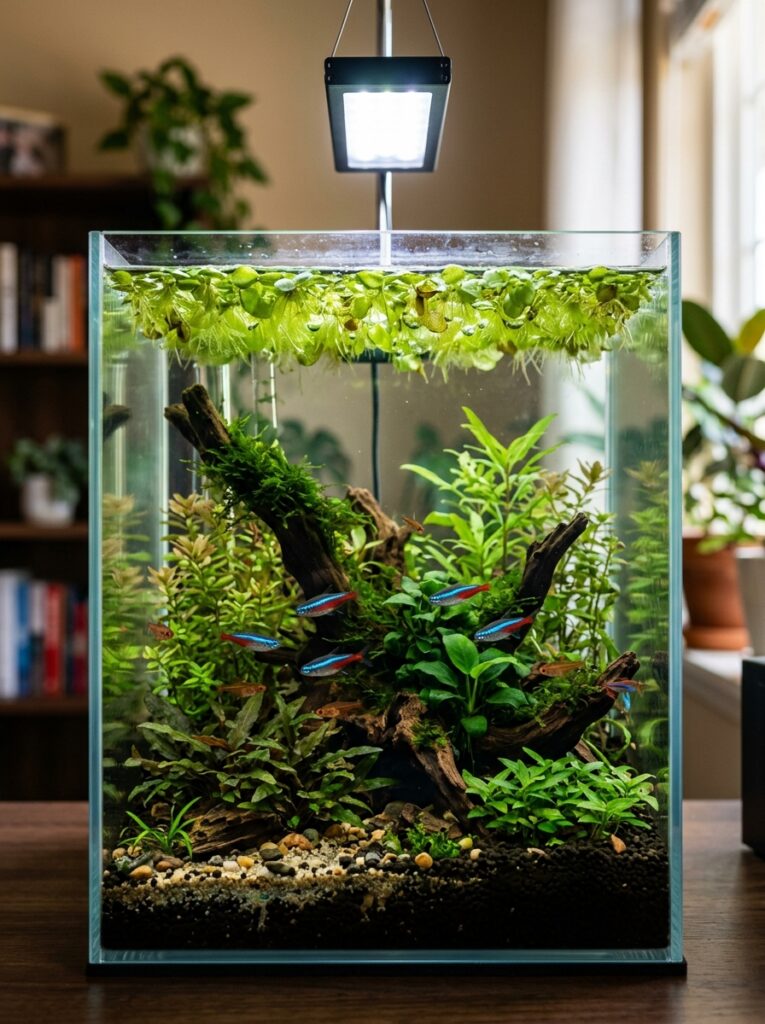
For beginners who want something simple and forgiving, salvinia is often a great place to start.
This floating plant is known for its easy-going nature and attractive appearance. Its small textured leaves create a soft green layer across the water surface without feeling overly heavy or dense.
One reason many hobbyists enjoy salvinia is that it adapts well to a variety of aquarium setups. Whether you’re keeping a betta fish, a nano community tank, or a planted aquarium, it can often fit naturally into the design.
Salvinia also tends to create a cozy, natural look that complements the calm aesthetic many aquarium owners are trying to achieve.
If you’re new to live plants and want an option that’s approachable and visually appealing, salvinia is definitely worth considering.
Beginner-Friendly Floating Plant
Recommended Option: Salvinia
Best For:
✓ First-time planted tanks
✓ Small aquariums
✓ Betta tanks
✓ Low-maintenance setups
Why We Like It:
✓ Easy beginner plant
✓ Soft green surface texture
✓ Usually adapts well
✓ Helps create a cozy natural look
PetYeti Take:
Salvinia is a smart starting point for beginners who want floating plants without making the aquarium feel complicated. It adds greenery quickly while staying easier to manage than some faster-growing options.
Water Lettuce for Larger Small Aquariums
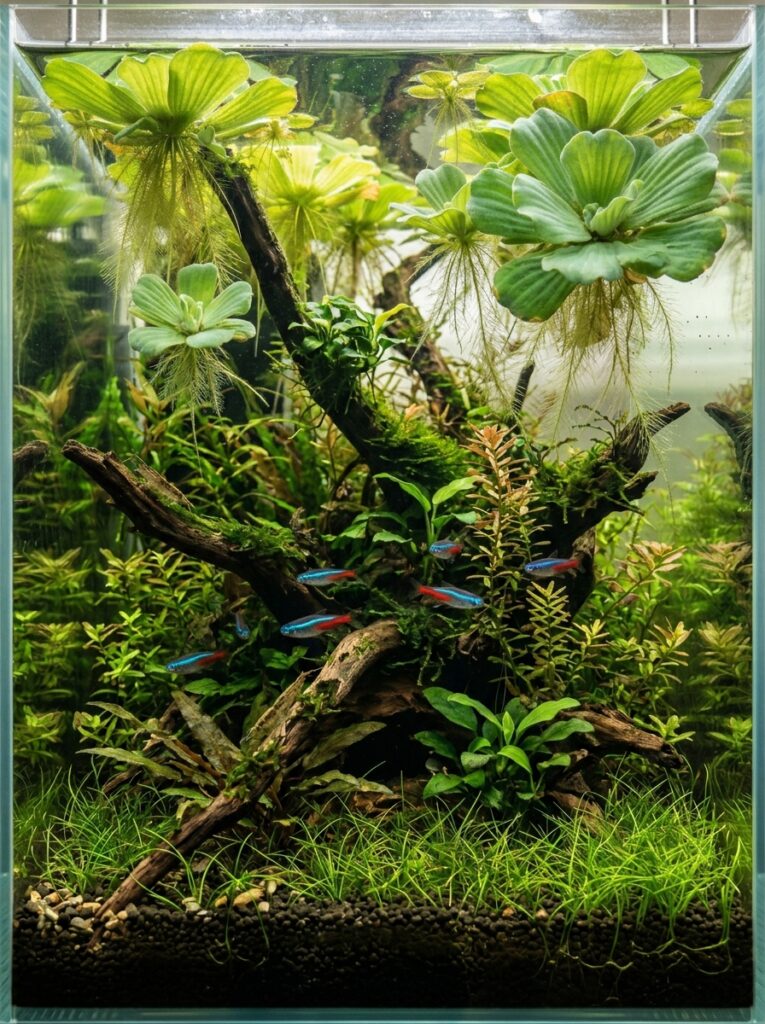
Water lettuce is one of the most recognizable floating plants in the aquarium hobby.
Its soft, velvety leaves form attractive rosettes that float on the water surface, giving the aquarium a natural pond-like appearance. In the right setup, it can become a real focal point.
Because water lettuce can grow larger than some other floating plants, it’s usually best suited for larger small aquariums where it has enough room to spread without overwhelming the entire surface.
Many hobbyists appreciate the shade and cover it provides. Fish often seem more comfortable when they have access to sheltered areas, especially in brightly lit aquariums.
Like other floating plants, occasional thinning may be necessary to maintain a healthy balance between open water and plant coverage.
For aquarium owners who love a lush, nature-inspired look, water lettuce can be a beautiful addition.
Floating Plants and Betta Fish
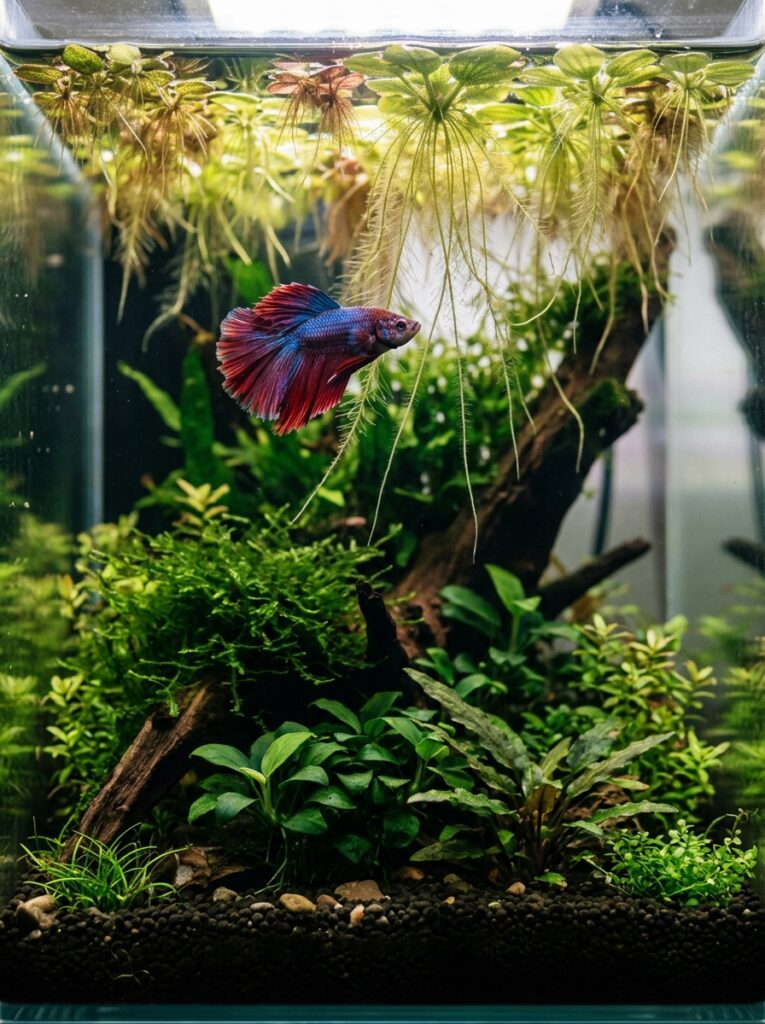
Floating plants and betta fish often go together beautifully.
In nature, bettas are commonly found in environments filled with vegetation, and many aquarium owners notice that bettas seem especially comfortable in tanks that include floating cover.
The gentle shade created by floating plants can help soften bright lighting and create a more relaxed environment. Bettas also tend to enjoy exploring the roots that hang beneath species like Amazon frogbit.
Beyond the practical benefits, floating plants simply enhance the overall appearance of a betta aquarium. The combination of lush greenery, calm water movement, and a colorful betta can create a stunning display.
That doesn’t mean the entire surface should be covered. Bettas still need easy access to the water surface, so maintaining a balance between open areas and plant coverage is important.
For many hobbyists, adding floating plants is one of the easiest ways to make a betta tank feel more natural and complete.
Common Floating Plant Mistakes
Floating plants are generally easy to keep, but a few common mistakes can cause problems.
One of the biggest is allowing the plants to completely cover the water surface. While floating plants provide many benefits, excessive coverage can block light from reaching plants below and reduce the open areas fish use for swimming and feeding.
Another mistake is choosing a floating plant without considering its growth rate. Some species grow surprisingly quickly and may require regular trimming to keep them under control.
Ignoring water movement can also create challenges. Certain floating plants prefer calmer conditions and may struggle in aquariums with strong surface agitation.
Fortunately, these issues are usually easy to manage. A little observation and occasional maintenance are often all that’s needed to keep floating plants looking their best.
Creating a Balanced Floating Plant Aquarium
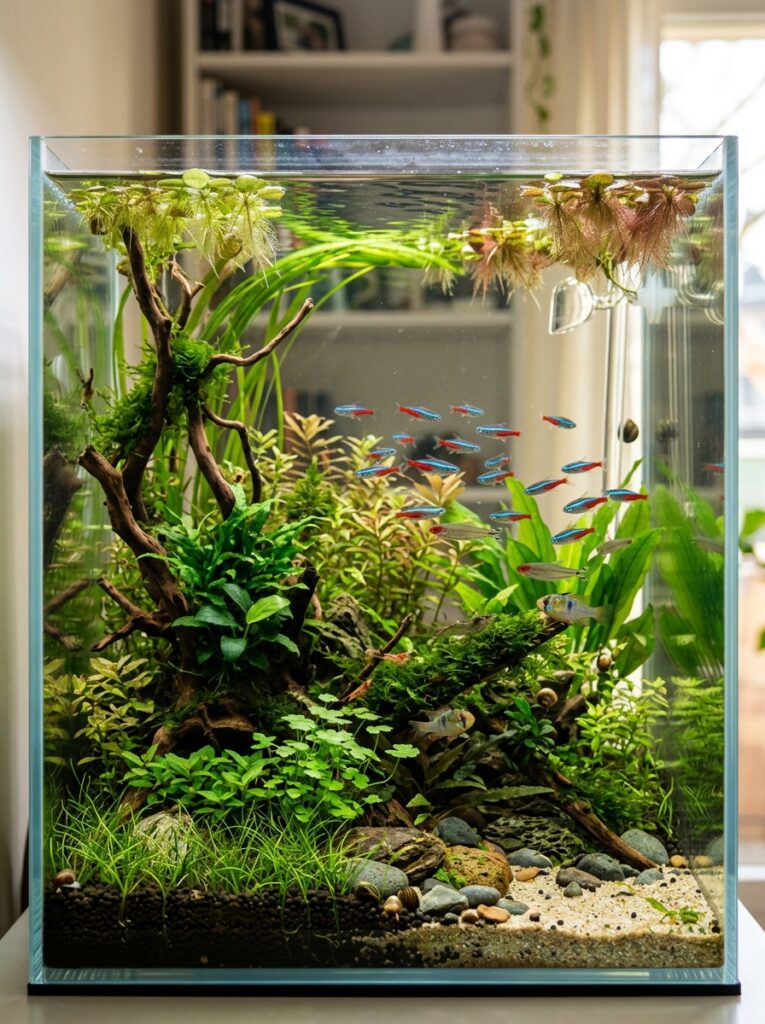
The best floating plant aquariums strike a balance between greenery and open space.
A few healthy floating plants can soften the appearance of the water surface, create natural shade, and make fish feel more secure. At the same time, leaving some open areas helps maintain light penetration and preserves the sense of openness that makes small aquariums enjoyable to view.
Whether you choose Amazon frogbit, red root floaters, salvinia, water lettuce, or another species, the goal isn’t to completely cover the aquarium.
Instead, think of floating plants as one more design element that contributes to a healthy, beautiful environment.
When used thoughtfully, they can transform an ordinary aquarium into a space that feels more natural, more relaxing, and more connected to nature.
And that’s exactly why so many aquarium owners continue to fall in love with them.
Related PetYeti Guides
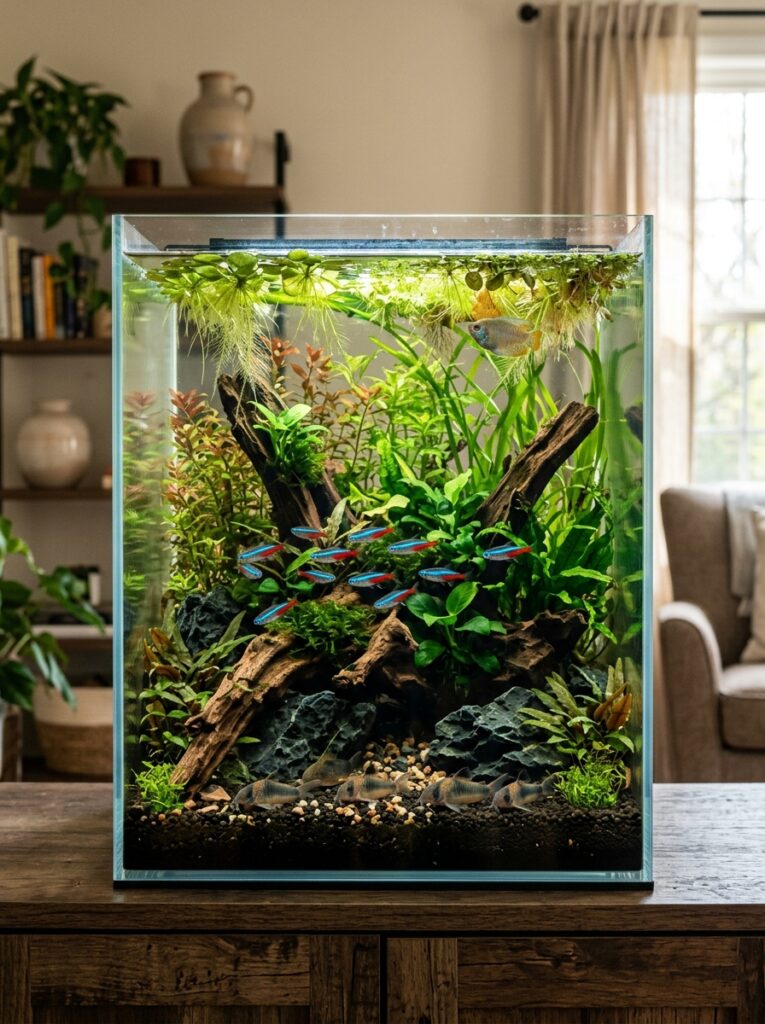
Floating plants work best when they match your tank size, lighting, filter flow, and the kind of fish you keep.
Growing plants in a betta tank? Read our guide to creating a beautiful planted betta tank.
Want easy plant options? See our low-light aquarium plants guide.
Trying to reduce algae naturally? Read how to control algae in a betta tank.
Keeping a small setup? See our nano aquarium plants guide.
Still learning plant nutrition? Read do aquarium plants need fertilizer.
CONCLUSION
Floating plants are one of the simplest ways to make a small aquarium feel more natural and inviting.
They add greenery to the water surface, create gentle shade, and provide a sense of comfort that many fish seem to appreciate. Whether you’re keeping a betta fish, a peaceful community tank, or a planted nano aquarium, the right floating plants can elevate both the appearance and atmosphere of the setup.
The key is choosing species that match your aquarium’s size and maintenance preferences. A little regular trimming and thoughtful placement can go a long way toward keeping the tank balanced and attractive.
From Amazon frogbit and salvinia to red root floaters and water lettuce, floating plants offer an easy way to bring more life, texture, and beauty into your aquarium.
Sometimes the smallest additions make the biggest difference.
FAQs
Are floating plants good for small aquariums?
Yes. Floating plants can help create shade, provide a sense of security for fish, and add visual interest without taking up valuable swimming space.
What is the easiest floating plant for beginners?
Salvinia is often considered one of the easiest floating plants for beginners because it adapts well to many aquarium conditions and generally requires minimal care.
Do betta fish like floating plants?
Many betta fish seem to enjoy aquariums with floating plants. The roots and shaded areas can create a more natural and comfortable environment.
Can floating plants cover the entire aquarium surface?
They can, but it’s usually better to maintain a balance between plant coverage and open water. Too much coverage may reduce light penetration and make maintenance more difficult.
Do floating plants require special lighting?
Most floating plants grow well under standard aquarium lighting, although growth rates and coloration can vary depending on the species and conditions.
How often should floating plants be trimmed?
It depends on the plant species and growth rate. Fast-growing plants may need occasional thinning to prevent excessive surface coverage.