
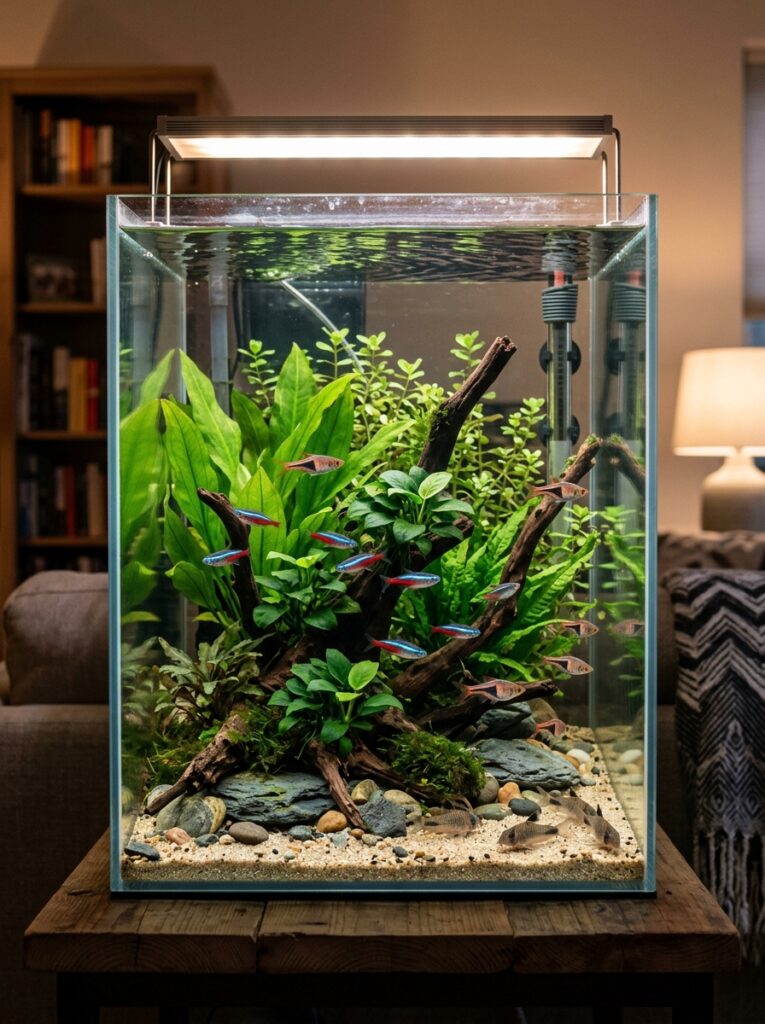
One of the biggest misconceptions in the aquarium hobby is that live plants are difficult to keep.
Many beginners assume they need expensive lighting systems, advanced equipment, or expert-level knowledge before they can enjoy a planted aquarium. Thankfully, that’s not true.
Some of the most popular aquarium plants thrive in simple setups with modest lighting and very little special care. In fact, many low-light plants are recommended specifically because they’re so forgiving.
These plants can help create a more natural environment, add beautiful greenery to the aquarium, and make a tank feel more established without turning maintenance into a full-time job.
If you’ve been curious about live plants but weren’t sure where to start, low-light species are often the perfect introduction.
Let’s take a look at some beginner-friendly options that can bring life and color to almost any aquarium.
- Why Low-Light Plants Are Perfect for Beginners
- What Makes a Plant Beginner Friendly?
- Anubias: One of the Easiest Aquarium Plants
- Java Fern: A Classic Low-Maintenance Favorite
- Cryptocorynes for Natural-Looking Aquariums
- Java Moss for Texture and Shelter
- Amazon Sword for Larger Beginner Tanks
- Common Mistakes When Growing Low-Light Plants
- Creating a Beautiful Low-Light Planted Aquarium
- Helpful Next Reads
- CONCLUSION
- FAQs
As an Amazon Associate, PetYeti earns from qualifying purchases. This comes at no additional cost to you and helps support the site. We only recommend products we genuinely believe can help create healthier and more enjoyable aquariums.
Why Low-Light Plants Are Perfect for Beginners
Low-light plants remove much of the stress that people associate with planted aquariums.
Instead of constantly adjusting equipment or worrying about complex care requirements, beginners can focus on learning the basics while still enjoying the benefits of live plants.
Many low-light species grow at a slower pace than demanding plants, which often means less trimming and fewer maintenance tasks. They also tend to adapt well to a wide range of aquarium conditions.
Another advantage is flexibility. Low-light plants can work beautifully in betta tanks, nano aquariums, community tanks, and many other setups.
For people who want a natural-looking aquarium without making the hobby overly complicated, low-light plants are often the smartest place to begin.
What Makes a Plant Beginner Friendly?
Not all aquarium plants are equally forgiving.
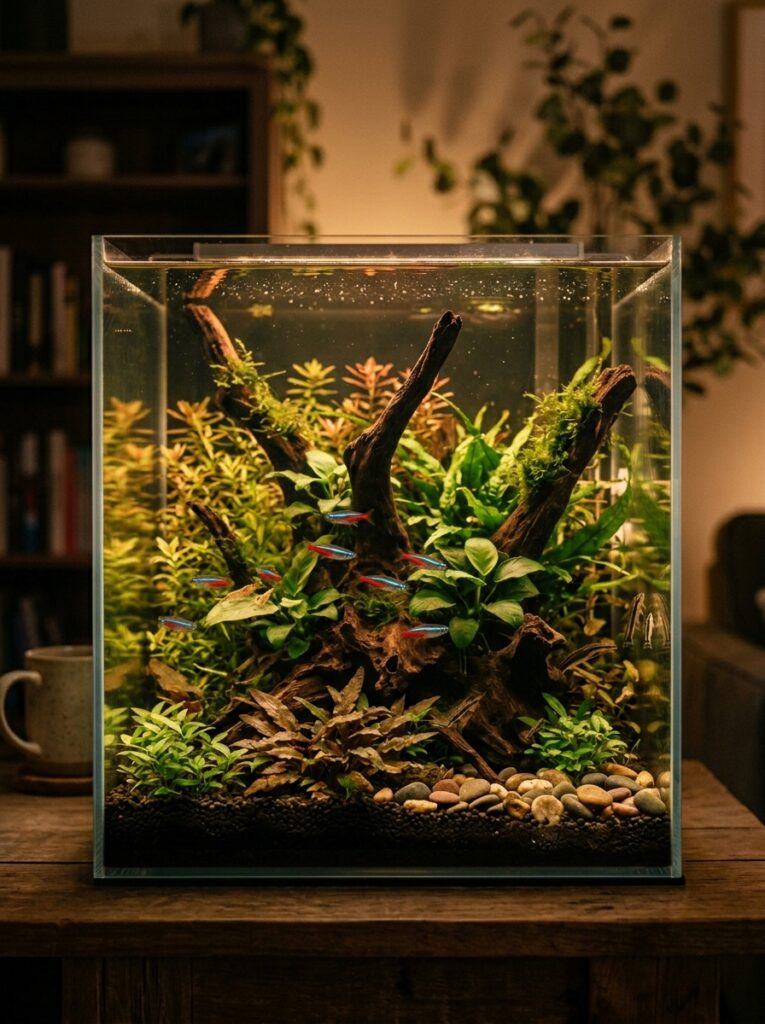
Beginner-friendly plants are usually adaptable, resilient, and capable of growing under a variety of conditions. They don’t require intense lighting, complicated fertilization schedules, or constant attention.
These plants also tend to recover well from minor mistakes, which is important because every new aquarium owner goes through a learning curve.
A good beginner plant should make the hobby feel more enjoyable, not more stressful.
When selecting plants, it’s often better to choose species known for reliability rather than chasing rare or demanding varieties. A healthy, thriving plant will always look better than one that’s constantly struggling.
That’s why the plants in this guide have remained favorites among aquarium hobbyists for years.
Anubias: One of the Easiest Aquarium Plants
If there were a hall of fame for beginner aquarium plants, Anubias would probably have its own exhibit.
It’s one of the most forgiving plants in the hobby and has earned a reputation for surviving conditions that would challenge many other species. That resilience is exactly why so many beginners start with it.
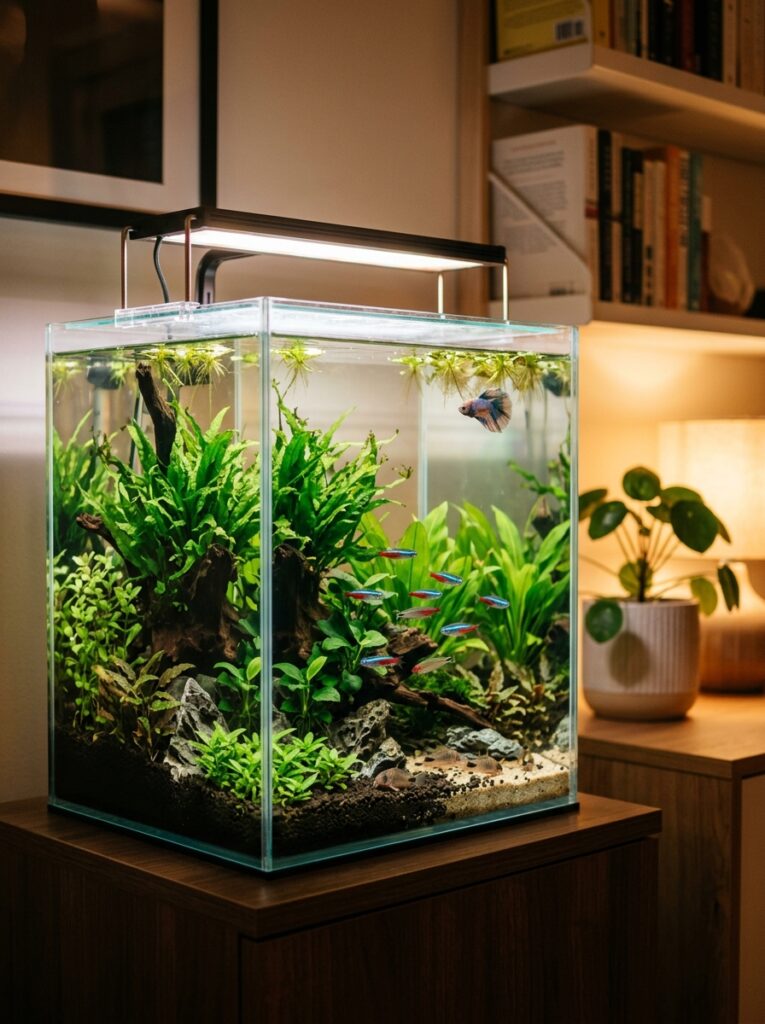
Anubias grows slowly, which means less trimming and less maintenance. Its thick green leaves add a clean, natural look to the aquarium and often stay attractive for long periods of time.
Another thing hobbyists love is its flexibility. Anubias can be attached to driftwood, rocks, or other hardscape elements, making it a favorite in natural-looking aquascapes.
Because it tolerates lower light levels so well, it’s often recommended for betta tanks, nano aquariums, and community setups where simplicity is the goal.
For anyone nervous about keeping live plants for the first time, Anubias is about as beginner-friendly as it gets.
⭐ PetYeti Pick: Easiest Beginner Plant
Recommended Option: Anubias Aquarium Plant
Best For:
✓ Betta tanks
✓ Nano aquariums
✓ Low-light setups
✓ Driftwood and rock aquascapes
Why We Like It:
✓ Very beginner-friendly
✓ Tolerates low light well
✓ Slow-growing and low maintenance
✓ Looks beautiful attached to hardscape
PetYeti Take:
Anubias is one of the safest live plant choices for beginners because it looks beautiful without demanding complicated care. Just avoid burying the rhizome under the substrate.
Java Fern: A Classic Low-Maintenance Favorite
Java fern has been a favorite among aquarium hobbyists for decades, and it’s easy to see why.
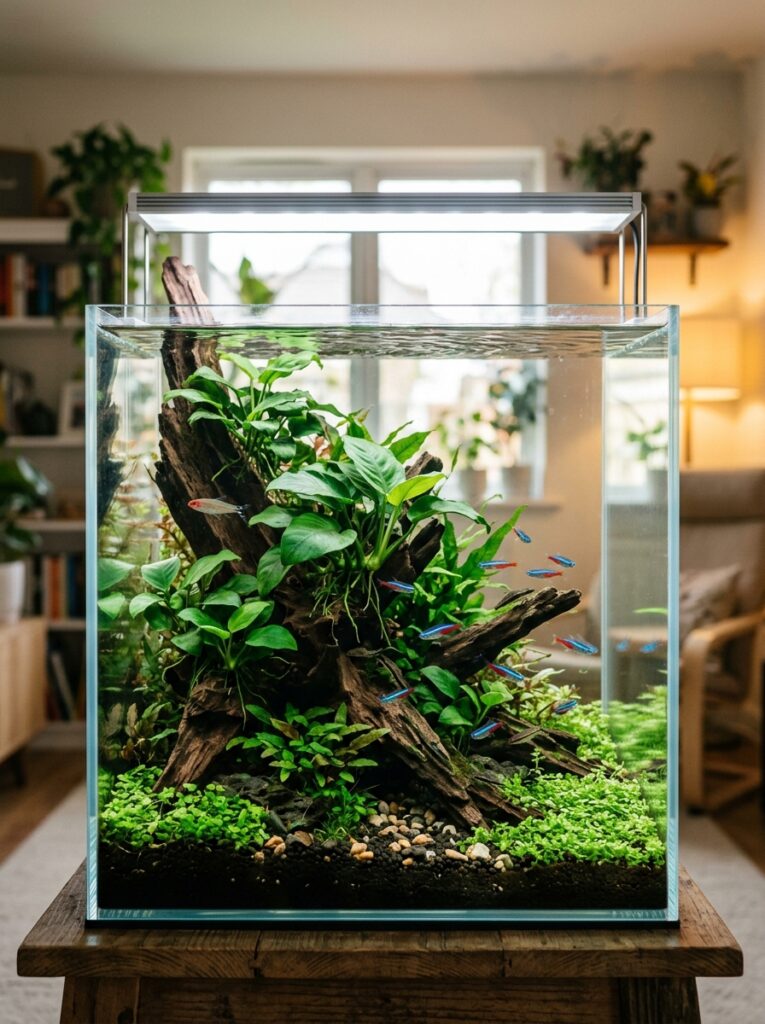
This plant combines attractive appearance with remarkably simple care requirements. Its long flowing leaves create movement and texture in the aquarium, helping tanks feel more mature and natural.
Like Anubias, Java fern is often attached to driftwood or rocks rather than planted directly into the substrate. That makes it incredibly versatile when designing an aquascape.
One of its biggest strengths is adaptability. Java fern can thrive in a wide range of aquarium conditions, which is great news for beginners who are still learning the basics of plant care.
It also pairs beautifully with fish commonly found in beginner aquariums, including bettas and peaceful community species.
If you’re looking for a plant that adds visual impact without adding much work, Java fern deserves a place near the top of your list.
Classic Low-Maintenance Plant
Recommended Option: Java Fern Aquarium Plant
Best For:
✓ Beginner planted tanks
✓ Betta aquariums
✓ Community tanks
✓ Driftwood or rock layouts
Why We Like It:
✓ Hardy and adaptable
✓ Handles modest lighting well
✓ Adds natural texture
✓ Works beautifully in calm aquariums
PetYeti Take:
Java fern is a great choice when you want a planted aquarium that looks mature and natural without creating a difficult maintenance routine.
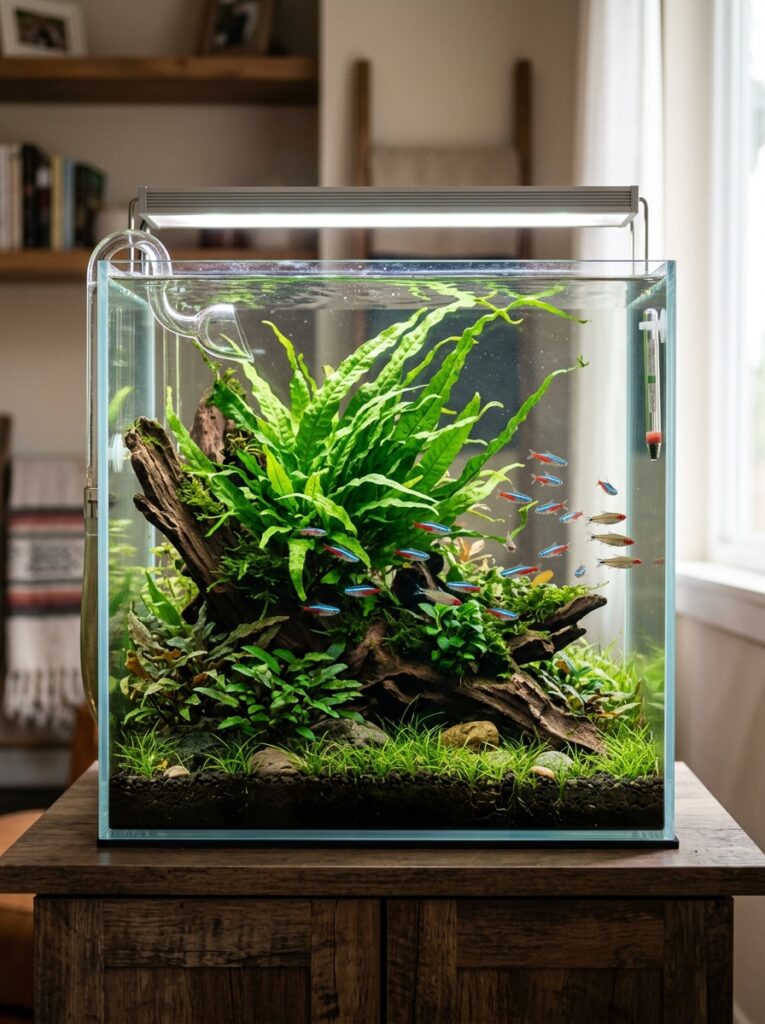
Cryptocorynes for Natural-Looking Aquariums
If your goal is to create an aquarium that feels calm and natural, cryptocorynes are worth a closer look.
These plants are known for their soft, flowing appearance and ability to blend beautifully into planted layouts. They work especially well in aquariums inspired by nature because they don’t look overly structured or artificial.
One reason beginners appreciate cryptocorynes is that many varieties tolerate lower lighting conditions quite well. Once established, they’re often surprisingly easy to maintain.
Their leaves come in different shapes, sizes, and shades of green, allowing hobbyists to add variety without making the aquarium feel cluttered.
Cryptocorynes also pair nicely with driftwood, stones, and other natural materials commonly used in modern aquascaping.
For aquarium owners seeking a relaxed, organic look, these plants can be a wonderful addition.
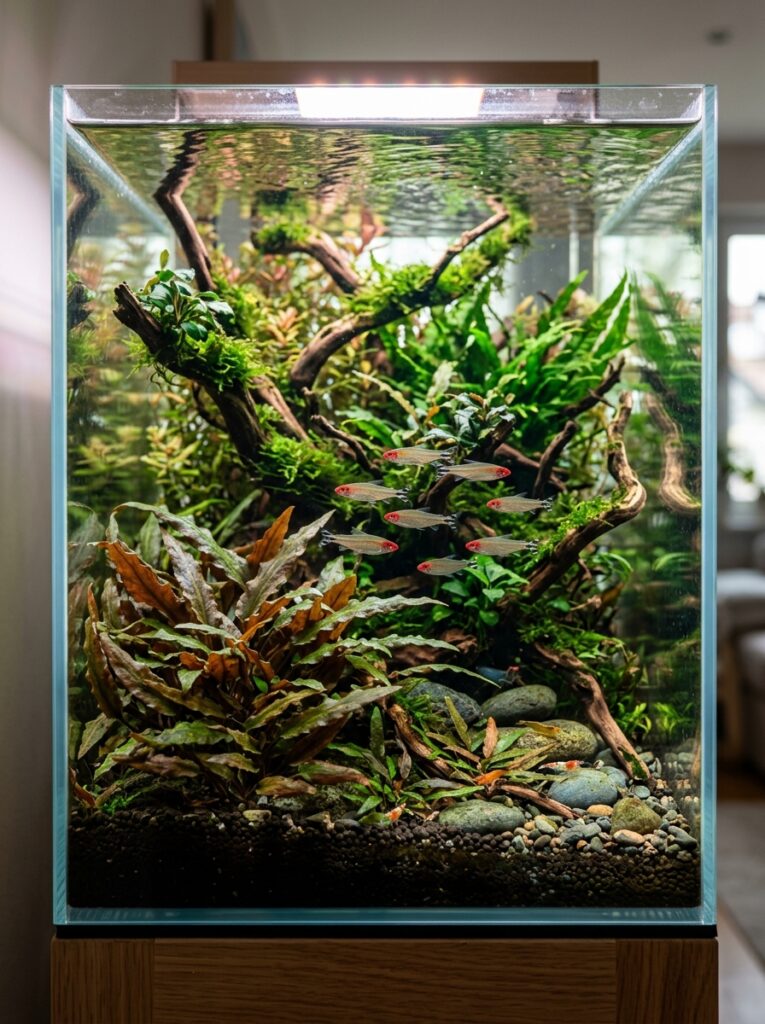
Java Moss for Texture and Shelter
Java moss may not be the flashiest plant in the aquarium hobby, but it’s one of the most useful.
Its soft, textured growth creates a natural appearance that can make an aquarium feel more established and mature. It also provides shelter for small fish and can help create a sense of security within the tank.
Many hobbyists attach Java moss to driftwood, rocks, or decorative structures to create a more natural look. Over time, it can soften hardscape elements and help tie the entire aquascape together.
Another advantage is its adaptability. Java moss is known for growing in a wide range of aquarium conditions and doesn’t usually demand intense lighting.
For beginners, it’s often one of the easiest ways to add texture and visual interest to a planted aquarium without increasing maintenance significantly.
Sometimes the smallest details have the biggest impact, and Java moss is a great example of that.
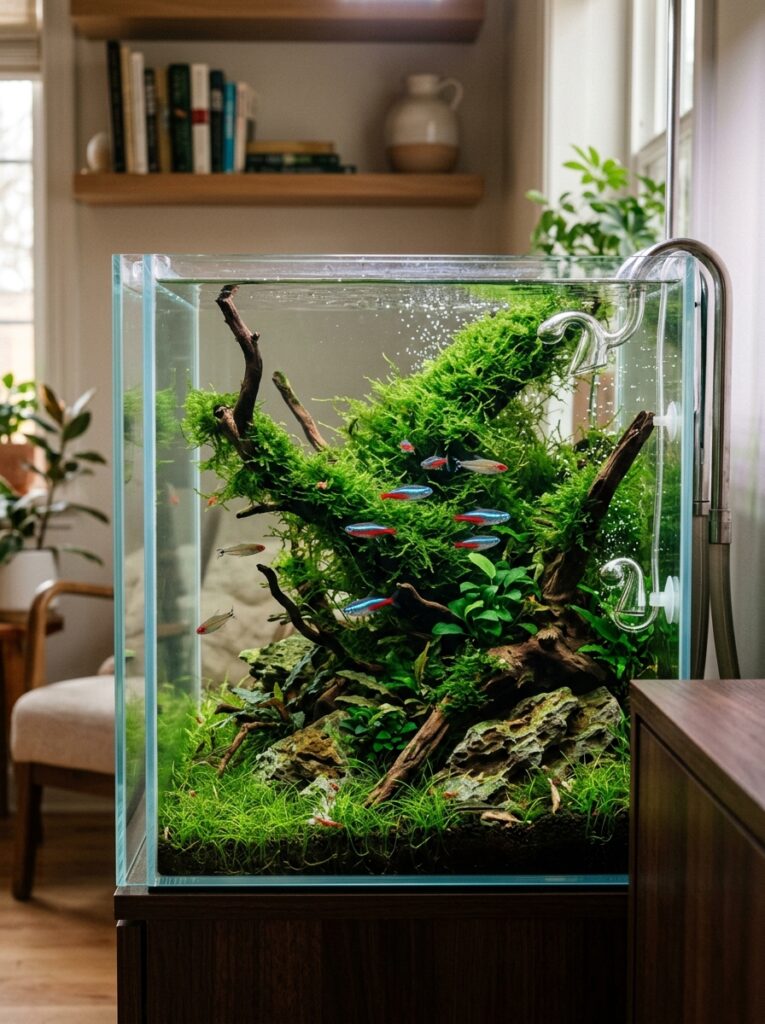
Amazon Sword for Larger Beginner Tanks
If you’re looking for a plant that can become a true centerpiece, Amazon sword is one of the best options available.
Its broad green leaves create a bold, lush appearance that immediately draws attention. In larger beginner aquariums, a healthy Amazon sword can become one of the most noticeable features in the entire setup.
Despite its impressive size, Amazon sword is often considered beginner-friendly. It adapts well to a variety of aquarium conditions and can provide a natural backdrop for fish, driftwood, and other plants.
Many aquarium owners use Amazon swords to create a sense of depth within the tank. Their larger leaves help fill empty areas and contribute to the rich, planted look that so many hobbyists enjoy.
While it may eventually require more space than some smaller plants, it’s still one of the easiest ways to add a dramatic natural element to a beginner aquarium.
Helpful Support for Root Feeders
Recommended Option: Aquarium Root Tabs
Best For:
✓ Amazon Swords
✓ Cryptocorynes
✓ Gravel substrates
✓ Larger beginner planted tanks
Why We Like It:
✓ Supports heavy root feeders
✓ Easy to place near plant roots
✓ Helpful in plain gravel or sand
✓ Beginner-friendly plant nutrition
PetYeti Take:
Amazon swords and many cryptocorynes often appreciate nutrients near their roots. Root tabs can help these plants grow stronger without making the whole aquarium routine more complicated.
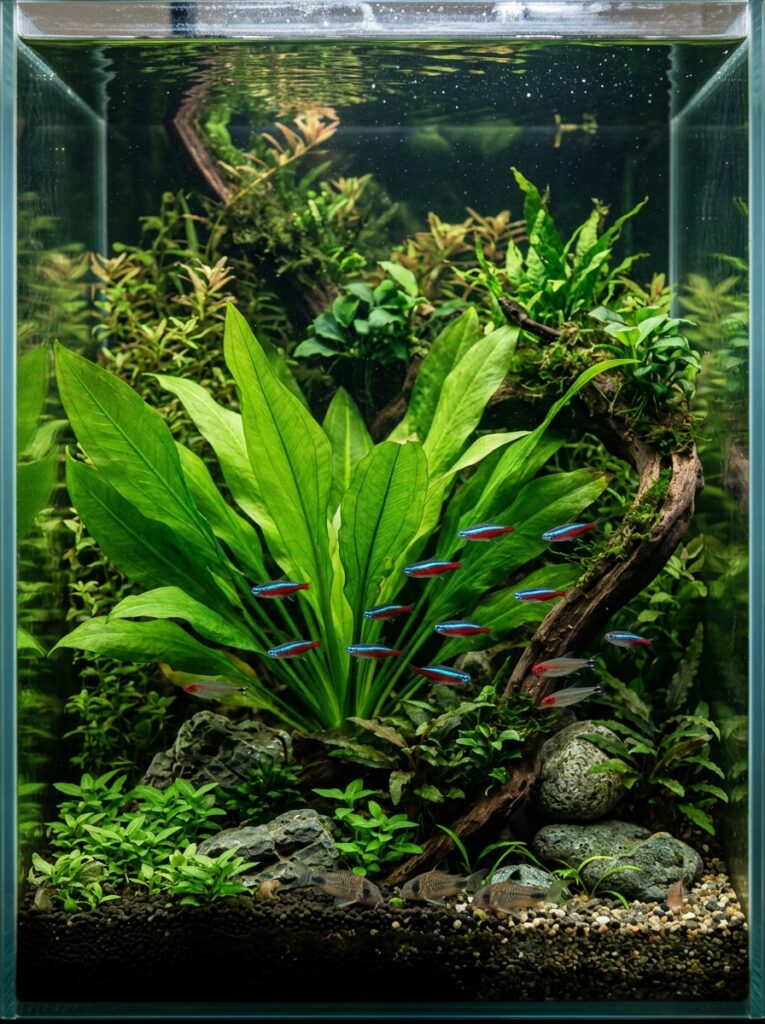
Common Mistakes When Growing Low-Light Plants
One of the biggest mistakes beginners make is assuming low-light plants can simply be ignored.
While these plants are generally forgiving, they still benefit from stable conditions, reasonable lighting, and basic care.
Another common mistake is choosing too many plant species at once. It can be tempting to fill the aquarium with every interesting plant you find, but starting with a few reliable species is often the better approach.
Overcrowding the aquarium can also make maintenance more difficult and reduce the clean, balanced appearance that many hobbyists are trying to achieve.
Patience is important as well. Some low-light plants grow slowly, which means it can take time for the aquarium to develop the lush look you see in photos online.
The good news is that most plant-related problems become much easier to avoid once you focus on consistency rather than perfection.
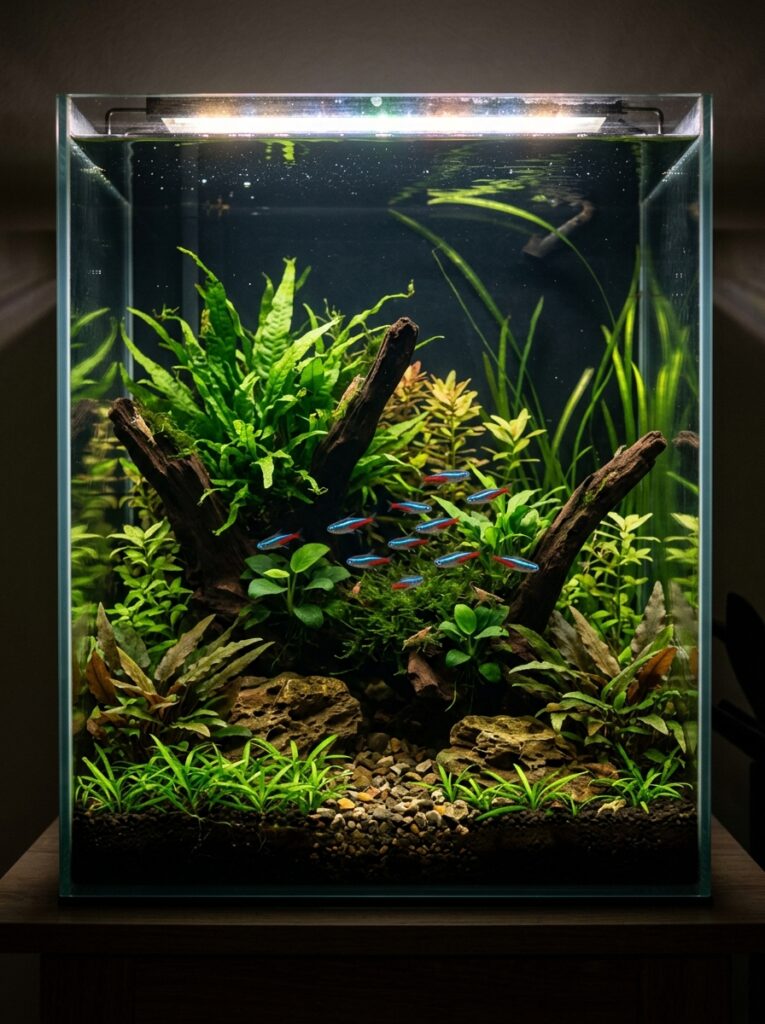
Creating a Beautiful Low-Light Planted Aquarium
A beautiful planted aquarium doesn’t need advanced equipment or expert-level skills.
In many cases, the most attractive tanks are built around a handful of healthy plants, a simple layout, and a commitment to consistency.
Low-light species like Anubias, Java fern, cryptocorynes, Java moss, and Amazon sword make it possible for beginners to enjoy the benefits of live plants without feeling overwhelmed.
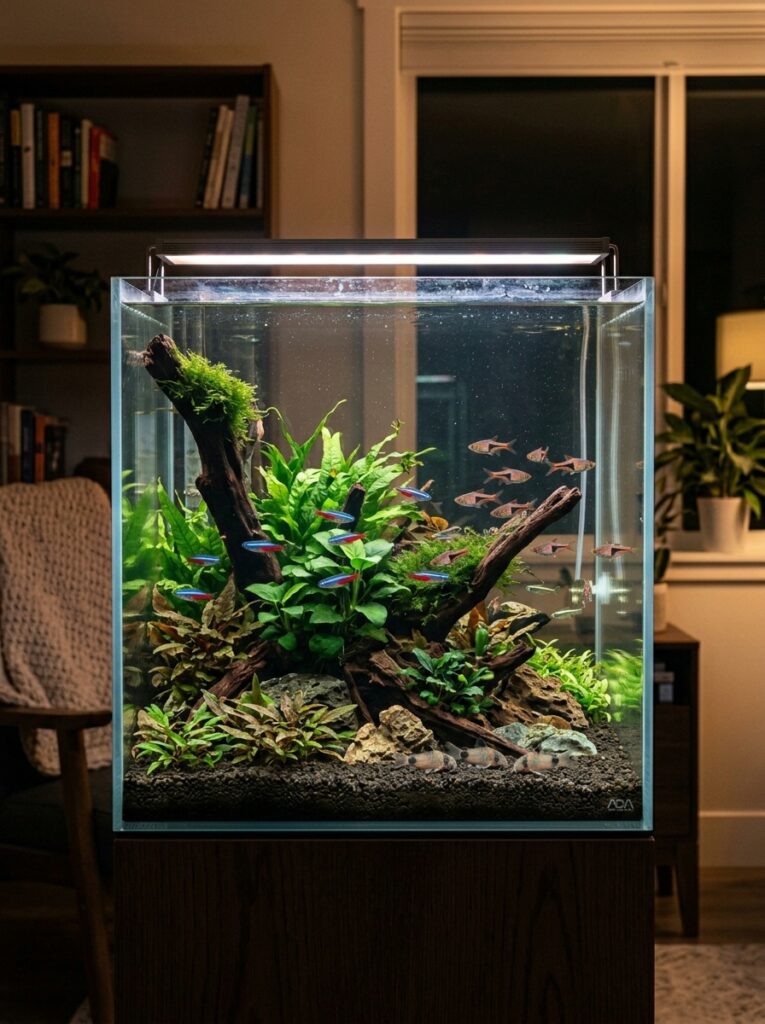
Over time, these plants help soften the aquarium, create a more natural environment for fish, and add a sense of life that artificial decorations often can’t match.
The result is an aquarium that feels calmer, more established, and more connected to nature.
And that’s exactly why low-light plants remain one of the best investments a beginner can make when creating a peaceful aquarium at home.
Helpful Next Reads
Low-light plants are easier to care for when you understand tank size, fertilizer needs, and where each plant fits in the aquascape.
Still learning plant nutrition? Read do aquarium plants need fertilizer.
Not sure which fertilizer type fits your plants? See root tabs vs liquid fertilizer.
Keeping a small tank? Read our nano aquarium plants guide.
Want floating options too? See our guide to floating plants for small aquariums.
Planning a betta setup? Read our guide to creating a beautiful planted betta tank.
CONCLUSION
Live plants don’t have to be complicated.
In fact, some of the easiest plants in the aquarium hobby thrive in simple setups with modest lighting and minimal maintenance.
Whether you choose Anubias, Java fern, cryptocorynes, Java moss, Amazon sword, or a combination of several species, low-light plants can transform an aquarium into something that feels more natural and alive.
They provide beauty, texture, and a healthier environment for fish while helping beginners build confidence with planted aquariums.
The best part is that you don’t need to be an expert to get started.
A few carefully chosen plants, a little patience, and consistent care can go a long way toward creating a planted aquarium you’ll enjoy for years to come.
FAQs
What is the easiest low-light aquarium plant for beginners?
Anubias is often considered one of the easiest aquarium plants for beginners because it’s adaptable, slow-growing, and tolerant of a wide range of conditions.
Can aquarium plants grow without strong lighting?
Yes. Many popular aquarium plants naturally thrive in low-light environments and don’t require intense lighting systems.
Are low-light plants good for betta fish tanks?
Absolutely. Plants like Anubias, Java fern, and floating plants are commonly used in betta aquariums because they create a more natural environment.
Do low-light plants require fertilizer?
Some aquariums may benefit from plant nutrients, but many beginner-friendly low-light plants can grow successfully with relatively simple care.
How long does it take for aquarium plants to grow?
Growth rates vary by species. Some low-light plants grow slowly, while others may show noticeable growth over a period of weeks or months.
Can I keep live plants in a small aquarium?
Yes. Many low-light plants are ideal for nano aquariums, betta tanks, and other compact setups