
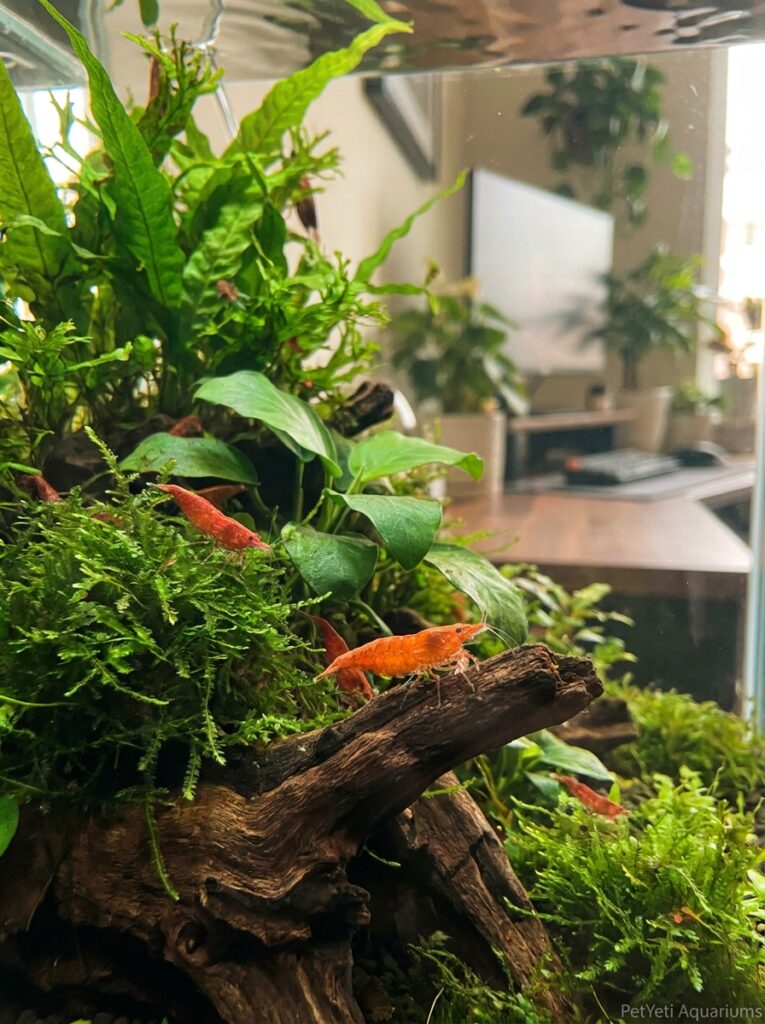
If you’re asking yourself why are my shrimp hiding—whether your once-active Cherry, Amano, or Ghost shrimp have completely vanished under rocks, behind filter pipes, or inside dense plant leaves—it can feel concerning. The good news is that hiding is a natural survival instinct for dwarf shrimp, and in many cases, it’s a completely healthy sign that they are simply preparing to molt or grow their colony.
The key is determining whether your shrimp are taking cover during a vulnerable life stage or retreating due to aggressive tank mates or shifting water parameters.
PetYeti 10-Second Quick Diagnostic
- It’s likely NORMAL if: You see a translucent empty exoskeleton floating in the tank, a berried (pregnant) female tucked under a plant leaf, or if new shrimp are taking a few days to get used to their fresh aquarium.
- It’s a WARNING SIGN if: All your shrimp hide at once, crawl near the top water line to escape, act lethargic when touched, or if you notice sudden deaths following a water change.
- 5 Reasons Why Your Shrimp Are Hiding (And How to Fix It)
- 1. Molting & Growing New Exoskeletons
- 2. Intimidation or Aggression from Tank Mates
- 3. Pregnant (Berried) Females Carrying Eggs
- 4. New Tank Acclimation & Small Colony Size
- 5. Water Quality Stress or Copper/Chemical Sensitivity
- When Should You Be Concerned?
- CONCLUSION
- FAQs
What To Check First
Before assuming your shrimp are gone or unhealthy, check whether they were recently added, whether the tank has dense plants or moss, whether fish or other tank mates are making them cautious, and whether any shrimp may be molting. If the whole colony suddenly hides, stops feeding, or becomes inactive after a water change or maintenance session, check water parameters and recent tank changes more carefully.
As an Amazon Associate, PetYeti earns from qualifying purchases. This comes at no additional cost to you and helps support the site. We only recommend products we genuinely believe can help create healthier and more enjoyable aquariums.
5 Reasons Why Your Shrimp Are Hiding (And How to Fix It)
1. Molting & Growing New Exoskeletons
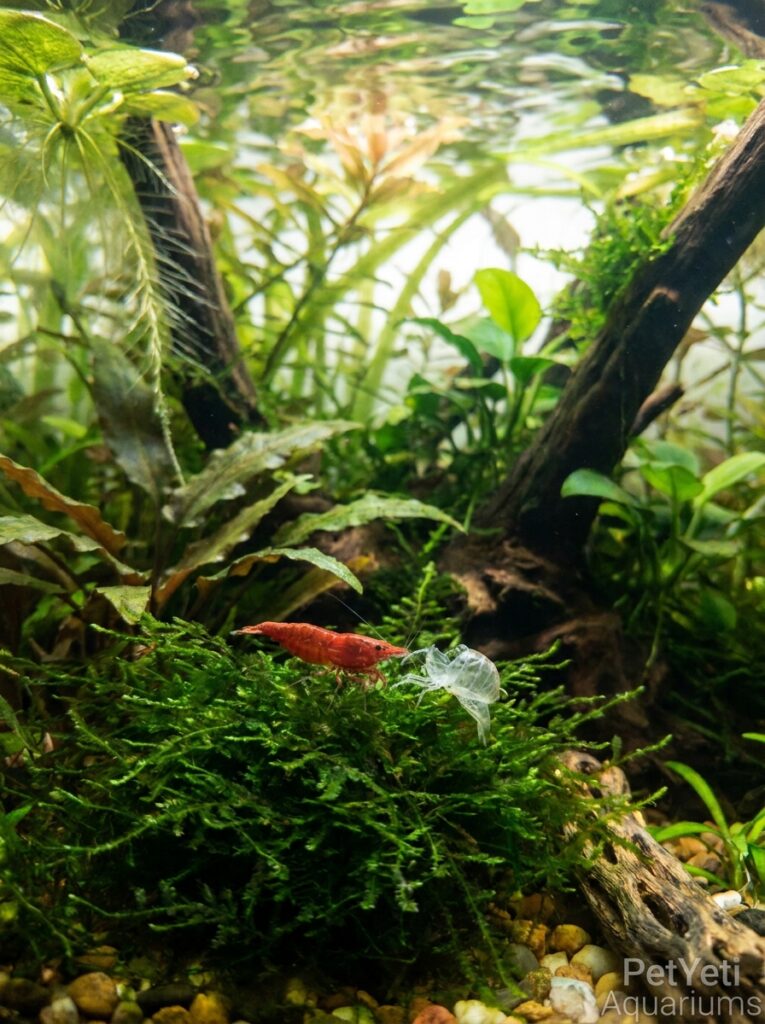
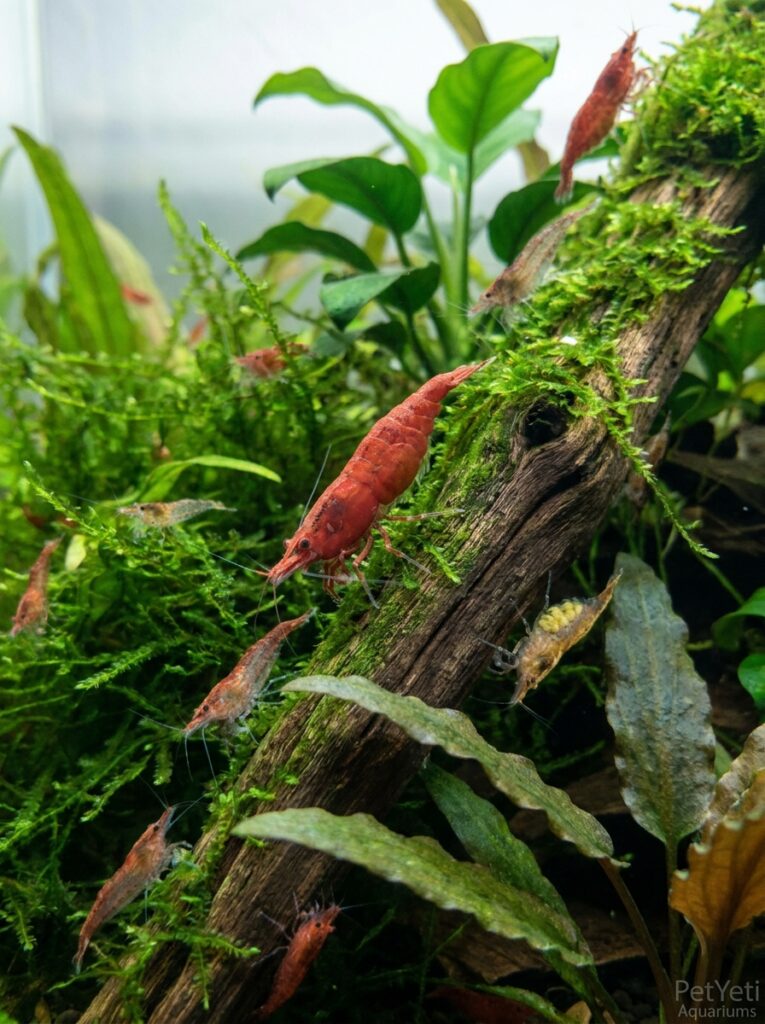
As dwarf shrimp grow, they must regularly shed their hard outer shell in a process called molting. Right after shedding, a shrimp’s new shell is soft, flexible, and completely unprotected for 24 to 48 hours. During this vulnerable period, instinct tells them to wedge themselves into tiny crevices, dense moss, or dark caves until their new shell hardens.
How to Tell: You spot a clear, translucent shrimp-shaped skin floating on the gravel, or individual shrimp reappear after a day or two looking slightly larger and brighter.
The Fix: Provide natural cover like cholla wood tubes or dense java moss so they feel safe while their shells harden, and never disturb them while molting.
PetYeti Pick: Natural Cholla Wood Pipes or Ceramic Shrimp Shelter Cubes give molting shrimp tiny, safe hiding tunnels that large fish can’t reach.
PetYeti Calm Tip
New shrimp often feel safer when the aquarium stays predictable. Keep lights, feeding, and maintenance gentle for the first few days, and avoid moving decorations around right after adding them. A calm, stable tank gives shrimp time to explore without feeling exposed.
2. Intimidation or Aggression from Tank Mates
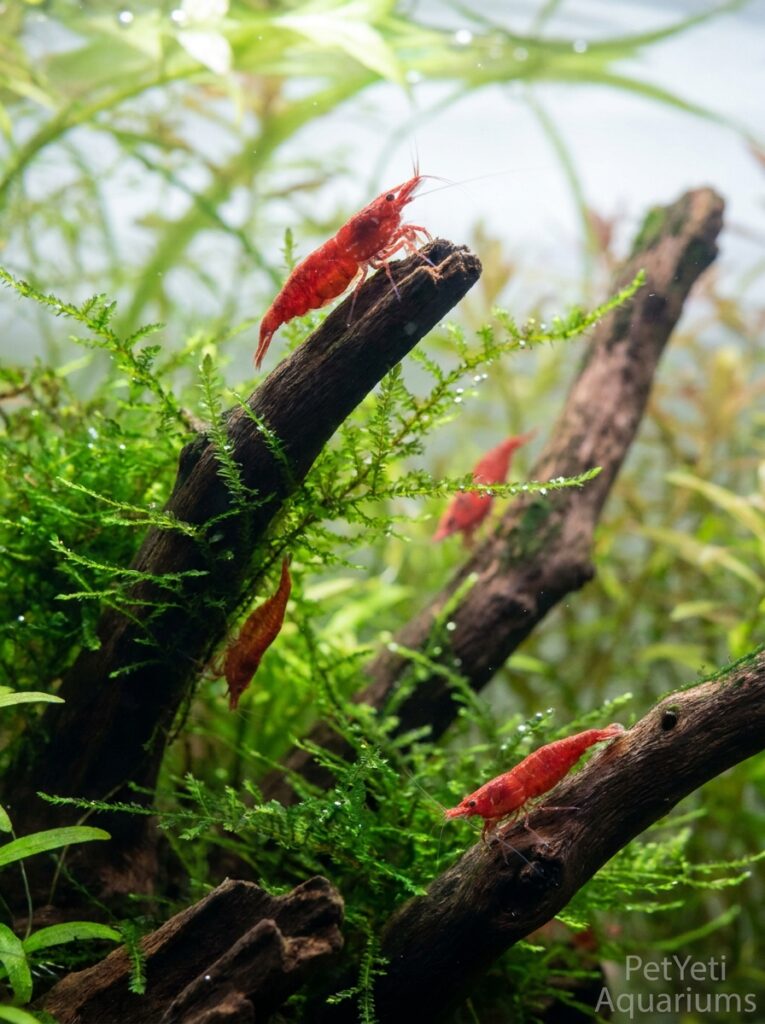
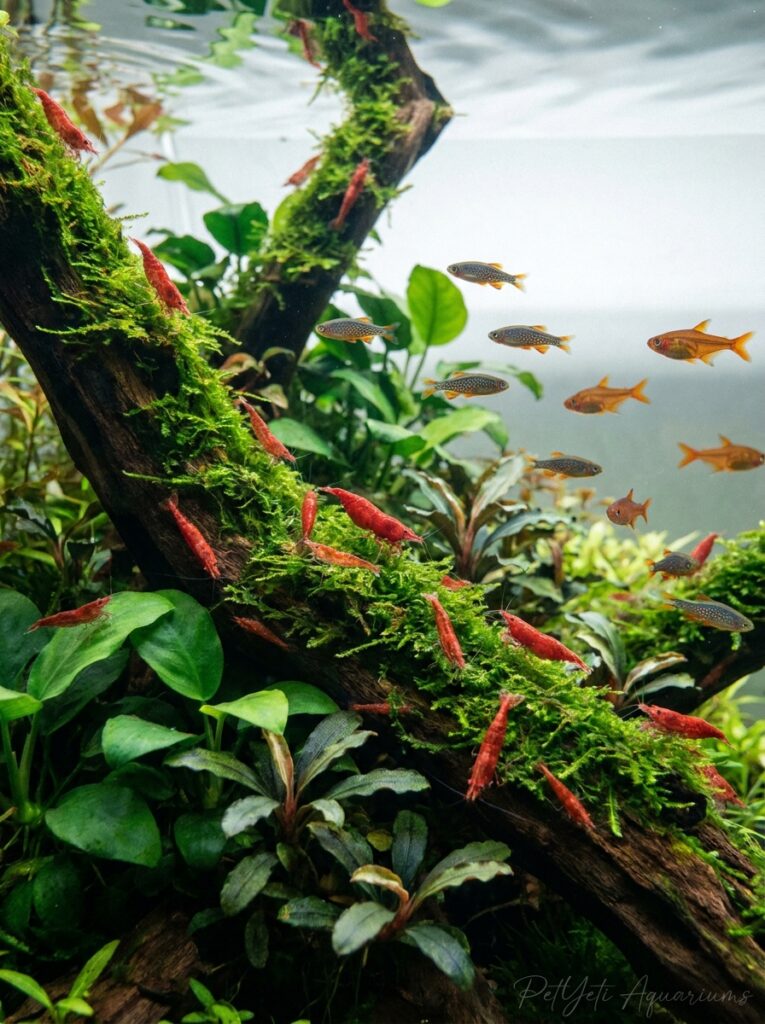
To a fish, almost any dwarf shrimp looks like a delicious snack—especially baby shrimplets! If your tank includes semi-aggressive or curious fish (like dwarf cichlids, gouramis, larger tetras, or active rasboras), your shrimp will spend 90% of their day hiding in plants or substrate to avoid being picked on.
- How to Tell: Shrimp only venture out at night when tank lights are off, or stay permanently glued to the upper corners of the glass near the water line.
- The Fix: Keep shrimp in dedicated nano tanks or pair them only with verified peaceful micro-fish (like Neon Tetras, Otocinclus, or Ember Tetras), and plant heavy cover.
- PetYeti Pick: Adding a lush clump of Live Java Moss or Anubias Nana Petite creates an intricate jungle where shrimplets can forage in complete safety.
Beginner Mistake to Avoid
A common beginner mistake is making a shrimp tank too open because you want to see the shrimp more often. Bare tanks can make shrimp feel exposed, especially if there are fish nearby. Instead of removing plants or hiding spots, add more soft cover, moss, and grazing surfaces. Shrimp that feel safe often become more visible over time.
3. Pregnant (Berried) Females Carrying Eggs
When a female Cherry or Neocaridina shrimp carries eggs under her tail (known as being “berried”), she becomes much more cautious. She will seek out dark, quiet spots with high water flow to fan her eggs with fresh oxygen while keeping them hidden from hungry fish.
- How to Tell: You catch a glimpse of a female with tiny yellow, green, or dark round eggs tucked beneath her swimmerets under a broad leaf.
- The Fix: No fix needed! Keep your water parameters steady and avoid doing large, sudden water changes that could trigger a premature molt and cause her to drop the eggs.
4. New Tank Acclimation & Small Colony Size
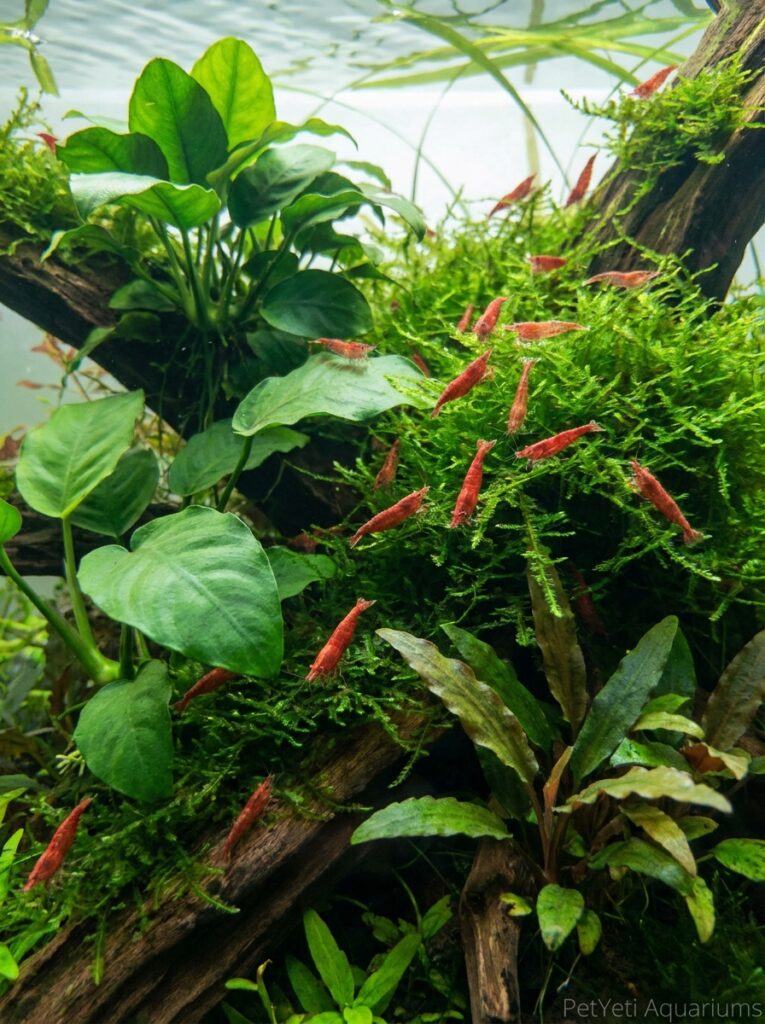
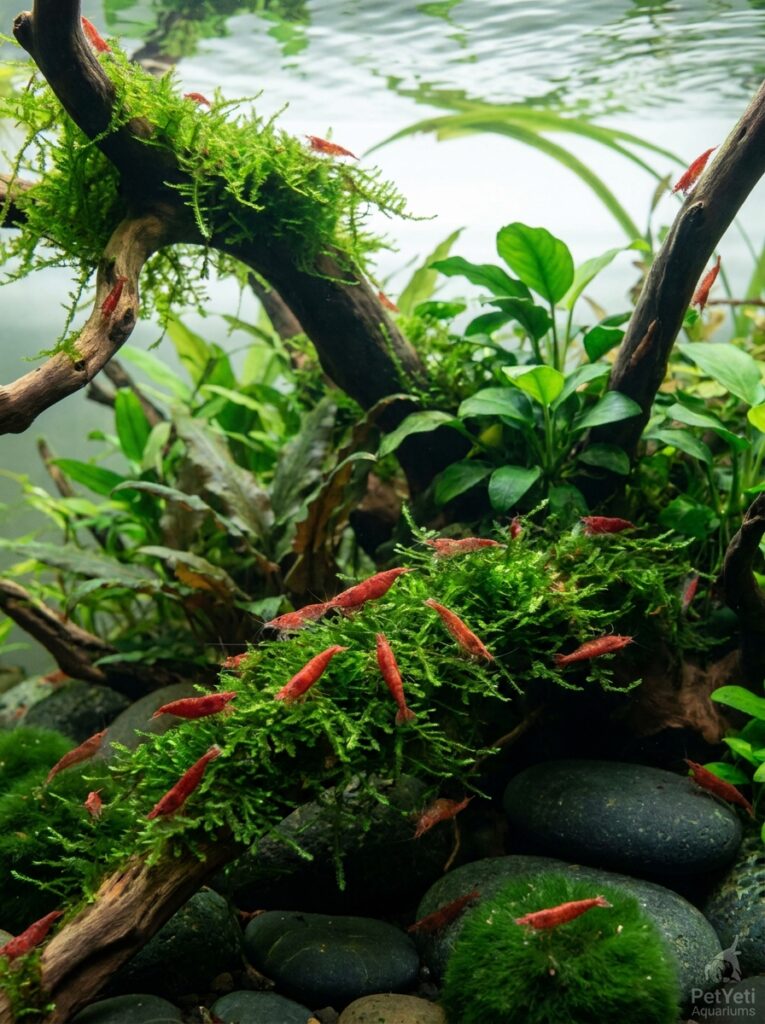
If you just brought your shrimp home from the pet store, or if you only have a tiny group of 3 or 4 shrimp in a large aquarium, shyness is guaranteed. Shrimp rely on safety in numbers—a small group feels exposed in a big tank, whereas a thriving colony of 15–20+ shrimp will boldly graze out in the open.
How to Tell: You recently introduced the shrimp within the past week, or your total shrimp count is under 5.
The Fix: Give new arrivals 3–5 days to settle in, and consider building your starter colony up to at least 10–12 individuals so they feel secure.
5. Water Quality Stress or Copper/Chemical Sensitivity
Shrimp are far more sensitive to water quality than most freshwater fish. Unstable pH, high nitrates, trace heavy metals (especially copper), or sudden temperature swings will send your entire shrimp population into panic mode, causing them to hide or climb up filter pipes to escape the water.
- How to Tell: All shrimp hide simultaneously, stop grazing on biofilm, or act lethargic when food is placed directly in front of them.
- The Fix: Test your parameters immediately using a liquid test kit, and ensure any tap water conditioner used detoxifies heavy metals.
- PetYeti Pick: Use Seachem Prime during water changes—it neutralizes chlorine, chloramines, and heavy metals without harming sensitive invertebrate colonies.
Simple Water Checks for Hidden Shrimp
When shrimp suddenly hide more than usual, water testing is one of the safest first checks. Shrimp are sensitive to sudden changes, so a simple aquarium test kit can help you check ammonia, nitrite, nitrate, and pH before making random adjustments. If the tank was recently cleaned, topped off, or changed, focus on stability before making big corrections.
For beginner-friendly help, see our guides on how to test aquarium water correctly and best aquarium test kits for beginners.
When Should You Be Concerned?
Most shrimp hiding is completely normal.
However, it’s important to pay attention to patterns.
You may want to investigate further if:
- The entire colony disappears suddenly
- Shrimp stop feeding
- Shrimp appear inactive for extended periods
- You notice unexplained deaths
- Other unusual behaviors appear
A few hidden shrimp are rarely a cause for concern.
A sudden change affecting the entire colony deserves closer observation.
Real-Life Example
A shrimp keeper who normally sees dozens of shrimp every day may notice that almost none are visible after a major change in the aquarium. In that situation, reviewing recent changes can help identify the cause.
The key is looking for changes in normal behavior rather than focusing on hiding alone.
Related PetYeti Guides
Shrimp hiding is easier to understand when you look at the whole aquarium, not just one behavior. These related guides can help you check shrimp tank setup, plant cover, water stability, and peaceful tank mate choices.
Best Nano Shrimp for Small Aquariums
Use this if you want beginner-friendly shrimp options for small planted tanks.
Best Plants for Shrimp Tanks
Use this if your shrimp need more cover, grazing surfaces, or natural hiding spots.
How to Test Aquarium Water Correctly
Use this if your shrimp suddenly hide more than usual after cleaning, water changes, or tank maintenance.
Want to build a thriving colony? Read our troubleshooting guide on why are my shrimp not breeding.
CONCLUSION
Seeing your shrimp disappear into thin air can be alarming, but in most aquariums, hiding is simply a normal part of a shrimp’s life cycle. Whether they are molting into a fresh shell, protecting a clutch of eggs, or settling into a new home, providing plenty of quiet cover gives them the security they need.
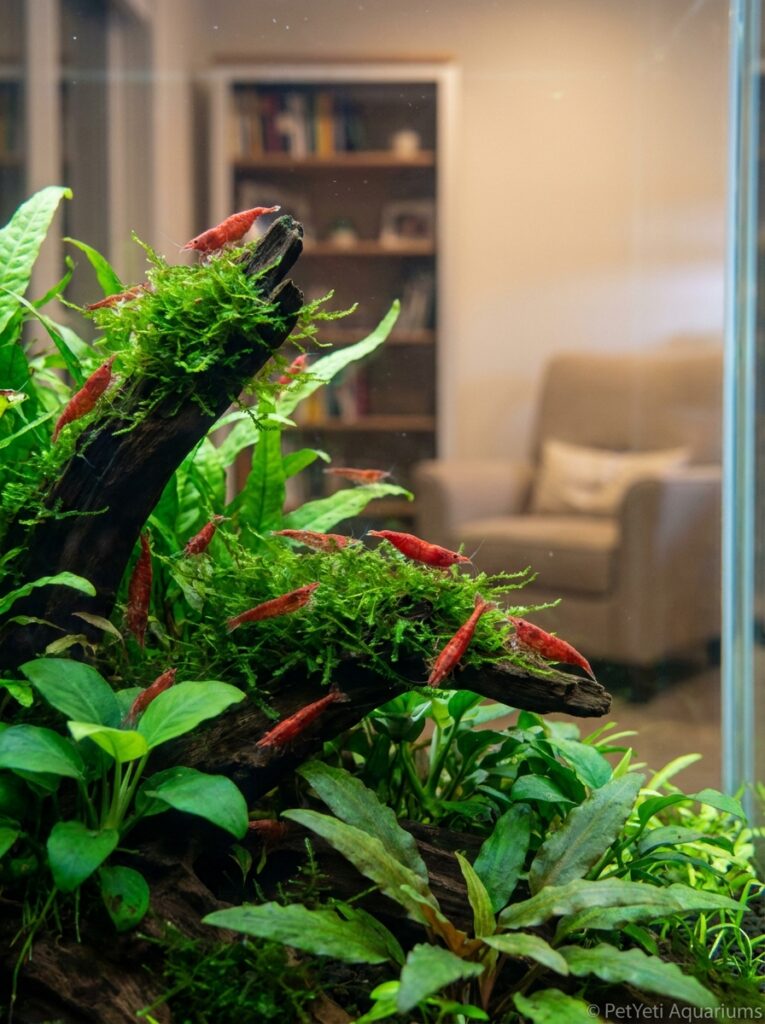
By keeping your water parameters stable, choosing peaceful tank mates, and offering dense mosses and cholla wood, your shrimp will feel safe enough to come out and graze boldly every single day.
PetYeti Quick Recap: Best Immediate Steps
If your shrimp are hiding, check for translucent molt shells in the substrate and verify your water parameters with an 11 in 1 – Aquarium Test Strips. To make molting shrimp feel secure, add natural Cholla Wood Pipes or dense Java Moss to give them safe, stress-free shelter.
FAQs
Is it normal for aquarium shrimp to hide?
Yes. Hiding is one of the most common and natural shrimp behaviors, especially in new aquariums.
Why did my shrimp disappear after I added them?
New shrimp often spend several days adjusting to unfamiliar surroundings before becoming more visible.
How long do shrimp stay in hiding after molting?
Most dwarf shrimp hide for 24 to 48 hours after molting. During this time, their new exoskeleton is soft and vulnerable. Once their shell hardens and they feel safe, they will emerge from hiding and immediately start grazing on biofilm again.
Will adding more plants help shrimp feel safer?
Absolutely. Dense plants and moss provide security, grazing surfaces, and natural shelter.
Do fish make shrimp hide?
Even peaceful fish can make shrimp more cautious, causing them to spend more time in cover.
Why are all my shrimp hiding at once?
A sudden environmental change, maintenance session, or water parameter shift can sometimes cause widespread hiding behavior.
When should I worry about hiding shrimp?
You should investigate further if hiding is accompanied by inactivity, lack of feeding, unusual behavior, or unexplained deaths.
Do cherry shrimp hide if they are stressed?
Yes. Stressed cherry shrimp will hide, lose their bright red coloration, and stop actively picking at substrate or plants. Common stress triggers include sudden pH shifts, high ammonia/nitrite levels, improper temperature, or aggressive fish swimming near their grazing spots.
How can I make my shrimp come out of hiding more often?
To encourage shy shrimp to come out in the open, add dense live cover like Java Moss, keep them in a colony of at least 10–12 shrimp, remove aggressive fish, and drop a tiny piece of shrimp food into an open glass feeding dish at the front of the tank.