
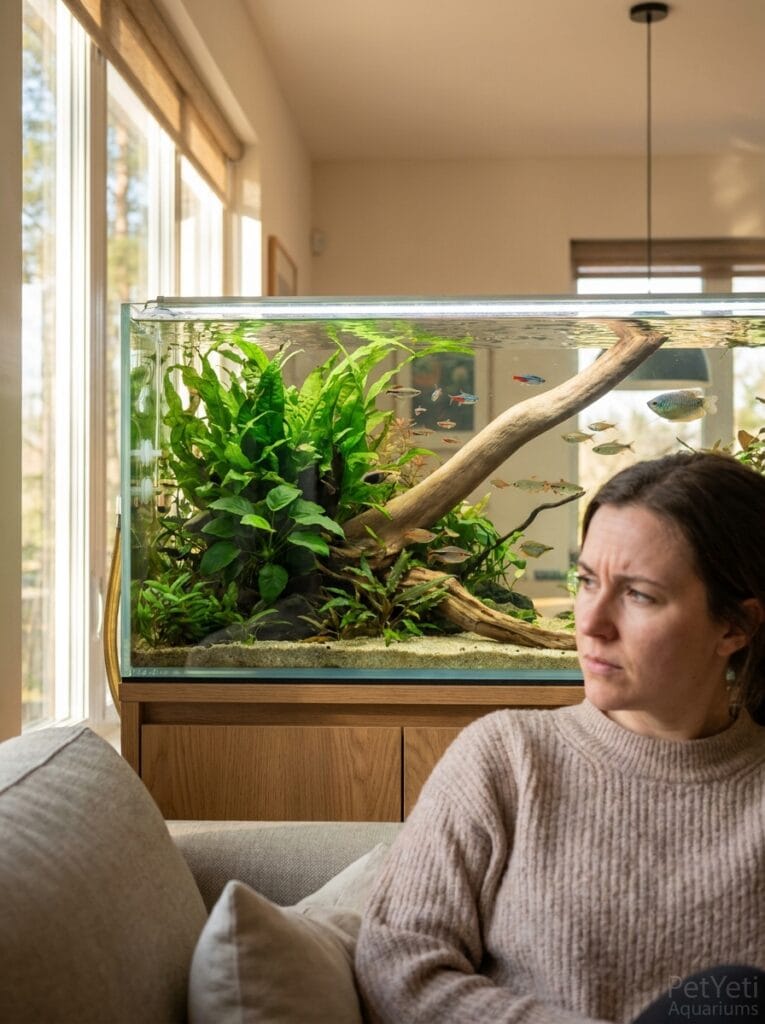
You glance at your aquarium and suddenly notice something unusual.
One of your fish darts toward a decoration, rubs its side against the surface, and quickly swims away.
A few minutes later, it does it again.
Naturally, your first thought is:
“Why is my fish rubbing its body on things?”
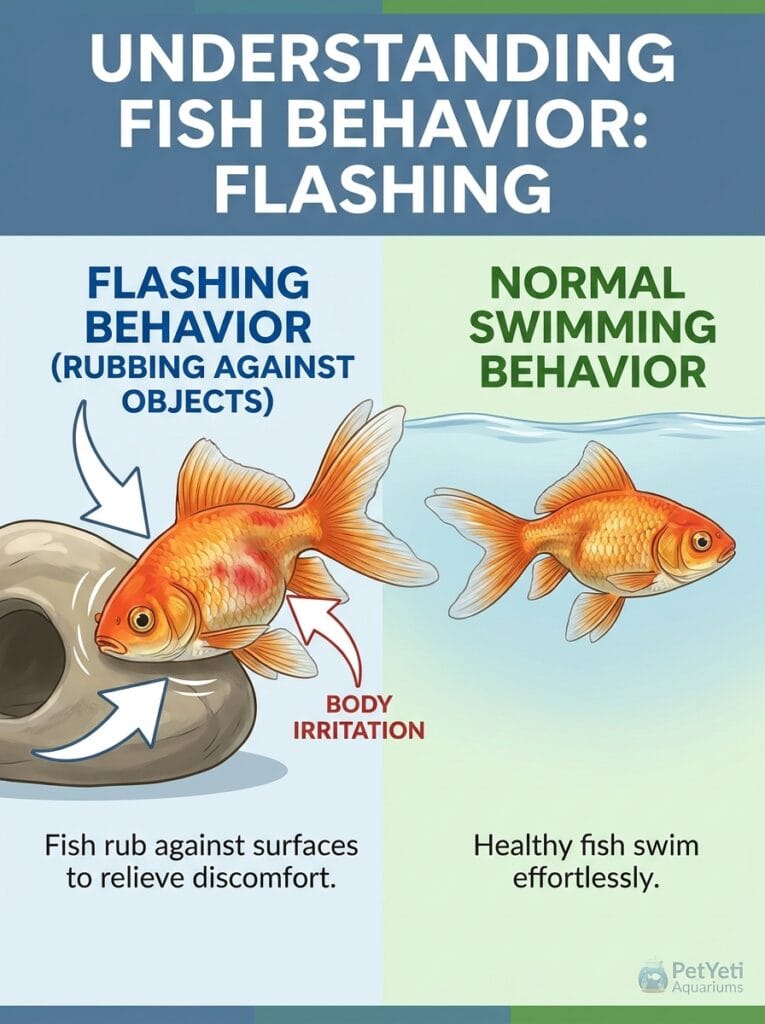
Aquarium hobbyists often call this behavior flashing.
Flashing happens when a fish rubs, scratches, or scrapes its body against:
• Decorations
• Rocks
• Driftwood
• Gravel
• Plants
• Even the aquarium glass
Occasional flashing isn’t always a reason to panic.
Fish can sometimes rub against objects for harmless reasons.
However, frequent flashing often suggests irritation that deserves attention.
The challenge is figuring out what’s causing it.
In this guide, we’ll cover the most common reasons fish rub against decorations, how to identify the cause, and when it’s time to take action.
What Does “Flashing” Mean in Aquarium Fish?
The aquarium hobby uses the term flashing to describe fish rubbing their bodies against surfaces.
The movement often looks quick and deliberate.
A fish may:
• Tilt slightly sideways
• Brush its body against an object
• Rub against gravel
• Make a sudden scraping motion
Many beginners describe it as:
“My fish looks itchy.”
That’s actually a pretty accurate way to think about it.
Flashing is often a sign that something is irritating the fish’s skin, gills, or scales.
The important question becomes:
What is causing the irritation?
Real-Life Example
A hobbyist noticed a platy occasionally rubbing against a piece of driftwood. At first it happened only once every few days. When the behavior became more frequent, further investigation revealed a developing water quality issue.
What to Expect
A single flashing event may not mean much.
Repeated flashing from one or multiple fish deserves closer attention.
Poor Water Quality Is One of the Most Common Causes
Before assuming disease or parasites, always consider water quality.
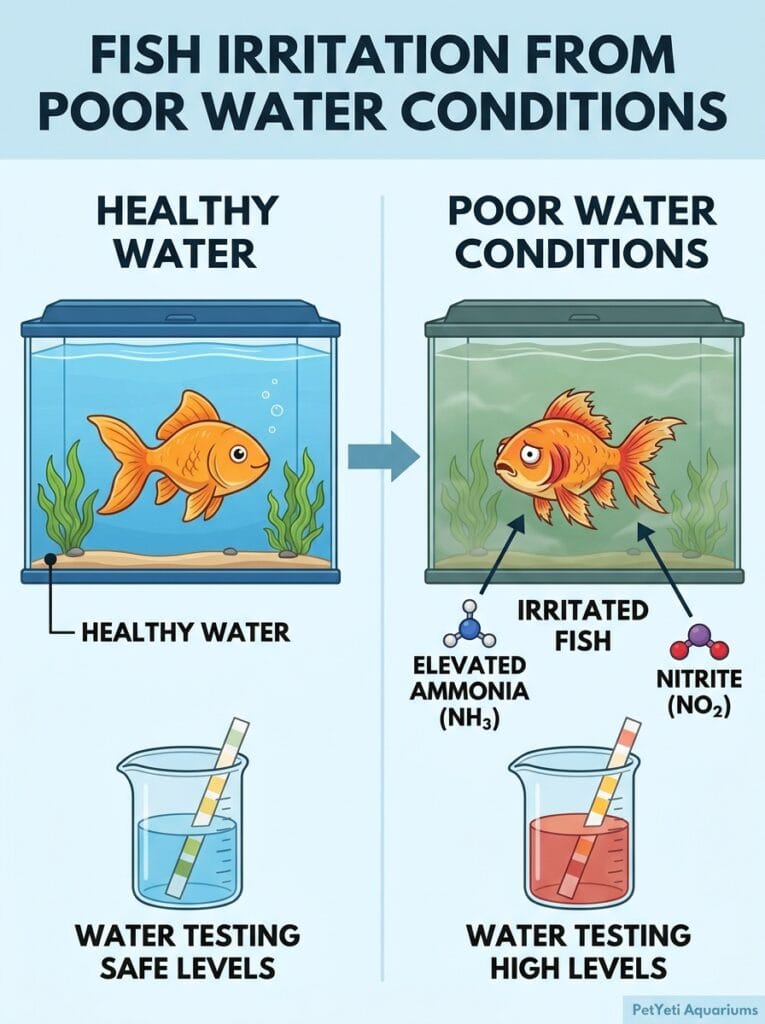
Poor water conditions are one of the most common reasons fish begin rubbing against decorations.
Fish live in constant contact with the water around them.
When water quality declines, their skin and gills can become irritated.
Potential triggers include:
• Ammonia spikes
• Nitrite spikes
• Sudden parameter changes
• Excess organic waste
• Poor maintenance routines
Sometimes the flashing behavior is one of the earliest warning signs.
Real-Life Example
A community tank appeared healthy at first glance, but several fish started rubbing against decorations after a missed maintenance period. Water testing revealed elevated ammonia levels that were irritating the fish.
How to Fix It
• Perform appropriate water changes
• Remove excess waste
• Review maintenance habits
• Ensure filtration is functioning properly
What to Expect
If water quality is the cause, flashing often decreases after conditions improve.
External Parasites Can Make Fish Feel Irritated
One of the most discussed causes of flashing is external parasites.
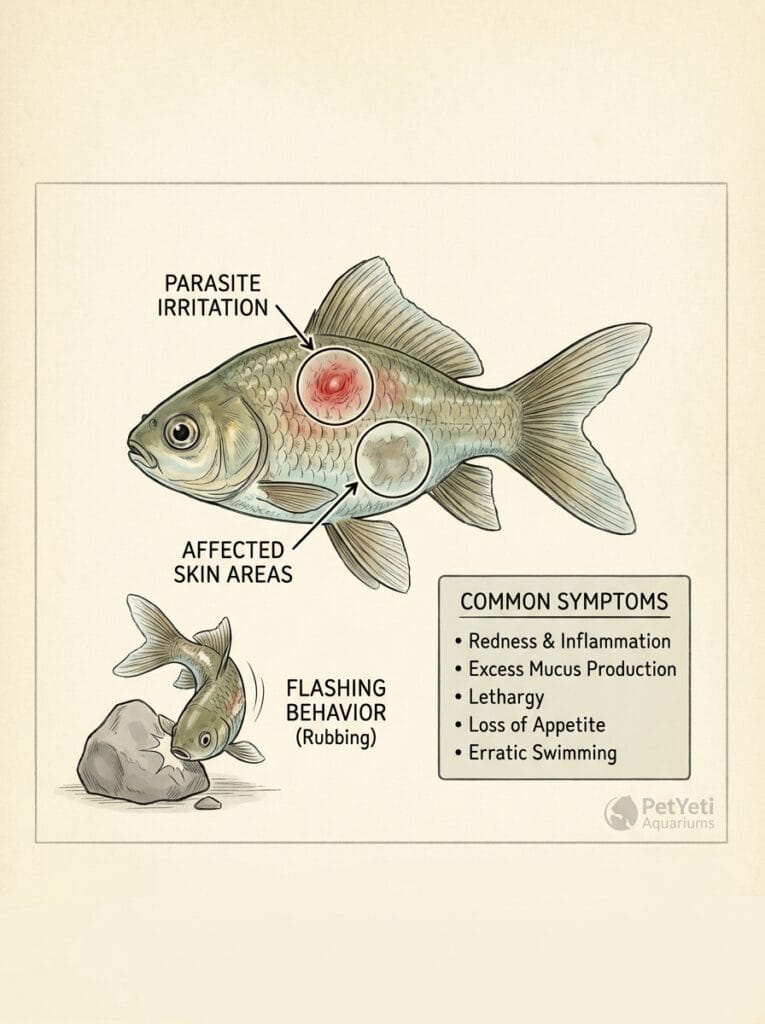
Parasites can irritate a fish’s skin and gills, causing the fish to repeatedly attempt to relieve the discomfort.
Common examples may include:
• Ich (white spot disease)
• Flukes
• Certain external protozoa
Fish don’t understand what is causing the irritation.
They simply respond by rubbing against available surfaces.
Real-Life Example
An aquarium owner initially assumed a fish was playing around decorations. Over several days, multiple fish began flashing and small white spots later appeared, confirming the presence of ich.
Signs That May Appear Alongside Flashing
• White spots
• Clamped fins
• Increased hiding
What to Expect
Persistent flashing combined with other symptoms often warrants closer investigation.
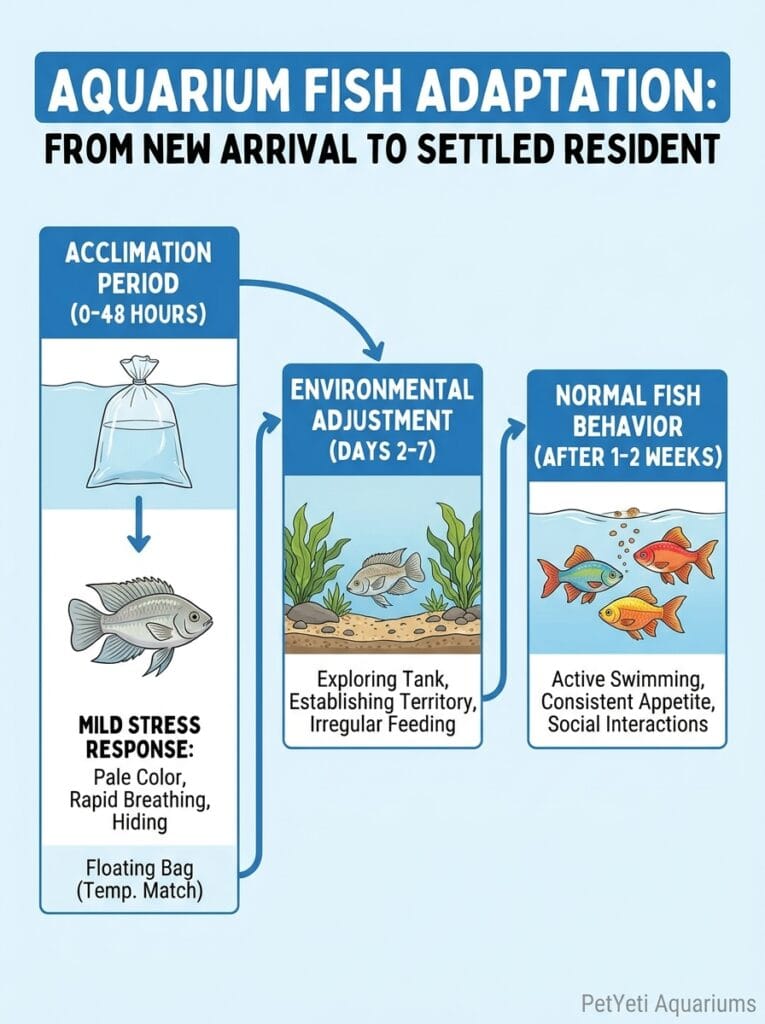
New Fish Often Flash During the Adjustment Period
If the fish was recently added to the aquarium, temporary flashing may be related to stress and adjustment.
Moving from one environment to another is a significant change for fish.
Even healthy fish experience:
• Different water chemistry
• New tank mates
• New decorations
• Different lighting
• New filtration flow
During this transition period, occasional flashing may occur as the fish adapts.
Real-Life Example
A hobbyist added several new tetras to an established community tank. One fish occasionally rubbed against plants during the first few days. The behavior disappeared completely after the fish settled into its new surroundings.
How to Fix It
• Maintain stable water conditions
• Avoid unnecessary disturbances
• Monitor behavior closely
• Allow time for adjustment
What to Expect
Mild flashing that disappears within a few days often points to temporary acclimation stress rather than disease.
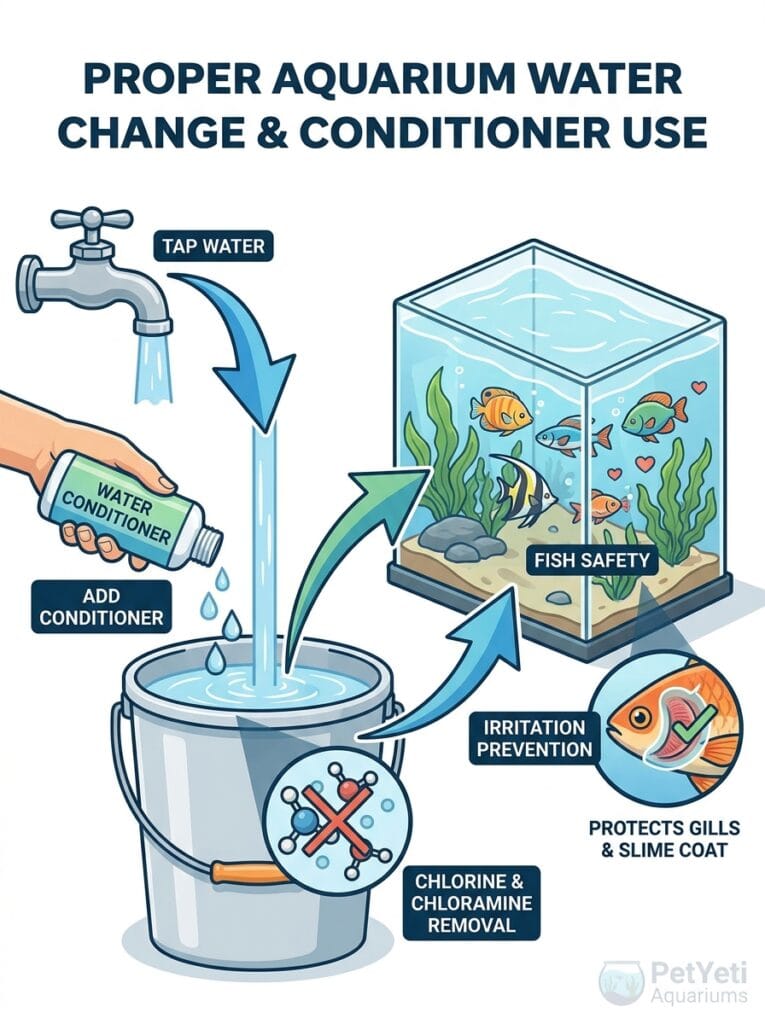
Chlorine and Sudden Water Changes Can Irritate Fish
Fish skin and gills are extremely sensitive.
Sudden changes in water chemistry can sometimes trigger irritation and flashing.
Potential causes include:
• Untreated tap water
• Large sudden water changes
• Temperature swings
• Rapid parameter shifts
Even when fish appear healthy, these changes can temporarily irritate their skin and gills.
Real-Life Example
An aquarium owner noticed fish rubbing against decorations shortly after a large water change. Investigation revealed that the replacement water differed significantly in temperature from the aquarium water.
How to Fix It
• Always use a water conditioner
• Match water temperature carefully
• Avoid drastic parameter swings
• Make changes gradually whenever possible
What to Expect
If irritation comes from a recent water change, the behavior often improves once conditions stabilize.
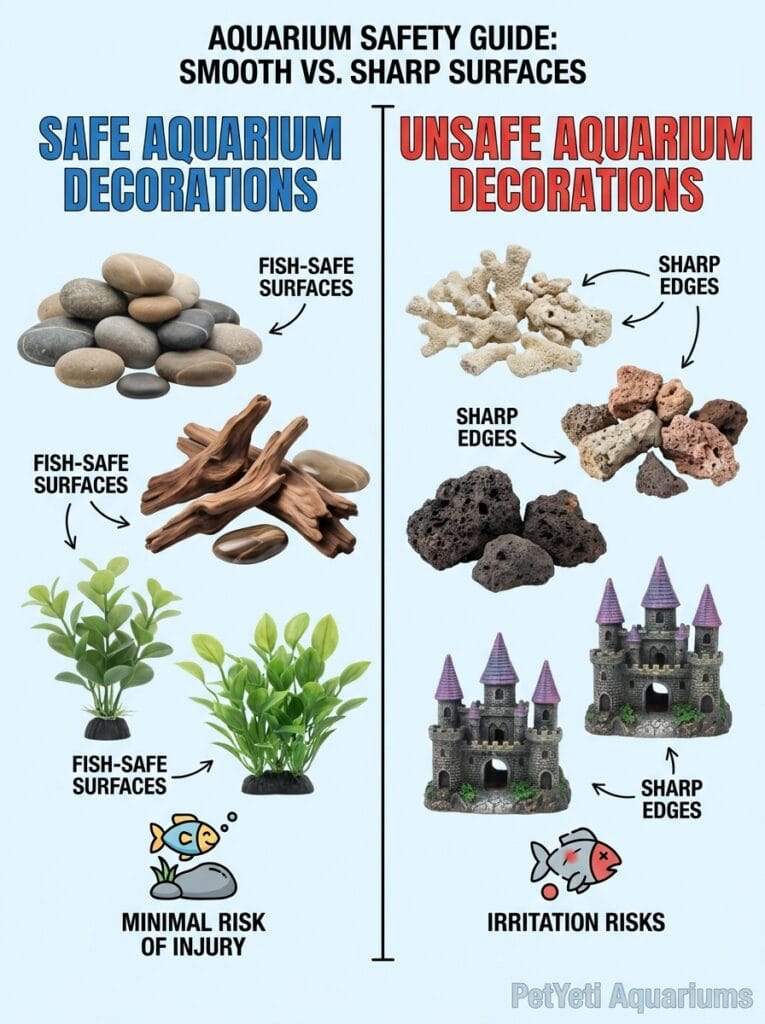
Rough Decorations Can Occasionally Cause Scratching
Not every case of rubbing involves disease or water quality.
Sometimes the decoration itself contributes to the behavior.
Sharp rocks, rough artificial decorations, or poorly finished ornaments can occasionally irritate fish that frequently swim near them.
This is especially true for:
• Long-finned species
• Curious fish
• Fast-swimming species
Real-Life Example
A fish keeper noticed a rainbowfish repeatedly brushing against one particular decoration. Upon inspection, the ornament had several rough areas that were catching delicate fins.
How to Fix It
• Inspect decorations carefully
• Remove sharp objects
• Smooth rough surfaces when appropriate
• Replace potentially hazardous ornaments
What to Expect
Eliminating rough surfaces removes one possible source of irritation and helps create a safer environment.
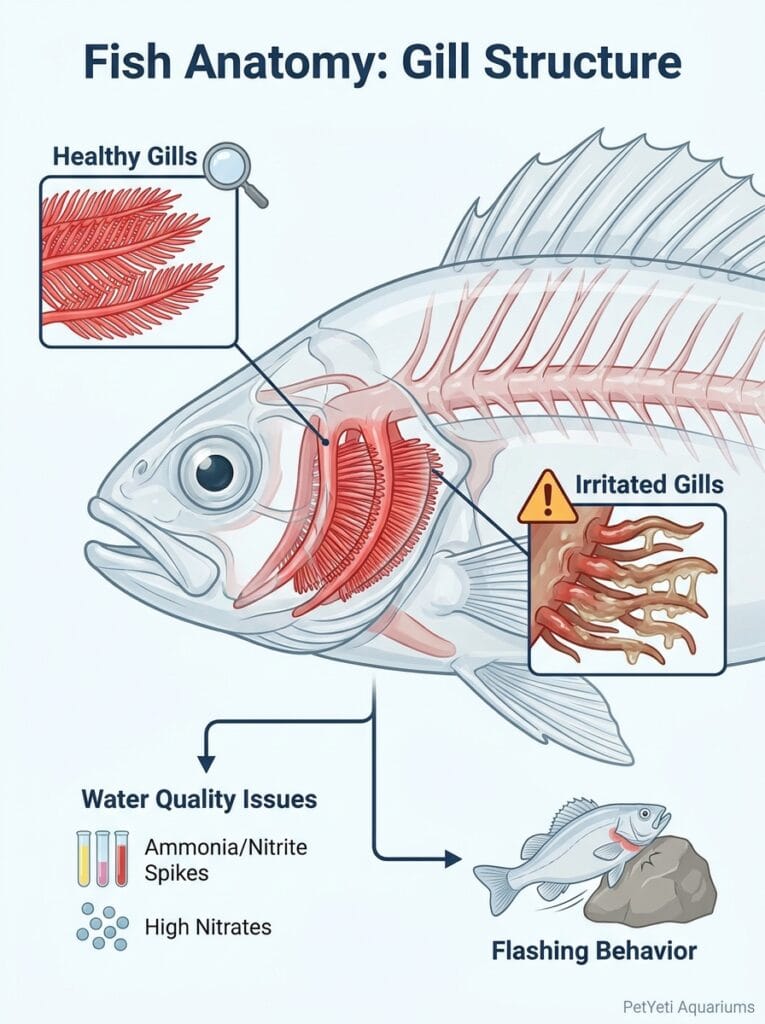
Gill Irritation Can Trigger Flashing Behavior
Sometimes the irritation isn’t on the fish’s body at all.
It may be affecting the gills.
When gills become irritated, fish often display behaviors such as:
• Flashing
• Staying near water flow
• Increased stress
Common causes include:
• Poor water quality
• Parasites
• Suspended irritants
• Sudden environmental changes
Real-Life Example
Several fish in a community aquarium began rubbing against gravel while also breathing more rapidly than usual. Water testing revealed a water quality issue affecting the entire tank.
What to Expect
When flashing occurs alongside breathing changes, investigating water quality should become a top priority.
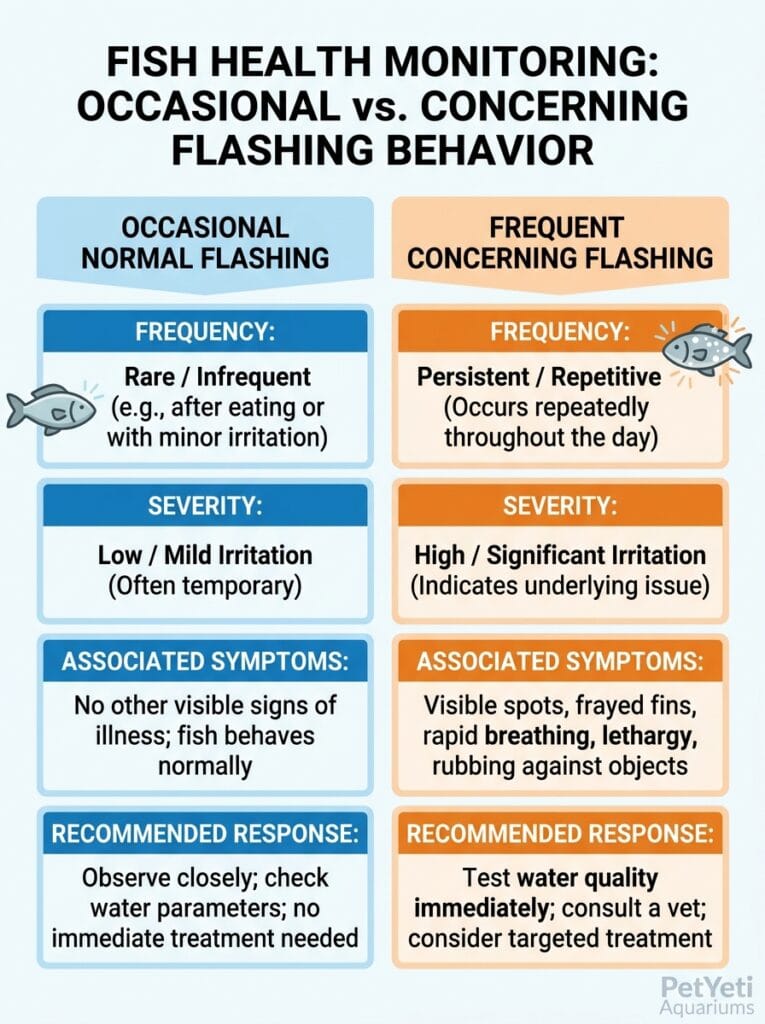
Occasional Flashing vs Constant Flashing
One of the most important factors is frequency.
Usually Less Concerning
• A single rubbing event
• Occasional flashing
• No other symptoms
• Normal appetite
• Normal activity levels
More Concerning
• Repeated flashing throughout the day
• Multiple fish affected
• Visible spots or lesions
• Rapid breathing
• Clamped fins
Real-Life Example
A hobbyist became alarmed after seeing one fish flash once against a rock. The behavior never repeated and the fish remained healthy. In contrast, another aquarium experienced repeated flashing from several fish, which ultimately led to the discovery of a parasite outbreak.
What to Expect
The presence of additional symptoms is often more important than the flashing behavior alone.
Quick Troubleshooting Checklist
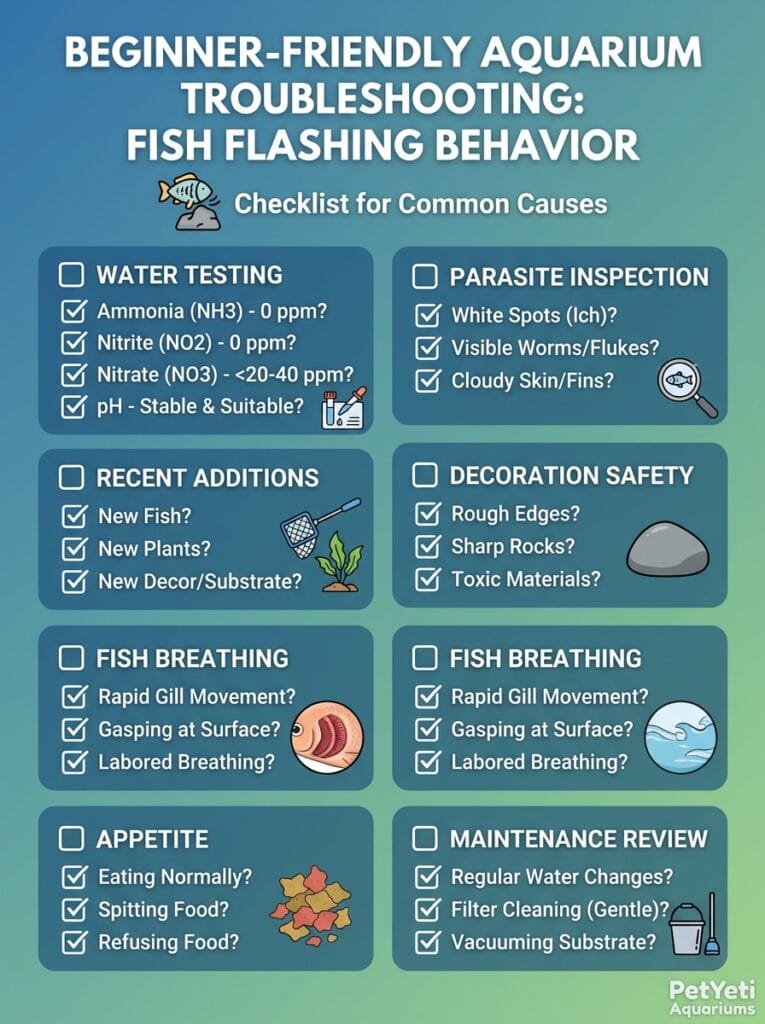
If your fish are rubbing against decorations, work through this checklist:
✅ Look for white spots
✅ Check appetite
✅ Review recent water changes
✅ Inspect decorations for rough surfaces
✅ Consider recent fish additions
✅ Monitor whether multiple fish are affected
This simple process often helps identify the cause before the problem becomes more serious.
CONCLUSION
Seeing a fish rub against rocks, decorations, gravel, or driftwood can be concerning, especially if you’ve never witnessed the behavior before.
The good news is that flashing doesn’t automatically mean your fish are sick.
In some cases, it may be a temporary response to environmental changes or minor irritation.
However, repeated flashing should never be ignored.
Poor water quality, parasites, gill irritation, and environmental stress are all common causes that deserve investigation.
The most effective approach is to look at the entire aquarium rather than focusing on the flashing alone.
Pay attention to:
• Fish appetite
• Breathing patterns
• Physical symptoms
Those clues often reveal the real cause much faster than the flashing behavior itself.
A healthy aquarium should allow fish to swim comfortably without constantly rubbing against objects.
When you identify and address the source of irritation, that natural behavior usually returns quickly.
FAQ
Why is my fish rubbing against rocks?
Fish often rub against rocks because something is irritating their skin or gills. Common causes include water quality issues, parasites, or environmental stress.
What does flashing mean in fish?
Flashing is the aquarium hobby term for fish rubbing or scraping their bodies against objects in the aquarium.
Is occasional flashing normal?
Yes. A single or occasional flashing event can occur without indicating a serious problem. Repeated flashing deserves closer attention.
Can poor water quality cause fish to scratch themselves?
Absolutely. Elevated ammonia, nitrite, or other water quality issues can irritate fish and trigger flashing behavior.
Do parasites always cause flashing?
No. Parasites are one possible cause, but water quality problems, stress, and environmental irritation can produce similar behavior.
Should I quarantine a fish that keeps flashing?
If flashing is persistent and accompanied by other symptoms, closer observation and potential quarantine may be appropriate depending on the suspected cause.