
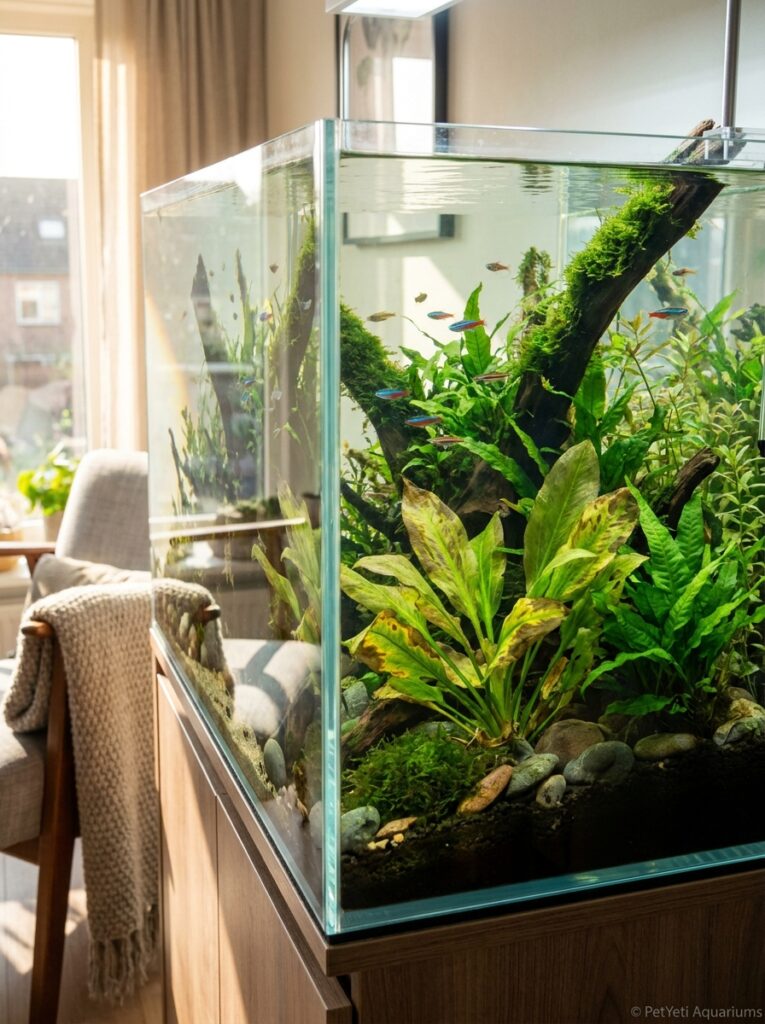
Few things are more frustrating than watching your aquarium plants slowly lose their vibrant green color.
One week they look healthy.
The next week, you notice yellow patches appearing on the leaves.
Then more leaves begin turning pale.
Before long, you’re wondering whether the plants are dying.
The good news is that yellow leaves don’t automatically mean your plants are doomed.
In many cases, yellowing is simply your plants’ way of telling you that something in their environment needs attention.
The challenge is figuring out exactly what they’re trying to say.
The cause could be:
• Plant adaptation
• Root feeding issues
• General aquarium conditions
In this guide, we’ll help you identify the most common reasons aquarium plants turn yellow and show you how to restore healthy growth.
Not All Yellow Leaves Mean Your Plants Are Dying
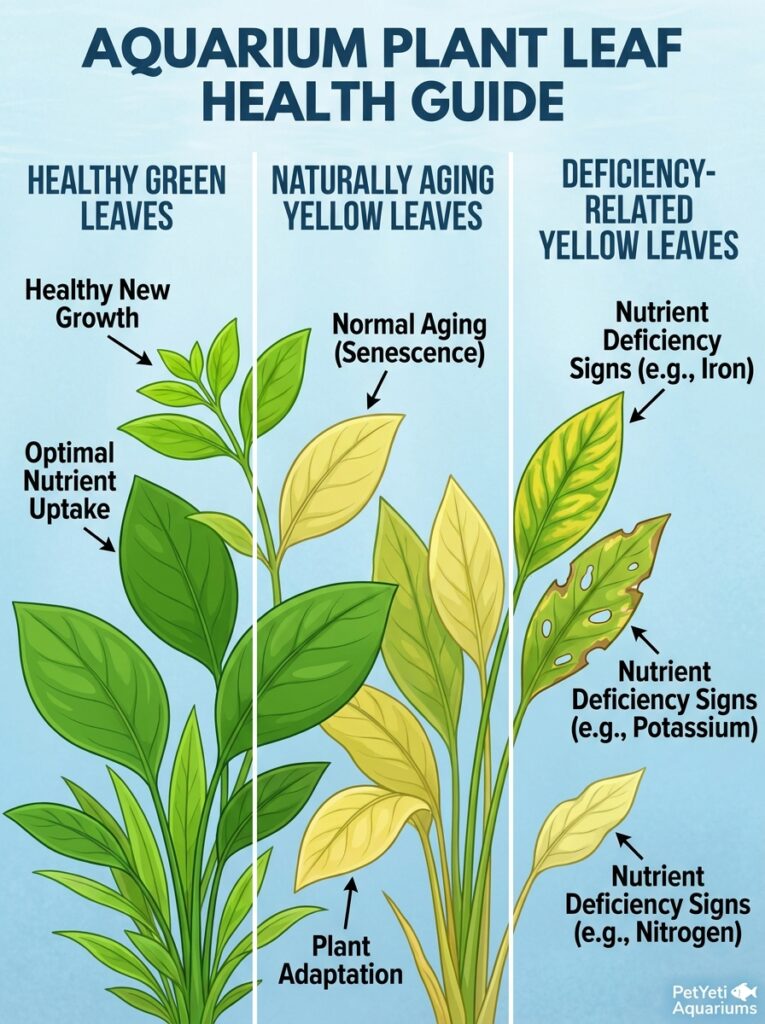
The first thing to understand is that occasional yellow leaves are completely normal.
Just like houseplants, aquarium plants regularly replace older leaves.
As new growth develops, older leaves sometimes yellow and die off naturally.
This process becomes more noticeable in:
• Fast-growing plants
• Newly planted aquariums
• Mature planted tanks
The key is determining whether only a few older leaves are affected or whether the entire plant is gradually losing color.
Real-Life Example
A beginner planted aquarium owner became concerned when a few leaves near the bottom of an Amazon Sword started turning yellow. After several weeks, healthy new leaves continued appearing from the center of the plant. The older leaves were simply reaching the end of their natural life cycle.
What to Expect
A few aging yellow leaves are normal.
Widespread yellowing usually points toward an environmental issue worth investigating.
Nutrient Deficiencies Are One of the Most Common Causes
Plants require nutrients just as fish require food.
When essential nutrients become limited, yellowing often appears as one of the first visible symptoms.
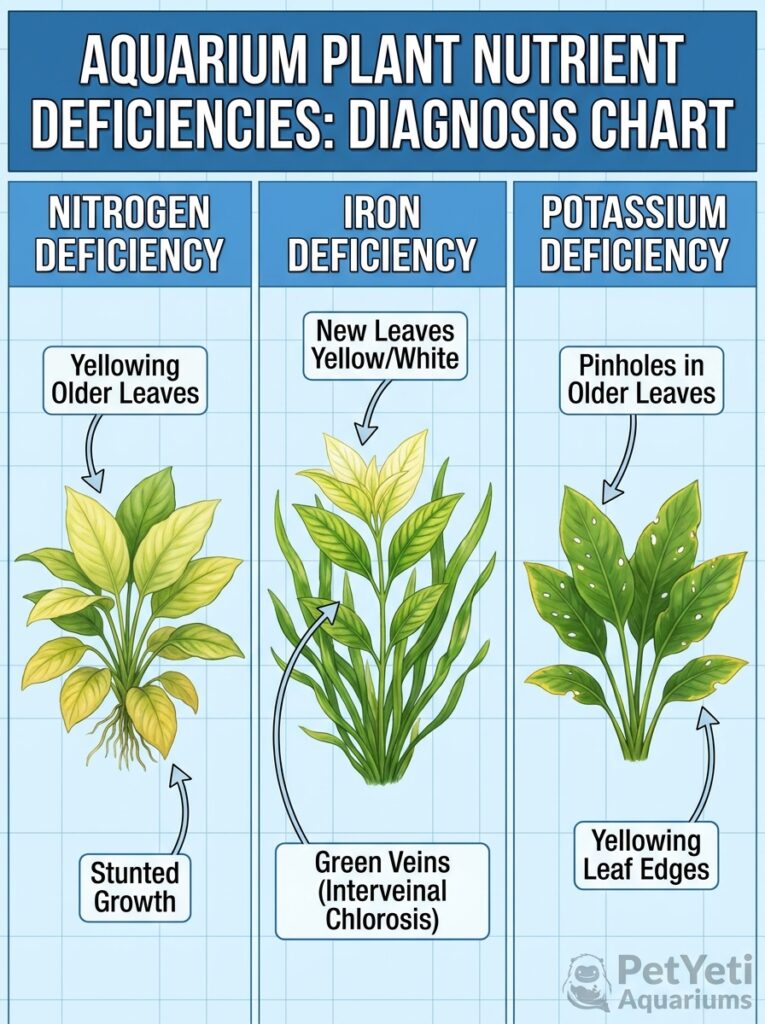
The most common deficiencies include:
Nitrogen Deficiency
Often causes older leaves to turn pale yellow first.
Plants may also appear generally weak or slow-growing.
Iron Deficiency
Usually affects newer growth.
Young leaves may emerge pale yellow while veins remain slightly greener.
Potassium Deficiency
Can cause yellowing accompanied by small holes or damaged leaf edges.
Real-Life Example
A hobbyist maintained healthy fish but noticed new plant growth becoming increasingly pale. After investigating nutrient levels, they discovered their plants were lacking iron. A balanced fertilization routine gradually restored deeper green growth.
How to Fix It
• Use a balanced fertilizer when appropriate
• Identify which leaves are affected first
• Monitor new growth carefully
• Avoid making multiple changes at once
What to Expect
Nutrient-related yellowing often improves gradually over several weeks rather than days.
New Plants Often Go Through an Adjustment Period
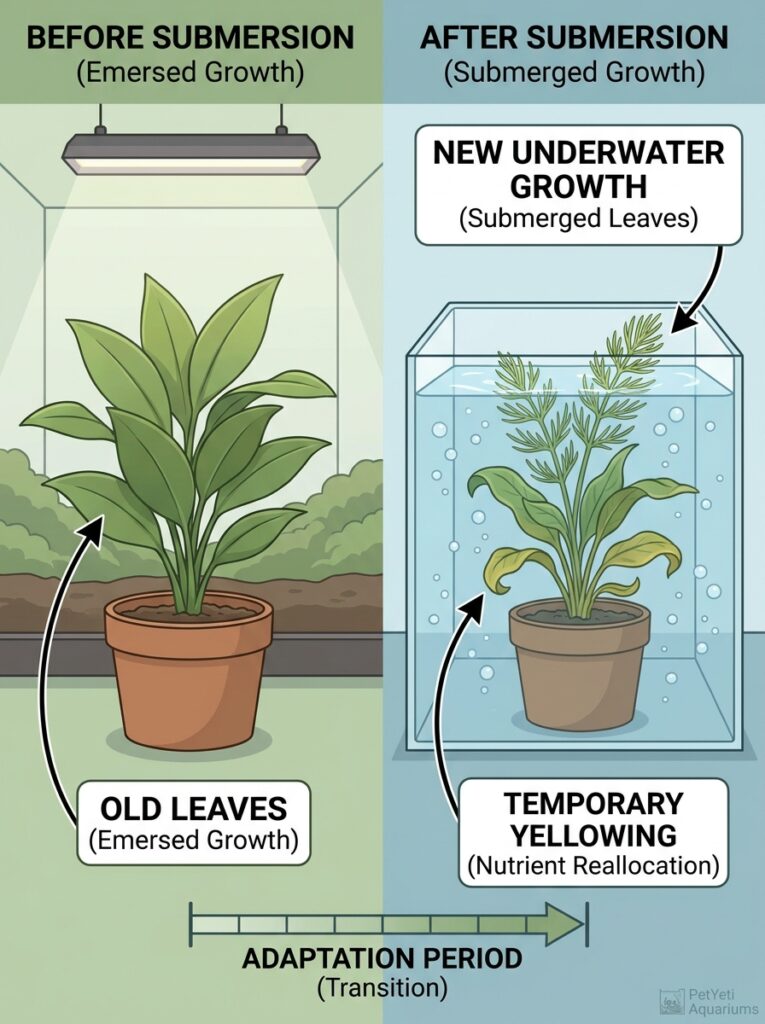
One of the most misunderstood causes of yellow leaves occurs shortly after buying new plants.
Many aquarium plants are grown above water by commercial growers.
Once placed underwater, those original leaves often struggle to adapt.
As a result, plants may:
• Yellow
• Melt
• Shed older leaves
• Produce entirely new submerged growth
This process can look alarming, but it’s often completely normal.
Real-Life Example
A new aquarium owner purchased several beautiful stem plants and watched them begin yellowing within two weeks. Fortunately, new underwater leaves soon appeared and the plants recovered without major intervention.
What to Expect
If healthy new growth appears, temporary yellowing may simply be part of the adaptation process.
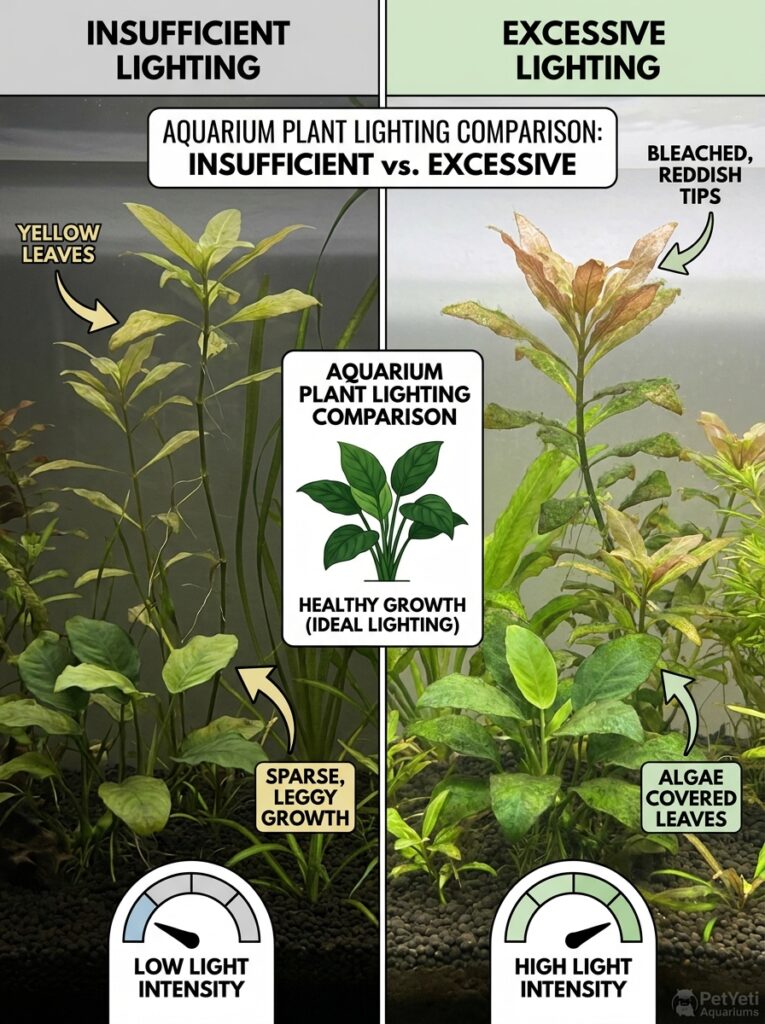
Too Much or Too Little Light Can Affect Leaf Color
Light plays a major role in plant health.
When lighting conditions aren’t appropriate, plants often struggle to maintain healthy coloration.
Too little light may cause:
• Pale growth
• Yellow leaves
• Weak stems
• Reduced growth
Too much light can create different problems, including stress and increased algae competition.
Real-Life Example
A hobbyist upgraded their aquarium light and expected immediate improvement. Instead, some plants continued yellowing because the underlying issue was nutrient availability rather than lighting itself.
How to Fix It
• Evaluate lighting duration
• Consider plant species requirements
• Avoid assuming brighter is always better
• Observe how plants respond over time
What to Expect
Correct lighting supports healthier growth but often works best when combined with proper nutrition.
Root Feeders and Stem Plants Need Different Nutrients
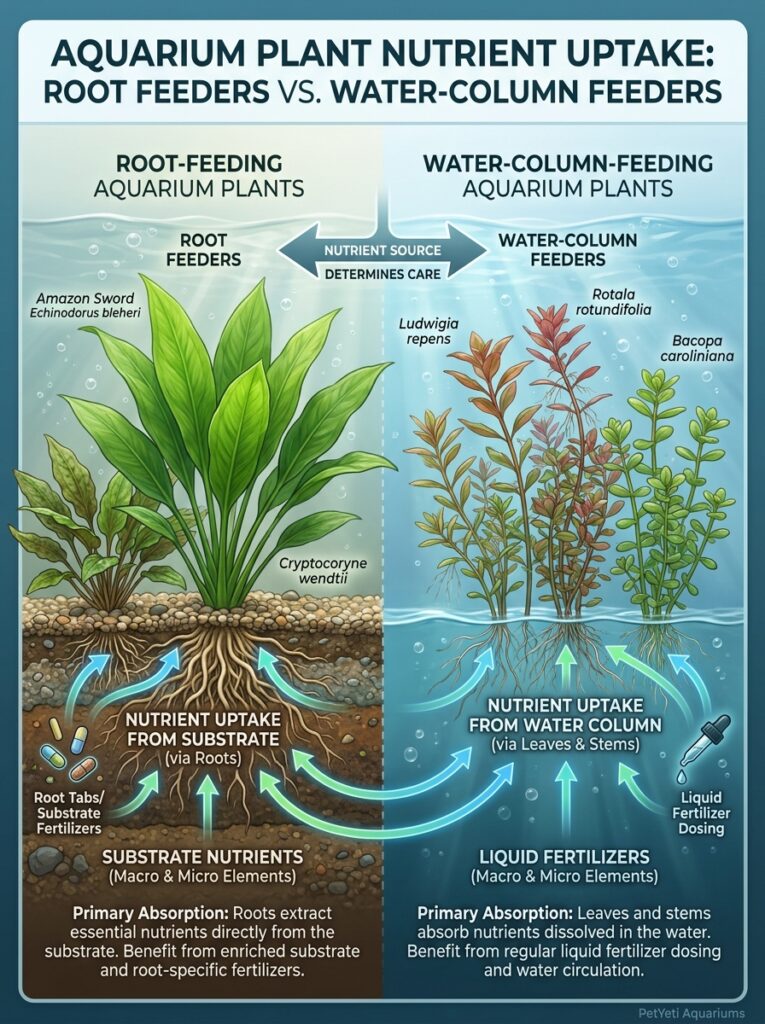
One mistake many beginners make is assuming all aquarium plants feed the same way.
They don’t.
Some plants obtain most of their nutrients through their roots.
Others absorb a large percentage directly from the water column.
For example:
Common Root Feeders
• Amazon Swords
• Cryptocorynes
• Vallisneria
These plants often benefit from nutrient-rich substrate or root tabs.
Common Water-Column Feeders
• Anubias
• Java Fern
• Many stem plants
These species often rely more heavily on nutrients dissolved in the water.
Real-Life Example
A hobbyist repeatedly added liquid fertilizer to help a struggling Amazon Sword. The leaves continued yellowing because the plant’s roots lacked nutrients. Once root tabs were added near the base, healthy growth gradually returned.
How to Fix It
• Identify the plant species
• Understand how it primarily feeds
• Match fertilization to plant type
• Monitor new growth rather than old damaged leaves
What to Expect
Providing nutrients in the right location often produces more noticeable improvements than simply adding more fertilizer.
Poor Substrate Can Limit Plant Growth
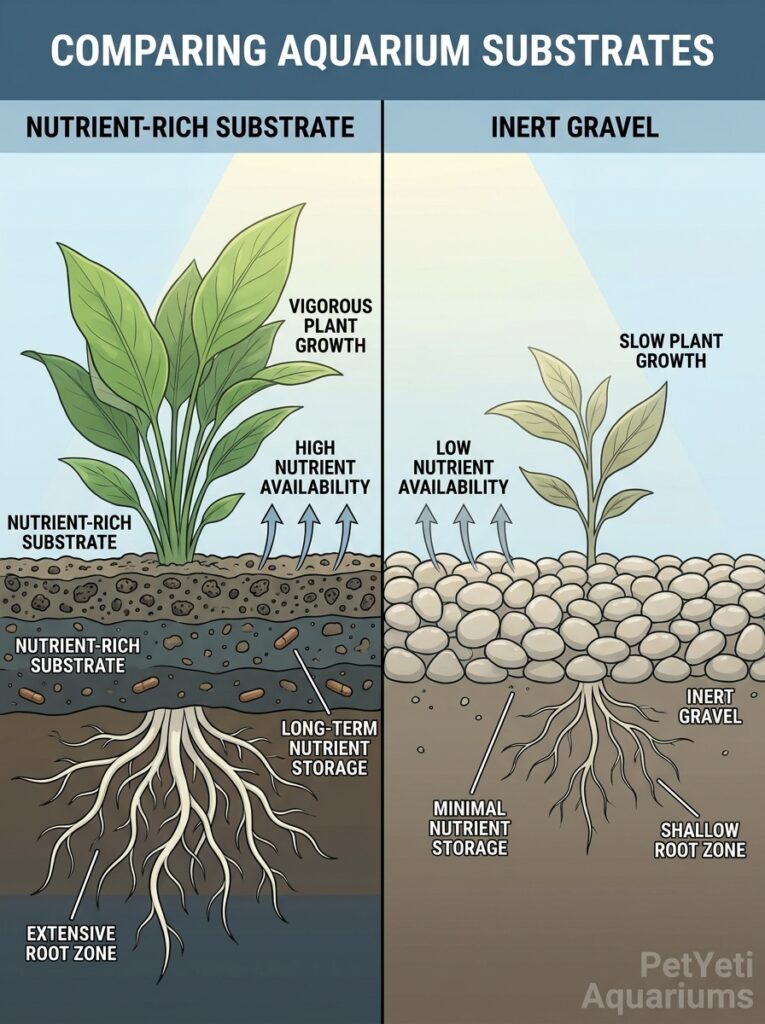
The substrate beneath your plants plays a bigger role than many beginners realize.
If root-feeding plants are growing in nutrient-poor gravel, they may eventually struggle to obtain the resources needed for healthy growth.
This doesn’t mean every planted aquarium requires expensive aquasoil.
However, some plants naturally perform better when nutrients are available around their roots.
Real-Life Example
An aquarium owner successfully grew Java Fern and Anubias for months but struggled with Amazon Swords. The difference wasn’t lighting or water quality—it was the substrate. The root-feeding species simply needed more nutrients below the surface.
How to Fix It
• Consider root tabs for heavy root feeders
• Research the needs of specific plant species
• Avoid assuming all plants thrive in identical conditions
What to Expect
Healthy root systems often lead to stronger leaves and deeper coloration over time.
Carbon Availability Can Influence Plant Health
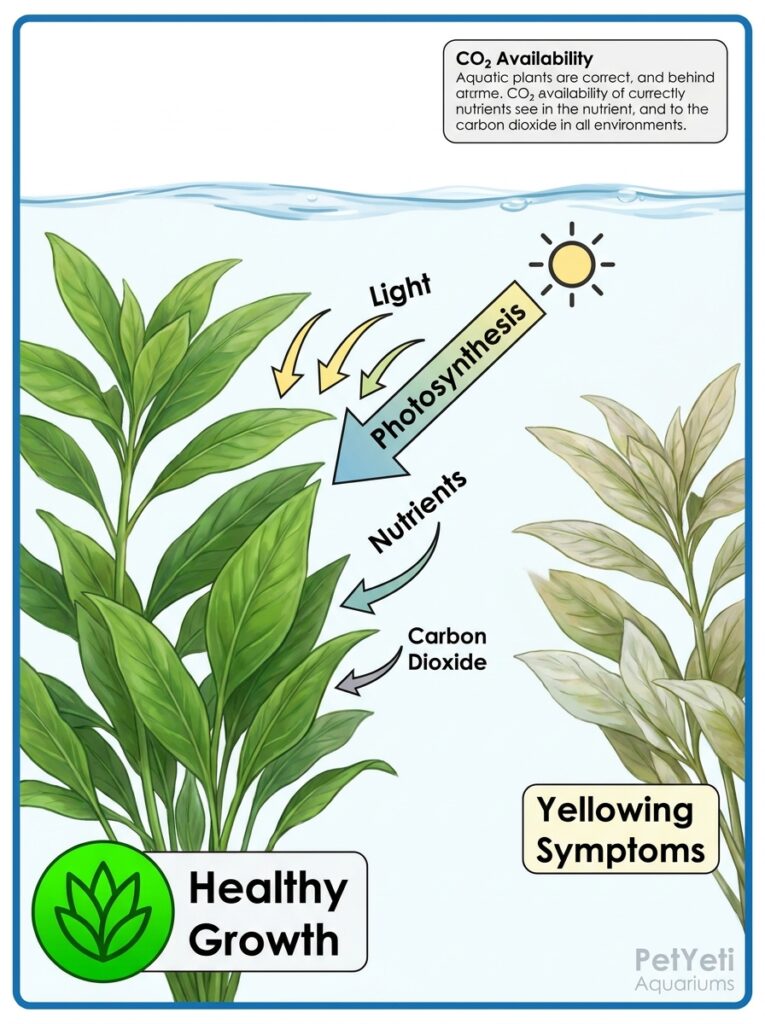
Plants need more than nutrients and light.
They also require a carbon source.
In high-tech planted aquariums, supplemental CO₂ is often added to accelerate growth.
Fortunately, most beginner-friendly planted aquariums can still succeed without additional CO₂.
The important thing is maintaining balance.
Sometimes hobbyists increase lighting dramatically without providing enough nutrients or carbon to support that growth.
The result can be stressed plants and yellowing leaves.
Real-Life Example
One aquarist upgraded to a brighter light expecting lush growth. Instead, some plants became pale and struggled. The increased demand for nutrients and carbon created an imbalance that the aquarium wasn’t prepared to support.
How to Fix It
• Focus on overall balance
• Avoid making major changes all at once
• Match lighting intensity to plant needs
• Prioritize stable conditions
What to Expect
Most beginner aquariums achieve healthy plant growth through consistency rather than complexity.
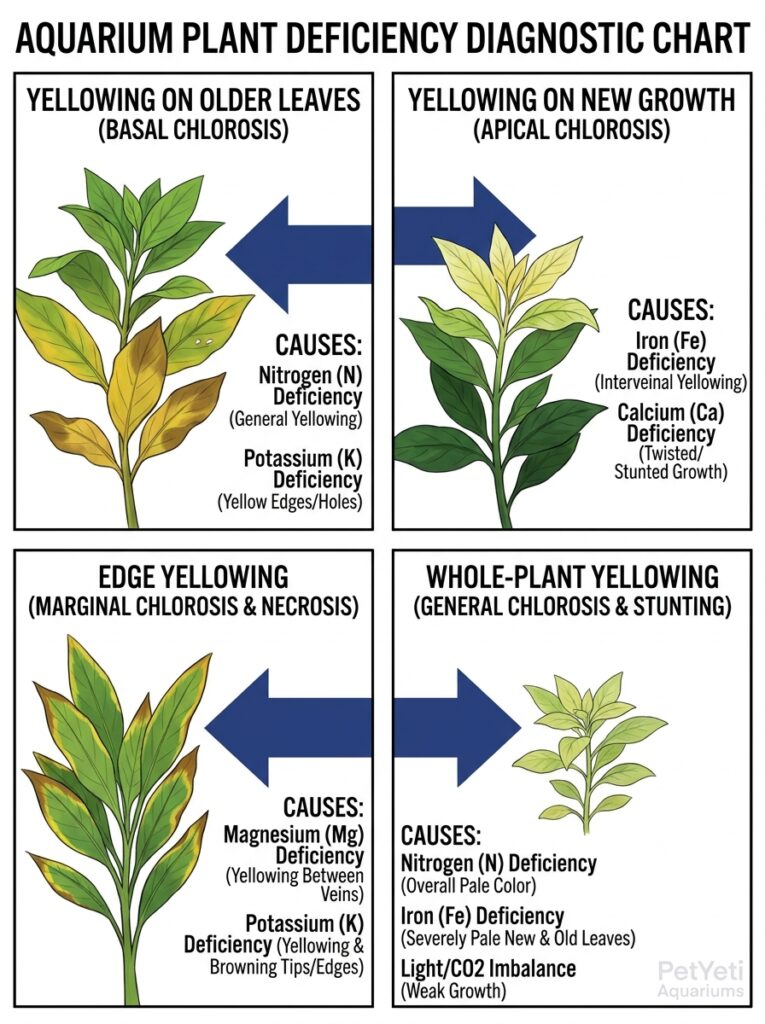
The Location of the Yellow Leaves Provides Important Clues
One of the fastest ways to identify the cause of yellowing is to look at which leaves are affected first.
Older Leaves Turning Yellow
Often points toward mobile nutrient deficiencies such as nitrogen.
New Leaves Turning Yellow
May indicate iron or micronutrient deficiencies.
Yellow Edges and Damaged Margins
Can sometimes suggest potassium-related issues.
Entire Plant Appearing Pale
May indicate broader environmental or nutritional problems.
Real-Life Example
A planted tank owner assumed all yellow leaves meant the same problem. After closer observation, they noticed only the newest leaves were affected. That clue helped narrow the issue to a micronutrient deficiency rather than a general plant health problem.
What to Expect
The pattern of yellowing is often more useful than the color itself when diagnosing plant issues.
Quick Troubleshooting Checklist
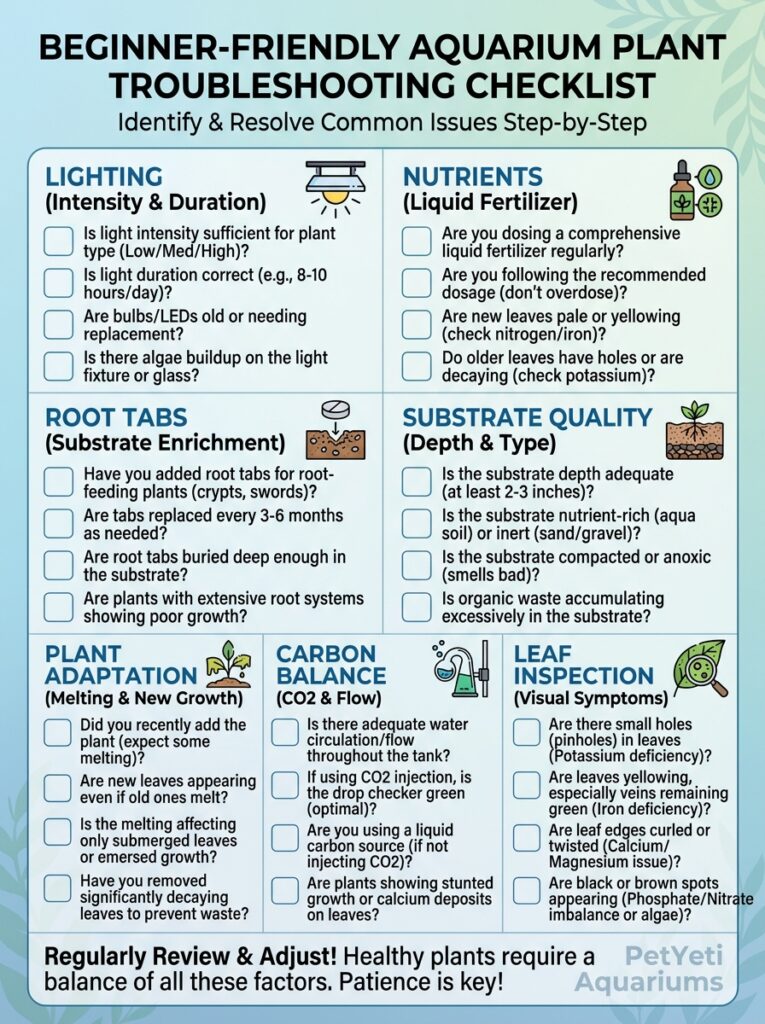
If your aquarium plants are turning yellow, work through this checklist:
✅ Determine whether old or new leaves are affected
✅ Identify the plant species
✅ Review fertilization habits
✅ Check lighting duration and intensity
✅ Consider substrate quality
✅ Evaluate root-feeding needs
✅ Look for signs of recent plant adaptation
✅ Monitor new growth over time
Most yellowing problems become easier to solve once you identify exactly where the plant is struggling.
CONCLUSION
Yellow aquarium leaves don’t automatically mean your plants are dying.
In fact, yellowing is often one of the earliest warning signs that a plant needs something adjusted.
The challenge is identifying what that missing piece might be.
For some aquariums, the solution is better nutrition.
For others, it’s improved lighting, healthier substrate conditions, or simply giving newly purchased plants time to adapt.
The most important thing is to avoid making drastic changes too quickly.
Plants respond gradually, and successful planted aquariums are usually built on patience and consistency.
Pay close attention to where the yellowing appears, how quickly it spreads, and whether new growth remains healthy.
Those clues often reveal the answer far more clearly than the yellow leaves themselves.
A thriving planted aquarium isn’t about perfection.
It’s about creating stable conditions where both plants and fish can flourish together.
FAQ
Why are my aquarium plant leaves turning yellow?
The most common causes include nutrient deficiencies, lighting issues, plant adaptation, poor substrate conditions, and imbalances between light and available nutrients.
Can yellow aquarium leaves turn green again?
Generally, severely yellowed leaves do not fully recover. Focus on encouraging healthy new growth rather than trying to repair heavily damaged leaves.
Does iron deficiency cause yellow leaves?
Yes. Iron deficiency often affects newer leaves first, causing pale yellow growth while leaf veins may remain greener.
Why are only the bottom leaves turning yellow?
Older lower leaves naturally age over time, but widespread yellowing of older leaves can also suggest nutrient deficiencies such as nitrogen shortages.
Do aquarium plants need fertilizer?
Many aquarium plants benefit from additional nutrients, although the type of fertilizer depends on the species and how it primarily absorbs nutrients.
Should I remove yellow aquarium leaves?
If leaves are heavily damaged or dying, removing them can help the plant focus energy on healthier growth.