
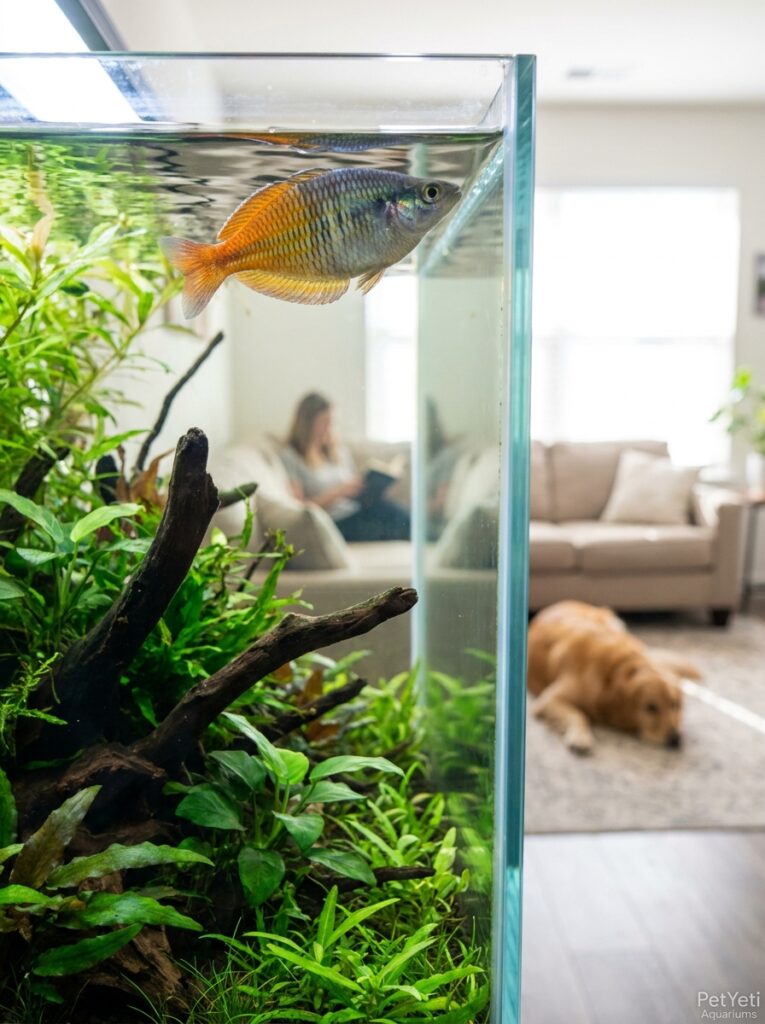
Most aquarium owners spend a lot of time watching their fish.
That’s why unusual behavior tends to stand out quickly.
One day everything looks normal.
The next day, a fish seems to be breathing much faster than usual.
Its gills move rapidly.
It may spend more time near the surface.
Or it may simply look like it’s working harder to breathe.
Seeing this can be alarming.
The good news is that fast breathing doesn’t automatically mean a fish is seriously ill.
In many cases, it’s a response to environmental conditions that can be identified and corrected.
The key is figuring out what’s causing the change.
Let’s look at some of the most common reasons fish breathe faster than normal.
Low Oxygen Levels in the Aquarium
One of the most common causes of rapid breathing is low oxygen.
Fish rely on dissolved oxygen in the water.
When oxygen levels drop, they often compensate by breathing faster.
You might notice fish:
- Staying near the surface
- Gathering around filter output
- Breathing more heavily than usual
This is especially common during hot weather or in aquariums with limited water movement.
Real-Life Example
Many aquarium owners notice fish breathing faster during summer months when water temperatures naturally rise and oxygen availability decreases.
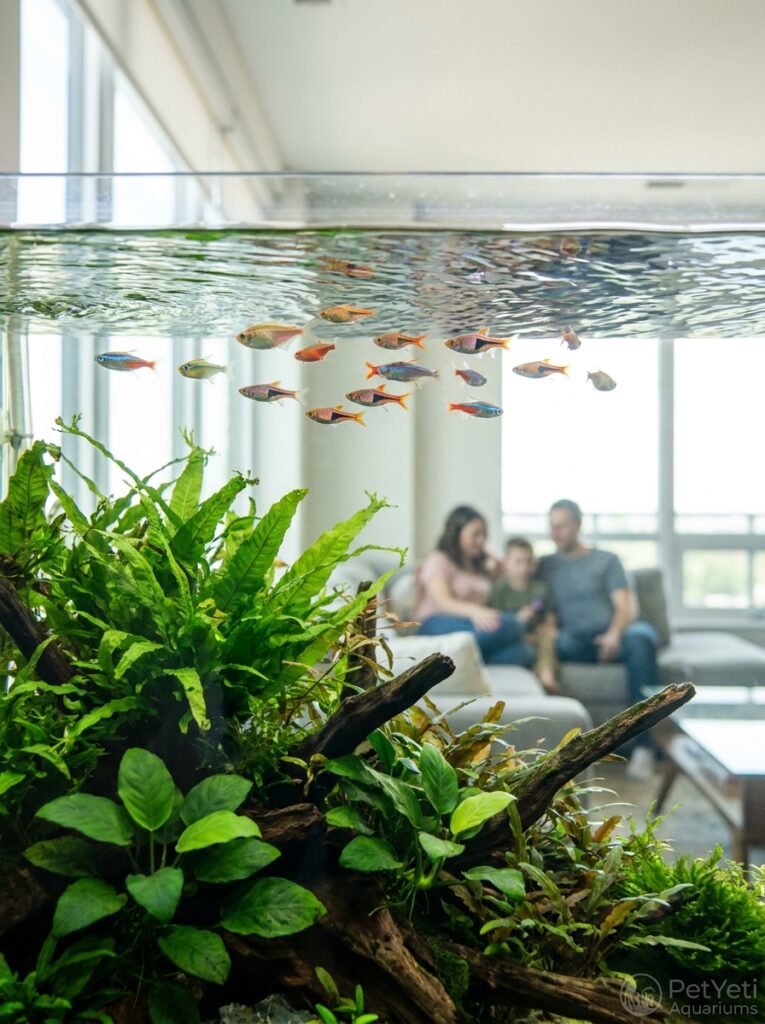
Poor Water Quality Can Cause Stress
Fish live in their environment continuously.
When water quality declines, fish often respond long before obvious symptoms appear.
Rapid breathing is one of those early warning signs.
Other clues may include:
- Reduced activity
- Hiding more often
- Loss of appetite
- Faded coloration
Fast breathing doesn’t always point to one specific problem, but it often signals that something in the aquarium needs attention.
Real-Life Example
A fish may appear perfectly healthy one week and begin breathing rapidly after maintenance has been delayed for several weeks.
Small water quality issues can gradually build over time.
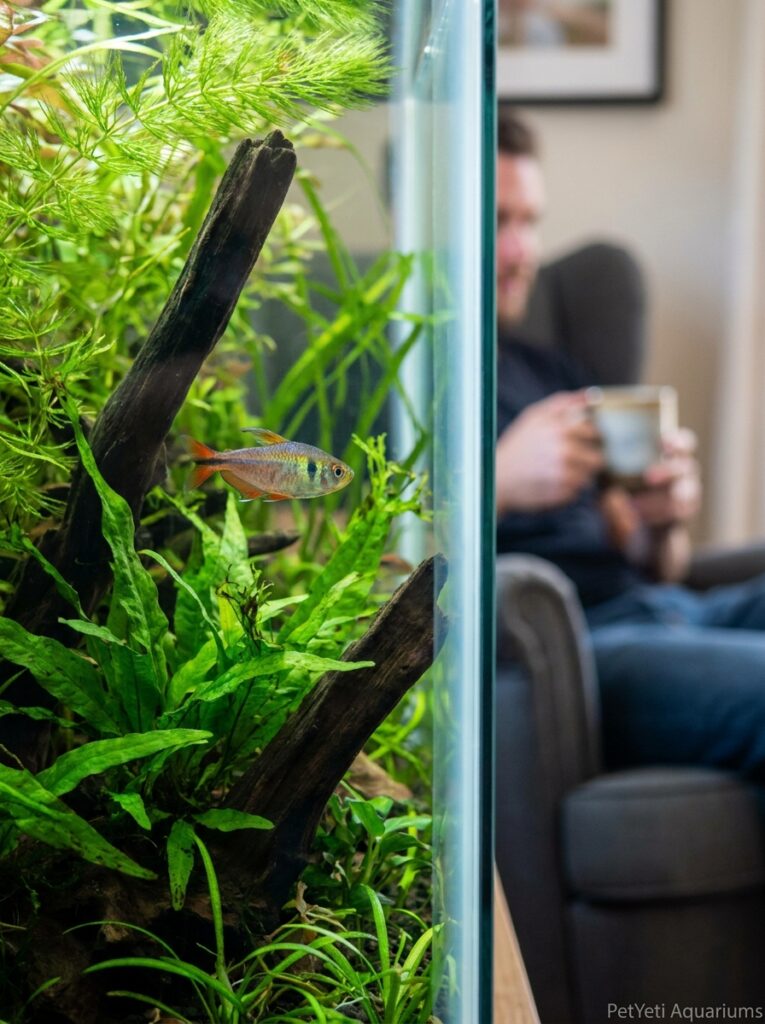
High Water Temperatures Reduce Available Oxygen
Warm water holds less oxygen than cooler water.
As temperatures rise, fish sometimes need to work harder to get the oxygen they need.
This doesn’t mean every warm aquarium is dangerous.
It simply means temperature can influence breathing behavior.
That’s why sudden heat waves sometimes lead aquarium owners to notice increased gill movement.
Real-Life Example
A fish that behaves normally throughout most of the year may start breathing faster during an unusually warm week, even though nothing else has changed.
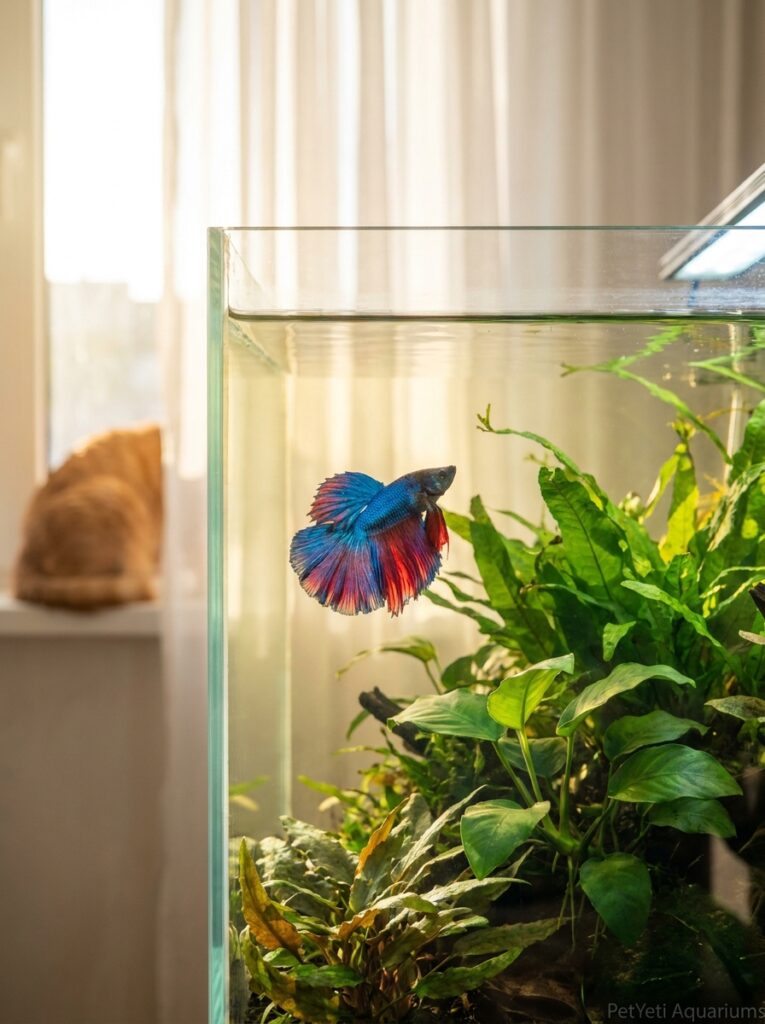
Stress From Recent Changes
Fish appreciate stability.
Major changes can sometimes trigger temporary stress responses, including faster breathing.
Examples include:
- Moving fish to a new tank
- Rearranging decorations
- Introducing new tank mates
- Large maintenance sessions
Most fish adapt over time, but adjustment periods can temporarily affect behavior.
Real-Life Example
A newly introduced fish may breathe faster during its first day or two while becoming familiar with its surroundings.
Aggressive Tank Mates Can Increase Breathing Rates
Sometimes the problem isn’t the water.
It’s the company.
Fish that are constantly chased, intimidated, or forced to defend territory often remain in a heightened state of stress.
Just like people breathe faster when anxious, fish can also show physical signs of stress.
You may notice:
- Rapid gill movement
- Hiding more often
- Staying away from certain areas
- Reduced appetite
- Less interaction with the environment
The tricky part is that aggression isn’t always obvious.
A dominant fish may only chase others when you’re not watching.
Real-Life Example
A peaceful fish that suddenly starts spending most of its day hiding behind plants while breathing heavily may be reacting to social stress rather than a water quality issue.
Illness or Physical Irritation Can Sometimes Be Involved
While environmental causes are usually the first place to look, health problems can sometimes contribute to rapid breathing.
This is why it’s important to observe the entire fish, not just its gills.
Look for additional signs such as:
- Refusing food
- Clamped fins
- Visible spots
- Unusual swimming
- Loss of color
- Physical injuries
The more symptoms you notice together, the more likely it is that a health issue may be involved.
Real-Life Example
A fish that is breathing rapidly but still eating, swimming normally, and interacting with tank mates may simply be responding to environmental stress. A fish showing several symptoms at once deserves closer attention.
When Fast Breathing Becomes an Emergency
Most cases of rapid breathing are not immediate emergencies.
However, there are situations where quick action becomes important.
Pay closer attention if you notice:
- Fish gasping continuously at the surface
- Multiple fish affected at the same time
- Severe lethargy
- Complete refusal to eat
- Loss of balance
- Sudden behavioral changes
When several fish begin showing the same symptoms, it’s often a sign that something in the aquarium environment needs immediate attention.
Real-Life Example
If an entire community tank suddenly starts gathering near the surface and breathing heavily, it’s usually more productive to investigate environmental conditions than to assume every fish became sick at the same time.
Simple Steps to Help Your Fish
If your fish are breathing faster than usual, start with the basics.
The simplest solutions are often the most effective.
Consider:
- Checking water quality
- Reviewing recent changes
- Ensuring adequate water movement
- Confirming equipment is working properly
- Maintaining a consistent care routine
Avoid making multiple major changes at once.
When too many adjustments happen together, it becomes difficult to identify the actual cause.
Real-Life Example
Many aquarium owners discover that a small maintenance issue, such as a clogged filter or delayed water change, was the real reason behind the problem.
CONCLUSION
Seeing a fish breathe rapidly can be unsettling.
Fortunately, the cause is often something that can be identified and corrected.
In many cases, fast breathing is linked to:
- Low oxygen levels
- Water quality issues
- Elevated temperatures
- Stress
- Social dynamics inside the aquarium
The best approach is to stay observant.
Look for patterns.
Watch for additional symptoms.
And focus on creating a stable, healthy environment.
Fish often tell us something is changing long before major problems develop.
Learning to recognize those early signs is one of the most valuable skills in fishkeeping.
FAQ
Why is my fish breathing fast but acting normal?
Environmental factors such as temperature, oxygen levels, or recent changes can sometimes increase breathing rates even when fish otherwise appear healthy.
Is fast breathing always a sign of illness?
No. Stress, water quality, oxygen levels, and temperature are often more common causes.
Why is my fish breathing fast near the surface?
Fish sometimes move toward the surface when oxygen levels are lower than normal.
Can high temperatures make fish breathe faster?
Yes. Warm water naturally contains less dissolved oxygen, which can increase breathing rates.
Why are all my fish breathing fast?
When multiple fish are affected, environmental conditions are often the first thing to investigate.
Can stress cause rapid breathing?
Yes. Moving tanks, aggressive tank mates, or major changes in the aquarium can temporarily increase breathing rates.
Should I feed a fish that is breathing rapidly?
Observe the fish carefully. Appetite can provide useful clues about what may be causing the behavior.
How long should I monitor rapid breathing before taking action?
If breathing remains elevated for more than a short adjustment period or is accompanied by other symptoms, it’s worth investigating further.