
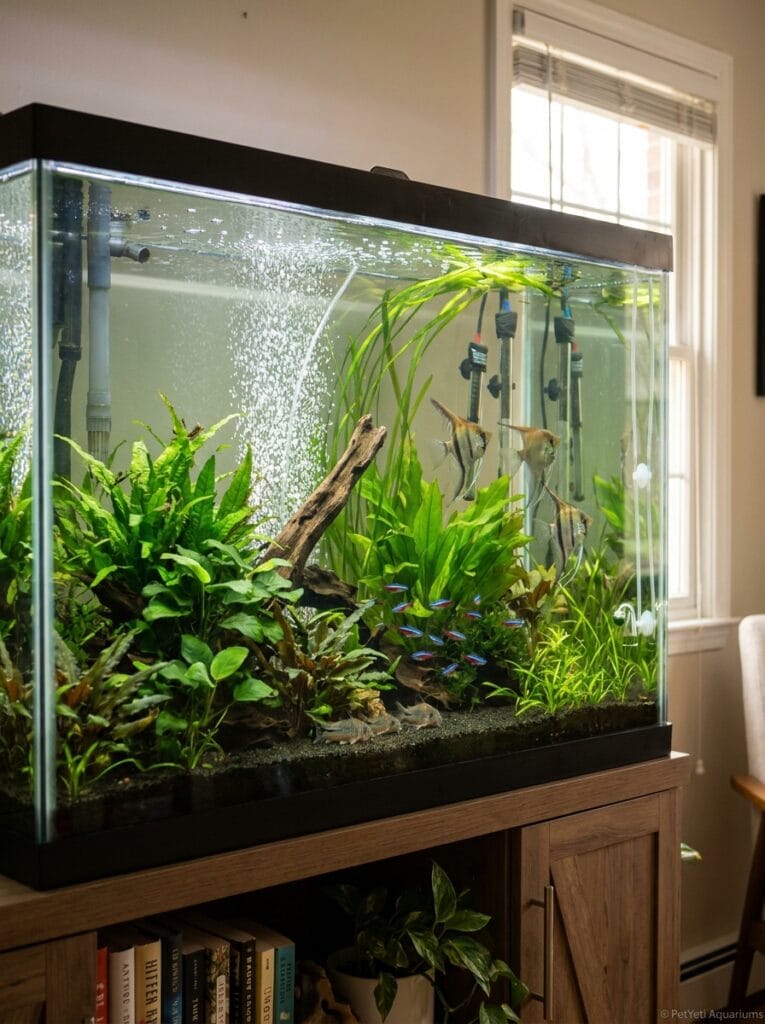
Walk into almost any aquarium store and you’ll eventually see a tank full of bubbles.
Those bubbles often come from an air stone.
Because they’re so common, many beginners assume air stones are required equipment for every aquarium.
But are they?
Not exactly.
Air stones can provide real benefits in certain situations, but they’re often misunderstood. Some fishkeepers install them because they look attractive, while others use them to improve water movement and aeration.
In this guide, we’ll explain what aquarium air stones actually do, when they help, and whether your aquarium truly needs one.
What Is an Aquarium Air Stone?
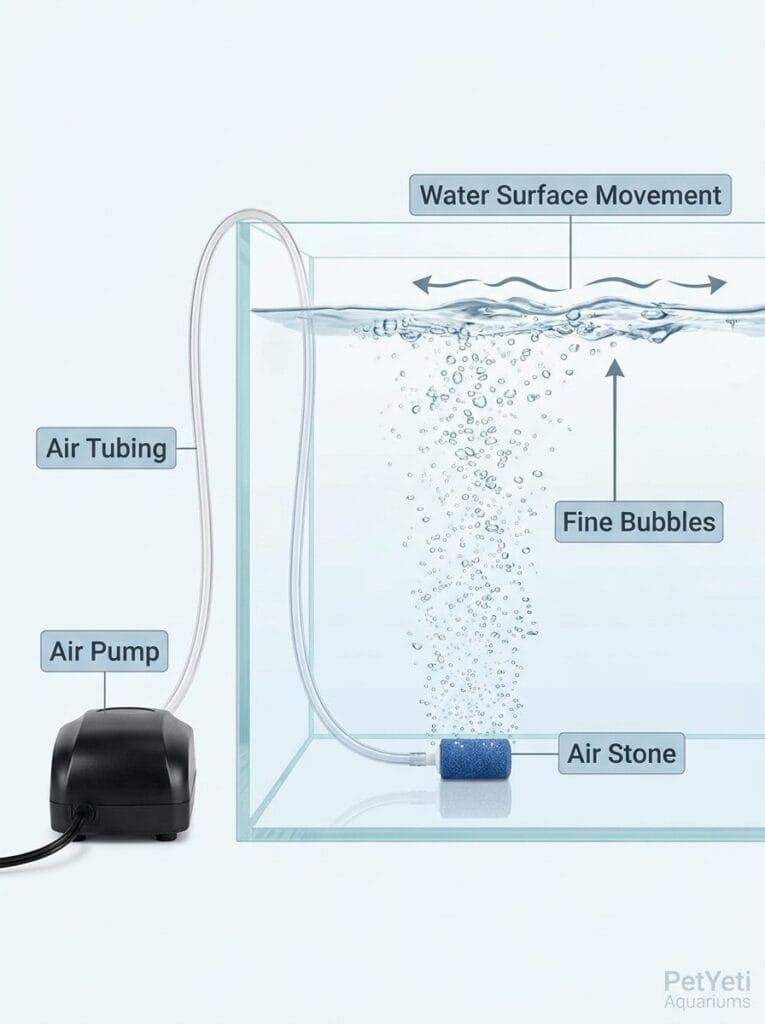
An air stone is a small porous device connected to an aquarium air pump.
As air passes through the stone, it breaks into hundreds of tiny bubbles that rise toward the surface.
The finer the bubbles, the larger the total surface area created by the air stream.
Most air stones are inexpensive, easy to install, and compatible with standard aquarium air pumps.
Common Types of Air Stones
| Type | Appearance | Common Use |
|---|---|---|
| Cylinder Air Stone | Small cylinder | General aquariums |
| Ball Air Stone | Round shape | Decorative bubbling |
| Bar Air Stone | Long strip | Bubble walls |
| Flexible Air Stone | Bendable design | Custom layouts |
Real-Life Example
Many beginners first encounter air stones when using a sponge filter because air pumps and air stones are frequently sold together.
What to Remember
An air stone doesn’t create oxygen by itself. It works as part of an air-powered system.
How Do Air Stones Actually Help an Aquarium?
One of the biggest misconceptions in fishkeeping is that bubbles themselves are what oxygenate the water.
The real benefit comes from movement.
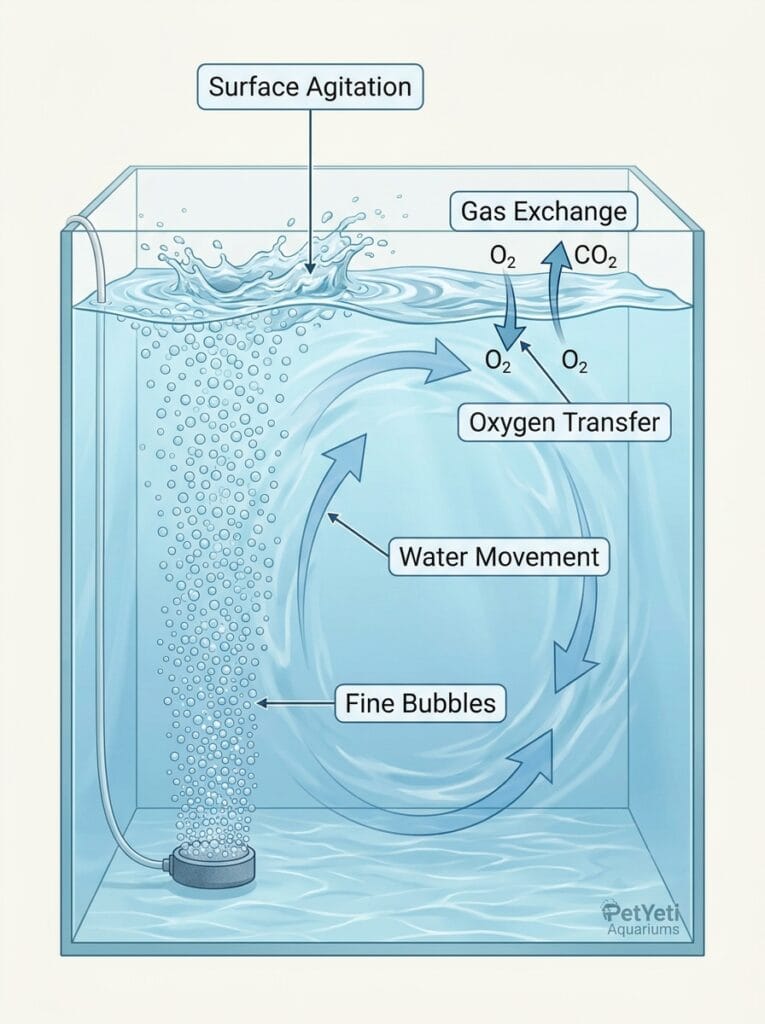
As bubbles rise, they pull water upward and disturb the water surface.
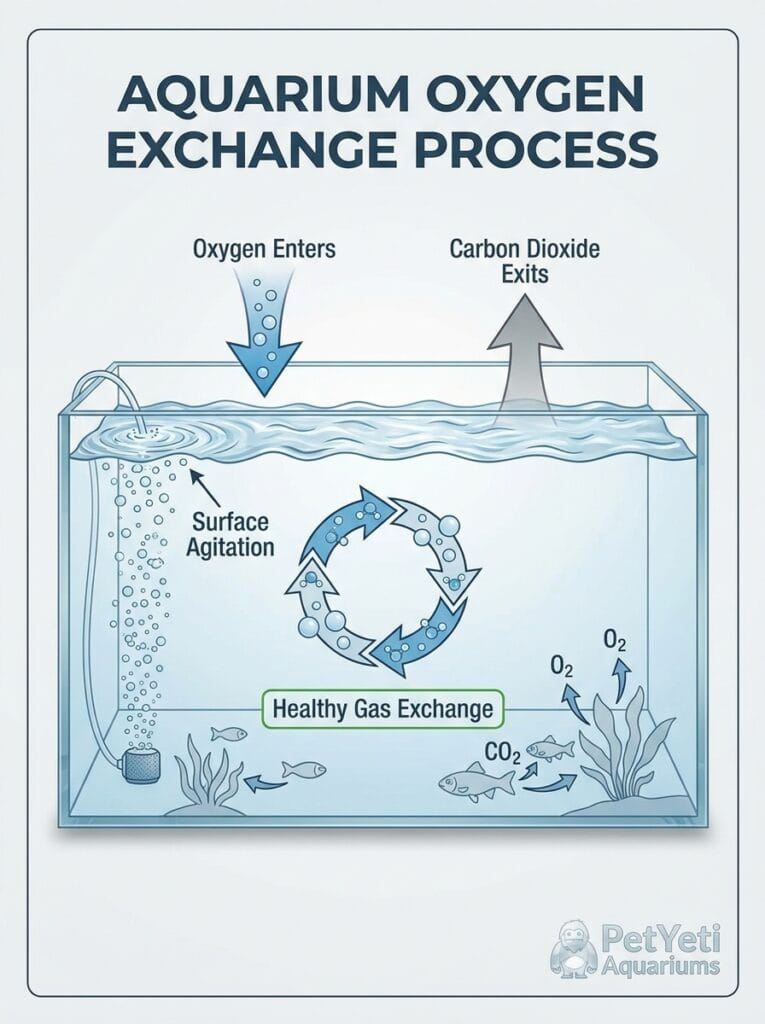
This surface agitation increases gas exchange, allowing oxygen to enter the water while carbon dioxide escapes.
Benefits of Air Stones
✅ Increase surface movement
✅ Improve water circulation
✅ Support gas exchange
✅ Help eliminate stagnant areas
✅ Create visual interest
Real-Life Example
In a heavily planted aquarium, an air stone may be used at night to increase water movement when plants are no longer producing oxygen through photosynthesis.
PetYeti Tip
The bubbles are visible, but the surface movement they create is where most of the benefit comes from.
Do Air Stones Add Oxygen to the Water?
Technically, a tiny amount of oxygen enters the water directly from the bubbles.
However, that’s not the primary reason air stones work.
Most oxygen transfer occurs at the water’s surface.
When rising bubbles create movement and agitation, they increase the efficiency of this process.
Simple Explanation
Think of the air stone as a tool that helps mix and circulate water.
The improved circulation helps maintain healthy oxygen levels throughout the aquarium.
Real-Life Example
A fish tank with strong surface movement but no air stone may have excellent oxygen levels. Meanwhile, a tank with bubbles but poor circulation elsewhere may still struggle with oxygen distribution.
What to Remember
Air stones help oxygenation indirectly by improving gas exchange and circulation.
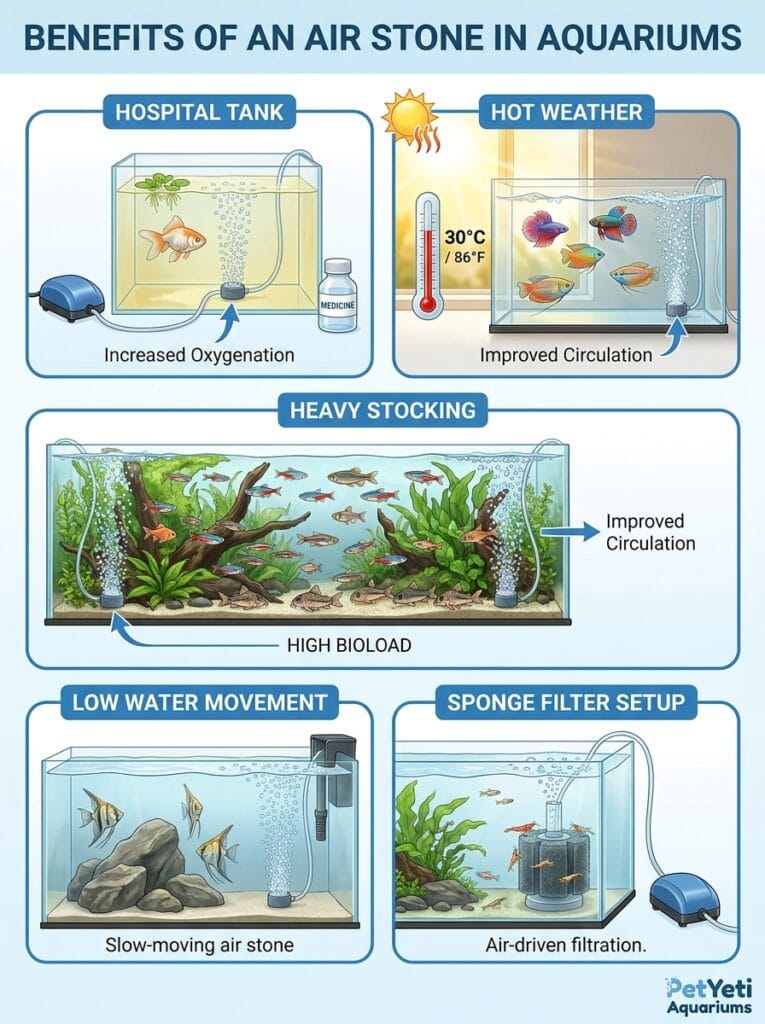
When Should You Use an Air Stone?
While air stones aren’t required for every aquarium, there are situations where they can be extremely useful.
Common Situations
During Hot Summer Weather
Warm water naturally holds less dissolved oxygen than cooler water.
An air stone can help improve circulation and surface agitation during periods of high temperature.
In Hospital or Quarantine Tanks
Fish recovering from illness often benefit from excellent water quality and strong oxygen availability.
In Heavily Stocked Aquariums
More fish means greater oxygen demand.
Additional water movement may help support healthy conditions.
In Areas With Limited Water Flow
Dead spots can develop in some aquariums where circulation is weak.
An air stone can help move water through these areas.
Real-Life Example
Many experienced fishkeepers keep an air stone on hand even if they don’t use one daily because it can become valuable during emergencies, heat waves, or disease treatment.
PetYeti Tip
Think of an air stone as a helpful tool rather than a mandatory piece of equipment.
When an Air Stone May Not Be Necessary
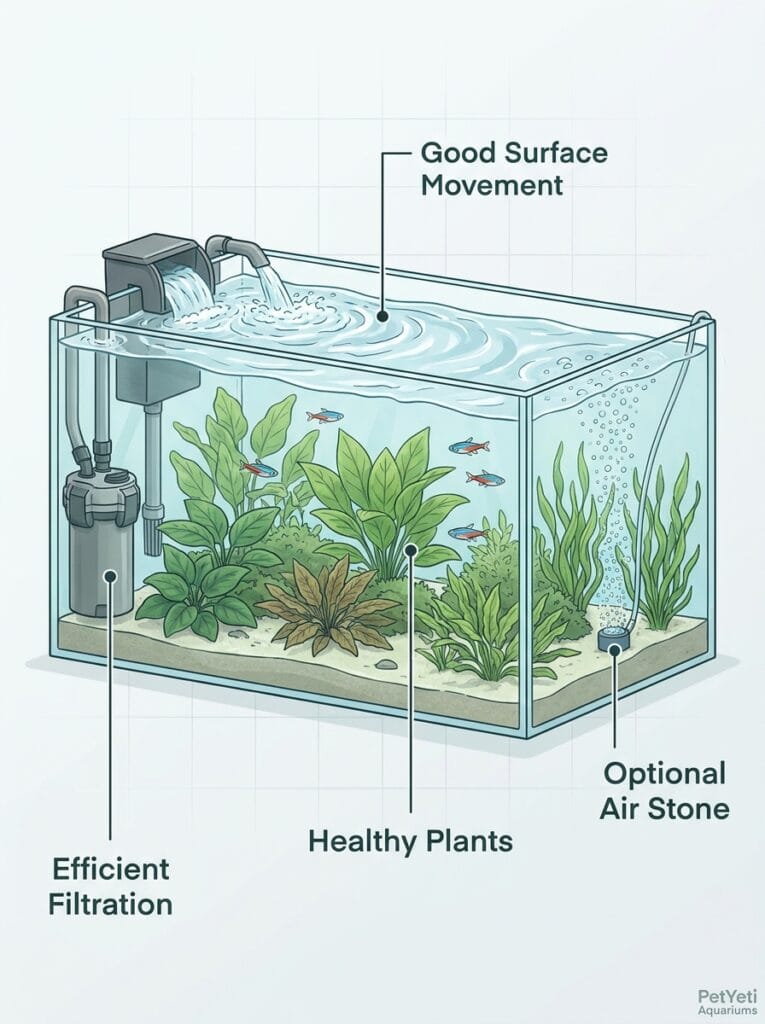
Many successful aquariums operate without air stones.
If your filter already creates sufficient surface movement and circulation, adding an air stone may provide little additional benefit.
Air Stones Are Often Optional In
- Lightly stocked aquariums
- Planted aquariums with good circulation
- Tanks using efficient filters
- Low-bioload community aquariums
Real-Life Example
Many modern planted aquariums rely entirely on filter-generated flow and maintain healthy oxygen levels without producing a single bubble.
What to Remember
An air stone is not a replacement for proper filtration and maintenance.
Air Stone vs Sponge Filter
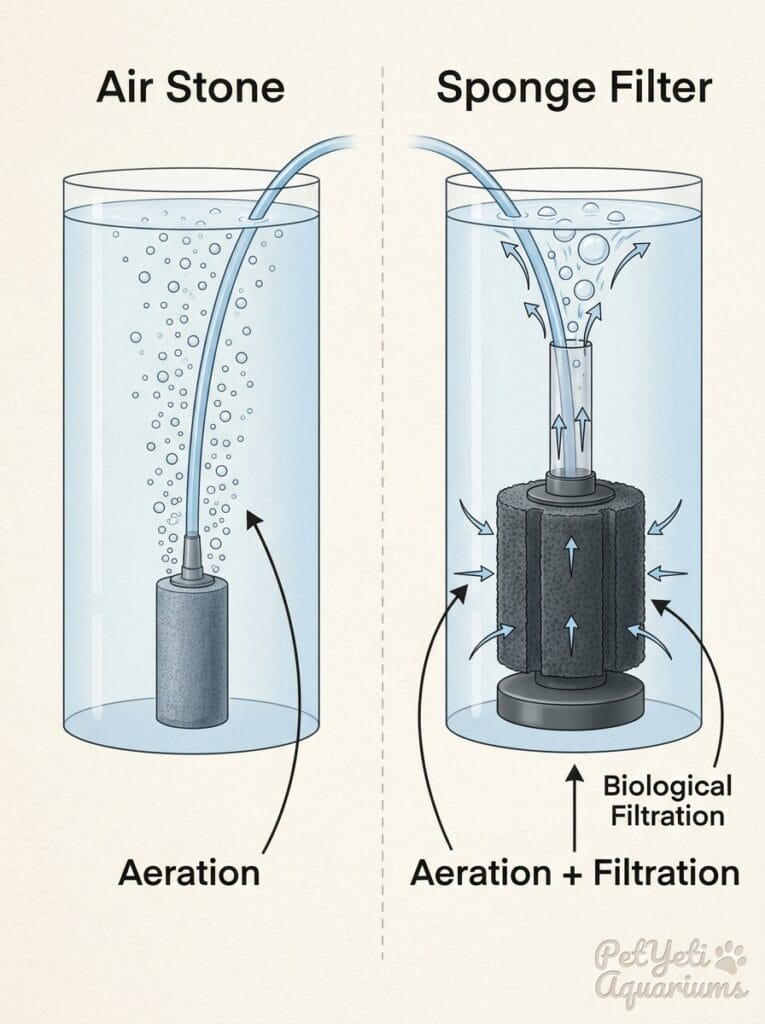
Many beginners confuse air stones and sponge filters because both are often powered by air pumps.
However, they serve different purposes.
| Feature | Air Stone | Sponge Filter |
|---|---|---|
| Produces Bubbles | Yes | Yes |
| Provides Filtration | No | Yes |
| Improves Circulation | Yes | Yes |
| Supports Beneficial Bacteria | No | Yes |
| Mechanical Filtration | No | Yes |
Real-Life Example
A sponge filter can provide both filtration and aeration, while an air stone focuses primarily on water movement and gas exchange.
PetYeti Tip
If you’re deciding between the two, a sponge filter usually provides more overall value because it combines multiple functions in one device.
Common Air Stone Mistakes
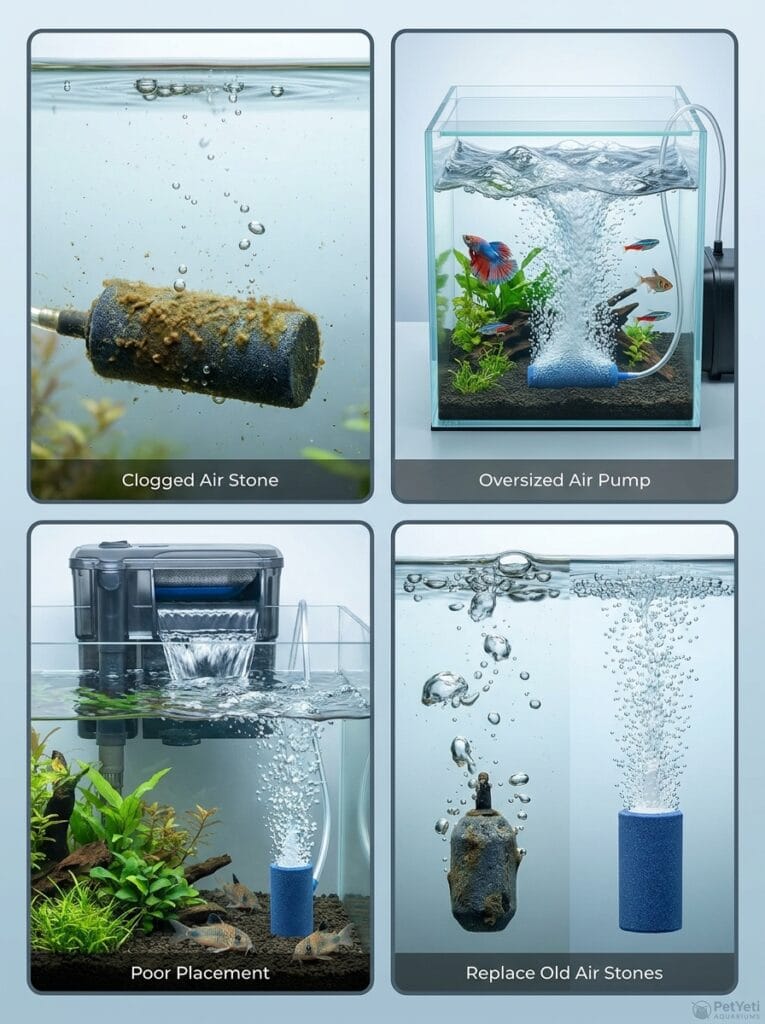
Air stones are simple, but a few mistakes can reduce their effectiveness.
Common Mistakes
❌ Never replacing a clogged air stone
❌ Using excessive airflow
❌ Placing the air stone where circulation is already strongest
❌ Ignoring airline maintenance
❌ Assuming bubbles automatically solve oxygen problems
Real-Life Example
A hobbyist notices weaker bubbles over time and assumes the pump is failing, when the actual problem is simply a clogged air stone that needs replacement.
What to Remember
Like any aquarium equipment, air stones work best when maintained properly.
CONCLUSION
Aquarium air stones can absolutely help in the right situation, but they’re often misunderstood.
Their greatest benefit isn’t the bubbles themselves. It’s the improved water movement and surface agitation that support healthy gas exchange.
For some aquariums, an air stone can be a valuable addition during hot weather, in hospital tanks, or alongside sponge filters. In other setups, a good filter may already provide all the circulation and oxygen exchange that’s needed.
The key is understanding what an air stone actually does rather than assuming every aquarium requires one.
Used appropriately, an air stone can be an inexpensive tool that supports a healthier, more stable aquarium.
FAQ
Do air stones increase oxygen in an aquarium?
Yes, but mostly by improving surface agitation and gas exchange rather than directly adding oxygen through the bubbles.
Are air stones necessary for fish tanks?
No. Many healthy aquariums operate successfully without air stones.
Can an air stone replace a filter?
No. Air stones improve circulation and aeration but do not provide filtration.
Do planted aquariums need air stones?
Not always. Many planted tanks maintain excellent oxygen levels through plant growth and proper filtration.
How often should an air stone be replaced?
Most air stones gradually clog over time and may need replacement every few months depending on usage and water conditions.
Can fish sleep with an air stone running?
Yes. Air stones are safe to operate continuously and many aquariums run them 24 hours a day.