
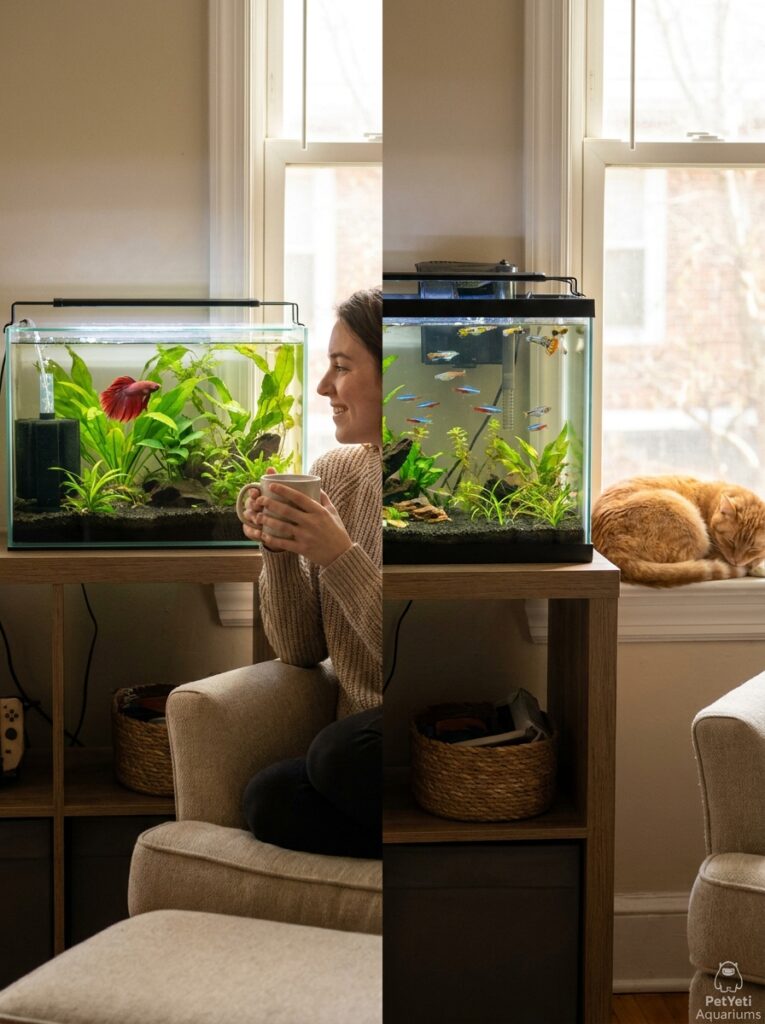
Choosing between a sponge filter and a HOB (hang-on-back) filter comes down to your aquarium, fish, desired water movement, and how you prefer to maintain your equipment.
Both can provide effective filtration, but they have different strengths. Sponge filters are especially useful when gentle flow and simple biological filtration are priorities. HOB filters can be a practical choice when you want stronger mechanical filtration, easy access to filter media, and more filtration capacity.
Quick Answer
Choose a sponge filter if you want gentle water movement, keep bettas or shrimp, raise fry, or prefer a simple filter that is easy to maintain.
Choose a HOB filter if you want stronger mechanical filtration, more accessible filter media, or a cleaner-looking setup with the main filter body outside the aquarium.
Tank size matters, but it shouldn’t be the only deciding factor. Fish species, stocking, filter flow, aquarium layout, and the specific manufacturer’s specifications all matter too.
Sponge Filter vs HOB Filter: At a Glance
| Feature | Sponge Filter | HOB (Hang-On-Back) Filter |
| Water movement | Gentle and adjustable with airflow | Usually stronger; varies by model |
| Mechanical filtration | Good, depending on sponge size and setup | Often stronger and more customizable |
| Biological filtration | Excellent surface area for beneficial bacteria | Excellent when adequate media is provided |
| Best suited for | Bettas, shrimp, fry, nano and gentle-flow setups | Community aquariums and setups needing more mechanical filtration |
| Maintenance | Simple; sponge can be rinsed and reused | Media and impeller require regular maintenance |
| Filter placement | Inside the aquarium | Hangs on the back of the aquarium |
| Electricity | Requires an air pump | Uses an electric motor |
| Noise | Usually comes from the air pump | Usually comes from the motor, water flow, or vibration |
| Media flexibility | Usually limited to sponge-based media | Often allows multiple types of media |
| Space inside tank | Takes some aquarium space | Keeps most equipment outside the tank |
| Top PetYeti Pick | Jump to Best Sponge Filter | Jump to Best HOB Filter |
Neither type is automatically better. The better choice is the one that provides appropriate filtration and water movement for your fish while fitting the way you want to maintain the aquarium.
- Sponge Filter vs HOB Filter: At a Glance
- How Sponge Filters Work (And Who They're For)
- How HOB (Hang-On-Back) Filters Work (And Who They're For)
- Sponge Filter vs HOB Filter: Quick Comparison
- Recommended Sponge and HOB Filters
- Sponge Filter Pros and Cons
- HOB Filter Pros and Cons
- Which One Would We Buy?
- How to Maintain a Sponge or HOB Filter
- Common Sponge and HOB Filter Mistakes
- Sponge Filter vs HOB Filter
- CONCLUSION
- FAQs
What Should You Check Before Choosing?
Before buying either type, consider four things:
1. Your fish
Bettas, shrimp, fry, and other fish that prefer gentler water movement often pair well with sponge filtration.
Community aquariums may benefit from a HOB filter when stronger mechanical filtration and convenient media access are useful.
2. Water movement
Think about how much circulation your fish actually need.
A filter that moves too much water can make a small aquarium uncomfortable, while insufficient circulation can make it harder to keep the water properly mixed and filtered.
3. Maintenance
Sponge filters are straightforward to clean and reuse.
HOB filters generally provide easier access to different filter media, but they have more components to inspect, including the intake, impeller, and media.
4. Your aquarium setup
Consider where the aquarium sits, how much equipment you want inside the tank, how much space is available behind it, and how sensitive you are to noise or vibration.
For a bedroom or home office, noise and vibration may matter almost as much as filtration performance.
As an Amazon Associate, PetYeti earns from qualifying purchases. This comes at no additional cost to you and helps support the site. We only recommend products we genuinely believe can help create healthier and more enjoyable aquariums.
How Sponge Filters Work (And Who They’re For)
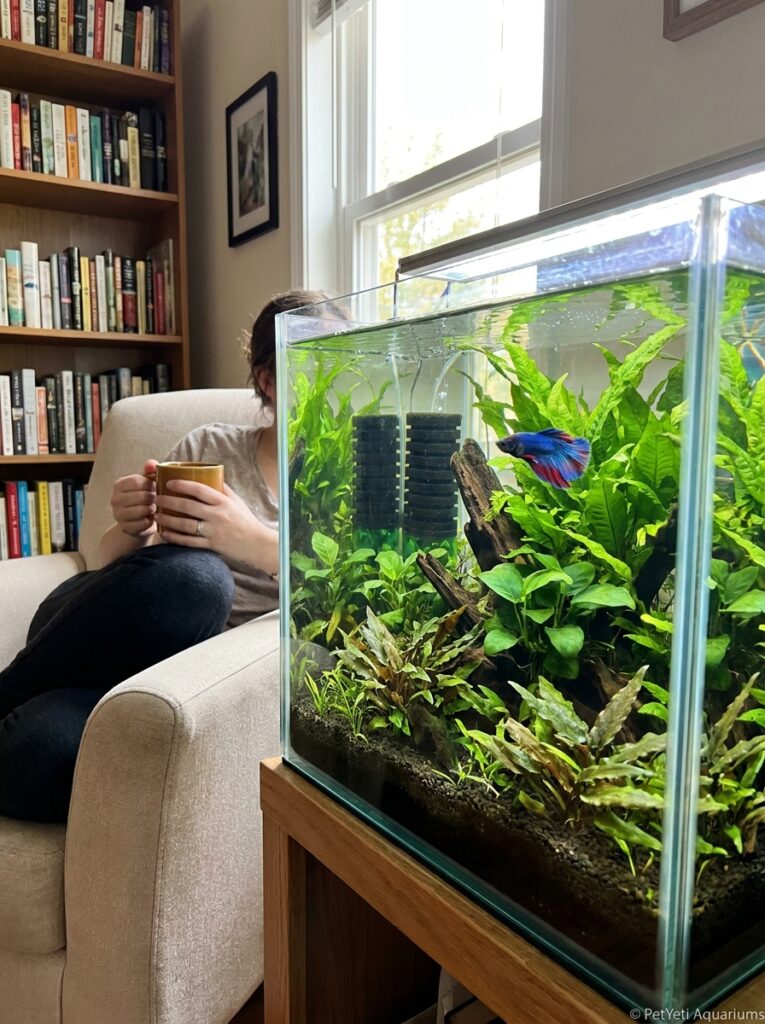
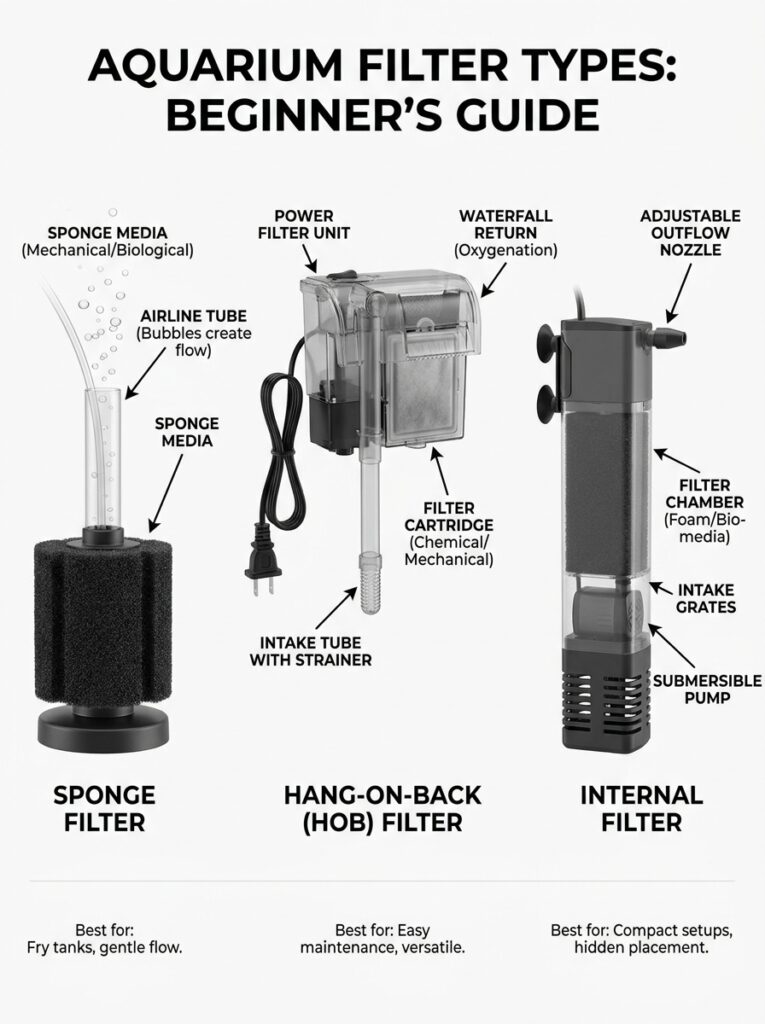
A sponge filter is about as simple as aquarium gear gets. It sits inside your tank and connects to an external air pump via a small piece of airline tubing. As air bubbles rise up through the hollow center tube, water gets pulled through the outer foam block.
That foam block acts as a massive mechanical sponge, trapping large debris. More importantly, it provides a massive surface area for beneficial nitrifying bacteria to colonize.
Why You’ll Love a Sponge Filter
- Zero Fin Snagging: Because the suction is spread out across the entire foam surface, there is no strong pull. It is 100% safe for long-finned bettas, tiny baby fry, and dwarf shrimp.
- Unbeatable Biological Filtration: The dense foam holds millions of beneficial bacteria. Even if your power goes out, a sponge filter holds onto that biological colony longer than most HOBs.
- Super Budget-Friendly: The filter itself costs very little, and the foam pad can last for years without needing replacement.
The Trade-offs
Bubbling Noise: While the filter itself has no moving motor, the popping air bubbles at the water surface create a continuous gentle sound.
Takes Up In-Tank Real Estate: Unlike HOBs, a sponge filter sits directly inside your aquarium, which can be tricky to hide in smaller tanks.
Requires an Air Pump: You will need an air pump, airline tubing, and a check valve to run it.
PetYeti Calm Tip:
If the surface bubbling sound bothers you at night, attach a tiny air stone inside the hollow core of your sponge filter. It breaks large noisy bubbles into fine, whisper-quiet micro-bubbles.
How HOB (Hang-On-Back) Filters Work (And Who They’re For)
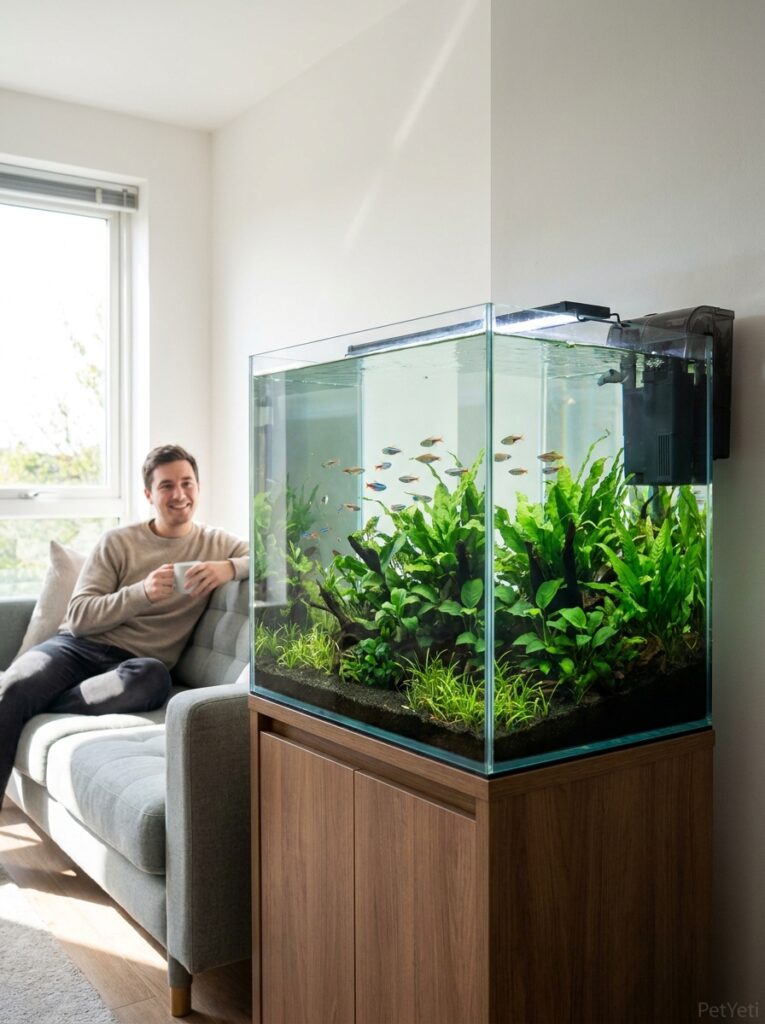
Hang-on-back filters sit on the rim outside your aquarium glass. An electric motor pulls water up through an intake tube, pushes it through internal filter media cartridges inside the box, and spills it back into the tank like a miniature waterfall.
Because HOBs live outside the tank, they offer much higher water flow and allow you to customize your filter media with specialized chemical adsorbents like activated carbon or Purigen.
Why You’ll Love an HOB Filter
- Crystal Clear Water: HOBs excel at mechanical polishing. They pull free-floating debris, leftover food, and cloudiness out of the water column quickly.
- Saves Internal Space: Since the main box hangs on the outside of your rear tank glass, your aquascape stays wide open for plants and swimming space.
- Customizable Media Chambers: You can easily swap out standard filter cartridges for custom foam blocks, ceramic rings, or water-clarifying media.
The Trade-offs
Water Level Evaporation Noise: If your tank water level drops even an inch, the waterfall spillway becomes noticeably louder.
Intake Tube Hazard: Powerful intake suction can easily trap delicate betta fins or pull in curious baby shrimp if left uncovered.
Strong Current: The returning waterfall flow can create too much current for slow-swimming fish like long-finned bettas.
Sponge Filter vs HOB Filter: Quick Comparison
Recommended Sponge and HOB Filters
If you’ve decided which filter type fits your aquarium, these are the kinds of options worth considering.
⭐ Beginner Sponge Filter:
Recommended option: AQUANEAT Sponge Filter
Best for: betta tanks, shrimp aquariums, fry, and other setups where gentle filtration is important.
Why consider it:
- Simple air-driven design
- Gentle water movement
- Provides mechanical and biological filtration
- Reusable sponge media
- Straightforward to clean
PetYeti Take: A practical choice if you want simple filtration and already have, or plan to add, an air pump.
Consider something else if: you want most equipment outside the aquarium or need stronger mechanical filtration.
⭐ Beginner HOB Filter:
Recommended option: AquaClear Power Filter
Best for: beginner community aquariums where convenient media access and stronger mechanical filtration are priorities.
Why consider it:
- Hangs outside the aquarium
- Adjustable water flow
- Accessible filter media
- Multiple filtration stages
- Straightforward access for maintenance
PetYeti Take: A practical HOB option when you want a traditional external filter with adjustable flow and accessible media.
Consider something else if: your fish require very gentle water movement or you don’t have enough clearance behind the aquarium.
Sponge Filter Pros and Cons
What We Like
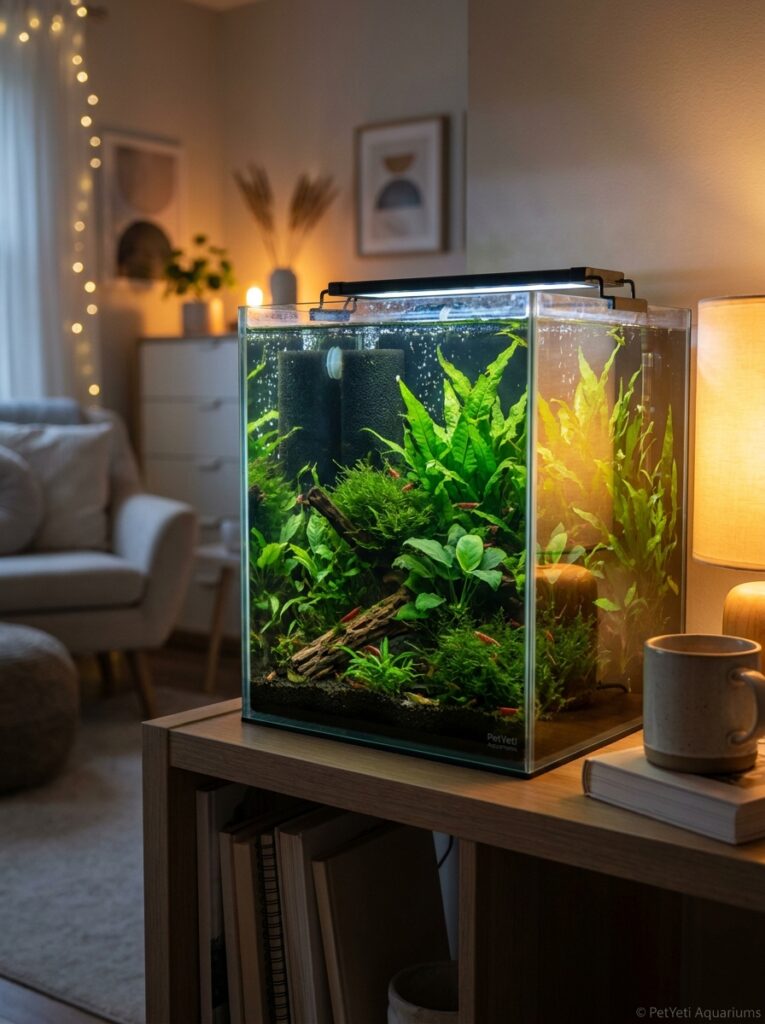
- Gentle water movement — a good fit for fish that don’t appreciate strong current.
- Excellent biological filtration — the porous sponge provides plenty of surface area for beneficial bacteria.
- Good for shrimp and fry — the broad sponge intake reduces the concentrated suction associated with many exposed filter intakes.
- Simple maintenance — the sponge can be cleaned and reused rather than routinely replaced.
- Affordable setup — the filter itself is simple, although you’ll also need an air pump and airline tubing.
What To Consider
- Takes up space inside the aquarium — the sponge and uplift tube remain visible in the tank.
- Requires an air pump — the sponge filter depends on an external air pump to move water through the sponge.
- Less mechanical polishing — it may not remove fine suspended particles as quickly as some HOB filters.
- Air-pump noise — the filter itself has no motor, but bubbling and pump vibration can still produce sound.
- Appearance — some aquarists prefer the cleaner look of equipment mounted outside the aquarium.
Best For
Sponge filters are particularly useful for:
- Betta aquariums
- Shrimp tanks
- Fry and breeding setups
- Nano aquariums
- Quarantine or hospital tanks
- Aquariums where gentle water movement is important
HOB Filter Pros and Cons
What We Like
- Strong mechanical filtration — many HOB filters are effective at removing suspended debris from the water.
- Accessible filter media — the media chamber is easy to reach for inspection and maintenance.
- Flexible filtration — many models allow you to use or customize different types of filter media.
- Keeps most equipment outside the aquarium — this leaves more visible space inside the tank.
- Useful for community aquariums — a suitable HOB can provide a practical combination of mechanical and biological filtration.
What To Consider
- Water flow can be stronger — some fish may need the output reduced or redirected.
- Noise varies by model and setup — motor vibration, water level, impeller condition, and return flow can all affect noise.
- Takes up space behind the aquarium — make sure there is enough clearance for the filter and its maintenance.
- Intake protection may be needed — shrimp, fry, and very small fish can benefit from an intake sponge or other appropriate protection.
- Media maintenance matters — the filter still needs regular inspection and cleaning to keep it working properly.
Best For
HOB filters are particularly useful for:
- Community aquariums
- Beginner freshwater setups
- Aquariums where mechanical filtration is a priority
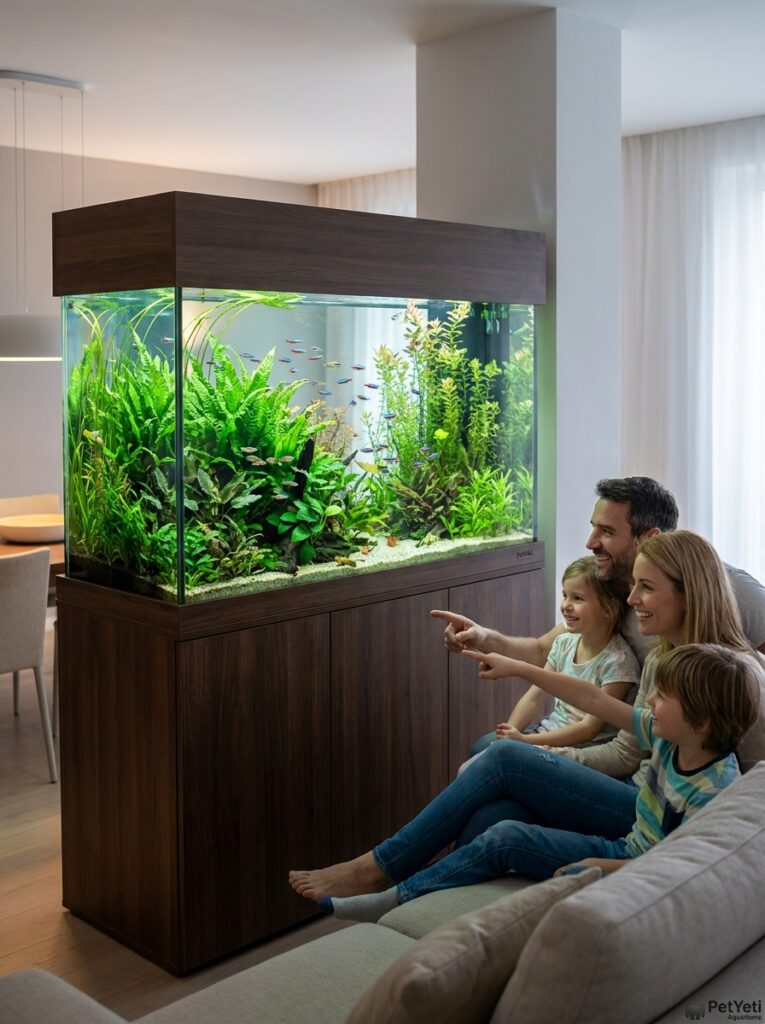
- Aquascapes where you want less equipment inside the tank
- Hobbyists who want easy access to multiple types of filter media
Which One Would We Buy?
For a betta, shrimp, fry, or gentle-flow setup, we’d start with a sponge filter.
For a general beginner community aquarium, we’d look at a HOB filter.
Neither recommendation is based simply on maximum filtration capacity. The right choice depends on your fish, aquarium size, desired water movement, available space, and how comfortable you are maintaining the filter.
Always check the current manufacturer’s specifications before buying, particularly the recommended aquarium size and flow characteristics.
For a shrimp aquarium
We’d choose a sponge filter.
⭐ Helpful Add-On: Sponge Intake Cover
Recommended Option: Sponge Intake Cover
Best For:
✓ Shrimp tanks
✓ Baby shrimp
✓ Small fish
✓ HOB filter setups
Why We Like It:
✓ Helps protect tiny shrimp
✓ Softens filter intake pull
✓ Simple beginner upgrade
✓ Inexpensive safety addition
PetYeti Take:
If you use a HOB filter on a shrimp tank, a sponge intake cover is a small but useful safety upgrade. It can help protect tiny shrimp while still allowing the filter to move water through the aquarium.
Who Should Skip It:
Skip this if you are using a sponge filter only, since sponge filters do not have the same open intake risk.
Shrimp Intake Covers
A planted display aquarium
We’d probably choose a quality HOB filter. The truth is that both filter types work extremely well when matched to the right aquarium.
The goal isn’t finding the “best” filter.
The goal is finding the filter that best supports the aquarium experience you want to create.
How to Maintain a Sponge or HOB Filter
Both filter types work best when they are maintained consistently without unnecessarily disrupting the beneficial bacteria living in the filter media.
Sponge Filter Maintenance
When the sponge becomes clogged with debris:
- Remove some water during a normal aquarium maintenance session.
- Gently rinse or squeeze the sponge in the removed aquarium water.
- Remove obvious debris without trying to make the sponge completely spotless.
- Reassemble the filter and return it to service.
Avoid routinely washing biological filter media under untreated tap water if doing so would expose the established media to chlorine or chloramine. Follow the manufacturer’s cleaning instructions for your specific filter.
HOB Filter Maintenance
HOB filters usually need a little more attention because they contain several components.
Check:
- Filter media
- Intake tube and intake strainer
- Impeller
- Water flow
- Filter housing
- Water level around the intake and return
Clean components according to the manufacturer’s instructions, and avoid replacing all established biological media at once unless there is a specific reason to do so.
The goal isn’t to make the filter look brand new. The goal is to keep water moving properly while preserving useful biological filtration.
Common Sponge and HOB Filter Mistakes
Choosing only by gallon rating
A manufacturer’s tank-size recommendation is useful, but it doesn’t tell the whole story. Fish species, stocking, flow, aquarium depth, and filter design also matter.
Using too much flow
More flow isn’t automatically better. Fish that prefer calmer water may struggle with an unnecessarily strong current.
Replacing all filter media at once
Replacing established biological media unnecessarily can remove a significant amount of the bacteria supporting the aquarium’s biological filtration.
Ignoring the intake
Check the intake regularly for debris and make sure small fish or shrimp cannot be drawn into an unprotected intake.
Letting an air-driven sponge filter run without checking the air pump
With a sponge filter, the air pump is part of the filtration system. Check the airline, connections, and pump if water movement suddenly changes.
Turning the filter off unnecessarily
Avoid leaving filtration off for extended periods without a good reason. Follow the manufacturer’s guidance and consider the needs of your aquarium if equipment must be stopped.
Ignoring noise or vibration
A noisy filter isn’t always a sign of a serious problem, but new or worsening noise can indicate vibration, debris, an impeller issue, excessive airflow, or another maintenance need.
If your filter is becoming unusually loud, see our guide to Why Is My Aquarium Filter So Loud?
Sponge Filter vs HOB Filter
Both sponge filters and HOB filters can be excellent choices for a beginner aquarium.
Choose a sponge filter when gentle water movement, simple maintenance, shrimp/fry safety, or straightforward biological filtration is your priority.
Choose a HOB filter when you want convenient media access, stronger mechanical filtration, and most of the equipment outside the aquarium.
If you’re still unsure, start with the needs of your fish rather than the filter itself. A filter that is easy to maintain and provides appropriate flow is usually a better choice than one with the most impressive specifications.
Related PetYeti Guides
Choosing between a sponge filter and HOB filter depends on your tank size, fish type, noise needs, and maintenance style.
Having noise issues with your current setup? Read our guide on why is my aquarium filter so loud to fix rattling impellers and air bubbles.
Looking for silent equipment for a bedroom or home office? Check out our top picks for quiet aquarium filters.
Still choosing your first filter? Read our beginner aquarium filter guide.
Setting up a shrimp tank? Read our guide to shrimp-friendly aquarium plants.
Planning a small betta tank? See our guide to setting up a beautiful betta fish tank for beginners.
Still choosing the tank size? Read choosing the right aquarium size for beginners.
CONCLUSION
Choosing between a sponge filter and an HOB filter isn’t about finding the single “best” filter on the market—it’s about matching the right filtration style to your specific tank, fish, and lifestyle. Sponge filters offer unmatched safety, ultra-gentle flow, and bulletproof biological stability for bettas, shrimp, and small nano setups. On the other hand, HOB filters deliver superior mechanical polishing, customizable media options, and keep your aquascape completely open and uncluttered in larger community tanks.
If I were setting up a tank today, I’d pick the Aquaneat Sponge Filter (paired with a quiet mini air pump) for any 5-to-10 gallon betta or shrimp aquarium, and the AquaClear Power Filter for a 10-to-20 gallon community setup in a living room or bedroom. Both options are beginner-friendly, budget-smart, and proven to maintain clear, healthy water without unnecessary noise or hassle.
Whichever direction you go, focus on setting it up correctly from day one. Keeping your water level high, using a simple check valve, and rinsing your filter media in removed tank water during routine maintenance will keep your filter running quietly and effectively for years to come.
Best Choice for Beginners
If you want an easy, stress-free setup, start with the Aquaneat Sponge Filter (paired with a mini air pump) for a 5–10 gallon betta or shrimp tank, or the AquaClear 20 for a 10–20 gallon community aquarium. Both options give you reliable, quiet filtration, simple maintenance, and great water clarity without overcomplicating your setup.
FAQs
Is a sponge filter better than a HOB filter?
Neither is universally better. Sponge filters are particularly useful for gentle-flow setups, shrimp, fry, and simple biological filtration. HOB filters can be useful when stronger mechanical filtration and convenient media access are priorities.
Are sponge filters good for betta fish?
Yes. A sponge filter can be a good choice for a betta aquarium because it can provide filtration with relatively gentle water movement. The airflow should still be adjusted so the aquarium isn’t excessively turbulent.
Is a HOB filter good for bettas?
Yes, provided the flow is appropriate. If the output creates too much current, the flow can often be reduced, redirected, or diffused depending on the filter model.
Which filter is better for shrimp?
Sponge filters are a popular choice for shrimp because they provide gentle filtration and a broad intake surface. If you use a HOB filter, protecting the intake can help prevent very small shrimp from being drawn into it.
Do sponge filters actually filter the water?
Yes. Water is drawn through the sponge, which traps particulate matter while the sponge also provides surface area for beneficial bacteria involved in biological filtration.
Do HOB filters provide biological filtration?
Yes. HOB filters can provide biological filtration through their filter media. The amount and type of biological media available depends on the particular filter.
Which filter is quieter?
Neither type is automatically quieter in every setup. Sponge filters don’t have a motor in the aquarium, but their air pump and bubbling can create noise and vibration. HOB filters can produce motor, impeller, vibration, and water-flow noise.
Can I use both a sponge filter and a HOB filter?
Yes. Using both can provide additional filtration and redundancy, provided the combined water movement is appropriate for your fish and aquarium.
How often should I clean a sponge filter?
Clean it when water flow becomes noticeably restricted or the sponge has accumulated substantial debris. Follow the manufacturer’s instructions and use appropriate aquarium water when cleaning established biological media.
How often should I clean a HOB filter?
There isn’t one universal schedule. Inspect the filter regularly and clean the intake, impeller, housing, and media as needed according to the manufacturer’s instructions and the filter’s actual condition.
What size sponge filter do I need?
Choose a sponge filter based on the manufacturer’s recommended aquarium size, then consider your stocking level, fish species, and desired water movement. Don’t choose solely by gallon rating.
What size HOB filter do I need?
Start with the manufacturer’s recommended aquarium size, then consider actual flow, stocking, fish requirements, and whether the model allows you to adjust or diffuse the output.