
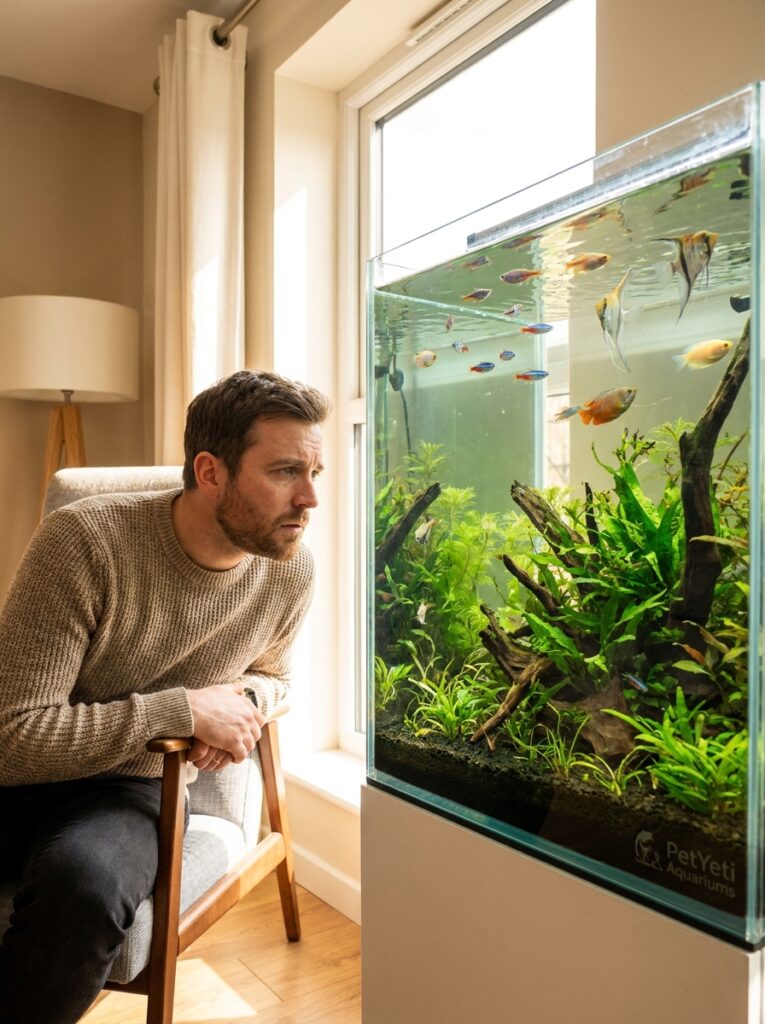
If you’re asking yourself why do my fish stay at the surface—whether they are hovering motionlessly at the waterline, gasping for air, or pacing back and forth near the top glass—it can be alarming to watch. Seeing your entire tank crowded at the surface makes you wonder if something is drastically wrong with the water.
While surface crowding is often a red flag for low dissolved oxygen or rising water toxins, it can also be a completely harmless habit, like begging for food or natural surface breathing in certain fish species. The key is identifying whether your fish are gasping under stress or simply waiting for their next meal.
PetYeti 10-Second Quick Diagnostic
It’s likely LOW DISSOLVED OXYGEN if: Multiple fish crowd the top with rapid gill movement and wide-open mouths, especially in the early morning or in warmer water.
It’s likely AMMONIA OR NITRITE TOXICITY if: Fish look pale, stay clamped at the surface, and you recently added new fish or skipped a water change.
It’s likely COMPLETELY NORMAL if: You keep labyrinth breathers (Bettas or Gouramis) that take occasional gulps of air, or if fish rush to the surface only when you approach the glass.
- 5 Reasons Why Your Fish Stay at the Surface (And How to Fix It)
- 1. Lack of Dissolved Oxygen (Surface Agitation Deficit)
- 2. Ammonia or Nitrite Gill Damage
- 3. High Water Temperature
- 4. Natural Labyrinth Breathing & Surface Feeding
- 5. Swim Bladder Disorder (Trapped Buoyancy)
- Is It Normal for Fish to Stay at the Surface?
- Some Fish Naturally Prefer the Upper Part of the Tank
- Why Is Only One Fish Staying at the Surface?
- Quick Troubleshooting Checklist
- CONCLUSION
- FAQs
What To Check First
Before assuming something is seriously wrong, check whether your fish are only near the surface at feeding time, whether all fish are affected or just one, whether they are gulping, and whether the water temperature, filter flow, and surface movement look normal. If several fish stay near the top for long periods, breathe quickly, or seem weak, test the water and improve surface agitation right away.
As an Amazon Associate, PetYeti earns from qualifying purchases. This comes at no additional cost to you and helps support the site. We only recommend products we genuinely believe can help create healthier and more enjoyable aquariums.
5 Reasons Why Your Fish Stay at the Surface (And How to Fix It)
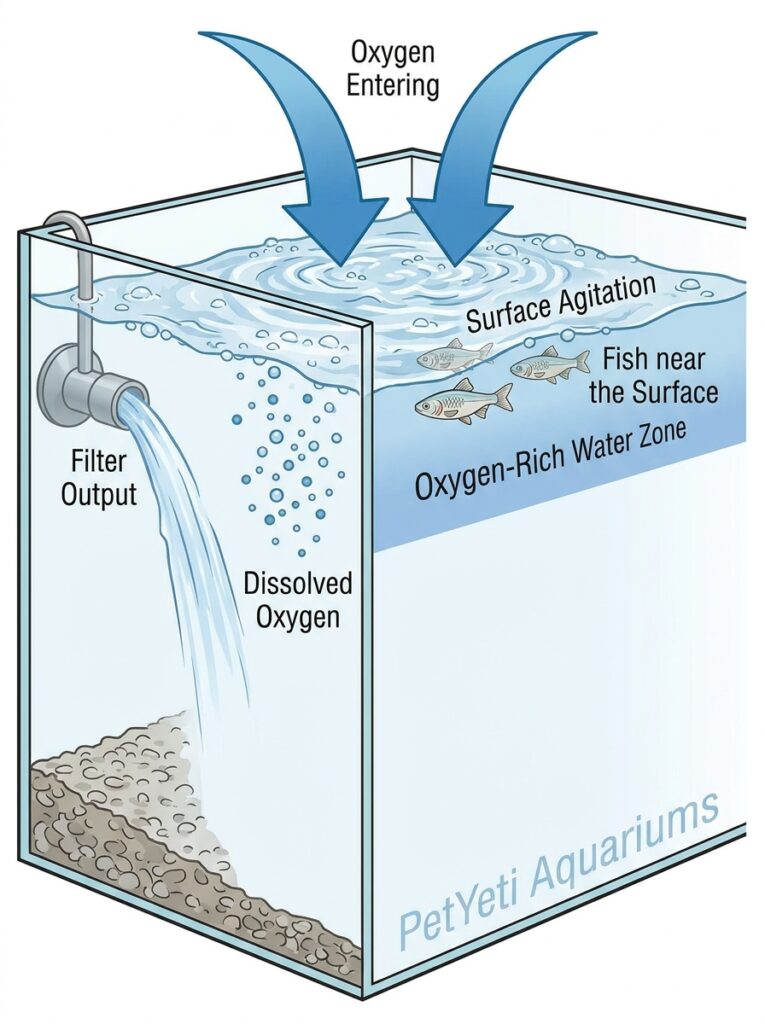
1. Lack of Dissolved Oxygen (Surface Agitation Deficit)
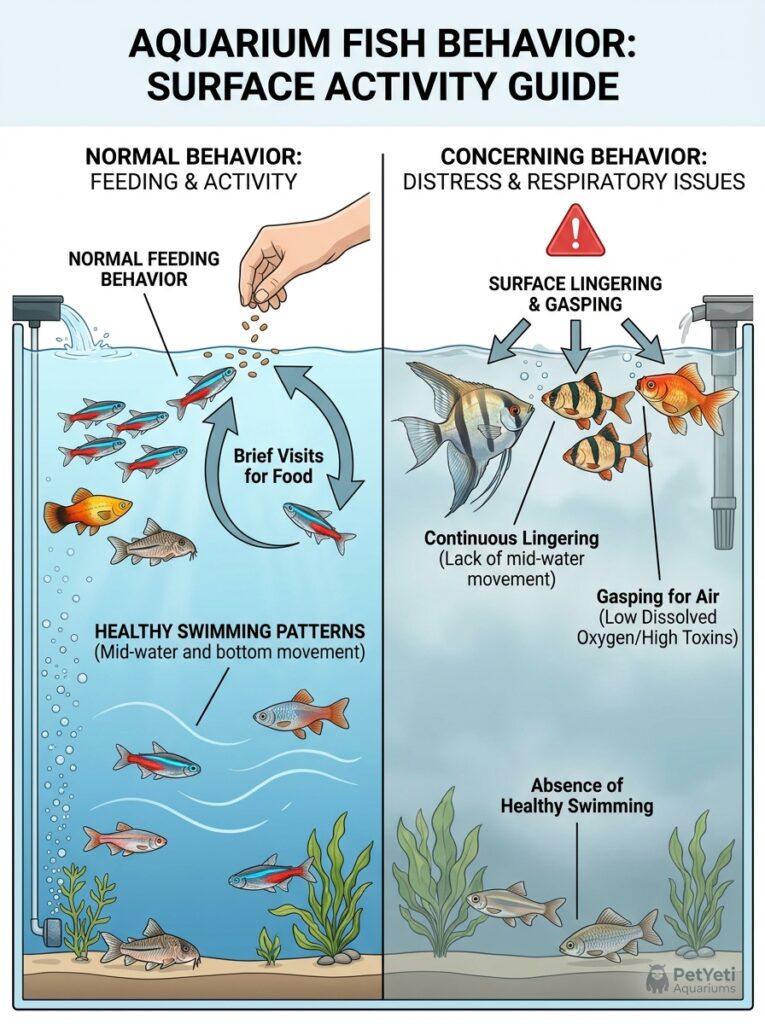
Water needs active surface movement to exchange gas—releasing trapped carbon dioxide (CO2) and absorbing fresh oxygen (O2). If your filter output is too weak, or if a thick protein film coats the waterline, oxygen levels drop fast. Fish will gather at the absolute top millimeter of water where dissolved oxygen levels remain highest.
- How to Tell: Multiple different species hover directly beneath the waterline, gasping rapidly with wide mouths.
- The Fix: Aim your filter output toward the water surface to create gentle ripples, or install an air pump with an airstone immediately.
- PetYeti Pick: A Tetra Whisper Air Pump paired with a small Porous Airstone restores healthy oxygen exchange in minutes without creating turbulent currents.
Real-Life Example:
If you wake up in the morning and see your tetras, rasboras, and corydoras all clustered at the top glass gasping, a lack of overnight surface agitation is almost always to blame. Turning on an airstone usually has them swimming happily across all tank levels within 15 minutes.
2. Ammonia or Nitrite Gill Damage
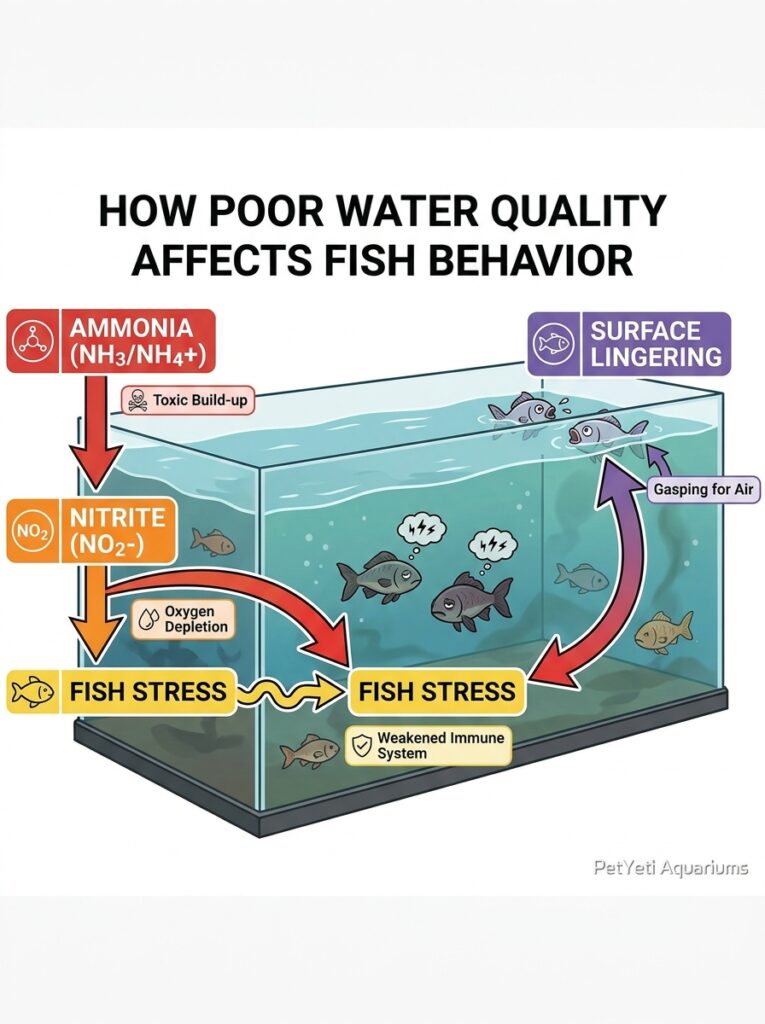
Ammonia (NH3) and Nitrite (NO2-) chemically burn delicate gill tissues. Even worse, nitrite binds to a fish’s hemoglobin, preventing red blood cells from transporting oxygen through the body (a condition called “brown blood disease”). Even if your water has plenty of physical oxygen, poisoned fish feel like they are suffocating.
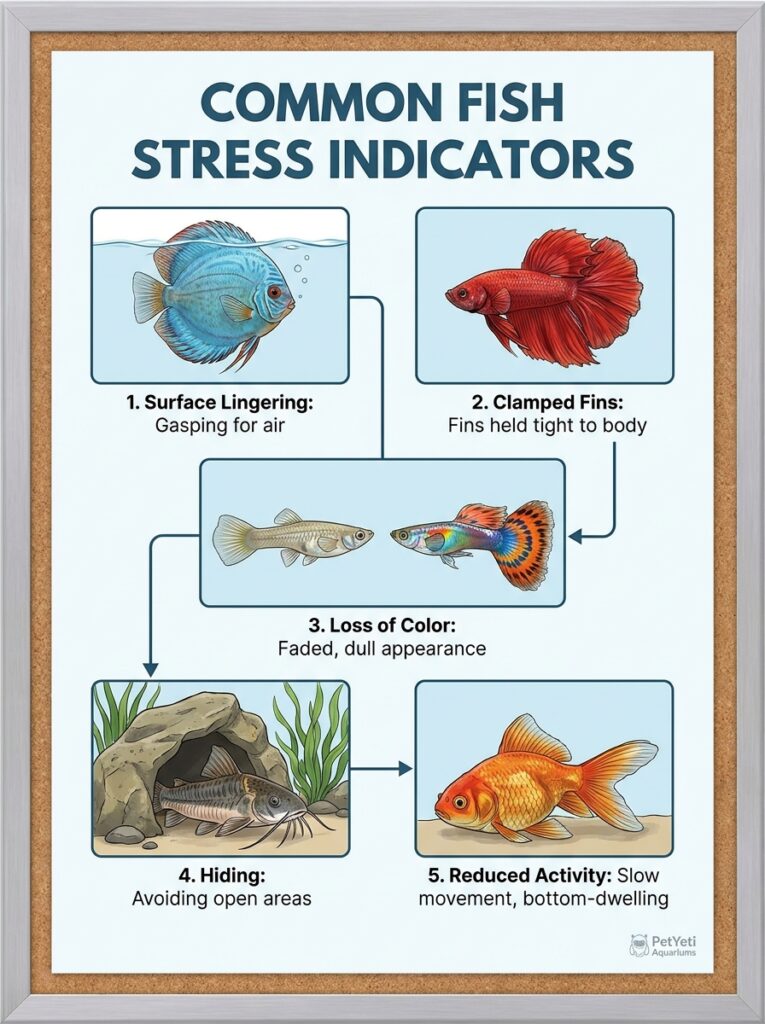
- How to Tell: Fish gasp at the surface even with good aeration, display inflamed red gills, or look pale and lethargic.
- The Fix: Test your parameters with a liquid test kit immediately, perform a 30% water change, and dose a water conditioner that detoxifies nitrogen compounds.
- PetYeti Pick: Use an 11 in 1 – Aquarium Test Strips to verify toxins, and double-dose Seachem Prime to neutralize free ammonia and nitrites on contact.
Real-Life Example:
A beginner who deep-cleans their filter sponges in chlorinated tap water accidentally destroys their beneficial bacteria. Two days later, the fish crowd the surface gasping—not because the tank lacks oxygen, but because a sudden ammonia spike is burning their gills.
3. High Water Temperature
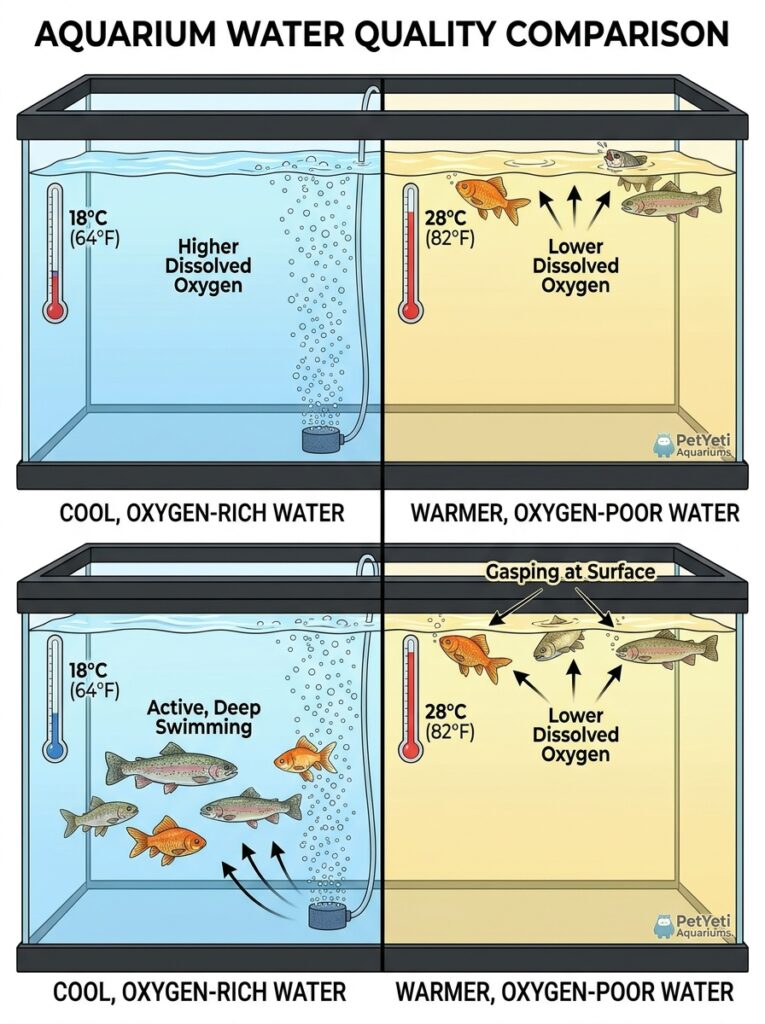
Warm water holds significantly less dissolved oxygen than cool water. If a summer heatwave strikes or an aquarium heater gets stuck in the “on” position, water temperatures above 82°F (28°C) cause dissolved oxygen to plummet while simultaneously spiking your fish’s metabolic oxygen demand.
- How to Tell: The aquarium thermometer reads well above 80°F, and active swimmers become sluggish or gasp near the surface.
- The Fix: Float sealed bags of ice or chilled water bottles in the tank to lower temperature gradually, remove solid tank lids, and point a small USB fan across the open water surface.
Real-Life Example:
During an August heatwave in a room without air conditioning, an aquarium can easily creep up to 86°F. Floating a couple of frozen water bottles in the tank and increasing airstone bubbles will cool the water down smoothly and save your fish from heat exhaustion.
4. Natural Labyrinth Breathing & Surface Feeding
Not all surface visits signal a crisis! Labyrinth fish—such as Bettas, Honey Gouramis, and Dwarf Gouramis—possess a specialized lung-like organ that lets them breathe atmospheric air directly from above the water. Other species, like Guppies and Hatchetfish, naturally have upturned mouths designed specifically to hunt surface bugs and flakes.
- How to Tell: The fish swims to the surface for a quick, playful gulp of air and then returns to cruising normally, showing no signs of heavy gill pumping or stress.
- The Fix: No fix needed! Ensure there is a small gap of humid air between your water line and the aquarium lid so your labyrinth fish can breathe comfortably.
Real-Life Example:
A healthy Betta will periodically swim up to the top, take a tiny bubble of air, and swim back down to explore plants. This is completely natural biological behavior and nothing to worry about.
5. Swim Bladder Disorder (Trapped Buoyancy)
A fish suffering from digestive compaction or a swim bladder infection loses the ability to regulate its depth. Because their internal air sac remains overinflated, they get stuck floating against their will at the very top of the tank.
- How to Tell: A single fish struggles to swim downward, floats like a cork, tilts sideways, or bobs back up the second it stops paddling.
- The Fix: Fast the fish for 2 to 3 days to relieve pressure on the digestive tract, and follow up with soft, thawed frozen daphnia or a blanched, peeled green pea.
Real-Life Example:
A fancy goldfish that eats floating flakes too fast might swallow excess air and float upside down at the surface by evening. Fasting it for 48 hours and switching to sinking pellets prevents that air gulping from happening again.
Is It Normal for Fish to Stay at the Surface?
Sometimes, yes.
Many fish naturally visit the surface throughout the day.They may come up during feeding, investigate movement outside the tank, or simply explore different levels of the aquarium. Some species also spend more time near the upper part of the water column than others.
What usually matters isn’t whether the fish visit the surface. It’s whether they seem unable or unwilling to leave it. If healthy fish occasionally swim throughout the aquarium and only spend short periods near the surface, there’s often no reason for concern.
If most of the fish remain there for long periods, it’s worth investigating further.
PetYeti Calm Tip
Surface swimming is not always an emergency. Watch the full pattern first: are the fish only coming up for food, or are they staying there and breathing quickly? A few calm minutes of observation can help you avoid overreacting while still catching real oxygen, temperature, or water quality problems early.
Real-Life Example
A beginner hobbyist became worried when their community fish started gathering near the surface every evening. After observing the tank for several days, they realized the behavior occurred shortly before feeding time. The fish were simply anticipating food and returned to normal swimming patterns afterward.
What to Expect
Occasional visits to the surface are completely normal. Persistent surface lingering is where troubleshooting should begin.
Beginner Mistake to Avoid
A common beginner mistake is assuming fish at the surface only need more food or attention. If several fish are staying near the top and breathing quickly, the issue may be low oxygen, poor circulation, warm water, or water quality stress. Check the tank conditions before feeding more or making random changes.
Real-Life Example
During a summer heat wave, an aquarium owner noticed several fish spending nearly all their time near the surface. The filter was still running, but warmer water had reduced available oxygen. Increasing surface movement and lowering the temperature slightly helped restore normal behavior over the following days.
How to Fix It
• Improve surface agitation
• Check filter performance
• Reduce overcrowding if necessary
• Perform regular maintenance
• Monitor water temperature
What to Expect
If oxygen levels are the issue, fish often become more active throughout the tank once conditions improve.
Helpful Tools
When fish stay near the surface for long periods, water testing is one of the safest first steps. A simple aquarium test kit can help you check ammonia, nitrite, nitrate, and pH before guessing. If oxygen seems low, improving surface movement with gentle filter flow or an air stone can also help the tank feel safer and more stable.
For more help, see our guides on how to test aquarium water correctly and best aquarium air stones for beginners.
Some Fish Naturally Prefer the Upper Part of the Tank
Not every fish staying near the surface is experiencing a problem.
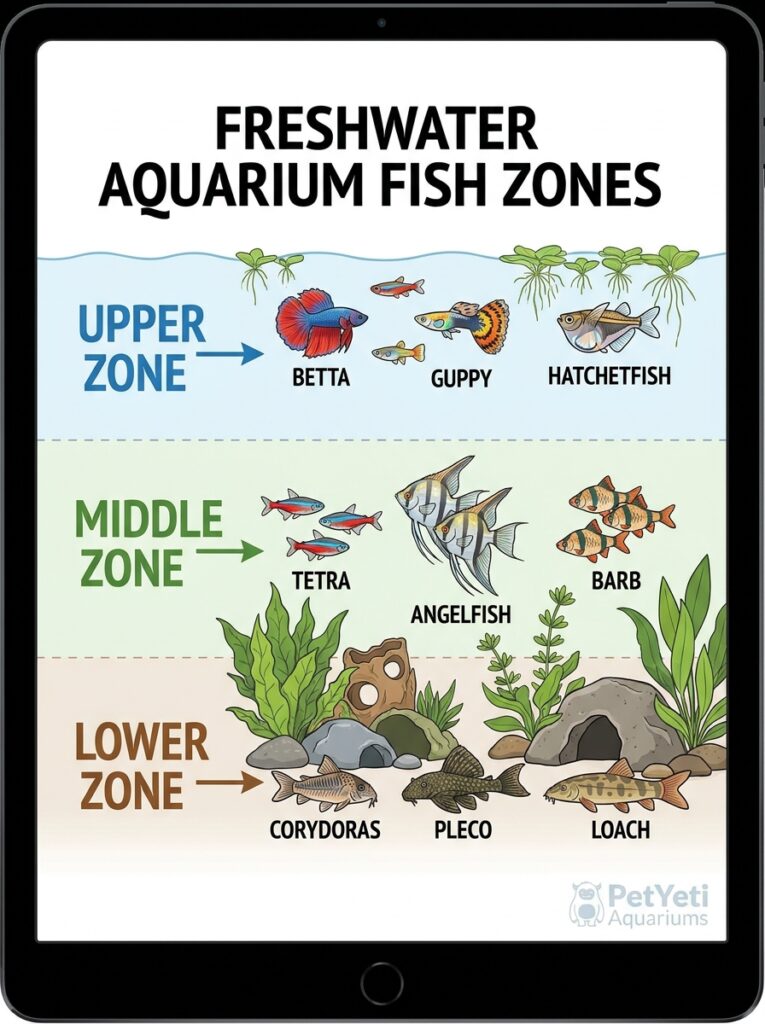
Some species naturally spend much of their time in the upper portion of the aquarium. Depending on the species you keep, surface-oriented behavior may be completely normal.
Fish often establish preferred swimming zones based on:
• Natural habitat
• Feeding behavior
• Tank layout
• Individual personality
This is why it’s important to consider what is normal for your specific fish rather than comparing them to every species.
Real-Life Example
A new aquarium owner worried that their fish were spending too much time near the top of the tank. After researching the species, they learned that upper-level swimming was completely normal and matched the fish’s natural behavior.
What to Expect
If the fish are healthy, eating normally, and showing no signs of stress, upper-level swimming may simply be part of their normal routine.
Why Is Only One Fish Staying at the Surface?
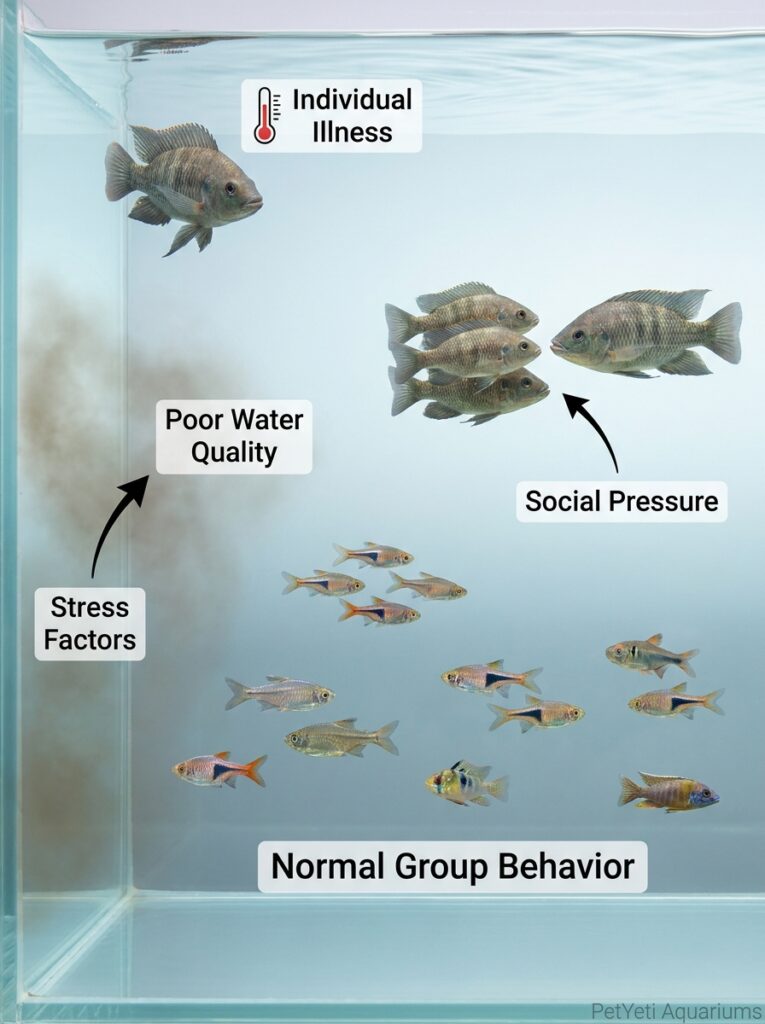
If the entire aquarium is staying near the surface, environmental factors are often responsible.
If only one fish is doing it, the situation may be different.
Consider:
• Individual illness
• Injury
• Bullying
• Age-related weakness
• Species-specific behavior
When only one fish is affected, closely observing that individual often provides valuable clues.
Ask yourself:
Is it eating normally?
Does it interact with other fish?
Has its appearance changed recently?
These observations can help narrow down the cause much faster than guessing.
What to Expect
A single fish staying near the surface usually points toward an issue affecting that particular fish rather than the aquarium as a whole.
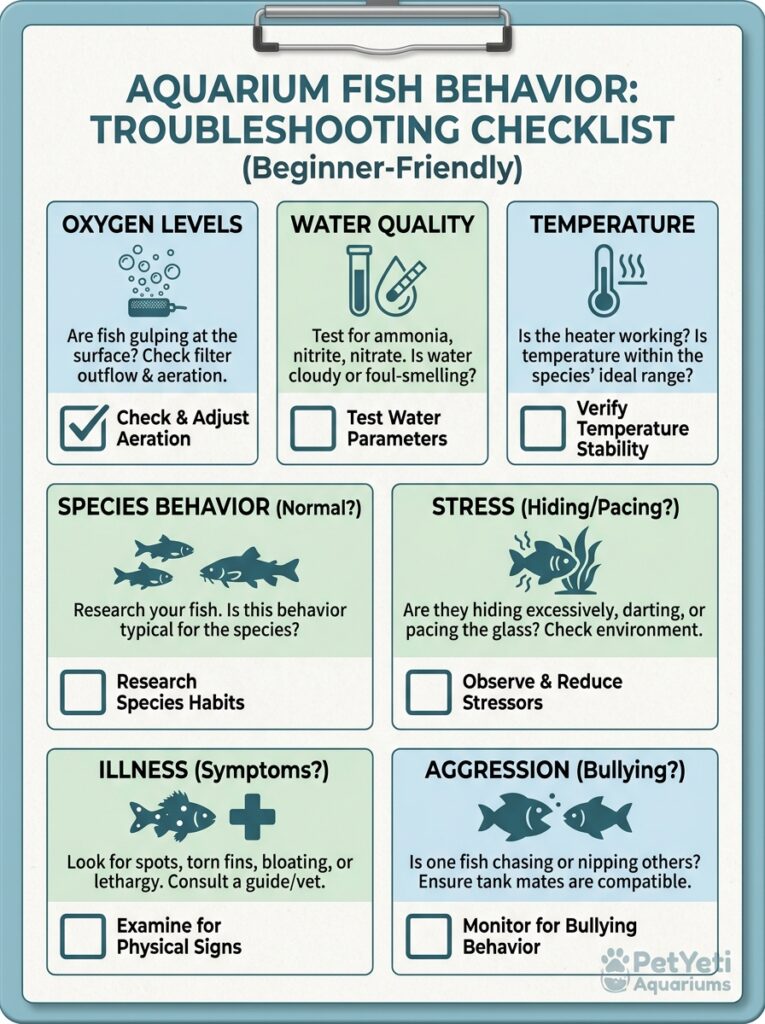
Quick Troubleshooting Checklist
If your fish are spending unusual amounts of time near the surface, work through this checklist:
✅ Check water temperature
✅ Test ammonia and nitrite levels
✅ Observe surface agitation
✅ Inspect filter performance
✅ Watch for signs of aggression
✅ Look for illness symptoms
✅ Consider normal species behavior
✅ Review recent changes to the aquarium
In many cases, the answer becomes much clearer after a few minutes of careful observation.
Related PetYeti Aquarium Care Guides
Fish staying near the surface is often connected to oxygen, water quality, temperature, or stress. These related guides can help you check the most common causes and make calm, beginner-safe improvements.
How to Test Aquarium Water Correctly
Use this if you need to check ammonia, nitrite, nitrate, or pH before guessing.
Best Aquarium Air Stones for Beginners
Use this if your tank needs gentler surface movement or improved oxygen exchange.
Best Aquarium Air Pumps for Beginners
Use this if you want a simple way to support an air stone or sponge filter.
Why Are My Fish Breathing Fast?
Use this if your fish are staying near the surface and also breathing quickly.
Fish moving erratically instead of hovering? Read our diagnostic on why is my fish swimming erratically.
Refusing to come down for food? Check out our troubleshooting guide on why is my fish not eating.
Looking for whisper-quiet circulation equipment? Explore our top quiet aquarium filters for home tanks.
CONCLUSION
Seeing your fish crowd the surface can make any fishkeeper anxious, but taking a few minutes to check your equipment and water parameters will quickly point you toward the right fix.
Whether your aquarium simply needs an extra burst of surface ripples from an airstone, a fast water change to drop ammonia levels, or a little cooling relief during a hot afternoon, addressing the issue calmly will restore balanced, effortless swimming across your entire tank.
PetYeti Quick Recap: Best Immediate Steps for Surface Gasping
If multiple fish are gasping near the waterline, immediately boost surface aeration with a Tetra Whisper Air Pump and porous airstone. Follow up by testing your ammonia and nitrite levels with an API Freshwater Master Test Kit and dosing Seachem Prime to keep your water clean and safe.
FAQs
Why does my fish stay near the surface in the corner?
A single fish hiding motionlessly near the upper corner is often seeking refuge from aggressive tank mates or escaping strong filter currents. Adding tall plants or floating botanicals gives timid fish secure resting spots without feeling trapped at the waterline.
Is it normal for fish to hang near the top of the tank?
Yes, some fish naturally spend more time in the upper portion of the aquarium. The behavior becomes more concerning if it appears suddenly or is accompanied by other signs of stress.
Are my fish gasping for air?
Fish that repeatedly gulp at the surface may be responding to low oxygen levels or poor water conditions. Testing the water and improving circulation can help identify whether this is the cause.
Why does only one fish stay near the surface?
If only one fish is affected, the issue may be related to illness, stress, injury, bullying, or species-specific behavior rather than a problem affecting the entire aquarium.
Can warm water make fish stay at the surface?
Yes. Warmer water holds less dissolved oxygen, which can encourage fish to spend more time near the surface where oxygen exchange occurs.
Should I do a water change if my fish are staying at the surface?
If you’re unsure of the cause, testing the water first is ideal. If water quality is poor, a partial water change is often one of the safest and most effective first steps.
Why are my fish gasping at the surface after a water change?
If fish rush to the surface and gasp immediately following a water change, it usually indicates either temperature shock (adding water that is noticeably colder or hotter than the tank) or unconditioned tap water containing chlorine, chloramines, or heavy metals. Always match tap water temperature closely and use a generous dose of water conditioner.
Do live aquarium plants help with surface oxygen?
During daylight hours, live plants produce oxygen through photosynthesis and absorb harmful toxins like ammonia and nitrate. However, at night when lights are off, plants switch to consuming oxygen and releasing carbon dioxide ($CO_2$). Having moderate surface agitation from a filter or airstone ensures steady oxygen levels 24/7.