
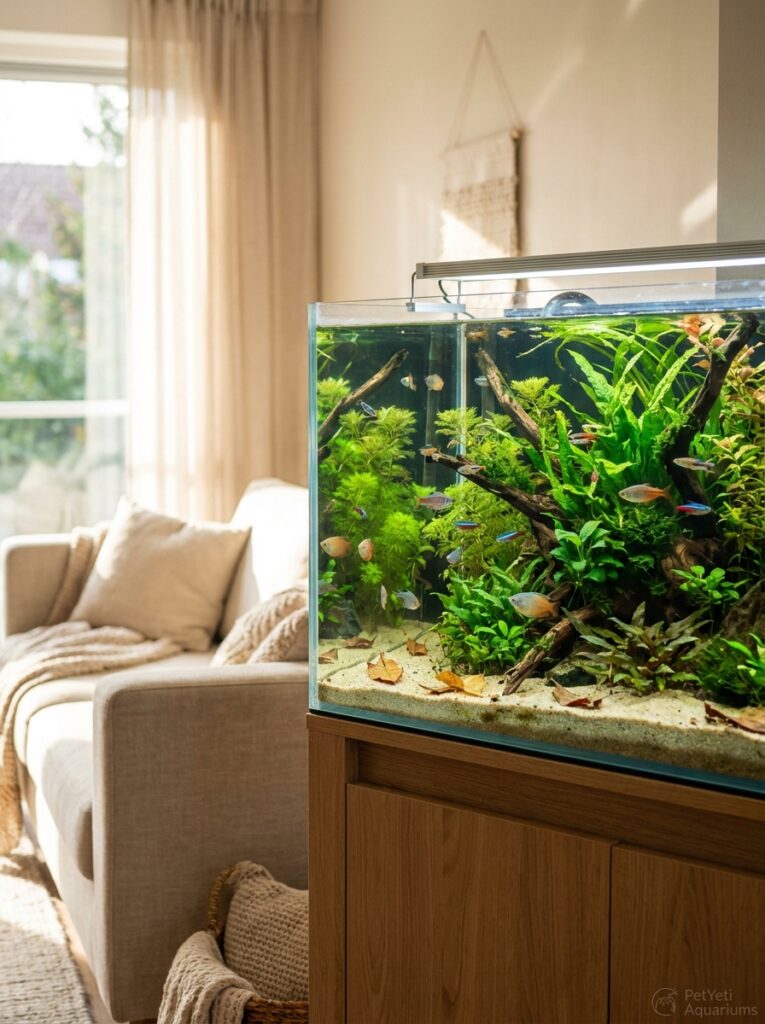
Aquarium water smell is usually caused by excess waste, uneaten food, decaying plant matter, clogged filter media, or poor maintenance habits.
A healthy aquarium shouldn’t smell bad.
In fact, most well-maintained freshwater aquariums have very little odor at all. Some hobbyists even describe the scent as similar to a clean pond or fresh rainwater.
So when you walk past your tank and notice an unpleasant smell, it’s natural to feel concerned.
The good news is that a smelly aquarium is usually a sign of an imbalance rather than a serious disaster. In many cases, the cause can be traced to excess waste, leftover food, decaying plant matter, or maintenance that has fallen behind schedule.
Let’s look at the most common reasons aquarium water develops an odor and how you can get things back to normal.
Quick Answer
What causes aquarium water smell? Aquarium water usually smells bad because of excess fish waste, uneaten food, decaying plant matter, clogged filter media, poor circulation, overcrowding, or maintenance that has fallen behind. A mild natural aquarium scent is normal, but strong rotten, sour, or dirty smells usually mean organic waste is breaking down somewhere in the tank.
What To Check First
Before assuming the tank has a serious problem, check for leftover food, excess fish waste, dead plant leaves, clogged filter media, and low-flow areas where debris may collect. A mild natural aquarium scent can be normal, but a strong rotten, sour, or dirty smell usually means organic waste is breaking down somewhere in the tank.
Excess Fish Waste Can Build Up Over Time
One of the most common causes of aquarium odor is a gradual buildup of organic waste.
Fish naturally produce waste every day. In a healthy aquarium, beneficial bacteria help break it down.
However, when waste accumulates faster than the system can process it, odors may begin to develop.
This is especially common in:
- Overcrowded tanks
- Small aquariums
- Tanks with irregular maintenance
If the substrate hasn’t been cleaned in a while, trapped waste may be contributing to the smell.
PetYeti Calm Tip
A smelly aquarium can feel worrying, but avoid deep-cleaning everything at once. Start with small, steady fixes: remove visible debris, clean only part of the substrate, and rinse filter media gently in old tank water if needed. Calm maintenance protects the helpful bacteria that keep the aquarium stable.
Uneaten Food May Be Decomposing
Many beginners feed their fish a little more than necessary.
We’ve all done it.
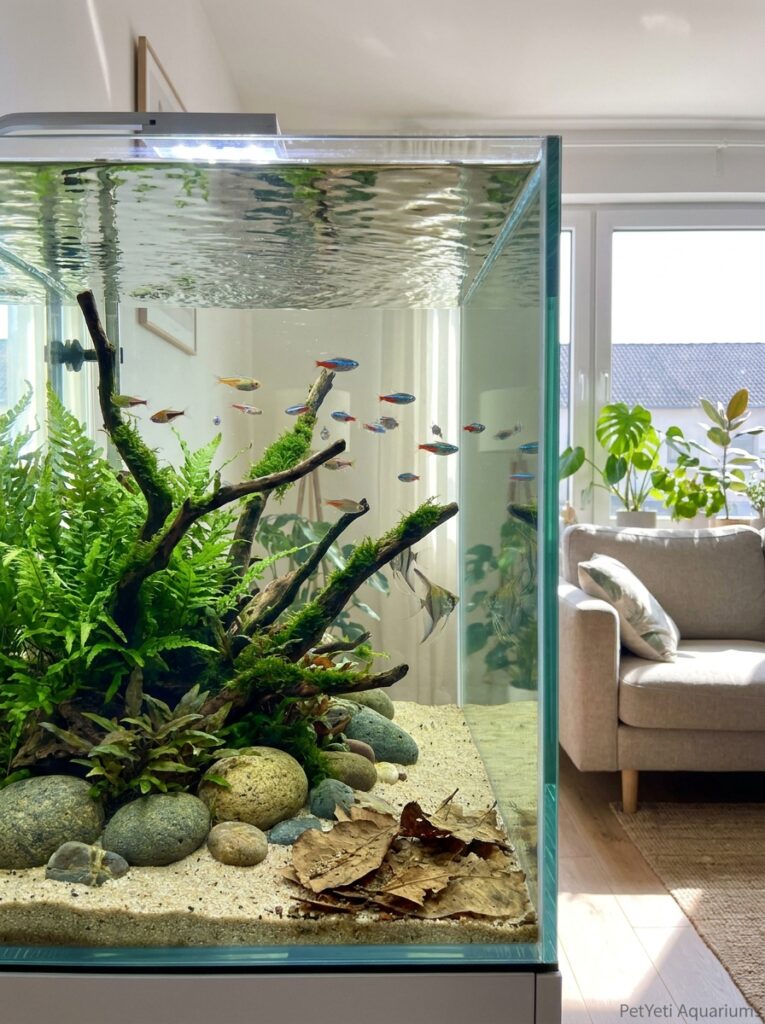
The problem is that leftover food doesn’t simply disappear. It settles into the substrate or becomes trapped behind decorations where it begins to break down.
As it decomposes, it can create unpleasant odors and reduce water quality.
A simple rule is to feed only what your fish can comfortably consume within a few minutes.
Less waste often means cleaner water and fewer odors.
Beginner Mistake to Avoid
A common beginner mistake is feeding more because the fish still seem interested. Fish often act hungry even when they have had enough. Extra food that sinks into the gravel, behind decorations, or under plants can break down quickly and create odor problems. Smaller feedings are usually safer than trying to “make sure everyone gets plenty.”
Dead Plant Material Can Create Odors
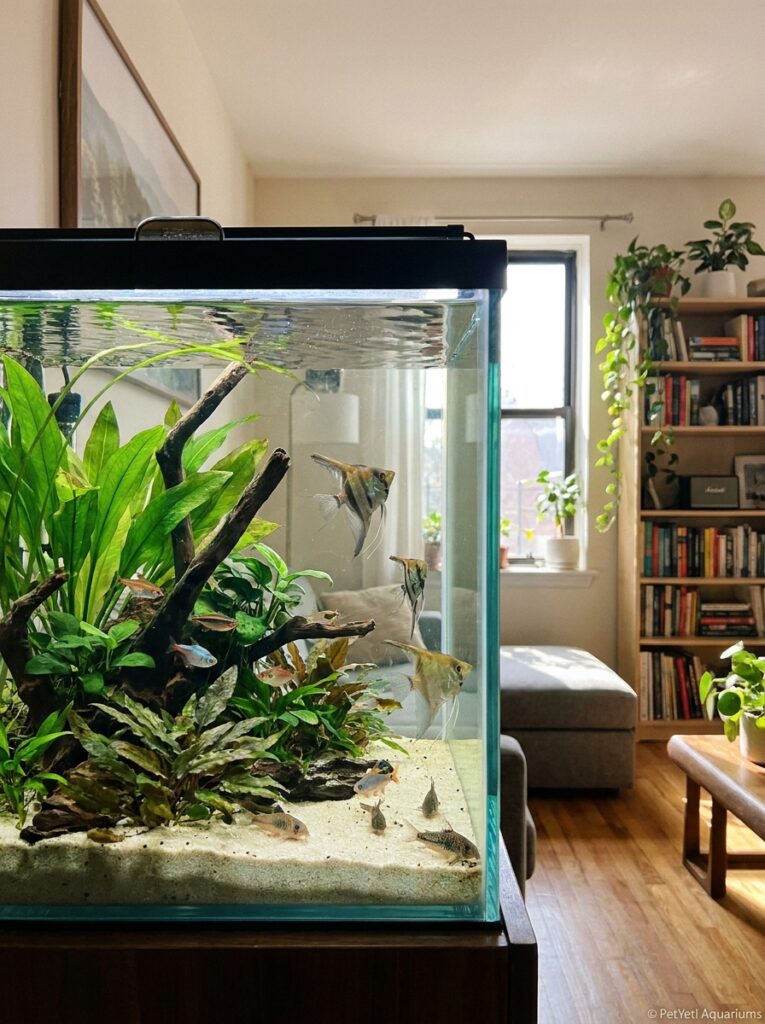
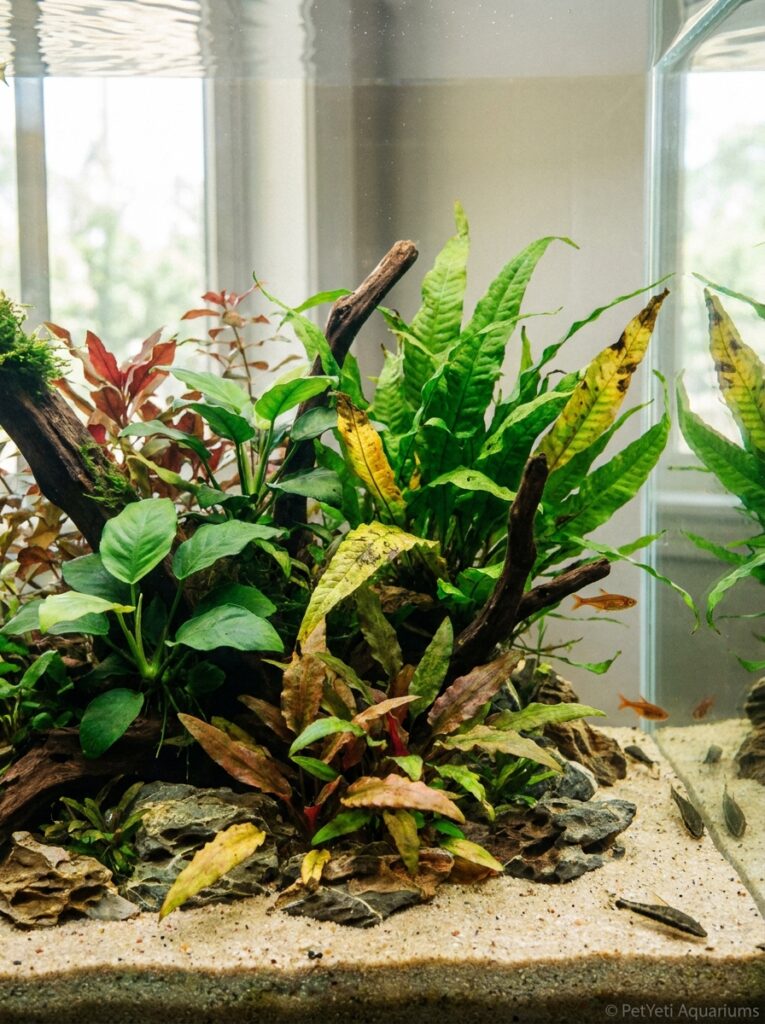
Aquarium plants improve water quality, but dying leaves should not be left in the tank indefinitely.
As old leaves break down, they contribute organic waste to the system.
A few decaying leaves usually aren’t a major problem, but larger amounts can lead to noticeable smells over time.
This is why occasional plant trimming is part of maintaining a healthy planted aquarium.
Removing damaged leaves helps keep the tank looking cleaner while reducing excess organic buildup.
The Filter May Need Maintenance
Your filter is one of the hardest-working parts of the aquarium.
Day after day, it traps debris and helps beneficial bacteria process waste.
Over time, however, filter media can become clogged with accumulated organic material. When this buildup sits for too long, it may contribute to unpleasant odors.
That doesn’t mean the filter needs a deep cleaning every week.
In fact, cleaning it too aggressively can remove beneficial bacteria.
A gentle rinse of filter media in old aquarium water during routine maintenance is often enough to keep things running smoothly.
Helpful Tools
When aquarium water smells bad, simple maintenance tools can help you find and remove the source without tearing the tank apart. A gentle gravel vacuum can lift trapped debris from the substrate, while an aquarium test kit can show whether waste buildup is affecting ammonia, nitrite, nitrate, or pH. If the smell keeps coming back, also check whether the filter media is clogged or the tank has low-flow areas where debris collects.
For more help, see our guides on best aquarium gravel vacuums for beginners, how to test aquarium water correctly, and best aquarium filters for beginners.
Poor Water Circulation Can Create Problem Areas
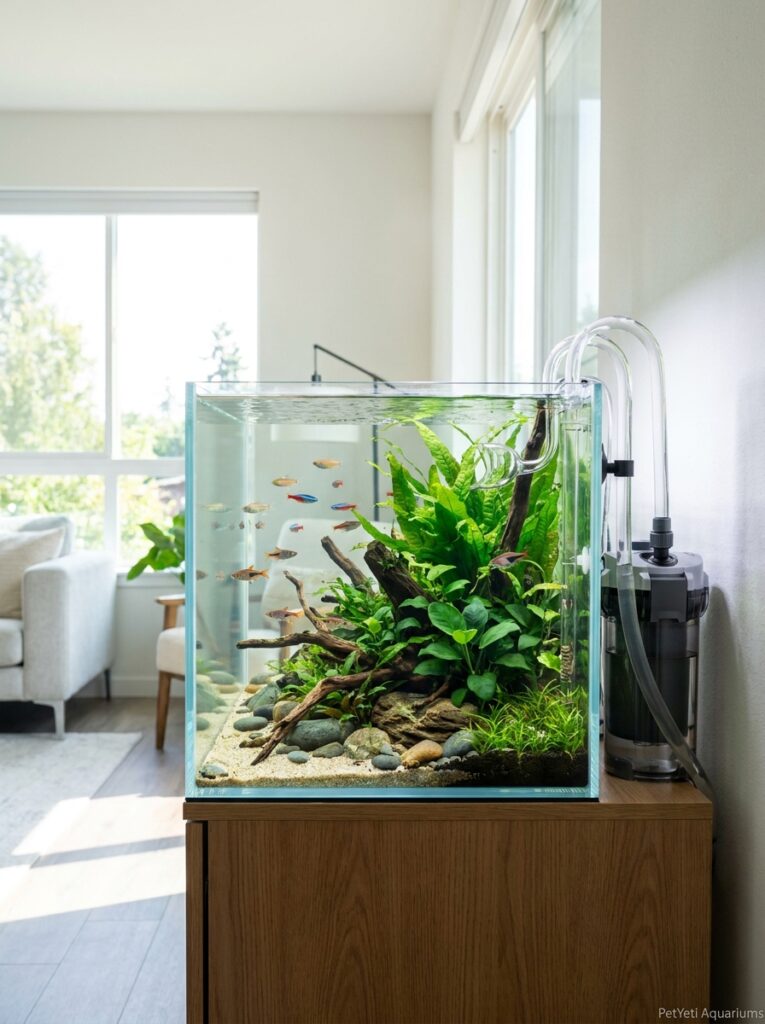
Even if the water looks clean, some areas of the aquarium may experience very little movement.
These “dead spots” can allow waste and debris to collect behind decorations, driftwood, or dense plant growth.
Over time, trapped organic matter begins to break down and may produce odors.
If you frequently notice debris gathering in the same area, it may be worth adjusting decorations, plants, or filter flow to improve circulation.
Good water movement helps distribute oxygen and keeps waste from settling in one place.
Overcrowding May Be Contributing to the Smell
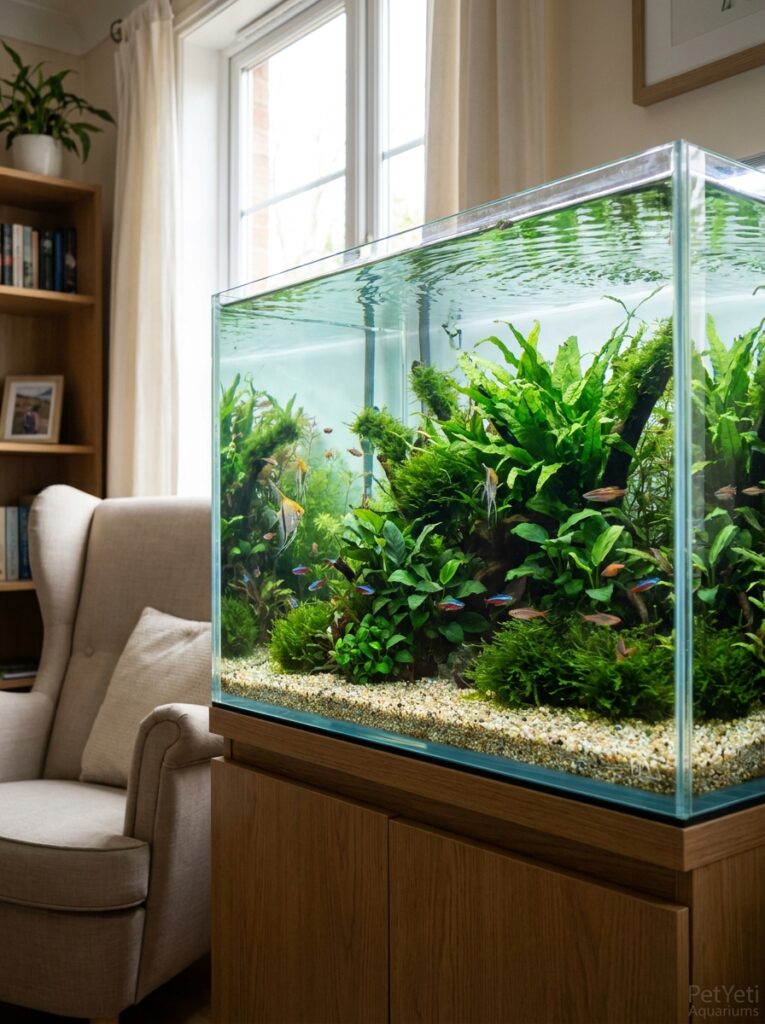
Every aquarium has a limit.
The more fish you keep, the more waste the aquarium must process.
When stocking levels become too high, waste can accumulate faster than beneficial bacteria and maintenance routines can handle.
This often leads to declining water quality and stronger odors.
A properly stocked aquarium is usually easier to maintain, cleaner to look at, and healthier for both fish and plants.
If odor is a recurring issue, reviewing your stocking level may be worthwhile.
Small Maintenance Habits Make a Big Difference
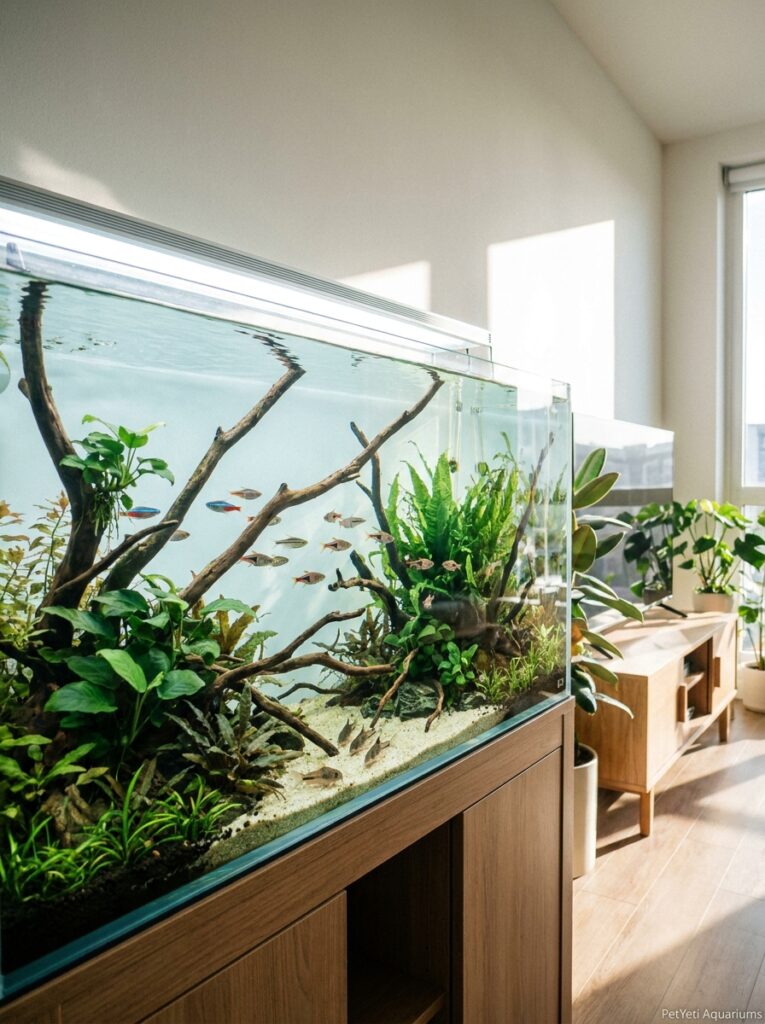
The best way to prevent aquarium odors is consistency.
Most smell problems don’t appear overnight.
They develop gradually as small maintenance tasks get delayed.
Simple habits can make a huge difference:
- Remove dead plant leaves
- Avoid overfeeding
- Perform regular water changes
- Clean excess debris during maintenance
- Check the filter periodically
A few minutes of weekly care often prevents the bigger problems that cause unpleasant odors later.
The goal isn’t perfection.
It’s consistency.
Related PetYeti Guides
Aquarium odors are usually connected to waste buildup, feeding habits, filter maintenance, or delayed cleaning routines. These related guides can help you find the source of the smell and keep the tank fresher long term.
Best Aquarium Gravel Vacuums for Beginners
Use this if debris is collecting in the substrate or behind decorations.
How to Test Aquarium Water Correctly
Use this if the smell may be connected to ammonia, nitrite, nitrate, or unstable water quality.
Best Aquarium Filters for Beginners
Use this if the filter seems weak, clogged, noisy, or unable to keep up with the tank.
How to Keep an Aquarium Looking Clean and Beautiful
Use this if you want a simple routine that keeps the tank clean without overdoing maintenance.
CONCLUSION
If your aquarium water smells bad, don’t panic.
In most cases, the odor is simply a sign that organic waste has started accumulating somewhere in the system.
The good news is that the solution is usually straightforward.
By improving feeding habits, removing decaying plant material, maintaining the filter, and staying consistent with routine care, most odor problems can be resolved without major changes.
A healthy aquarium should smell fresh and natural—not unpleasant.
When maintenance becomes part of your regular routine, both your fish and your nose will appreciate it.
FAQs
Should a healthy aquarium smell at all?
Yes, but only slightly. Most healthy aquariums have a mild natural scent that resembles a clean pond or fresh water. Strong or unpleasant odors usually indicate an underlying maintenance issue.
Why does my aquarium smell bad after a water change?
A water change can sometimes disturb debris trapped in the substrate or decorations, temporarily releasing odors. The smell usually improves as the filter clears the water.
Can overfeeding make an aquarium smell?
Absolutely. Uneaten food decomposes quickly and can contribute to unpleasant odors while also reducing overall water quality.
How often should I clean my aquarium to prevent smells?
For most beginner aquariums, a small weekly water change combined with basic maintenance is enough to prevent odor buildup and maintain healthy water quality.
Will a bad-smelling aquarium harm my fish?
The smell itself isn’t usually the problem. However, the conditions causing the odor—such as excess waste or poor water quality—can eventually affect fish health if left unaddressed.