
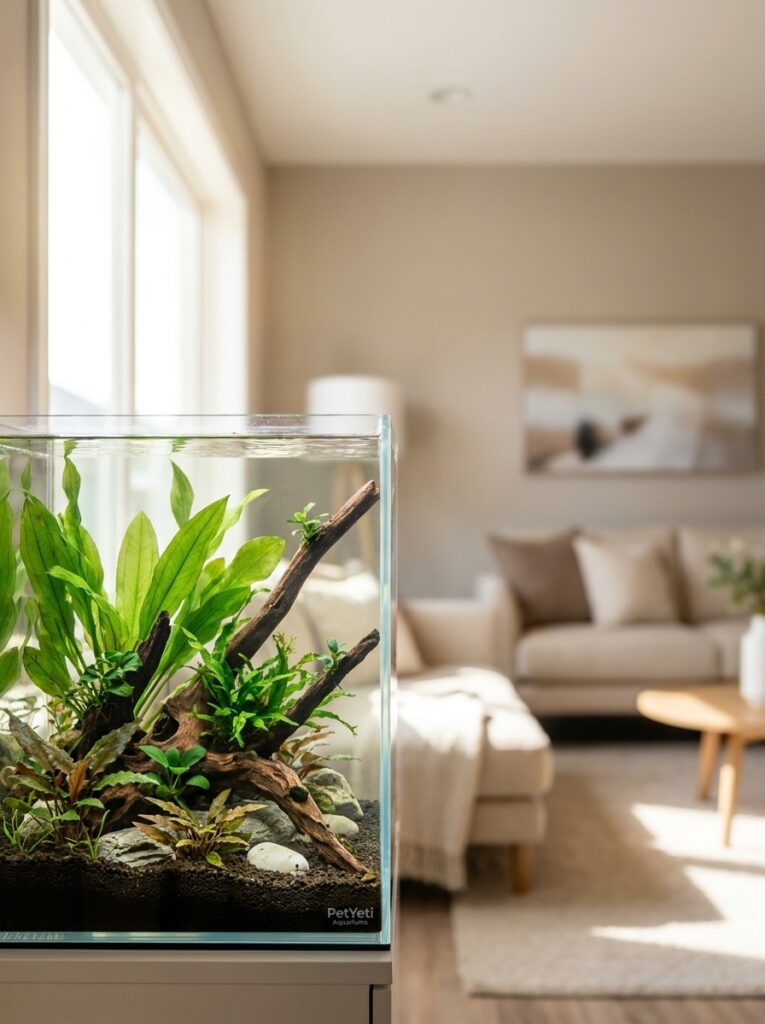
Aquarium plants not growing can feel confusing when the leaves still look green, the tank looks healthy, and your fish seem fine.
The strange part is that they often don’t look unhealthy. The leaves stay green, the tank looks fine, and your fish seem perfectly happy. Yet weeks go by and your plants barely change.
If you’ve ever looked at your aquarium and wondered why your Java Fern hasn’t produced a new leaf or why your Amazon Sword seems stuck in the same spot month after month, you’re not alone.
In many cases, aquarium plants aren’t dying at all—they’re just missing one or two things they need to grow properly.
The good news is that most growth problems are surprisingly easy to fix once you identify the cause. Let’s look at the most common reasons aquarium plants stop growing and what you can do to help them thrive.
Quick Answer
If your aquarium plants are not growing, the most common causes are weak lighting, missing nutrients, poor root support, unstable water conditions, or plants that naturally grow slowly. Start by checking light, fertilizer, substrate, and plant type before making big changes.
- Your Plants May Not Be Getting Enough Light
- The Plants Are Still Adjusting to a New Tank
- Your Plants May Need More Nutrients
- The Substrate May Not Support Root Growth
- Carbon Dioxide Could Be Limiting Growth
- Water Parameters May Be Holding Plants Back
- Overcrowding Can Slow Plant Development
- Some Aquarium Plants Naturally Grow Slowly
- CONCLUSION
- FAQs
Your Plants May Not Be Getting Enough Light
One of the biggest misconceptions in the hobby is that low-light plants don’t need much light.
They can survive in lower light conditions, but surviving and growing are two very different things.
A plant like Anubias may stay green for months in a dim aquarium while producing very little new growth. Many beginners assume everything is fine because the plant isn’t turning brown or melting.
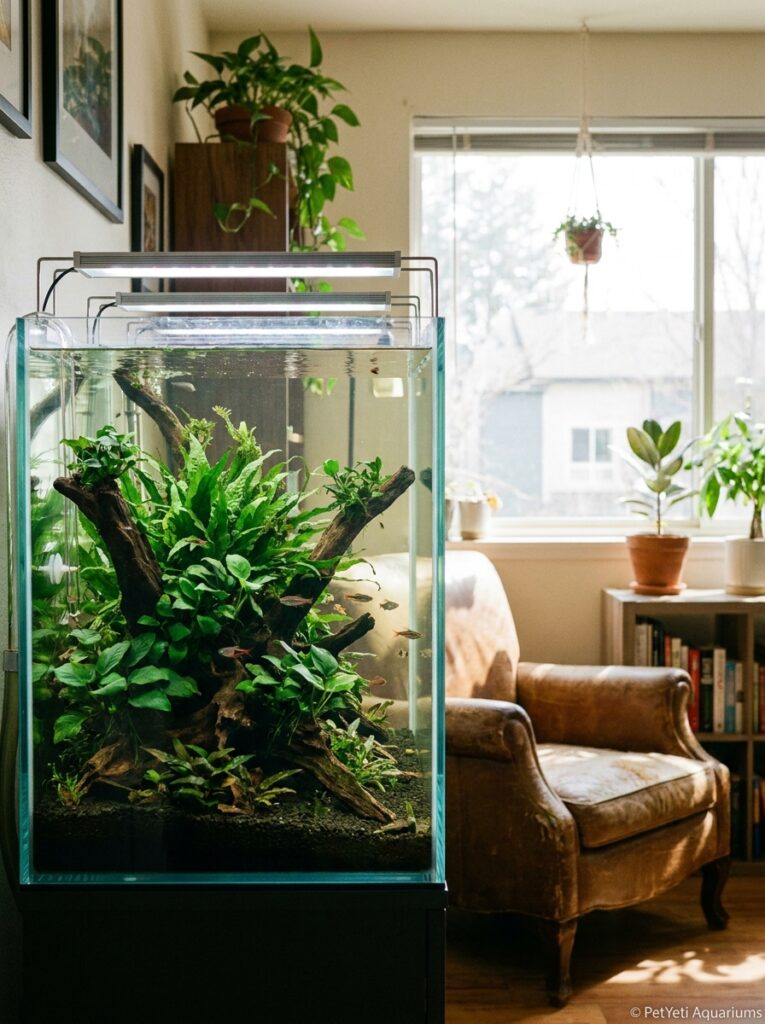
If your aquarium sits in a dark corner of a room or your light is very weak, your plants may simply lack the energy needed to grow.
A consistent lighting schedule of around six to eight hours per day is often enough for many beginner-friendly species.
The Plants Are Still Adjusting to a New Tank
Many aquarium plants go through an adjustment period after being introduced to a new aquarium.
This can be frustrating because nothing seems to happen for several weeks.
The plant is actually spending energy adapting to different water conditions, lighting, and nutrient levels before focusing on new growth.
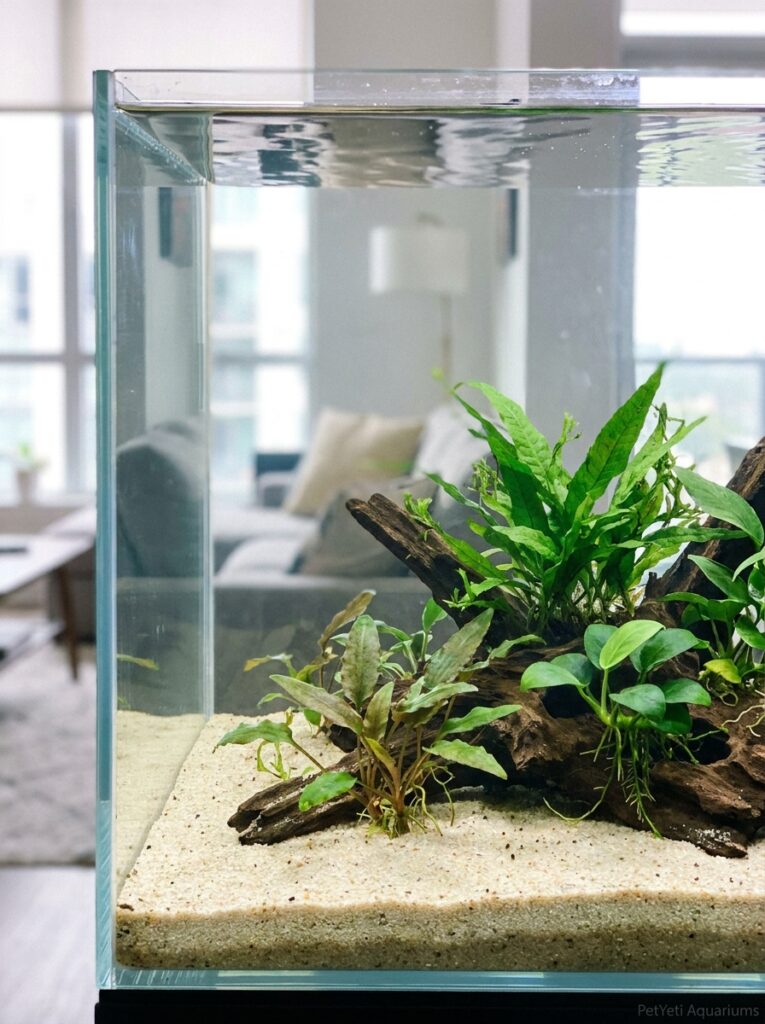
This is especially common with Cryptocoryne species, which are famous for taking their time before settling in.
If your plants were added recently, patience may be the only solution needed.
Sometimes the best thing you can do is leave them alone and allow them to adjust naturally.
Your Plants May Need More Nutrients
Plants need food just like fish do.
While fish obtain nutrients from feeding, aquarium plants rely on nutrients dissolved in the water or stored in the substrate.
A tank with very few fish or frequent large water changes may sometimes leave plants with limited access to the nutrients they need.
One clue is slow growth despite otherwise healthy-looking leaves.
Many beginner hobbyists see dramatic improvement after introducing a quality plant fertilizer or root tabs for heavy root-feeding plants.
The goal isn’t to force growth—it’s simply to provide the resources the plants have been missing.
Simple Plant Growth Checks
Before replacing your plants, check whether they are getting the right kind of nutrition. Liquid fertilizer can help water-feeding plants like Java Fern and Anubias, while root tabs are more useful for heavy root-feeders like Amazon Swords and Cryptocorynes.
Helpful PetYeti guides:
The Substrate May Not Support Root Growth
Not all aquarium plants feed the same way.
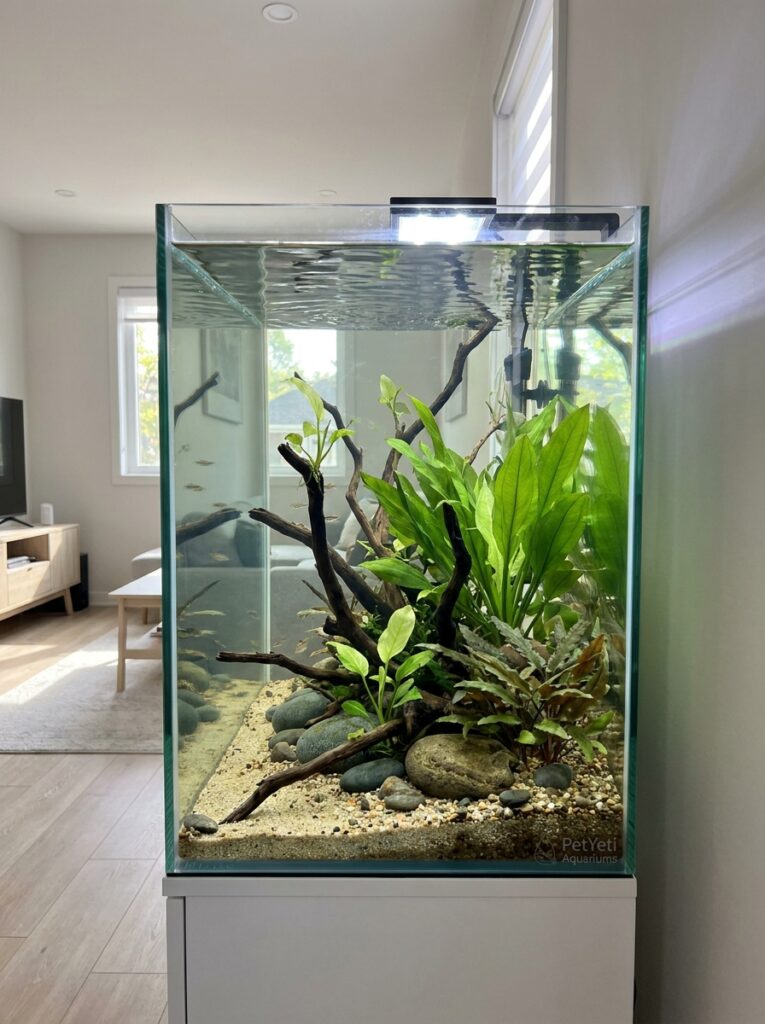
Some plants, such as Java Fern and Anubias, absorb most of their nutrients directly from the water. Others, including Amazon Swords and Cryptocorynes, rely heavily on their roots.
If root-feeding plants are growing in plain gravel with no additional nutrients available, growth can slow dramatically.
This doesn’t mean you need an expensive planted tank setup. Many beginners successfully grow root-feeding plants by occasionally adding root tabs near the base of the plant.
If your Amazon Sword looks healthy but hasn’t produced a new leaf in weeks, the substrate could be part of the problem.
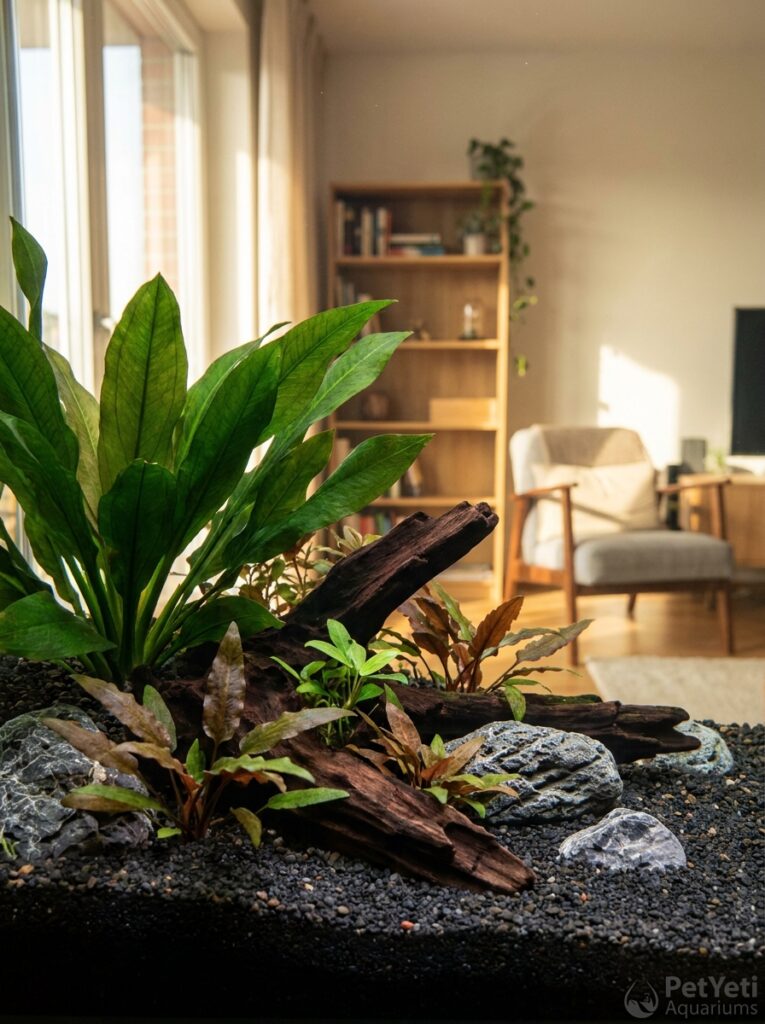
Carbon Dioxide Could Be Limiting Growth
Carbon dioxide, often called CO₂, plays a major role in plant growth.
The good news for beginners is that many popular aquarium plants can grow successfully without a dedicated CO₂ system.
However, even easy plants may grow more slowly when carbon dioxide is limited.
This becomes more noticeable when lighting is increased. Plants receive more energy from the light but may not have enough carbon dioxide available to fully use it.
For most beginner aquariums, maintaining stable conditions is more important than chasing rapid growth. Healthy, steady growth is usually the goal.
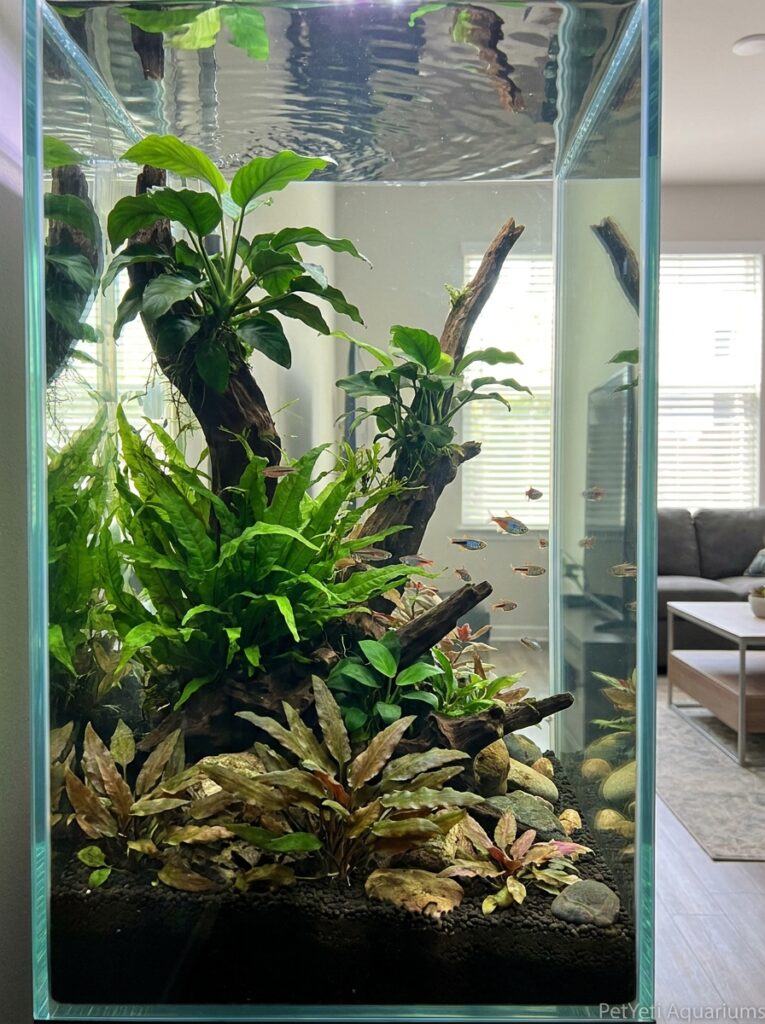
Water Parameters May Be Holding Plants Back
Aquarium plants are surprisingly adaptable, but they still have limits.
Extremely hard water, unusually soft water, unstable temperatures, or sudden swings in water chemistry can all affect growth.
This doesn’t mean you need to obsess over every number.
Many successful planted aquariums thrive because the environment stays consistent rather than perfect.
If your plants seem stuck despite good lighting and proper nutrition, it’s worth checking the basics, including temperature, pH stability, and overall water quality.
Often, small adjustments can make a noticeable difference over time.
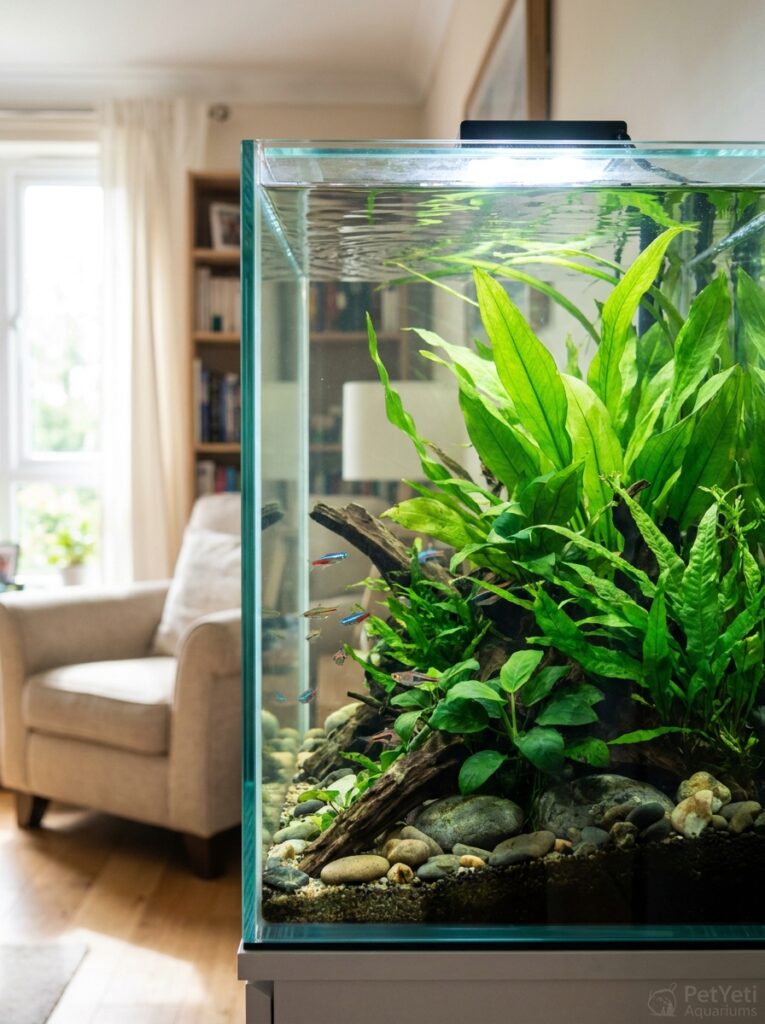
Overcrowding Can Slow Plant Development
As aquariums mature, plants often begin competing with each other for space, light, and nutrients.
A tank that once looked open and spacious may eventually become densely planted.
While this can create a beautiful natural appearance, it may also reduce growth in certain areas.
Foreground plants can become shaded by larger species. Slow-growing plants may struggle when surrounded by faster growers.
Occasional trimming and thoughtful plant placement help maintain balance and allow light to reach more areas of the aquarium.
Healthy growth often comes from creating space, not adding more plants.
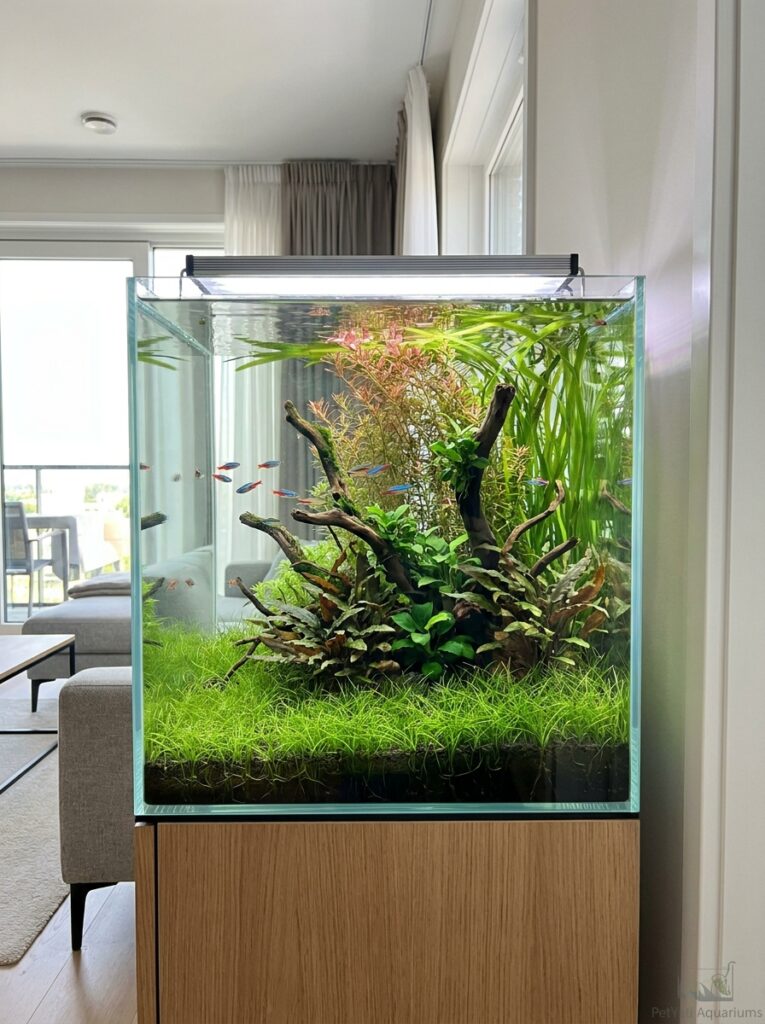
Some Aquarium Plants Naturally Grow Slowly
Sometimes there isn’t a problem at all.
Certain beginner-friendly plants are simply slow growers.
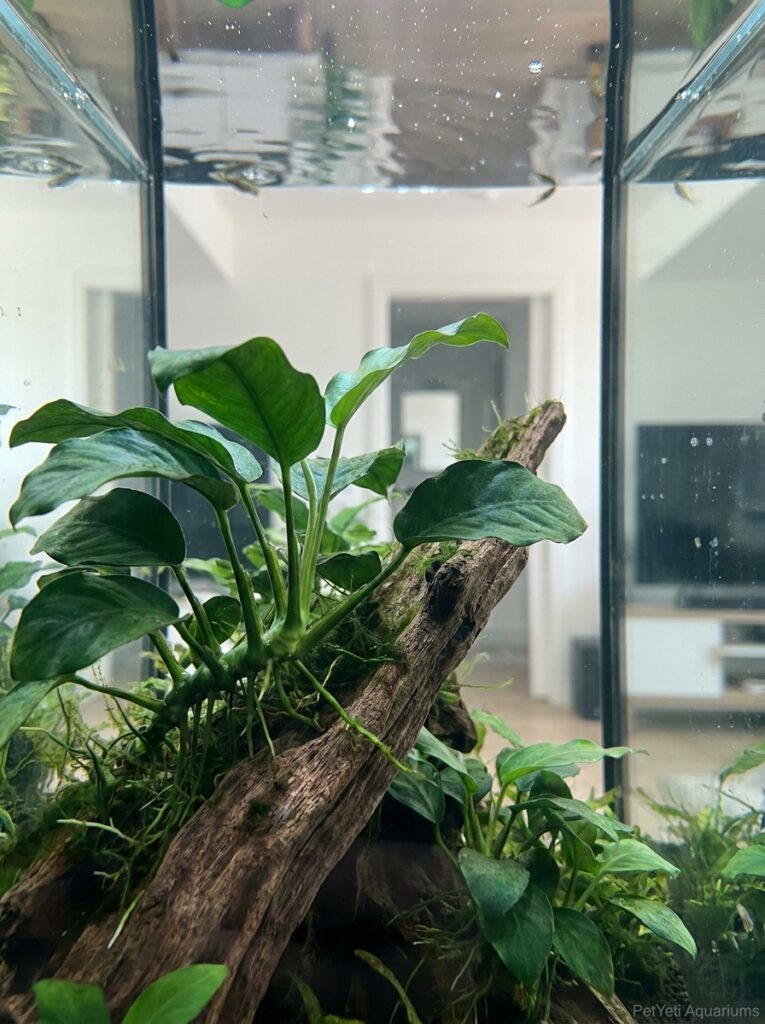
Anubias is a perfect example. It can remain healthy for months while producing only a few new leaves.
Many new hobbyists expect aquarium plants to grow as quickly as houseplants, but aquatic plants often follow a different timeline.
If your plant looks healthy, maintains good color, and isn’t losing leaves, slow growth may be completely normal.
Patience is one of the most valuable skills in fishkeeping, and planted aquariums are no exception.
Related PetYeti Guides
Slow plant growth usually connects to lighting, nutrients, plant choice, or water stability. These guides can help you fix the problem without overcomplicating your planted tank:
CONCLUSION
When aquarium plants aren’t growing, the cause is often simpler than many beginners expect.
A little more light, improved nutrition, better plant placement, or simply giving the plants time to adjust can make a huge difference.
The key is to focus on overall plant health rather than growth speed alone.
Healthy plants don’t always grow quickly, but they should show gradual progress over time.
With consistent care and realistic expectations, even beginner-friendly plants like Anubias, Java Fern, Cryptocoryne, and Amazon Sword can become beautiful long-term features in your aquarium.
FAQs
Why are my aquarium plants alive but not growing?
If your plants look healthy but aren’t producing new leaves, they may need more light, nutrients, or time to adjust to the aquarium. Some species also grow much more slowly than others.
How long does it take aquarium plants to start growing?
Many aquarium plants need a few weeks to adapt to a new tank before noticeable growth begins. Some species may take a month or longer to fully establish themselves.
Do aquarium plants need fertilizer to grow?
Many aquarium plants benefit from fertilizer, especially in tanks with few fish. Root-feeding plants like Amazon Swords often respond well to root tabs.
Can low light stop aquarium plants from growing?
Yes. Even low-light plants need enough energy to grow. While they may survive in dim conditions, growth often slows significantly when lighting is insufficient.
Why are my aquarium plants growing roots but not new leaves?
Plants sometimes focus on establishing their root system before producing new foliage. This is common in newly planted aquariums and usually improves with time.