
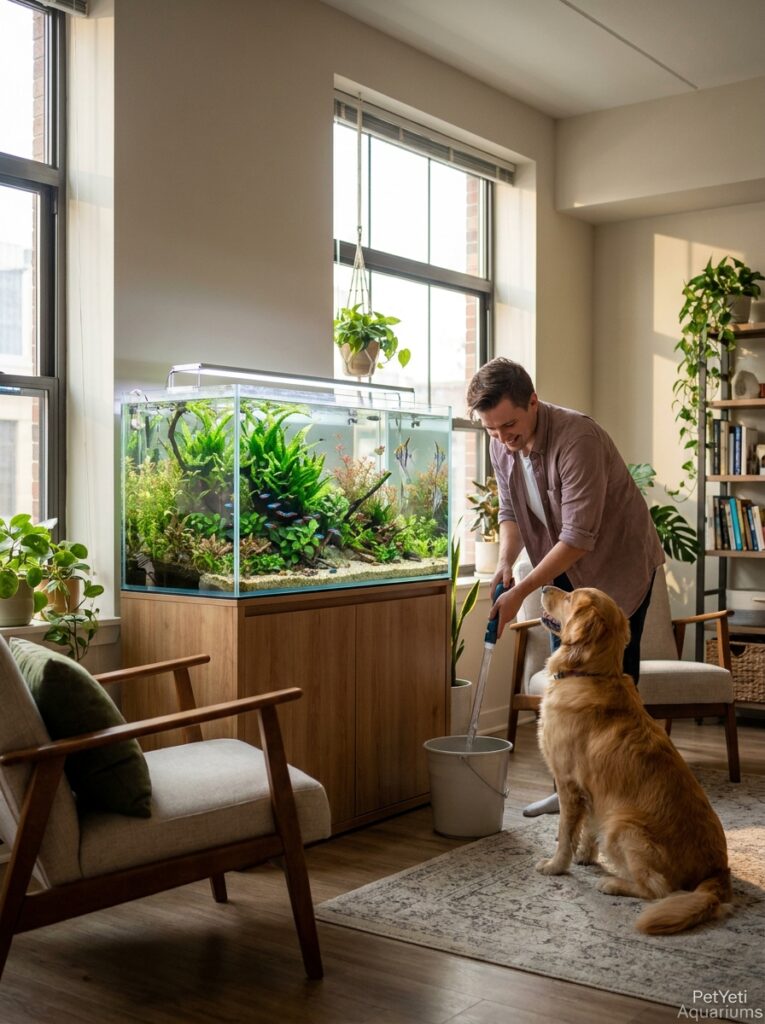
Best aquarium gravel vacuums help beginners remove fish waste, leftover food, and debris during water changes without making tank cleaning stressful.
Cleaning an aquarium sounds simple.
Then you perform your first water change and suddenly find yourself wondering:
How do I remove waste from the gravel without disturbing the entire aquarium?
That’s where a gravel vacuum becomes incredibly useful.
For many beginners, a gravel vacuum is one of the most valuable maintenance tools they’ll ever own.
It helps remove debris, leftover food, and fish waste while making water changes more effective and less stressful.
In this guide, we’ll explain how gravel vacuums work, what features matter most, and how to choose the right option for your aquarium.
Quick Answer
The best aquarium gravel vacuum for most beginners is a simple manual siphon gravel vacuum. It removes waste from the substrate while also helping with routine water changes. Electric gravel cleaners and no-spill systems can be helpful for larger tanks, but most small beginner aquariums do well with a basic manual gravel vacuum.
WHAT TO CHECK FIRST
Before choosing an aquarium gravel vacuum, check these basics:
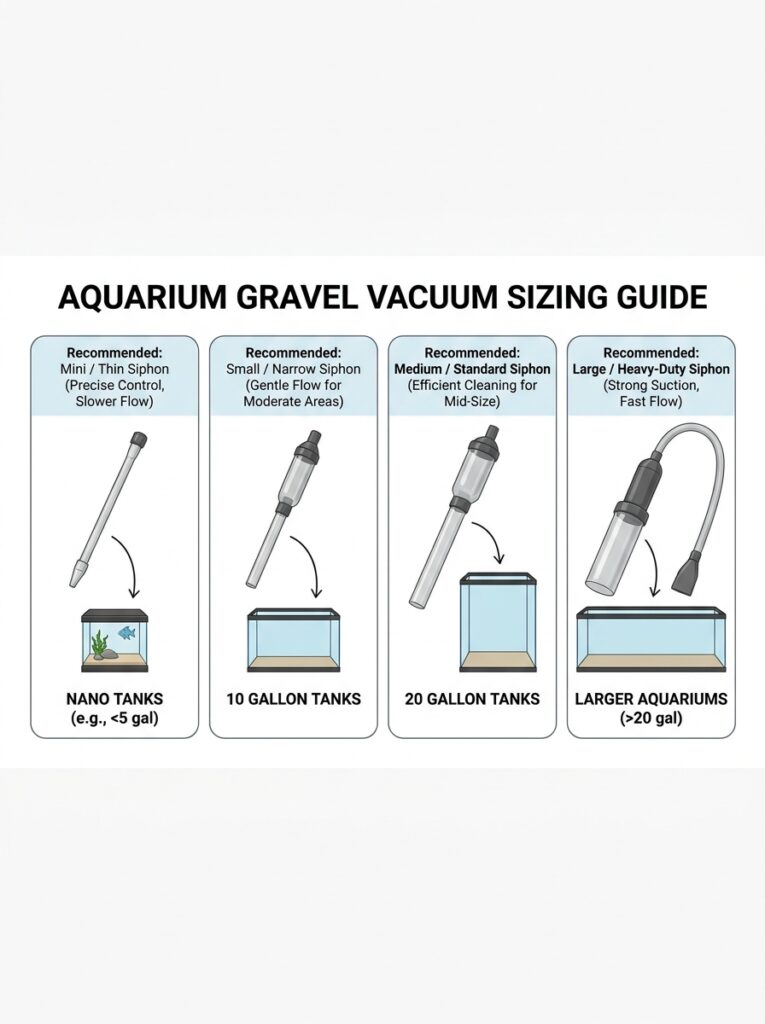
- Tank size — small tanks need a smaller tube and gentler flow.
- Substrate type — sand needs a lighter touch than gravel.
- Water-change style — bucket changes and sink-connected systems feel very different.
- Storage space — large systems take more room to store.
- Ease of starting — beginners often prefer simple or self-starting siphons.
As an Amazon Associate, PetYeti earns from qualifying purchases. This comes at no additional cost to you and helps support the site. We only recommend products we genuinely believe can help create healthier and more enjoyable aquariums.
What Is an Aquarium Gravel Vacuum?
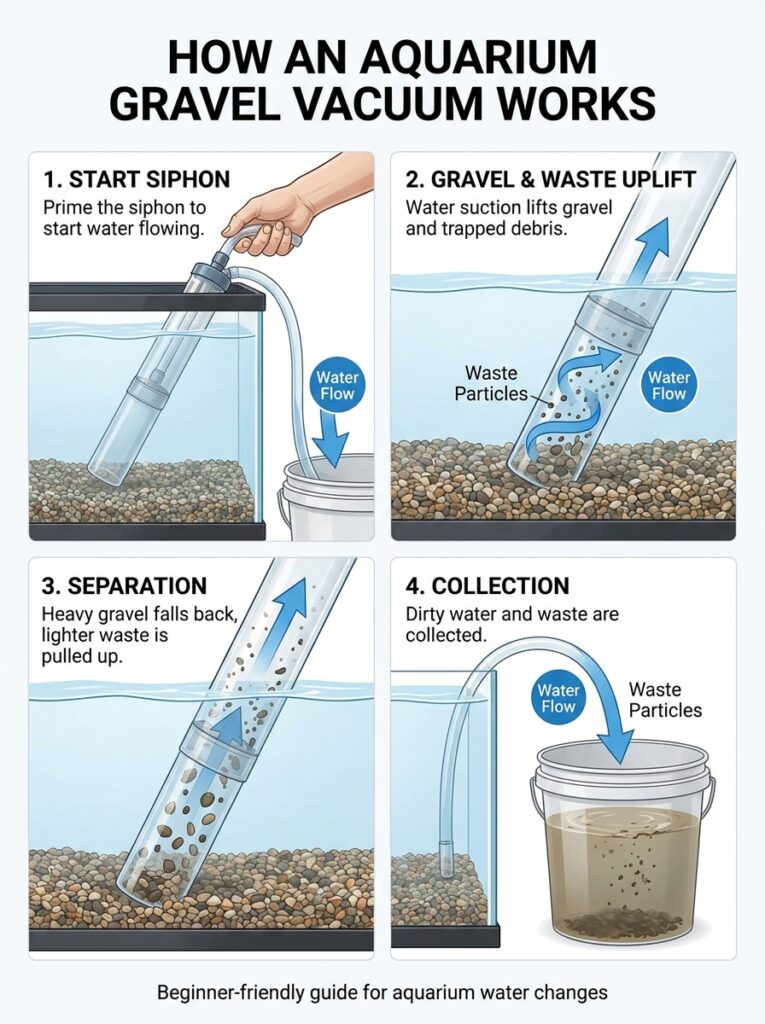
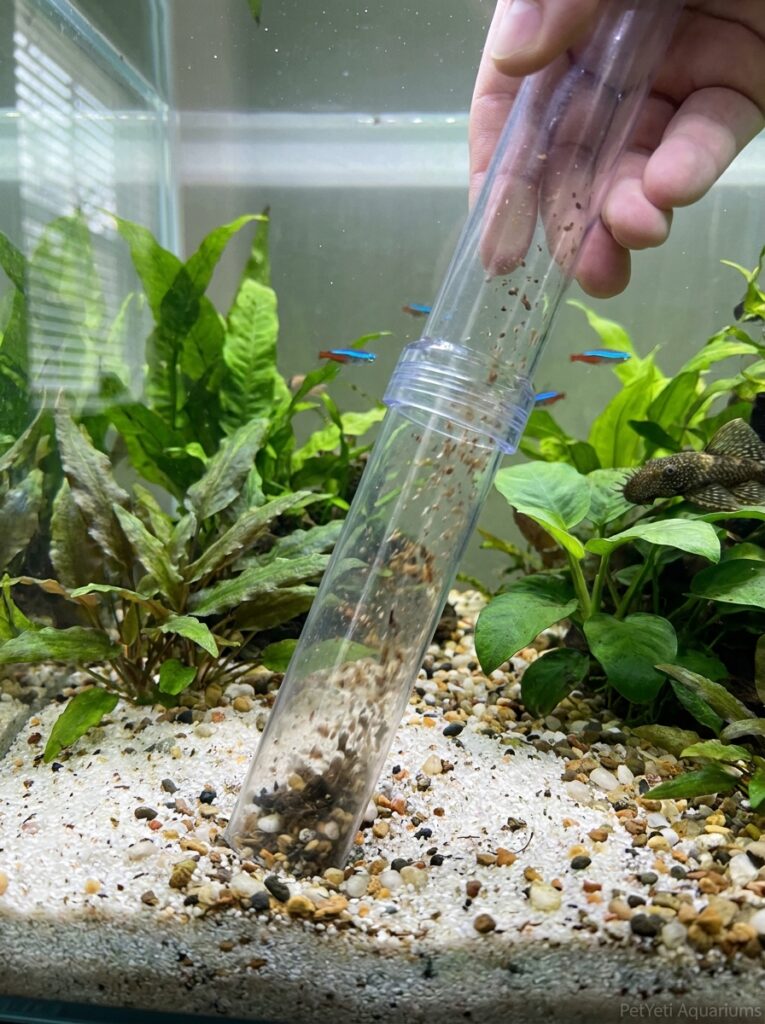
A gravel vacuum is a simple cleaning tool that uses siphon action to remove water and debris from the aquarium.
As water flows through the tube:
- Fish waste is removed
- Leftover food is removed
- Organic debris is removed
- Water changes become easier
The goal isn’t making the substrate spotless.
The goal is preventing waste from accumulating over time.
Why Gravel Vacuuming Matters
Many aquarium problems begin in places we rarely see.
Over time, debris settles into the substrate.
Without regular maintenance, this buildup can contribute to:
- Poor water quality
- Excess nutrients
- Increased algae growth
- Unpleasant odors
A gravel vacuum helps remove waste before it creates larger problems.
Different Types of Aquarium Gravel Vacuums
Not all gravel vacuums are the same.
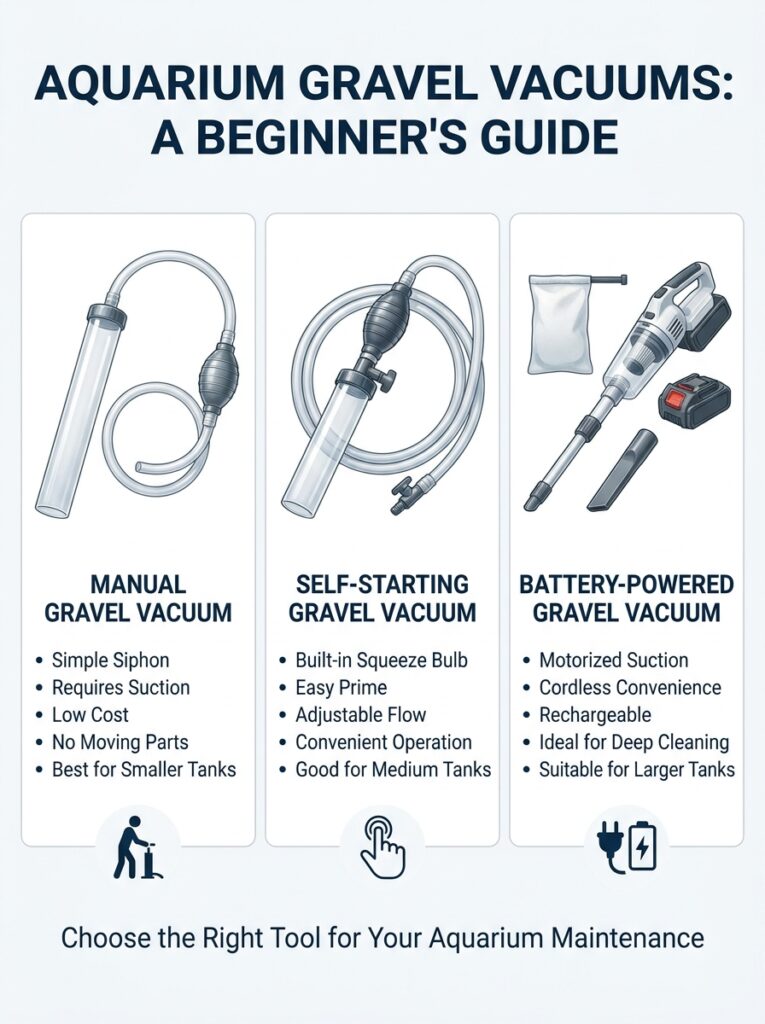
Manual Gravel Vacuums
The most common option.
Simple, affordable, and reliable.
Self-Starting Gravel Vacuums
Designed to simplify siphon startup.
Often appreciated by beginners.
Battery-Powered Gravel Vacuums
Provide additional convenience but generally cost more.
Convenience Option: Electric Gravel Cleaner
Recommended Option: Hygger Electric Gravel Cleaner
Best For:
✓ Larger aquariums
✓ Frequent maintenance
✓ Hobbyists who want easier cleaning
Why We Like It:
✓ Faster cleaning
✓ Reduced manual siphoning
✓ Convenient operation
PetYeti Take:
Battery-powered models aren’t necessary for most beginners, but they can make maintenance feel easier in larger setups.
Who Should Skip It:
Skip this if you have a small beginner tank and only need a simple tool for routine water changes.
For most beginners, a simple manual gravel vacuum works perfectly well.
⭐ PetYeti Pick: Beginner Gravel Vacuum
Recommended Option: Laifoo Manual Gravel Vacuum
Best For:
✓ Beginner aquariums
✓ 5–20 gallon tanks
✓ Routine water changes
✓ Budget-friendly maintenance
Why We Like It:
✓ Simple design
✓ Easy to use
✓ No batteries required
✓ Affordable and reliable
PetYeti Take:
For most beginners, a basic manual gravel vacuum is often all that’s needed to keep an aquarium clean and healthy.
Who Should Skip It:
Skip this if you have a large aquarium and want to avoid carrying buckets during water changes.
How to Choose the Right Gravel Vacuum
Several factors influence which model will work best.
Aquarium Size
Larger tanks benefit from longer hoses and larger cleaning tubes.
Best for Larger Tanks: Python No Spill System
Recommended Option: Python No Spill Clean & Fill System
Best For:
✓ Larger aquariums
✓ Frequent water changes
✓ Long-term hobbyists
Why We Like It:
✓ Simplifies water changes
✓ Reduces bucket carrying
✓ Saves time on maintenance
PetYeti Take:
For larger aquariums, reducing maintenance effort often helps hobbyists stay more consistent over time.
Who Should Skip It:
Skip this if you only have a small tank or do not have an easy sink connection nearby.
Substrate Type
Fine sand and coarse gravel may require different techniques.
Ease of Use
Beginner-friendly designs reduce frustration during maintenance.
Storage Space
Some systems are larger than others.
The best gravel vacuum is often the one that makes maintenance feel easy enough to do consistently.
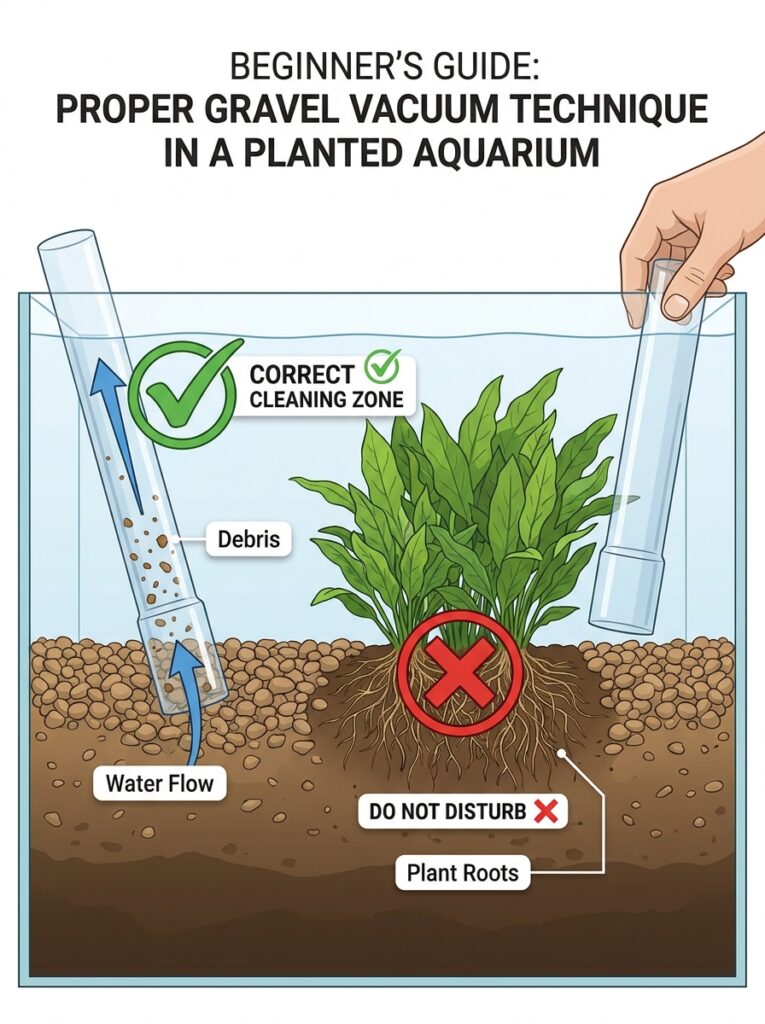
Gravel Vacuums and Planted Aquariums
Many beginners worry about damaging plants during cleaning.
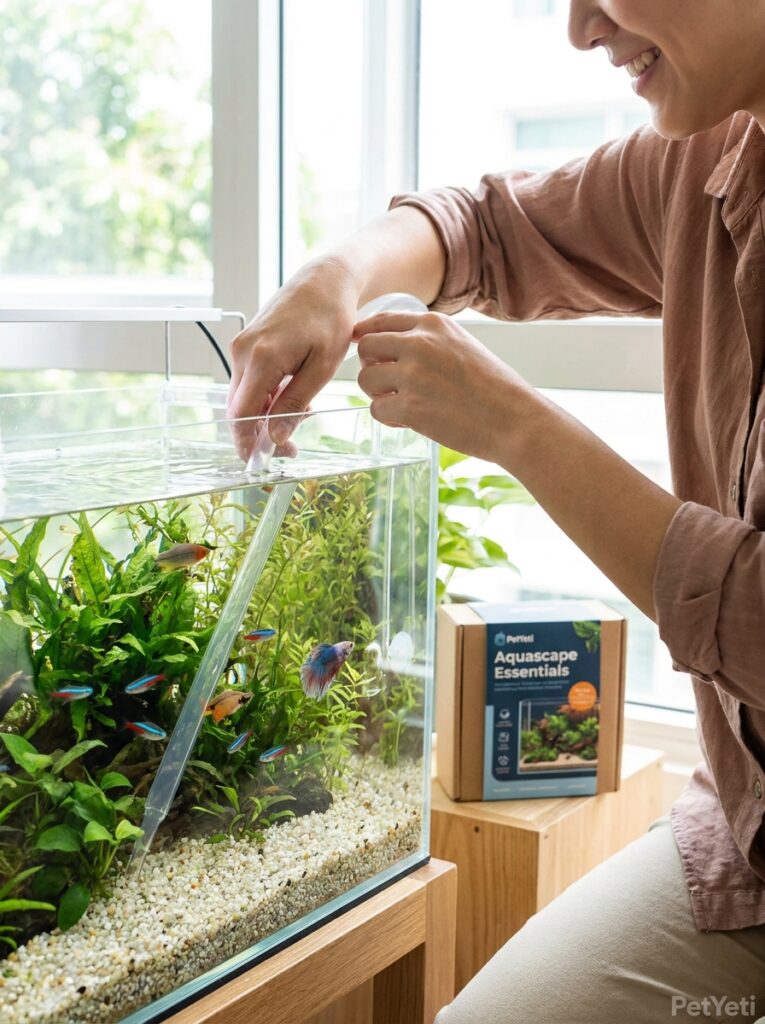
Fortunately, gravel vacuums can be used safely in planted aquariums.
The key is cleaning gently.
Focus on:
- Open substrate areas
- Visible debris
- Surface waste
Avoid aggressively disturbing plant roots.
A light touch usually works best.
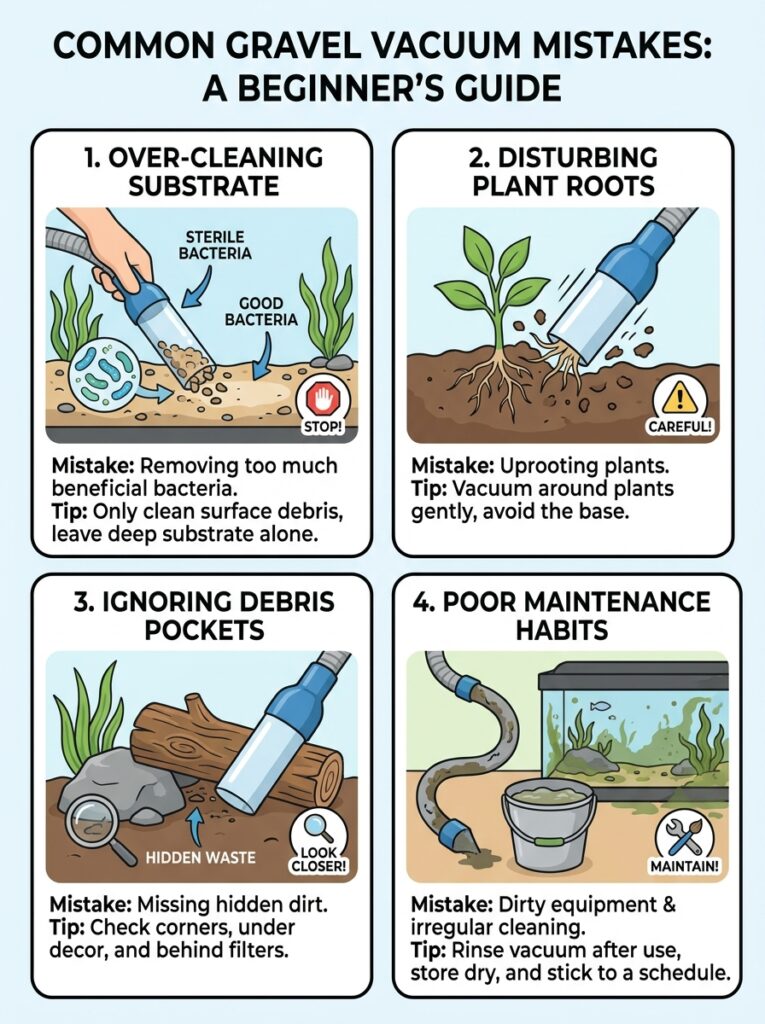
Common Gravel Vacuum Mistakes
Cleaning Too Aggressively
The goal is maintenance, not deep excavation.
Ignoring Certain Areas Forever
Waste often accumulates in low-flow zones.
Vacuuming Every Inch at Once
Many hobbyists rotate cleaning areas over multiple maintenance sessions.
Forgetting Water Changes
Gravel vacuuming and water changes work best together.
Which Gravel Vacuum Would We Choose?
For most beginners, we’d choose a simple manual gravel vacuum.
Why?
Because it’s:
- Affordable
- Reliable
- Easy to maintain
- Effective for most aquariums
Fancy equipment can be helpful, but consistency matters far more than complexity.
A basic gravel vacuum used regularly often outperforms expensive equipment that rarely gets used.
Related PetYeti Guides
A gravel vacuum works best when it fits your cleaning routine, tank size, and substrate. These guides can help you build an easier maintenance routine without overcleaning the aquarium:
CONCLUSION
A gravel vacuum may not be the most exciting aquarium purchase, but it can have a significant impact on long-term aquarium health.
By removing waste during routine water changes, gravel vacuums help support cleaner water, healthier fish, and a more enjoyable aquarium experience.
For beginners, it’s one of the simplest tools for building good maintenance habits.
And in fishkeeping, consistency is often the difference between frustration and success.
FAQs
Do beginners need a gravel vacuum?
For most aquariums, yes. Gravel vacuums make water changes easier and help remove accumulated waste.
Can I use a gravel vacuum in a planted tank?
Yes. Gentle cleaning around plants is usually safe and effective.
How often should I vacuum aquarium gravel?
Many aquariums benefit from light gravel vacuuming during routine water changes.
Can a gravel vacuum remove beneficial bacteria?
Most beneficial bacteria live throughout the aquarium, including filters and surfaces. Routine vacuuming is generally considered safe.
Are battery-powered gravel vacuums worth it?
They can be convenient, but many beginners are perfectly satisfied with manual models.