
Have you ever finished cleaning your aquarium, stepped back to admire it, and thought:
“Finally. It looks great again.”
Then a few days later, the glass looks dusty, debris is collecting on the substrate, and the tank somehow feels messy all over again.
If that sounds familiar, you’re definitely not alone.
Many aquarium owners assume they’re doing something wrong when their tank seems to get dirty unusually fast.
In reality, a dirty aquarium is often a symptom of an underlying issue rather than a cleaning problem.
The good news?
Most of the common causes are surprisingly easy to identify and fix.
In this guide, we’ll look at why aquariums become dirty so quickly, what may be contributing to the problem, and how to create a cleaner, healthier aquarium that stays attractive for longer.
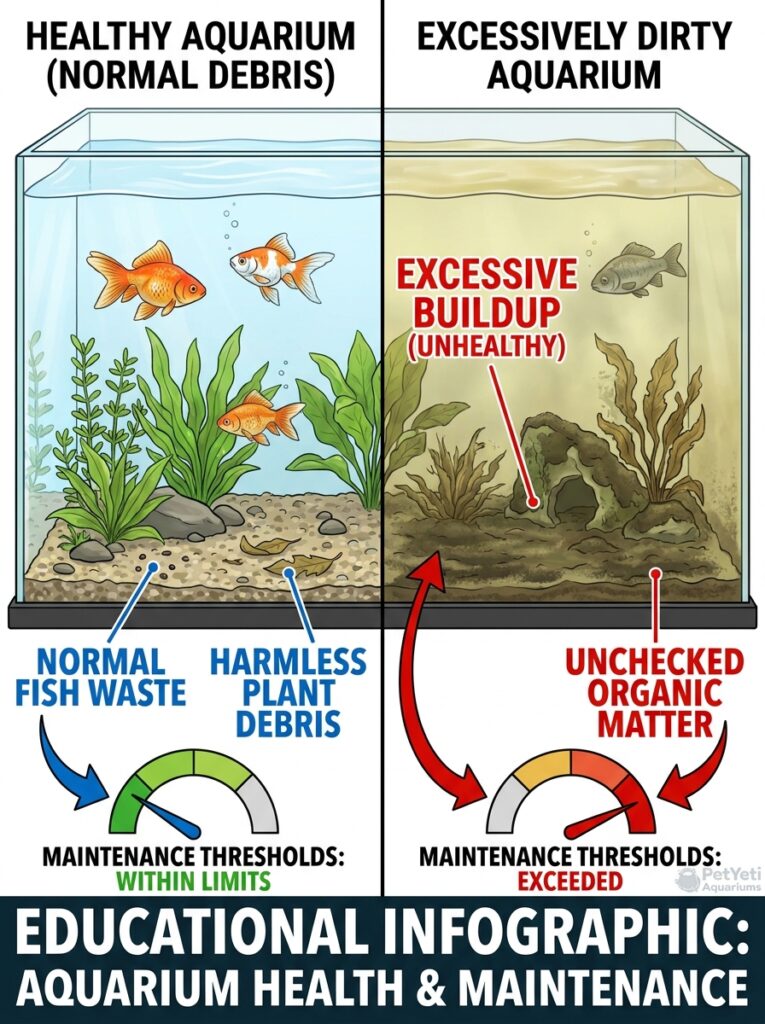
A Certain Amount of Aquarium Mess Is Completely Normal
Before troubleshooting, it’s important to understand something many beginners don’t realize:
No aquarium stays perfectly spotless forever.
Fish produce waste.
Plants shed leaves.
Tiny particles naturally collect throughout the tank.
Even the healthiest aquariums develop some debris between maintenance sessions.
The goal isn’t perfection.
The goal is keeping the aquarium clean enough that waste doesn’t build up faster than the system can handle.
Real-Life Example
A beginner hobbyist spent weeks trying to keep every grain of debris out of their aquarium. Eventually they realized that a few bits of plant matter and occasional waste were normal parts of a healthy ecosystem. Once they adjusted their expectations, aquarium maintenance became much less stressful.
What to Expect
Some debris is normal.
Rapid buildup that returns shortly after cleaning is what we’re trying to solve.
Overfeeding Is the Most Common Cause
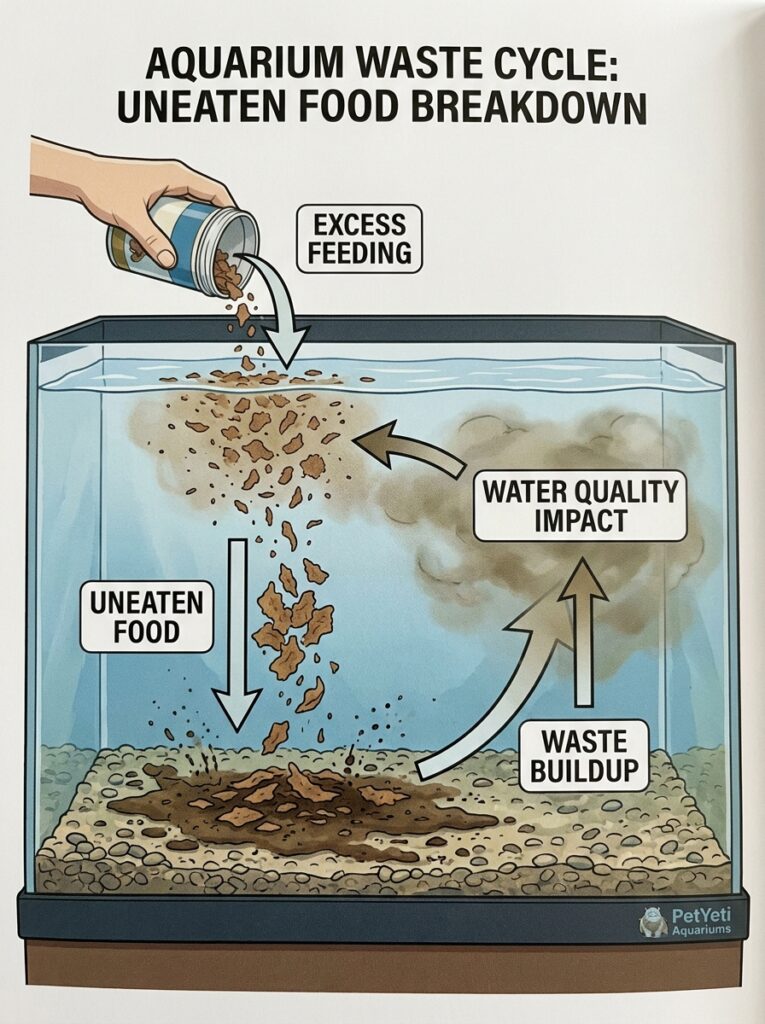
If there were one cause responsible for more dirty aquariums than any other, overfeeding would probably be at the top of the list.
Extra food doesn’t simply disappear.
It eventually becomes:
• Fish waste
• Decaying food particles
• Excess nutrients
• Increased debris
Even healthy fish can contribute to excessive waste if they’re consistently fed more than they need.
Real-Life Example
One aquarium owner felt guilty feeding small portions and gradually increased feeding amounts over time. The fish loved it, but so did the algae. Within a few weeks, debris buildup and maintenance demands increased noticeably. Returning to more appropriate feeding levels helped restore balance.
How to Fix It
• Feed smaller portions
• Observe how much food is actually eaten
• Remove uneaten food when possible
• Avoid frequent “treat feeding”
What to Expect
Many aquariums become noticeably cleaner within a couple of weeks after feeding habits improve.
Too Many Fish Create More Waste
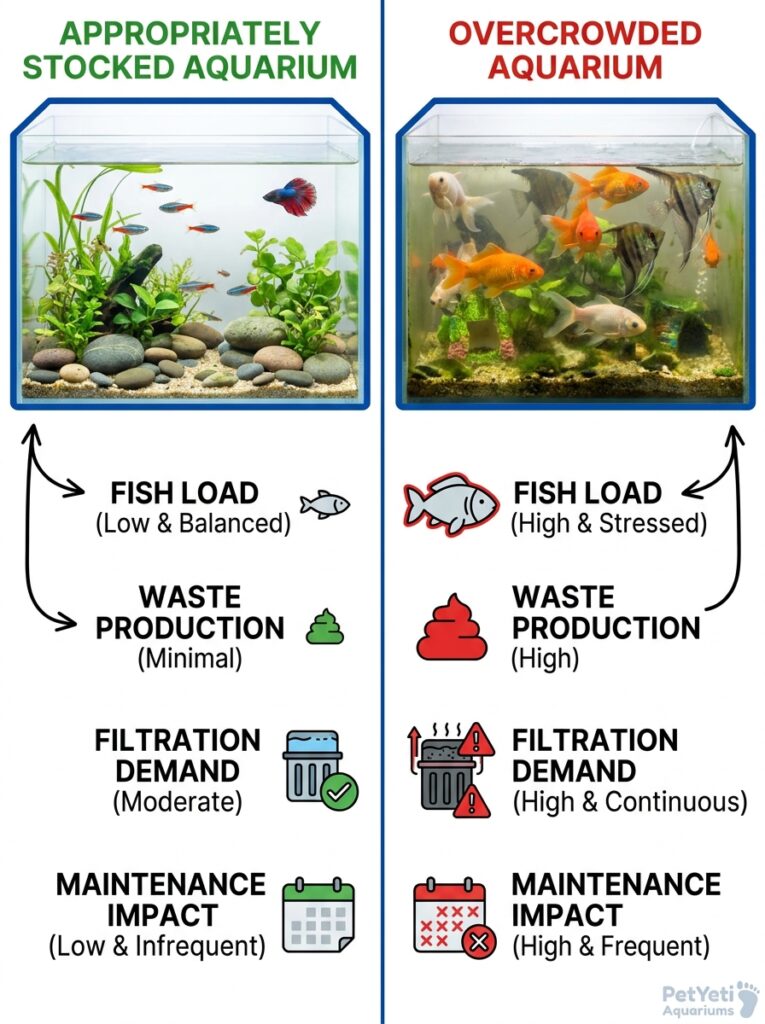
A larger fish population naturally creates more waste.
This doesn’t mean heavily stocked aquariums are impossible to maintain.
However, they typically require:
• More filtration
• More maintenance
• More water changes
• More careful feeding
If your aquarium always seems dirty despite regular cleaning, stocking levels are worth evaluating honestly.
Many beginner aquariums slowly become crowded over time as additional fish are added without realizing how much extra waste each fish contributes.
What to Expect
Reducing stocking pressure isn’t always necessary, but understanding the relationship between fish load and waste production can make maintenance expectations much more realistic.
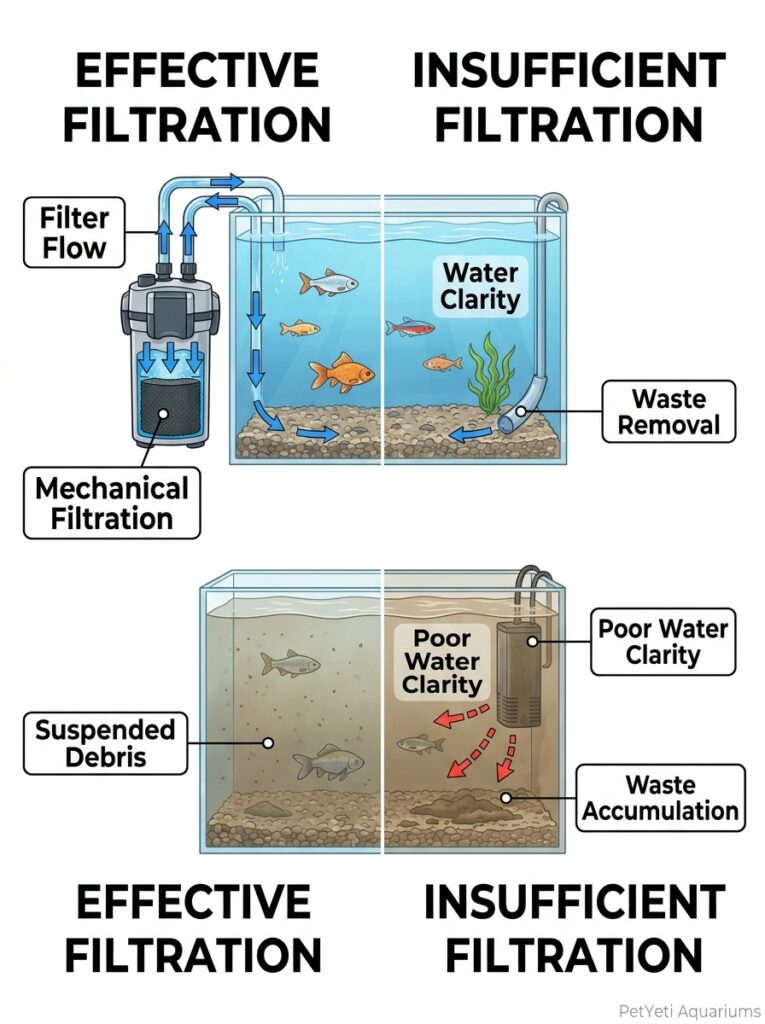
Inadequate Filtration Can Allow Debris to Build Up
Even if you’re feeding responsibly and maintaining the tank regularly, poor filtration can make an aquarium seem dirty much faster than it should.
A filter helps remove suspended particles before they settle throughout the aquarium.
When filtration is inadequate, debris often remains in the water column longer and eventually settles on:
• The substrate
• Decorations
• Plant leaves
• Aquarium glass
This doesn’t necessarily mean your filter is broken.
Sometimes the filter simply isn’t the best match for the aquarium’s size or bioload.
Real-Life Example
A hobbyist upgraded from a few small fish to a heavily planted community aquarium but kept the same filter. Over time, they noticed debris collecting everywhere despite regular cleaning. After improving filtration and maintenance, the tank stayed noticeably cleaner between water changes.
How to Fix It
• Ensure the filter is appropriate for the aquarium size
• Clean filter media when needed
• Verify water flow remains consistent
• Avoid allowing debris to accumulate inside the filter itself
What to Expect
A properly functioning filter won’t eliminate all cleaning, but it can significantly reduce how quickly visible debris returns.
The Substrate May Be Trapping More Waste Than You Realize
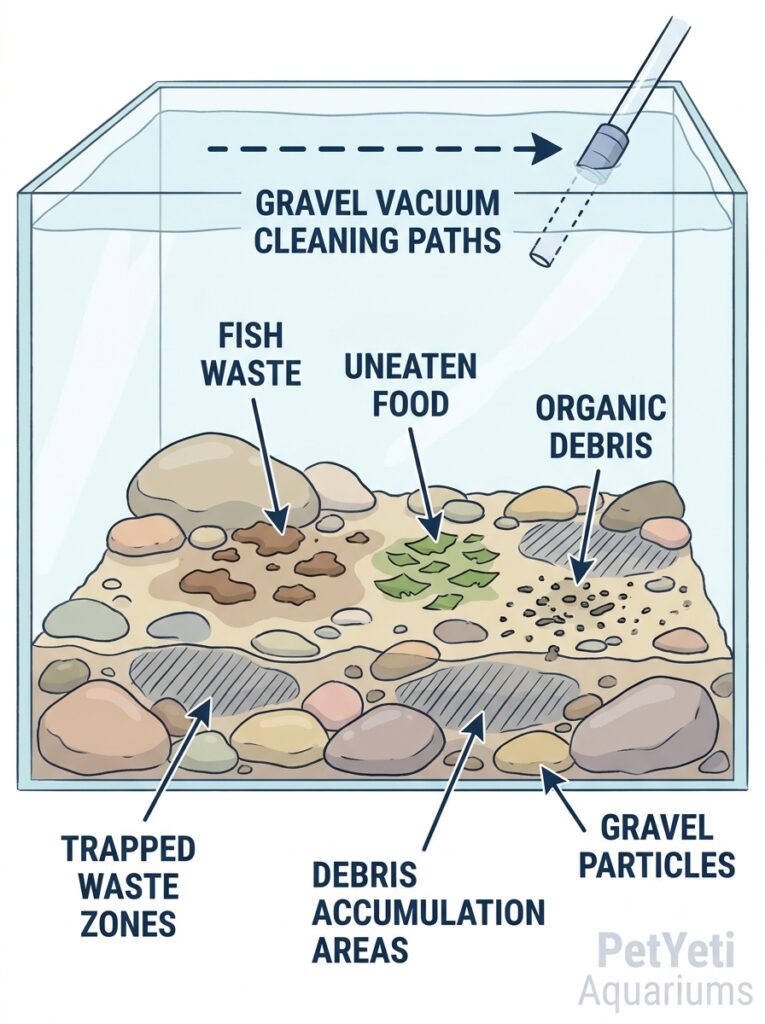
Many aquarium owners focus on what they can see.
The bigger issue is often what they can’t.
Waste frequently settles deep into gravel or substrate where it becomes less noticeable until it accumulates over time.
Eventually this hidden buildup contributes to:
• Dirty-looking substrate
• Increased algae growth
• Recurring debris problems
Real-Life Example
One aquarium owner cleaned the glass every week but rarely vacuumed the gravel. The aquarium looked fine from a distance, but large amounts of trapped waste had accumulated beneath the surface. After adding regular gravel vacuuming to their routine, the tank stayed cleaner much longer.
How to Fix It
• Vacuum the substrate during water changes
• Pay attention to low-flow areas
• Remove visible debris before it settles deeply
• Maintain a consistent cleaning schedule
What to Expect
Cleaning trapped waste often creates one of the biggest improvements in overall aquarium cleanliness.
Decaying Plant Material Can Make a Tank Look Dirtier
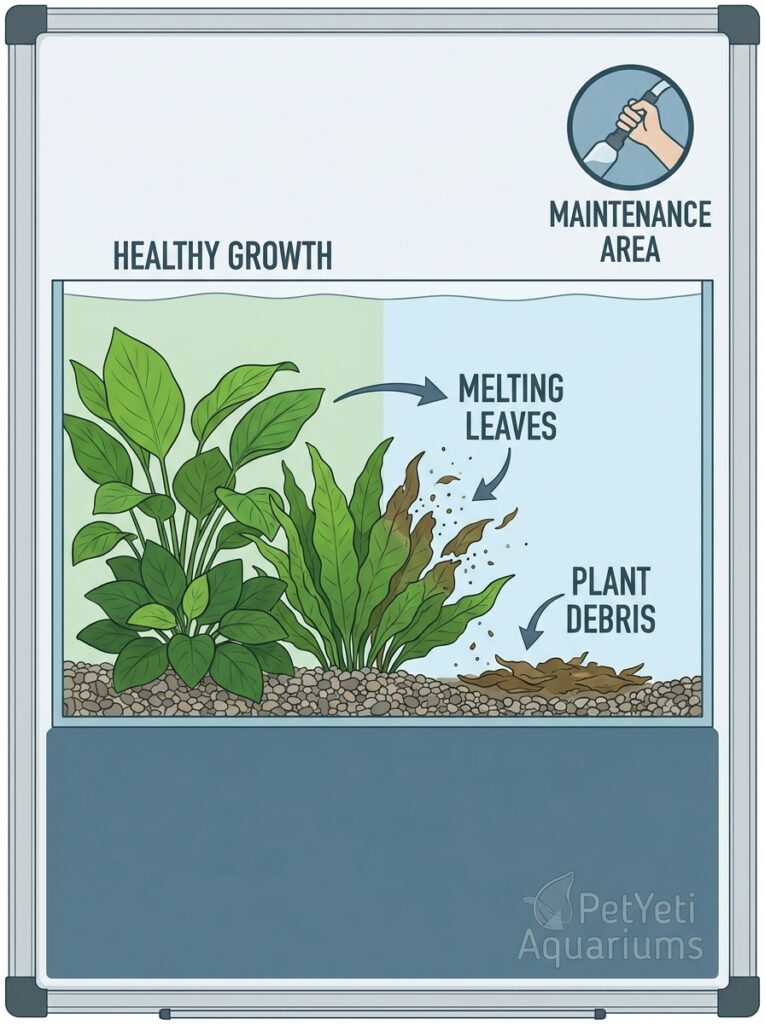
Live plants can make an aquarium look beautiful, but they also require occasional maintenance.
As leaves age, become damaged, or adapt to new conditions, some plant material naturally dies off.
If left in the aquarium, those leaves eventually break down and contribute to debris accumulation.
This is especially common after:
• Adding new plants
• Major aquascaping changes
• Lighting adjustments
• Fertilizer changes
Real-Life Example
A planted aquarium owner couldn’t understand why debris kept appearing despite regular maintenance. The culprit turned out to be several older plant leaves slowly breaking down behind decorations where they weren’t easily visible.
How to Fix It
• Remove dying leaves promptly
• Trim damaged growth
• Inspect dense plant areas regularly
• Avoid letting plant debris accumulate
What to Expect
Healthy plant maintenance often reduces debris and helps the aquarium appear cleaner overall.
Inconsistent Maintenance Creates a Cycle of Buildup
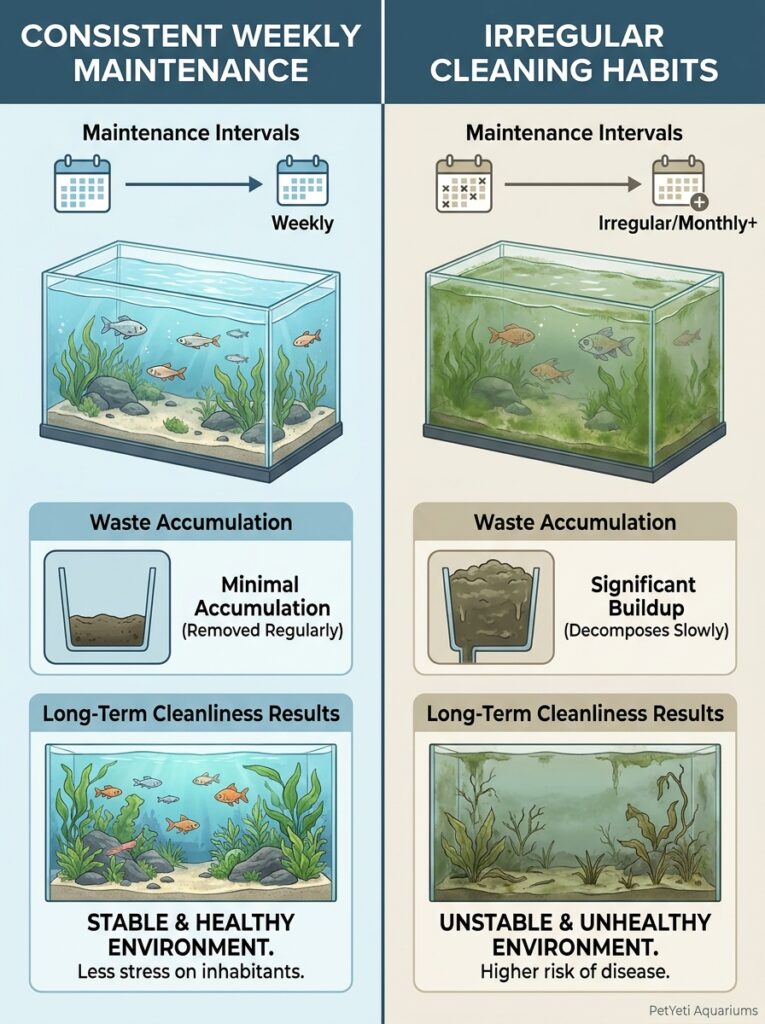
Many aquarium owners unintentionally fall into a maintenance cycle that makes cleaning more difficult.
The pattern often looks like this:
• Wait until the aquarium looks dirty
• Perform a large cleaning session
• Ignore maintenance for several weeks
• Repeat
The problem is that waste continues accumulating during those gaps.
Smaller, consistent maintenance sessions are usually much more effective than occasional deep cleanings.
Real-Life Example
A busy professional found aquarium maintenance overwhelming because every cleaning session felt like a major project. Switching to shorter weekly maintenance sessions made the tank easier to manage and helped prevent large waste buildups.
How to Fix It
• Establish a realistic maintenance schedule
• Focus on consistency rather than perfection
• Break larger tasks into smaller routines
• Address issues before they become major problems
What to Expect
Consistency often reduces both the workload and the appearance of dirt over time.
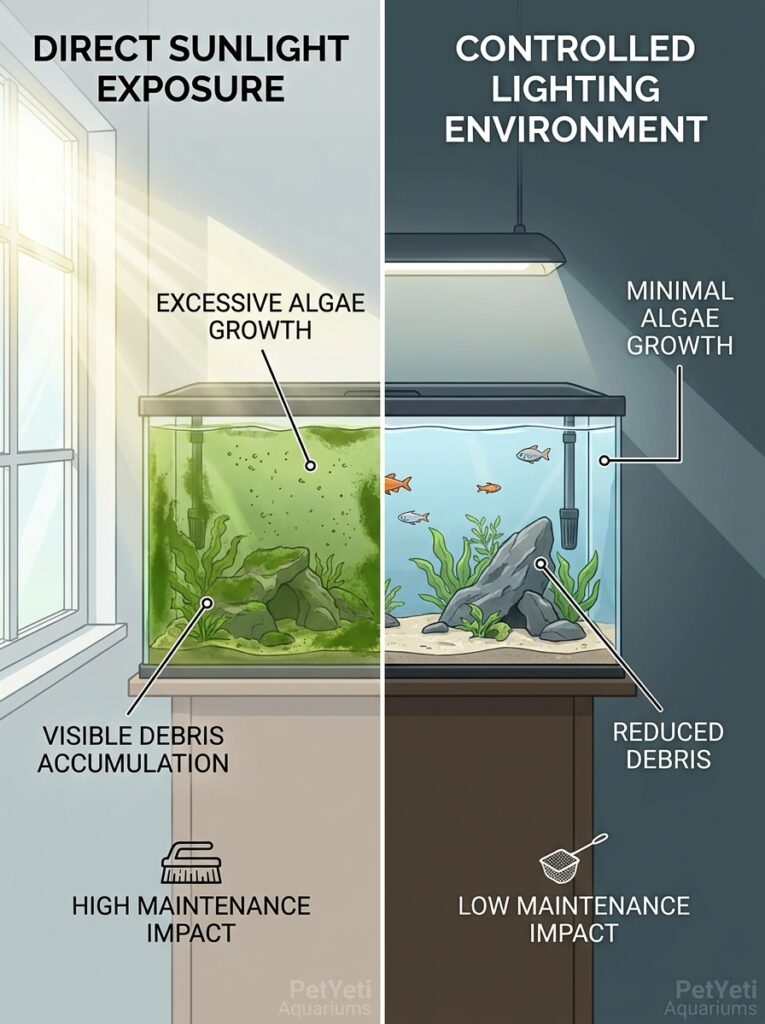
Aquarium Placement Can Influence How Dirty the Tank Looks
Sometimes the aquarium isn’t actually getting dirtier.
It just looks dirtier.
Aquariums positioned near direct sunlight often experience:
• Faster algae growth
• Increased visibility of debris
• More noticeable glass buildup
• Greater maintenance demands
Likewise, strong room lighting can make even minor debris easier to see.
Real-Life Example
An aquarium placed near a bright window seemed to require constant cleaning. After relocating the tank to a more controlled lighting environment, algae growth slowed noticeably and the aquarium stayed visually cleaner for longer.
How to Fix It
• Avoid direct sunlight when possible
• Control aquarium lighting schedules
• Monitor algae growth patterns
• Consider the tank’s location within the room
What to Expect
Better placement won’t eliminate maintenance, but it can reduce several common causes of recurring mess.
Quick Troubleshooting Checklist
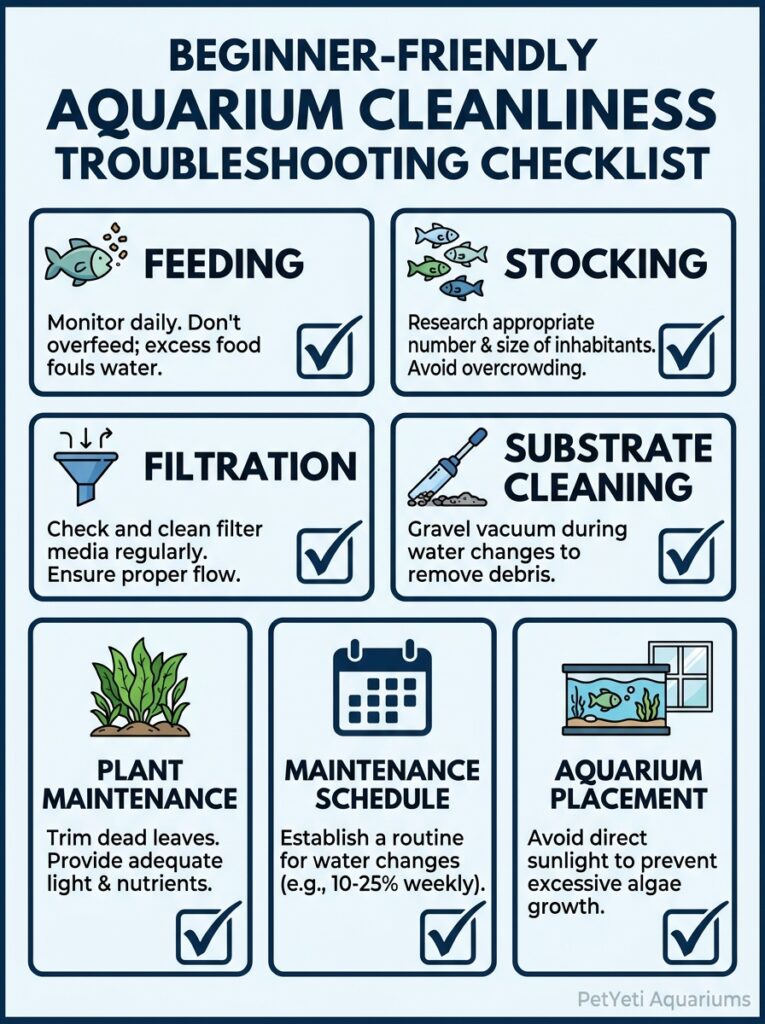
If your aquarium seems dirty again shortly after cleaning, work through this checklist:
✅ Review feeding habits
✅ Evaluate stocking levels
✅ Inspect filter performance
✅ Vacuum the substrate regularly
✅ Remove dying plant material
✅ Maintain a consistent cleaning routine
✅ Check aquarium placement and lighting
✅ Monitor algae growth patterns
Most recurring cleanliness problems can be traced back to one or more of these factors.
Identifying the cause is often more effective than simply cleaning more often.
CONCLUSION
If your aquarium seems to get dirty again almost immediately after cleaning, you’re probably not dealing with a cleaning problem.
You’re dealing with a cause-and-effect problem.
The dirt, debris, or algae you’re seeing is often the result of something happening behind the scenes.
In many aquariums, the biggest contributors are:
• Overfeeding
• Overstocking
• Inadequate filtration
• Trapped substrate waste
• Decaying plant material
• Inconsistent maintenance
• Excessive light exposure
The good news is that most of these issues are easy to improve once you identify them.
A cleaner aquarium isn’t about scrubbing harder or cleaning more often.
It’s about creating balance so waste doesn’t build up faster than the aquarium can process it.
When that balance is in place, the tank stays cleaner, maintenance becomes easier, and the entire aquarium feels more enjoyable to own.
That’s exactly the kind of calm, low-stress aquarium experience most fish keepers are looking for.
FAQ
Why does my fish tank get dirty so quickly?
The most common causes include overfeeding, too many fish, poor filtration, trapped substrate waste, and inconsistent maintenance routines.
Is it normal for an aquarium to get dirty between cleanings?
Yes. Every aquarium accumulates some debris over time. The goal isn’t to eliminate all waste but to prevent excessive buildup.
Can overfeeding make an aquarium dirty?
Absolutely. Uneaten food eventually breaks down and contributes to waste, algae growth, and declining water quality.
Why does my gravel always look dirty?
Substrate naturally traps fish waste, food particles, and organic debris. Regular gravel vacuuming helps remove buildup before it becomes excessive.
Does a bigger filter keep an aquarium cleaner?
A properly sized filter can help remove suspended debris and improve water clarity, but it doesn’t replace routine maintenance.
How often should I clean my aquarium?
The ideal schedule depends on the aquarium’s size, stocking level, and setup. For many beginner aquariums, light weekly maintenance works better than occasional deep cleanings.