
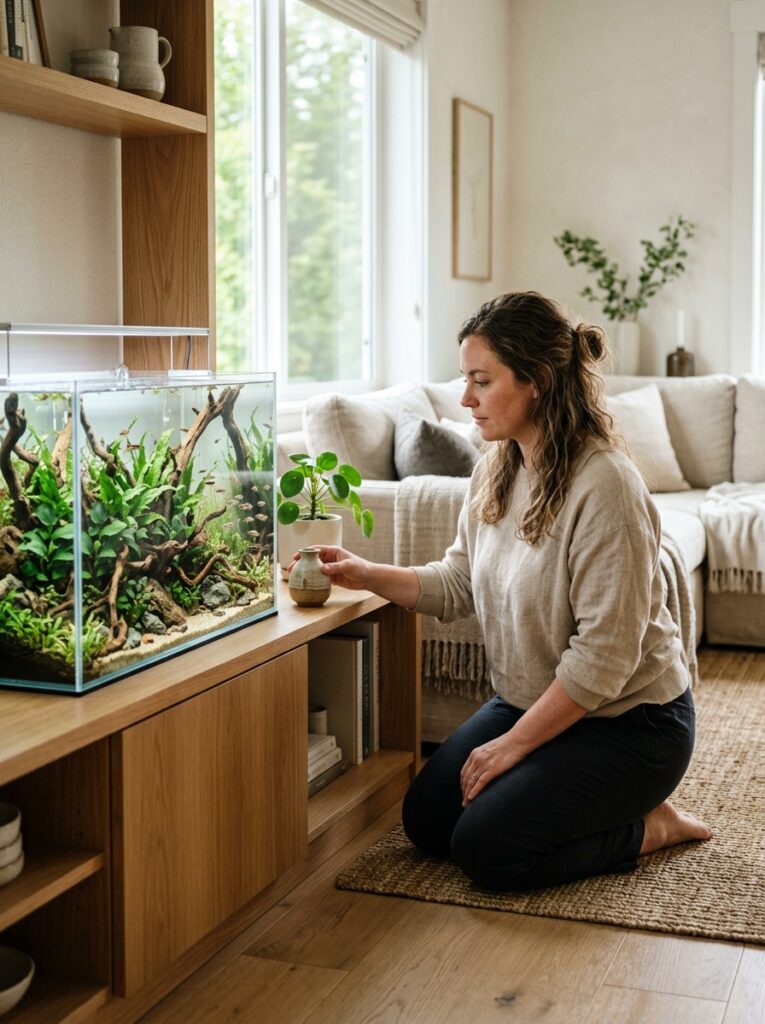
Japandi design has become increasingly popular because it combines the warmth of natural materials with the simplicity of modern minimalism. The result is a home environment that feels calm, uncluttered, and intentionally designed for everyday comfort.
Aquariums fit beautifully within Japandi interiors because planted aquascapes naturally introduce movement, texture, and organic elements without disrupting the clean aesthetic. Rimless aquariums, natural driftwood, and carefully selected plants often complement Japandi spaces especially well.
In this guide, we’ll explore Japandi aquarium ideas that blend modern interior design with relaxing planted aquarium aesthetics to create beautiful and peaceful living spaces.
- What Makes Japandi Style Perfect for Aquariums
- Choosing the Right Aquarium for a Japandi Interior
- Natural Materials That Complement Japandi Aquariums
- Japandi Aquascaping Ideas Using Plants and Driftwood
- Creating a Calm Aquarium Focal Point in the Living Room
- Color Palettes That Work Best with Japandi Aquariums
- Common Japandi Aquarium Design Mistakes to Avoid
- Designing a Home That Feels Peaceful and Balanced
- CONCLUSION
- FAQs
What Makes Japandi Style Perfect for Aquariums
Japandi design combines the simplicity of Japanese minimalism with the warmth and comfort of Scandinavian interiors. This balance makes it especially compatible with planted aquariums because both emphasize natural beauty, intentional design, and peaceful living environments.
Unlike decorative styles that rely on bold colors and visual abundance, Japandi spaces focus on restraint, natural materials, and thoughtful composition. A well-designed planted aquarium naturally supports these principles by introducing organic movement, living textures, and subtle visual interest without creating clutter.
The result is a home environment where the aquarium feels like an integrated part of the interior rather than a separate decorative object competing for attention.
Choosing the Right Aquarium for a Japandi Interior
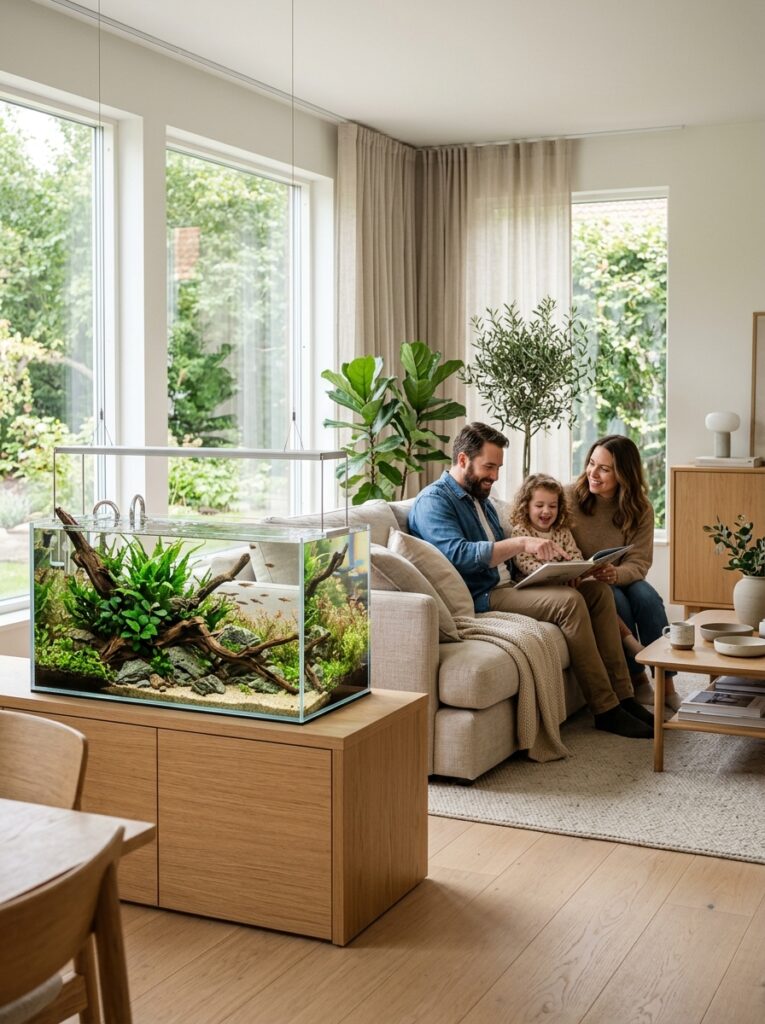
The aquarium itself plays an important role in maintaining a Japandi aesthetic. Clean lines, minimal framing, and balanced proportions often work far better than highly decorative tanks or bulky equipment-heavy setups.
Rimless aquariums are especially popular because they feel visually lighter and allow the aquascape to become the focus. Choosing an aquarium size that complements the room rather than dominates it also helps preserve the calm and balanced atmosphere that defines Japandi interiors.
In most cases, simplicity creates a stronger visual impact than excessive size or complexity.
Natural Materials That Complement Japandi Aquariums
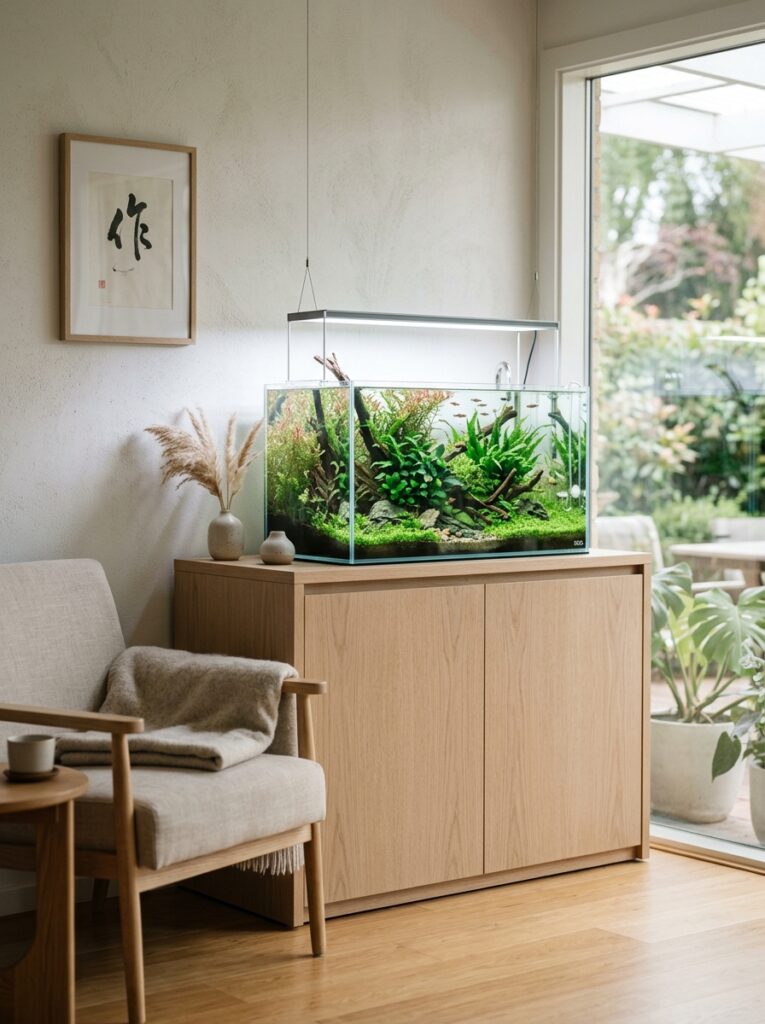
Natural materials are one of the defining features of Japandi design. Warm wood tones, stone textures, linen fabrics, ceramic accents, and organic finishes help create interiors that feel grounded and comfortable.
Aquariums naturally complement these materials through driftwood, natural stones, planted aquascapes, and living ecosystems. When these elements are coordinated thoughtfully, the aquarium feels like an extension of the room rather than an isolated feature.
If you want more room-styling inspiration beyond Japandi, our aquarium decor ideas guide walks through plants, lighting, stands, and fish-safe decor for calm real-home setups.
The most successful Japandi aquariums often repeat natural textures both inside and outside the aquarium to create visual harmony throughout the space.
Japandi Aquascaping Ideas Using Plants and Driftwood
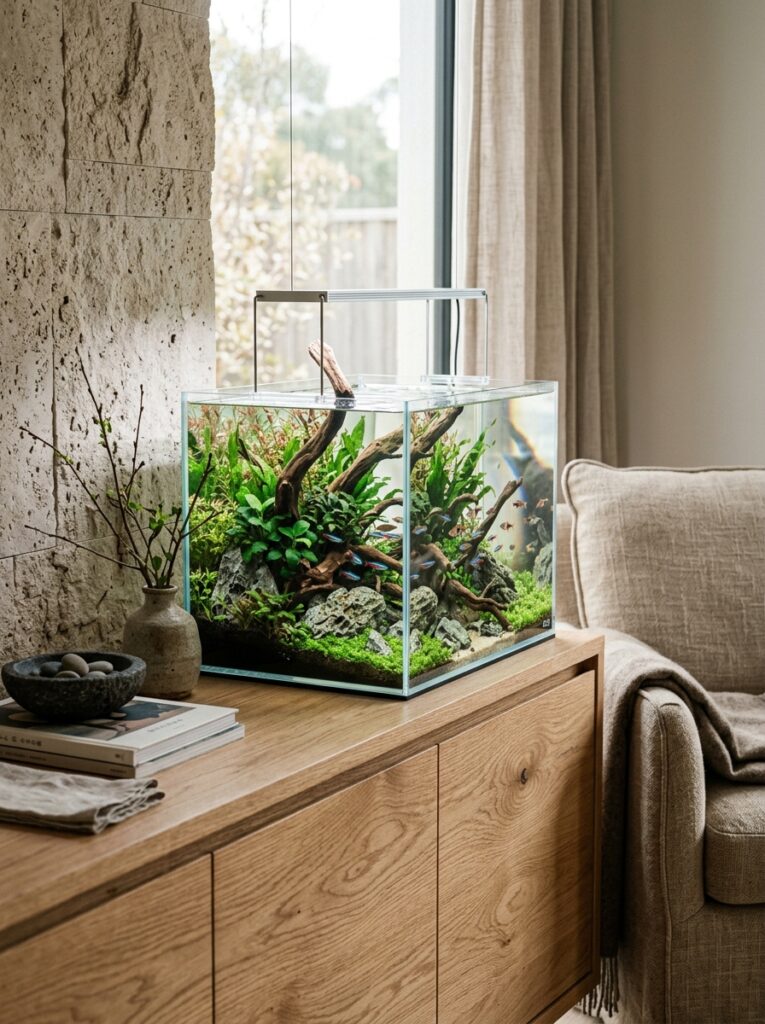
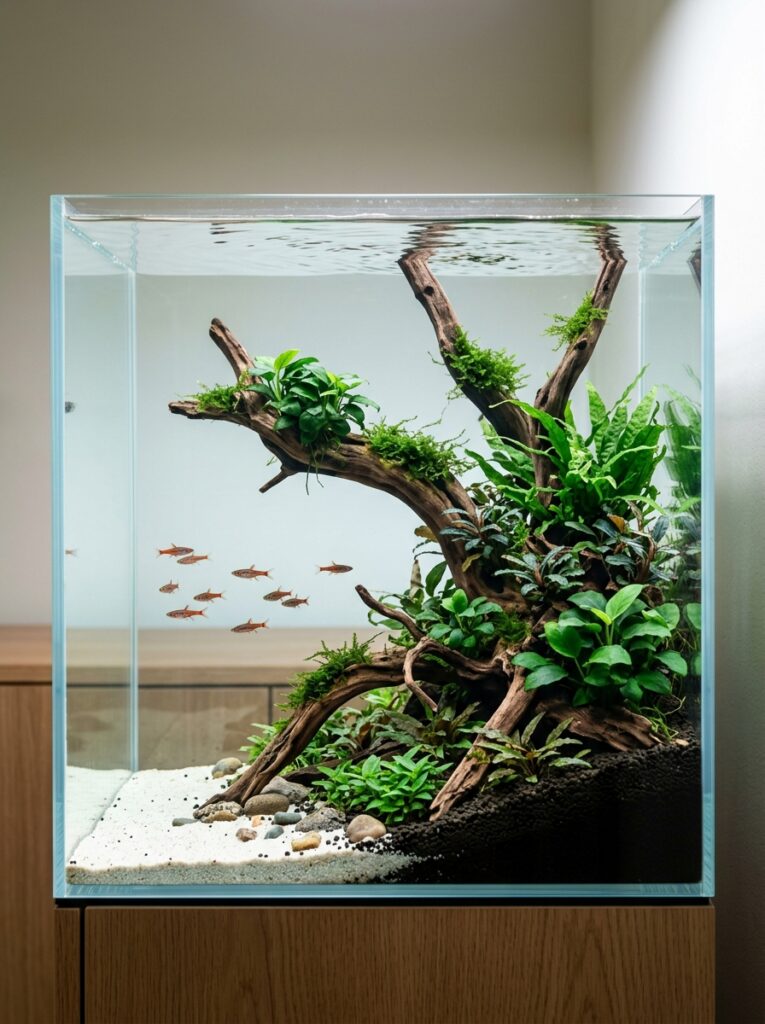
Japandi aquascaping focuses on natural balance rather than visual complexity. Instead of filling every area with plants and decorations, these layouts typically use carefully selected driftwood, open swimming space, and restrained planting to create a sense of calm.
Plants such as Anubias, Java Fern, Bucephalandra, and mosses often work particularly well because their shapes feel natural and understated. Driftwood usually serves as the primary focal point, creating elegant organic lines that guide the eye through the aquascape.
The goal is not to create a dense underwater jungle, but a living composition that feels peaceful, intentional, and timeless.
Creating a Calm Aquarium Focal Point in the Living Room
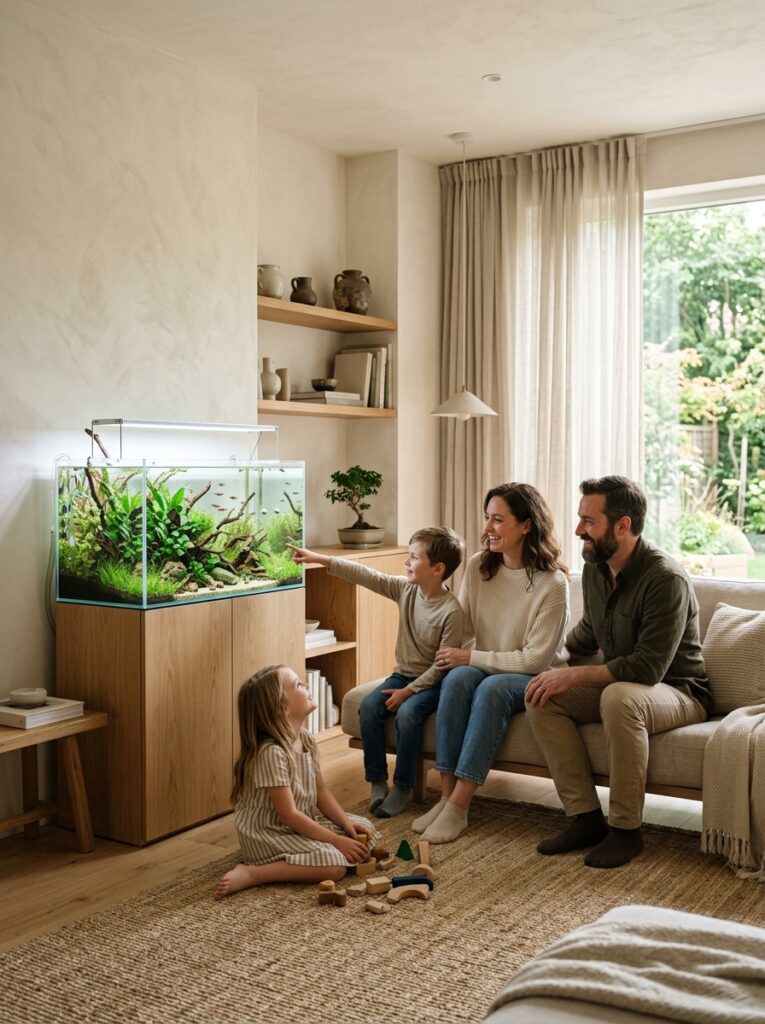
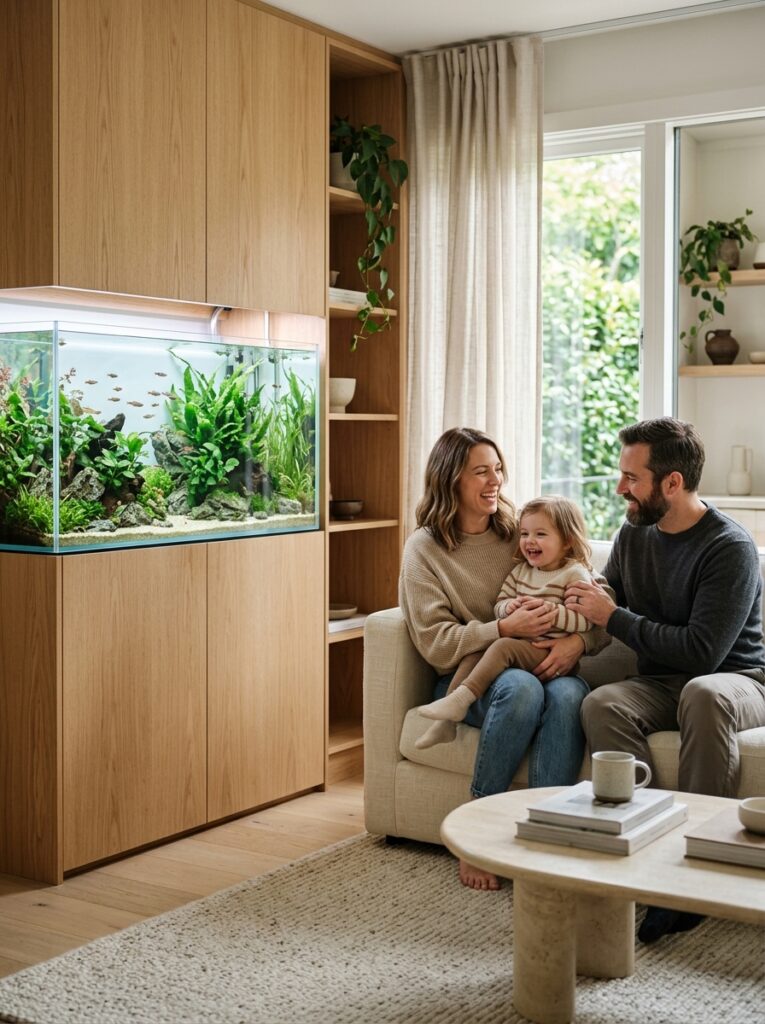
A thoughtfully positioned aquarium can become one of the most calming focal points in a Japandi living room. Rather than competing with furniture, artwork, or architectural features, the aquarium should support the overall atmosphere of the space.
Many Japandi interiors place aquariums on low natural wood cabinetry where they integrate naturally into the room’s visual flow. Soft lighting, uncluttered surroundings, and balanced aquascaping help the aquarium become a peaceful destination for the eye without overwhelming the room.
When designed well, the aquarium quietly contributes to the feeling of comfort and balance that defines Japandi living.
Color Palettes That Work Best with Japandi Aquariums
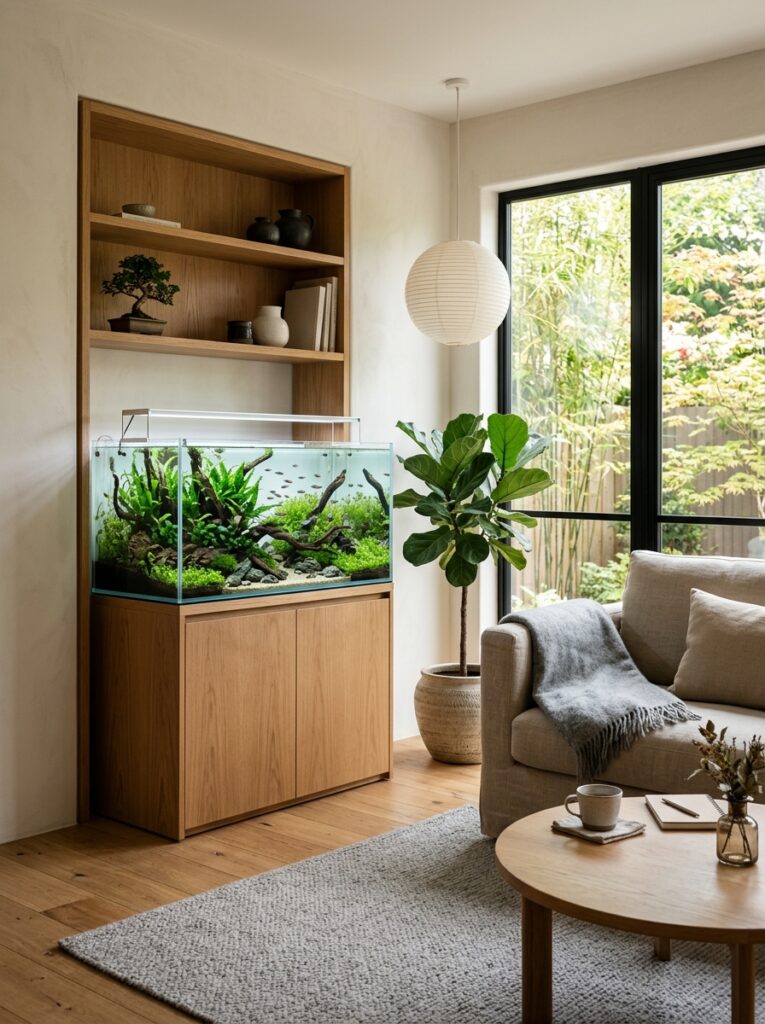
Color plays an important role in creating a successful Japandi atmosphere. Most Japandi interiors rely on soft neutral tones that help rooms feel calm, spacious, and visually balanced.
Warm wood tones, beige fabrics, soft gray accents, muted greens, and off-white walls often complement planted aquariums beautifully. These colors allow the natural greens of aquatic plants and the organic textures of driftwood to stand out without appearing overly dramatic.
A restrained palette often creates a stronger sense of relaxation than rooms filled with competing colors and visual distractions.
Common Japandi Aquarium Design Mistakes to Avoid
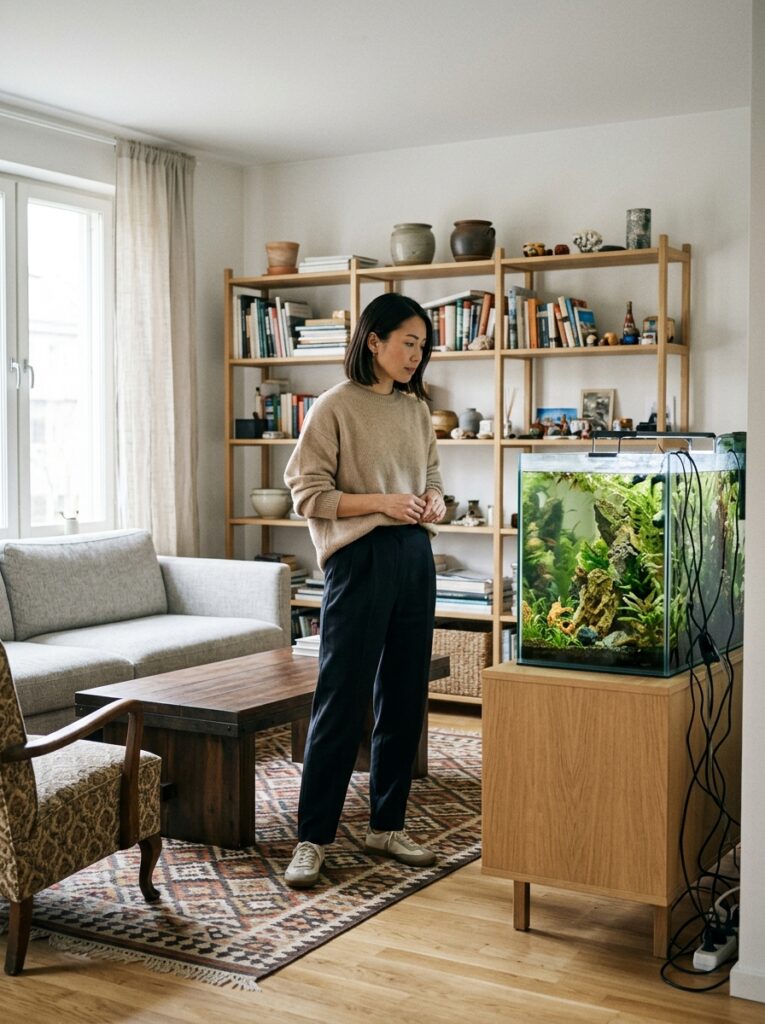
Many aquarium owners accidentally move away from the Japandi aesthetic by adding too many decorative elements at once. Excessive ornaments, bright artificial colors, cluttered shelving, and overcrowded aquascapes often compete with the calm simplicity that makes Japandi interiors so appealing.
Another common mistake is choosing furniture, lighting, or aquarium equipment that feels visually disconnected from the rest of the room. Bulky stands, visible cables, and mismatched materials can disrupt the clean and balanced atmosphere the design is trying to achieve.
The most successful Japandi aquarium spaces usually feel intentional, restrained, and harmonious. Every element should contribute to the overall sense of calm rather than demand attention individually.
Designing a Home That Feels Peaceful and Balanced
At its core, Japandi design is not about achieving perfection. It is about creating spaces that feel calm, functional, and comfortable to live in every day. A thoughtfully designed aquarium can support this goal by introducing natural beauty and gentle movement into the home without adding visual noise.
When aquariums, furniture, lighting, and decor work together harmoniously, the entire space feels more balanced and welcoming. Small design decisions often have a larger impact than expensive upgrades when they support a consistent atmosphere throughout the room.
A Japandi aquarium is ultimately more than a decoration. It becomes part of a living environment designed to encourage relaxation, simplicity, and everyday enjoyment.
CONCLUSION
Japandi aquariums combine natural beauty, simplicity, and intentional design to create living spaces that feel calm and welcoming. By blending planted aquascapes with warm natural materials, neutral colors, and uncluttered interiors, aquariums become more than decorative features—they become part of the overall atmosphere of the home.
The most successful Japandi aquarium spaces focus on balance rather than excess. Thoughtfully selected plants, natural driftwood, soft lighting, and clean design choices often create a stronger sense of relaxation than complicated or highly decorative setups.
Whether incorporated into a living room, apartment, or dedicated relaxation space, a Japandi-inspired aquarium can help create a home environment that feels peaceful, timeless, and comfortable to enjoy every day.
FAQs
What is a Japandi aquarium?
A Japandi aquarium combines minimalist aquarium design with natural materials, soft colors, and balanced aquascaping inspired by both Japanese and Scandinavian interior styles.
What type of aquarium works best in a Japandi home?
Rimless planted aquariums are often the most popular choice because their clean lines and minimalist appearance blend naturally with Japandi interiors.
What colors work well with Japandi aquariums?
Warm wood tones, beige, soft gray, off-white, muted greens, and natural stone colors typically complement Japandi aquarium designs beautifully.
Which plants suit a Japandi aquascape?
Plants such as Anubias, Java Fern, Bucephalandra, mosses, and other naturally shaped aquatic plants often fit Japandi aesthetics very well.
Can a Japandi aquarium work in a small apartment?
Yes. Japandi design emphasizes simplicity and intentional use of space, making it especially suitable for smaller apartments and modern homes.