
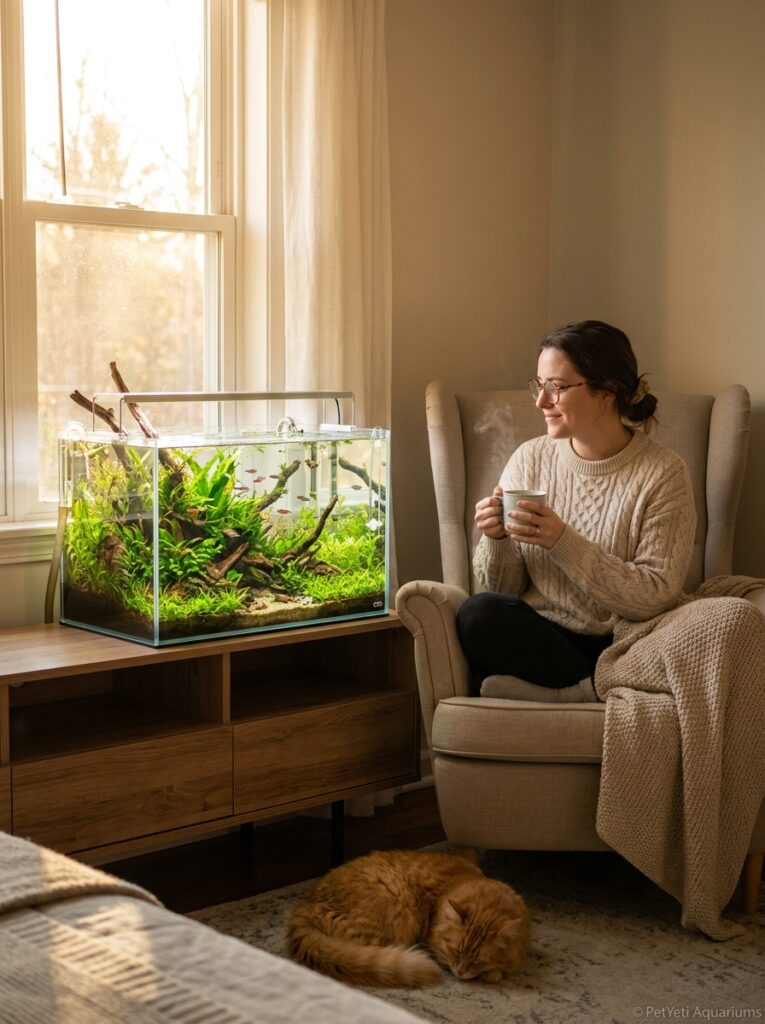
Quiet aquarium filters can make the difference between a relaxing aquarium and one that constantly hums, rattles, or splashes in the background. The quietest filters are usually sponge filters, well-designed hang-on-back filters, and internal filters with low vibration and gentle water flow.
For most beginners, I’d choose a quiet hang-on-back filter for a bedroom or living room and a sponge filter for a betta or nano tank because both can be nearly silent when installed correctly.
In this guide, I’ll show you which aquarium filters are actually quiet in real homes, which ones are best for bedrooms and small apartments, and how to make an existing noisy filter much quieter.
Quick Answer
If you want the quietest aquarium filter, choose a sponge filter for a 5–10 gallon betta or shrimp tank or a high-quality hang-on-back filter for a 10–20 gallon aquarium. The AquaClear 20 is our best overall quiet filter, while the Aquaneat Sponge Filter is the quietest option for small betta tanks.
Our Top Picks: Quiet Aquarium Filters (2026)
| Filter | Best For |
|---|---|
| AquaClear 20 Power Filter | Best Overall |
| Tetra Whisper IQ Power Filter | Best Budget |
| Aquaneat Sponge Filter | Best for Betta & Nano Tanks |
| Nano Silent Air Pump + Sponge Filter | Best for Bedrooms & Apartments |
If I were setting up a quiet aquarium in a bedroom, I’d choose the AquaClear 20 for a 10–20 gallon tank or the Aquaneat Sponge Filter for a betta or nano aquarium.
- Our Top Picks: Quiet Aquarium Filters (2026)
- What Makes an Aquarium Filter Quiet?
- Why Quiet Equipment Matters More Than Most Beginners Realize
- Which Types of Aquarium Filters Are Usually the Quietest?
- ⭐ PetYeti Pick: Quiet Sponge Filter Setup
- ⭐ Best Budget: Tetra Whisper IQ Power Filter
- Best Quiet Aquarium Filters for Bedrooms
- ⭐ Best for Bedrooms & Apartments:
- Best Quiet Aquarium Filters for Apartments
- ⭐ PetYeti Pick: Quiet HOB Filter
- How to Make Your Existing Filter Quieter
- Which Quiet Filter Would We Choose?
- CONCLUSION
- FAQs
WHAT TO CHECK FIRST
Before choosing a quiet aquarium filter, check these basics:
- Room location — bedrooms and desks need lower vibration and less splashing.
- Tank size — small tanks usually need gentler flow.
- Fish type — bettas and shrimp often prefer sponge filters.
- Noise source — humming, splashing, and cabinet vibration may need different fixes.
- Maintenance — dirty filters, low water levels, and worn parts often get louder over time.
As an Amazon Associate, PetYeti earns from qualifying purchases. This comes at no additional cost to you and helps support the site. We only recommend products we genuinely believe can help create healthier and more enjoyable aquariums.
What Makes an Aquarium Filter Quiet?
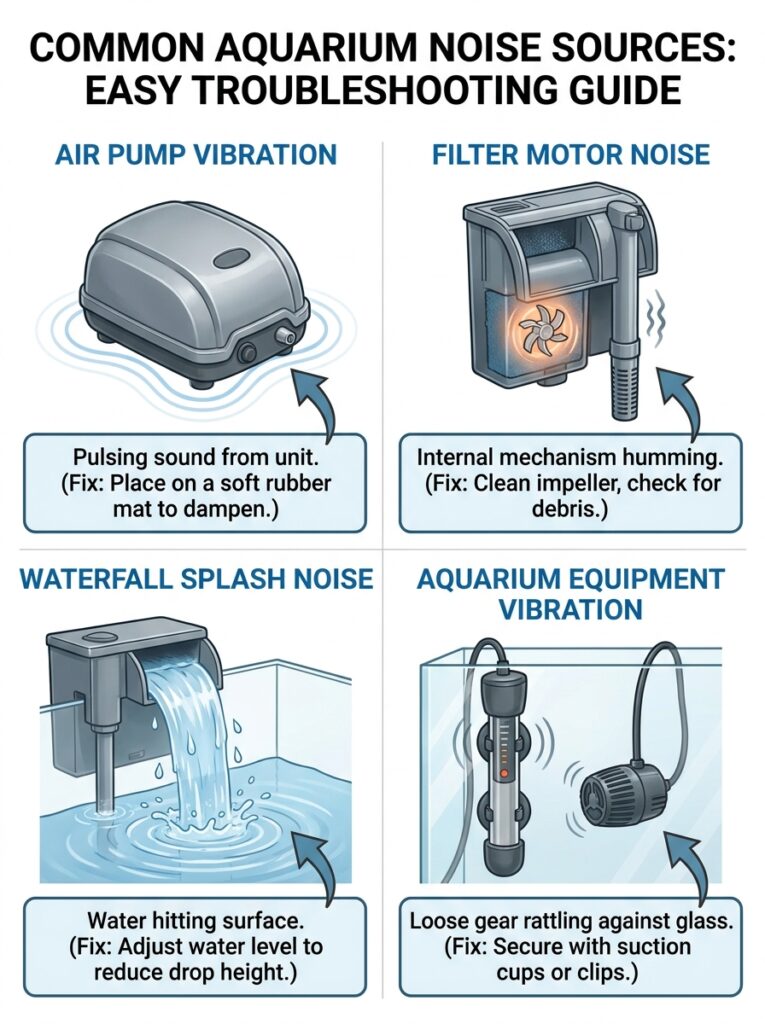
A quiet aquarium filter is not just about the motor. Most filter noise comes from vibration, water splashing, trapped air, or worn parts, and the quietest filters are designed to minimize all four.
The Quietest Filters Usually Have
- Low-vibration motors that do not buzz against the aquarium glass
- Adjustable water flow so the return does not splash loudly
- Soft rubber feet or mounting pads that reduce vibration
- Smooth impeller design that keeps the motor running quietly over time
- Easy maintenance access, because dirty impellers are one of the most common causes of filter noise
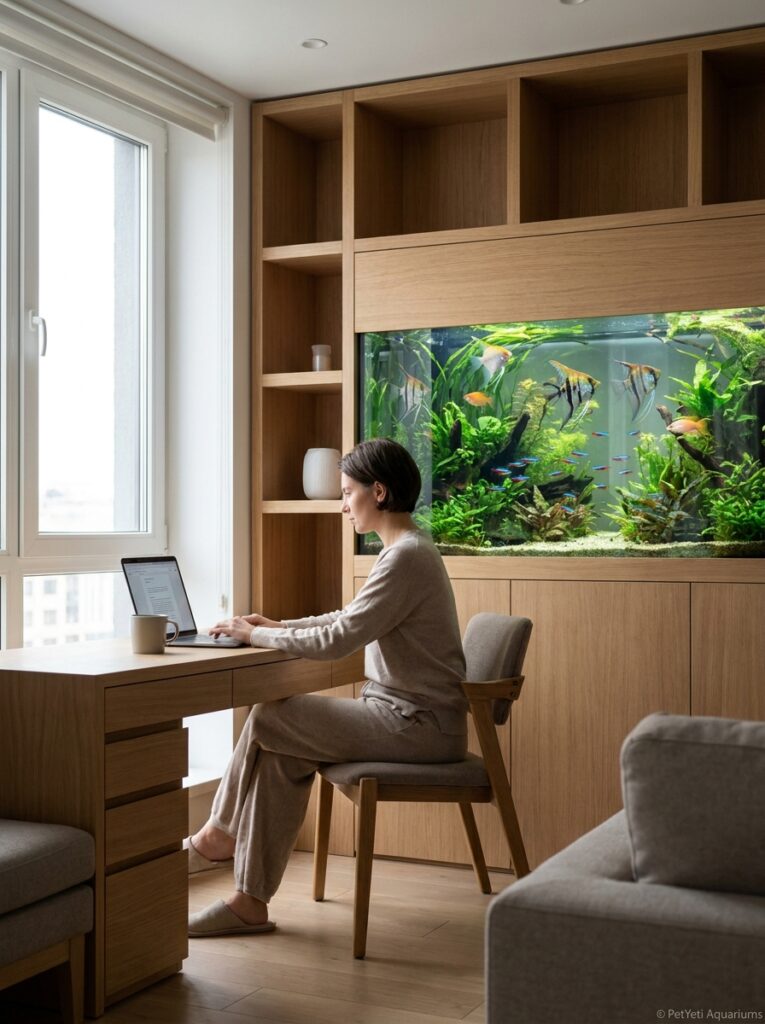
For most home aquariums, sponge filters are usually the quietest option, followed by high-quality hang-on-back filters with adjustable flow. Internal filters can also be very quiet when they are fully submerged and properly maintained.
PetYeti Tip
If a filter was quiet when it was new but has become noisy, the problem is often a dirty impeller or trapped air, not the filter itself. Cleaning the impeller chamber can reduce noise dramatically in just a few minutes.
Why Quiet Equipment Matters More Than Most Beginners Realize
A noisy aquarium may seem like a small inconvenience at first.
Over time, however, constant noise can affect how much you enjoy the hobby.
This is especially true for aquariums located in:
- Bedrooms
- Apartments
- Home offices
- Small studios
- Reading corners
Many aquarium owners spend hours near their tanks each week.
A quieter setup often feels more relaxing and natural.
Which Types of Aquarium Filters Are Usually the Quietest?
Not all filters produce the same level of noise.
Some are naturally quieter than others.
Sponge Filters
Sponge filters are often among the quietest filtration options when paired with a quality air pump.
⭐ PetYeti Pick: Quiet Sponge Filter Setup
Best for Betta & Nano Tanks: Aquaneat Sponge Filter
For 5–10 gallon aquariums, especially betta, shrimp, or nano community tanks, a sponge filter is usually the quietest filtration option you can buy. The filter itself produces almost no vibration, and with a good silent air pump it can become virtually inaudible from a few feet away.
Why I Like It
- Nearly silent operation
- Extremely gentle water flow
- Safe for bettas, shrimp, and fry
- Excellent biological filtration
- Inexpensive and easy to maintain
PetYeti Take
If your main goal is a peaceful bedroom aquarium, this is one of my favorite options. Bettas often behave more naturally with the gentle flow of a sponge filter, and the lack of motor vibration makes it feel much quieter than most small hang-on-back filters.
The sponge itself makes almost no noise.
Most sound comes from the air pump.
⭐ Best Budget: Tetra Whisper IQ Power Filter
If you want a filter that stays surprisingly quiet without spending much, the Tetra Whisper IQ Power Filter is one of the best budget-friendly options available. It’s designed specifically to reduce motor noise and water splashing, making it a strong choice for bedrooms, apartments, and beginner aquariums.
Why I Like It
- Excellent value for the price
- Quiet motor design
- Easy to install and maintain
- Good for 10–30 gallon aquariums
- Widely available and beginner-friendly
PetYeti Take
This is the filter I’d recommend for someone setting up their first aquarium on a budget. It’s noticeably quieter than many inexpensive hang-on-back filters and usually requires very little adjustment once it’s installed correctly.
Hang-On-Back Filters
Quality HOB filters can be extremely quiet.
However, poor water levels or cheap motors may create additional sound.
Internal Filters
Many modern internal filters operate quietly because the motor remains underwater.
Noise levels vary depending on the model.
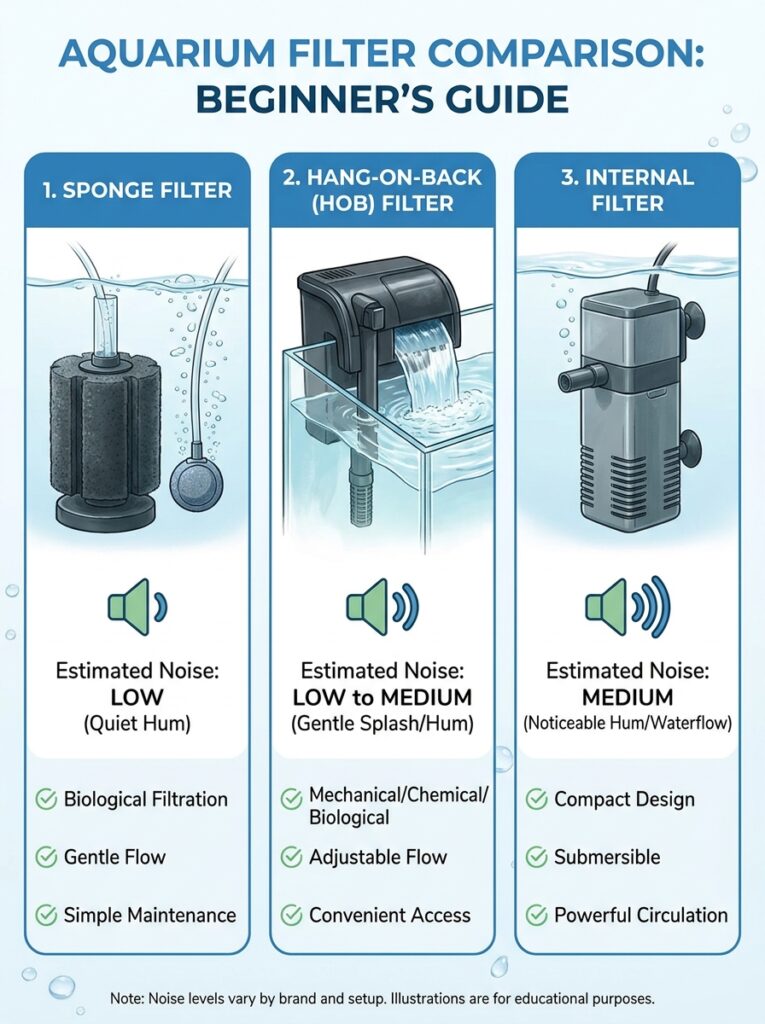
Best Quiet Aquarium Filters for Bedrooms
When selecting equipment for a bedroom, low vibration and gentle water movement are usually priorities.
Good options often include:
- Sponge filters with quality air pumps
- Adjustable HOB filters
- Quiet internal filters
Many bedroom aquarium owners also place equipment on vibration-dampening surfaces to reduce sound.
Real-Life Scenario
If you’re setting up a 5-gallon or 10-gallon betta aquarium beside your bed, a sponge filter paired with a quiet air pump is often one of the most peaceful combinations available.
⭐ Best for Bedrooms & Apartments:
Uniclife Nano Silent Air Pump & Sponge Filter
If you’re trying to keep an aquarium in a bedroom, studio apartment, dorm room, or office, this combination is hard to beat. A silent nano air pump paired with a sponge filter eliminates most of the motor vibration that makes small aquarium filters annoying at night.
Why I Like It
- Nearly silent during nighttime use
- Very low vibration
- Gentle flow that won’t disturb sleeping areas
- Compact enough for desks and bedside tanks
- Easy to maintain
- Dual Outlet
PetYeti Take
For a 5–10 gallon bedroom aquarium, this is the setup I’d choose over almost any small hang-on-back filter. It creates a much calmer environment, and the gentle flow is especially suitable for bettas, shrimp, and other small peaceful fish.
Best Quiet Aquarium Filters for Apartments
Apartment living often comes with additional challenges.
Noise may affect:
- Shared walls
- Small living spaces
- Studio apartments
- Open floor plans
Quiet equipment helps keep the aquarium enjoyable without becoming a distraction.
For many apartment aquariums, adjustable HOB filters strike a good balance between filtration performance and noise reduction.
⭐ PetYeti Pick: Quiet HOB Filter
Best Overall: AquaClear 20 Power Filter
The AquaClear 20 is the quiet filter I’d choose for most 5–20 gallon freshwater aquariums. It consistently performs well because the motor produces very little vibration, the water return is gentle, and the media chamber is larger than most filters in its size range.
For a bedroom, office, or living room aquarium, this is the filter that gives the best balance between silence, filtration quality, and long-term reliability.
Why I Like It
- Very low motor vibration
- Gentle, adjustable water flow
- Excellent biological filtration
- Easy to clean without becoming noisy again
- Reliable for long-term use
PetYeti Take
If you only buy one quiet filter from this list, this is the one I’d start with. It’s especially good for 10–20 gallon community tanks where you want strong filtration without the constant humming or rattling that many budget filters develop over time.
Who Should Skip It:
Skip this if you keep bettas, shrimp, or tiny fish that may be stressed by stronger water movement.
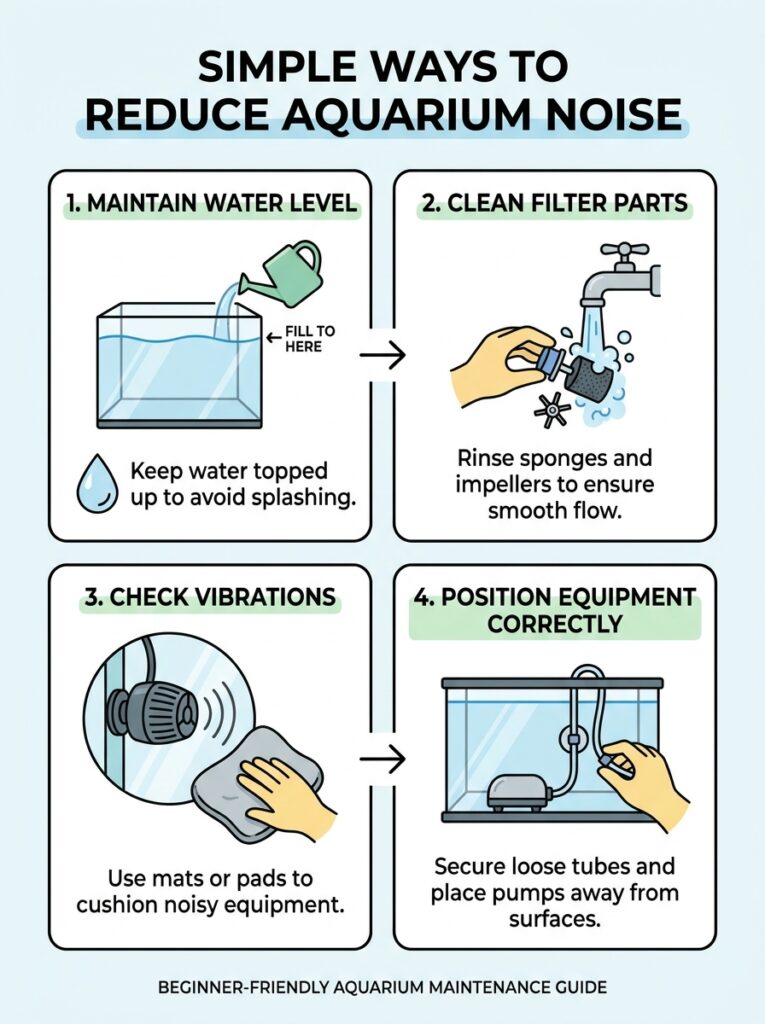
How to Make Your Existing Filter Quieter
Before buying a new filter, try these fixes. A surprising number of noisy filters can become almost silent with a few minutes of maintenance.
Quick Fixes
- Raise the water level so the return does not splash.
- Clean the impeller and impeller chamber thoroughly.
- Remove trapped air by tilting the filter slightly while it is running.
- Tighten loose parts such as the lid, intake tube, or media basket.
- Place a small piece of foam or rubber where the filter touches the tank to reduce vibration.
The Fix That Works Most Often
In my experience, the biggest improvement usually comes from cleaning the impeller. A little debris, algae, or mineral buildup can cause a humming or rattling sound that many people mistake for a failing filter motor.
PetYeti Tip
If your filter becomes noisy again every few weeks, the issue is often maintenance, not the filter model. Cleaning the impeller chamber during routine tank maintenance usually keeps most quality filters running quietly for years.
Which Quiet Filter Would We Choose?
For a peaceful betta aquarium in a bedroom, we’d usually lean toward a sponge filter paired with a quality air pump.
For a larger planted aquarium in a living room or apartment, we’d often choose a reliable adjustable HOB filter.
The goal isn’t finding the quietest filter on the market.
It’s finding the filter that creates the type of aquarium experience you want to enjoy every day.
Related PetYeti Guides
A quiet filter works best when it matches your tank size, flow needs, and the room where the aquarium sits.
Still choosing your first filter? Read our beginner aquarium filter guide.
Comparing filter styles? See sponge filter vs HOB filter.
Trying to fix an already noisy filter? Read why your aquarium filter is so loud.
Planning a bedroom tank? See our relaxing bedroom aquarium ideas.
Setting up a desk tank? Read our aquarium desk setup ideas for cozy workspaces.
CONCLUSION
The quietest aquarium filter is not always the most expensive one. For most aquariums, a high-quality hang-on-back filter is the best balance of silence, filtration performance, and convenience, while a sponge filter is usually the quietest option for betta, shrimp, and nano tanks.
If I were choosing today, I’d pick the AquaClear 20 for a 10–20 gallon bedroom or living room aquarium and the Aquaneat Sponge Filter for a 5–10 gallon betta tank. Both are reliable, beginner-friendly, and noticeably quieter than many inexpensive filters that develop humming or rattling over time.
The good news is that many noisy filters can also be fixed without replacing them. Raising the water level, cleaning the impeller, and reducing vibration often make a dramatic difference in just a few minutes.
Best first choice for most beginners
If you want a quiet aquarium filter for a bedroom or apartment, start with the AquaClear 20 for a 10–20 gallon tank or the Aquaneat Sponge Filter for a 5–10 gallon betta aquarium. Those two options are the easiest way to create a calmer, quieter aquarium without overspending.
FAQs
What is the quietest aquarium filter type?
Sponge filters are often considered among the quietest options when paired with a quality air pump.
Are HOB filters noisy?
Many modern HOB filters are very quiet, especially when maintained properly.
Why is my aquarium filter suddenly louder?
Common causes include debris buildup, worn impellers, vibration, or low water levels.
Can aquarium filters disturb sleep?
Some filters can be distracting in quiet bedrooms, which is why many hobbyists choose low-noise equipment.
Do sponge filters make noise?
The sponge itself does not. Most sound comes from the connected air pump.