
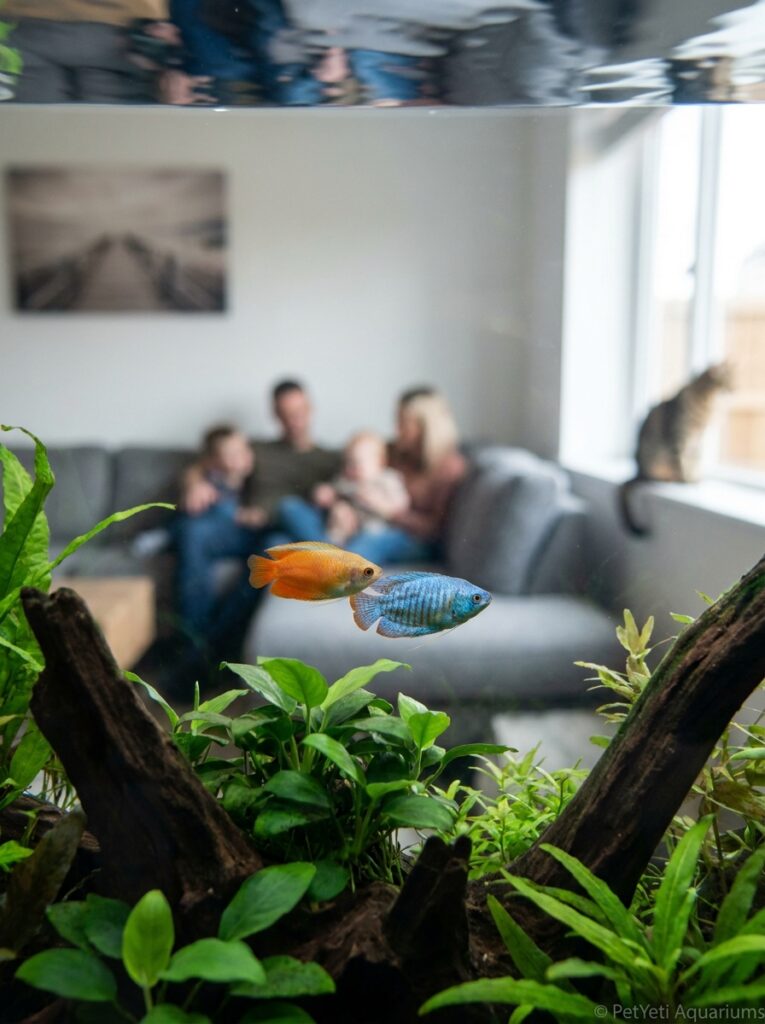
Why are my fish chasing each other? Fish chasing each other is not always a sign of aggression. The most common causes are territorial behavior, breeding activity, competition for food, stress, overcrowding, or species incompatibility, and many cases can be improved once you identify which type of chasing you’re seeing.
The good news is that some chasing is completely normal, especially during feeding time, mating behavior, or when fish establish a social hierarchy. The important question is whether the chasing is occasional and harmless or constant and causing stress or injury.
In this guide, I’ll help you figure out whether your fish are playing, breeding, defending territory, or bullying each other, what to check first, and what you can do today to stop harmful chasing before it becomes a bigger problem.
When Chasing Is Normal vs When It’s a Problem
Not all fish chasing is a sign of aggression. Many healthy fish chase each other briefly during feeding, courtship, breeding behavior, or while establishing a social hierarchy. The behavior becomes more concerning when it is constant, targeted, and causing stress or injury.
| Behavior | Usually Normal? |
|---|---|
| Short bursts of chasing during feeding | Yes |
| One fish chasing another for a few seconds | Usually |
| Chasing during breeding or courtship | Yes |
| Constant chasing for hours | No |
| One fish hiding all the time | No |
| Torn fins, missing scales, or injuries | No |
| A fish being prevented from eating | No |
If the chasing stops after a few moments and both fish continue swimming normally, it is often harmless. If one fish is repeatedly targeting another, causing injuries, or preventing it from accessing food or shelter, the behavior should be treated as aggression and addressed quickly.
- When Chasing Is Normal vs When It’s a Problem
- What to Check First (30-Second Diagnosis)
- Some Chasing Is Completely Normal
- Tank Size and Territory
- Competition During Feeding Can Increase Chasing
- Introducing New Fish Can Disrupt Social Balance
- Species Compatibility
- When Chasing Turns Into Aggression
- Stress and Water Quality
- Breeding Behavior Can Trigger Chasing
- Hiding Places and Enrichment
- How to Reduce Chasing in a Community Aquarium
- A Lack of Visual Barriers Can Increase Chasing
- What to Do Today If Your Fish Are Chasing Each Other
- When Should You Actually Be Concerned?
- CONCLUSION
- FAQs
What to Check First (30-Second Diagnosis)
Before separating your fish, check these four things first. They solve a surprisingly large number of chasing problems in community aquariums.
- Tank size: Is the aquarium large enough for the number and species of fish you keep?
- Hiding places: Are there plants, caves, driftwood, or decorations where weaker fish can escape?
- Water quality: Are ammonia and nitrite at 0 ppm?
- Feeding: Does the chasing happen mostly during feeding time or all day long?
If the tank is crowded, lacks hiding places, or has poor water quality, start with those issues before assuming the fish are incompatible.
Match What You’re Seeing
This quick guide can help you narrow down the most likely cause before reading the detailed sections below.
| What You See | Most Likely Cause | Usually Easy to Fix? |
|---|---|---|
| Short chasing during feeding | Competition for food | Yes |
| Chasing after adding new fish | Territory or hierarchy | Yes |
| One fish chasing a specific fish constantly | Aggression or incompatibility | Sometimes |
| Chasing with torn fins or injuries | Bullying or fighting | Urgent |
| Chasing in an overcrowded tank | Lack of space | Yes |
| Chasing during breeding behavior | Courtship or spawning | Yes |
Most cases of fish chasing are related to territory, overcrowding, stress, breeding behavior, or competition for food, so start with those areas before separating the fish permanently.
As an Amazon Associate, PetYeti earns from qualifying purchases. This comes at no additional cost to you and helps support the site. We only recommend products we genuinely believe can help create healthier and more enjoyable aquariums.
Some Chasing Is Completely Normal
Not all chasing is aggression. Healthy fish often interact with one another throughout the day.
Brief chasing can occur when fish:
- Explore their environment
- Compete for food
- Establish social order
- Investigate newcomers
The key is duration. Short bursts of chasing followed by normal behavior are usually nothing to worry about.
Real-Life Example
A group of small schooling fish may occasionally dart after one another during feeding time and then immediately return to swimming together normally. If both fish quickly resume normal behavior afterward, there’s usually little reason for concern.
The important question isn’t:
“Did chasing happen?”
It’s:
“How often does it happen, and what happens afterward?”
PetYeti Calm Tip
When you notice chasing, watch the whole aquarium for a few minutes before reacting. If the fish separate easily, keep eating, and return to normal swimming, it may just be normal social behavior. A calm tank has movement and interaction, but every fish should still have space to rest, hide, and eat without constant pressure.
Tank Size and Territory
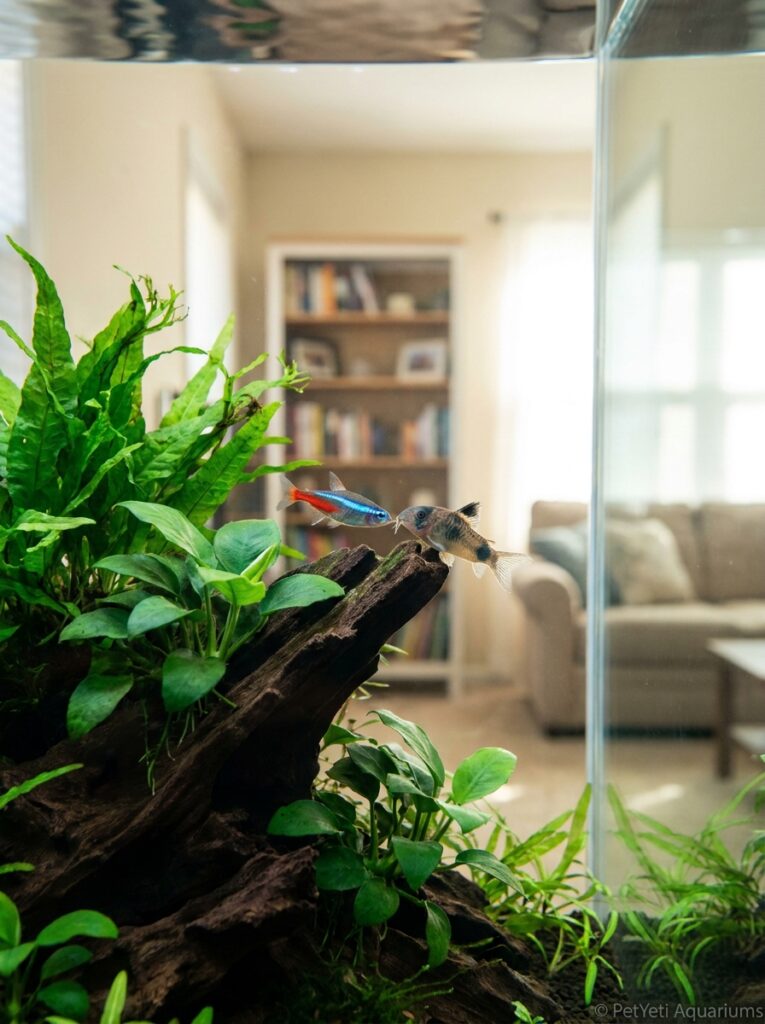
One of the most common reasons fish chase each other is that the tank is too small for the species being kept. Many freshwater fish establish territories, and when they do not have enough space, they may constantly chase tankmates away from their preferred area.
Territorial chasing is especially common in bettas, cichlids, gouramis, some livebearers, and even certain tetras when kept in cramped conditions. A fish that feels crowded may become much more aggressive than it would be in a larger aquarium.
Signs tank size may be the cause:
- Chasing increases after adding more fish
- One fish patrols a specific area of the tank
- Weaker fish are forced into corners or behind decorations
- The chasing is worse in a small aquarium than in a larger setup
What to Do
Increase the amount of usable space by adding plants, driftwood, rocks, or caves that break up lines of sight. If the tank is heavily stocked, reducing the number of fish or upgrading to a larger aquarium may be the most effective long-term solution.
PetYeti Pick
Dense live plants and aquarium caves are often one of the easiest ways to reduce territorial chasing because they create visual barriers and give weaker fish places to hide.
PetYeti Tip
A larger tank does not just provide more swimming space—it creates more separate territories, which often reduces aggression dramatically in community aquariums.
Real-Life Example
A Betta may peacefully explore the aquarium all day but repeatedly chase fish that venture too close to its favorite resting area near a large plant or piece of driftwood.
Territorial behavior becomes more noticeable in smaller aquariums where personal space is limited.
Competition During Feeding Can Increase Chasing
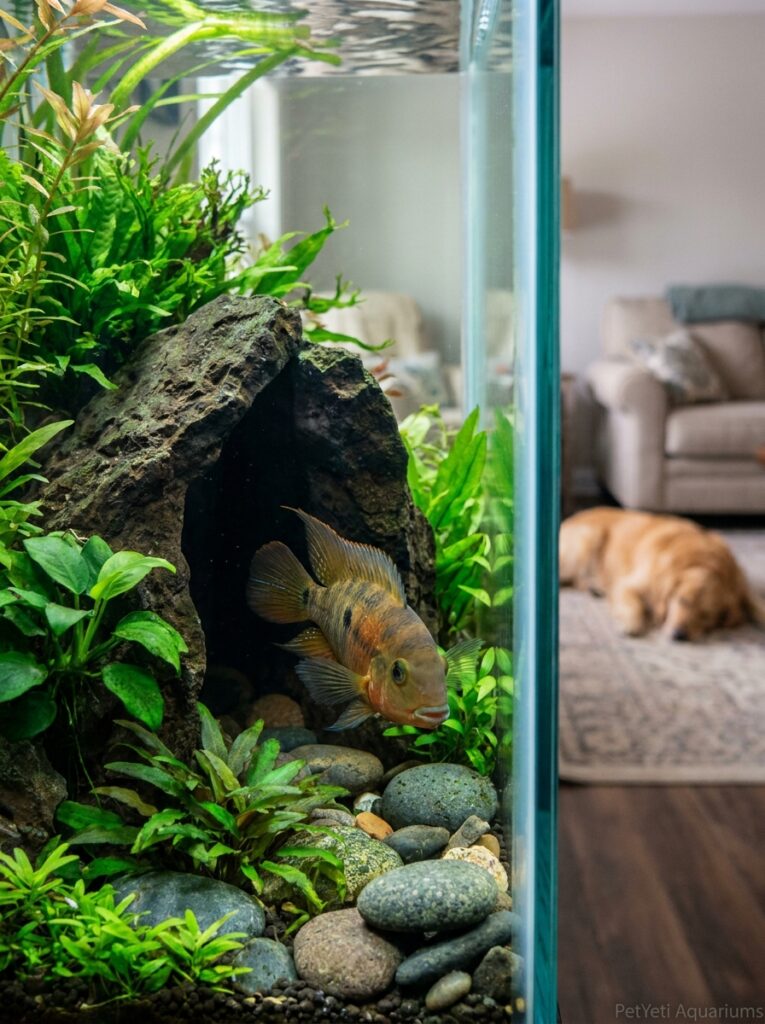
Food changes behavior. Even peaceful fish often become more active when food is introduced.
You may notice:
- Short bursts of chasing
- Faster swimming
- Competition for favorite foods
- Temporary excitement
This type of behavior usually disappears once feeding is over.
Real-Life Example
A normally calm community fish may briefly chase another fish away from a sinking pellet, then completely ignore it once feeding is finished. This type of behavior is usually short-lived and predictable.
Problems arise when food competition becomes constant or prevents weaker fish from eating properly.
Introducing New Fish Can Disrupt Social Balance
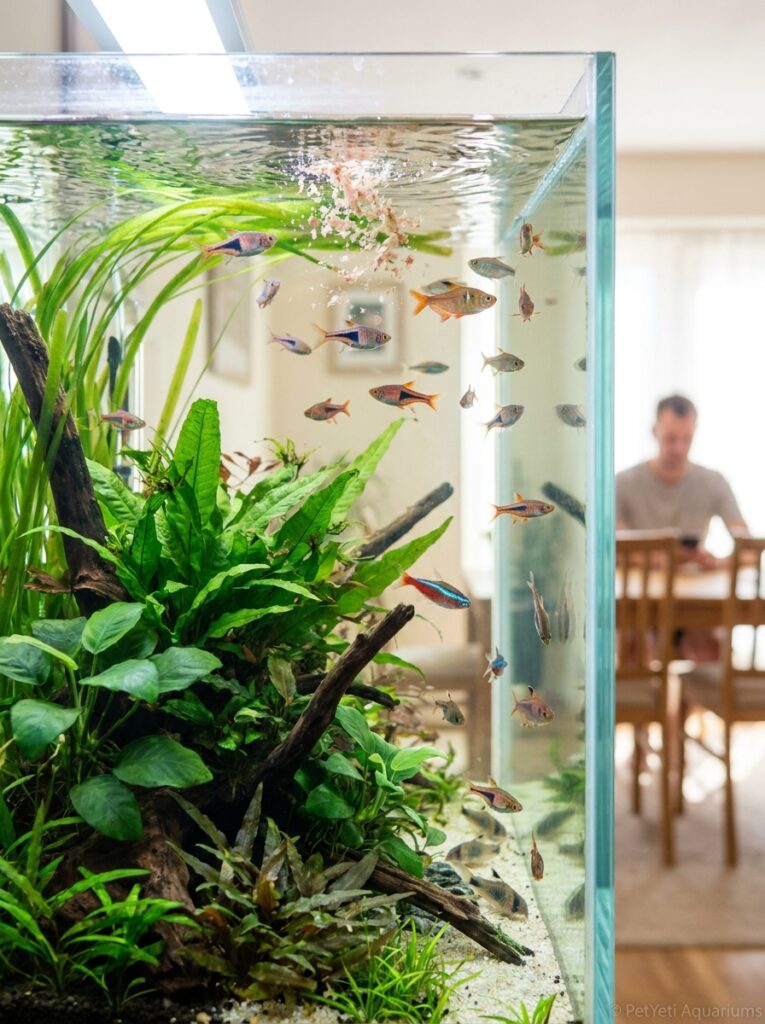
Adding a new fish changes the aquarium dynamic. Existing fish may investigate the newcomer or attempt to establish social boundaries.
Some temporary chasing is often part of the adjustment process.
However, the behavior should gradually decrease as the fish become familiar with one another.
Real-Life Example
A newly introduced fish may receive extra attention from established tank mates during the first few days before the aquarium settles down again.
Beginner Mistake to Avoid
A common beginner mistake is adding new fish and expecting the aquarium to feel peaceful immediately. Some chasing can happen while fish adjust, but it should not become constant or one-sided. Watch closely for the first few days, make sure every fish can reach food, and add extra plant cover or hiding spaces if one fish keeps getting pushed away.
Species Compatibility
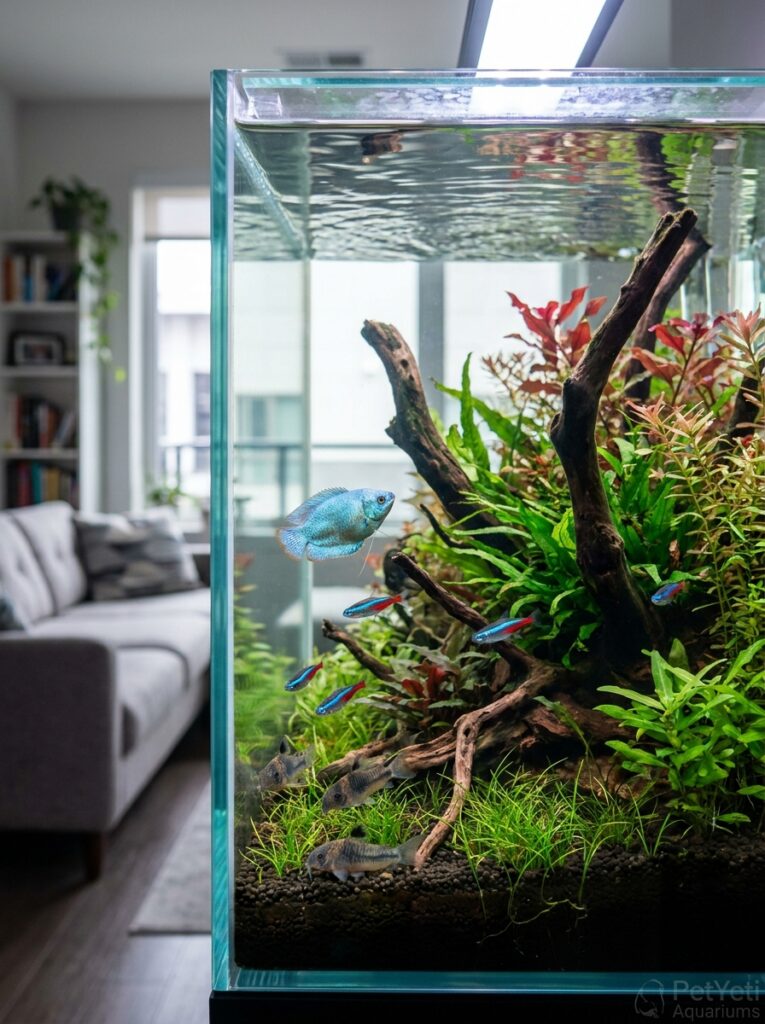
Sometimes the problem is not the individual fish—it is the combination of species living together. Different fish have different temperaments, activity levels, and territorial instincts, and some combinations naturally lead to chasing.
For example, male bettas may chase other colorful or long-finned fish, many cichlids become territorial as they mature, and some livebearers and schooling fish may harass weaker individuals if they are kept in the wrong group size.
Signs compatibility may be the issue:
- One species consistently targets another species
- Chasing is focused on fish with long fins or bright colors
- Aggression increases as the fish grow larger
- The behavior does not improve after adding hiding places or reducing stress
What to Do
Research the specific species in your aquarium and make sure they have similar temperature requirements, temperament, and space needs. In some cases, separating the aggressor or choosing more compatible tankmates is the only long-term solution.
PetYeti Tip
A community tank is usually most peaceful when fish occupy different areas of the aquarium—surface, mid-water, and bottom—rather than competing for the same territory.
Real-Life Example
A highly active fish may constantly swim around slower species. While the active fish isn’t trying to attack, the slower fish may perceive the behavior as harassment and become stressed over time.
Compatibility is about more than avoiding outright aggression.
It’s about creating an environment where all fish can thrive comfortably.
When Chasing Turns Into Aggression
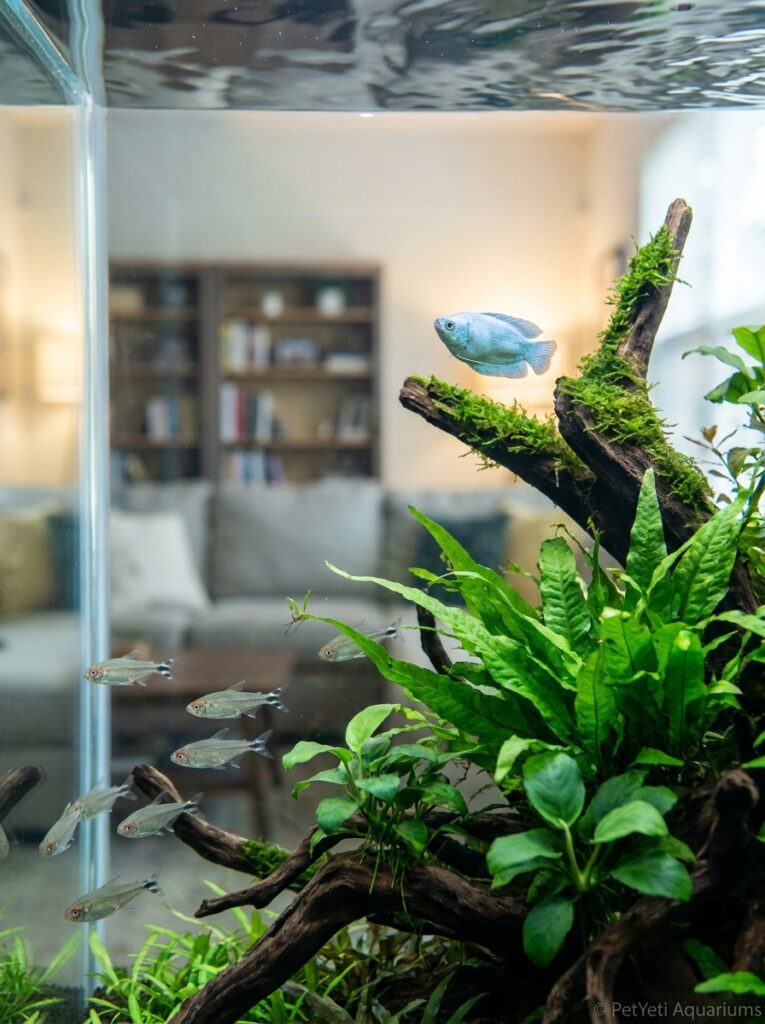
The line between normal chasing and aggression is usually easy to spot once you know what to watch for.
Warning signs include:
- Constant pursuit
- Torn fins
- Visible injuries
- Preventing access to food
- One fish hiding most of the day
- Obvious stress
Healthy interactions tend to be brief. Aggressive interactions tend to be repetitive and relentless.
Real-Life Example
A fish that occasionally chases another fish away from a favorite cave may be acting territorially. A fish that follows and attacks the same tank mate all day is creating a problem.
Stress and Water Quality
Poor water quality can make fish far more aggressive than they would be in a healthy aquarium. Even water that looks perfectly clear can contain ammonia or nitrite, and those compounds can stress fish, reduce oxygen exchange, and increase territorial or defensive behavior.
In a healthy aquarium, ammonia and nitrite should always be 0 ppm. When either one is present, fish may chase each other more frequently, breathe rapidly, lose appetite, or become unusually restless.
Signs stress or water quality may be the cause:
- Chasing became worse after a missed water change
- Fish are breathing heavily or staying near the surface
- Colors appear faded
- Multiple fish seem unusually active or irritable
- The tank is newly set up or heavily stocked
What to Do
Test the water as soon as possible. A liquid aquarium test kit is much more accurate than guessing based on appearance alone. If ammonia or nitrite is above 0 ppm, perform a partial water change, reduce feeding temporarily, and check that the filter is running properly.
PetYeti Pick
For most beginner aquarium owners, we recommend a liquid freshwater test kit because it allows you to check ammonia, nitrite, nitrate, and pH in a few minutes and gives much more reliable results than test strips.
PetYeti Tip
Fish often become less aggressive once water quality improves. Testing the water is one of the fastest ways to rule out a hidden environmental problem before assuming the fish are incompatible.
Breeding Behavior Can Trigger Chasing
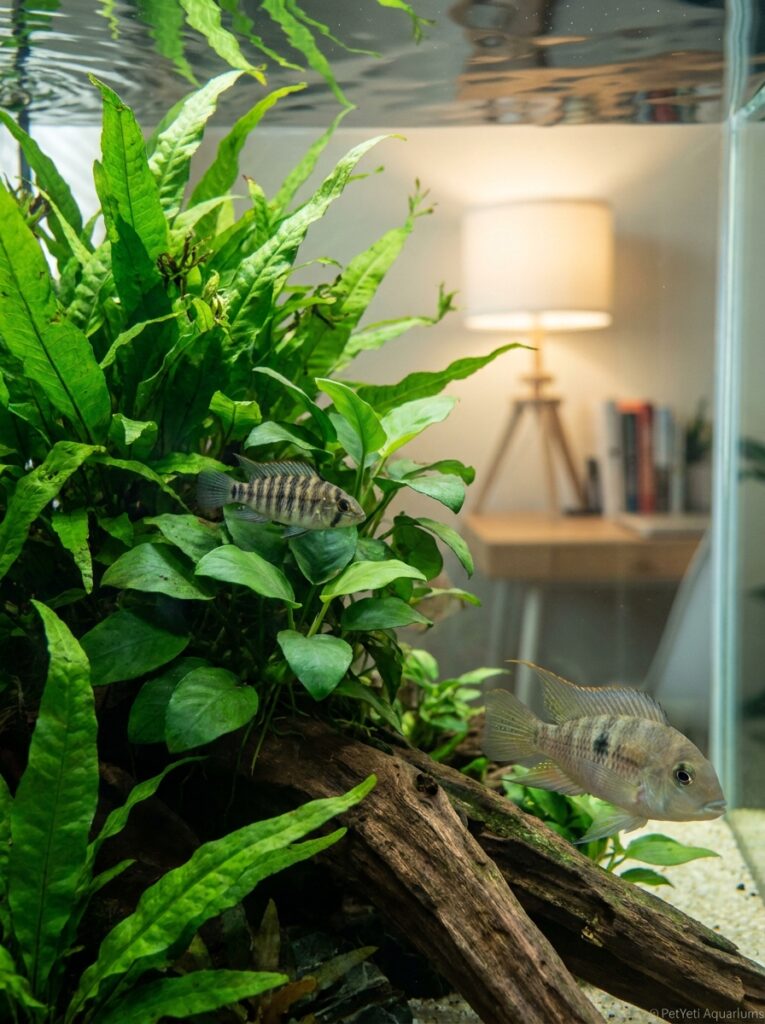
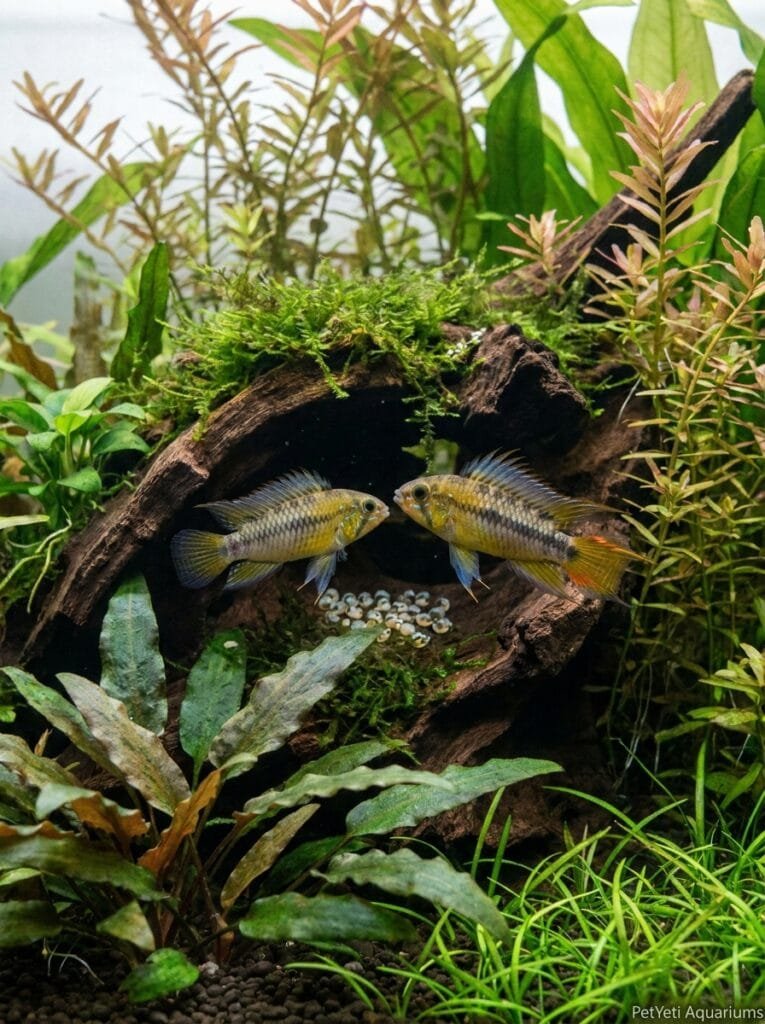
Sometimes chasing has nothing to do with aggression. Many fish become more active and territorial when breeding behavior begins.
During this time, fish may:
- Defend spawning areas
- Chase rivals
- Escort potential mates
- Protect eggs
To a beginner, it can look alarming. But in many cases, it’s a natural part of fish behavior.
Real-Life Example
A pair of fish that normally ignore each other may suddenly become very active around a specific area of the aquarium. Chasing may increase temporarily while they establish and defend a breeding site.
The important factor is intensity. Brief territorial displays are very different from relentless aggression that causes injuries or constant stress.
Hiding Places and Enrichment
A surprisingly common cause of fish chasing is that the aquarium is too open. When fish have nowhere to hide, weaker individuals are forced to stay in the aggressor’s line of sight, and the chasing can continue almost constantly.
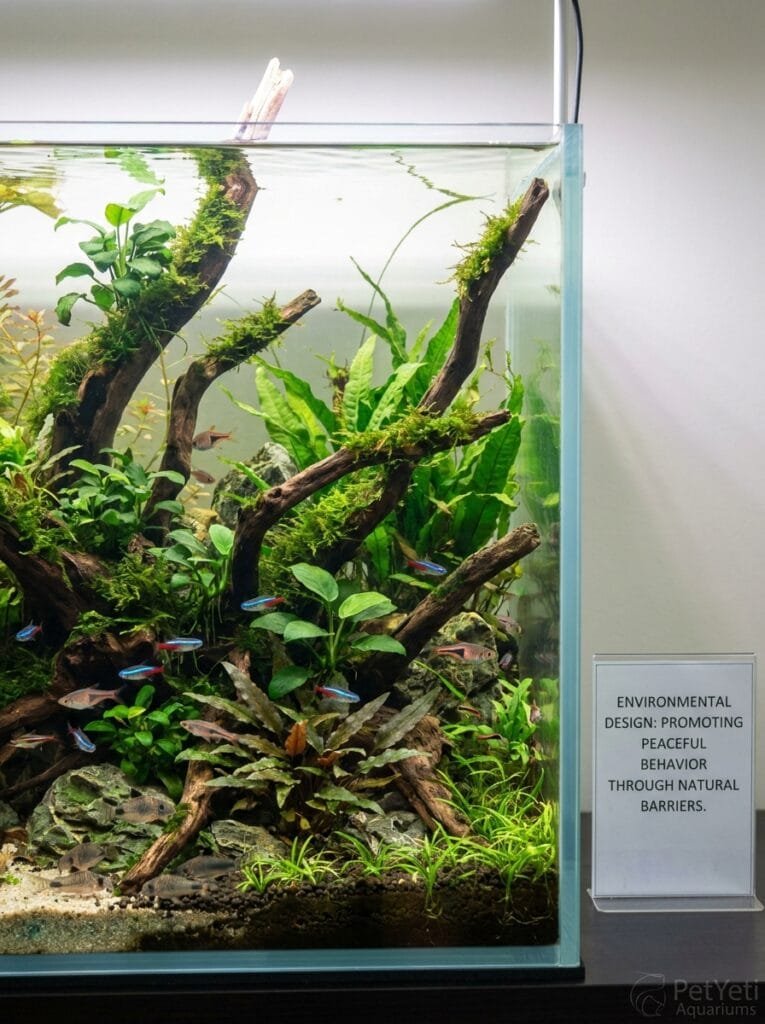
Plants, driftwood, rocks, caves, and other decorations help break up territories and create visual barriers. In many community tanks, simply adding more cover can dramatically reduce aggression because fish can escape, rest, and establish separate areas of the aquarium.
Signs the tank may lack enough cover:
- One fish is constantly hiding behind the filter or heater
- Chasing occurs mostly in open swimming areas
- Aggression decreases when decorations are rearranged
- The aquarium has very few plants or hiding spots
What to Do
Add live plants, caves, driftwood, or dense decorations so that chased fish can break the aggressor’s line of sight. Floating plants are especially useful because they create shaded areas and make many fish feel more secure.
PetYeti Pick
For beginner community tanks, live plants and a simple aquarium cave are often the easiest way to reduce chasing and create a calmer environment without changing your fish stock.
PetYeti Calm Tip
Try to create at least three separate hiding areas in a community aquarium. Fish that can retreat out of sight are usually much less likely to be chased continuously.
How to Reduce Chasing in a Community Aquarium
Many chasing problems can be improved by making the aquarium feel less crowded and more secure.
Helpful adjustments may include:
- Adding more plants
- Creating additional hiding places
- Rearranging decorations
- Providing visual barriers
- Ensuring adequate space
A well-designed aquarium often reduces stress and territorial disputes naturally.
Real-Life Example
Adding dense plant cover can sometimes dramatically reduce chasing because fish no longer feel exposed or forced to compete for the same space.
Calm Tank Checks That Can Reduce Chasing
When fish chasing happens often, the best fix is usually better tank layout, safer stocking, and more swimming space — not a quick product. Start by checking whether the aquarium feels crowded, whether one fish is being targeted, and whether the tank has enough plants, caves, and visual barriers.
Helpful PetYeti guides:
A Lack of Visual Barriers Can Increase Chasing
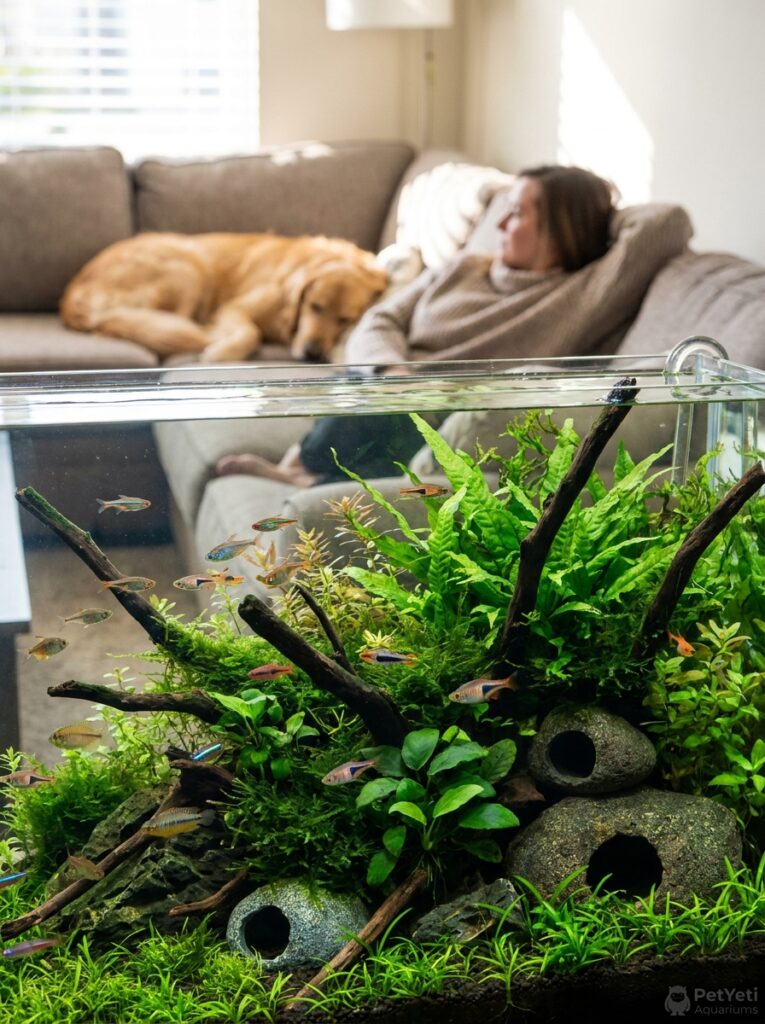
Aquariums that are too open sometimes encourage fish to interact more than necessary. Plants, driftwood, and decorations don’t just improve appearance. They help break lines of sight.
When fish constantly see each other, territorial individuals may feel the need to repeatedly defend their space. Visual barriers help create natural boundaries.
Real-Life Example
A fish that spends all day chasing tank mates in a sparsely decorated aquarium may become significantly calmer after live plants and driftwood are added to create separate zones within the tank.
This is one reason heavily planted aquariums often appear more peaceful.
The fish have more opportunities to avoid unnecessary encounters.
What to Do Today If Your Fish Are Chasing Each Other
If your fish are chasing each other right now, this is the order I’d follow today.
- Watch the chasing for 10–15 minutes and determine whether it is occasional or constant.
- Check for injuries, such as torn fins, missing scales, or bite marks.
- Test ammonia and nitrite and confirm both are 0 ppm.
- Add or rearrange hiding places so weaker fish can escape the aggressor’s line of sight.
- Reduce overcrowding if the tank is heavily stocked.
- Feed a little more strategically, spreading food across different areas of the tank so dominant fish cannot control the entire feeding zone.
- Separate the aggressor temporarily if one fish is repeatedly targeting another and causing injuries or preventing it from eating.
Many cases of fish chasing improve once territories are broken up, hiding places are added, and water quality is corrected, so start with those environmental changes before assuming the fish must be permanently separated.
When Should You Actually Be Concerned?
Occasional chasing is normal. Persistent aggression is not.
If one fish is consistently being targeted and begins showing signs of stress, action may be necessary.
Pay attention if you notice:
- Loss of appetite/ A fish refusing food
- Constant hiding
- Rapid breathing
- Physical injuries, Torn fins, Missing scales
- Loss of color
- Unusual swimming behavior
- Constant pursuit
- bvious signs of stress
Looking at the complete picture will help you determine whether the behavior is part of normal aquarium life or a developing problem.
Real-Life Example
A fish that briefly chases another fish away from food once or twice a day is very different from a fish that relentlessly hunts a tank mate from morning to night. One is normal behavior. The other is creating chronic stress.
If chasing is causing injuries, preventing feeding, or dramatically changing behavior, it’s time to investigate the cause and make adjustments.
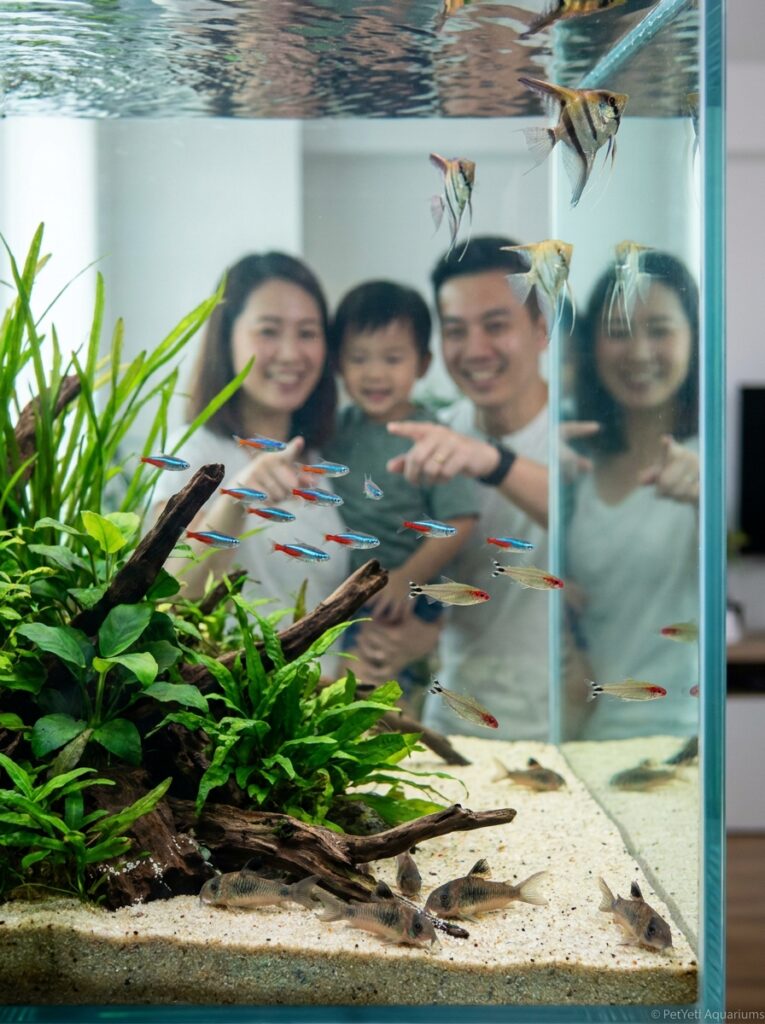
The key is learning to recognize the difference between natural interaction and behavior that’s creating stress.
Ask yourself:
- Are the fish eating normally?
- Are injuries occurring?
- Is one fish constantly hiding?
- Has anything changed recently?
- Does the aquarium provide enough space and cover?
Most of the time, the answers point toward a simple solution.
A well-designed aquarium with compatible species, adequate space, and plenty of visual barriers usually encourages calmer behavior.
The more you observe your fish, the easier it becomes to understand what they’re communicating.
And that’s one of the most rewarding parts of the hobby.
Related PetYeti Guides
Fish chasing is easier to understand when you look at the full tank setup, not just one moment of behavior. These related guides can help you check compatibility, tank size, and common stress signs in beginner aquariums.
Best Peaceful Fish for Small Community Aquariums
Use this if you want calmer stocking ideas for a small, beginner-friendly community tank.
Choosing the Right Aquarium Size for Beginners
Use this if chasing seems connected to crowding, limited swimming space, or territorial behavior.
Why Are My Fish Hiding? Common Reasons Explained
Use this if one fish is avoiding others, hiding all day, or acting stressed after being chased.
CONCLUSION
Fish chasing each other is not always a sign of aggression. In many aquariums, chasing is a normal part of feeding, breeding behavior, or establishing territory, and it often stops on its own once the fish settle down. The important question is whether the chasing is brief and harmless or constant and causing stress or injury.
If I were helping a beginner today, I’d start by checking the tank size, adding more hiding places, and testing ammonia and nitrite. Those three steps solve a surprisingly large number of chasing problems in community aquariums without needing to separate the fish permanently.
The good news is that most chasing problems are manageable once you identify the cause. A larger tank, cleaner water, gentle filtration, and a well-planted environment usually create a much calmer aquarium where weaker fish have room to escape and recover.
Best first step for most beginners
If you’re not sure why your fish are chasing each other, start by checking for injuries, testing ammonia and nitrite, and adding more hiding places. A liquid freshwater test kit and a few plants or aquarium caves are often the most useful first purchases for reducing aggression in a community tank.
FAQs
Is it normal for fish to chase each other?
Yes. Short bursts of chasing are often normal during feeding, breeding, or when fish establish a social hierarchy. It becomes more concerning when one fish is constantly targeted, injured, or prevented from eating.
How can I tell if my fish are playing or fighting?
Playful or social chasing is usually brief and both fish continue swimming normally afterward. Fighting is more likely when one fish relentlessly pursues another, fins become torn, scales are damaged, or the weaker fish hides constantly.
Why are my fish chasing each other after I added a new fish?
This is often related to territory or social hierarchy. Existing fish may chase the newcomer while establishing dominance, especially in smaller aquariums.
Can overcrowding cause fish chasing?
Yes. Overcrowding reduces available territory and hiding places, which can increase stress and aggression. A larger tank or fewer fish often helps reduce chasing.
Should I separate fish that are chasing each other?
Separate the fish if chasing is constant, injuries are occurring, or one fish is being prevented from eating or accessing shelter. Temporary separation can help prevent serious bullying while you address the underlying cause.
What is the fastest way to stop fish chasing?
The fastest helpful action is to check water quality, add hiding places, reduce overcrowding, and observe whether the chasing is related to feeding or territory. Many aggression problems improve once the environment becomes less stressful.