
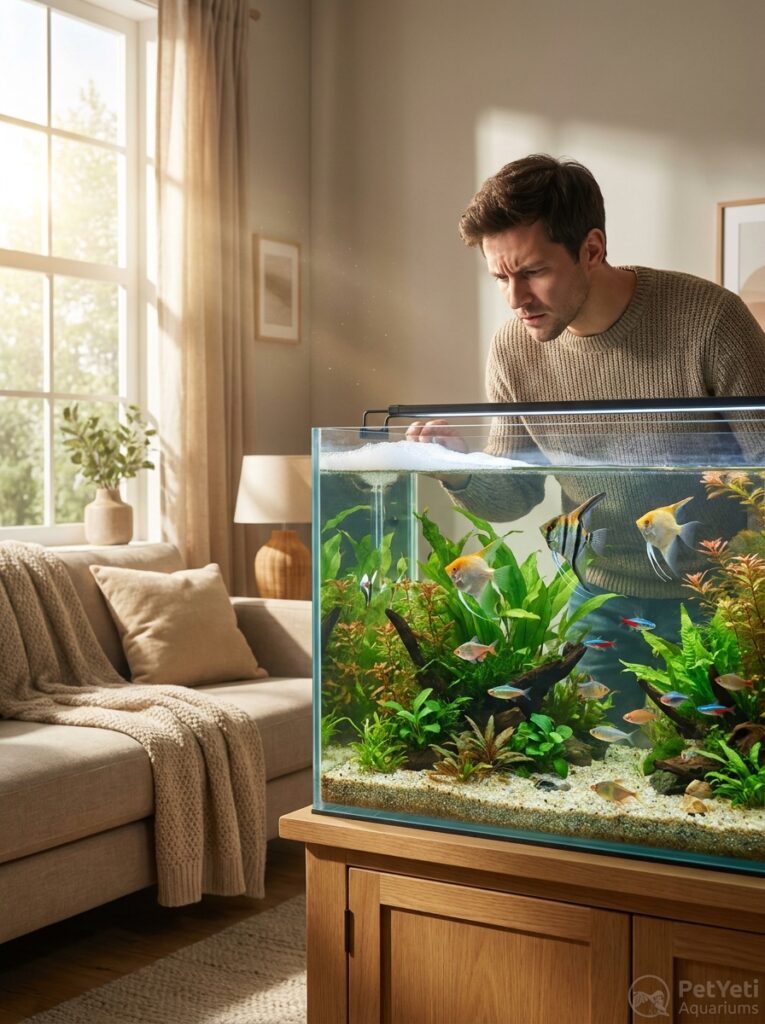
Waking up to froth or persistent bubbles and asking yourself why is my aquarium water foamy can be alarming. When foam gathers in the corners of your glass or clumps around your filter outflow, it is natural to worry about chemical contamination, soap residue, or poor water conditions.
In most home aquariums, foamy water is not an immediate emergency. It is usually caused by dissolved organic waste increasing water surface tension, natural bubble-nesting behaviors by male labyrinth fish, or safe reactions to certain water conditioners and medications. However, identifying the true root cause quickly is essential to keeping your fish healthy and restoring crystal-clear water.
PetYeti 10-Second Foamy Water Diagnostic
Clustered Small Bubbles in One Corner: If you keep a male Betta or Gourami and see a neat cluster of uniform bubbles tucked under a floating leaf, it is a completely harmless bubble nest.
Thick White Froth Near Filter Outflow: Indicates a buildup of Dissolved Organic Compounds (DOCs) or excess protein from overfeeding, decaying plants, or missed gravel siphoning.
Rainbow Sheen or Sudden Violent Bubbles: If the bubbles pop with an oily sheen or you recently used household cleaning sprays nearby, suspect soap/detergent contamination and perform an immediate 50% water change with activated carbon filtration.
- Is Aquarium Foam Always a Problem?
- 6 Main Reasons Your Aquarium Water Is Foamy
- 1. Excess Organic Waste Is One of the Most Common Causes
- 2. Poor Surface Agitation Can Allow Foam to Collect
- 3. Excess Waste and Protein Buildup (Most Common)
- 4. Foam After a Water Change Is Often Temporary
- 5. Harmless Bubble Nests (Bettas and Gouramis)
- 6. Soap, Detergents, or Chemical Contamination (Urgent)
- Quick Troubleshooting Checklist for Foamy Aquarium Water
- Related PetYeti Aquarium Maintenance Guides
- CONCLUSION
- FAQs
As an Amazon Associate, PetYeti earns from qualifying purchases. This comes at no additional cost to you and helps support the site. We only recommend products we genuinely believe can help create healthier and more enjoyable aquariums.
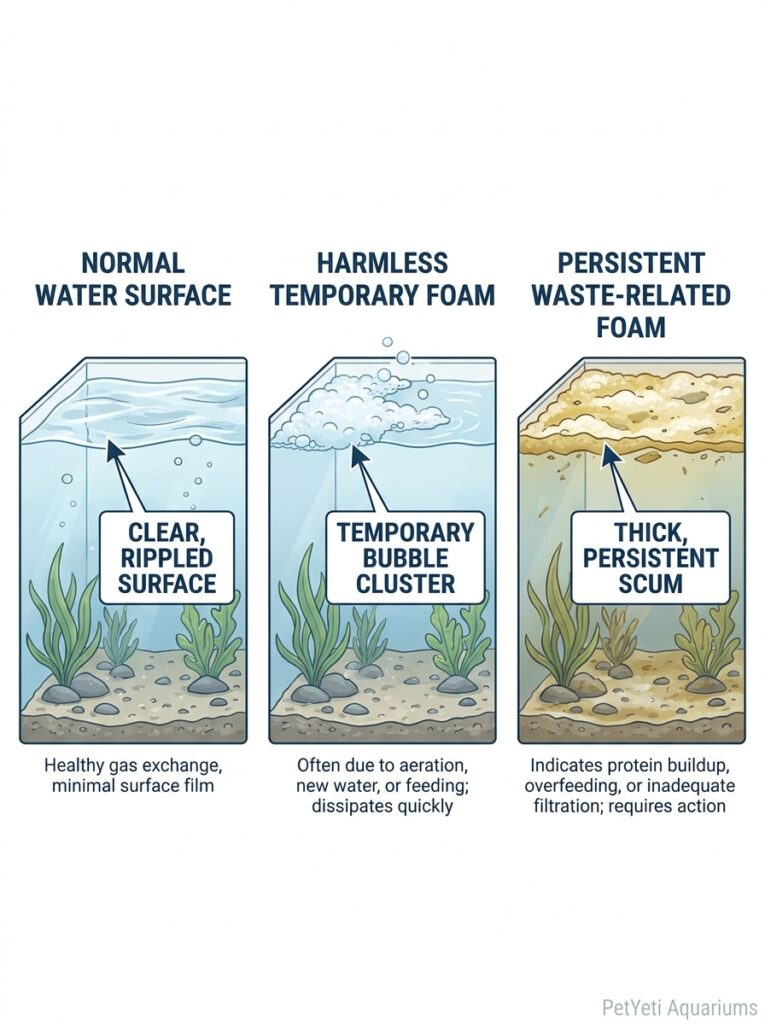
Is Aquarium Foam Always a Problem?
Not necessarily.
A small amount of foam can appear from time to time in perfectly healthy aquariums.
For example, after a water change, adding certain water conditioners, or increasing water movement, you may notice a few bubbles gathering near the edges of the tank.
These bubbles often disappear on their own within a short period of time. Persistent foam is different.
If thick foam remains on the surface for days or keeps returning after you remove it, there’s usually an underlying cause worth investigating.
The first step is figuring out whether the foam is temporary or ongoing.
6 Main Reasons Your Aquarium Water Is Foamy
1. Excess Organic Waste Is One of the Most Common Causes
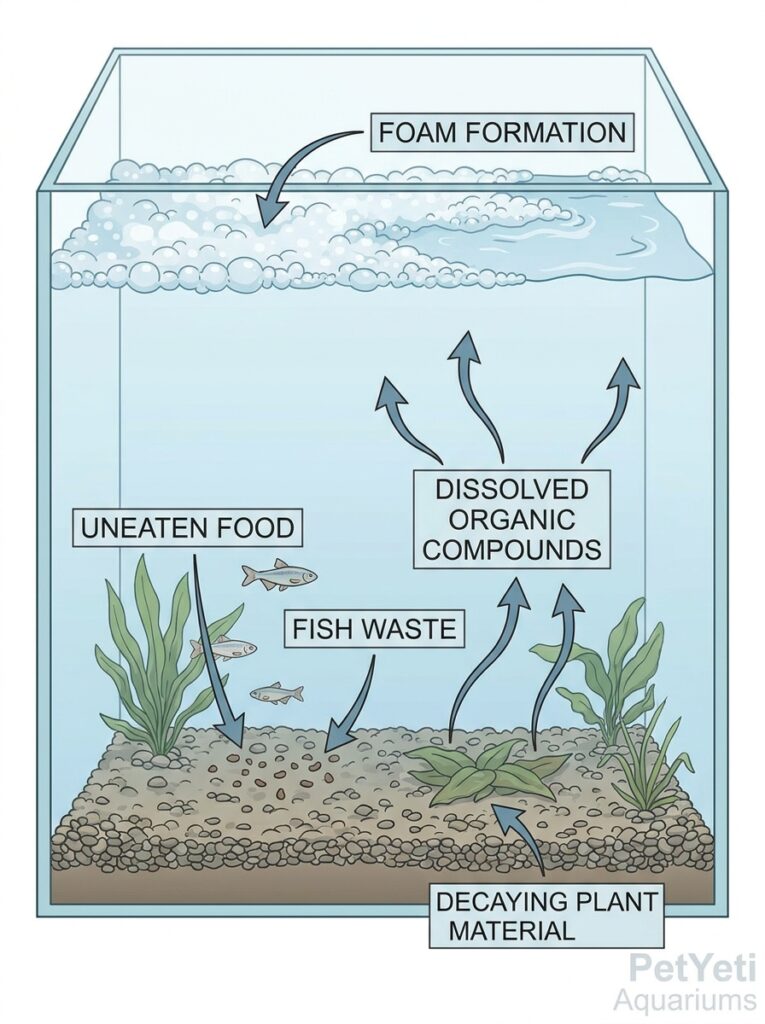
One of the most common causes of aquarium foam is excess organic waste.
As fish produce waste and leftover food breaks down, dissolved organic compounds begin accumulating in the water. When these compounds collect near the surface, they can create persistent foam, especially if water movement is limited.
Signs this may be the cause include:
• Foam collecting in corners
• Increased debris in the tank
• Dirty substrate
• Elevated nitrate levels
• Overfeeding
Real-Life Example
A beginner hobbyist noticed a patch of foam forming near the back corner of their community tank every few days. Water tests showed elevated nitrates, and they realized extra food was regularly being left behind after feeding. After reducing feeding and increasing maintenance, the foam gradually disappeared over the next couple of weeks.
How to Fix It
• Remove uneaten food promptly
• Vacuum debris during water changes
• Maintain a regular cleaning schedule
• Avoid overstocking the aquarium
What to Expect
If excess organic waste is causing the foam, improvements are usually noticeable after a few maintenance cycles.
2. Poor Surface Agitation Can Allow Foam to Collect
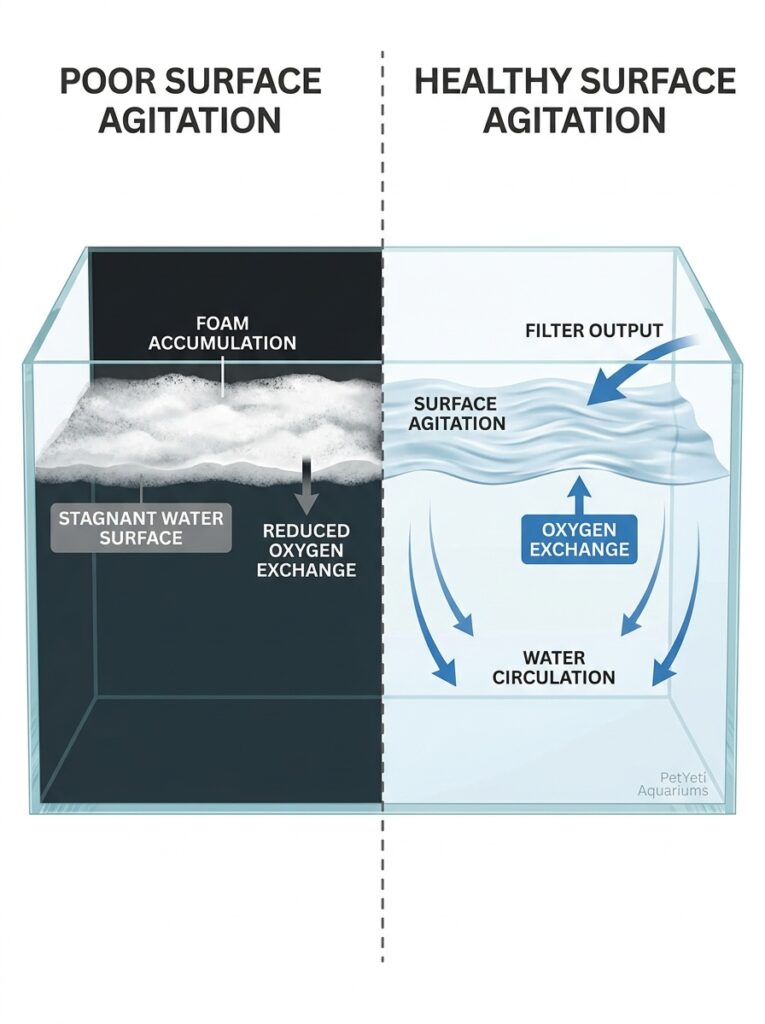
Sometimes the problem isn’t what’s in the water. It’s how the water is moving.
Aquariums rely on gentle surface movement to help exchange gases and prevent waste from accumulating at the top of the tank.
When the surface remains mostly still, proteins, oils, and dissolved organic compounds can gather and form patches of foam.
This is particularly common in:
• Tanks with very low flow
• Aquariums with clogged filters
• Heavily planted tanks
• Tanks where the filter output sits too low
Real-Life Example
A hobbyist with a heavily planted betta aquarium noticed a thin layer of foam collecting near one corner every week. Water tests looked fine, and the fish appeared healthy. The issue turned out to be minimal surface movement. After slightly adjusting the filter output to create more ripple at the surface, the foam gradually stopped returning.
How to Fix It
• Check that your filter is operating properly
• Clean clogged filter media
• Adjust the filter output to create gentle surface movement
• Avoid excessive dead spots where water barely circulates
What to Expect
If poor circulation is the cause, foam often becomes less noticeable within a few days.
3. Excess Waste and Protein Buildup (Most Common)
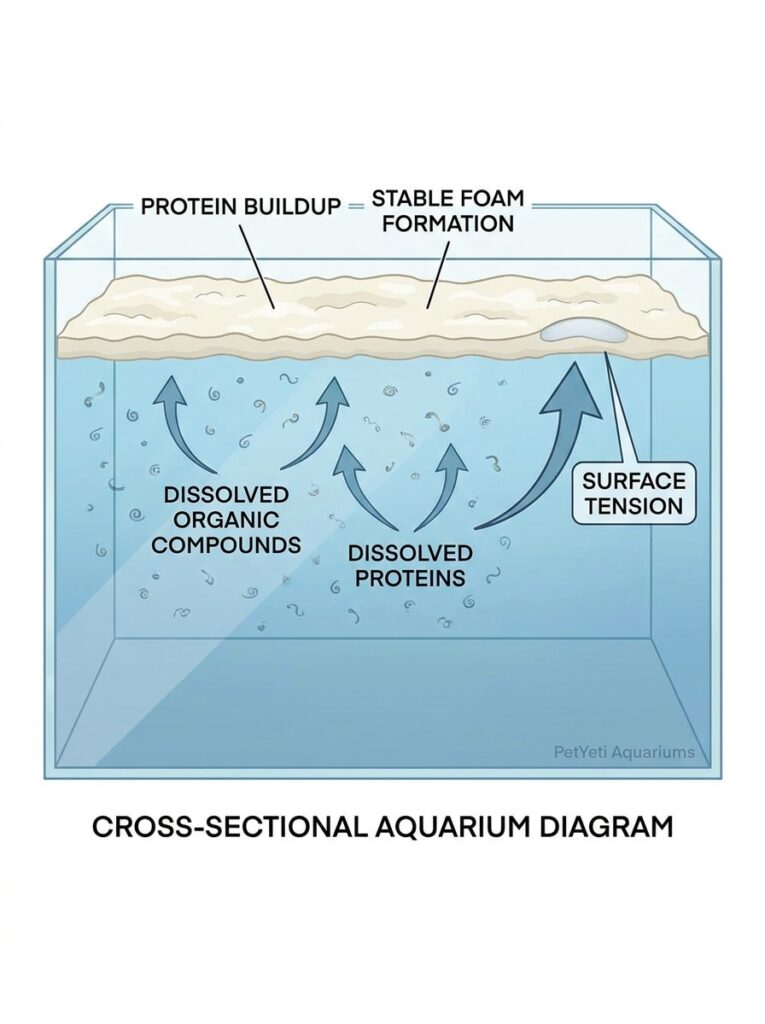
In most freshwater tanks, foam is caused by dissolved organic waste. When fish waste, uneaten fish food, and dead plant leaves break down, they release organic proteins into the water.
These proteins float to the top and make the surface of the water slightly sticky. When your filter splashes or an airstone bubbles, the air gets trapped under this sticky layer, creating white froth or foam along the edges of the glass.
Heavy feeding: Giving your fish more food than they can eat in two minutes.
Dirty substrate: Leftover food rotting deep inside gravel or sand.
Clogged filter pads: Old filter sponges holding trapped organic gunk.
PetYeti Fix: Use an Aquarium Gravel Vacuum Siphon during your weekly water changes to pull waste out of the substrate, and place Seachem Purigen or fresh Activated Carbon inside your filter to absorb dissolved organic waste.
• Increase maintenance frequency
• Remove decaying plant material
• Review feeding habits
Real-Life Example:
If you accidentally drop a pinch of extra flake food and don’t scoop it out, you might notice small patches of white bubbles gathering near your filter outflow the next morning. A quick 25% water change and gravel vacuum will clear it up right away.
What to Expect
Reducing dissolved waste typically leads to clearer water and less surface foam over time.
4. Foam After a Water Change Is Often Temporary
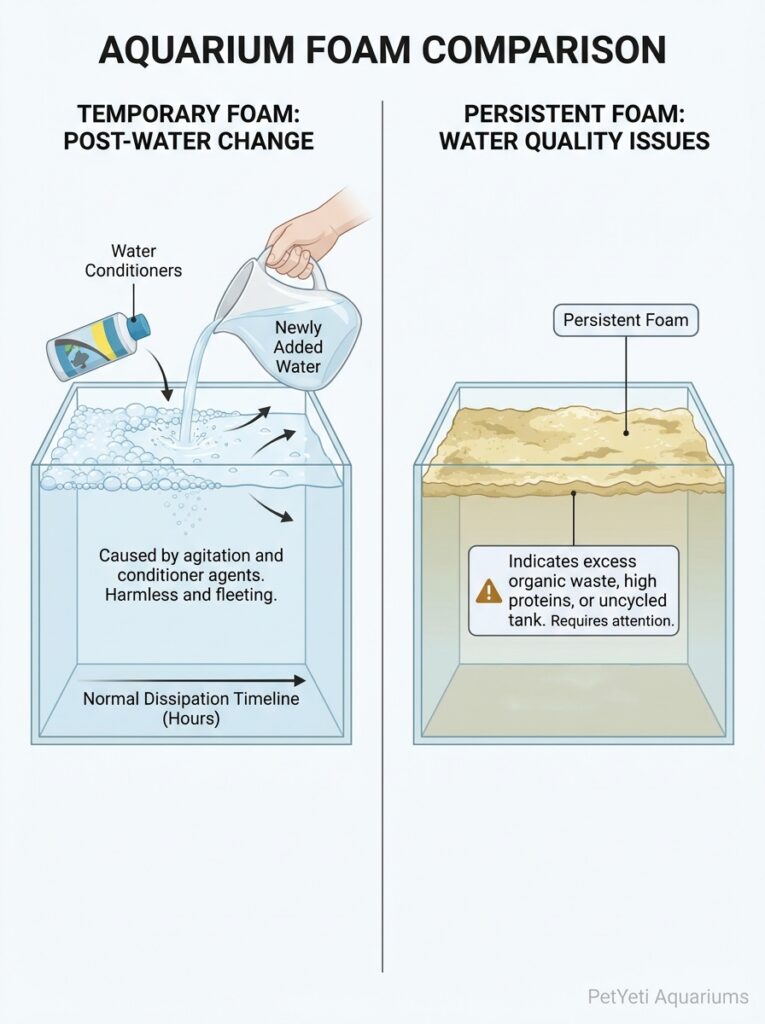
Not all foam indicates a problem. Many aquarium owners notice bubbles or foam shortly after performing a water change.
This can happen because:
• Water conditioners temporarily affect surface tension
• Fresh water introduces dissolved gases
• Increased water movement creates temporary bubbles
In most cases, these bubbles disappear on their own within several hours.
Real-Life Example
A beginner aquarium owner became concerned after seeing foam along the edges of the tank immediately following a large water change. By the next morning, the foam had completely disappeared without any additional action.
How to Fix It
Often, no fix is needed.
Simply monitor the tank and give the water time to stabilize.
What to Expect
Temporary foam usually disappears within a few hours to a day.
5. Harmless Bubble Nests (Bettas and Gouramis)
If you have a male Betta fish or a male Gourami, the foam you see might actually be great news.
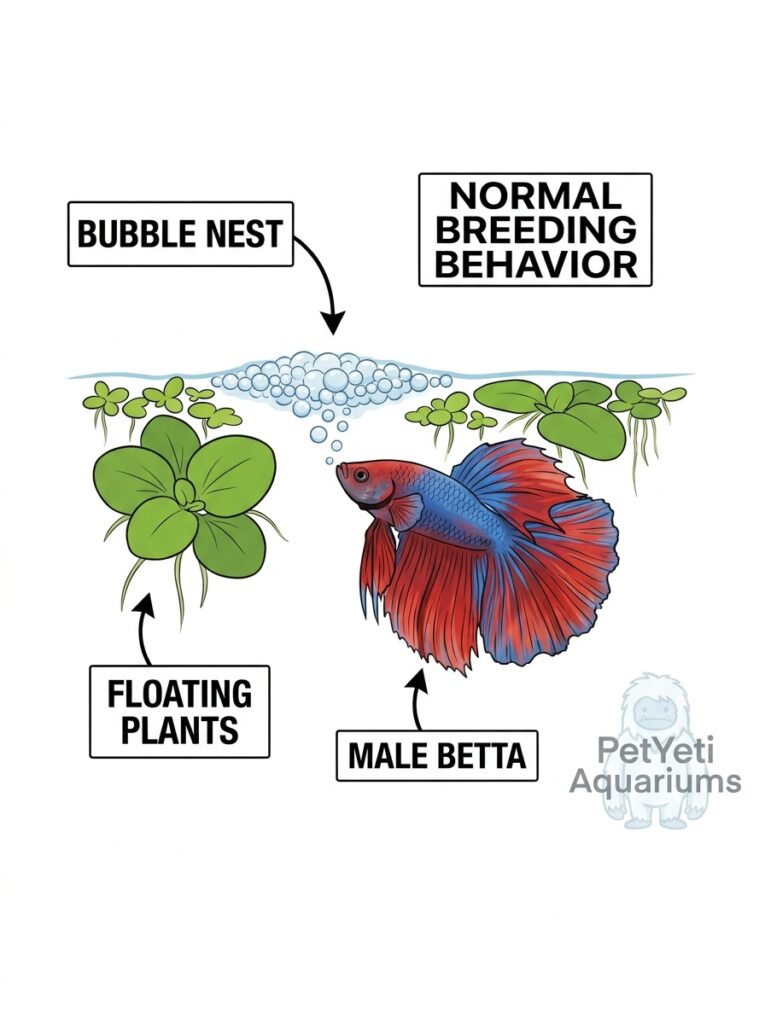
Male labyrinth fish build nests made of tiny, sticky saliva bubbles right at the surface. They do this when they feel healthy, safe, and ready to breed.
- What it looks like: A neat, tight cluster of uniform white bubbles, often tucked around a floating plant leaf or in a quiet corner of the tank.
- Is it dangerous? Not at all. It is 100% natural and shows that your fish feels comfortable in its home.
- What you should do: Leave it alone. You do not need to do any water changes or turn off your filter.
Real-Life Example:
You might wake up and see a quarter-sized raft of shiny bubbles resting under a floating plant leaf right near your Betta. That is simply his nest, and it means he is settled and happy.
How to Tell the Difference
A bubble nest usually looks organized and concentrated in one location.
Organic-waste foam often appears more random and spread across the surface.
What to Expect
If the foam is a bubble nest, no action is necessary.
It’s simply a normal part of betta behavior.
6. Soap, Detergents, or Chemical Contamination (Urgent)
This is the only type of foam that is dangerous to your fish.
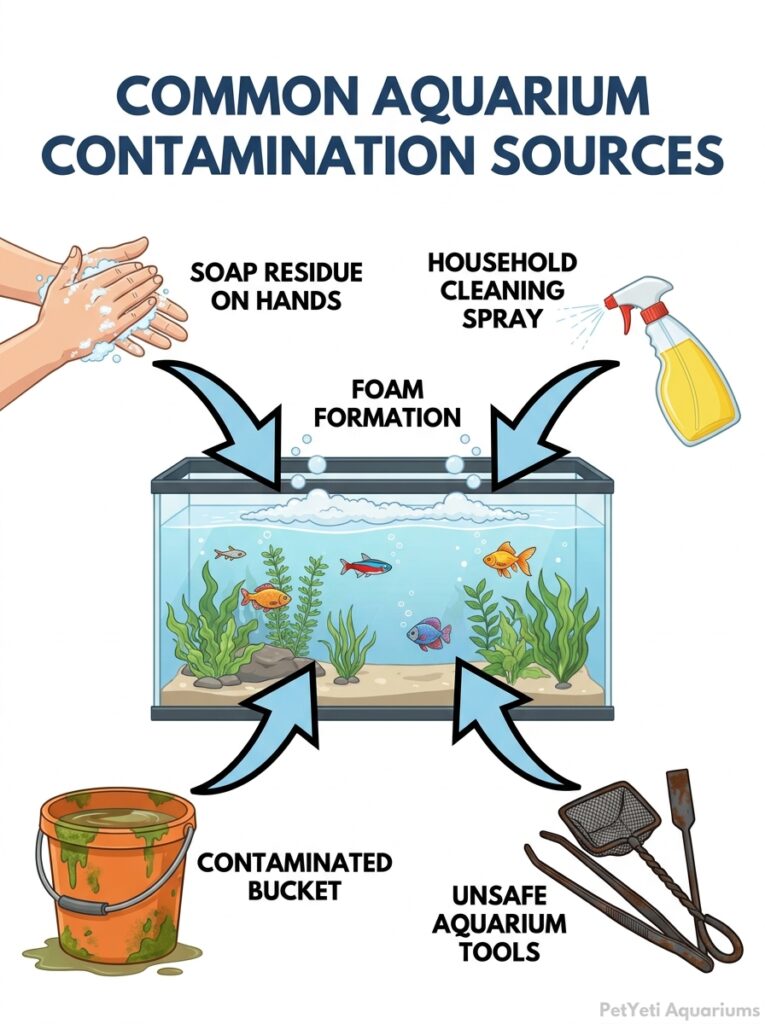
Fish gills are very sensitive to soap, detergents, hand lotions, and glass cleaners. Even a tiny trace of soap on your hands or a bucket can cause sudden, violent bubbles and harm your pets.
What it looks like: Large, soapy-looking bubbles that do not pop quickly, sometimes with a faint oily or rainbow sheen on the water.
Fish behavior: Fish gasping at the surface, swimming erratically, or clamping their fins.
Emergency Action:
- Drain the aquarium, rinse all decorations thoroughly with warm tap water (never use soap), and do an 80% water change.
- Move your fish to a clean container filled with fresh, dechlorinated water immediately.
- Add fresh Activated Carbon to your filter to remove any remaining chemical traces.
- Stop using any suspected product immediately
- Monitor fish behavior closely
- Use aquarium-only buckets and tools
Real-Life Example:
If someone sprays household window cleaner near the open top of the tank, or uses a bucket that had laundry detergent in it, foam will form quickly and the fish will swim frantically to the top for air.
PetYeti Care Pick: Always test your water parameters with the API 5-IN-1 TEST STRIPS whenever you see unusual foam or strange fish behavior.
What to Expect
If contamination is the cause, removing the source and performing water changes usually improves conditions fairly quickly.
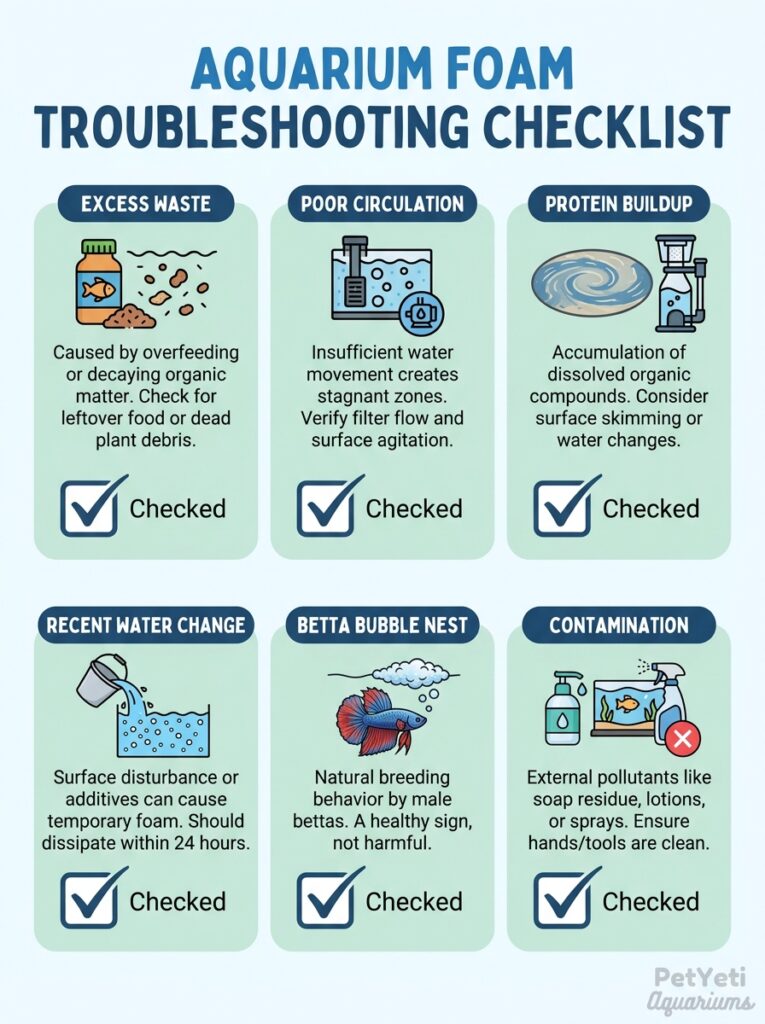
Quick Troubleshooting Checklist for Foamy Aquarium Water
If you’re not sure what’s causing the foam, work through this checklist:
✅ Check whether the foam appeared after a water change
✅ Look for signs of overfeeding
✅ Inspect the substrate for excess debris
✅ Confirm your filter is running properly
✅ Check for adequate surface movement
✅ Remove decaying plant material
✅ Consider whether a betta bubble nest is present
✅ Think about possible contamination from soaps or cleaners
✅ Test water quality if the issue persists
In many cases, the cause becomes obvious after a few simple observations.
Most aquarium foam problems are related to maintenance, circulation, or harmless fish behavior.
Related PetYeti Aquarium Maintenance Guides
- Water dropping down quickly too? Read our guide on why is my aquarium losing water so fast.
- Are your fish swimming strangely near the top? Check our troubleshooting tips on why do my fish stay at the surface.
- Looking for whisper-quiet filtration that runs clean? Browse our top quiet aquarium filters.
CONCLUSION
Seeing foam in your aquarium can make you worry, but it is usually very easy to fix. Most of the time, it is just a sign that your tank needs a light gravel vacuum, a small water change, or a little less food at dinner time.
Take a quick look at how the bubbles look and how your fish are acting. If your fish are swimming happily and eating normally, a simple maintenance session will have your aquarium water looking crystal-clear and peaceful again in no time.
PetYeti Quick Recap: Easy Fixes for Foamy Water
To remove organic surface foam quickly, use a simple Aquarium Gravel Vacuum Siphon during your weekly water change and add Seachem Purigen or fresh Activated Carbon to your filter chamber. Check your ammonia and nitrate levels with the API Freshwater Master Test Kit to make sure your water stays clean and balanced.
FAQs
Can foamy aquarium water harm my fish?
In most cases, no. Natural organic foam from fish food or a Betta bubble nest will not hurt your fish at all. The only foam that is dangerous is soap or chemical contamination, which requires an immediate water change.
Why does foam keep coming back after I remove it?
If the underlying cause remains, the foam will usually return. Common causes include excess organic waste, protein buildup, and poor surface agitation.
Can overfeeding cause aquarium foam?
Yes. Uneaten food breaks down and increases dissolved organic compounds in the water, which can contribute to foam formation.
Why does my betta tank have foam on top?
Male bettas often build bubble nests at the surface. These are normal and usually indicate that the fish feels comfortable in its environment.
Should I remove a betta bubble nest?
There’s usually no need to remove it. Bubble nests are a natural behavior and generally don’t harm the aquarium.
How long should foam last after a water change?
Temporary bubbles often disappear within a few hours. If foam remains for several days, it’s worth investigating other causes.
How do I get rid of white foam on my fish tank surface?
The easiest way is to do a 25% water change and vacuum the gravel to pull out leftover food and fish waste. You can also wipe the waterline with a clean paper towel and place fresh Activated Carbon or Seachem Purigen in your filter.
Why does my aquarium filter make so many bubbles and foam?
When organic proteins build up in the water, the surface becomes slightly sticky. When water splashes out of your filter or an airstone bubbles, the air cannot pop easily and turns into foam. Increasing gentle surface movement and keeping the filter media clean helps stop it.