
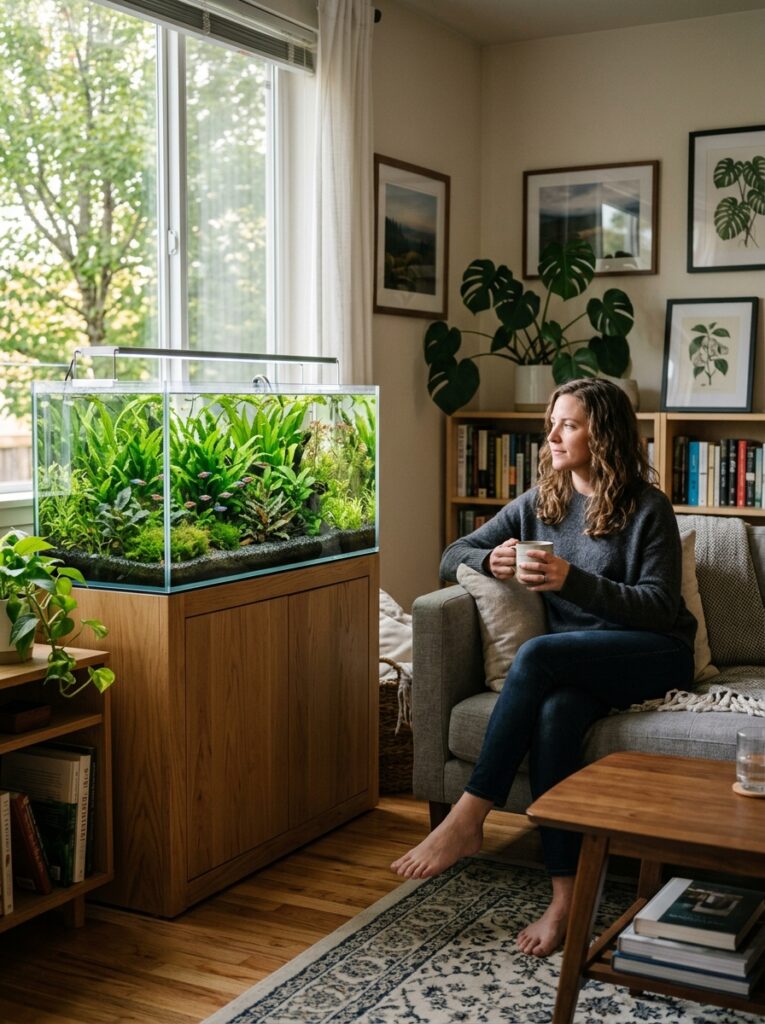
Low maintenance aquarium setups work best when you choose the right tank size, hardy fish, simple plants, and equipment that keeps the water stable.
A lot of people love the idea of owning an aquarium.
What they don’t love is the idea of spending every weekend cleaning it.
The good news is that a beautiful aquarium doesn’t have to become a second job. In fact, many of the most enjoyable home aquariums are designed to be simple, stable, and easy to maintain.
The secret isn’t working harder. It’s setting up the aquarium in a way that naturally reduces the amount of maintenance required.
Whether you’re a busy professional, a parent, or simply someone who prefers a more relaxed approach to fishkeeping, a low-maintenance aquarium can be a perfect fit.
In this guide, we’ll look at practical ways to create an aquarium that stays attractive, healthy, and enjoyable without demanding constant attention.
As an Amazon Associate, PetYeti earns from qualifying purchases. This comes at no additional cost to you and helps support the site. We only recommend products we genuinely believe can help create healthier and more enjoyable aquariums.
Quick Answer
A low maintenance aquarium starts with a stable tank size, hardy fish, easy plants, simple equipment, and a realistic cleaning routine. The goal is not to avoid aquarium care completely. The goal is to build a setup that stays healthy with fewer surprises and fits naturally into everyday life.
- What Makes an Aquarium Low Maintenance
- Start With the Right Aquarium Size
- Choose Hardy Fish Instead of Demanding Species
- Use Live Plants to Create a More Stable Aquarium
- Keep the Aquascape Simple
- Create an Easy Weekly Maintenance Routine
- Avoid Overcrowding the Aquarium
- Equipment That Can Make Aquarium Care Easier
- Building an Aquarium You Can Enjoy for Years
- CONCLUSION
- FAQs
WHAT TO CHECK FIRST
Before building a low maintenance aquarium, check these basics:
- Tank size — very small tanks often need more attention than medium tanks.
- Fish choice — hardy, peaceful fish are easier for beginners.
- Plant choice — easy live plants can help support a more stable tank.
- Stocking level — fewer fish usually means less waste and less stress.
- Cleaning routine — simple weekly care works better than occasional deep cleaning.
What Makes an Aquarium Low Maintenance
A low-maintenance aquarium isn’t one that never needs care.
It’s an aquarium that’s designed to stay stable with less effort.
Many beginners assume the secret is buying expensive equipment or choosing a tiny tank that takes up less space. In reality, low-maintenance aquariums are usually built around a few simple principles: stable water conditions, hardy fish, live plants, and a setup that’s easy to manage.
Think of it like maintaining a home. A well-organized space naturally stays cleaner and requires less work than one that’s constantly fighting against clutter. Aquariums work much the same way.
The goal isn’t to eliminate maintenance completely. It’s to create a system that works with your lifestyle instead of demanding constant attention.
When everything is set up thoughtfully from the beginning, a healthy aquarium can become one of the most relaxing parts of your home rather than another item on your to-do list.
Start With the Right Aquarium Size
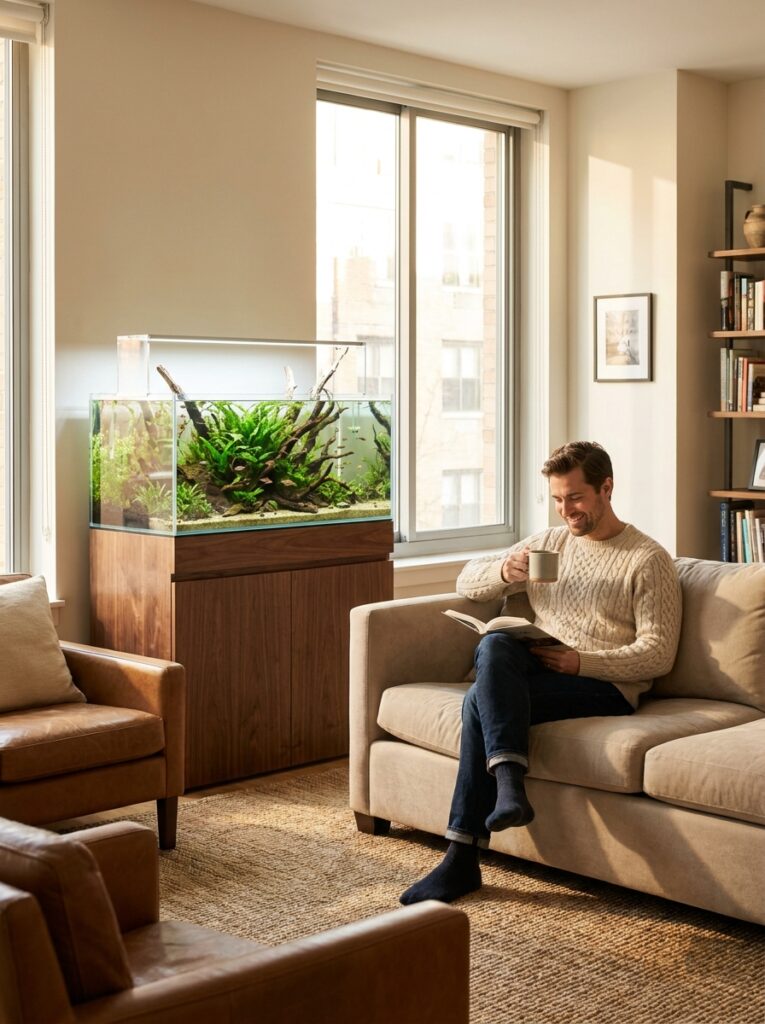
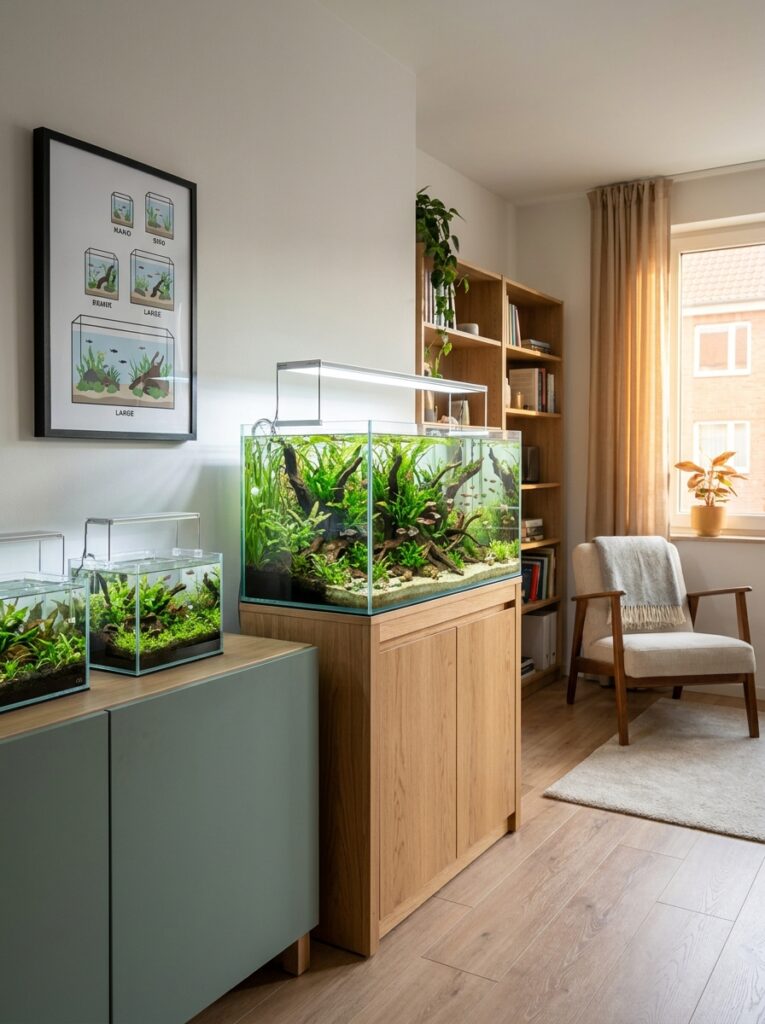
One of the biggest surprises for beginners is that larger aquariums are often easier to maintain than very small ones.
Small tanks can look appealing because they take up less space, but they also tend to react more quickly to changes in water conditions. A missed water change or a little extra food can have a bigger impact in a tiny aquarium than it would in a larger setup.
That doesn’t mean you need a massive aquarium.
For many people, a medium-sized tank strikes the perfect balance between easy maintenance and practical living space. It provides more stability while still fitting comfortably into apartments, home offices, and living rooms.
If your goal is simplicity, choosing an aquarium that’s slightly larger than the absolute minimum is often one of the smartest decisions you can make.
A stable aquarium usually requires less intervention, and less intervention often means less stress for both you and your fish.
⭐ PetYeti Pick: Easier Beginner Tank Size
Recommended Option: Medium Aquarium Starter Kit
Best For:
✓ Busy beginners
✓ Apartment aquariums
✓ Home offices
✓ Low-maintenance planted setups
Why We Like It:
✓ More stable than tiny tanks
✓ Usually easier to manage long term
✓ Practical size for real homes
✓ Good starting point for peaceful community aquariums
PetYeti Take:
For many busy beginners, a slightly larger aquarium is often easier to enjoy than a tiny tank because water conditions tend to stay more stable. Stability is one of the biggest secrets behind low-maintenance fishkeeping.
Who Should Skip It:
Skip this if you already have a stable aquarium size picked out or you only have space for a very small tank.
👉 View Medium Aquarium Kit Options
Choose Hardy Fish Instead of Demanding Species
One of the easiest ways to reduce aquarium maintenance is to choose fish that are naturally adaptable and beginner-friendly.
Many new hobbyists are drawn to fish because of their appearance, which is completely understandable. The challenge is that some species require very specific water conditions, specialized diets, or extra attention to thrive.
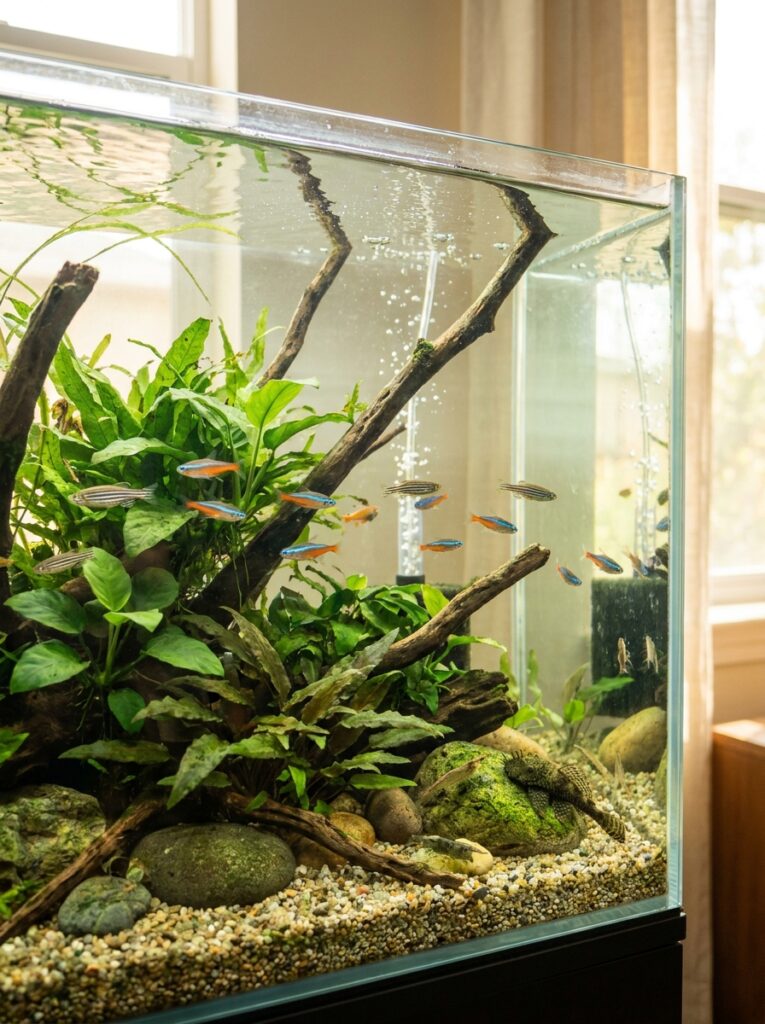
If your goal is a low-maintenance aquarium, focus on fish known for their hardiness and peaceful nature. Species that adapt well to stable community aquariums tend to be less stressful to care for and more forgiving of small mistakes.
This doesn’t mean settling for boring fish. Plenty of beautiful species are also beginner-friendly. In fact, many of the most popular aquarium fish earned that popularity because they combine attractive colors with relatively simple care requirements.
A low-maintenance aquarium starts with realistic expectations. Choosing fish that match your lifestyle is often more important than choosing fish that simply look impressive.
Use Live Plants to Create a More Stable Aquarium
Many beginners assume live plants make an aquarium more complicated.
In reality, the right plants can actually make life easier.
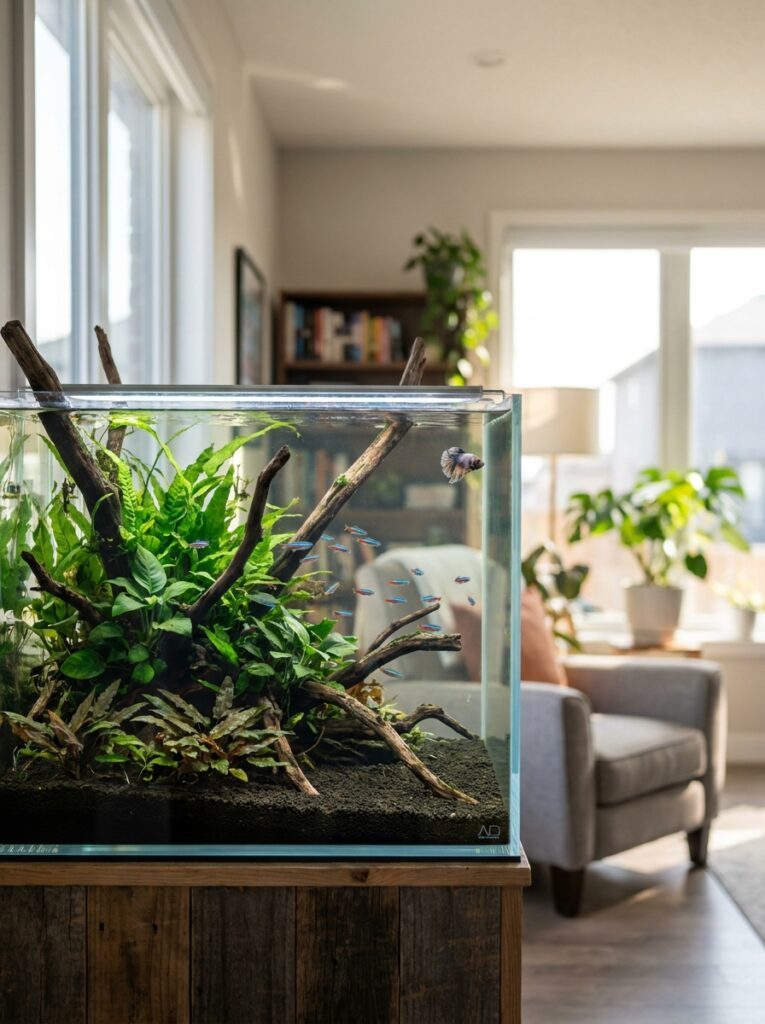
Aquatic plants help absorb nutrients from the water, provide natural cover for fish, and contribute to a more balanced environment. A healthy planted aquarium often feels more stable than a completely bare setup.
You don’t need an advanced aquascape packed with dozens of plant species. Even a few easy beginner plants can make a noticeable difference.
Helpful Low-Maintenance Plant Option
Recommended Option: Beginner Aquarium Plant Bundle
Best For:
✓ Low-maintenance aquariums
✓ Betta tanks
✓ Community tanks
✓ Natural planted setups
Why We Like It:
✓ Adds greenery without complicated care
✓ Helps the aquarium feel more natural
✓ Beginner-friendly plant selection
✓ Supports a calmer aquarium look
PetYeti Take:
A few hardy live plants can make an aquarium feel more stable, natural, and relaxing without turning it into an advanced aquascaping project.
Who Should Skip It:
Skip this if your tank has fish that dig up plants or you prefer a very simple artificial-decor setup.
👉 View Beginner Aquarium Plant Options
Plants also add a softer, more natural look to the aquarium. They help transform a fish tank into something that feels alive and integrated into the room rather than simply sitting there as a piece of equipment.
For busy people, that’s a win-win. The aquarium looks better, feels more natural, and often requires less intervention over time.
Keep the Aquascape Simple
A beautiful aquarium doesn’t have to be complicated.
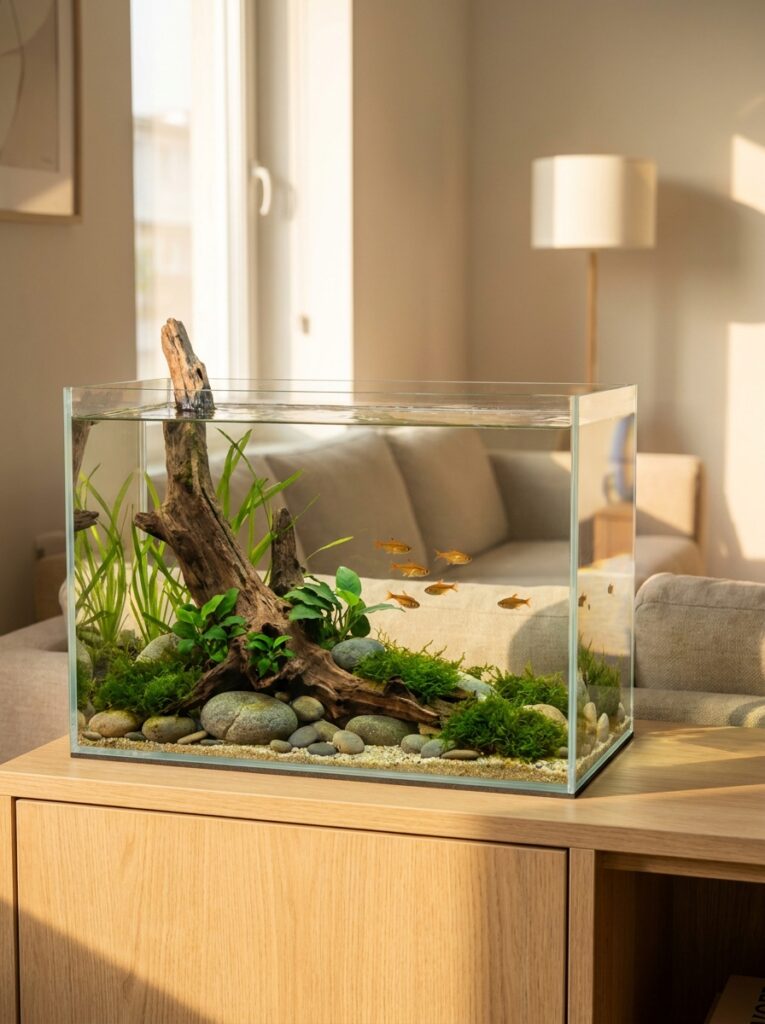
Some of the most attractive setups are built around a simple layout, a handful of healthy plants, and enough open space for fish to move comfortably.
It’s tempting to add more decorations, more plants, and more accessories, especially when you’re getting started. But every additional element creates something else that may eventually need attention.
A simpler aquascape is usually easier to clean, easier to maintain, and easier to enjoy.
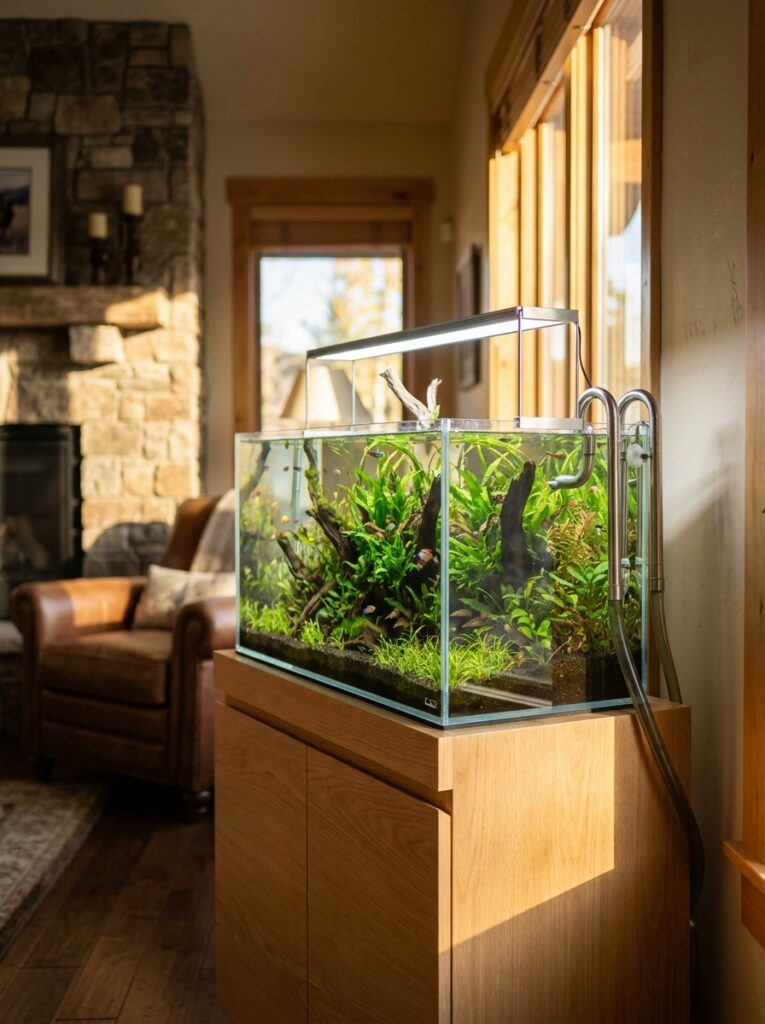
This approach also fits perfectly with the PetYeti style. Natural wood, healthy greenery, and uncluttered layouts tend to create a calmer atmosphere than tanks packed with decorations.
When in doubt, choose simplicity. Your future self will probably thank you.
Create an Easy Weekly Maintenance Routine
One reason some aquariums start feeling like work is that maintenance gets postponed until it becomes a big job.
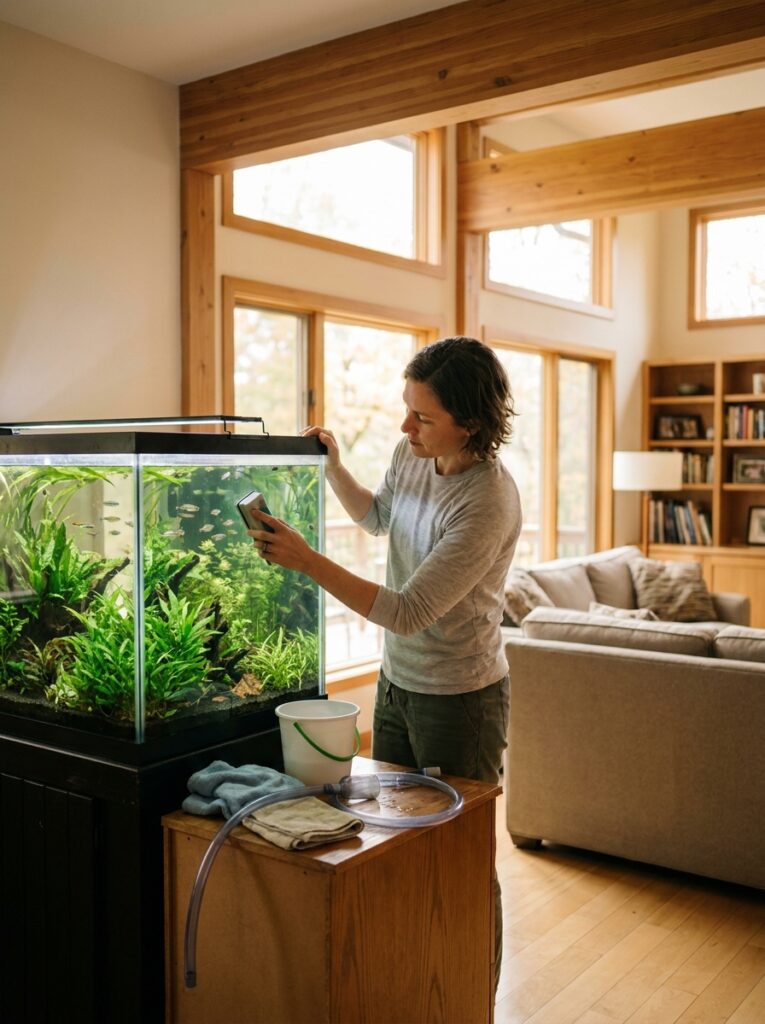
A much easier approach is to spend a few minutes each week doing small tasks before problems have a chance to build up.
For many aquariums, that might mean checking equipment, wiping away any visible algae on the glass, trimming a few plant leaves, and performing a routine water change. None of these tasks take very long on their own, but together they help keep the aquarium looking its best.
The goal isn’t perfection. It’s consistency.
Think of it the same way you might care for houseplants or tidy a favorite room in your home. Small amounts of regular attention are often more effective than occasional marathon cleaning sessions.
When maintenance becomes part of a simple weekly routine, the aquarium stays healthier and feels much less demanding.
Helpful Maintenance Tool
Recommended Option: Beginner Gravel Vacuum
Best For:
✓ Routine water changes
✓ Busy aquarium owners
✓ Beginner tanks
✓ Cleaner substrate
Why We Like It:
✓ Combines water changes with debris removal
✓ Simple to use
✓ Makes maintenance more efficient
✓ Helps prevent waste buildup
PetYeti Take:
A gravel vacuum is one of the simplest tools for making routine aquarium care easier. For busy people, anything that turns maintenance into a quick habit is worth considering.
Who Should Skip It:
Skip this if you already have a gravel vacuum that works well for your tank size and cleaning routine.
Avoid Overcrowding the Aquarium
When it comes to low-maintenance aquariums, more fish doesn’t always mean more enjoyment.
Overcrowding is one of the most common reasons aquariums become harder to manage. More fish typically means more waste, more competition for space, and a greater demand on the aquarium’s biological balance.
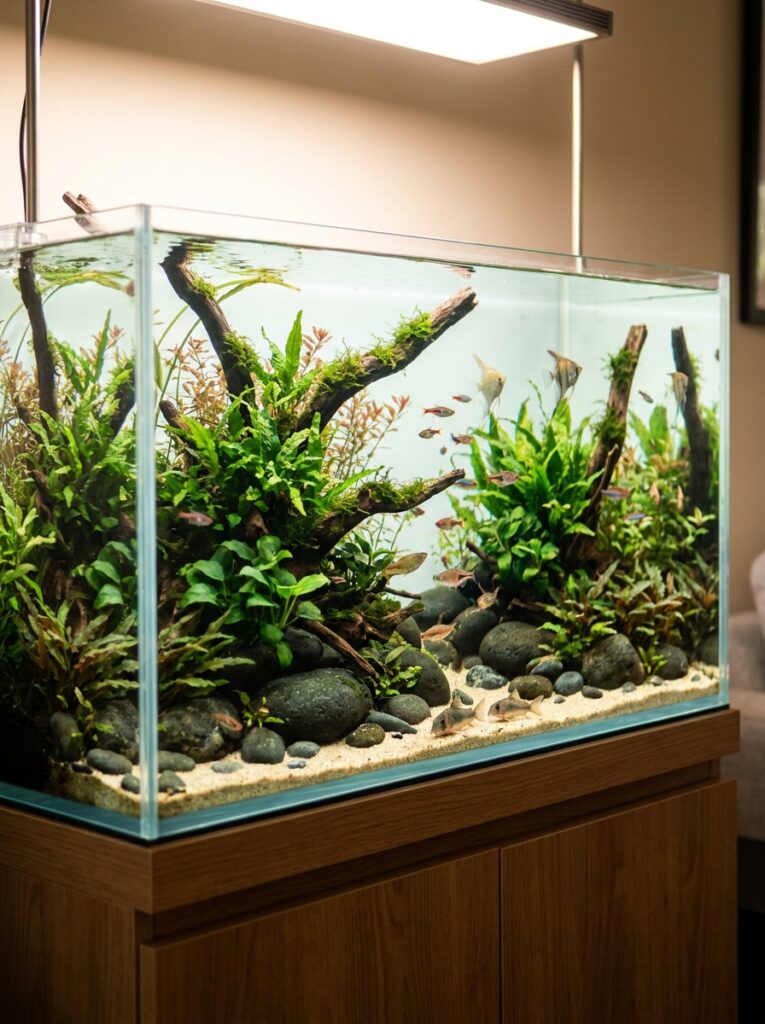
A lightly stocked aquarium often feels calmer and easier to care for. Fish have more room to behave naturally, water quality tends to remain more stable, and maintenance becomes simpler.
There’s also a visual benefit.
Many of the most attractive aquariums don’t look crowded at all. Instead, they create a sense of balance between fish, plants, and open space.
If you’re aiming for a peaceful aquarium that fits into a busy lifestyle, resist the temptation to fill every inch of the tank. Sometimes a little restraint creates a much better result.
Equipment That Can Make Aquarium Care Easier
A low-maintenance aquarium isn’t about buying every gadget available.
It’s about choosing reliable equipment that quietly does its job in the background.
A quality filter, appropriate lighting, and a heater when needed can go a long way toward keeping the aquarium stable. Good equipment helps create consistency, which is one of the biggest factors in long-term aquarium success.
That said, expensive doesn’t always mean better.
For most beginners, simple and dependable equipment is often the smartest choice. Reliable gear tends to create fewer headaches and makes it easier to establish a routine you can stick with.
The best aquarium equipment is the kind you rarely have to think about because it simply works.
When the basics are covered, you can spend less time troubleshooting and more time enjoying the aquarium itself.
Building an Aquarium You Can Enjoy for Years
The most successful aquariums aren’t always the most complicated.
They’re the ones that fit naturally into everyday life.
When you choose hardy fish, use live plants, avoid overcrowding, and follow a simple maintenance routine, the aquarium becomes easier to care for and more enjoyable to own.
That’s especially important for busy people. A fish tank should be a source of relaxation, not another responsibility that constantly demands attention.
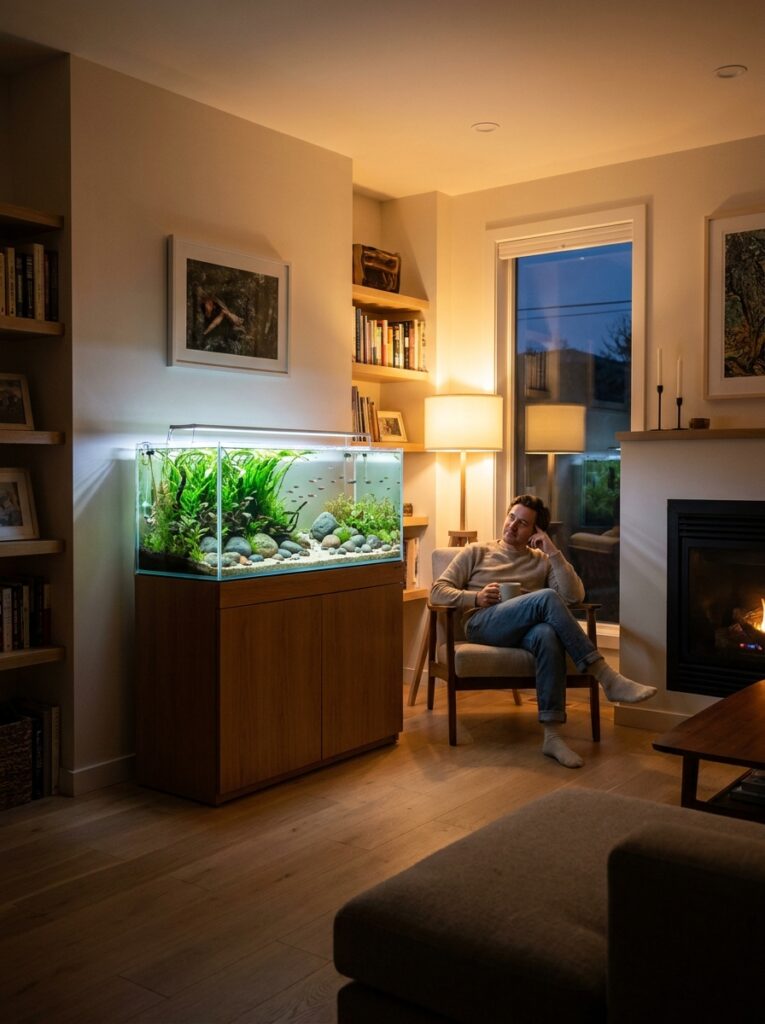
Over time, a well-designed low-maintenance aquarium becomes part of the home. It adds life to a room, creates moments of calm, and gives you something beautiful to enjoy without requiring endless effort.
And honestly, that’s what many people are looking for in the first place—a peaceful aquarium that enhances their space while fitting comfortably into a busy lifestyle.
Related PetYeti Guides
A low-maintenance aquarium works best when you choose the right tank size, simple equipment, easy plants, and a realistic cleaning routine.
Still choosing the tank? Read choosing the right aquarium size for beginners.
Need simple filtration? See our beginner aquarium filter guide.
Want easy plant options? Read our low-light aquarium plants guide.
Trying to clean less without neglecting the tank? See our betta fish tank cleaning routine.
Tank keeps getting messy? Read why your aquarium keeps getting dirty.
CONCLUSION
A low-maintenance aquarium isn’t about doing as little as possible.
It’s about making smart choices from the beginning so the aquarium stays healthy and enjoyable with less effort.
By choosing hardy fish, incorporating live plants, keeping the layout simple, and following a manageable routine, you can create an aquarium that fits comfortably into a busy lifestyle.
The result is more than just an easy-to-care-for fish tank. It’s a peaceful living feature that adds beauty, movement, and a sense of calm to your home.
And when an aquarium feels enjoyable rather than overwhelming, you’re much more likely to stick with the hobby and appreciate it for years to come.
FAQs
What is the easiest type of aquarium to maintain?
A moderately sized planted aquarium with hardy fish is often one of the easiest setups to maintain. Stable conditions generally require less intervention over time.
Are live plants difficult to care for?
Not necessarily. Many beginner-friendly aquatic plants are surprisingly easy to grow and can help create a more stable aquarium environment.
What size aquarium is best for busy people?
Many hobbyists find that medium-sized aquariums offer a good balance between stability and practicality. Very small tanks can sometimes require more frequent attention.
How often should I clean a low-maintenance aquarium?
Most aquariums benefit from a simple weekly routine that includes checking equipment, light cleaning, and regular water changes.
Can a community aquarium be low maintenance?
Yes. Choosing compatible, peaceful fish and avoiding overcrowding can make a community aquarium much easier to manage.
Do I need expensive equipment for a low-maintenance aquarium?
No. Reliable, appropriately sized equipment is usually more important than buying the most expensive options available.