
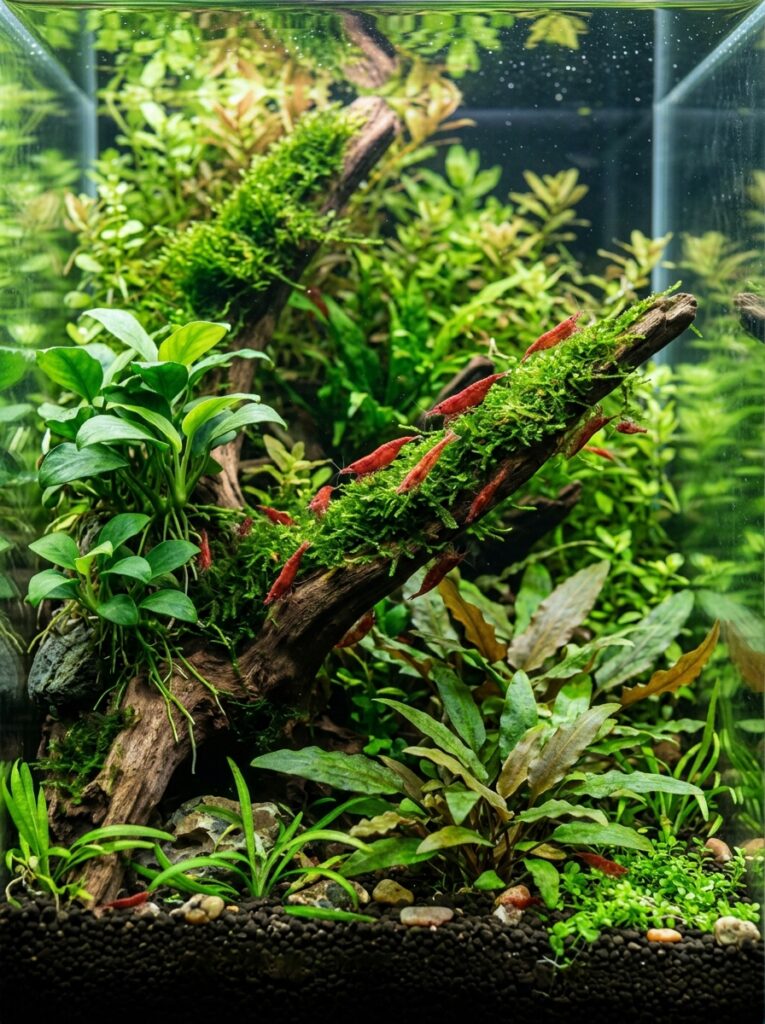
Plants play a much bigger role in shrimp tanks than many beginners realize.
While fish often use plants for shelter and visual comfort, shrimp depend on them for much more.
Live plants provide hiding places, grazing surfaces, protection for young shrimp, and a stable environment that helps the aquarium feel more natural.
In many successful shrimp tanks, plants become the foundation of the ecosystem.
The good news is that you don’t need advanced aquascaping skills to create a plant-filled shrimp aquarium.
Many beginner-friendly plants grow easily, look beautiful, and offer valuable benefits for shrimp.
Whether you’re keeping Cherry Shrimp, Amano Shrimp, or other peaceful freshwater species, choosing the right plants can make a noticeable difference.
Let’s explore some of the best aquarium plants for creating a healthy and attractive shrimp tank.
- Why Plants Are So Important in Shrimp Tanks
- What Makes a Good Shrimp Tank Plant?
- Java Moss: The Classic Shrimp Plant
- Anubias Nana: Easy and Shrimp-Friendly
- Java Fern: A Low-Maintenance Favorite
- Cryptocoryne Species for Natural Shelter
- Floating Plants for Additional Cover
- Common Plant Mistakes in Shrimp Tanks
- Building a Balanced Planted Shrimp Aquarium
- CONCLUSION
- FAQs
As an Amazon Associate, PetYeti earns from qualifying purchases. This comes at no additional cost to you and helps support the site. We only recommend products we genuinely believe can help create healthier and more enjoyable aquariums.
Why Plants Are So Important in Shrimp Tanks
If you’ve ever watched shrimp in a planted aquarium, you’ll quickly notice something.
They’re constantly exploring.
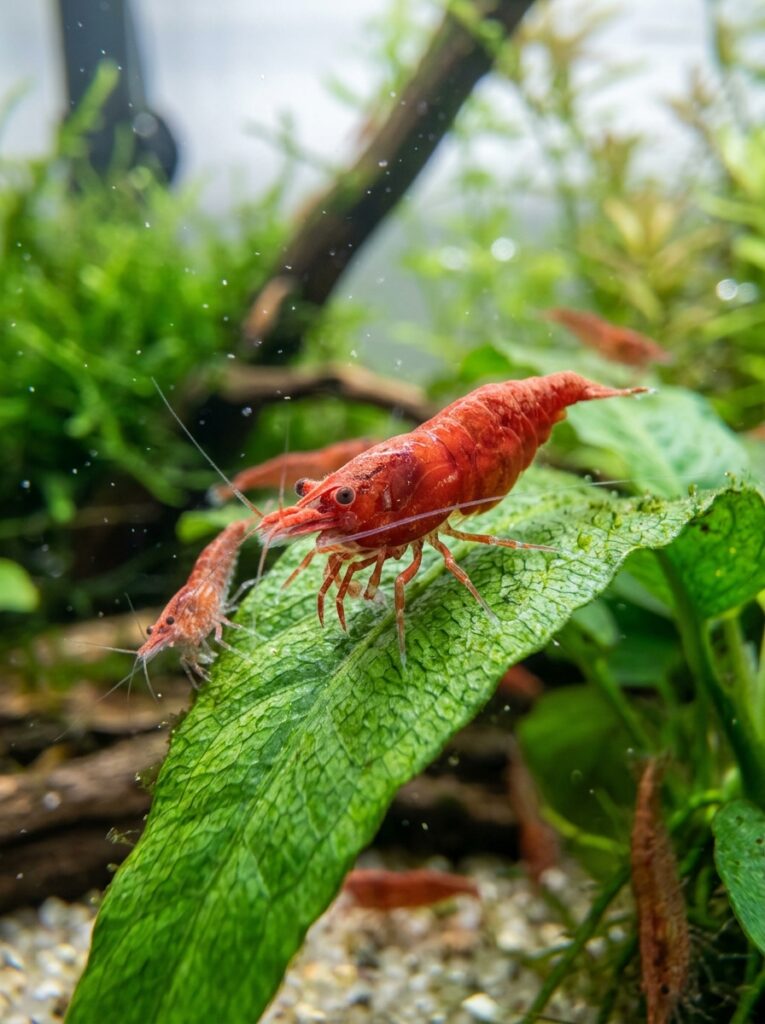
Shrimp spend much of their day searching for tiny food particles, algae, and biofilm growing on available surfaces. Plants provide countless areas for this natural behavior.
Unlike many fish, shrimp interact directly with nearly every part of the aquarium. They climb leaves, investigate roots, and graze across plant surfaces throughout the day.
Plants also provide important shelter.
Young shrimp, often called shrimplets, are extremely small and benefit from having dense areas where they can hide and grow safely.
In addition, planted aquariums tend to feel more stable and natural. The combination of plants, microorganisms, and biological activity creates an environment that closely matches the conditions shrimp often prefer.
For these reasons, plants are often considered one of the most valuable additions to a shrimp tank.
What Makes a Good Shrimp Tank Plant?
Not every aquarium plant offers the same benefits for shrimp.
Some plants provide dense cover.
Others create grazing surfaces where biofilm naturally develops.
Some species remain compact and work well in nano tanks, while others grow tall and help create a sense of depth.
A good shrimp tank plant usually shares several characteristics.
It should be easy to maintain, compatible with beginner setups, and capable of providing surfaces where shrimp can forage naturally.
Plants that develop broad leaves, fine textures, or complex root systems are often especially valuable.
Another important factor is growth habit.
Fast-growing plants can help fill empty spaces quickly, while slower-growing species may require less maintenance.
The ideal planted shrimp tank usually combines several different plant types to create a balanced and natural environment.
Java Moss: The Classic Shrimp Plant
If there is one plant that appears in countless successful shrimp tanks, it’s Java Moss.
Its popularity comes from a simple combination of benefits.
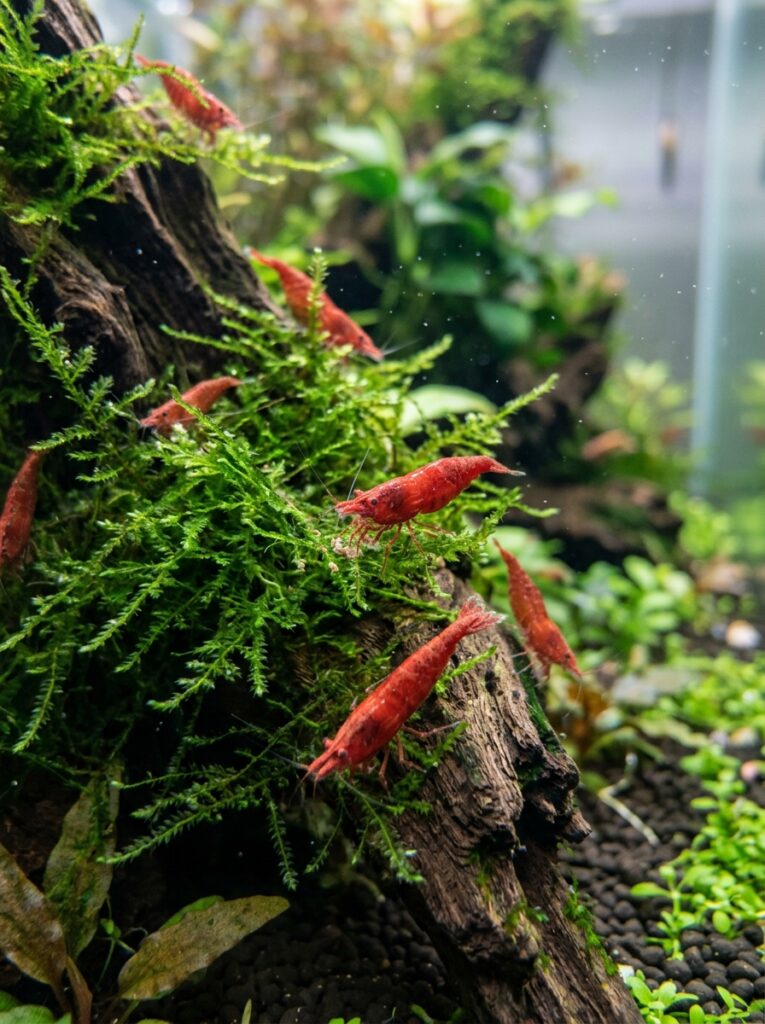
Java Moss is easy to grow, adaptable, and creates a dense network of fine growth where shrimp love to spend time.
The intricate structure of the moss provides countless surfaces for biofilm and microorganisms to develop. Shrimp naturally graze on these surfaces throughout the day, making Java Moss both a decorative and functional addition to the aquarium.
Young shrimp also benefit from the shelter it provides.
The dense growth can help shrimplets find cover while they grow, especially in community aquariums.
Another advantage is versatility.
Java Moss can be attached to driftwood, rocks, mesh structures, or allowed to grow naturally throughout the aquarium.
For beginners creating their first shrimp tank, Java Moss is often one of the safest and most rewarding plant choices available.
⭐ PetYeti Pick: Best Shrimp Tank Plant
Recommended Option: Java Moss Aquarium Plant
Best For:
✓ Cherry shrimp tanks
✓ Baby shrimp cover
✓ Shrimp grazing areas
✓ Nano planted aquariums
Why We Like It:
✓ Excellent surface area for biofilm
✓ Provides shelter for shrimplets
✓ Very beginner-friendly
✓ Works on driftwood, rocks, and mesh
PetYeti Take:
Java Moss is one of the most useful plants for shrimp tanks because it supports natural grazing behavior while also giving young shrimp places to hide and feel secure.
Anubias Nana: Easy and Shrimp-Friendly
Anubias Nana has earned a reputation as one of the most beginner-friendly aquarium plants available.
Its thick green leaves, slow growth rate, and ability to thrive in a variety of aquarium conditions make it a popular choice for both fish and shrimp keepers.
While Anubias doesn’t provide the dense cover of Java Moss, it offers something equally valuable.
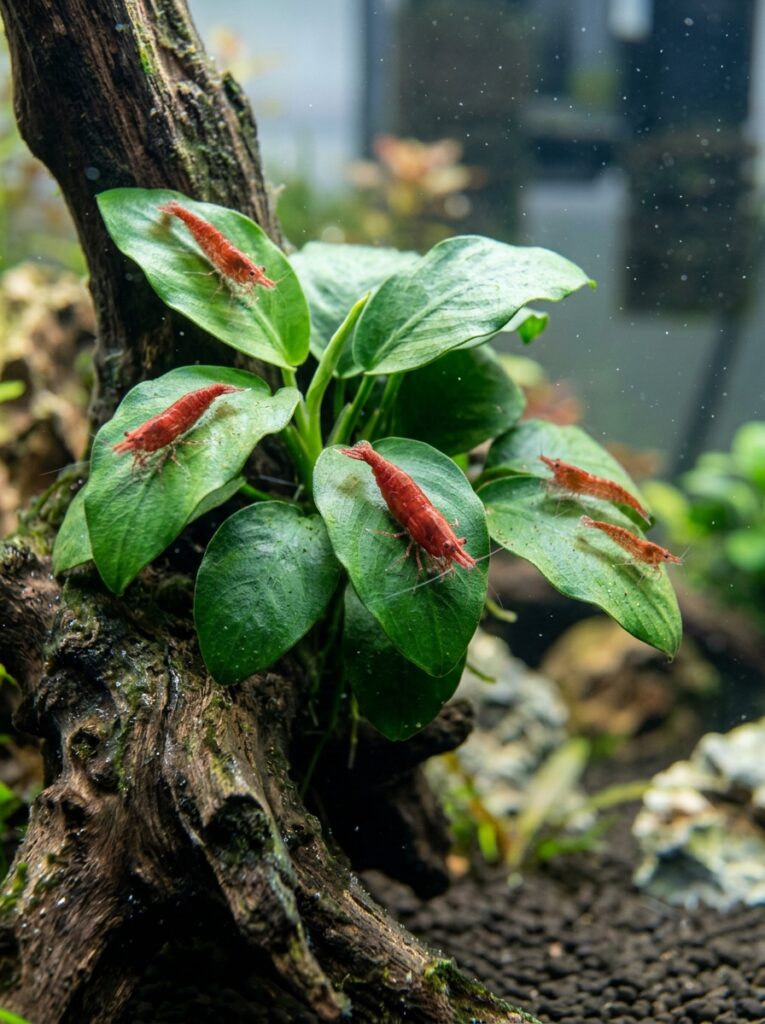
Its broad leaves become excellent grazing surfaces.
Over time, biofilm and microscopic organisms naturally develop on these surfaces, creating feeding opportunities for shrimp.
Anubias Nana is also easy to incorporate into an aquascape.
Rather than planting it directly into the substrate, many aquarists attach it to driftwood or rocks where it becomes a natural part of the hardscape.
The result is a plant that adds structure, beauty, and functionality without demanding constant maintenance.
For beginners seeking a reliable shrimp tank plant, Anubias Nana is often one of the easiest recommendations.
Easy Broad-Leaf Option
Recommended Option: Anubias Nana Aquarium Plant
Best For:
✓ Shrimp tanks
✓ Betta-shrimp setups
✓ Driftwood layouts
✓ Low-maintenance aquariums
Why We Like It:
✓ Broad leaves create grazing surfaces
✓ Very hardy
✓ Slow-growing and easy to manage
✓ Looks beautiful attached to hardscape
PetYeti Take:
Anubias Nana is a great shrimp tank plant when you want something sturdy, attractive, and easy to care for. Its broad leaves naturally become useful grazing surfaces over time.
Java Fern: A Low-Maintenance Favorite
Java Fern is another classic aquarium plant that works exceptionally well in shrimp tanks.
Much like Anubias, it is known for being easy to grow and adaptable to a wide range of aquarium conditions.
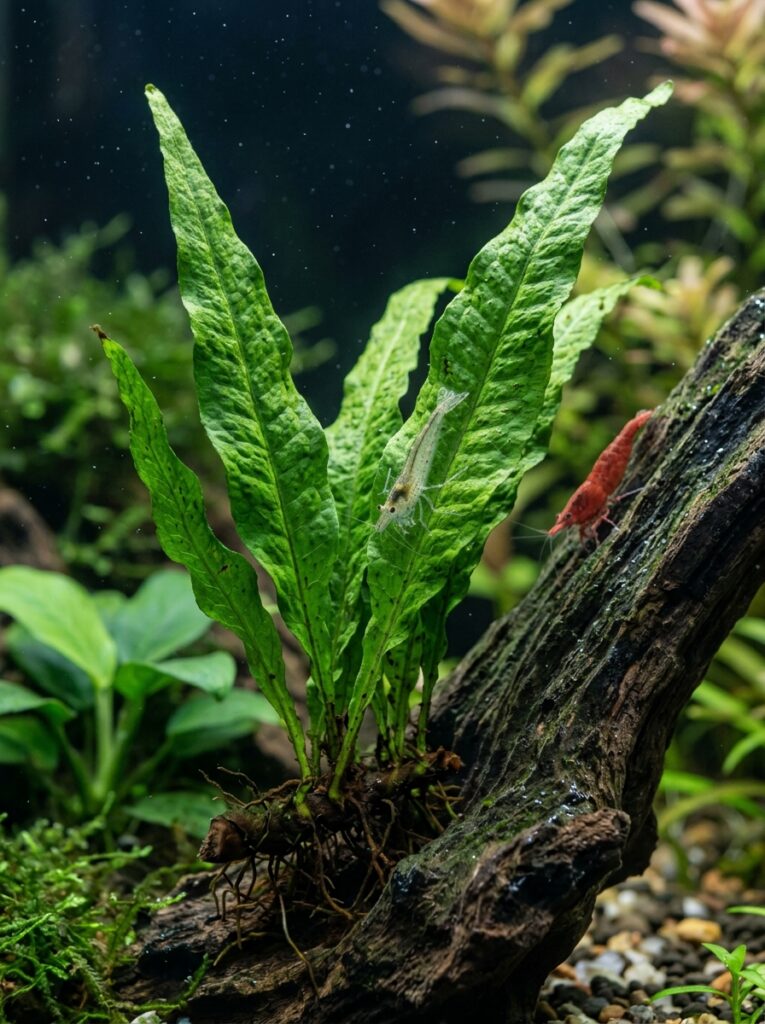
Its long textured leaves provide additional surfaces where shrimp can forage and explore.
The plant also contributes visual height to the aquarium, helping create depth and structure within the layout.
Java Fern is commonly attached to driftwood and rocks rather than planted directly into the substrate.
This makes it easy to position throughout the aquarium and incorporate into various aquascaping styles.
For shrimp keepers, the appeal of Java Fern lies in its simplicity.
It grows steadily, requires relatively little maintenance, and helps create a natural environment where shrimp can thrive.
Combined with Java Moss and Anubias Nana, it forms part of what many hobbyists consider the ideal beginner shrimp plant collection.
Cryptocoryne Species for Natural Shelter
Cryptocoryne plants are often overlooked by beginners, yet they can be incredibly useful in shrimp aquariums.
These plants are known for their attractive leaf shapes, manageable growth habits, and ability to create dense planting areas.
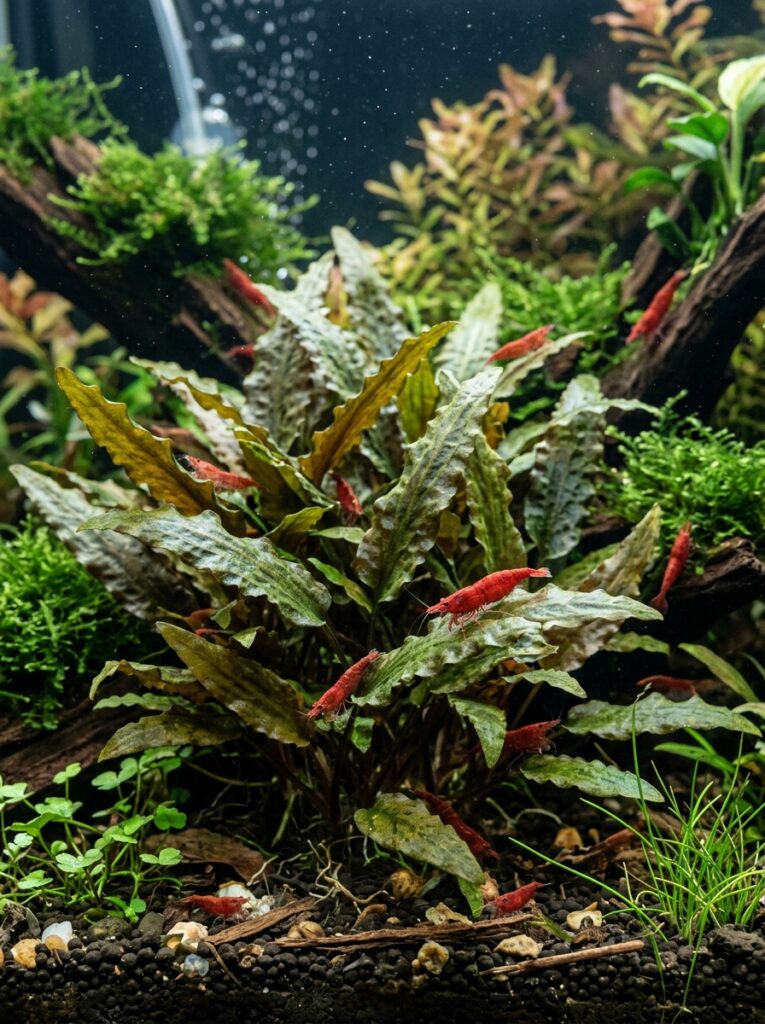
Unlike mosses that provide intricate textures, Cryptocoryne species create clusters of leaves that function like miniature underwater forests.
Shrimp frequently move through these areas while foraging or seeking shelter.
Many popular varieties remain compact enough for nano aquariums while still adding visual fullness to the aquascape.
Cryptocoryne Wendtii is one of the most commonly recommended options because it adapts well to a variety of aquarium conditions and is generally easy to care for.
For aquarists seeking a natural planted look, Cryptocoryne species can help bridge the gap between low-growing plants and taller background vegetation.
They add both structure and practicality to a shrimp aquarium.
Floating Plants for Additional Cover
When people think about aquarium plants, they often focus on what grows in the substrate.
But some of the most useful shrimp tank plants actually float at the water’s surface.
Floating plants provide a unique set of benefits that many planted aquariums lack.
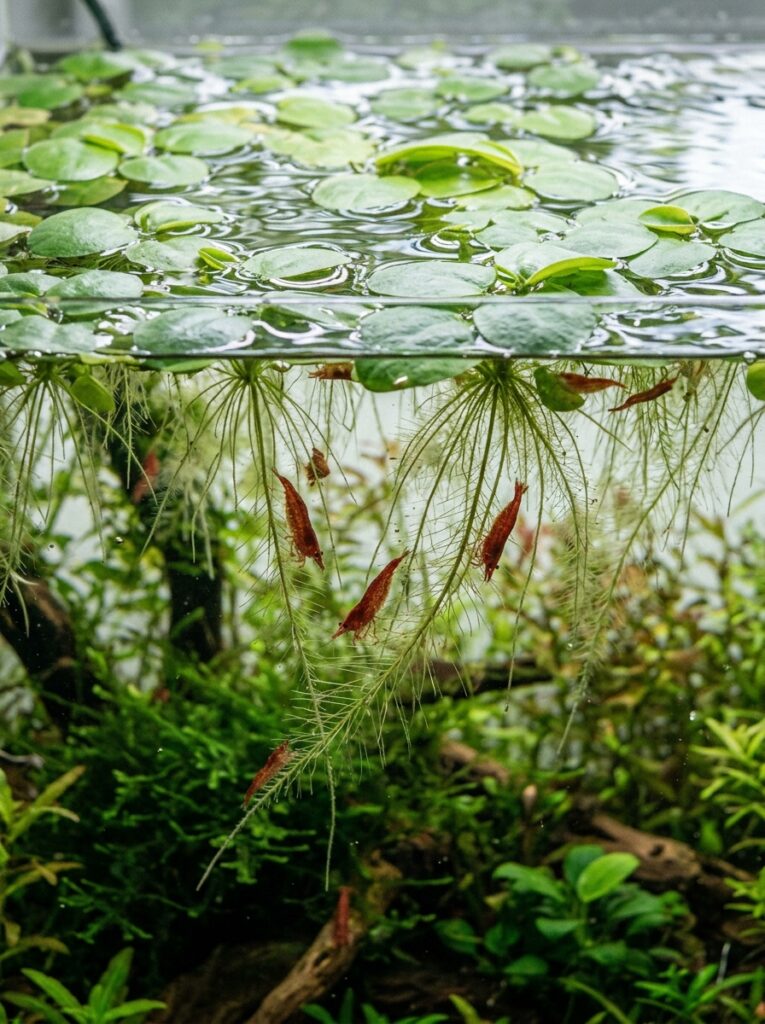
Their roots hang beneath the surface, creating a network of shelter where shrimp frequently explore and graze. These root systems also add another layer of visual interest to the aquarium.
Species such as Amazon Frogbit are popular because they create gentle shade while helping the tank feel more natural.
This can be especially useful in aquariums with bright lighting.
Floating plants also contribute to the layered appearance that makes planted tanks look more mature and established.
Instead of having visual interest only at the bottom of the aquarium, you create activity and texture at the surface as well.
For shrimp keepers looking to add depth and complexity to a planted aquarium, floating plants are often one of the most effective additions.
Helpful Floating Cover
Recommended Option: Amazon Frogbit
Best For:
✓ Shrimp tanks
✓ Nano aquariums
✓ Surface cover
✓ Natural planted layouts
Why We Like It:
✓ Hanging roots create extra grazing areas
✓ Helps soften bright lighting
✓ Adds surface-level shelter
✓ Creates a natural layered look
PetYeti Take:
Amazon Frogbit can make a shrimp tank feel more natural by adding shelter and texture near the surface. Just keep some open water so the tank stays balanced and easy to maintain.
Common Plant Mistakes in Shrimp Tanks
Adding plants to a shrimp aquarium is generally beneficial, but a few common mistakes can make the tank more difficult to manage.
One mistake is choosing plants based solely on appearance.
Some plants may look attractive in photos but require stronger lighting, additional fertilization, or more maintenance than a beginner expects.
Another common issue is creating a tank with only one type of plant.
While this can work, combining different plant forms often creates a more balanced environment.
Mosses provide grazing surfaces.
Broad-leaf plants create feeding areas.
Floating plants add cover near the surface.
Together, they create a more diverse habitat.
Some hobbyists also overcrowd their tanks with plants from the very beginning.
A heavily planted aquarium can look beautiful, but it’s still important to leave enough room for water circulation, maintenance, and observation.
The goal isn’t simply to add more plants.
The goal is to create a healthy environment that shrimp can comfortably explore and utilize.
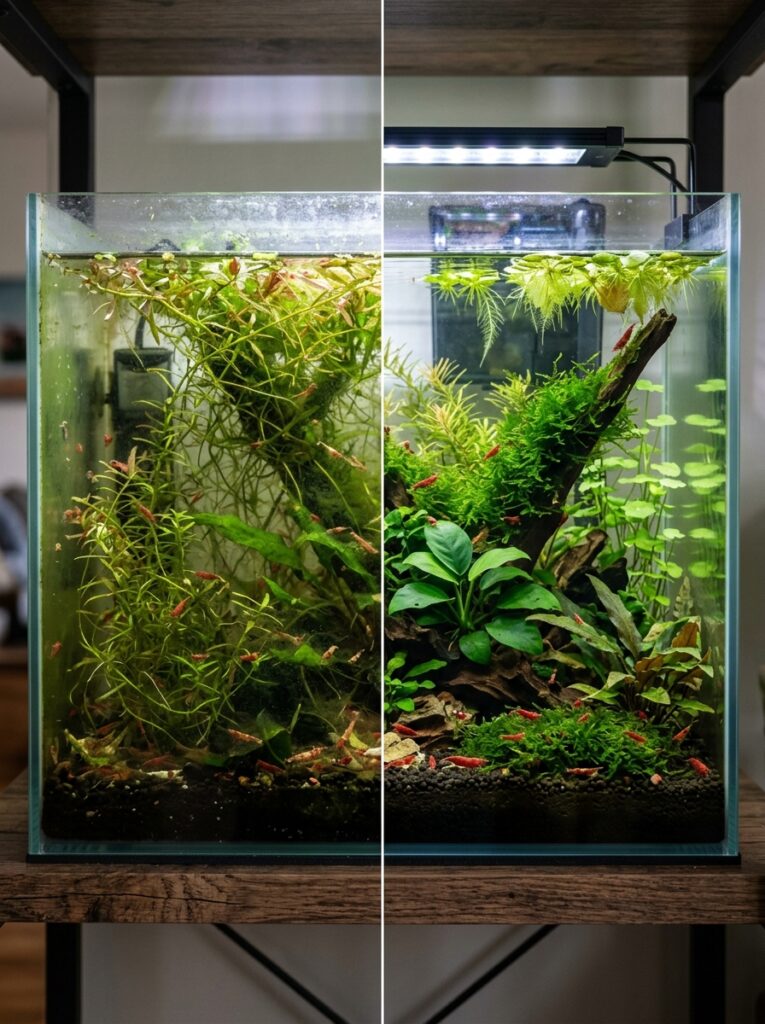
Building a Balanced Planted Shrimp Aquarium
A successful shrimp tank doesn’t depend on a single perfect plant.
It depends on balance.
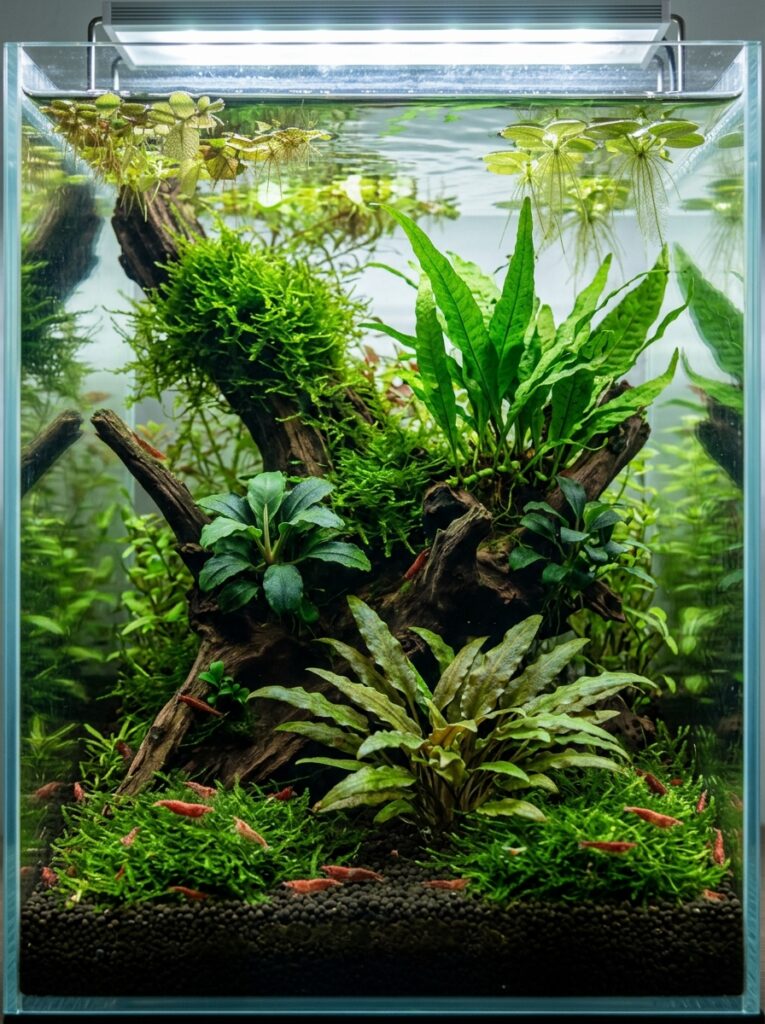
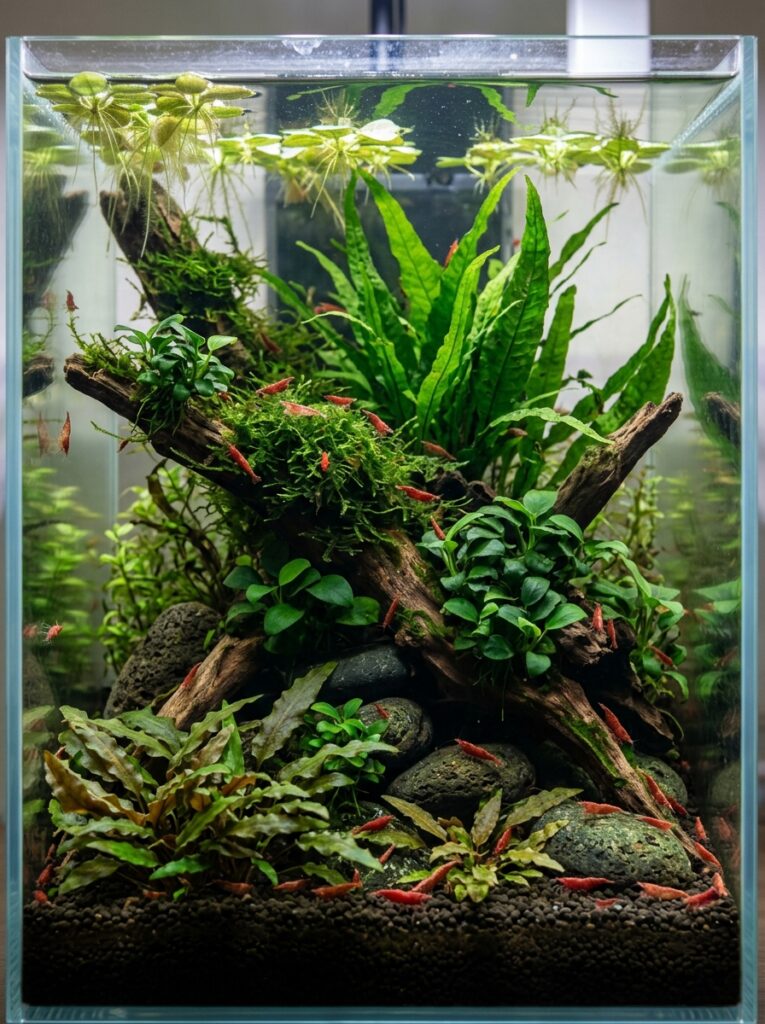
Many of the most attractive and productive shrimp aquariums combine several plant types that work together.
Java Moss provides dense grazing areas.
Anubias Nana offers broad leaf surfaces.
Java Fern contributes structure and visual height.
Cryptocoryne species create natural shelter.
Floating plants add cover near the surface.
Together, these plants form a layered ecosystem that supports natural shrimp behavior while creating an attractive display.
The best part is that this approach remains beginner-friendly.
None of these plants require advanced aquascaping knowledge to enjoy their benefits.
As the aquarium matures, the plants grow, biofilm develops, and the environment becomes increasingly natural.
Over time, the tank begins to feel less like a collection of plants and more like a living ecosystem.
And that’s often the moment when shrimp keeping becomes truly rewarding.
Related PetYeti Guides
Shrimp plants work best when they provide cover, grazing surfaces, and a calm environment without making the tank hard to maintain.
Keeping a small shrimp setup? Read our nano aquarium plants guide.
Want easy low-light options? See our low-light aquarium plants guide.
Looking for floating cover? Read our guide to floating plants for small aquariums.
Still learning plant nutrition? Read do aquarium plants need fertilizer.
Choosing filtration for shrimp? See sponge filter vs HOB filter.
CONCLUSION
The best aquarium plants for shrimp tanks do more than improve appearance.
They create shelter, provide grazing opportunities, support natural behavior, and help establish a healthier aquarium environment.
Java Moss, Anubias Nana, Java Fern, Cryptocoryne species, and floating plants each contribute something unique to a planted shrimp tank.
Rather than focusing on a single plant, consider building a diverse environment that combines several plant types.
As the aquarium matures, these plants work together to create a natural ecosystem where shrimp can thrive.
For beginners and experienced hobbyists alike, live plants remain one of the most valuable investments you can make in a shrimp aquarium.
FAQs
What is the best plant for a shrimp tank?
Java Moss is often considered one of the best shrimp tank plants because it provides grazing surfaces, shelter, and excellent cover for young shrimp.
Do shrimp need live plants?
Shrimp can survive without live plants, but planted aquariums generally provide more natural grazing opportunities, shelter, and environmental stability.
Are floating plants good for shrimp tanks?
Yes. Floating plants such as Amazon Frogbit create hanging root systems that shrimp frequently explore and use as grazing areas.
What plants are best for baby shrimp?
Java Moss is one of the most popular choices because its dense growth offers protection and shelter for shrimplets.
Can beginners grow shrimp tank plants?
Absolutely. Plants such as Java Moss, Anubias Nana, Java Fern, and Cryptocoryne species are widely regarded as beginner-friendly options.
How many plant types should a shrimp tank have?
Many successful shrimp tanks use a combination of mosses, broad-leaf plants, background plants, and floating plants to create a balanced ecosystem.