
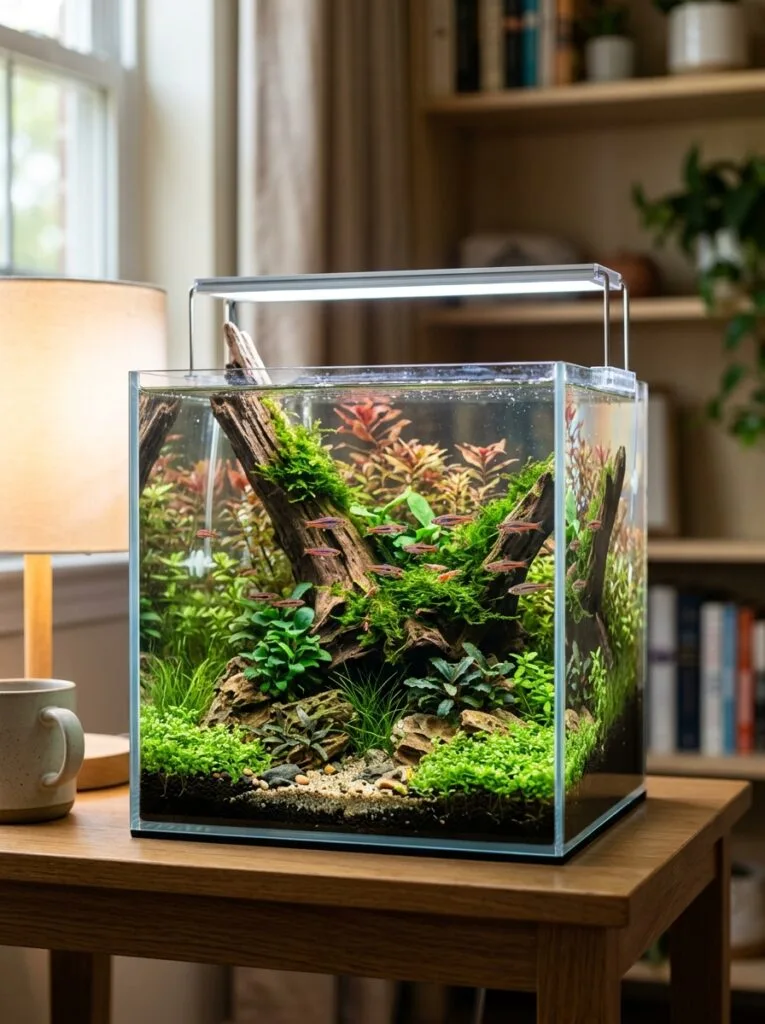
Nano aquariums have a charm that’s hard to explain until you’ve owned one.
There’s something incredibly satisfying about creating a tiny underwater world that fits on a desk, shelf, or apartment countertop. But because space is limited, every choice matters—including the plants you add.
Not all aquarium plants are well suited for nano tanks. Some grow too large, spread aggressively, or quickly overwhelm the limited space available.
The best nano aquarium plants stay manageable, look natural in smaller layouts, and help create the lush appearance many hobbyists love without turning maintenance into a constant chore.
Whether you’re building a betta tank, a shrimp aquarium, or a planted nano community setup, choosing the right plants can make a huge difference.
Let’s look at some of the best options for creating a beautiful nano aquarium that remains balanced and easy to enjoy.
- Why Plant Selection Matters in Nano Aquariums
- What Makes a Good Nano Aquarium Plant?
- Anubias Nana: A Nano Tank Favorite
- Java Moss for Natural Texture
- Cryptocoryne Parva for Small Spaces
- Bucephalandra for Unique Leaf Shapes
- Floating Plants for Nano Aquariums
- Common Nano Planting Mistakes
- Creating a Balanced Nano Planted Aquarium
- CONCLUSION
- FAQs
As an Amazon Associate, PetYeti earns from qualifying purchases. This comes at no additional cost to you and helps support the site. We only recommend products we genuinely believe can help create healthier and more enjoyable aquariums.
Why Plant Selection Matters in Nano Aquariums
In larger aquariums, a plant that grows a little bigger than expected may not cause many problems.
In a nano tank, it’s a different story.
Because space is limited, even a single oversized plant can dominate the layout, block viewing areas, and make the aquarium feel crowded. That’s why plant selection becomes especially important in smaller setups.
The right plants help maintain scale. They complement the aquarium rather than overwhelming it, creating a layout that feels balanced and intentional.
Good nano plants also tend to be easier to manage. They require less trimming, leave more swimming space for fish, and make routine maintenance simpler.
When chosen carefully, plants can make a nano aquarium feel much larger than it actually is.
What Makes a Good Nano Aquarium Plant?
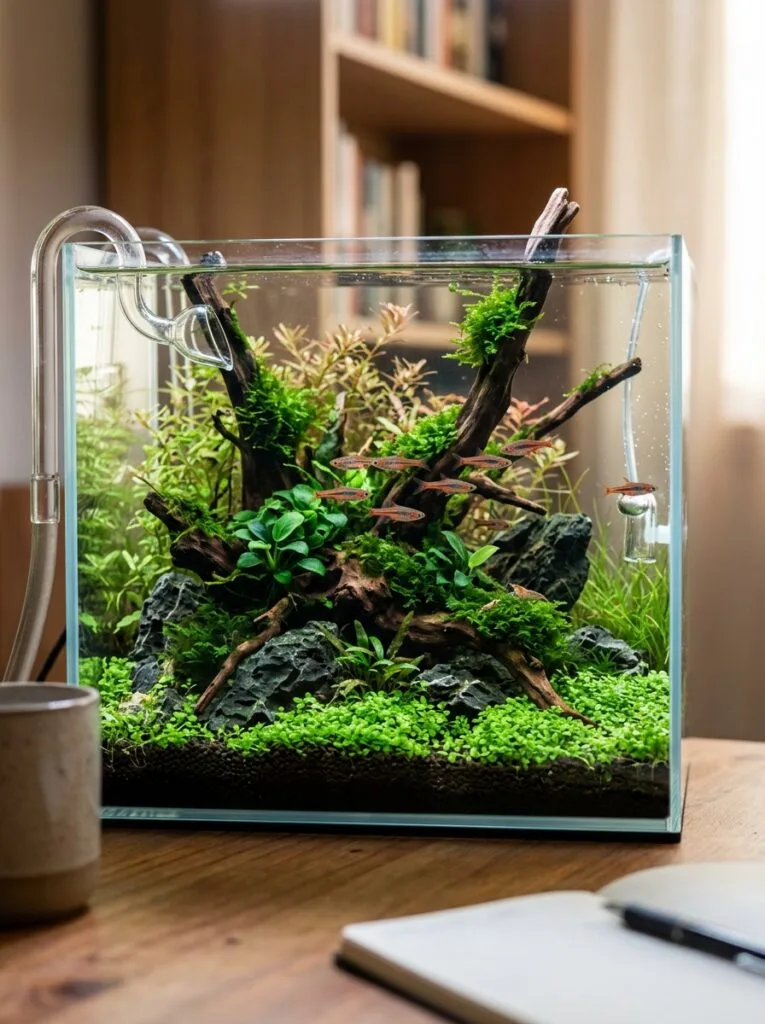
The best nano aquarium plants share a few important qualities.
They stay relatively compact, grow at a manageable pace, and fit naturally within smaller layouts. Instead of constantly fighting for space, they work with the dimensions of the aquarium.
Many successful nano plants are also adaptable and beginner-friendly. Since small aquariums can experience changes more quickly than larger tanks, resilient plants often perform better.
Visual scale matters too. A plant that looks perfectly proportioned in a nano tank can help create the illusion of a much larger underwater landscape.
When selecting plants for a nano aquarium, simplicity usually wins. A few well-chosen species often create a cleaner and more attractive layout than an overcrowded collection of plants.
Anubias Nana: A Nano Tank Favorite
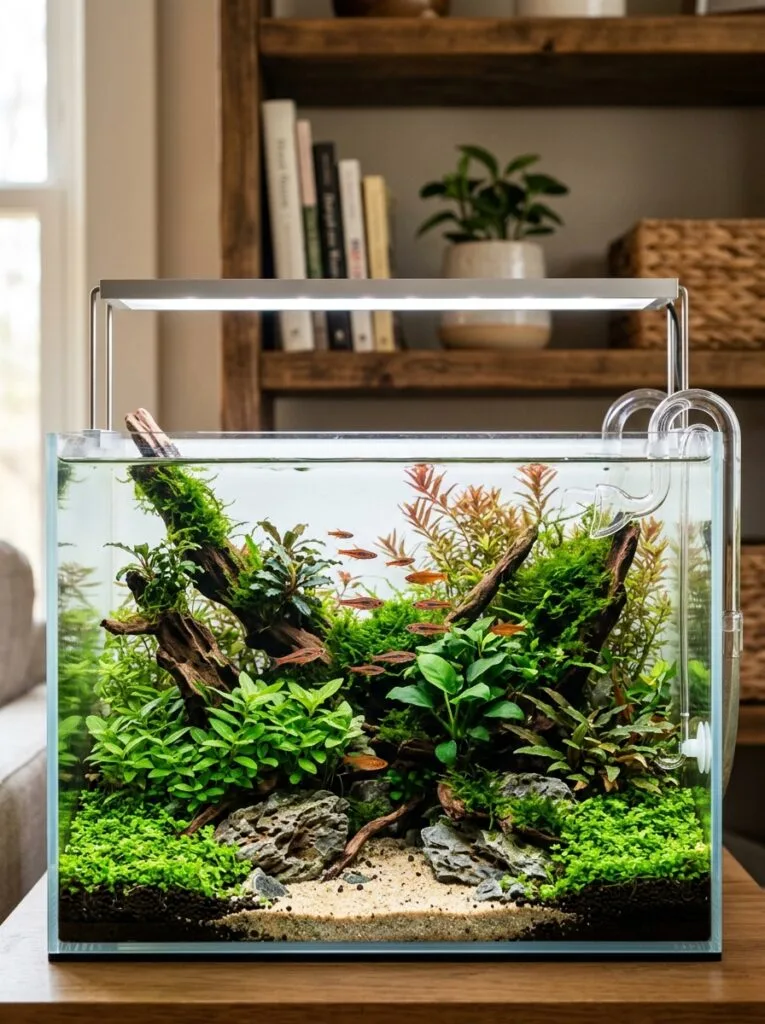
Anubias Nana feels like it was designed specifically for nano aquariums.
Unlike larger Anubias varieties, this compact version stays relatively small while still offering the same durability and beginner-friendly nature that makes the genus so popular.
Its thick, dark green leaves create a clean and polished look that works beautifully in modern aquascapes. Many hobbyists attach Anubias Nana to driftwood or small stones, where it naturally becomes part of the hardscape rather than taking over the aquarium.
Another reason it’s so popular is its slow growth rate. In a nano tank, slower growth often means less maintenance and fewer trimming sessions.
Whether you’re setting up a betta aquarium, a shrimp tank, or a peaceful nano community, Anubias Nana is one of the safest and most reliable plant choices available.
It’s small, attractive, and remarkably forgiving—three qualities every nano aquarium owner appreciates.
⭐ PetYeti Pick: Compact Nano Plant
Recommended Option: Anubias Nana Aquarium Plant
Best For:
✓ Nano aquariums
✓ Betta tanks
✓ Shrimp tanks
✓ Driftwood and rock layouts
Why We Like It:
✓ Stays compact
✓ Very beginner-friendly
✓ Slow-growing and manageable
✓ Looks beautiful in small aquascapes
PetYeti Take:
Anubias Nana is one of our favorite nano aquarium plants because it adds real greenery without quickly overwhelming the layout. For small tanks, that balance matters a lot.
Java Moss for Natural Texture
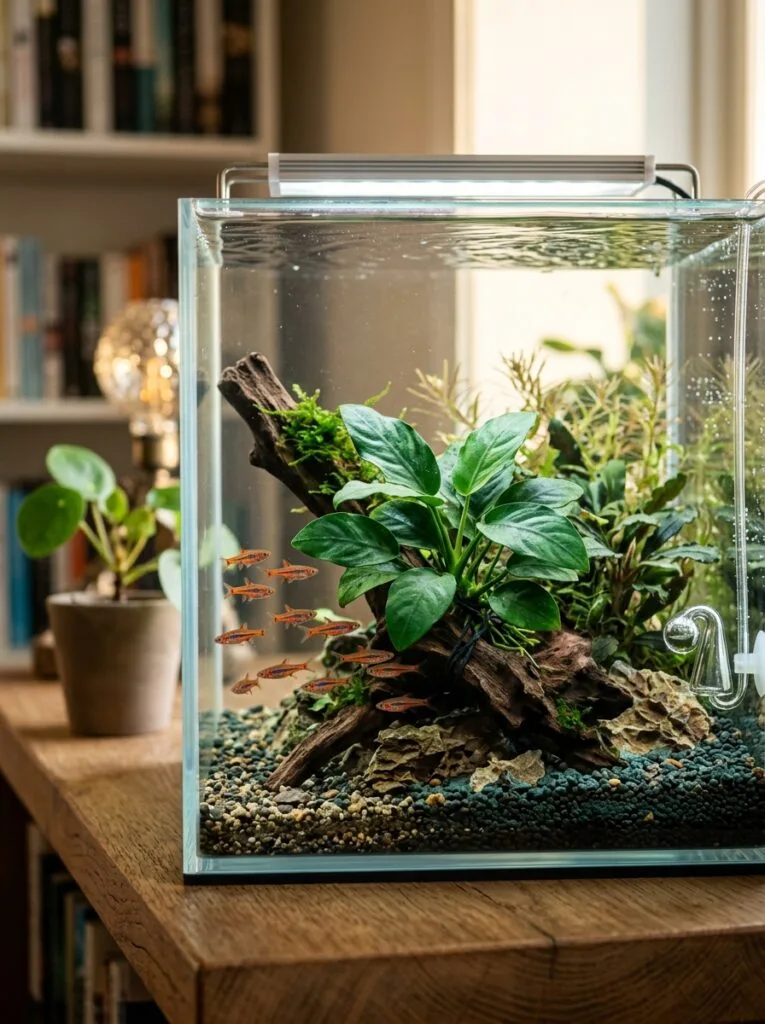
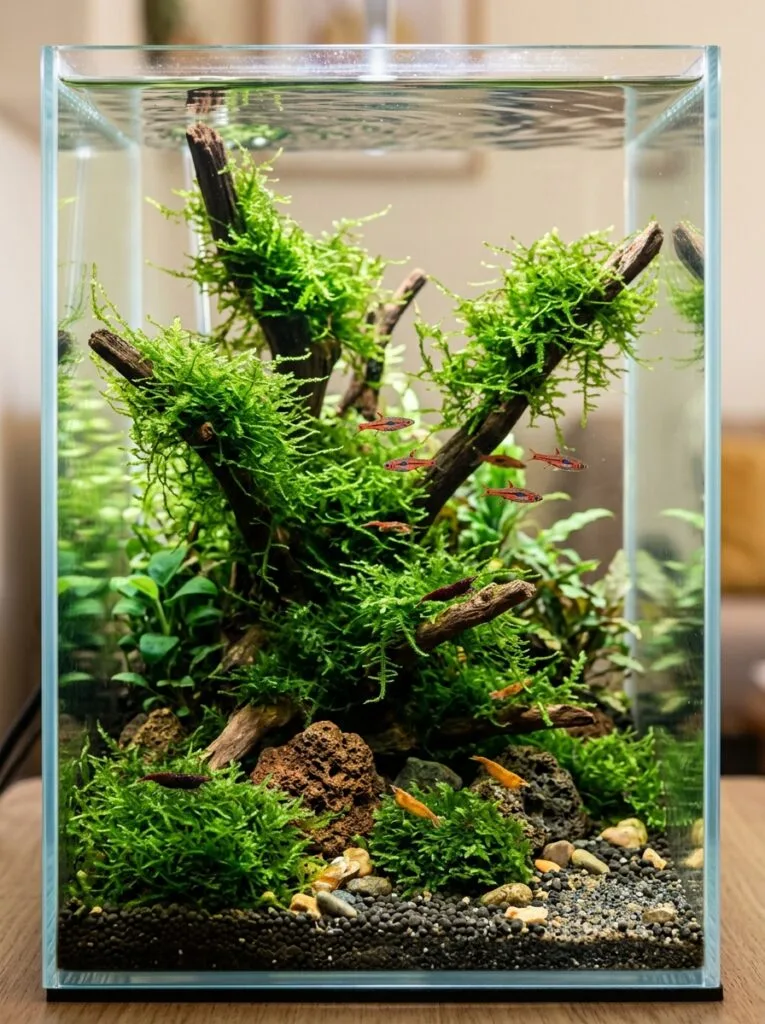
If there’s one plant that can instantly make a nano aquarium feel more natural, it’s Java moss.
This hardy plant grows in soft green clusters that add texture and depth without taking up much space. Even a small amount can dramatically change the appearance of an aquarium.
Many aquascapers use Java moss to soften hardscape features such as driftwood and rocks. As it grows, it creates the impression that the aquarium has been established for years rather than weeks.
Java moss is also a favorite for shrimp tanks and nano fish setups because it provides shelter and creates tiny areas for exploration.
Perhaps the biggest advantage is its adaptability. Java moss grows in a wide range of conditions and is often recommended to beginners because it’s so forgiving.
For nano aquariums, it offers a simple way to create a lush, natural look without overwhelming the limited space.
Natural Texture Option
Recommended Option: Java Moss Aquarium Plant
Best For:
✓ Shrimp tanks
✓ Nano aquariums
✓ Driftwood
✓ Rock layouts
Why We Like It:
✓ Adds soft natural texture
✓ Great for shrimp and nano fish
✓ Beginner-friendly
✓ Helps small tanks look more mature
PetYeti Take:
Java moss is a simple way to make a nano aquarium feel more natural and established. Even a small amount can soften hardscape and create useful shelter.
Cryptocoryne Parva for Small Spaces
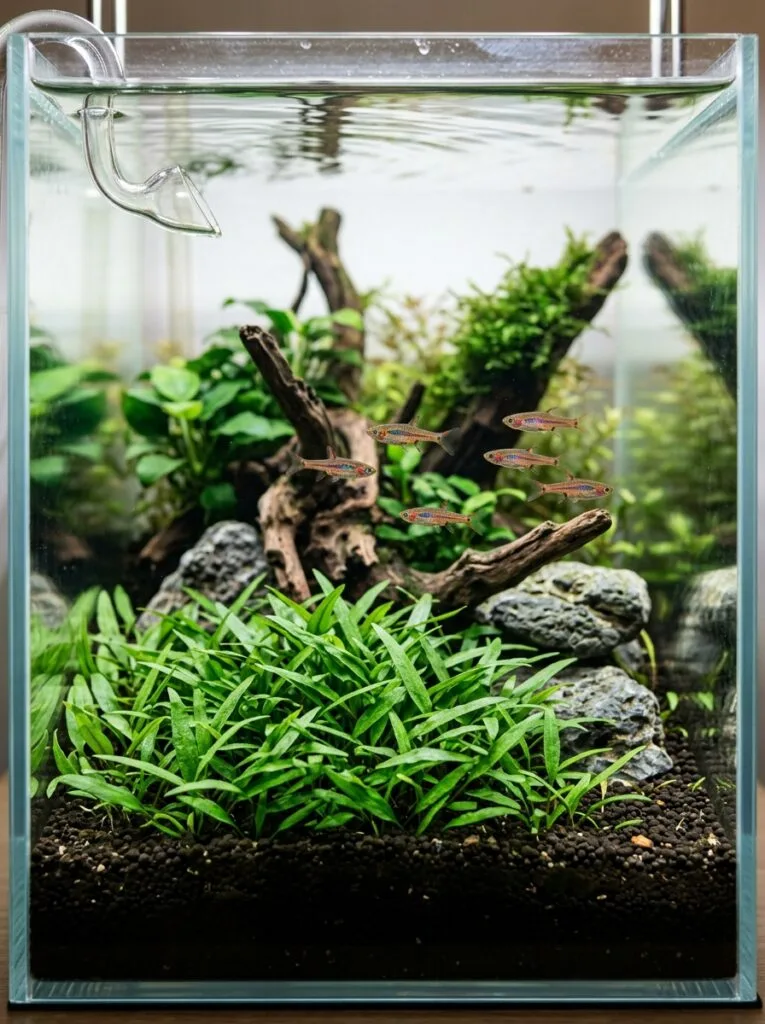
Cryptocoryne Parva is one of the few aquarium plants that genuinely stays small, which makes it incredibly valuable in nano aquariums.
While many plants eventually outgrow compact layouts, Cryptocoryne Parva maintains a low-profile appearance that helps preserve the scale of the tank.
Its narrow green leaves create a clean and natural look that works particularly well in minimalist aquascapes. Because it doesn’t dominate the layout, it allows other elements such as driftwood, stones, and fish to remain visually important.
Growth tends to be slow, which many nano aquarium owners see as a benefit. Less aggressive growth means less trimming and a more stable appearance over time.
For hobbyists trying to create a carefully balanced nano aquarium, Cryptocoryne Parva is often one of the most practical plant choices available.
Bucephalandra for Unique Leaf Shapes
Bucephalandra has become increasingly popular among aquascaping enthusiasts, and it’s easy to understand why.
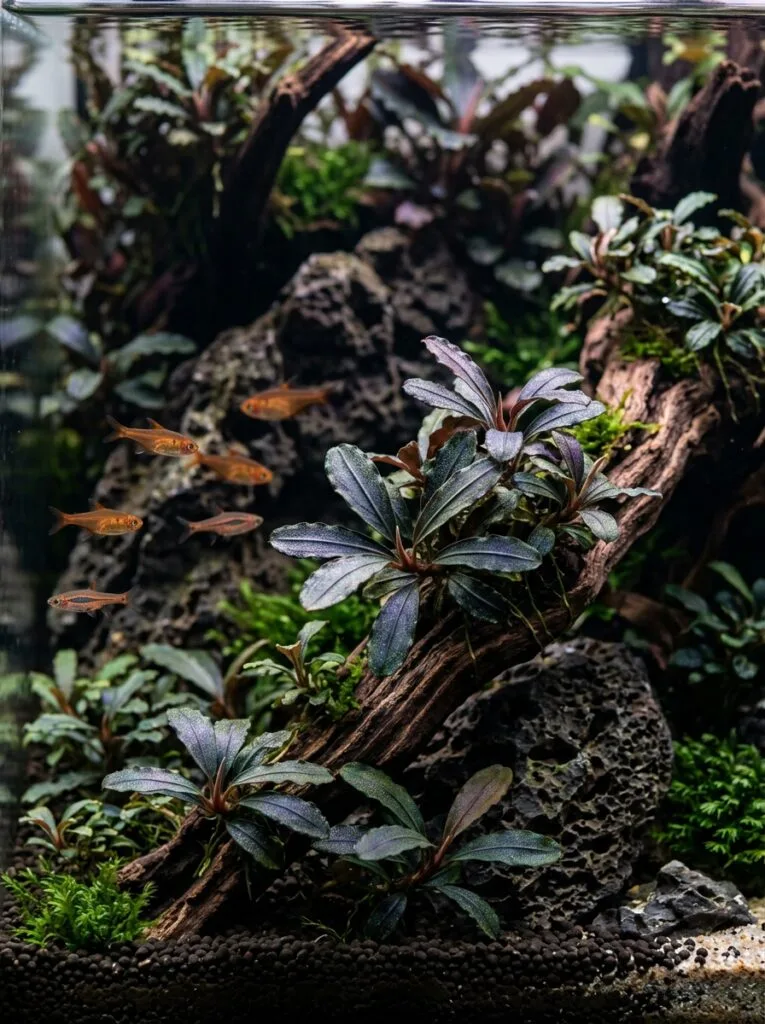
Unlike many aquarium plants that look somewhat similar, Bucephalandra offers a wide variety of leaf shapes, textures, and subtle color variations. That uniqueness can add a surprising amount of character to a nano aquarium.
Most varieties remain relatively compact, making them a great fit for smaller tanks. They’re often attached to rocks or driftwood, where they create attractive focal points without taking up too much space.
Many hobbyists appreciate how Bucephalandra helps make an aquascape feel more detailed and refined. Even a small clump can add visual interest that draws the eye.
For nano aquarium owners who want something a little different while still maintaining a natural appearance, Bucephalandra is definitely worth considering.
Floating Plants for Nano Aquariums
Floating plants can be a fantastic addition to nano aquariums when used thoughtfully.
Because they grow on the water surface, they add greenery without taking up valuable space on the substrate. That makes them especially useful in smaller tanks where every inch matters.
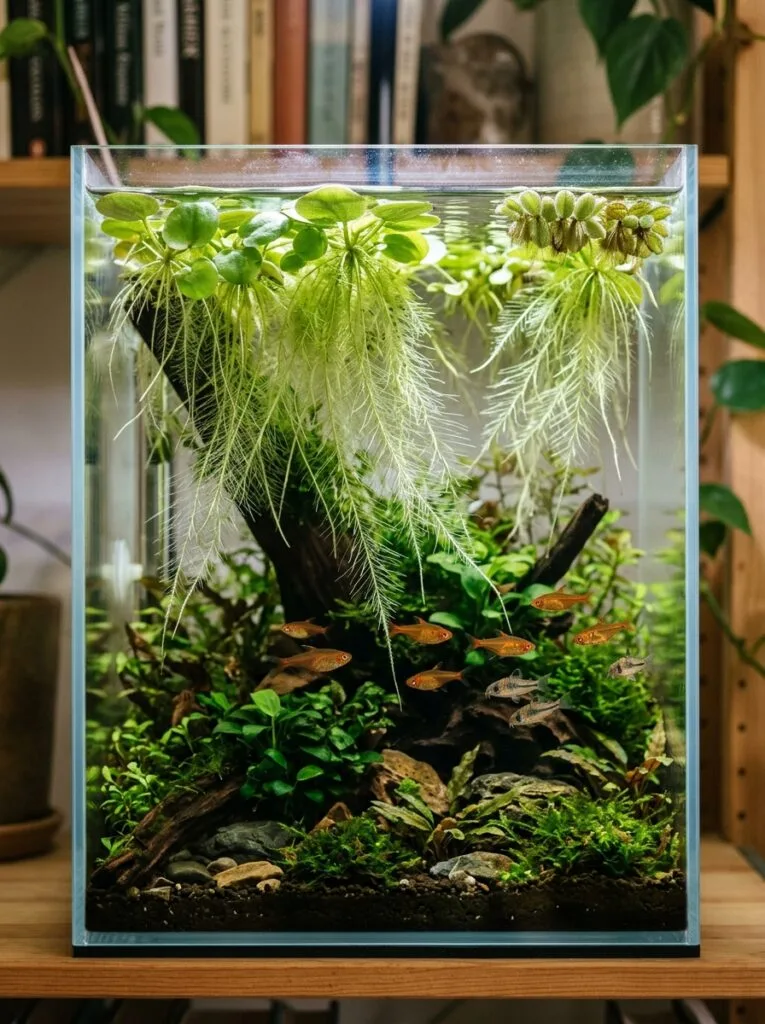
Species such as Amazon frogbit and salvinia are popular choices because they create a natural appearance while remaining relatively easy to manage.
Many fish seem to appreciate the gentle shade floating plants provide. The hanging roots of Amazon frogbit can also add visual interest and create a more layered look within the aquarium.
The key is moderation. Nano aquariums have limited surface area, so it’s important to avoid letting floating plants completely cover the top of the tank.
A small amount of floating plant coverage often creates the best balance between aesthetics, light penetration, and easy maintenance.
Helpful Control Tool
Recommended Option: Floating Plant Corral
Best For:
✓ Nano aquariums
✓ Betta tanks
✓ Floating plant setups
✓ Feeding areas
Why We Like It:
✓ Helps prevent surface overcrowding
✓ Keeps feeding areas open
✓ Maintains light access
✓ Simple beginner-friendly tool
PetYeti Take:
Floating plants can look beautiful in nano aquariums, but surface space is limited. A simple plant corral helps keep the tank balanced instead of letting floating plants cover everything.
👉 View Floating Plant Corral Options
Common Nano Planting Mistakes
One of the most common mistakes in nano aquariums is choosing plants that eventually become too large for the available space.
A plant may look small in the store, but some species grow quickly and can overwhelm a nano tank within a few months.
Another mistake is adding too many different plant varieties at once. While variety can be attractive, overcrowding often makes a small aquarium feel cluttered rather than balanced.
Many beginners also underestimate how important open space is in a nano aquarium. Leaving some areas free of plants helps maintain a clean appearance and gives fish room to move comfortably.
Patience is another factor. Nano aquascapes often look their best after plants have had time to settle and grow naturally.
In most cases, a simple layout with a few carefully selected plants creates a stronger result than trying to include everything at once.
Creating a Balanced Nano Planted Aquarium
The most beautiful nano aquariums aren’t necessarily the ones with the most plants.
They’re the ones where every plant feels like it belongs.
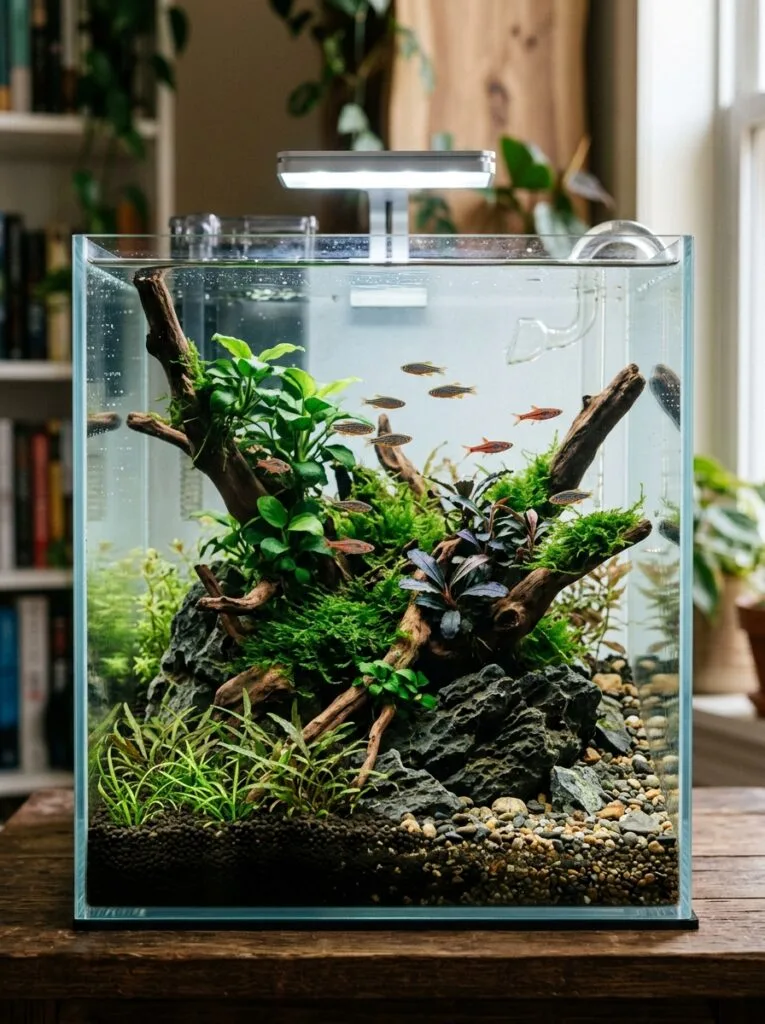
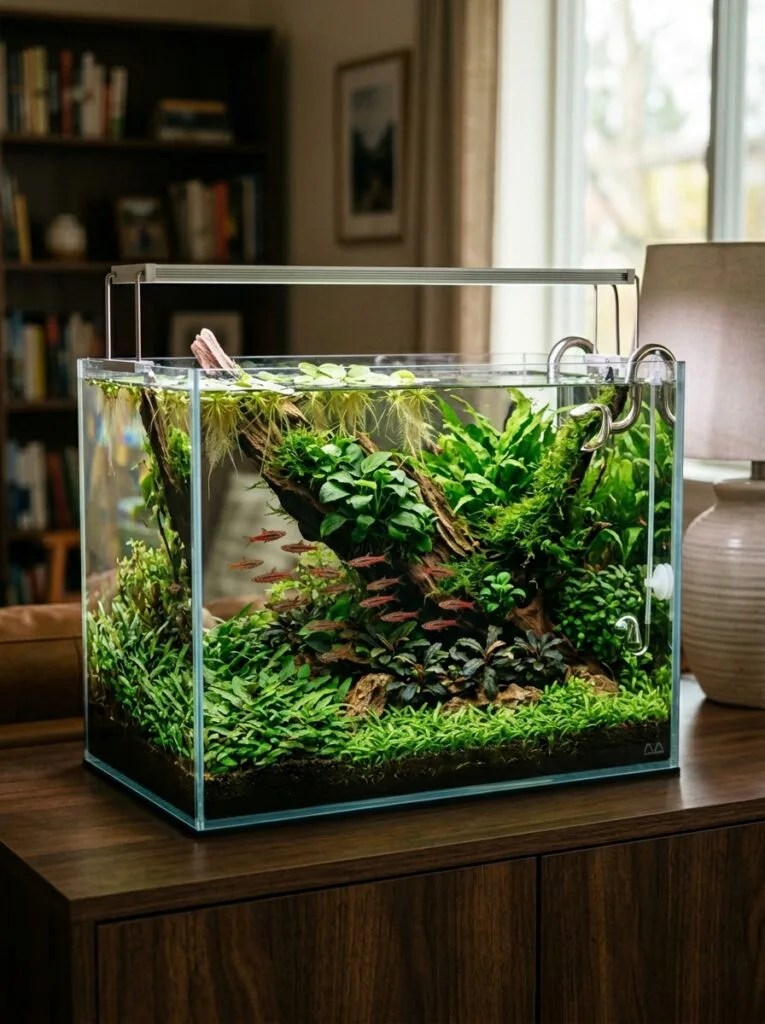
A compact Anubias Nana attached to driftwood, a patch of Java moss adding texture, a few clusters of Cryptocoryne Parva in the foreground, and a touch of floating greenery above can create a layout that feels both natural and intentional.
The goal is balance.
Plants should enhance the aquarium, not compete for attention. Leaving open areas, maintaining scale, and choosing species that suit the size of the tank often produces better results than filling every available space.
When done well, a nano planted aquarium can feel surprisingly spacious despite its small footprint.
And that’s part of what makes these tiny underwater worlds so enjoyable to create and admire.
Related PetYeti Guides
Nano aquarium plants work best when they match your tank size, lighting, fish, and maintenance style.
Want easy low-light options? Read our low-light aquarium plants guide.
Looking for floating plants too? See our guide to floating plants for small aquariums.
Keeping shrimp in a nano tank? Read our shrimp-friendly aquarium plants guide.
Still learning plant nutrition? Read do aquarium plants need fertilizer.
Planning a planted betta setup? See our guide to creating a beautiful planted betta tank.
CONCLUSION
Choosing the right plants is one of the most important decisions you’ll make when setting up a nano aquarium.
Because space is limited, plants that stay compact and manageable often deliver the best results. They help create a natural appearance, provide visual interest, and make the aquarium feel more established without overwhelming the layout.
Plants like Anubias Nana, Java moss, Cryptocoryne Parva, Bucephalandra, and beginner-friendly floating plants have become favorites for a reason. They fit the scale of nano tanks while remaining relatively easy to care for.
With thoughtful plant selection and a little patience, even the smallest aquarium can become a beautiful underwater landscape you’ll enjoy every day.
FAQs
What are the best plants for nano aquariums?
Anubias Nana, Java moss, Cryptocoryne Parva, Bucephalandra, and beginner-friendly floating plants are among the most popular choices for nano tanks.
Can live plants grow in a small aquarium?
Yes. Many aquarium plants are specifically suited for nano aquariums and remain compact enough for smaller spaces.
What is the easiest nano aquarium plant for beginners?
Anubias Nana and Java moss are often recommended because they’re hardy, adaptable, and require minimal maintenance.
Do nano aquariums need live plants?
No, but live plants can improve the appearance of the aquarium and help create a more natural environment for fish and shrimp.
Are floating plants good for nano aquariums?
Yes. Floating plants can add shade and visual interest, but they should be managed carefully so they don’t cover the entire water surface.
How many plants should I put in a nano aquarium?
It depends on the size of the tank, but a few carefully chosen plants often create a better result than overcrowding the aquarium.