
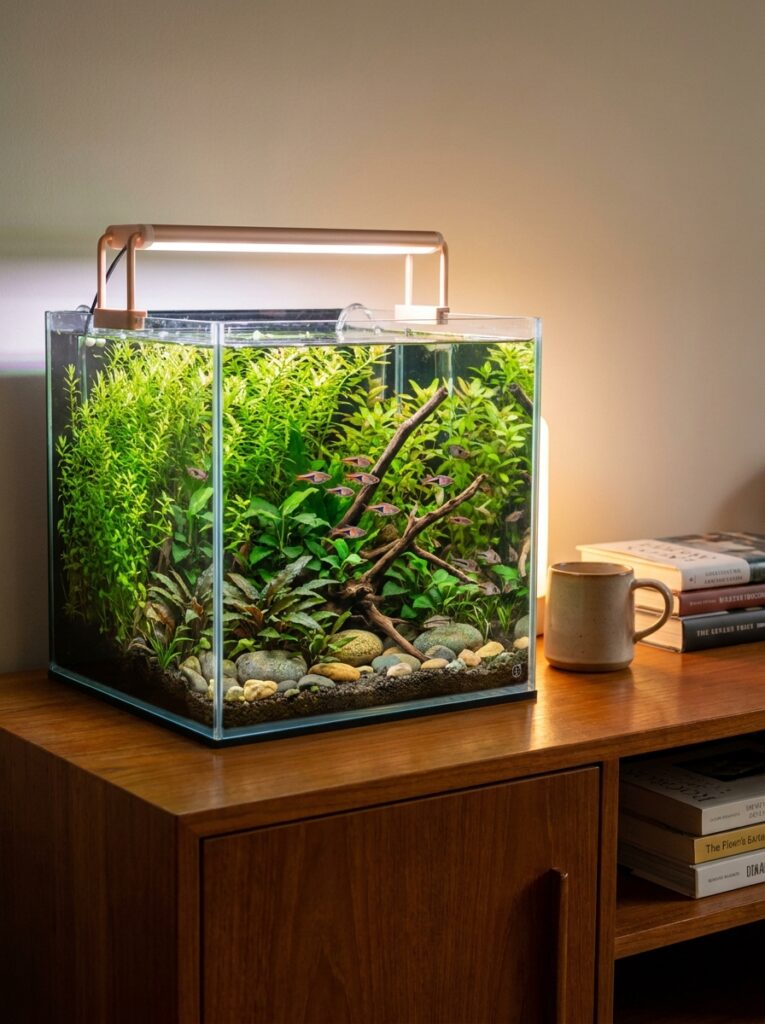
The best aquarium background plants can completely change how a tank looks, adding height, depth, and a natural backdrop without making the aquarium feel crowded.
That’s understandable.
Foreground plants are easy to notice because they’re right in front of you. But if you’ve ever looked at an aquarium and felt like something was missing, the problem might actually be in the background.
Background plants help frame the entire aquarium. They add height, create depth, and give fish a more natural environment to explore.
In small aquariums, choosing the right background plants is especially important. A plant that’s too large can quickly overwhelm the tank, while the right species can make the aquarium feel larger, more balanced, and more natural.
The good news is that several beginner-friendly plants work beautifully in small aquariums without turning maintenance into a full-time job.
Let’s explore some of the best options.
- What Are Background Plants in an Aquarium?
- Why Background Plants Matter in Small Tanks
- Vallisneria for Height and Movement
- Water Wisteria for a Lush Background
- Rotala Rotundifolia for Color and Texture
- Bacopa Caroliniana for Beginner-Friendly Growth
- Choosing the Right Background Plant
- Common Background Plant Mistakes
- Creating Depth in a Small Aquarium
- CONCLUSION
- FAQs
What Are Background Plants in an Aquarium?
Think of background plants as the backdrop of your underwater scene.
Just like a room feels more complete with a well-designed wall behind the furniture, an aquarium often feels more natural when plants fill the space behind the hardscape and fish.
Background plants are typically taller species placed near the back glass of the aquarium. Their job is to add height, soften the edges of the tank, and create a sense of depth.
Without them, many aquariums can feel flat or unfinished. The fish may still be healthy, but the layout often lacks the layered look that makes planted tanks so appealing.
In small aquariums, background plants play an even bigger role because they help draw the eye upward and make the tank feel larger than it actually is.
When used thoughtfully, they become the foundation that ties the entire aquascape together.
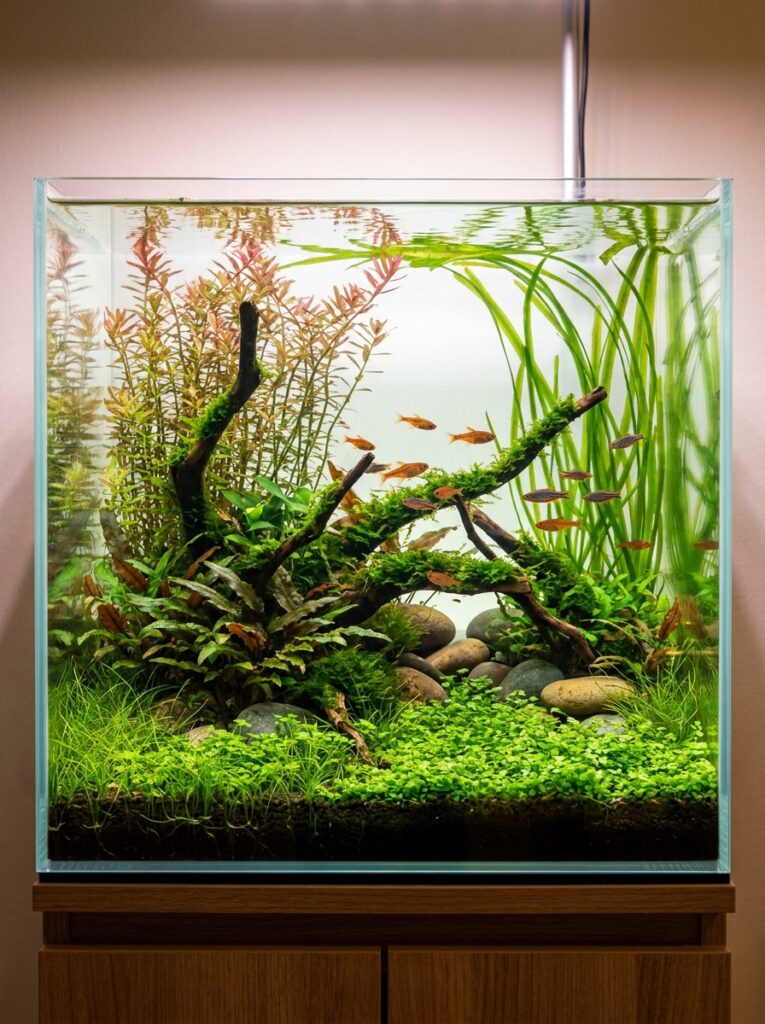
Why Background Plants Matter in Small Tanks
Small aquariums don’t have much room for mistakes.
A few inches of plant growth can completely change the look of the layout.
That’s why choosing background plants carefully matters so much.
The right plants create a sense of depth and scale that makes a compact aquarium feel surprisingly spacious. They also help hide equipment such as filter intakes, airline tubing, and heater cords that might otherwise distract from the natural appearance of the tank.
Many fish seem more comfortable when tall plants are present as well. Dense greenery can provide a sense of security and make the aquarium feel more like a natural habitat.
Perhaps most importantly, background plants help complete the visual story of the aquarium. They create a backdrop that allows foreground plants, hardscape features, and fish to stand out more effectively.
For a small tank, that’s a big advantage.
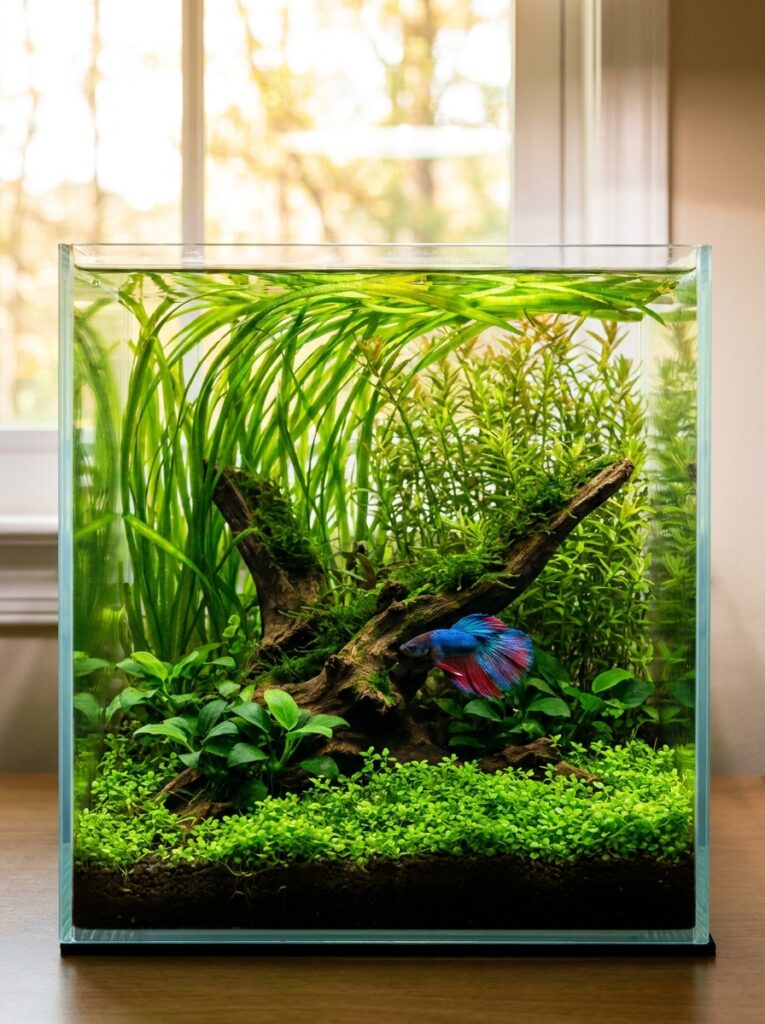
Vallisneria for Height and Movement
If you’ve ever watched underwater plants gently sway with the current, there’s a good chance you were looking at Vallisneria.
Often called “Val,” this plant is known for its long ribbon-like leaves that stretch toward the water surface and create beautiful movement throughout the aquarium.
One reason beginners enjoy Vallisneria is that it can quickly make a tank feel mature and established. Even a relatively simple aquarium can gain a natural, flowing appearance once a few healthy Vallisneria plants begin growing in the background.
In small aquariums, it’s important to use it thoughtfully. Since the leaves can become quite long, occasional trimming may be needed to keep the layout balanced.
Many aquarists place Vallisneria along the back corners of the tank where it can add height without blocking the main viewing area.
If your aquarium feels a little static or flat, Vallisneria can introduce movement and softness that completely changes the atmosphere of the tank.
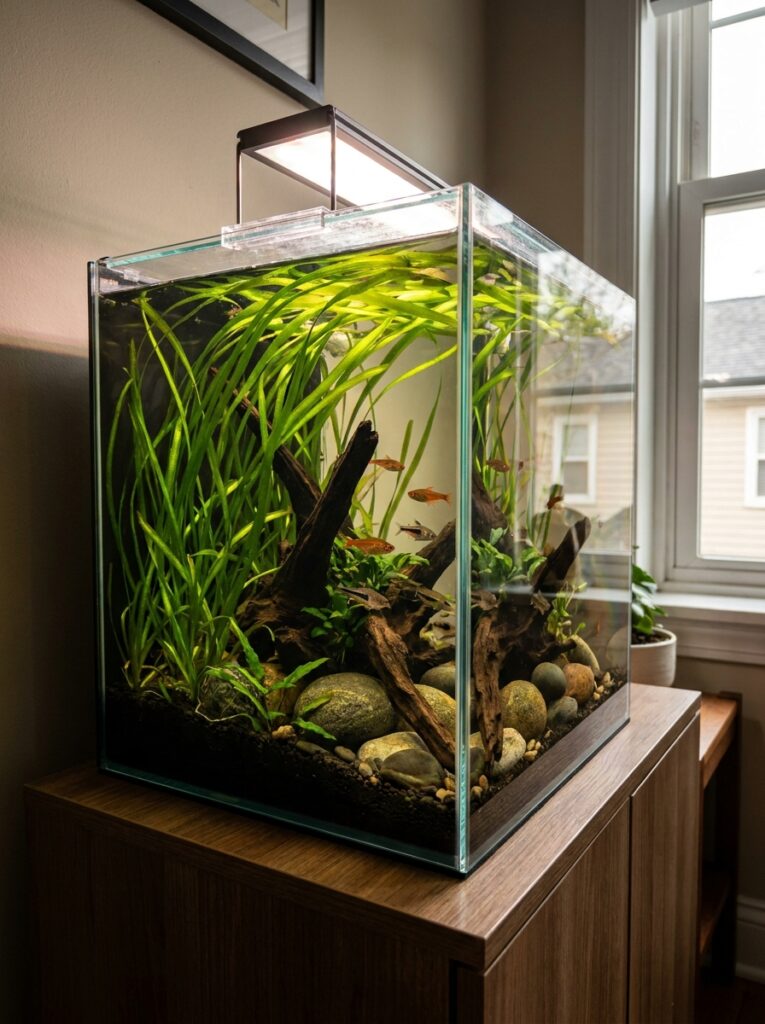
Water Wisteria for a Lush Background
Some aquarium plants make a statement through size.
Water Wisteria makes a statement through fullness.
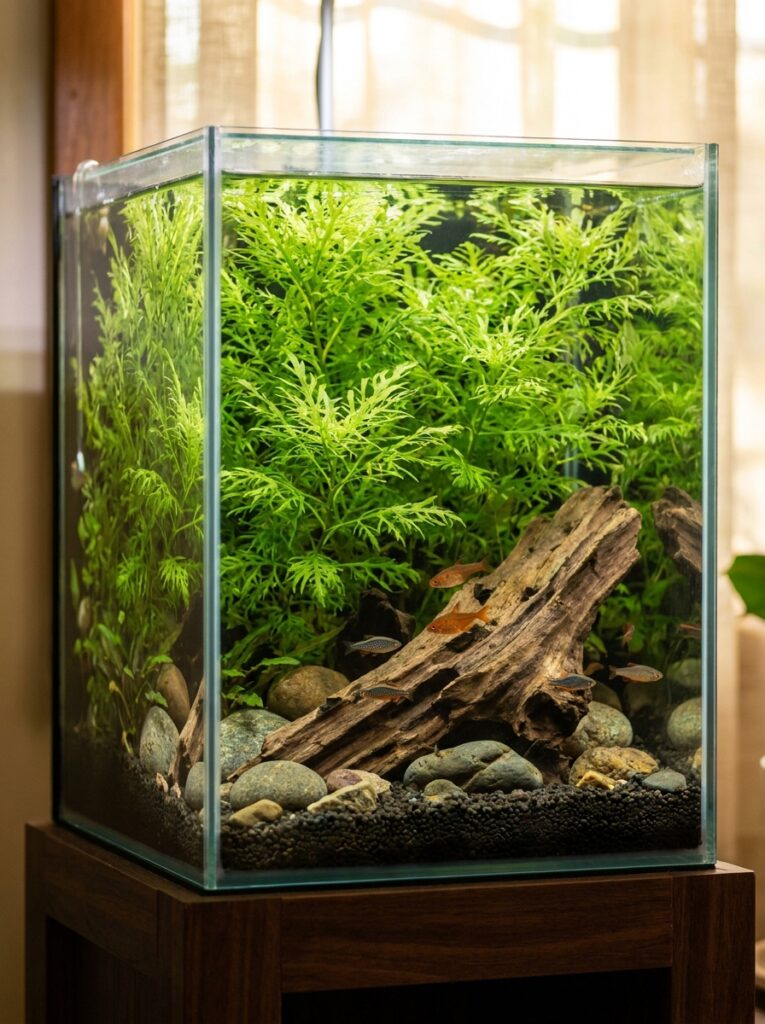
Its delicate, lace-like leaves create a soft, bushy appearance that can instantly make an aquarium feel greener and more alive. For beginners who want that lush planted-tank look without needing dozens of different plant species, Water Wisteria is often a great place to start.
One of its biggest strengths is versatility. It can work as a background plant, a midground accent, or even a focal point in certain layouts.
As it grows, Water Wisteria develops a dense appearance that helps fill empty areas and create a natural backdrop behind fish and hardscape features.
Many hobbyists appreciate how quickly it can improve the overall look of a new aquarium. A tank that feels sparse today can look dramatically different after healthy Water Wisteria has had time to establish itself.
For beginners looking to create a lush, planted appearance, Water Wisteria remains one of the most rewarding options available.
Rotala Rotundifolia for Color and Texture
Rotala Rotundifolia is one of those plants that quietly elevates an aquarium.
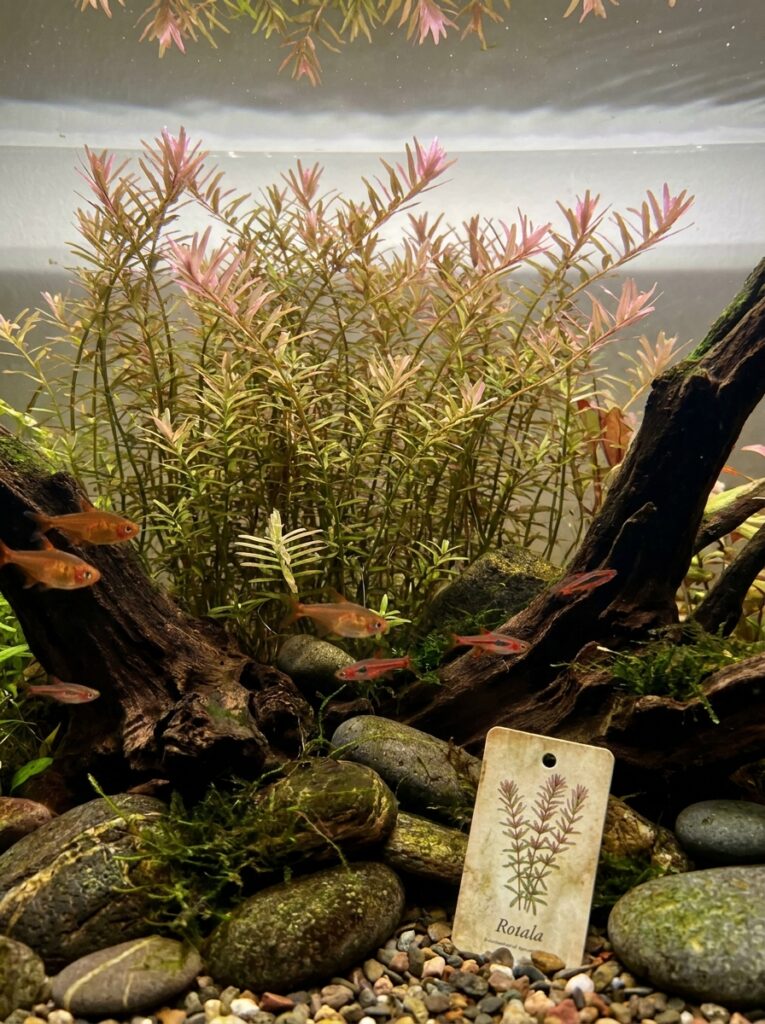
At first glance, it may seem simple. But as it grows, its fine stems and small leaves add a level of texture that can make a planted tank feel far more refined.
Under the right conditions, Rotala can also develop subtle shades of pink, orange, or reddish tones near the upper portions of the plant. These gentle color variations create contrast without overwhelming the natural look of the aquarium.
In small aquariums, Rotala works particularly well because its leaves remain relatively delicate. Large-leaved background plants can sometimes make a nano tank feel crowded, but Rotala often maintains a lighter visual presence.
Many aquascapers use groups of Rotala behind rocks or driftwood to create depth and draw the viewer’s eye toward the back of the layout.
For hobbyists who want a little extra color while keeping a natural appearance, Rotala Rotundifolia is an excellent choice.
Bacopa Caroliniana for Beginner-Friendly Growth
If you’re looking for a background plant that’s easy to recognize and easy to grow, Bacopa Caroliniana deserves a spot on your shortlist.
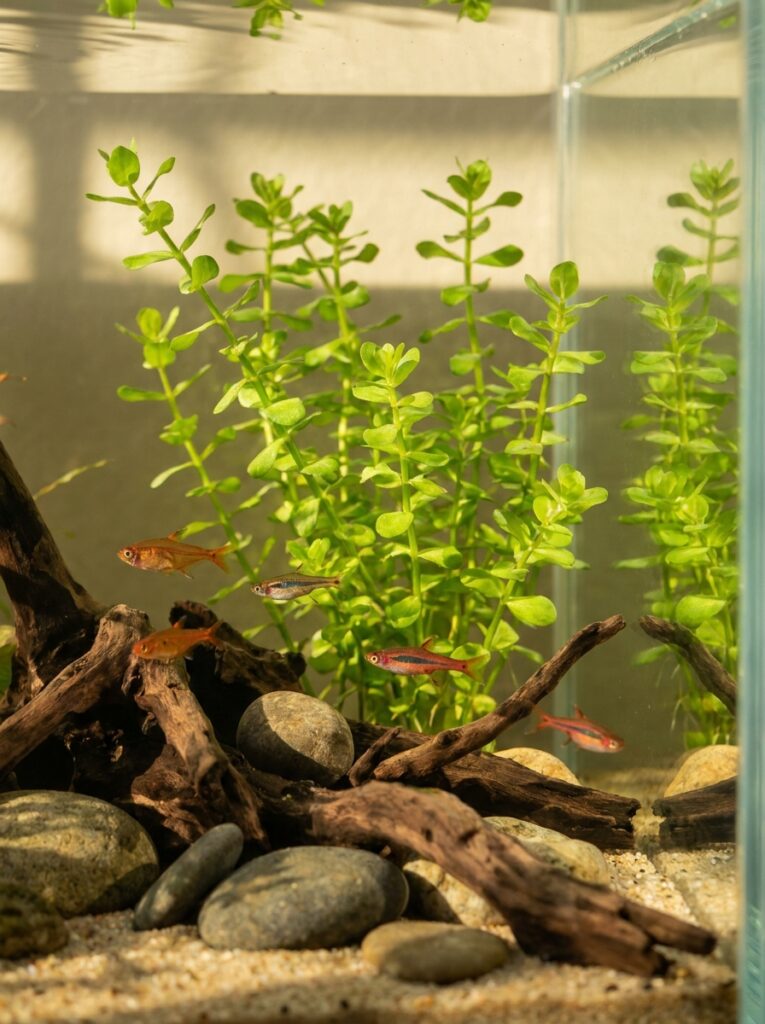
Unlike some plants with delicate or highly complex leaf structures, Bacopa has thick stems and rounded leaves that give it a clean, organized appearance.
Many beginners appreciate how predictable it feels. The plant grows upright, maintains a tidy structure, and often responds well to routine aquarium care.
Because of its sturdy appearance, Bacopa can create an attractive contrast when paired with finer-textured plants such as Rotala or Water Wisteria.
Another advantage is visibility. Even new hobbyists can quickly identify healthy growth and understand how the plant is developing over time.
For small aquariums, Bacopa Caroliniana offers a reliable way to add height without making the tank feel overly crowded.
It’s one of those plants that quietly does its job while making the entire aquarium look better.
Choosing the Right Background Plant
The best background plant isn’t necessarily the one that looks most impressive in photos.
It’s the one that fits your aquarium and the experience you want to create.
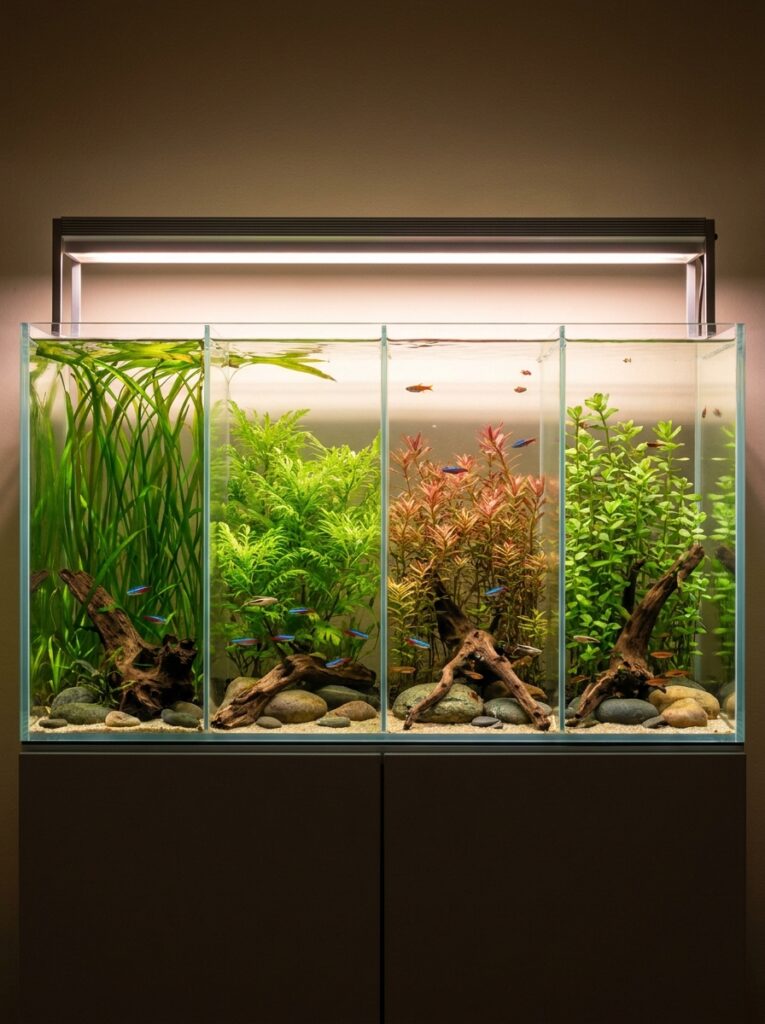
If you love movement and a natural river-like feel, Vallisneria might be the perfect choice. If your goal is a lush green backdrop that quickly fills empty space, Water Wisteria can be incredibly rewarding.
For hobbyists who enjoy texture and subtle color variation, Rotala Rotundifolia offers a more refined look. And if simplicity and reliability are your priorities, Bacopa Caroliniana is hard to beat.
It’s also worth considering the size of your aquarium. A plant that looks balanced in a 20-gallon tank may feel oversized in a compact nano setup.
Rather than chasing the “best” plant, focus on finding the plant that matches your vision for the aquarium. That’s usually where the most satisfying results come from.
Common Background Plant Mistakes
One of the most common mistakes beginners make is assuming that every tall plant belongs in the background.
Height matters, but so does scale.
A plant that grows too aggressively can quickly dominate a small aquarium and make the layout feel crowded. What starts as a neat background planting can eventually block light, hide hardscape details, and reduce open swimming space.
Another common mistake is planting everything in a straight line. In nature, plants rarely grow with perfect symmetry. Creating clusters of different heights often produces a more natural appearance.
Many beginners also underestimate the value of maintenance. Even easy background plants benefit from occasional trimming to help preserve the intended shape of the layout.
Perhaps the biggest mistake is trying to fill every empty space immediately. A little breathing room often makes an aquarium feel more open, balanced, and visually appealing.
In aquascaping, restraint is often just as important as creativity.
Creating Depth in a Small Aquarium
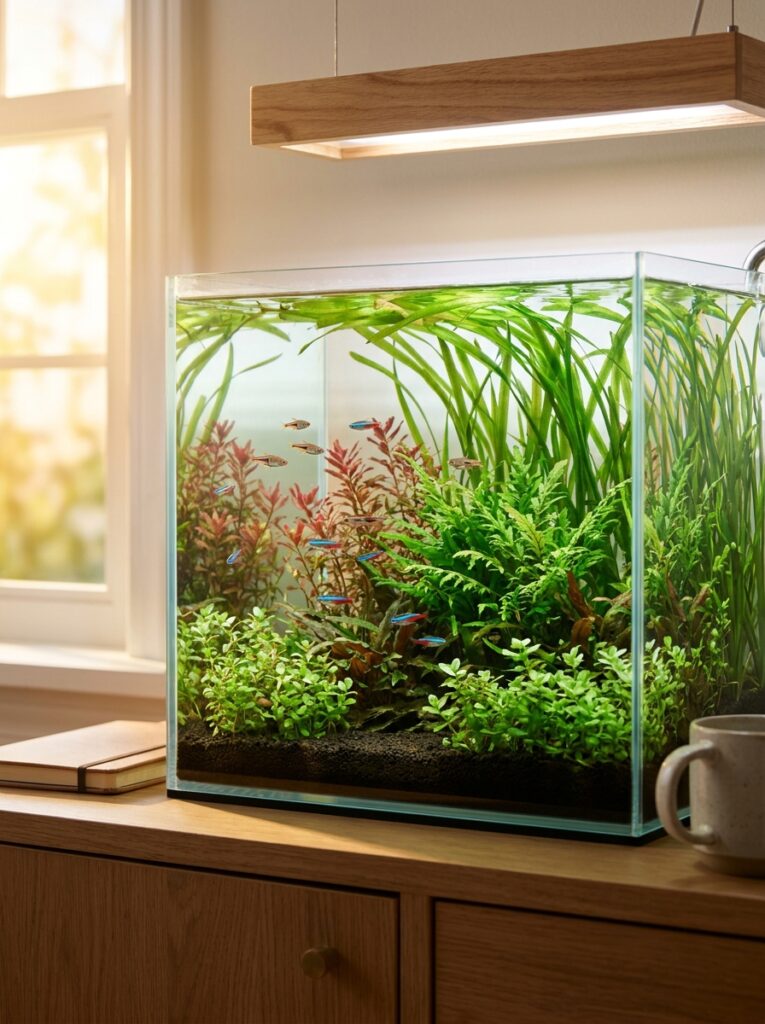
One of the biggest challenges in a small aquarium is making the tank feel larger than it really is.
Background plants can help accomplish exactly that.
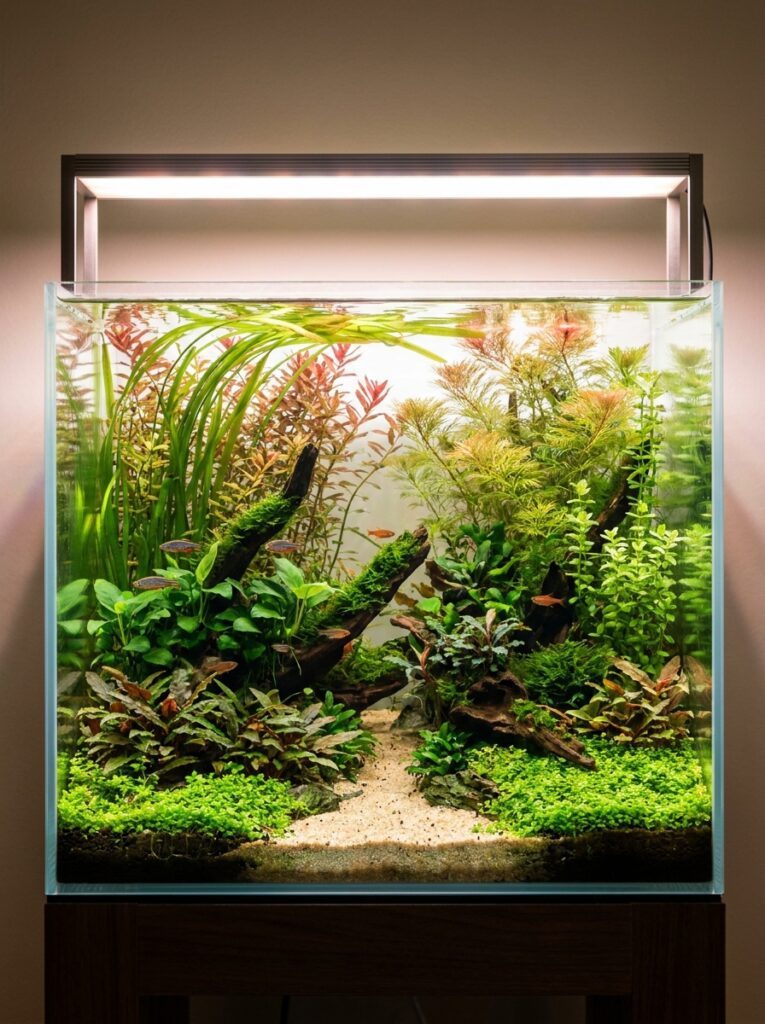
When taller plants are placed toward the back of the aquarium, they naturally draw the eye deeper into the layout. Combined with carefully placed foreground and midground plants, they create layers that add a surprising sense of dimension.
This layered approach is one reason professionally designed aquariums often appear much larger than their actual size.
Background plants also provide a visual frame for fish, hardscape features, and focal points. Instead of floating in empty space, the entire aquarium feels connected and intentional.
The goal isn’t to fill every inch of the tank with greenery.
The goal is to create depth, balance, and a natural sense of scale.
When background plants are used thoughtfully, even a modest nano aquarium can feel like a complete underwater landscape.
CONCLUSION
Background plants do far more than fill empty space.
They add height, create depth, provide shelter for fish, and help transform a simple aquarium into a layout that feels complete and natural.
Whether you’re drawn to the flowing movement of Vallisneria, the lush growth of Water Wisteria, the fine texture of Rotala Rotundifolia, or the beginner-friendly reliability of Bacopa Caroliniana, the right background plant can dramatically improve the appearance of a small aquarium.
The key is choosing species that complement the size of your tank and the style you’re trying to create.
With a little patience and thoughtful placement, background plants can help even the smallest aquarium feel larger, more balanced, and far more enjoyable to admire.
FAQs
What are background plants in an aquarium?
Background plants are taller aquarium plants placed near the back of the tank to add height, depth, and a natural backdrop.
What is the best background plant for beginners?
Bacopa Caroliniana and Water Wisteria are often recommended because they’re relatively easy to grow and visually rewarding.
Can background plants be used in nano aquariums?
Yes. Many background plants work well in nano tanks when selected carefully and maintained with occasional trimming.
Does Vallisneria grow too large for small aquariums?
Vallisneria can grow long leaves, but it can still work beautifully in small aquariums when planted strategically and trimmed as needed.
What background plant adds color to an aquarium?
Rotala Rotundifolia is popular because it can develop subtle pink and reddish tones while maintaining a natural appearance.
Why do planted aquariums look more spacious?
Layering foreground, midground, and background plants creates depth and perspective, making the aquarium feel larger than it actually is.