
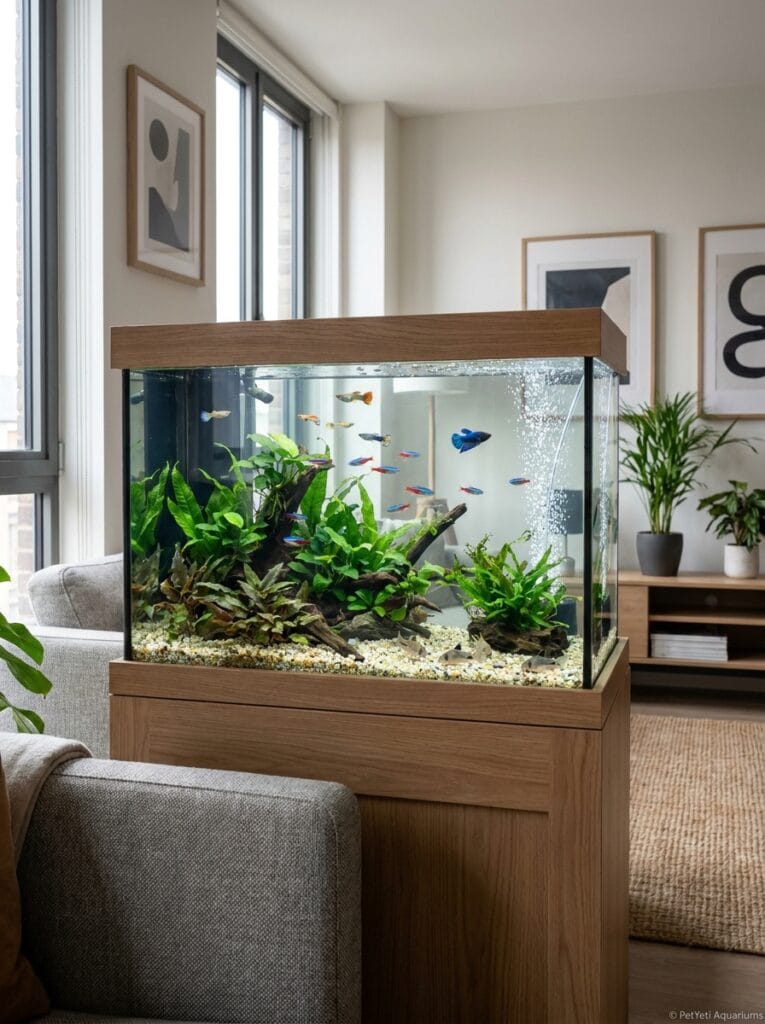
Best aquarium air stones help beginners create gentle bubbles, improve surface movement, and support better water circulation without making the tank complicated.
But do you actually need one?
The truth is that air stones can be helpful in many aquariums, but they aren’t essential for every setup. In some tanks, they improve circulation and create attractive bubble displays. In others, the filter already provides all the water movement and oxygen exchange the aquarium needs.
If you’re still unsure whether an air stone is necessary, check out our guide on Do Aquarium Air Stones Really Help? for a deeper explanation.
In this guide, we’ll look at how to choose the right air stone, review several beginner-friendly options, and help you determine whether an air stone is the right fit for your aquarium.
Quick Answer
The best aquarium air stone for most beginners is a small, fine-bubble air stone that creates gentle surface movement without blasting the tank. For small aquariums, choose an air stone that matches your air pump, stays in place easily, and produces steady bubbles without making the aquarium too loud or chaotic.
WHAT TO CHECK FIRST
Before choosing an aquarium air stone, check these basics:
- Tank size — smaller tanks need gentler bubbles.
- Air pump strength — a strong pump may need an air control valve.
- Bubble style — fine bubbles usually look softer and calmer.
- Placement — place it where bubbles improve movement without stressing fish.
- Extra parts — most setups need airline tubing and a check valve.
As an Amazon Associate, PetYeti earns from qualifying purchases. This comes at no additional cost to you and helps support the site. We only recommend products we genuinely believe can help create healthier and more enjoyable aquariums.
QUICK COMPARISON TABLE
| Product | Best For | Tank Size |
|---|---|---|
| Penn-Plax Standard Air Stone | Overall Beginners | Small–Medium |
| Hygger Nano Air Stone | Betta Tanks | Nano Tanks |
| Hygger Air Stone Bar | Community Aquariums | Medium–Large |
| Pawfly Air Stone Disc | Fine Bubble Production | Various Sizes |
| Pawfly Cylinder Air Stone | Budget Setups | Small–Medium |
- Do Beginners Actually Need an Air Stone?
- How to Choose the Right Air Stone for Your Aquarium
- Best Aquarium Air Stones for Beginners
- Who Should Skip an Air Stone?
- Common Air Stone Mistakes Beginners Make
- Buying an Oversized Air Stone
- Using a Weak Air Pump
- Creating Too Much Water Movement
- Poor Placement
- Ignoring Maintenance
- Best Air Stone by Aquarium Type
- Are Air Stones Worth It for Beginners?
- CONCLUSION
- FAQs
Do Beginners Actually Need an Air Stone?
Many beginners assume air stones add oxygen directly to the water.
In reality, most oxygen exchange occurs at the water’s surface. Air stones help by creating bubbles that increase surface agitation and improve water circulation.
An air stone may be useful if:
- Your aquarium has limited water movement
- You keep fish that appreciate higher oxygen levels
- Your tank is heavily stocked
- Summer temperatures reduce dissolved oxygen
- You want additional water circulation
However, a healthy aquarium can thrive without an air stone if the filter already provides adequate surface movement and oxygen exchange.
For example, many small betta aquariums with properly adjusted filters maintain excellent oxygen levels without any air stone at all.
The key takeaway is simple:
Air stones can be helpful, but they are not required for every aquarium.
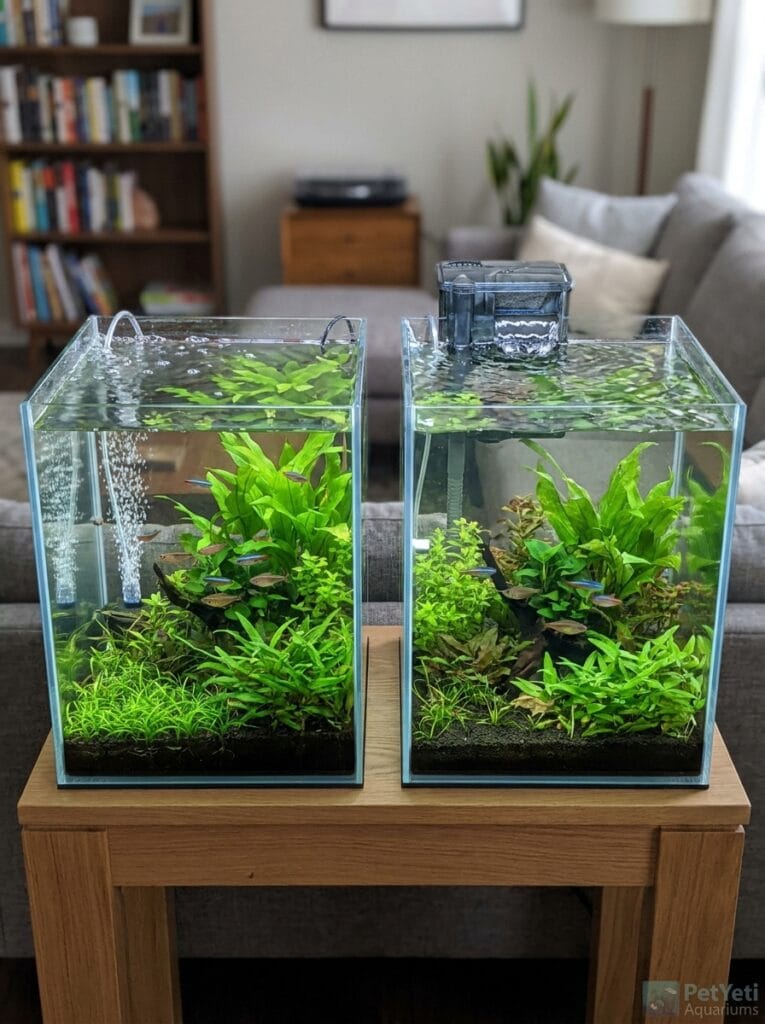
How to Choose the Right Air Stone for Your Aquarium
Not all air stones perform the same way. Choosing the right type can improve both appearance and functionality.
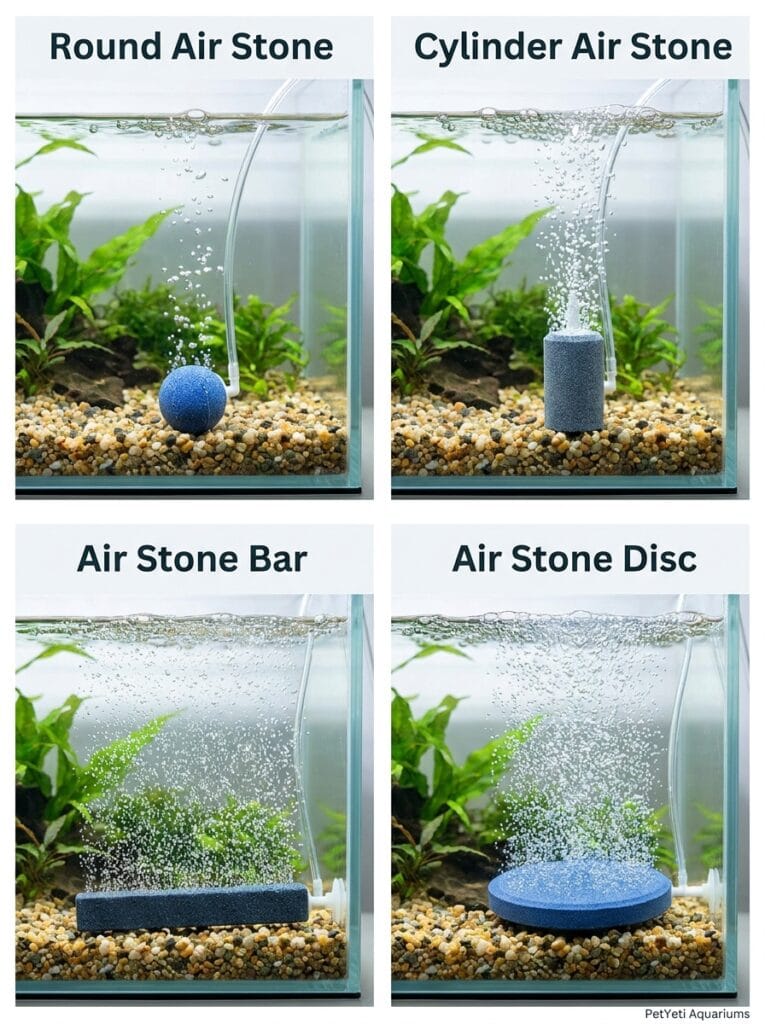
Shape
Different shapes produce different bubble patterns.
| Air Stone Type | Typical Use |
|---|---|
| Round | General-purpose aquariums |
| Cylinder | Compact setups |
| Bar | Long tanks and community aquariums |
| Disc | Fine bubble production |
Size
An oversized air stone can create excessive water movement, especially in smaller aquariums.
For most beginner tanks between 5 and 20 gallons, smaller air stones usually work best.
Bubble Production
Some air stones create large visible bubbles, while others generate a fine mist-like stream.
Fine bubbles often look more natural and can improve circulation without creating excessive turbulence.
Tank Size Compatibility
Always match the air stone to both:
- Tank size
- Air pump strength
A powerful air stone connected to a weak air pump often performs poorly.
Material Quality
Quality air stones tend to produce more consistent bubbles and last longer before requiring replacement.
Ease of Cleaning
Over time, mineral deposits and algae can clog air stones.
Choose options that are easy and inexpensive to replace when necessary.
Best Aquarium Air Stones for Beginners
There is no single air stone that works best for every aquarium.
The ideal choice depends on:
- Tank size
- Fish species
- Air pump strength
- Bubble preference
- Aquarium layout
The recommendations below focus on beginner-friendly options that are widely available and easy to use.
PetYeti Pick: Overall Beginner Air Stone
Best For
Overall Beginner Choice
Pros
- Affordable
- Easy to find
- Reliable bubble production
- Works with most air pumps
Cons
- May require replacement sooner than premium options
- Basic design
Beginner Friendliness
Excellent
Tank Size Suitability
5–30 gallons
PetYeti Take
If you’re setting up your first aquarium and simply want an air stone that works, this is one of the safest choices. It provides consistent performance without adding unnecessary complexity.
Who Should Skip It
Skip this if you want a more premium fine-bubble look or a weighted design that stays hidden more easily
Best for Betta Tanks: Hygger Nano Air Stone
Best For
Small Betta Tanks
Pros
- Compact size
- Gentle bubble output
- Suitable for nano aquariums
Cons
- Not ideal for larger tanks
- Limited circulation coverage
Beginner Friendliness
Excellent
Tank Size Suitability
3–10 gallons
PetYeti Take
Many betta owners worry about creating too much water movement. This option is small enough for nano aquariums while still providing gentle circulation.
Who Should Skip It
Skip this if your aquarium is larger than about 10 gallons or you need stronger circulation across the whole tank.
Best for Community Tanks: Hygger Air Stone Bar
Best For
Community Aquariums
Pros
- Even bubble distribution
- Covers larger areas
- Great for longer tanks
Cons
- Requires slightly stronger air pumps
- Takes up more space
Beginner Friendliness
Very Good
Tank Size Suitability
20–55 gallons
PetYeti Take
For community aquariums, an air stone bar often provides better circulation than a small round air stone. It’s especially useful in longer tanks where water movement can become uneven.
Who Should Skip It
Skip this if you keep fish that prefer very gentle water movement, especially bettas in small tanks.
Best Fine-Bubble Option: Pawfly Air Stone Disc
Best For
Fine Bubble Production
Pros
- Produces fine bubbles
- Attractive visual effect
- Good circulation
Cons
- Can clog over time
- Requires occasional maintenance
Beginner Friendliness
Very Good
Tank Size Suitability
Various sizes
PetYeti Take
If you enjoy the appearance of fine bubbles rising through the aquarium, a disc-style air stone is often the most visually appealing option.
Who Should Skip It
Skip this if you do not want to clean or replace clogged air stones occasionally.
Best Budget Option: Pawfly Cylinder Air Stone
Best For
Budget Choice
Pros
- Affordable
- Compact
- Easy to install
Cons
- Smaller coverage area
- May need replacement more frequently
Beginner Friendliness
Excellent
Tank Size Suitability
5–20 gallons
PetYeti Take
For beginners on a budget, this type of air stone offers excellent value. It won’t transform your aquarium, but it performs its job reliably without costing much.
Who Should Skip It
Skip this if you want a more polished display piece or very fine, even bubbles.
Who Should Skip an Air Stone?
This may sound surprising in a buying guide, but not every aquarium benefits from an air stone.
You may not need one if:
- Your filter already creates strong surface movement
- Your aquarium is lightly stocked
- Your planted tank has excellent circulation
- Oxygen levels are already adequate
- Fish are behaving normally and showing no signs of stress
Adding equipment simply because it is available does not always improve an aquarium.
Many successful aquariums operate for years without an air stone because the filtration system already provides sufficient circulation and oxygen exchange.
Common Air Stone Mistakes Beginners Make
Buying an Oversized Air Stone
Large air stones can create excessive movement in small tanks.
A 5-gallon aquarium rarely needs the same bubble output as a 55-gallon community tank.
Using a Weak Air Pump
An undersized air pump may struggle to produce consistent bubbles.
Always check compatibility between the air stone and pump.
Helpful Add-On: Airline Tubing Kit
Recommended Option: Aquarium Airline Tubing Kit
Why We Like It:
✓ Useful for air stones
✓ Helpful for sponge filters
✓ Easy to replace when needed
PetYeti Take:
Many beginners focus on the air stone itself and forget that tubing is also part of the setup.
Who Should Skip It
Skip this if you already have airline tubing, a check valve, and an air control valve.
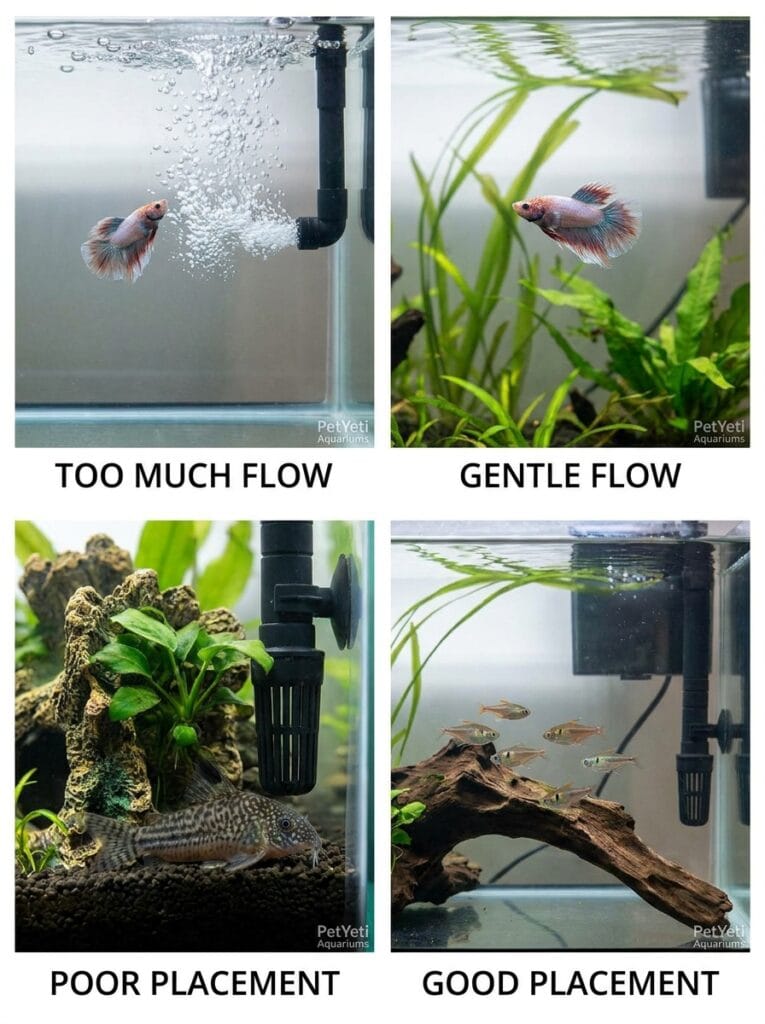
Creating Too Much Water Movement
Some fish, especially bettas, prefer calmer water conditions.
Excessive bubbling can create unnecessary stress.
Real-Life Example
A beginner installed a large air stone in a 5-gallon betta aquarium because they thought more bubbles meant more oxygen.
The result was strong water movement that constantly pushed the betta around the tank.
After switching to a smaller nano air stone, the fish became noticeably more comfortable and resumed normal resting behavior.
Poor Placement
Positioning an air stone directly beneath decorations or plants can reduce effectiveness.
Place it where bubbles can rise freely through the water column.
Ignoring Maintenance
Air stones gradually clog with mineral deposits and biofilm.
Replacing or cleaning them periodically helps maintain consistent performance.
Best Air Stone by Aquarium Type
| Aquarium Type | Recommended Air Stone |
|---|---|
| Betta Tank | Hygger Nano Air Stone |
| Nano Aquarium | Pawfly Cylinder Air Stone |
| Community Aquarium | AQUANEAT Air Stone Bar |
| Planted Aquarium | Small Air Stone Disc |
| Large Aquarium | Multiple Air Stone Bars |
Are Air Stones Worth It for Beginners?
For many beginners, an air stone is an inexpensive way to improve water circulation and add visual interest to an aquarium.
However, it should be viewed as a helpful tool rather than a requirement.
If your aquarium already has healthy oxygen levels and adequate water movement, an air stone may offer only modest benefits.
The best choice depends on your specific aquarium rather than a universal rule.
Related PetYeti Guides
Air stones work best when they are paired with the right air pump and used for a real oxygen, circulation, or surface movement need. These guides can help you decide what your aquarium actually needs:
CONCLUSION
Air stones are simple pieces of equipment, but they can play a useful role in many aquariums by improving circulation and increasing surface agitation.
The most important thing to remember is that air stones are optional tools, not mandatory equipment.
For beginners looking for a reliable all-around choice, the Penn-Plax Standard Air Stone is a safe starting point. Smaller tanks may benefit from a nano option, while larger community aquariums often perform better with air stone bars.
Choose an air stone based on your aquarium’s needs rather than marketing claims, and you’ll be far more likely to end up with equipment that genuinely improves your setup.
FAQs
Do air stones increase oxygen in an aquarium?
Indirectly, yes. Air stones improve surface agitation, which helps oxygen enter the water more efficiently.
Can betta fish use air stones?
Yes. Many betta tanks use small air stones successfully, but excessive water movement should be avoided.
How long do aquarium air stones last?
Most air stones last several months before performance begins to decline. Lifespan varies depending on water conditions and maintenance.
Can an air stone be too powerful?
Yes. Excessive bubble production can create strong currents that may stress some fish species.
Do planted tanks need air stones?
Not always. Many planted aquariums already have adequate circulation and oxygen exchange from filtration and plant growth.
Why is my air stone producing large bubbles?
Clogging, mineral buildup, or wear can cause larger bubbles. Cleaning or replacing the air stone often solves the problem.