
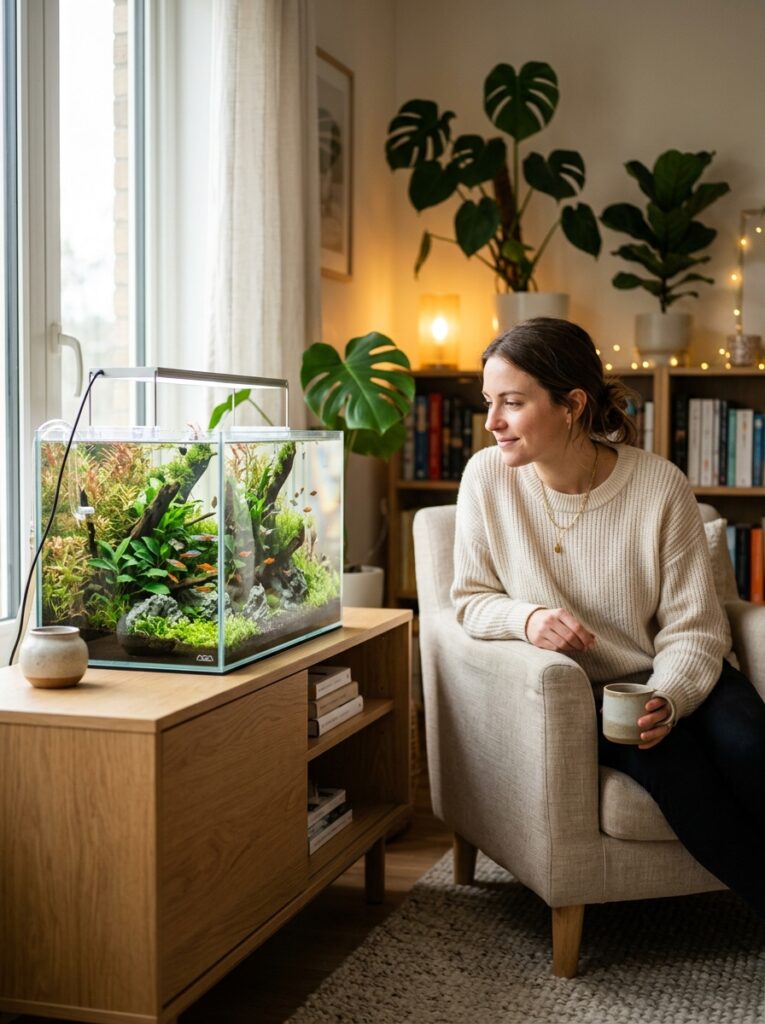
Choosing the right peaceful fish for community aquariums is the foundation of a relaxing, low-stress home tank. A true community setup is not just about gathering colorful species in the same box of water—it is about creating an environment where every inhabitant feels safe, feeds naturally, and shares space without territory battles or fin-nipping.
When fish coexist peacefully across different water layers, your aquarium transforms into a calming living painting. You will see natural behaviors: schooling fish moving gracefully through the mid-water, a gentle centerpiece exploring plant leaves, and bottom dwellers tirelessly sifting sand.
PetYeti 10-Second Community Harmony Rule
Layer Your Swimming Levels: Never pack all your fish into one zone. Combine surface dwellers (like Hatchetfish or peaceful Guppies), mid-water schoolers (like Harlequin Rasboras or Cardinal Tetras), and bottom foragers (like Corydoras Catfish).
Match Temperament & Pacing: Pair slow, deliberate swimmers (like Honey Gouramis) with calm schoolers. Avoid hyper-active fin-nippers (like Tiger Barbs or Serpae Tetras) that stress docile tankmates.
Safety in Numbers: Keep schooling species in groups of at least 6 to 8. When schoolers feel secure together, they focus on their group and leave other species completely alone.
- Why Peaceful Fish Create More Relaxing Aquariums
- Best Peaceful Fish for Small Community Aquariums (By Swimming Level)
- 1. Top Level & Centerpiece Species
- 2. Mid-Water Schooling Companions
- 3. Bottom Dwellers & Cleanup Crew
- ⚠️ "Peaceful" Fish to Avoid in Small Community Tanks
- How to Avoid Overcrowding Small Community Aquariums
- Common Community Aquarium Mistakes to Avoid
- Creating a Calm and Balanced Aquarium Environment
- Related PetYeti Aquarium Guides
- CONCLUSION
- FAQs
As an Amazon Associate, PetYeti earns from qualifying purchases. This comes at no additional cost to you and helps support the site. We only recommend products we genuinely believe can help create healthier and more enjoyable aquariums.
Why Peaceful Fish Create More Relaxing Aquariums
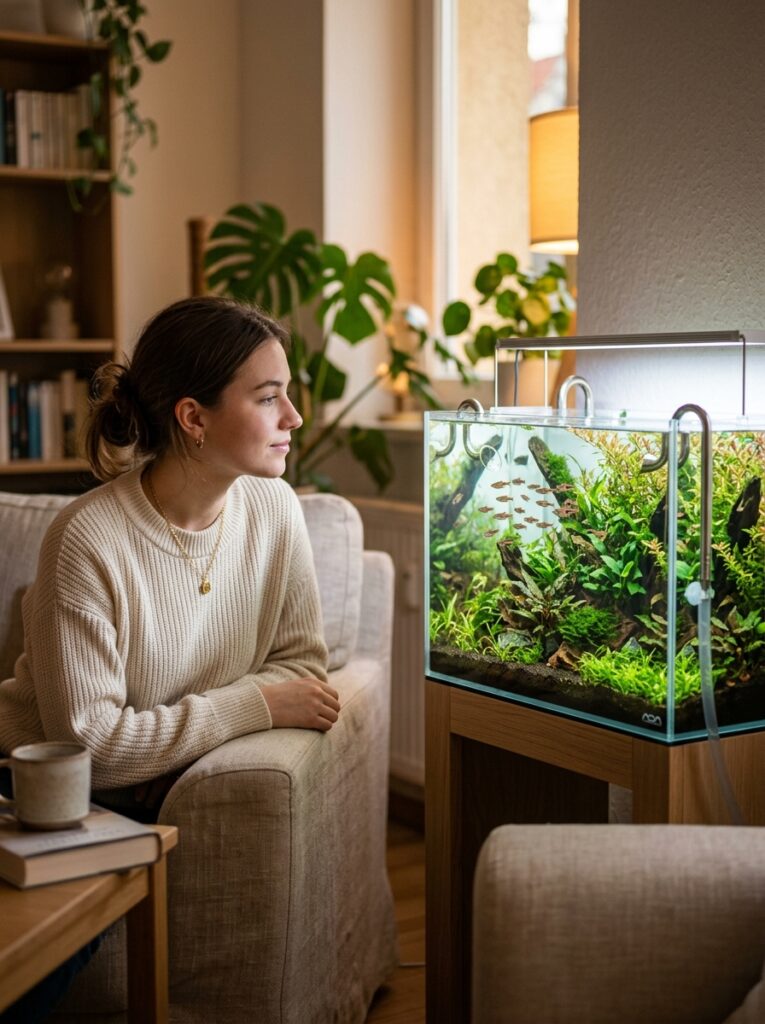
Peaceful fish often create a calmer aquarium atmosphere because their movement feels smoother, gentler, and less visually chaotic inside smaller planted tanks. Instead of constant chasing or territorial behavior, peaceful community fish usually move naturally through the aquascape in a way that feels balanced and relaxing to observe.
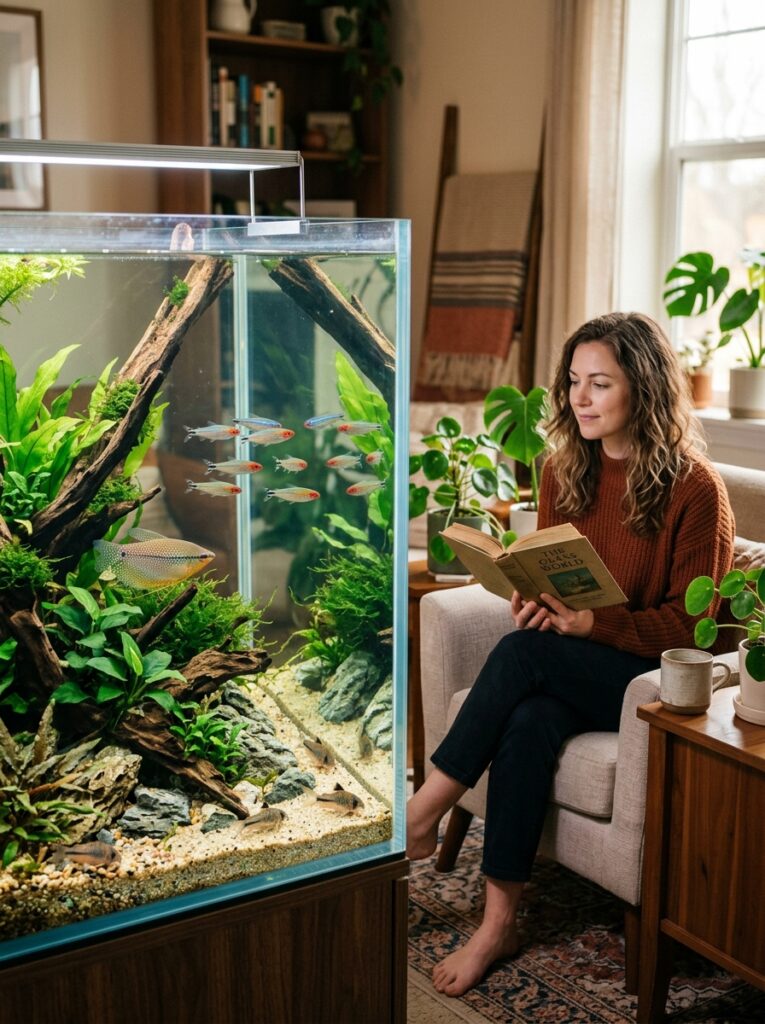
Many people designing cozy apartment or bedroom aquariums prefer calm fish species because they help maintain the peaceful atmosphere the aquarium is meant to create. Slower swimming patterns, softer coloration, and natural schooling behavior often contribute to a more visually soothing environment overall.
A balanced community aquarium is not only about compatibility. It is also about creating an aquarium that feels emotionally calming to live beside every day.
Best Peaceful Fish for Small Community Aquariums (By Swimming Level)
1. Top Level & Centerpiece Species
These fish inhabit the upper third of the tank or act as gentle, inquisitive focal points without claiming excessive territory.
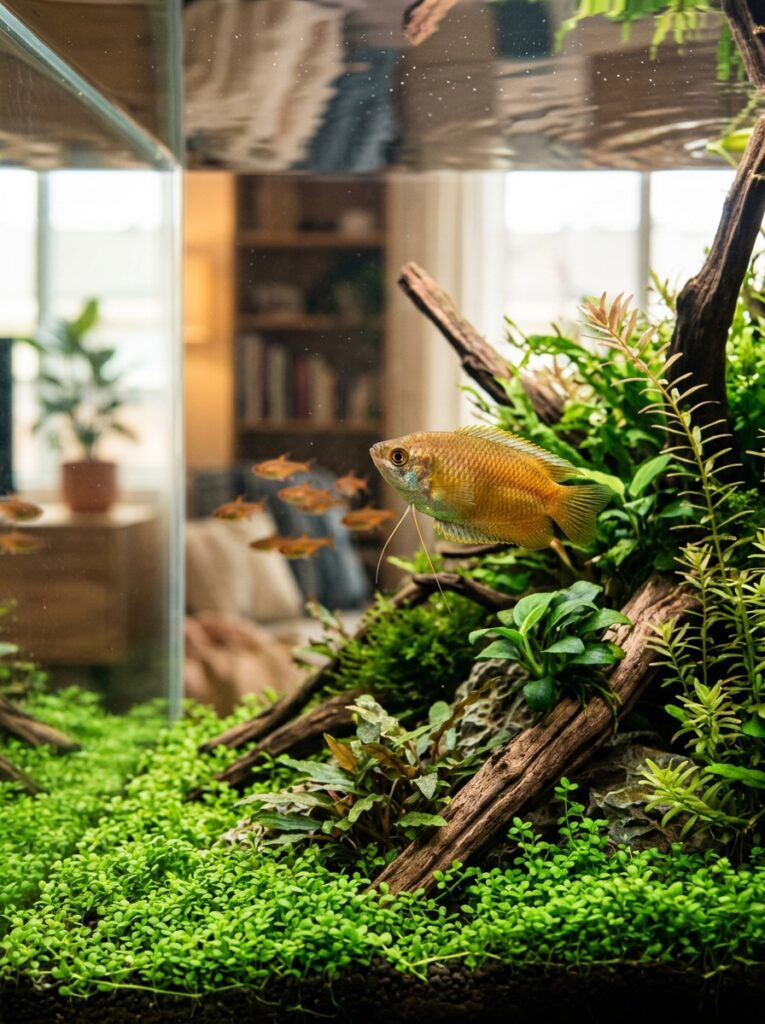
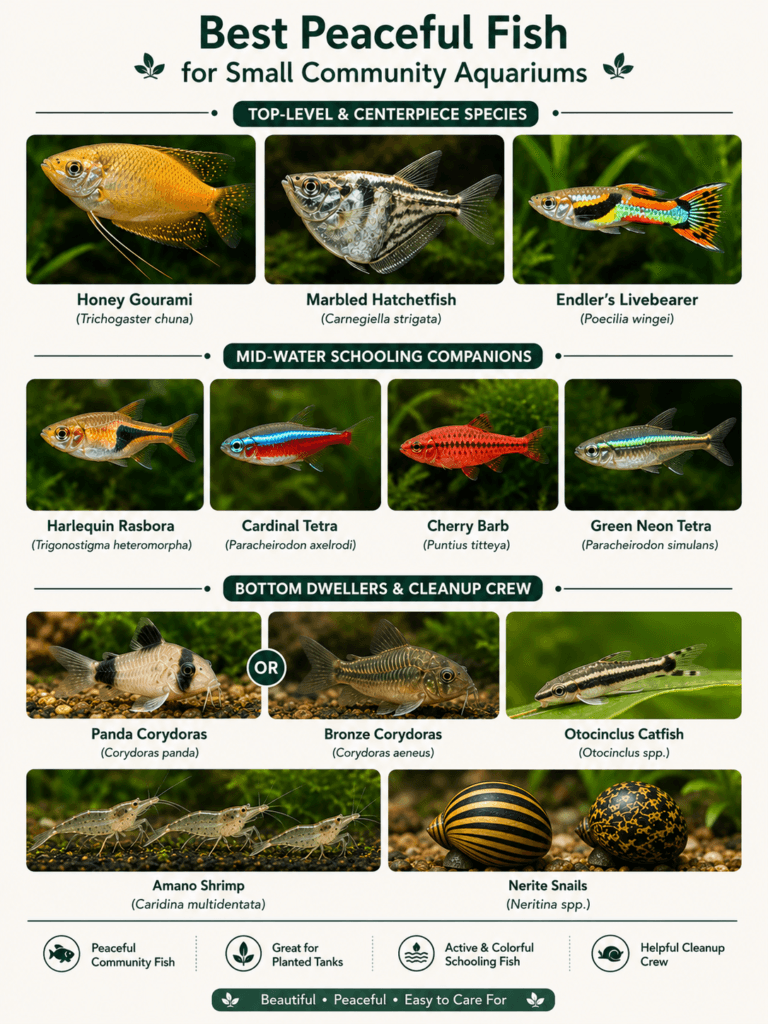
- Honey Gourami (Trichogaster chuna): The quintessential peaceful centerpiece. They move slowly, explore plants with delicate pelvic feelers, and never nip fins or harass smaller nano fish.
- Marbled Hatchetfish (Carnegiella strigata): Dedicated surface dwellers with deep bellies that stay glued to the top inch of water, completely ignoring mid-water and bottom fish (requires a tight lid).
- Endler’s Livebearer (Poecilia wingei): Smaller and calmer than fancy guppies, peaceful males display brilliant metallic patterns without trailing fins that tempt nippers.
A single Honey Gourami will gently hover in front of the glass during dinner time, waiting patiently for sinking flakes while small tetras dart around below, coexisting without any aggression.
Real-Life Example:
A single Honey Gourami will gently hover in front of the glass during dinner time, waiting patiently for sinking flakes while small tetras dart around below, coexisting without any aggression.
2. Mid-Water Schooling Companions
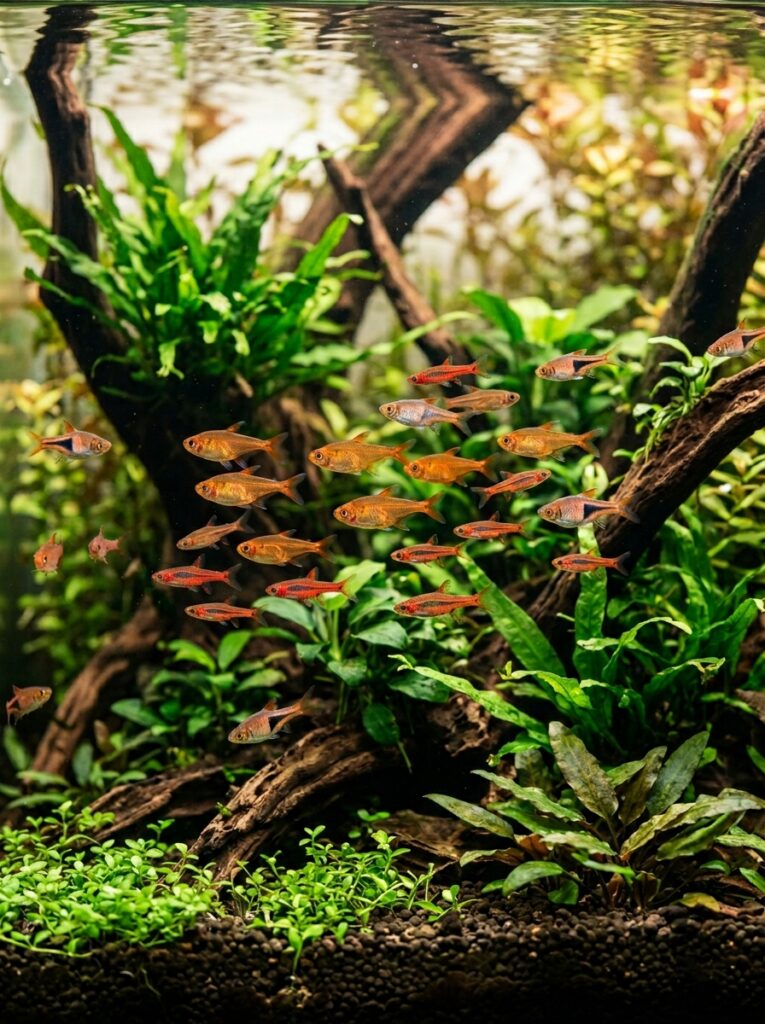
Mid-water fish bring fluid, synchronized movement and shimmering color to the central viewing area of your tank.
| Species | Group Size | Temperament | Best Tankmates |
| Harlequin Rasbora | 6–8+ | Extremely Peaceful | Gouramis, Corydoras, Tetras |
| Cardinal Tetra | 8–10+ | Docile & Peaceful | Dwarf Cichlids, Rasboras, Snails |
| Cherry Barb | 6–8+ | Gentle Shoaler | Livebearers, Gouramis, Otocinclus |
| Green Neon Tetra | 8–10+ | Shy & Non-Aggressive | Chili Rasboras, Shrimp, Pygmy Corys |
- PetYeti Care Pick: Feed mid-water schoolers Fluval Bug Bites Tropical Micro Granules—a nutrient-dense, insect-based food that stays suspended in the water column just long enough for mid-dwellers to eat.
Real-Life Example:
When kept in a group of eight or more, Harlequin Rasboras stay focused on their own tight shoal, weaving gracefully around driftwood without chasing or nipping other tank inhabitants.
3. Bottom Dwellers & Cleanup Crew
Bottom-dwelling fish help peaceful community aquariums feel more balanced because they naturally use lower areas of the tank that many mid-level fish ignore. Their gentle activity often adds movement and personality to planted aquariums without making the environment feel overcrowded or chaotic.
Bottom dwellers keep your substrate clean and add charming wiggling activity to the lower level.
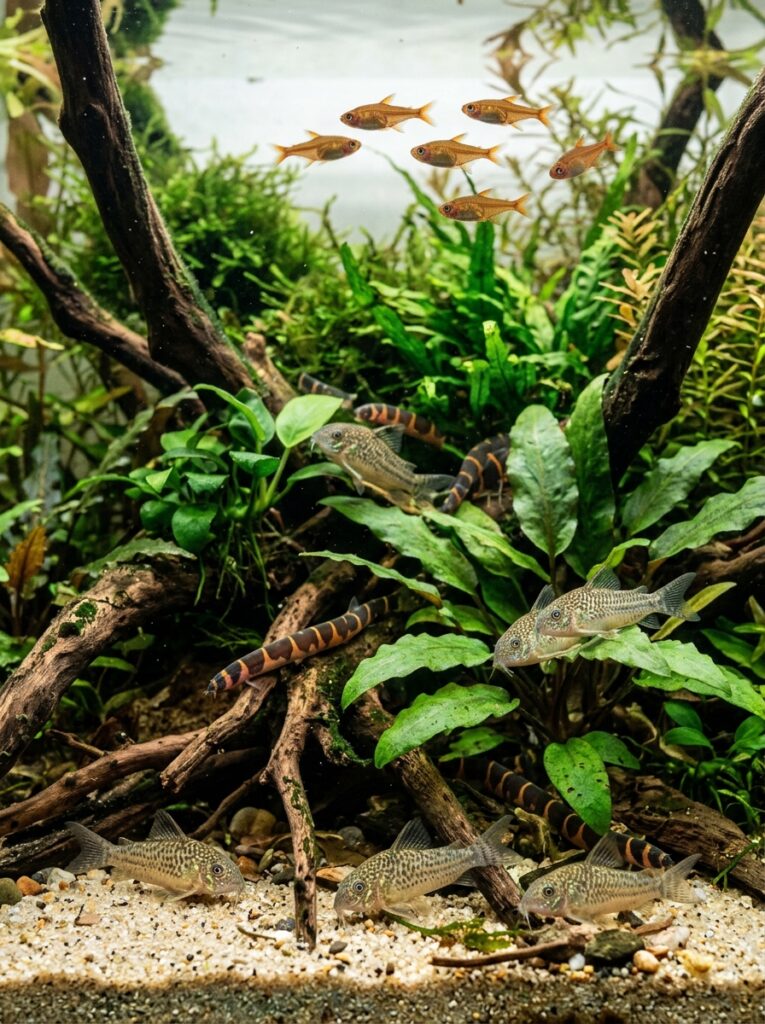
- Panda or Bronze Corydoras (Group of 6+): Inquisitive, social catfish that continuously snuffle through soft sand, completely oblivious to fish swimming above them.
- Otocinclus Catfish (Group of 4–6): Peaceful dwarf suckermouth catfish that dedicate their entire lives to polishing algae off plant leaves and glass.
- Amano Shrimp & Nerite Snails: The ultimate non-fish cleanup crew, keeping plants free of hair algae and hardscape clean of diatoms without increasing aggression.
- PetYeti Care Pick: Drop in Hikari Sinking Wafers or Fluval Bug Bites Sinking Bottom Feeder Granules at lights-out so bottom dwellers get full meals undisturbed.
Real-Life Example:
A small group of Panda Corydoras wiggling across a sand bed looks like a busy little cleaning crew, sifting through fine grains together without disturbing delicate rooted plants or shy shrimp.
⚠️ “Peaceful” Fish to Avoid in Small Community Tanks
Some fish are sold as community species but cause stress in compact setups:
Tiger Barbs & Serpae Tetras: Notorious fin-nippers that shred long fins and chase docile tankmates relentlessly.
Chinese Algae Eaters: Sold small as algae eaters, but they quickly grow up to 10 inches and turn aggressive, often rasping slime coats off sleeping fish.
Common Plecos: Outgrow small tanks rapidly (reaching 15–20 inches) and create massive biological waste. Stick to small Bristlenose Plecos or Otocinclus instead.
Many beginner-friendly community fish are popular because they tend to coexist peacefully while helping smaller planted aquariums feel calm and visually balanced. Fish with gentler temperaments often reduce stress inside the aquarium and create a more enjoyable long-term experience for beginners.
Species like ember tetras, harlequin rasboras, corydoras, honey gouramis, and smaller rasboras are commonly recommended because they usually adapt well to calmer planted community environments. Their natural behavior often fits beautifully into nano aquariums designed around relaxation and visual harmony.
Balanced stocking and proper aquarium size still remain important, but peaceful species combinations usually create healthier and less stressful community tanks overall.
How to Avoid Overcrowding Small Community Aquariums
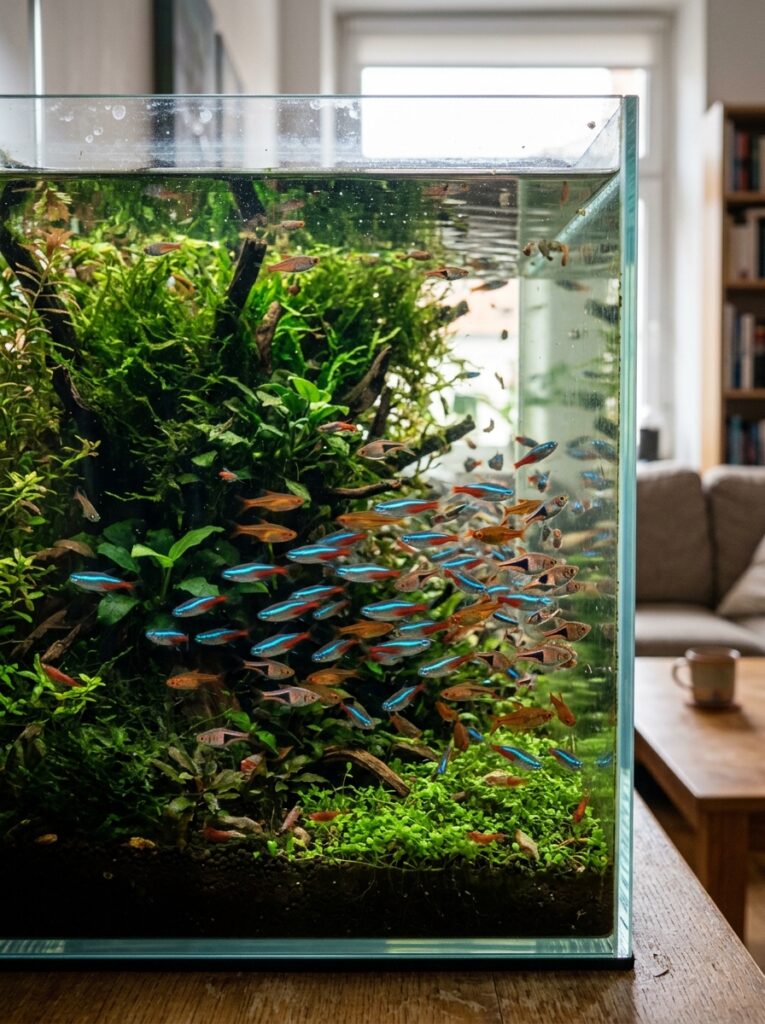
Overcrowding is one of the most common reasons peaceful community aquariums begin to feel stressful instead of relaxing. Too many fish competing for limited swimming space can create visual chaos, increased aggression, and a less balanced atmosphere inside smaller planted tanks.
Many beginners make the mistake of adding too many species at once because individual fish look small in stores. However, calmer aquariums usually rely on thoughtful stocking, open swimming areas, and fewer carefully selected species that naturally complement each other.
Smaller community aquariums often feel more peaceful when fish movement remains gentle and balanced rather than constantly crowded throughout the entire tank.
Common Community Aquarium Mistakes to Avoid
Many community aquariums become stressful because beginners combine fish species based only on appearance without considering behavior, swimming style, or long-term compatibility. Fish that look peaceful individually may still create tension when mixed inside smaller aquariums with limited space.
Another common mistake is adding too many centerpiece fish or combining highly active species with calmer planted aquarium setups. This often disrupts the relaxing atmosphere many people want from community aquariums and can make smaller tanks feel visually overwhelming.
Community aquariums also become less balanced when fish are added too quickly without allowing the environment to stabilize naturally. Calm planted aquariums usually perform best when stocking decisions remain simple, intentional, and visually balanced over time.
Creating a Calm and Balanced Aquarium Environment
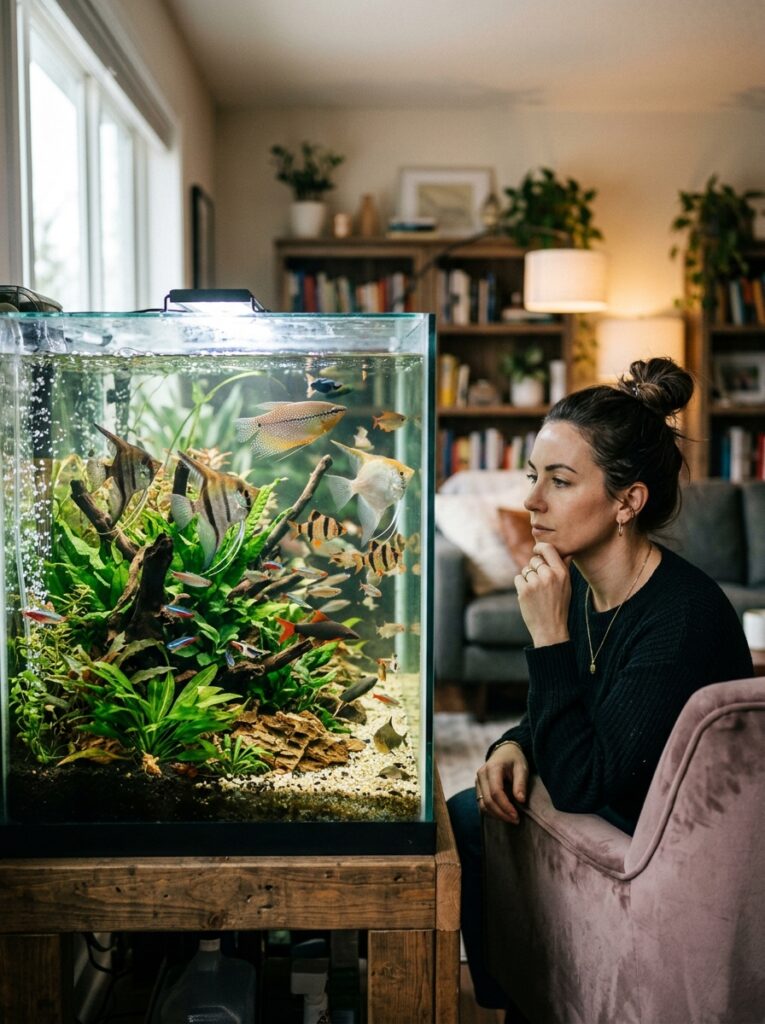
A peaceful community aquarium is usually created through balance rather than maximum stocking or visual complexity. Calm fish movement, open swimming space, healthy plants, and thoughtful species selection often create a far more relaxing environment than overcrowded aquariums filled with constant activity.
Many balanced community tanks combine smaller schooling fish, gentle centerpiece species, and peaceful bottom-dwellers in a way that allows each part of the aquarium to feel natural and visually comfortable. Soft lighting and planted aquascapes also help strengthen the calm atmosphere of the tank.
The goal is not to own the most fish possible, but to build an aquarium environment that feels peaceful, healthy, and enjoyable to observe every day.
Related PetYeti Aquarium Guides
- Looking specifically for synchronized group swimmers? Explore our top best schooling fish for peaceful aquariums.
- Setting up a desktop or sub-10-gallon tank? Check out our favorite best nano fish for peaceful small aquariums.
- Need the perfect low-maintenance greenery for your community? Browse our top best low-light aquarium plants.
CONCLUSION
Building a peaceful community aquarium is all about balance. When you choose species with compatible temperaments, group schooling fish properly, and ensure every level of the water column has its own gentle residents, your aquarium becomes a serene, living focal point in your home.
Stick to reliable favorites like Honey Gouramis, Harlequin Rasboras, and Panda Corydoras. Feed them high-quality nutrition, provide plenty of leafy plant cover, and enjoy a thriving community where every fish feels safe and settled.
PetYeti Quick Recap: Best Essentials for a Harmonious Community
To keep your community stress-free and vibrant, feed mid-water schoolers Fluval Bug Bites Tropical Micro Granules and nourish your cleanup crew with Hikari Sinking Wafers. Monitor your parameters weekly with the API Freshwater Master Test Kit to ensure clean, stable water conditions.
FAQs
What is the most peaceful freshwater fish for a beginner community tank?
Honey Gouramis (Trichogaster chuna) and Corydoras Catfish share the top spot. Honey Gouramis are gentle, curious, and slow-moving centerpieces that never nip fins, while Corydoras are playful, social bottom dwellers that spend their entire day sifting sand without bothering other species.
Can I keep different types of schooling fish together?
Yes, as long as your tank size allows for proper school numbers. Rather than buying two or three fish from multiple species, choose one or two distinct species and keep at least 6 to 8 of each. Large groups prevent stress, encourage natural shoaling behavior, and keep the tank looking clean rather than chaotic.
What makes a community aquarium feel relaxing?
Gentle fish movement, balanced stocking, healthy plants, soft lighting, and peaceful fish behavior usually create a calmer and more visually soothing aquarium atmosphere.
Are schooling fish good for planted aquariums?
Yes. Small schooling fish often create natural movement and visual balance that works beautifully in planted community aquariums.
How do beginners avoid overcrowding community tanks?
Beginners usually create calmer aquariums by choosing fewer compatible species, maintaining open swimming space, and avoiding excessive stocking.
How do I stop aggression during feeding time?
Feed a combination of floating micro-pellets and quick-sinking bottom wafers at the same time on opposite sides of the tank. This spreads your fish out across the water column, allowing surface feeders and bottom foragers to eat at their own pace without competing for the same bite.