
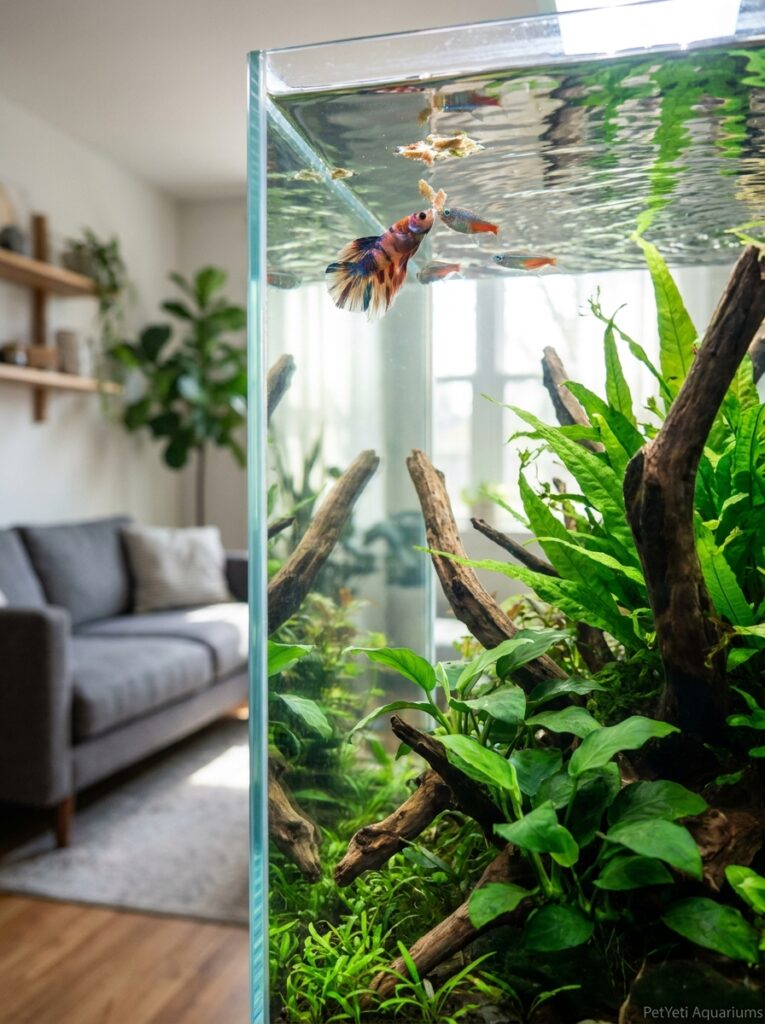
If you’re asking yourself why is my fish not eating—whether your betta turns its nose up at pellets, a new school of tetras ignores flakes, or a once-hungry fish suddenly hides at feeding time—it is one of the most nerve-wracking things an aquarium owner can experience. The reassuring reality is that healthy adult fish can easily survive several days without food, meaning you have plenty of time to calmly identify the root issue without going into panic mode.
A fish refusing food is rarely being “stubborn.” Instead, it is usually reacting to environmental stress, temperature shifts, improper food size, or a need for tank acclimation.
PetYeti 10-Second Quick Diagnostic
- It’s likely NEW TANK SHYNESS if: You brought the fish home within the last 48 hours and it stays hidden near the bottom or behind plants during feeding time.
- It’s likely WATER QUALITY STRESS if: Multiple fish lose their appetite simultaneously, breathe heavily near the surface, or look pale in color.
- It’s likely FOOD PICKINESS OR EXPIRATION if: The fish swims eagerly toward the surface when you approach, takes a bite of food, but immediately spits it back out.
- 6 Reasons Why Your Fish Is Not Eating (And How to Fix It)
- 1. New Environment Shyness & Stress
- 2. Water Quality & Ammonia Irritation
- 3. Cold Water & Low Metabolism
- 4. Food Size, Stale Pellets, or Picky Eating
- 5. Bullying & Feeding Hierarchy
- 6. Underlying Illness or Parasitic Infections
- When Should You Be Concerned?
- CONCLUSION
- FAQs
As an Amazon Associate, PetYeti earns from qualifying purchases. This comes at no additional cost to you and helps support the site. We only recommend products we genuinely believe can help create healthier and more enjoyable aquariums.
6 Reasons Why Your Fish Is Not Eating (And How to Fix It)
1. New Environment Shyness & Stress
Being netted at a pet store, transported in a plastic bag, and dropped into unfamiliar surroundings causes extreme disorientation. It is completely normal for a newly introduced fish to fast for the first 24 to 72 hours while learning where safe hiding spots are located.
The Fix: Dim the aquarium lights for the first 24 hours, avoid crowding the glass, and offer tiny portions once daily until the fish builds confidence.e enough to eat normally.
How to Tell: The fish was added to your tank within the past 3 days and hides behind plants whenever humans approach the glass.
Real-Life Example
A newly purchased fish may ignore food for a day or two after arriving home but begin eating enthusiastically once it becomes familiar with its new environment.
Patience is often the best first step.
2. Water Quality & Ammonia Irritation
When ammonia or nitrite levels spike, fish experience physical discomfort and burning along their gills. Loss of appetite is their first defense mechanism—a stressed fish shuts down feeding to conserve energy and reduce internal metabolic waste.
How to Tell: Multiple fish refuse food at the same time, stay near the bottom, or show rapid gill movement.
The Fix: Test your water immediately using a liquid master test kit and perform a 25% water change with conditioned, temperature-matched water.
PetYeti Pick: Use an 11 in 1 – Aquarium Test Strips to verify that ammonia and nitrites are at a safe 0 ppm.
Real-Life Example:
If you skip a couple of weekly water changes and notice your entire school of tetras suddenly ignores dinner, don’t switch foods right away. An invisible spike in ammonia or nitrates is usually the real culprit making them feel too sick to eat.
3. Cold Water & Low Metabolism
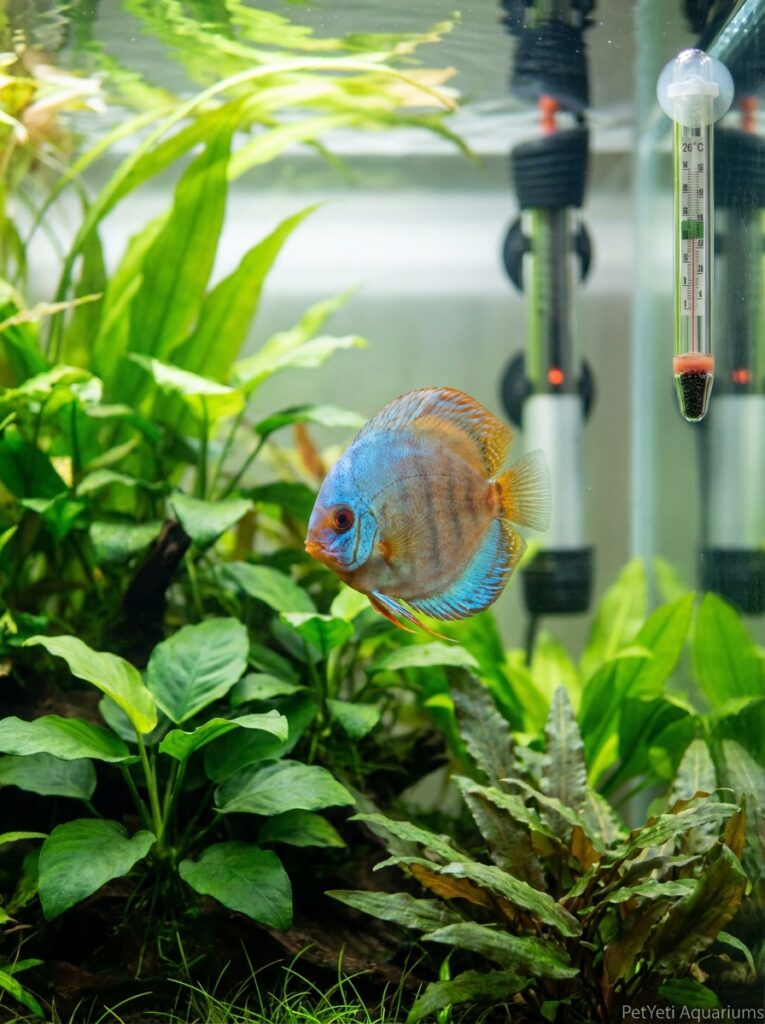
Fish are cold-blooded animals, meaning their metabolism depends entirely on the surrounding water temperature. If an aquarium heater unplugs, fails, or the room gets chilly at night, their digestion slows to a crawl, turning off their natural appetite.
- How to Tell: The aquarium thermometer reads below 76°F (24°C), and your fish sits motionless near the gravel or behind the heater.
- The Fix: Check your heater settings and gradually bring the water temperature back into the ideal 78°F–80°F (25.5°C–27°C) range.
- PetYeti Pick: The hygger Small Aquarium Heater provides steady, automatic temperature regulation to keep tropical metabolisms active.
Real-Life Example:
During the first cold snap of autumn, a betta might suddenly stop swimming up for breakfast and rest on the bottom. Once you check the glass thermometer and realize the water slipped to 70°F, warming it back to 78°F usually brings their appetite roaring back within 24 hours.
4. Food Size, Stale Pellets, or Picky Eating
Many commercial pellets are simply too hard or too big for smaller mouths to swallow comfortably. Open food containers also lose their natural aroma, fats, and vitamins after 4 to 6 months, making once-tasty food smell unappealing to your fish.
- How to Tell: Your fish eagerly lunges at the food, attempts to chew it, but spits it out repeatedly until it sinks to the bottom.
- The Fix: Pre-soak hard pellets in a small cup of tank water for 2 minutes, crush flakes into bite-sized micro-pieces, or rotate in frozen bloodworms.
- PetYeti Pick: Soaking pellets in a drop of Seachem GarlicGuard naturally entices picky eaters and stimulates appetite through natural scent.
Real-Life Example:
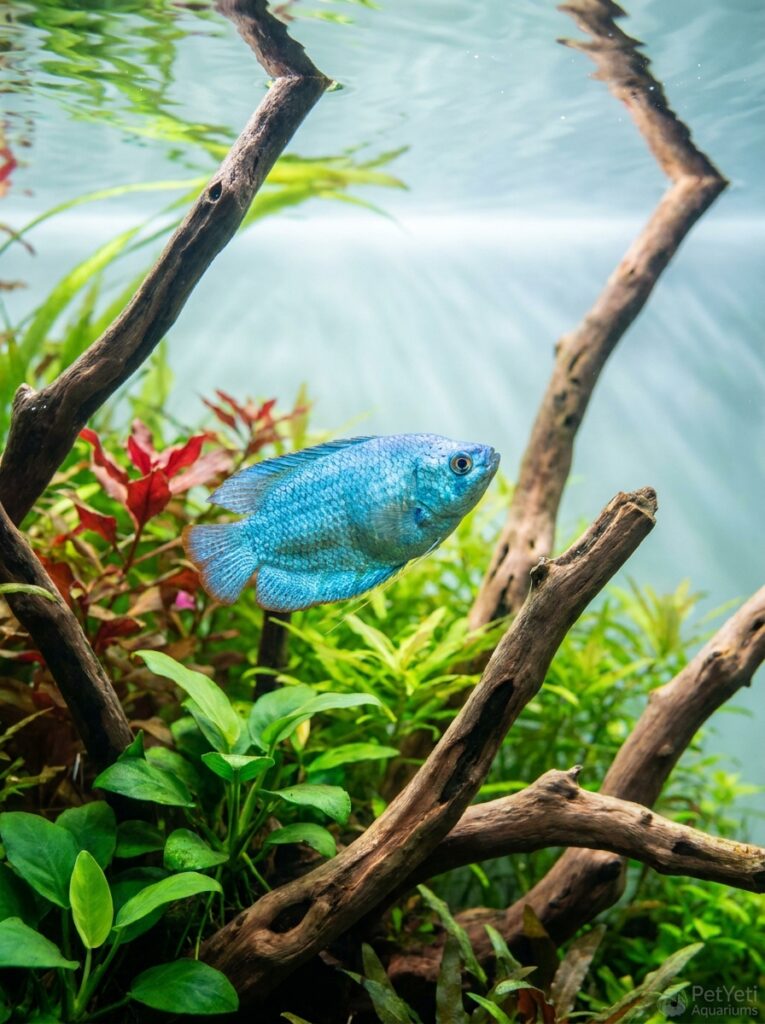
A newly adopted dwarf gourami might enthusiastically grab a pellet, spit it out three times, and watch it sink. Soaking that exact same pellet in tank water for two minutes makes it soft enough for them to swallow with zero struggle.
5. Bullying & Feeding Hierarchy
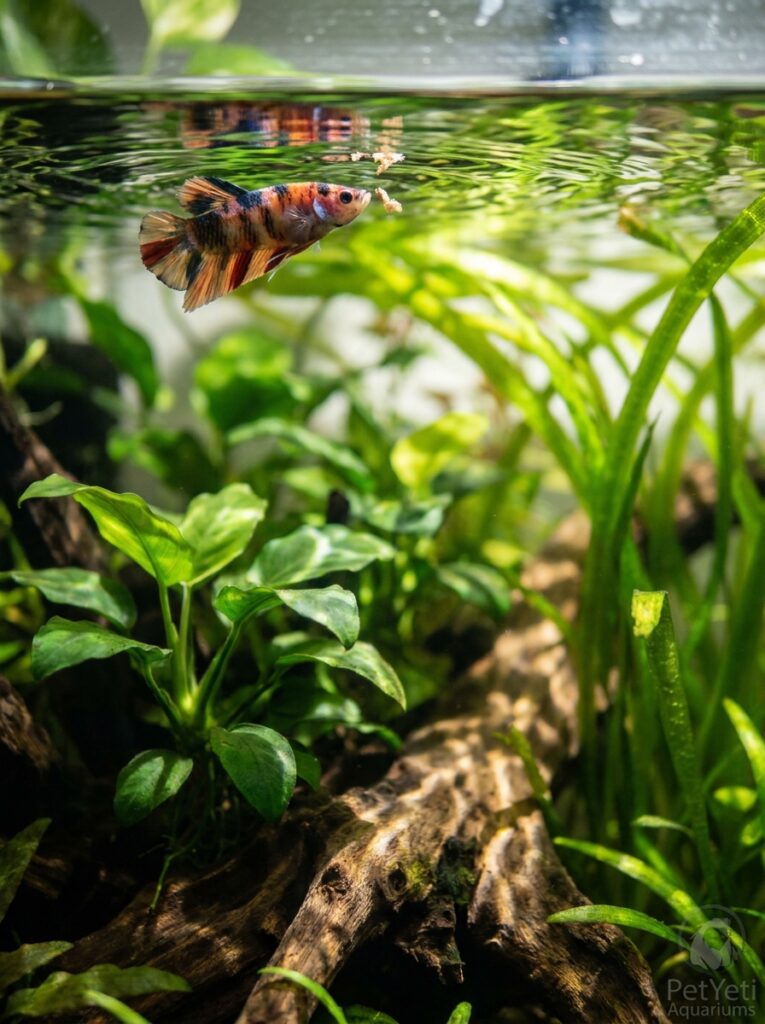
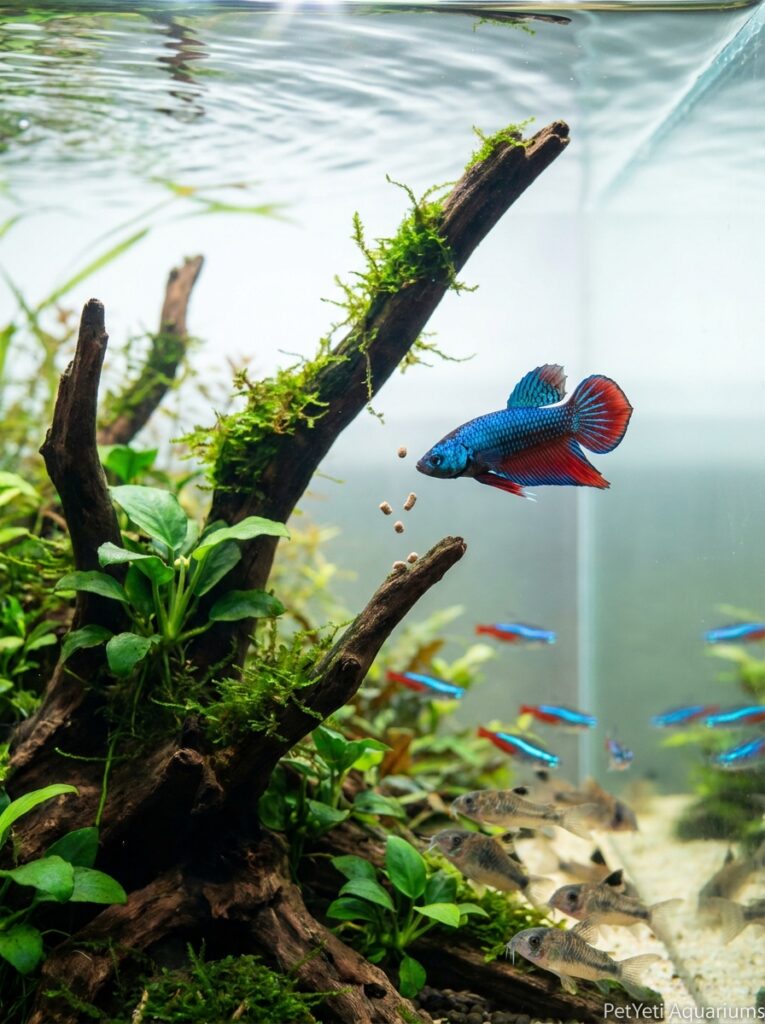
In community setups, active surface feeders like Zebra Danios or Tiger Barbs often gobble down every speck of food in seconds. Slower-moving fish, bettas, or bottom-dwelling corydoras can easily get intimidated and give up trying to eat altogether.
How to Tell: Faster fish chase smaller or slower tank mates away from the surface, leaving shy fish hiding in the corners during feeding time.
The Fix: Distract fast swimmers by dropping flakes on one side of the tank while gently releasing sinking pellets or micro-bites on the opposite end.
Real-Life Example:
If an older, long-finned betta shares a tank with speedy neon tetras, the tetras will snatch all the floating flakes before the betta even notices dinner. Using a simple floating feeding ring keeps the betta’s food in one dedicated spot where he can eat at his own pace.
6. Underlying Illness or Parasitic Infections
When fish battle bacterial infections, internal parasites, or external issues like Ich, their bodies redirect energy toward immune defense. Much like humans during a bad flu, a sick fish loses interest in food, becomes lethargic, and avoids normal social activity.
How to Tell: Look for visible symptoms alongside the loss of appetite—such as white salt-like specks on fins, clamped fins, a swollen belly (bloating), pale stringy feces, or frayed fin edges.
The Fix: Move the sick fish to a separate hospital tank if possible, keep the water pristine with small daily water changes, and treat the specific issue with targeted, gentle medication rather than shotgun dosing the whole display tank.
PetYeti Pick: Fritz Maracyn Oxy or API General Cure treats common bacterial and parasitic ailments without wiping out your filter’s beneficial biological bacteria.
Real-Life Example:
A betta that usually dances at the front glass whenever you open the lid might start resting behind the filter, turning away from bloodworms. If you look closely with a flashlight and spot tiny white dots on his fins, catching an early Ich outbreak and treating it with aquarium salt and warmth usually gets him eating again within 3 to 4 days.
When Should You Be Concerned?
Missing a meal isn’t automatically a problem. Many healthy fish occasionally eat less than usual. The bigger concern is a consistent pattern.
You should investigate further if:
- Appetite loss lasts several days
- Multiple fish stop eating
- Weight loss becomes noticeable
- Other symptoms appear
- Behavior changes dramatically
Real-Life Example
A fish that skips one feeding but resumes normal eating the next day is usually not a major concern. A fish that refuses food for an extended period while showing other unusual behaviors deserves closer observation.
The goal is to identify trends, not panic over a single missed meal.
Related PetYeti Aquarium Care Guides
Worried your fish is acting strange along the glass? Read our guide on why is my betta glass surfing.
Seeing sudden, erratic movements? Check out why is my fish swimming erratically.
Setting up a calm, low-stress environment? Read our blueprint for a stress-free betta fish tank.
CONCLUSION
Seeing your fish turn away from food can feel alarming, but in most cases, it is simply a temporary response to environmental stress, cooler water temperatures, or hard-to-swallow pellets.
Take a calm, systematic approach: verify your water parameters with a liquid test kit, ensure your heater holds steady at 78°F, and give new fish a day or two to settle into their surroundings. With clean water, comfortable temperatures, and soft, bite-sized food, your fish will be back to greeting you enthusiastically at feeding time before you know it.
PetYeti Quick Recap: Best Immediate Steps to Restore Appetite
If your fish refuses food, test your water parameters first with an API Freshwater Master Test Kit to rule out ammonia stress. To stimulate a stubborn appetite or entice picky eaters, soak high-quality pellets in a drop of Seachem GarlicGuard before feeding.
FAQs
Why is my fish suddenly not eating?
Stress, environmental changes, water quality issues, or adjustment to a new aquarium are some of the most common causes.
How long can a pet fish safely go without eating?
Most healthy adult tropical fish can comfortably survive 5 to 7 days without eating, while larger species can often manage up to two weeks. If your fish skips meals for a day or two, avoid adding extra food out of worry, as unconsumed leftovers quickly decay and trigger toxic ammonia spikes.
Can poor water quality make fish stop eating?
Yes. Water quality problems often cause behavioral changes, including reduced appetite.
Do new fish usually refuse food?
It’s common for newly introduced fish to eat less while adjusting to unfamiliar surroundings.
Why does my fish spit its food back out?
Fish usually spit out food for two basic reasons: the pellet is too large or too hard to swallow, or the food has expired and lost its flavor. Softening pellets in a small cup of tank water for two minutes or crushing flakes into finer pieces typically resolves the problem right away.
Can stress cause appetite loss in fish?
Absolutely. Stress is one of the most common reasons aquarium fish eat less than usual.
Should I leave uneaten food in the aquarium?
Never leave uneaten food sitting in the tank. If food remains unconsumed after 3 to 5 minutes, scoop it out using a fine net or turkey baster so it does not foul the water, clog filter media, or cause sudden nitrate spikes.
When should I worry about a fish not eating?
You should investigate further if appetite loss continues for several days or is accompanied by other unusual symptoms.