
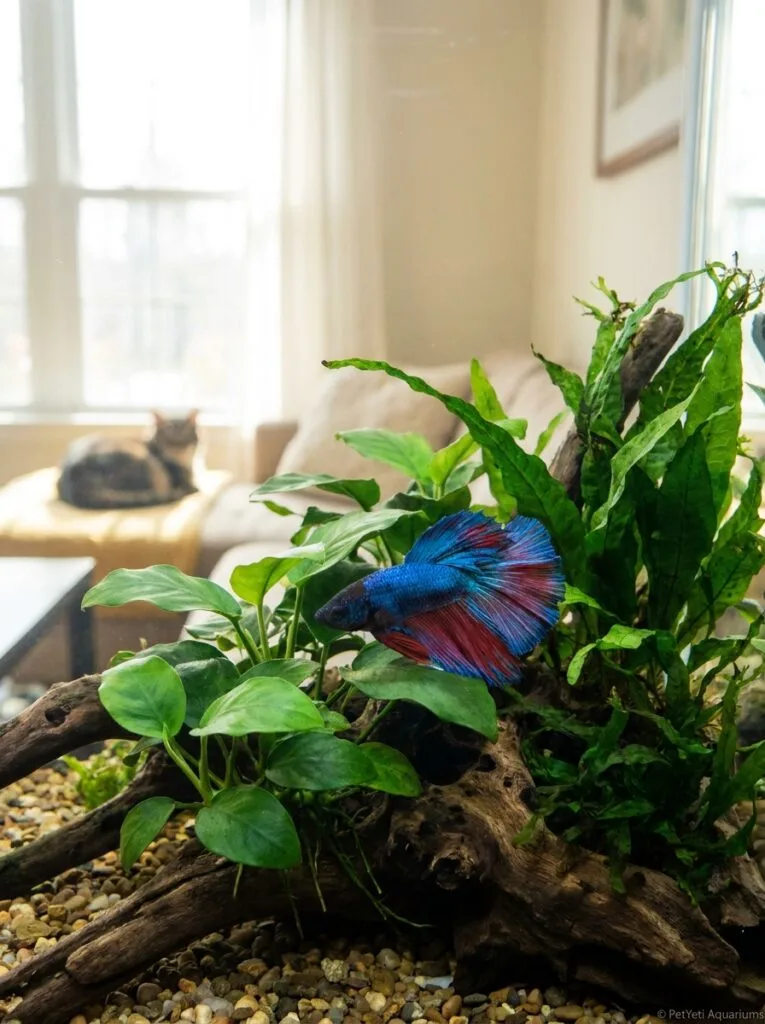
Why is my betta staying at the bottom? A betta fish that stays at the bottom of the tank is not always dying. The most common causes are cold water, poor water quality, stress, overfeeding, constipation, or simple resting behavior, and many of these problems can be improved once you identify the cause.
The good news is that bottom-sitting is often a symptom rather than a disease. Some bettas rest on leaves, decorations, or the substrate for short periods, while others stay near the bottom because something in the aquarium is making them uncomfortable.
In this guide, I’ll help you figure out whether your betta is simply resting or showing signs of illness, what to check first, and what you can do today to help your fish recover.
What to Check First (30-Second Diagnosis)
Before assuming your betta is sick, check these three things first. They solve a surprisingly large number of bottom-sitting problems in beginner aquariums.
- Water temperature: Is it between 78–80°F (25.5–26.5°C)?
- Water quality: Are ammonia and nitrite at 0 ppm?
- Behavior: Does your betta still eat, react when you approach the tank, and swim normally for short periods?
If the temperature is too low, the water quality is poor, or your betta is becoming less responsive, start with those issues before treating for disease.
Match What You’re Seeing
This quick guide can help you narrow down the most likely cause before reading the detailed sections below.
| What You See | Most Likely Cause | Usually Easy to Fix? |
|---|---|---|
| Resting on the bottom but still active | Normal resting behavior | Yes |
| Staying on the bottom and not eating | Cold water or illness | Sometimes |
| Bottom sitting after a large meal | Overfeeding or constipation | Yes |
| Bottom sitting with rapid breathing | Poor water quality | Urgent |
| Bottom sitting with clamped fins | Stress or illness | Sometimes |
| Bottom sitting with bloating or pineconing scales | Serious illness | Urgent |
Most cases of a betta staying at the bottom are related to temperature, water quality, stress, or digestion, so start with those four areas before assuming the worst.
- What to Check First (30-Second Diagnosis)
- Match What You’re Seeing
- When It’s an Emergency
- Your Betta Might Simply Be Resting
- Bettas Often Sleep Near the Bottom
- The Water Temperature Is Too Low
- Stress and Tank Conditions
- Poor Water Quality
- Age Can Influence Activity Levels
- Illness Can Sometimes Cause Bottom Sitting
- When Should You Be Concerned?
- What to Do Today If Your Betta Is Staying at the Bottom
- Conclusion
- FAQs
As an Amazon Associate, PetYeti earns from qualifying purchases. This comes at no additional cost to you and helps support the site. We only recommend products we genuinely believe can help create healthier and more enjoyable aquariums.
When It’s an Emergency
A betta resting near the bottom is not automatically an emergency, but you should act quickly if your fish shows any of these signs:
- Lying on its side or unable to stay upright
- Gasping at the surface or breathing very rapidly
- Not eating for more than 2–3 days
- Severe bloating, pineconing scales, or visible sores
- Ammonia or nitrite above 0 ppm
- Water temperature below 76°F (24°C)
If your betta is simply sitting on the substrate but still swims normally, responds when you approach the tank, and eats when offered food, the problem is often related to temperature, water quality, stress, or resting behavior rather than a life-threatening illness.
Your Betta Might Simply Be Resting
Many beginners don’t realize that Bettas enjoy resting. Unlike some constantly active fish species, Bettas frequently take breaks throughout the day.
They may rest:
- On broad plant leaves
- Near driftwood
- On decorations
- Along the substrate
As long as your Betta appears healthy when active, occasional resting is usually nothing to worry about.
Real-Life Example
A Betta may spend twenty minutes resting beneath an Anubias plant and then suddenly become active again, swimming around the aquarium as if nothing happened.
This behavior is especially common in calm, comfortable environments.
PetYeti Calm Tip
Do not judge bottom-sitting by one moment alone. Watch the full pattern: whether your betta still eats, reacts normally, swims at other times, and looks bright and steady. A calm resting betta is very different from a betta that suddenly becomes weak, pale, breathes fast, or stops eating.
Bettas Often Sleep Near the Bottom
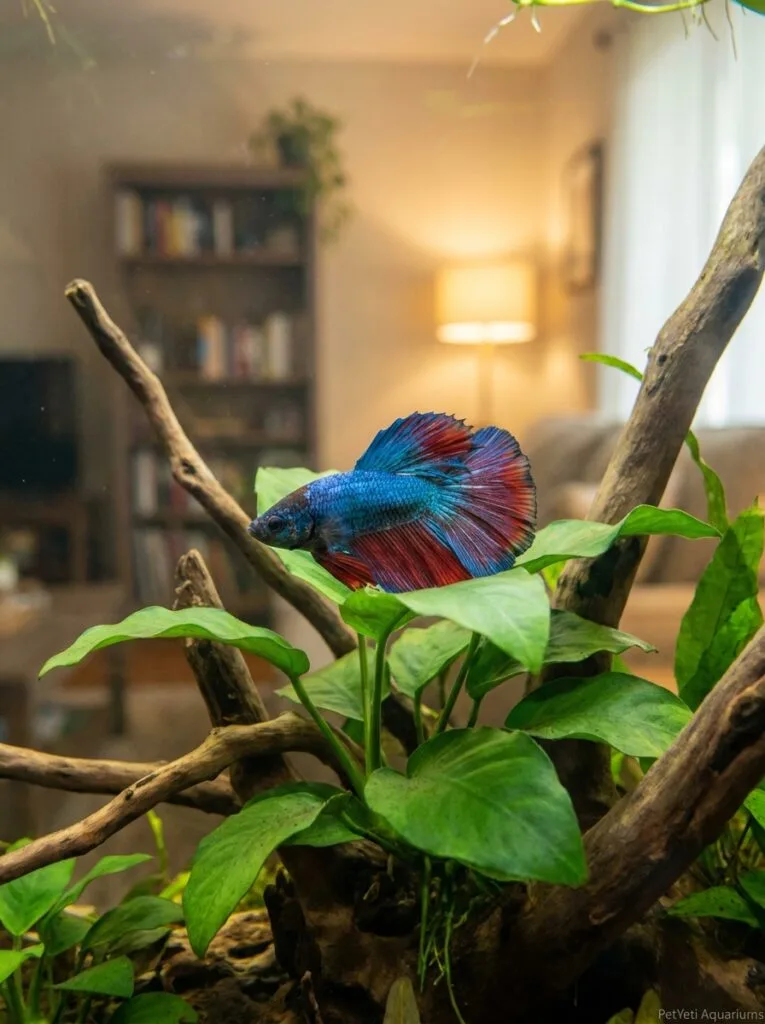
Many owners are surprised the first time they see a sleeping Betta. During sleep, Bettas often become much less responsive and may remain motionless for extended periods. This can look alarming if you’ve never seen it before.
Unlike humans, fish don’t close their eyes, so a sleeping Betta may appear awake even while resting.
Real-Life Example
A Betta that seems unusually inactive early in the morning may simply be finishing its normal sleep cycle before becoming active later in the day. Pay attention to patterns.
If the behavior occurs around the same time each day, sleep may be the explanation.
The Water Temperature Is Too Low
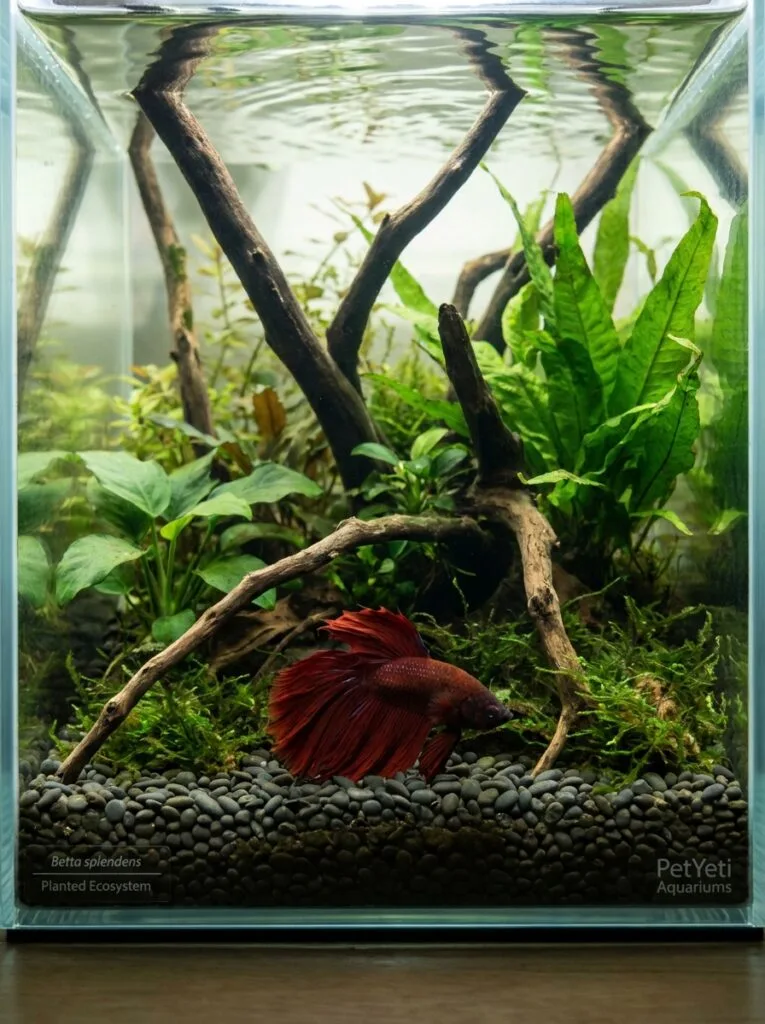
This is one of the most common reasons a betta suddenly begins spending long periods at the bottom of the tank. Bettas are tropical fish, and when the water becomes too cool, their metabolism slows down. They often become less active, stop exploring the tank, and may rest on the substrate or decorations for much longer than usual.
A healthy betta is usually most active when the water stays between 78–80°F (25.5–26.5°C). Temperatures below 76°F (24°C) can make a betta lethargic, reduce appetite, and weaken the immune system over time.
Signs cold water may be the cause:
- Sitting at the bottom for long periods
- Moving slowly when disturbed
- Eating less than usual
- Becoming more active after the room warms up
What to Do
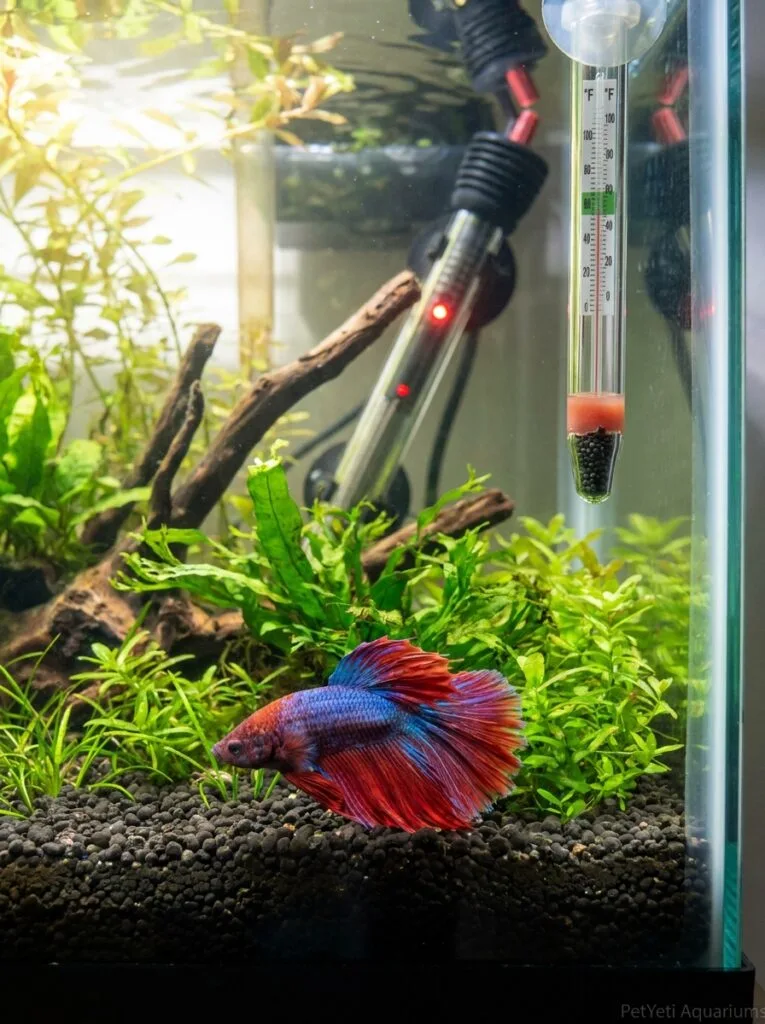
Check the temperature with a separate aquarium thermometer rather than relying on the heater dial alone. If the water is below the recommended range, gradually warm the tank using an adjustable aquarium heater designed for small freshwater aquariums.
PetYeti Pick
For most 5–20 gallon betta tanks, we’d choose a 50W adjustable aquarium heater because it provides stable temperature control and is easier to fine-tune than most preset heaters.
Beginner Mistake
Many new betta owners assume room temperature is warm enough. In reality, a room that feels comfortable to us can still leave aquarium water too cool for a tropical fish.
Real-Life Example
A Betta that was active during summer may suddenly become sluggish after a heater failure during colder weather. This is why a reliable aquarium heater is considered essential for most Betta setups.
Checking water temperature should always be one of the first troubleshooting steps.
Stress and Tank Conditions
A betta may stay at the bottom simply because the aquarium environment is making it feel stressed. Bettas are naturally calm, territorial fish that prefer gentle water flow, stable temperatures, hiding places, and a predictable environment.
Stress is especially common after moving to a new tank, changing decorations, adding new fish, or using a filter with strong current. A stressed betta may spend long periods resting near the substrate even though it is not seriously ill.
Signs stress may be the cause:
- Hiding frequently
- Clamped fins
- Pale or faded colors
- Avoiding the filter flow
- Becoming more active when the lights are dimmed
What to Do
Make sure the tank has plants, caves, or other hiding places, keep the temperature stable, avoid sudden changes, and reduce strong water movement if the filter is pushing your betta around the tank.
PetYeti Pick
For bettas that seem bothered by filter current, a sponge filter with a gentle air flow is often one of the quietest and least stressful filtration options for a small aquarium.
PetYeti Calm Tip
Many bettas become noticeably more active once the current is reduced and they have a few places to rest near the surface and near the bottom of the tank.
Real-Life Example
A Betta may spend several hours hiding or resting after a major aquascaping session. Once the environment feels familiar again, normal behavior often returns.
Consistency is often one of the best ways to reduce stress.
Beginner Mistake to Avoid
When a betta acts stressed, avoid changing everything at once. Deep-cleaning the tank, replacing filter media, moving decorations, and doing a huge water change on the same day can make the fish feel even less secure. Make one calm adjustment at a time, then watch how your betta responds.
Poor Water Quality
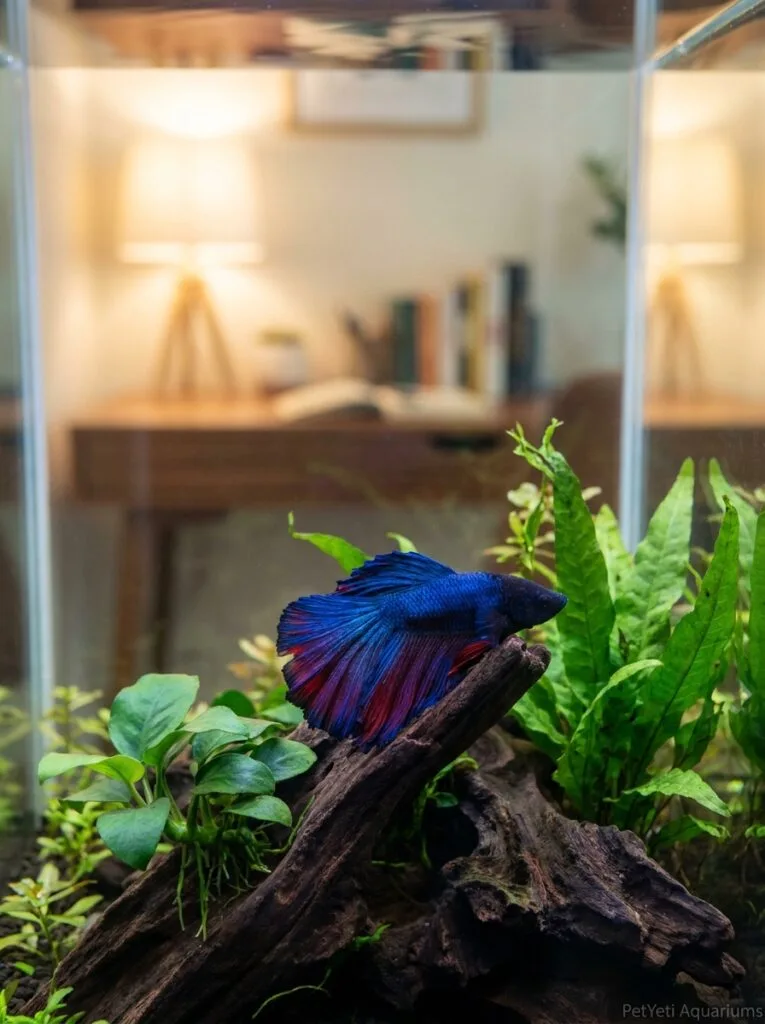
Poor water quality is one of the most common reasons a betta becomes lethargic and begins spending long periods at the bottom of the tank. Even water that looks perfectly clear can contain ammonia or nitrite, and those compounds can irritate a betta’s gills and make it difficult to swim comfortably.
In a healthy aquarium, both ammonia and nitrite should always be 0 ppm. If either one is present, your betta may become stressed, breathe more rapidly, lose interest in food, or stay near the bottom to conserve energy.
Signs water quality may be the cause:
- Staying at the bottom for most of the day
- Rapid or heavy breathing
- Clamped fins
- Loss of appetite
- Red or irritated gills
- Recent overfeeding or missed water changes
What to Do
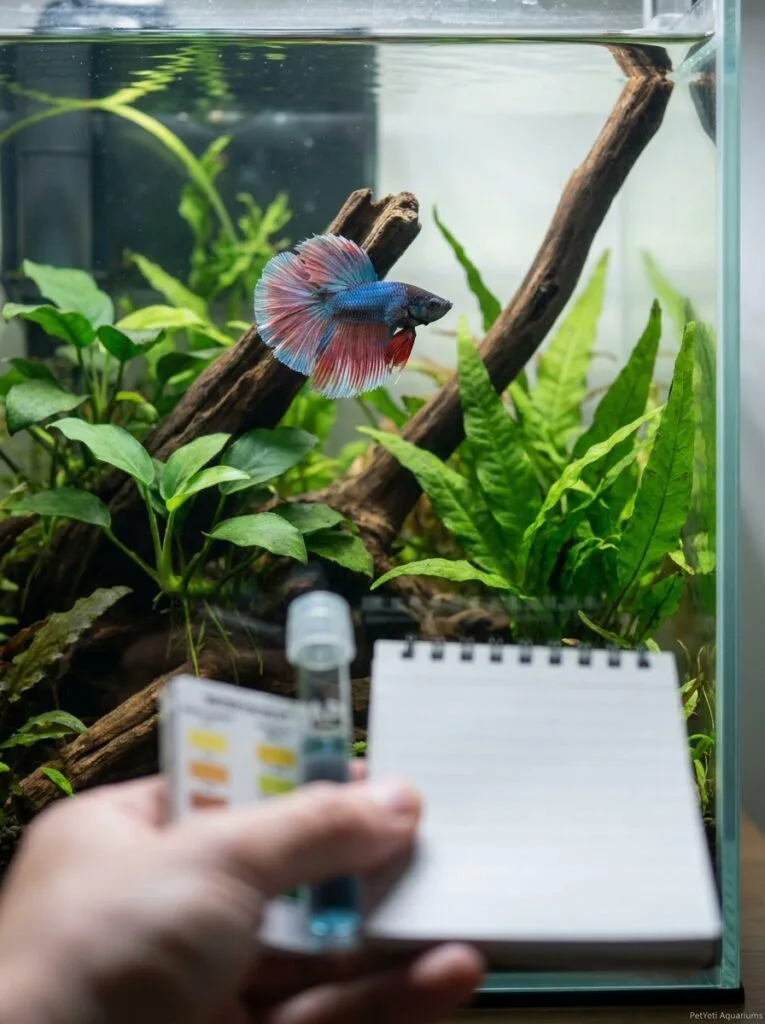
Test the water as soon as possible. A liquid aquarium test kit is much more accurate than guessing based on appearance alone. If ammonia or nitrite is above 0 ppm, perform a partial water change, reduce feeding temporarily, and check that the filter is running properly.
PetYeti Pick
For most beginner betta owners, we recommend a liquid freshwater test kit because it allows you to check ammonia, nitrite, nitrate, and pH in a few minutes and gives much more reliable results than test strips.
PetYeti Tip
A betta can look sick when the real problem is simply poor water quality. Testing the water is often the fastest way to rule out one of the most serious causes of bottom sitting.
Real-Life Example
A Betta that normally swims around the tank may start spending long periods near the bottom after several missed maintenance sessions. Once regular water changes resume, activity often improves noticeably.
This is one reason a consistent cleaning routine is so important.
Simple Checks for Bottom-Sitting Bettas
You do not need to guess when your betta suddenly becomes less active. A simple aquarium thermometer and a basic water test kit can help you check the two biggest beginner clues: stable warm water and safe water quality.
Helpful PetYeti guides:
• Best Aquarium Test Kits for Beginners
• Best Aquarium Heaters for Small Tanks
• How to Test Aquarium Water Correctly
Age Can Influence Activity Levels
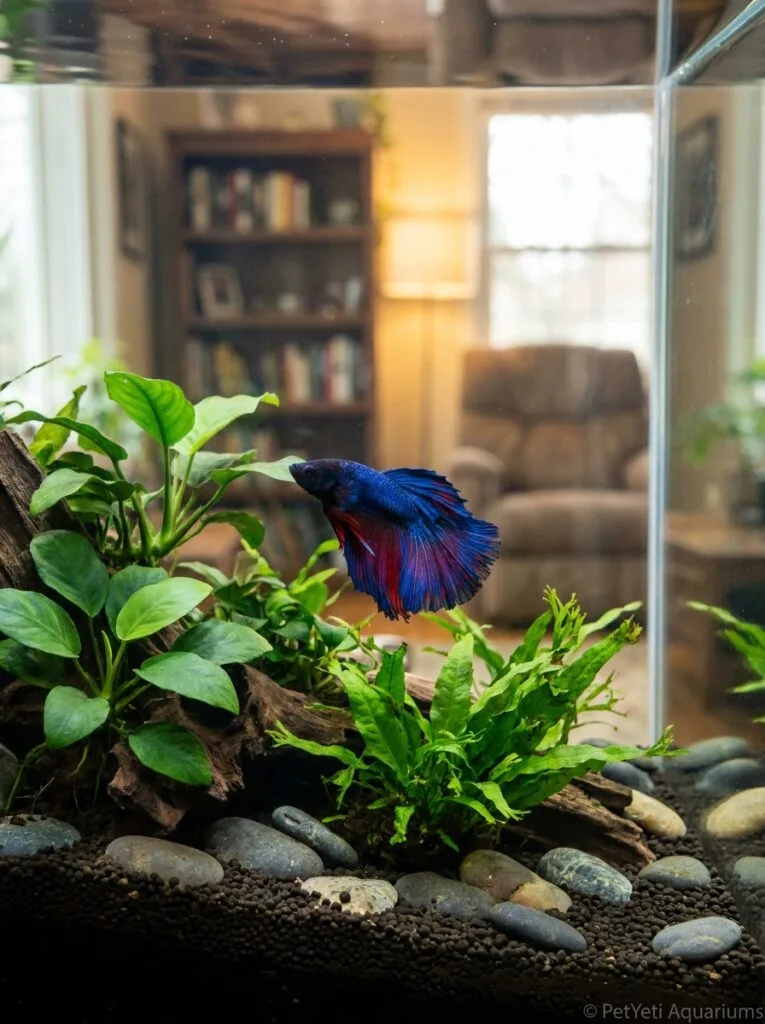
Not every Betta remains equally active throughout its life. As Bettas age, they often become calmer and spend more time resting. This change usually happens gradually rather than suddenly.
Older Bettas may:
- Swim less frequently
- Rest more often
- Take longer breaks between activities
- Spend more time on leaves or near the substrate
This isn’t necessarily a problem. It’s often a normal part of aging.
Real-Life Example
An older Betta that once explored every corner of the aquarium may now prefer resting on broad plant leaves and making shorter swimming trips throughout the day.
The important thing is whether the fish still appears healthy, alert, and interested in food.
Illness Can Sometimes Cause Bottom Sitting
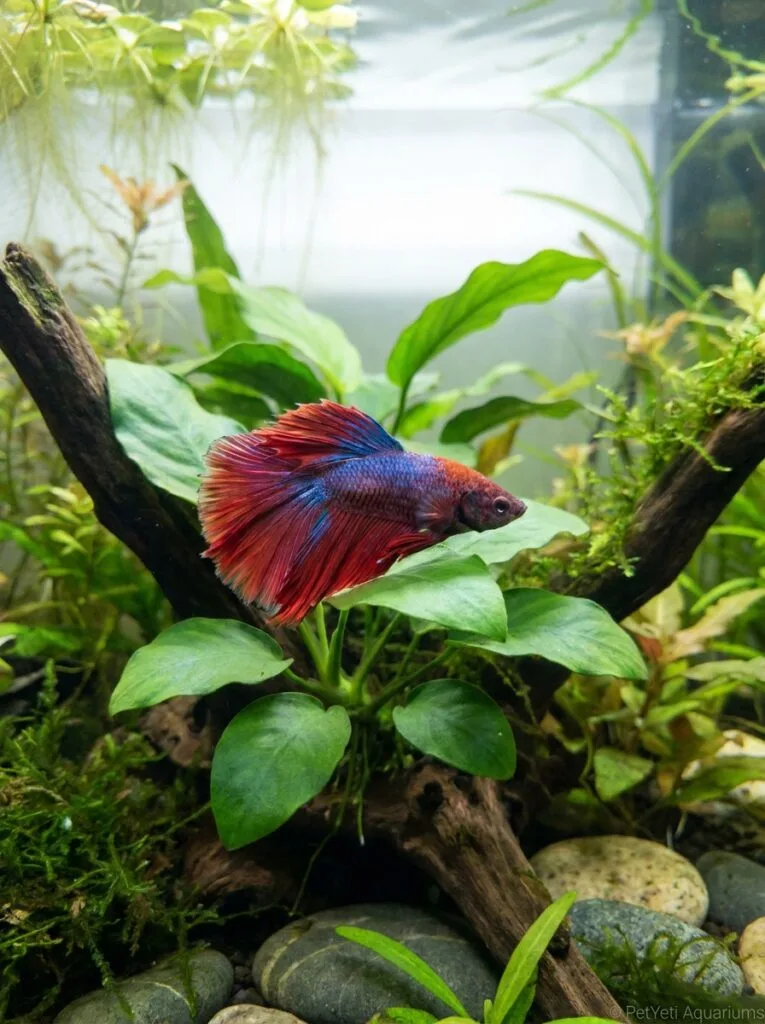
While many cases are harmless, persistent bottom sitting can occasionally indicate a health issue. The key is looking for additional symptoms rather than focusing on a single behavior.
Warning signs may include:
- Loss of appetite
- Clamped fins
- Rapid breathing
- Faded coloration
- Difficulty swimming
- Visible spots or lesions
A healthy Betta that occasionally rests is very different from a Betta that appears weak, inactive, and uninterested in food.
Real-Life Example
A Betta resting on the substrate for an hour after a large meal is usually not concerning. A Betta that remains on the bottom for days while refusing food and showing other symptoms deserves closer attention. Observation often provides the best clues.
Small behavioral changes can tell you a lot about a fish’s overall condition.
When Should You Be Concerned?
A betta resting near the bottom for a short time is often normal, especially after eating or while sleeping. The situation becomes more concerning when bottom sitting is combined with other symptoms that suggest stress, poor water quality, or illness.
You should be concerned if your betta:
- stays at the bottom for most of the day,
- refuses food for more than 2–3 days,
- has clamped fins, pale coloration, or visible bloating,
- breathes rapidly or gasps near the surface,
- struggles to swim normally,
- or shows pineconing scales, sores, or white patches.
If several of these symptoms appear together, check the water temperature and water parameters immediately and begin correcting any problems before treating for disease. In many cases, improving the environment is the fastest and most effective first step.
Real-Life Example
A Betta that spends part of the afternoon resting beneath a plant and then swims normally during feeding time is usually behaving naturally. A Betta that stays motionless at the bottom for several days and ignores food is a different situation entirely.
The goal isn’t to panic every time your Betta rests.
The goal is to understand what normal behavior looks like for your individual fish.
The better you know your Betta, the easier it becomes to spot genuine problems early.
What to Do Today If Your Betta Is Staying at the Bottom
If you’re looking for a simple action plan, this is the order I’d follow today.
- Check the water temperature and make sure it is between 78–80°F (25.5–26.5°C).
- Test ammonia and nitrite and confirm both are 0 ppm.
- Observe your betta for 10–15 minutes to see whether it responds when you approach the tank or offer food.
- Perform a partial water change if the water quality is questionable or maintenance has been overdue.
- Reduce stress by dimming the lights, minimizing strong filter current, and avoiding sudden changes to the tank.
- Monitor for the next 24–48 hours before adding medications unless obvious disease symptoms are present.
Many bettas begin acting normally again once the temperature and water quality are corrected, so those two checks should always come first.
Related PetYeti Guides
If your betta is staying near the bottom, these beginner guides can help you check the most common causes without guessing:
Conclusion
A betta staying at the bottom of the tank is not always a sign that it is dying. In many cases, the cause is something that can be corrected, such as cold water, poor water quality, stress, overfeeding, or constipation. The most important step is to check the temperature and water parameters first, because those two factors are responsible for a large percentage of bottom-sitting cases in small betta aquariums.
If I were helping a beginner today, I’d start by warming the tank to 78–80°F, testing ammonia and nitrite, and observing whether the betta is still eating and responding normally. Many fish become noticeably more active once those basic conditions are corrected.
The good news is that most bottom-sitting problems are treatable when caught early. A stable temperature, clean water, gentle filtration, and a calm environment give your betta the best chance of recovering and returning to its normal curious behavior.
Best first step for most beginners
If you’re not sure why your betta is staying at the bottom, start by checking the water temperature and testing ammonia and nitrite. A 50W adjustable heater and a liquid freshwater test kit are usually the two most useful tools for diagnosing this problem in a 5–20 gallon betta aquarium.
FAQs
Is it normal for a betta to sit at the bottom of the tank?
Yes. Bettas often rest near the bottom, especially while sleeping or after eating. It becomes more concerning when the fish stays there for long periods, stops eating, breathes heavily, or shows other signs of illness.
Why is my betta staying at the bottom and not eating?
A betta that stays at the bottom and refuses food may be affected by cold water, poor water quality, stress, constipation, or illness. Check the temperature first, then test ammonia and nitrite before adding any medication.
Can cold water make a betta stay at the bottom?
Yes. Bettas are tropical fish and usually do best around 78–80°F (25.5–26.5°C). Water below 76°F (24°C) can slow their metabolism and make them lethargic and inactive.
How long can a betta stay at the bottom before I should worry?
Occasional resting is normal. You should become more concerned if your betta remains at the bottom for most of the day, stops eating for 2–3 days, or shows symptoms such as clamped fins, bloating, rapid breathing, or difficulty swimming.
Should I change the water if my betta is staying at the bottom?
If the water has not been tested recently, a partial water change is usually a good first step. Poor water quality is a common cause of lethargy and bottom sitting in betta aquariums.
What is the fastest way to help a betta staying at the bottom?
The fastest helpful action is to check the water temperature and test ammonia and nitrite immediately. Correcting low temperature or poor water quality often improves a betta’s behavior much faster than treating for disease without a diagnosis.