
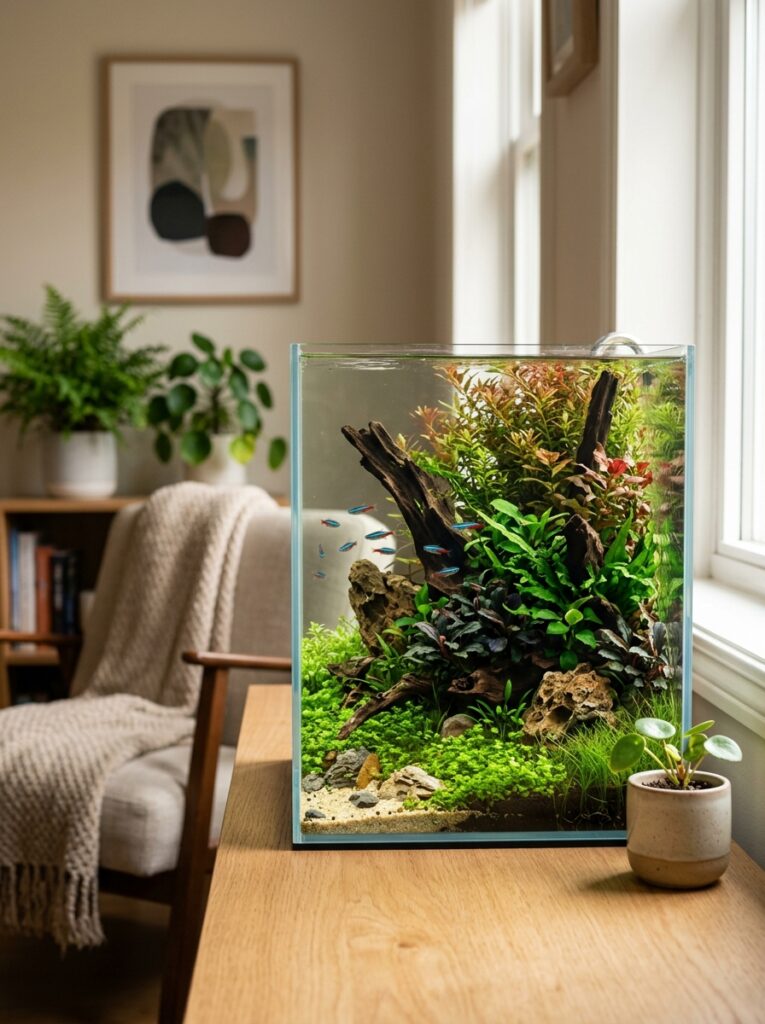
Many beginners believe aquascaping is something only professionals can do.
They see stunning planted aquariums online and assume those layouts require years of experience, expensive equipment, or advanced design skills.
The reality is much simpler.
At its core, aquascaping is the art of arranging plants, hardscape, and open space in a way that feels natural and visually pleasing.
You don’t need a massive aquarium to create something beautiful.
In fact, small aquariums are often the perfect place to learn aquascaping because they allow beginners to experiment with layout, balance, and plant placement on a manageable scale.
The goal isn’t perfection.
The goal is creating an underwater landscape that feels balanced, natural, and enjoyable to look at every day.
Let’s explore the simple principles that can help transform an ordinary aquarium into a beautiful aquascape.
What Is Aquascaping?
Aquascaping is often described as underwater landscaping.
Instead of designing a garden or outdoor landscape, you’re creating a miniature scene inside an aquarium using plants, rocks, driftwood, and open space.
Some aquascapes imitate natural environments such as rivers, forests, or mountain valleys. Others focus on simplicity and artistic balance.
Regardless of style, the goal remains the same.
To create an aquarium that feels intentional rather than random.
One reason aquascaping has become so popular is that it combines creativity with nature. Every decision influences how the final aquarium looks and feels.
Even a small aquarium can become a beautiful display when the elements work together harmoniously.
Understanding this idea is the first step toward becoming a better aquascaper.

Start With a Vision Before Buying Anything
One of the most common beginner mistakes happens before the aquarium is even assembled.
Many people buy plants, rocks, driftwood, and decorations first, then try to figure out how everything fits together later.
This often leads to cluttered layouts and wasted money.
A better approach is to start with a simple vision.
Ask yourself how you want the aquarium to feel.
Do you want a natural forest-like appearance?
A cozy planted betta tank?
A nature-inspired nano aquarium?
Having a general direction makes every future decision easier.
You don’t need a detailed blueprint.
Even a rough idea of the atmosphere you’re trying to create can help guide plant selection, hardscape choices, and overall layout design.
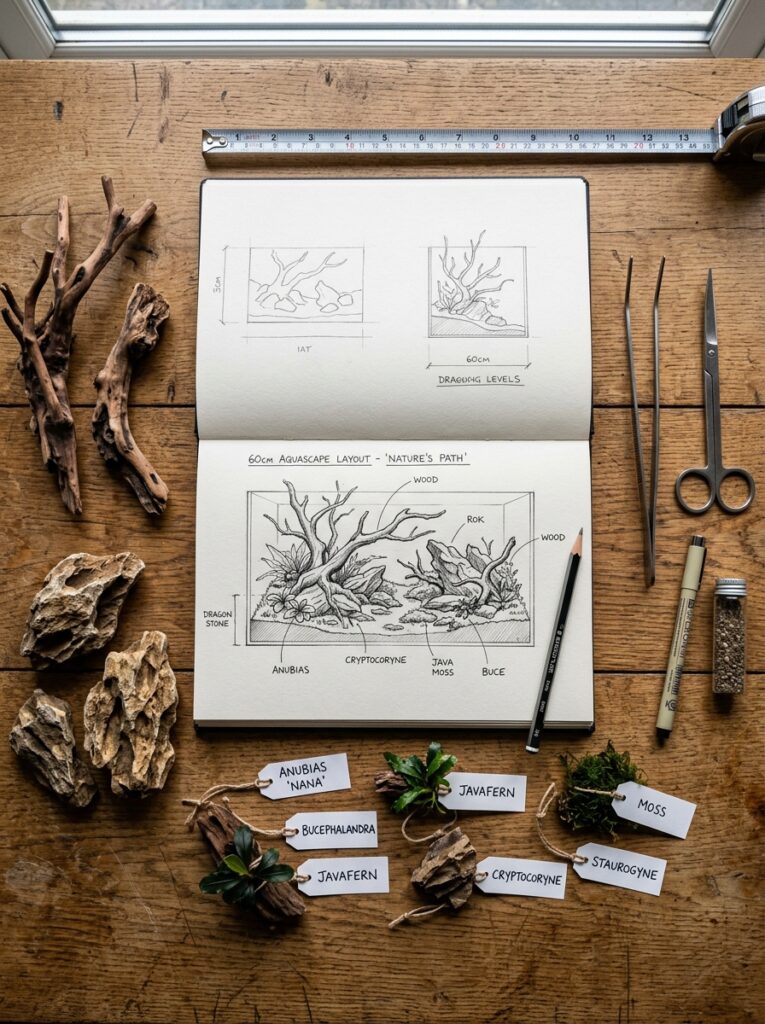
Choosing a Focal Point for Your Aquarium
Every beautiful aquascape has something that naturally attracts your attention first.
This is known as the focal point.
Without a focal point, an aquarium can feel scattered because the viewer’s eyes don’t know where to look. Everything competes for attention, and nothing truly stands out.
A focal point doesn’t need to be large or expensive.
It might be a unique piece of driftwood, an interesting rock formation, a cluster of plants, or even an open area surrounded by greenery.
The goal is to create one primary area that becomes the visual anchor of the aquarium.
Many beginner aquascapers make the mistake of placing the focal point directly in the center of the tank. While this can work occasionally, layouts often feel more natural when the focal point is slightly off-center.
This simple adjustment creates a stronger sense of balance and movement throughout the aquarium.
Before planting anything, decide what you want people to notice first when they look at the tank.
That decision will guide every other design choice that follows.
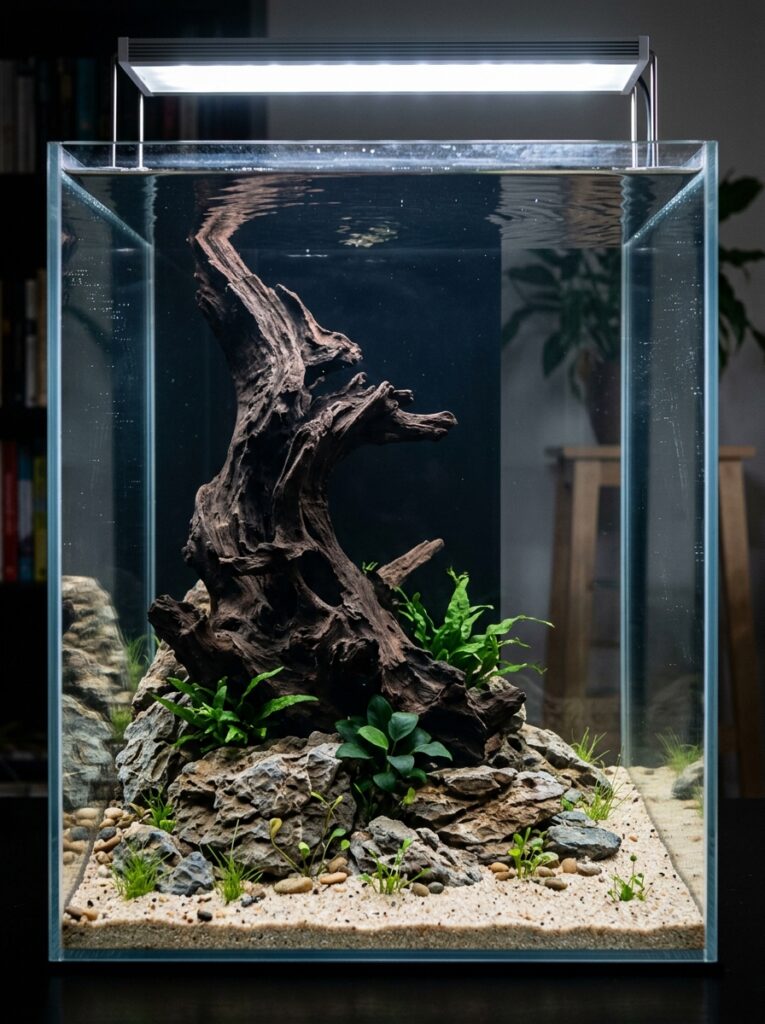
Using Driftwood and Rocks to Create Structure
If plants are the greenery of an aquascape, driftwood and rocks are the framework.
These hardscape elements provide structure, shape, and visual stability.
Without them, many aquariums feel flat and unorganized.
Driftwood adds natural movement to a layout. Its curves and branches create visual flow while providing surfaces where plants such as Anubias and Java Fern can be attached.
Rocks serve a different purpose. They create contrast, define spaces, and help establish the overall character of the aquarium.
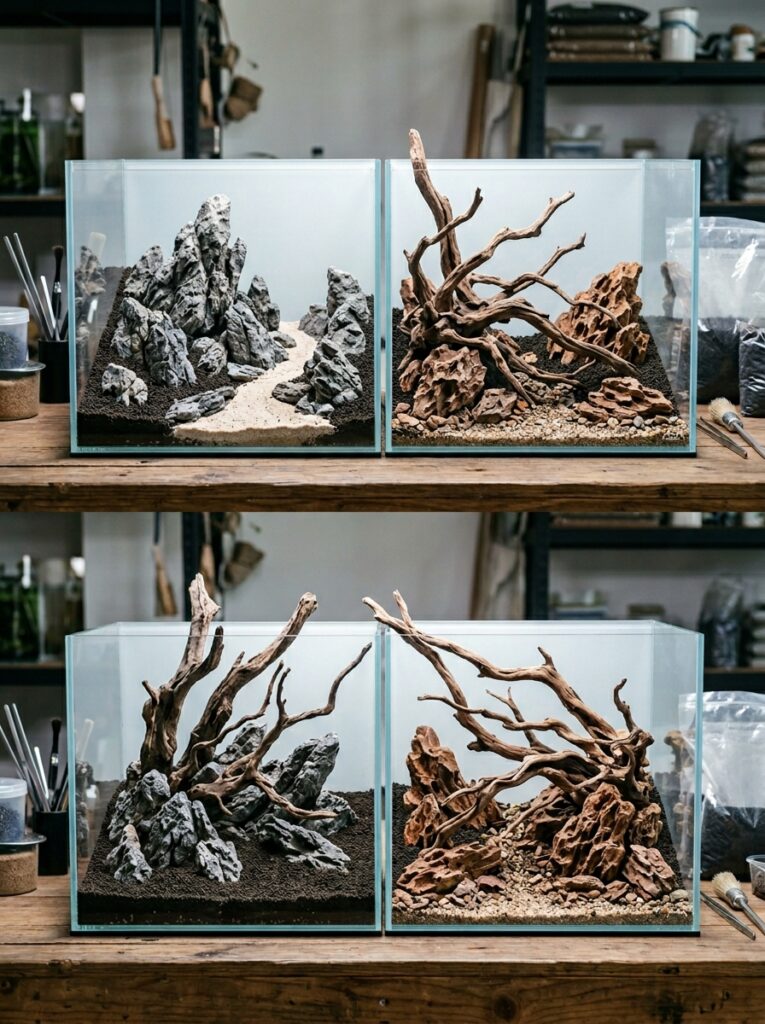
Some aquascapes use dramatic rock formations inspired by mountains and cliffs. Others rely on driftwood to imitate tree roots or fallen branches beneath the water.
For beginners, the most important lesson is not to use too many pieces.
A few carefully selected hardscape elements often create a stronger design than a tank filled with random decorations.
Think of driftwood and rocks as the skeleton of the aquascape.
Once the structure feels right, plants can be added to bring the scene to life.
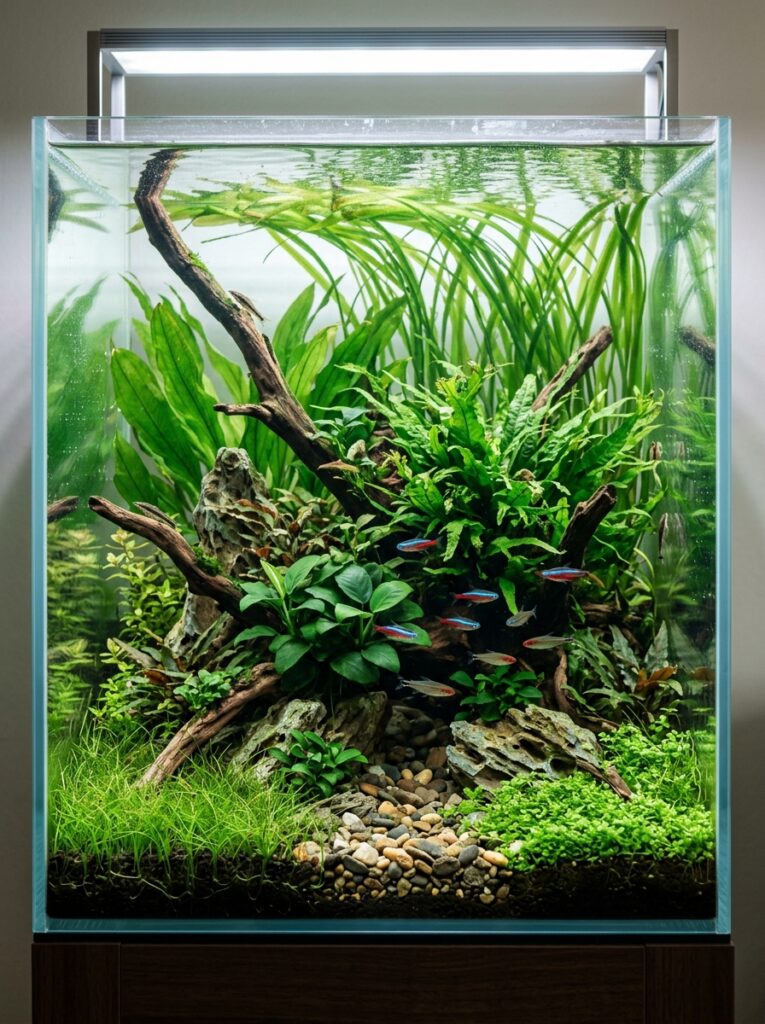
Understanding Foreground, Midground, and Background Zones
One of the biggest breakthroughs for many beginner aquascapers happens when they stop thinking about individual plants and start thinking in layers.
Aquascapers typically divide an aquarium into three planting zones.
The foreground occupies the front of the tank and usually contains smaller plants.
The midground sits between the front and back, helping connect different parts of the layout.
The background provides height and creates the visual backdrop for the entire aquarium.
These layers work together to create depth.
Without them, an aquarium can appear flat because everything sits at roughly the same height.
Even small aquariums benefit from layered planting.
A compact foreground plant near the front glass, medium-sized plants around hardscape features, and taller background species can dramatically improve the overall appearance of the aquarium.
This simple concept is one of the foundations of successful aquascaping.
Why Open Space Is Just as Important as Plants
When beginners first start aquascaping, they often believe every inch of the aquarium should be filled.
More plants.
More rocks.
More decorations.
More everything.
But one of the most important design principles in aquascaping is learning when not to add something.
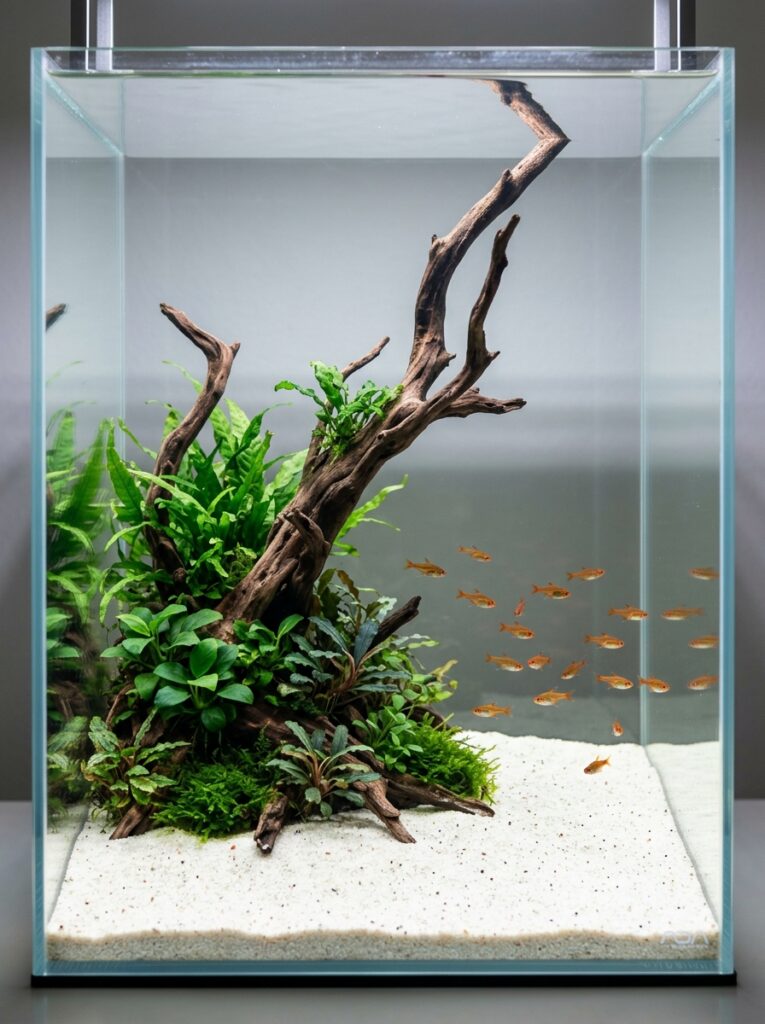
Open space gives the eye a place to rest.
It creates contrast and helps the focal points stand out more clearly.
Imagine walking into a room where every wall is covered with furniture, artwork, and decorations. Even beautiful objects can feel overwhelming when there’s no breathing room.
Aquariums work the same way.
A small open area of sand or gravel can make nearby plants appear more dramatic. An uncluttered swimming area can help fish become more noticeable.
Many professional aquascapes feel larger than they really are because they intentionally include negative space.
Rather than asking, “What else can I add?”
Try asking:
“What can I leave out?”
That simple mindset shift often leads to more balanced and visually appealing aquascapes.
Common Beginner Aquascaping Mistakes
Every aquascaper makes mistakes.
In fact, most beautiful aquariums are built on lessons learned from earlier layouts.
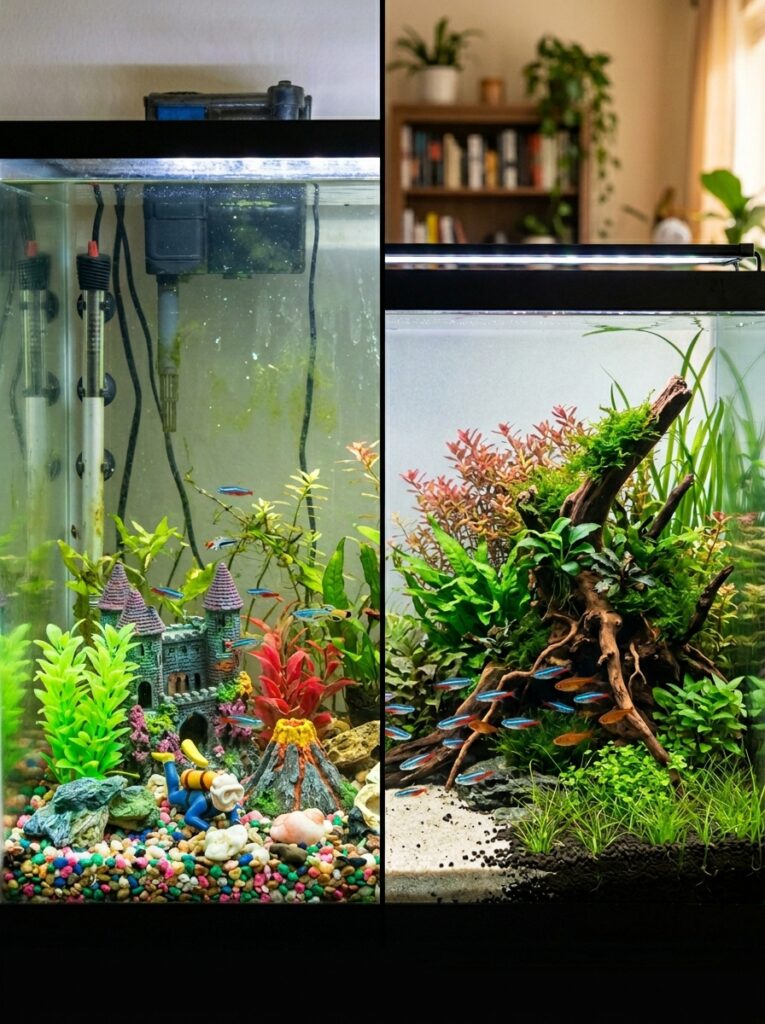
One common mistake is placing too many decorations inside a small aquarium. While each individual item may look attractive, the combined result can feel crowded and chaotic.
Another frequent issue is choosing plants without considering their mature size. Small plants can eventually dominate a layout if growth habits aren’t planned from the beginning.
Some beginners also arrange rocks and driftwood in perfectly straight lines. While neat and organized, these arrangements often appear artificial compared to the irregular patterns found in nature.
Poor layering is another challenge. When all plants are the same height, the aquarium can look flat and lack depth.
Perhaps the biggest mistake of all is constantly rearranging the tank.
Aquascaping improves through patience. Plants need time to grow, settle, and naturally fill out the design.
Small adjustments are useful.
Major redesigns every week usually aren’t.
The best aquascapes often develop slowly over time.
Creating Depth in a Small Aquarium
One of the most impressive tricks in aquascaping is making a small aquarium appear larger than it actually is.
This effect is created through depth.
Fortunately, creating depth doesn’t require a larger tank.
It requires thoughtful placement.
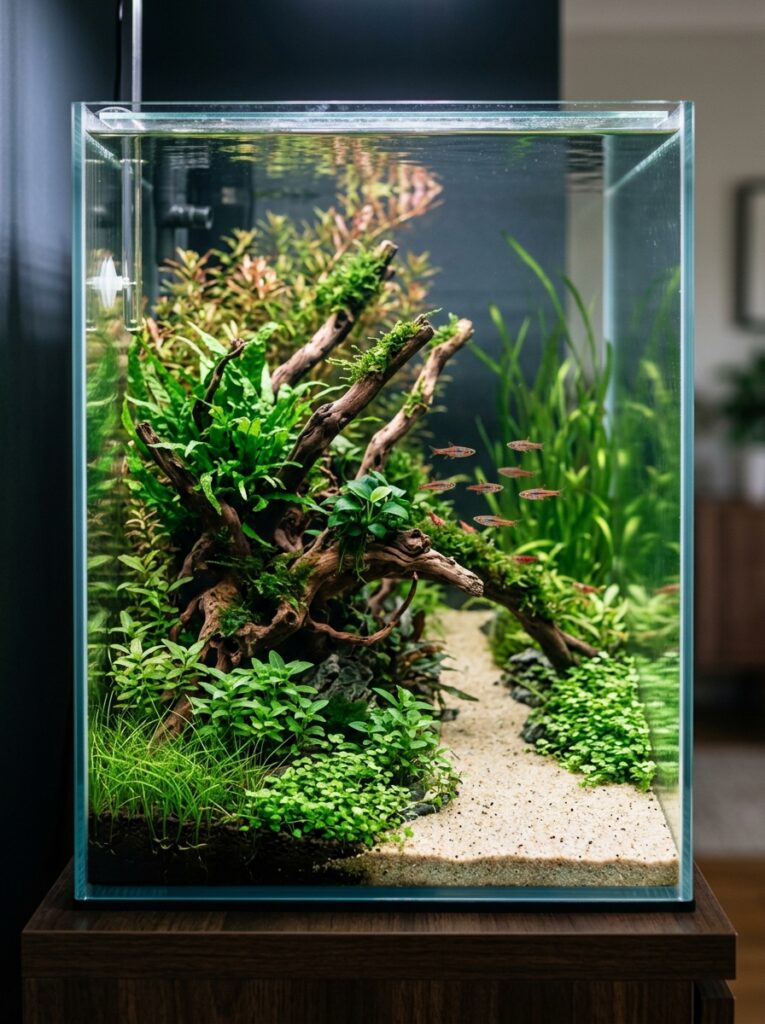
Taller plants near the back naturally push the visual horizon farther away. Smaller plants near the front create perspective.
Hardscape can also help.
A piece of driftwood angled toward the back of the aquarium creates a sense of direction and movement. Pathways of sand or open substrate can guide the viewer’s eyes deeper into the layout.
Even subtle differences in plant height contribute to the illusion.
When these elements work together, the aquarium begins to feel like a miniature landscape rather than a simple glass box.
That’s one reason depth is such an important concept in aquascaping.
It makes small aquariums feel surprisingly spacious.
Enjoying the Process of Aquascaping
One of the most rewarding parts of aquascaping is realizing that the aquarium is never truly finished.
Plants grow.
Layouts evolve.
New ideas appear.
What starts as a simple beginner setup often becomes something much more personal over time.
Many hobbyists initially focus on creating the perfect aquascape. They compare their tanks to professional competition layouts and feel discouraged when their aquarium doesn’t look the same.
But the most enjoyable aquascapes are often the ones that grow naturally alongside the aquarist’s experience.
Each adjustment teaches something new.
A plant thrives unexpectedly.
A piece of driftwood settles into the design perfectly.
A small change improves the balance of the entire layout.
These moments are part of the hobby.
Rather than chasing perfection, focus on creating an aquarium that brings you enjoyment every time you look at it.
A beautiful aquascape isn’t defined by how closely it resembles a magazine cover.
It’s defined by how much satisfaction it brings to the person who created it.
And that’s something every beginner can achieve.
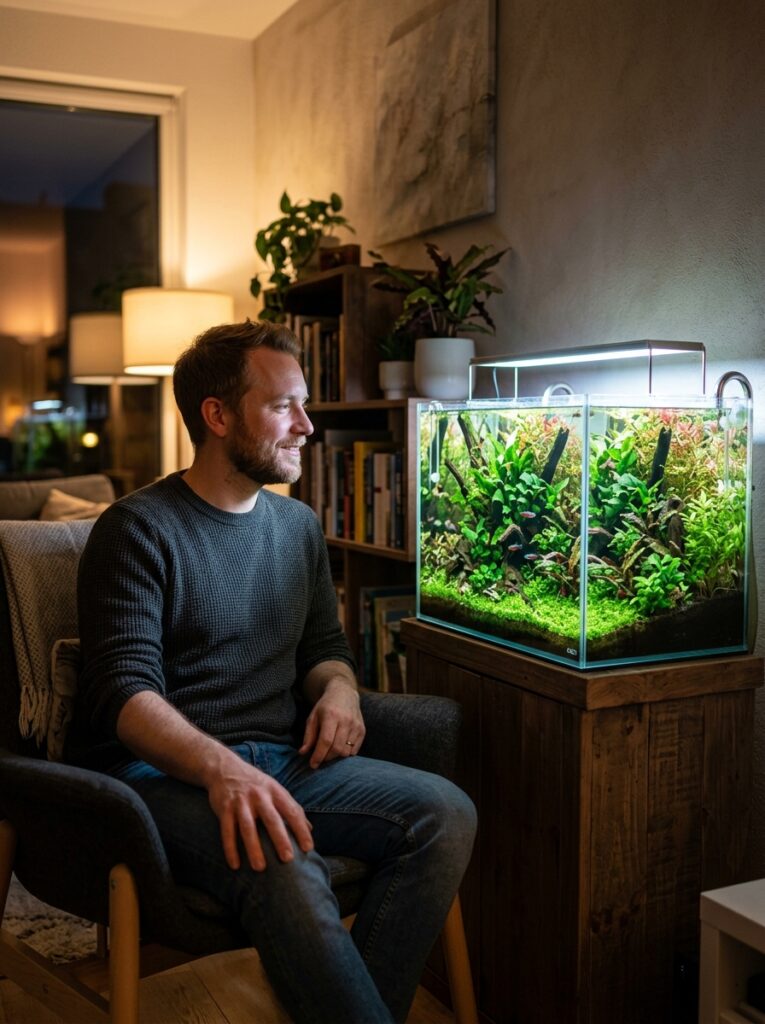
CONCLUSION
Aquascaping may seem intimidating at first, but the principles behind a beautiful aquarium are surprisingly simple.
Start with a vision.
Choose a focal point.
Build structure with driftwood and rocks.
Create depth using foreground, midground, and background plants.
Leave room for open space.
Most importantly, allow the aquarium to develop naturally over time.
A successful aquascape isn’t measured by how many plants or decorations it contains. It’s measured by how balanced, natural, and enjoyable it feels.
Every experienced aquascaper started as a beginner.
With patience, observation, and a willingness to learn, even a small aquarium can become a beautiful underwater landscape that you’ll enjoy for years to come.
FAQ
What is aquascaping?
Aquascaping is the art of arranging aquarium plants, rocks, driftwood, and open space to create a natural and visually appealing underwater landscape.
Can beginners learn aquascaping?
Yes. Many beautiful aquascapes are built using simple design principles and beginner-friendly plants. Experience helps, but creativity and patience matter more.
What is the most important part of aquascaping?
Balance is often the most important factor. A combination of plants, hardscape, focal points, and open space creates a more natural-looking aquarium.
Do I need expensive equipment to aquascape a small aquarium?
No. Many beginner aquascapes can be created using affordable plants, simple hardscape materials, and standard aquarium equipment.
Why do professional aquascapes look so natural?
Professional aquascapers focus on composition, depth, plant layering, and negative space rather than simply adding more decorations.
How long does it take for an aquascape to look mature?
Most aquascapes improve significantly over several weeks and months as plants grow, fill out, and blend naturally into the layout.