
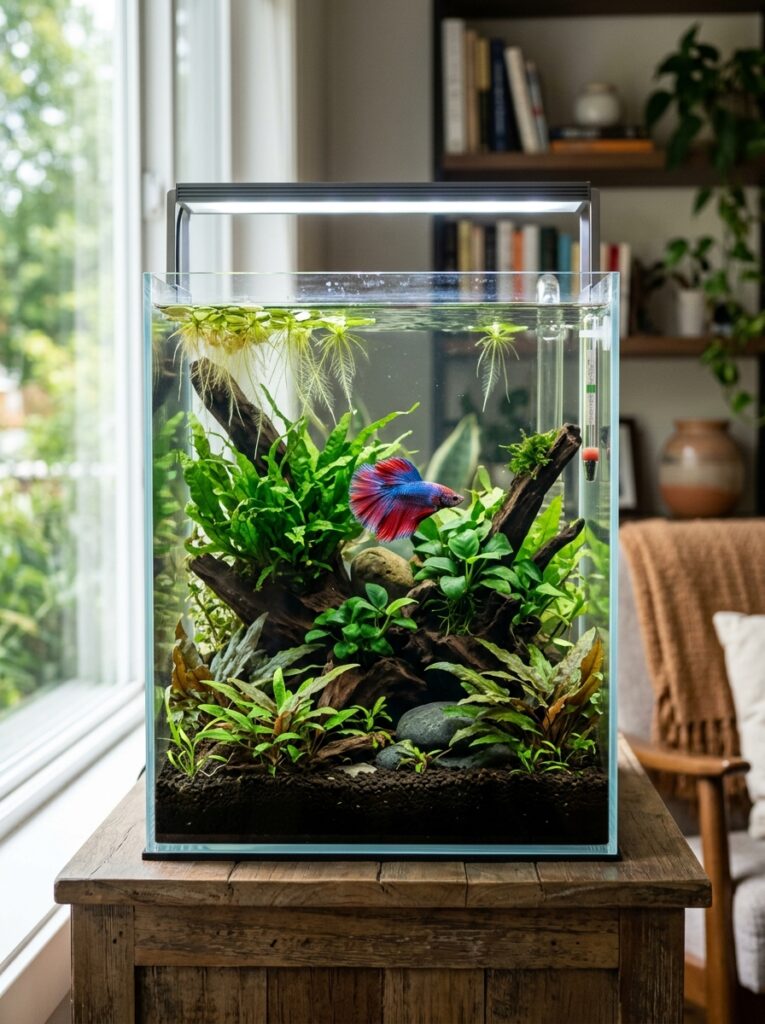
A planted betta tank has a different feeling than a tank decorated entirely with artificial ornaments.
- It feels calmer.
- More natural.
- More alive.
Many betta keepers discover this after adding their first live plant. Suddenly the aquarium doesn’t just look like a container for a fish. It starts to feel like a miniature underwater world.
The good news is that creating a beautiful planted betta tank doesn’t require advanced aquascaping skills or expensive equipment.
In fact, many of the most attractive betta aquariums are built around a handful of beginner-friendly plants, a simple layout, and a focus on creating a comfortable environment for the fish.
Whether you’re setting up your first betta tank or looking to improve an existing aquarium, a few thoughtful choices can make a dramatic difference.
Let’s explore how to create a planted betta tank that’s both beautiful and beginner-friendly.
- Why Bettas Thrive in Planted Aquariums
- What Makes a Planted Betta Tank Look Beautiful?
- Choosing Beginner-Friendly Plants for Bettas
- Creating Natural Layers With Foreground, Midground, and Background Plants
- Using Driftwood and Rocks to Build Structure
- Why Floating Plants Can Transform a Betta Tank
- Avoiding Common Planted Betta Tank Mistakes
- Creating a Relaxing Layout for Both You and Your Betta
- Small Changes That Make a Big Difference
- CONCLUSION
- FAQs
As an Amazon Associate, PetYeti earns from qualifying purchases. This comes at no additional cost to you and helps support the site. We only recommend products we genuinely believe can help create healthier and more enjoyable aquariums.
Why Bettas Thrive in Planted Aquariums
If you’ve ever seen wild bettas in photos or documentaries, one thing quickly becomes obvious.
They don’t live in bare glass boxes.
Their natural habitats are often filled with vegetation, roots, floating plants, and sheltered areas where they can rest and explore.
While a home aquarium can never perfectly replicate nature, live plants help create an environment that feels much closer to what bettas evolved to live in.
Plants provide visual barriers, resting spots, and shaded areas that many bettas seem to appreciate. They can also soften the overall appearance of the aquarium, making it feel calmer and more natural.
For many hobbyists, the biggest surprise is how much a planted aquarium changes the atmosphere of the tank.
The aquarium begins to feel less like a display and more like a living ecosystem.
And that benefits both the fish and the person enjoying the view.
What Makes a Planted Betta Tank Look Beautiful?
Many beginners assume that a beautiful aquarium requires dozens of plant species and complicated aquascaping techniques.
That’s rarely true.
In fact, some of the most attractive planted betta tanks are surprisingly simple.
A beautiful aquarium usually comes down to balance.
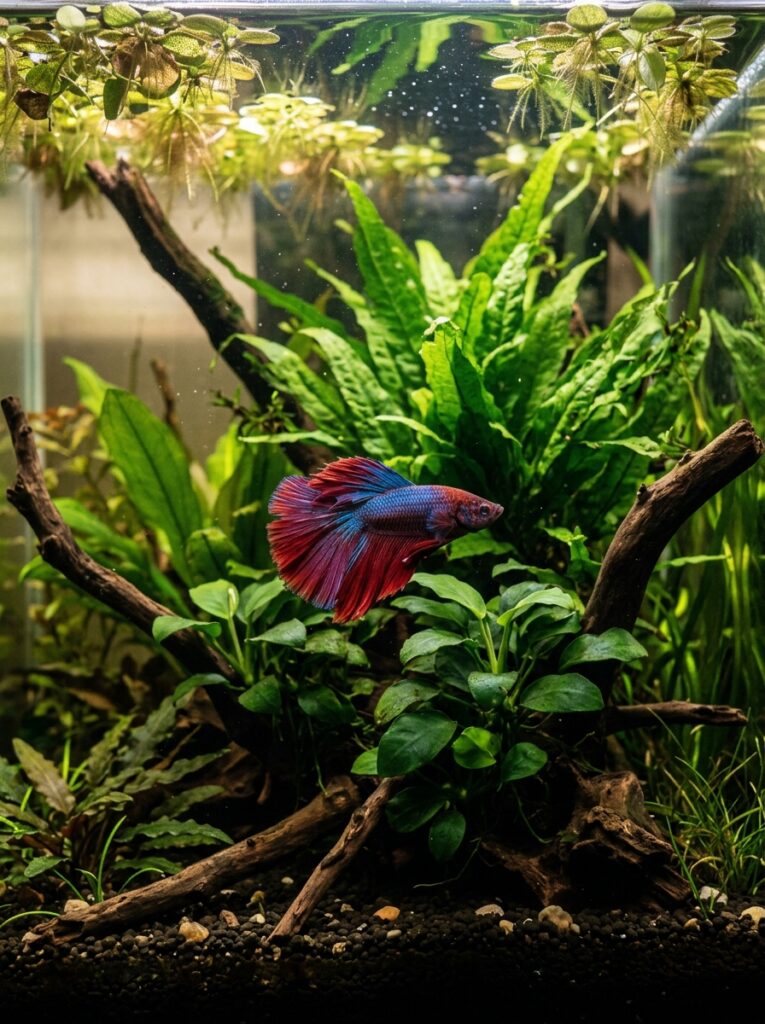
Healthy plants, open swimming space, natural hardscape, and a layout that feels intentional often matter more than the number of decorations in the tank.
One common mistake is trying to fill every available inch with plants and ornaments. While it may seem like more is better, overcrowding often makes an aquarium feel smaller and less relaxing.
Instead, think about creating contrast.
A patch of greenery beside an open area. A piece of driftwood surrounded by plants. A floating plant casting soft shadows across part of the tank.
These small design choices create depth and make the aquarium more enjoyable to look at every day.
Beauty in aquascaping often comes from restraint rather than excess.
Choosing Beginner-Friendly Plants for Bettas
One of the biggest myths in the aquarium hobby is that live plants are difficult.
The truth is that many aquarium plants are surprisingly beginner-friendly and can thrive with basic care.
When choosing plants for a betta tank, it’s usually best to start with species known for their adaptability and ease of maintenance.
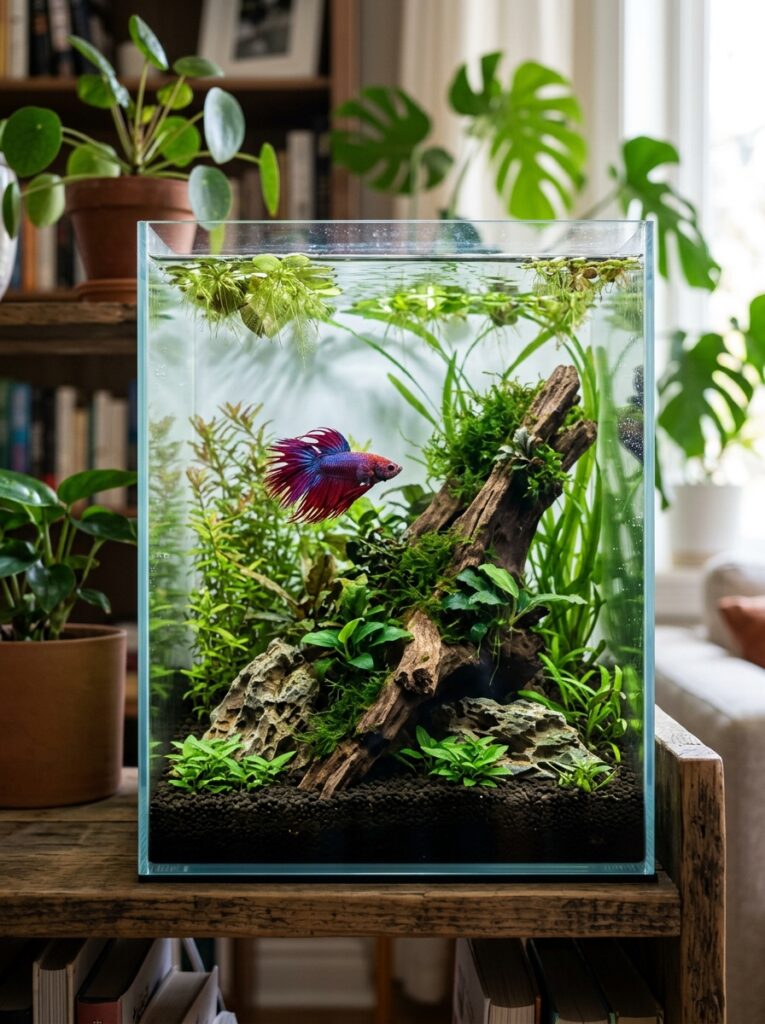
Anubias Nana is a favorite because of its attractive dark green leaves and slow-growing nature. Java Fern is another classic choice that works beautifully in betta aquariums and looks natural when attached to driftwood.
Cryptocoryne species can add texture and fullness to the aquarium while remaining relatively easy to manage. Floating plants such as Amazon Frogbit can also provide shade and help create a more natural environment.
The goal isn’t to collect every plant available.
Instead, choose a small number of species that complement one another and fit the size of your aquarium.
A simple planting plan often produces better results than an overcrowded tank filled with too many competing elements.
⭐ PetYeti Pick: Beginner Betta Plant
Recommended Option: Anubias Nana Aquarium Plant
Best For:
✓ Betta tanks
✓ Nano aquariums
✓ Driftwood layouts
✓ Low-maintenance planted setups
Why We Like It:
✓ Very beginner-friendly
✓ Slow-growing and easy to manage
✓ Tolerates modest lighting
✓ Looks beautiful attached to rocks or driftwood
PetYeti Take:
Anubias Nana is one of the safest plants for a planted betta tank because it adds natural greenery without quickly overcrowding the aquarium. For beginners, that balance is incredibly helpful.
Creating Natural Layers With Foreground, Midground, and Background Plants
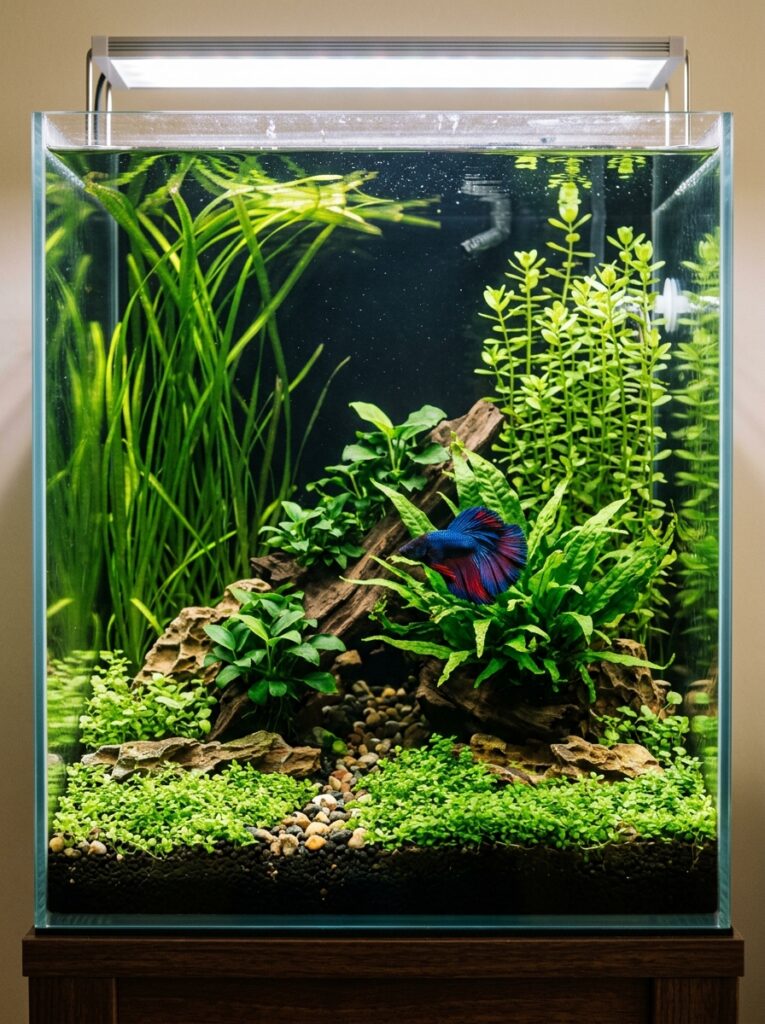
One of the easiest ways to make a planted betta tank look more professional is to think in layers.
This is a technique used by aquascapers around the world, but the idea itself is surprisingly simple.
Place shorter plants near the front of the aquarium.
Use medium-sized plants around hardscape features and transition areas.
Reserve taller plants for the back of the tank.
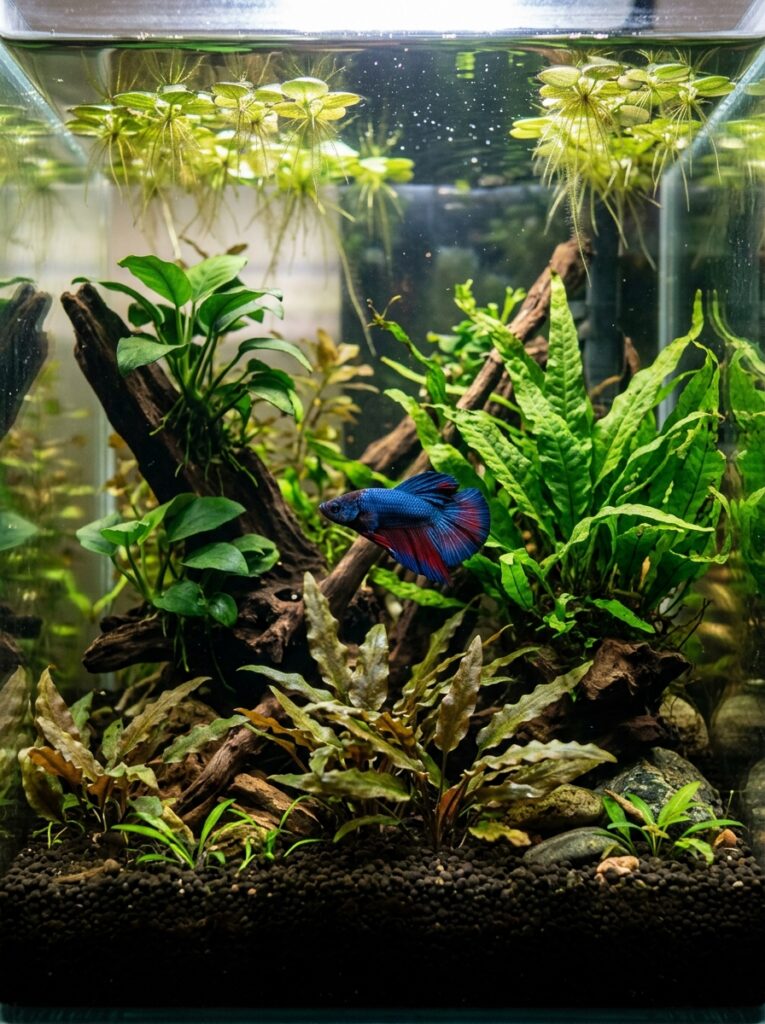
These layers create depth and help the aquarium feel larger than it actually is.
For example, a small patch of Cryptocoryne Parva or another compact foreground plant can create a neat foundation. Anubias Nana or Java Fern can occupy the midground, helping connect different parts of the layout. Taller plants such as Vallisneria or Bacopa Caroliniana can then create a natural backdrop behind everything else.
Even in a small betta tank, this layered approach creates a sense of perspective that makes the aquarium feel more intentional and visually appealing.
It’s one of the simplest design upgrades any beginner can make.
Using Driftwood and Rocks to Build Structure
Plants are important, but they aren’t the only reason some aquariums look beautiful.
Hardscape plays a huge role as well.
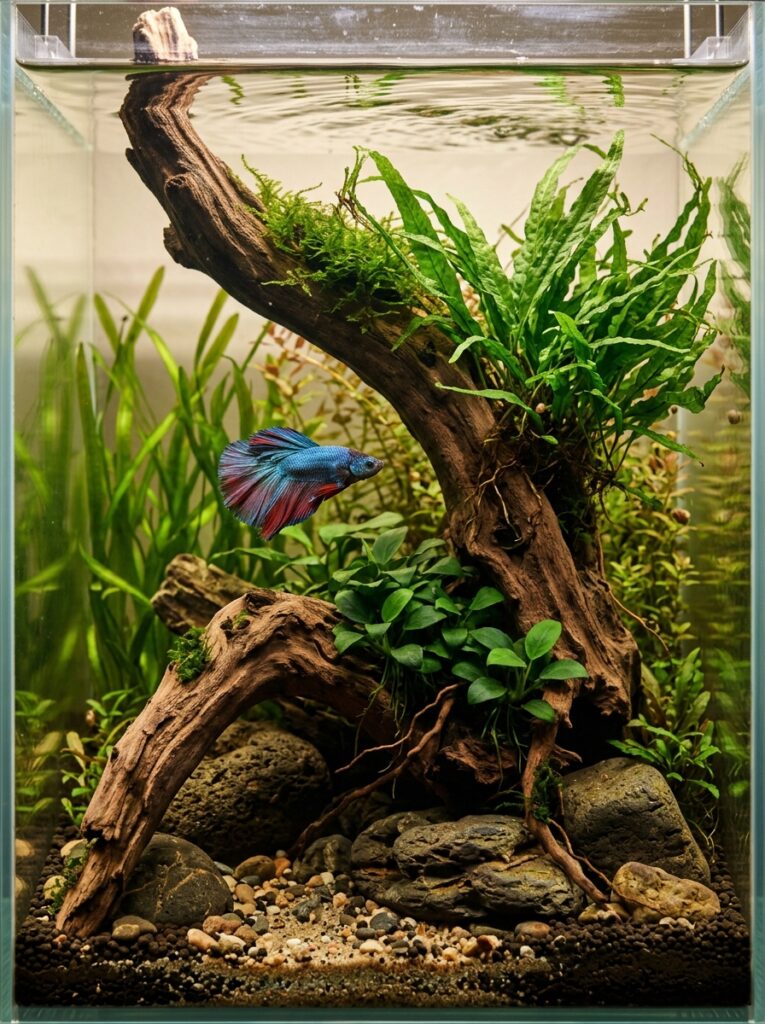
In aquascaping, the term hardscape refers to non-living design elements such as driftwood and rocks. These pieces provide structure and help create a layout that feels grounded and intentional.
Without hardscape, plants can sometimes appear as though they’re simply growing randomly throughout the tank.
A carefully placed piece of driftwood can become a focal point that naturally draws attention. Plants attached to the wood then help blend it into the surrounding layout.
Rocks can create visual anchors, define planting zones, and add contrast against the softer shapes of leaves and stems.
Many beginner aquarists are surprised by how much a single piece of natural driftwood can improve the appearance of a planted betta tank.
It often becomes the feature that ties everything together.
Natural Layout Upgrade
Recommended Option: Aquarium Driftwood
Best For:
✓ Planted betta tanks
✓ Natural aquascapes
✓ Anubias and Java Fern layouts
✓ Cozy aquarium designs
Why We Like It:
✓ Creates a natural focal point
✓ Helps structure the layout
✓ Works beautifully with attached plants
✓ Makes the tank feel more mature and intentional
PetYeti Take:
A single piece of natural driftwood can make a planted betta tank feel more complete. It gives plants a place to attach and helps the aquarium look less like a random setup and more like a tiny underwater landscape.
👉 View Aquarium Driftwood Options
Why Floating Plants Can Transform a Betta Tank
Few additions change the mood of a betta aquarium as quickly as floating plants.
Many betta keepers notice an immediate difference after introducing species such as Amazon Frogbit or other suitable floating plants.
The reason is simple.
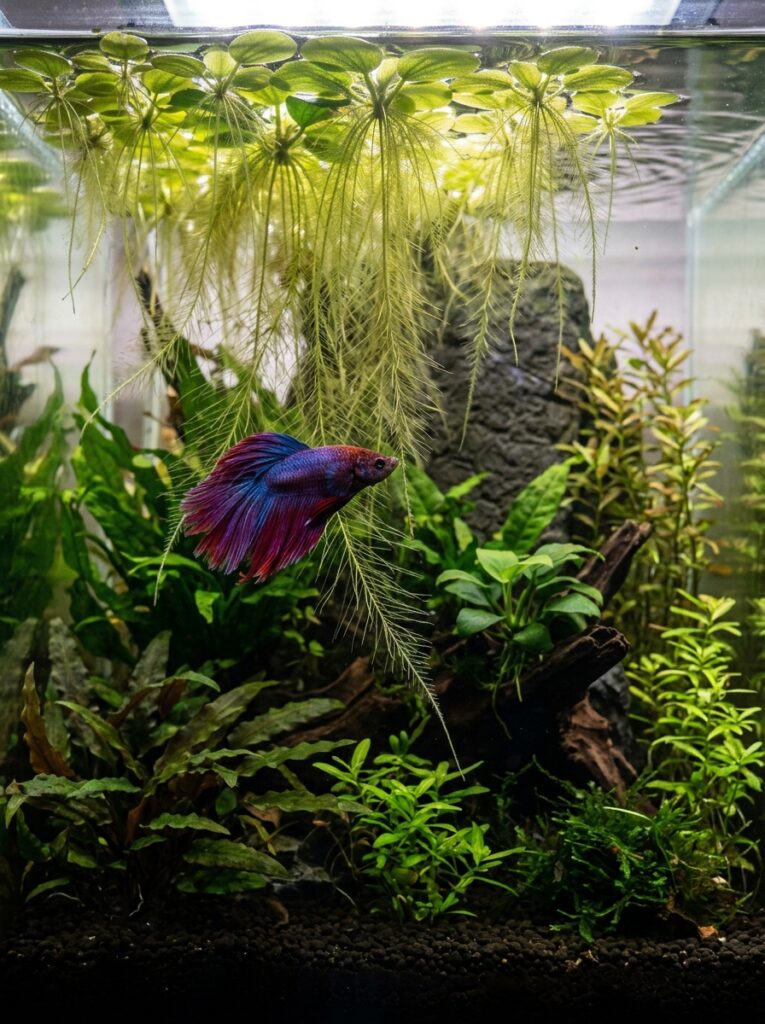
Floating plants create gentle shade, soften overhead lighting, and add a natural layer to the aquarium that many tanks are missing.
This extra layer helps the aquarium feel more complete. Instead of viewing the tank only from front to back, you now have visual interest near the water’s surface as well.
Many floating plants also develop attractive root systems that hang below the surface, creating additional shelter and texture.
Perhaps most importantly, floating plants help create a calmer atmosphere.
A softly shaded planted aquarium often feels more relaxing than a brightly illuminated tank with little surface cover.
For betta enthusiasts seeking a cozy, natural look, floating plants are often one of the most effective upgrades available.
Helpful Floating Plant Option
Recommended Option: Amazon Frogbit
Best For:
✓ Betta tanks
✓ Calm planted aquariums
✓ Soft surface shade
✓ Natural-looking layouts
Why We Like It:
✓ Creates gentle shade
✓ Adds surface-level greenery
✓ Hanging roots create visual interest
✓ Helps the aquarium feel calmer and more natural
PetYeti Take:
Amazon Frogbit can quickly change the mood of a betta tank by softening bright light and adding a natural surface layer. Just keep some open water so your betta can easily reach the surface.
Avoiding Common Planted Betta Tank Mistakes
Creating a beautiful planted betta tank doesn’t require perfection.
But avoiding a few common mistakes can save a lot of frustration.
One of the biggest mistakes beginners make is adding too many plants at once. It’s easy to get excited when browsing aquarium plants online or at a local fish store, but overcrowding can make a small aquarium feel cramped and difficult to maintain.
Another common issue is choosing plants without considering their mature size. A plant that looks small in a store may eventually become much larger than expected, disrupting the balance of the layout.
Many hobbyists also underestimate the importance of open swimming space. Bettas enjoy exploring planted environments, but they also benefit from areas where they can move freely without constantly weaving through dense vegetation.
Artificial decorations can create a similar problem. A tank packed with ornaments, caves, and plants may end up feeling cluttered rather than natural.
Finally, some beginners focus entirely on appearance and forget the fish. A beautiful aquarium should always be designed around the needs of its inhabitants first.
When the fish is comfortable, the aquarium usually feels more natural and enjoyable to observe.
Creating a Relaxing Layout for Both You and Your Betta
One of the reasons planted aquariums have become so popular is that they create a sense of calm.
Many people place aquariums in living rooms, bedrooms, home offices, or study spaces because they enjoy the relaxing atmosphere they provide.
A thoughtfully designed planted betta tank can contribute to that feeling.
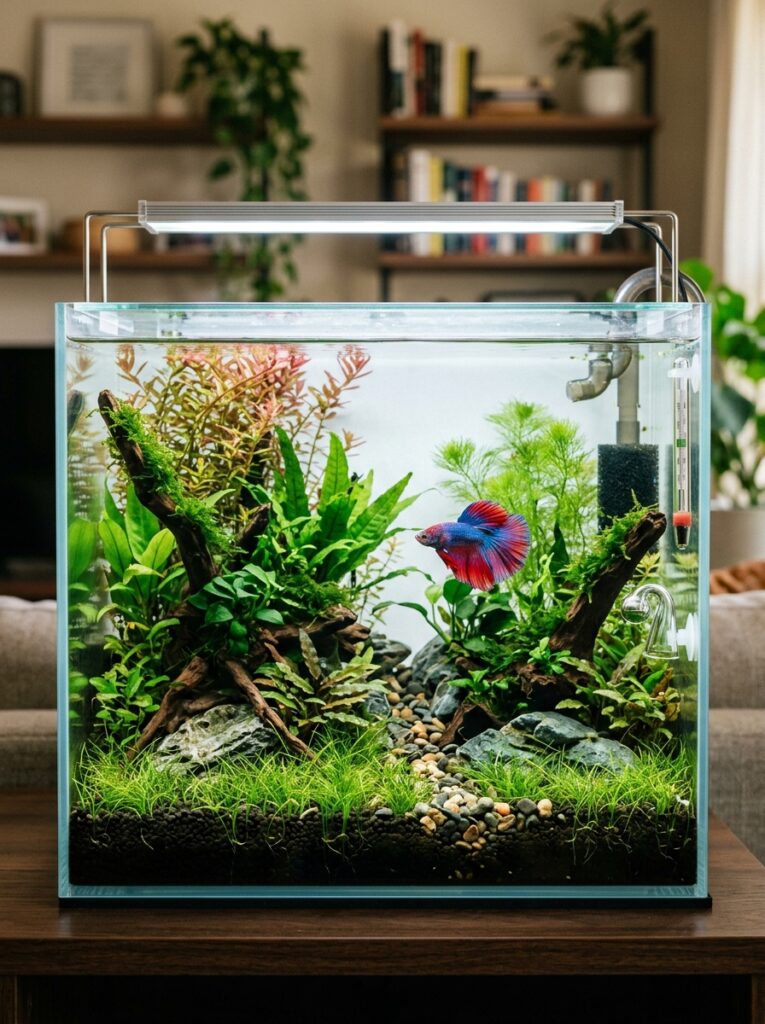
Soft greenery, natural driftwood, gentle swimming movements, and open areas of negative space work together to create a layout that feels peaceful rather than busy.
The key is resisting the urge to add too much.
A few healthy plants often look better than dozens of struggling ones. A single attractive focal point may have more visual impact than multiple competing decorations.
Think of the aquarium as a small living landscape.
Every plant, rock, and piece of wood should contribute to the overall feeling you’re trying to create.
When simplicity and balance guide the design, the result is often a tank that’s relaxing for both the betta and the person viewing it.
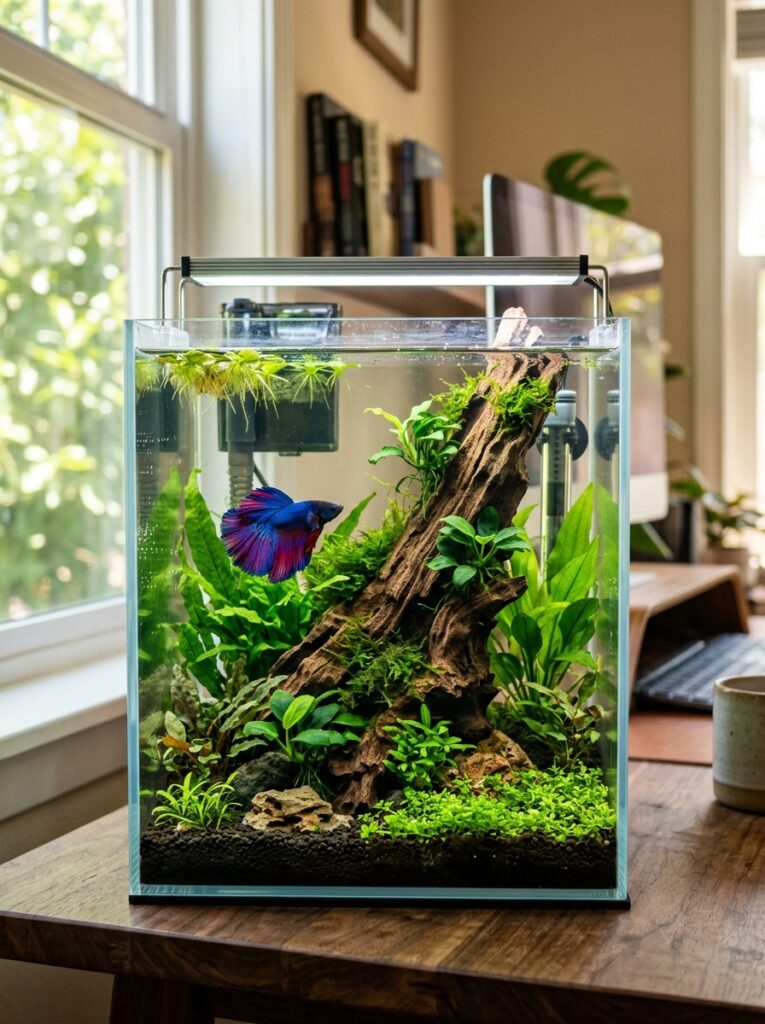
Small Changes That Make a Big Difference
Many beautiful planted betta tanks aren’t built overnight.
They’re improved gradually.
A new plant added this month. A better piece of driftwood next month. A small adjustment to the layout a few weeks later.
These small changes often have a bigger impact than major redesigns.
Adding a floating plant can soften harsh lighting. Moving a rock slightly can improve visual balance. Replacing an artificial ornament with a natural piece of wood can instantly make the aquarium feel more authentic.
The best aquariums tend to evolve over time.
Rather than chasing perfection, focus on making thoughtful improvements whenever opportunities arise.
As your plants grow and your understanding of aquascaping develops, your aquarium will naturally become more beautiful.
And that’s one of the most rewarding parts of the hobby.
A planted betta tank isn’t just something you create.
It’s something you continue shaping and enjoying over time.
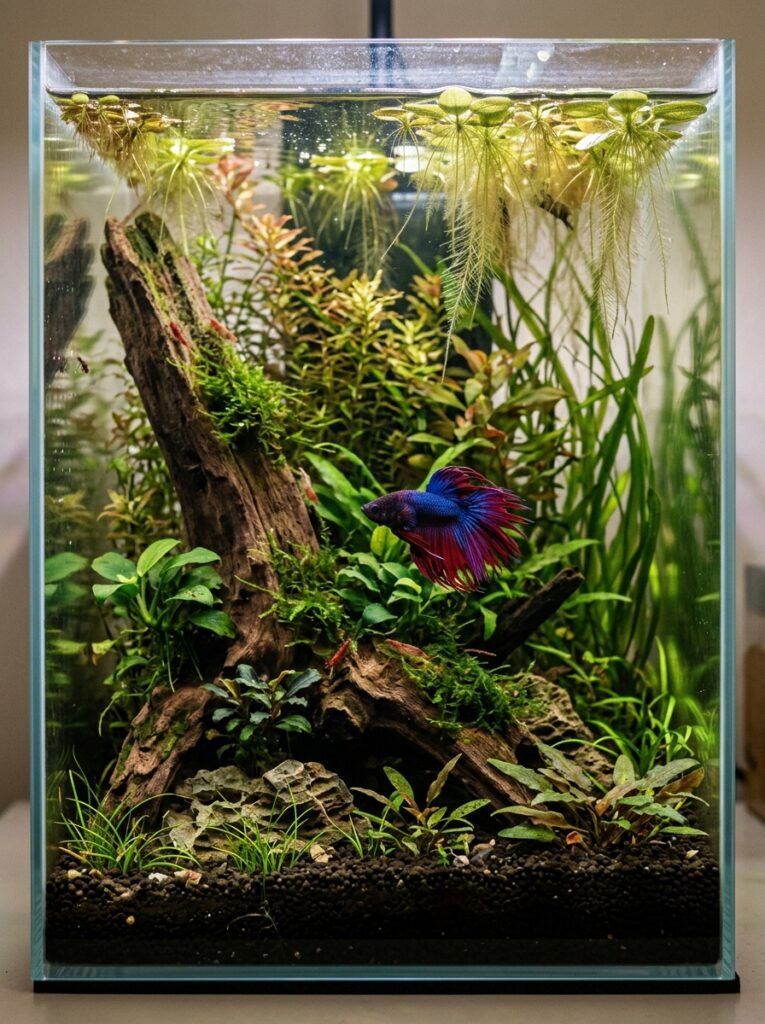
Related PetYeti Guides
A planted betta tank is easier to build when you choose beginner-friendly plants, understand fertilizer basics, and keep the setup calm.
Still choosing plants? Read our guide to beginner betta tank plants.
Want easy low-light options? See our low-light aquarium plants guide.
Keeping a small betta setup? Read our nano aquarium plants guide.
Not sure about plant nutrition? Read do aquarium plants need fertilizer.
Choosing floating cover? See our guide to floating plants for small aquariums.
CONCLUSION
Creating a beautiful planted betta tank doesn’t require expensive equipment, advanced aquascaping skills, or dozens of plant species.
What matters most is creating a balanced environment that feels natural, comfortable, and enjoyable to observe.
By choosing beginner-friendly plants, using natural hardscape, incorporating layers of foreground, midground, and background plants, and leaving room for your betta to swim comfortably, you can build an aquarium that looks beautiful while supporting the well-being of your fish.
Remember that great aquariums rarely happen all at once.
They grow and improve over time.
With patience, observation, and a few thoughtful design choices, even a simple betta tank can become a relaxing centerpiece that you’ll enjoy every day.
FAQs
What plants are best for a planted betta tank?
Beginner-friendly choices include Anubias Nana, Java Fern, Cryptocoryne species, Amazon Frogbit, and other easy-to-maintain aquarium plants.
Do bettas like heavily planted tanks?
Most bettas appreciate live plants because they provide shelter, resting areas, and a more natural environment. However, open swimming space is still important.
Can I create a planted betta tank in a small aquarium?
Yes. Many live plants are well-suited for nano aquariums and can create beautiful layouts even in compact tanks.
Are floating plants good for bettas?
Yes. Floating plants can provide gentle shade, surface cover, and a more natural atmosphere that many bettas seem to enjoy.
Do planted betta tanks require special equipment?
Not necessarily. Many beginner-friendly aquarium plants grow successfully with standard aquarium lighting and routine maintenance.
How long does it take for a planted betta tank to look established?
Most planted aquariums improve gradually over several weeks and months as plants grow and fill out the layout naturally.