
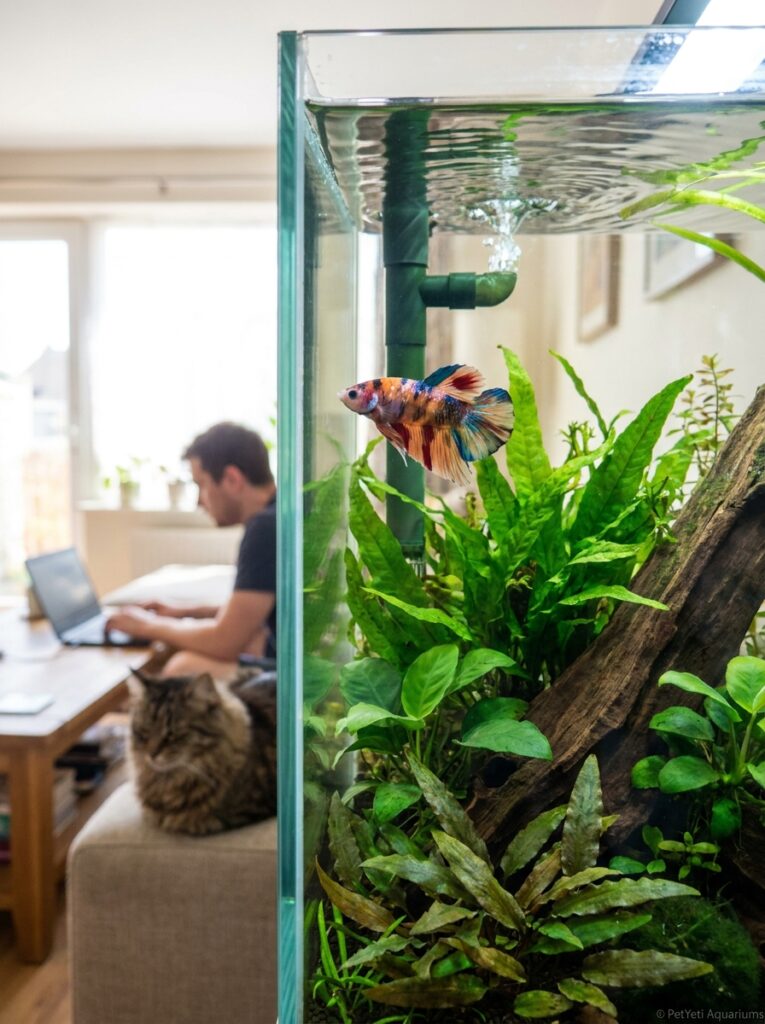
If your fish spend a lot of time near the aquarium filter, you might wonder whether something is wrong. Sometimes fish simply enjoy swimming in the current or resting in a sheltered spot. Other times, the behavior can point to a problem with water quality, oxygen, temperature, or tank mates.
The key is to look at how your fish behave, whether one fish or several are affected, and whether anything has changed in the aquarium recently.
Quick Answer: Why Do Fish Stay Near the Filter?
Fish may stay near a filter because they enjoy the current, feel safer there, or are responding to conditions elsewhere in the tank. If several fish suddenly gather around the filter, breathe rapidly, or gasp at the surface, check the water quality and make sure there is adequate surface movement.
When It May Be Normal
- One fish occasionally swims into the filter current and then explores the rest of the tank.
- Your fish eat normally and swim comfortably.
- The behavior is familiar and hasn’t suddenly changed.
When to Investigate
- Several fish suddenly gather near the filter outlet.
- Fish breathe rapidly, gasp at the surface, or become unusually lethargic.
- Fish stop eating or show other signs of distress.
- The behavior starts after a water change, filter adjustment, new fish addition, or other change to the aquarium.
If multiple fish are gasping or breathing rapidly, don’t assume they’re simply enjoying the current. Check the water temperature, test for ammonia and nitrite, and improve surface agitation while you investigate.
- 5 Reasons Fish Stay Near the Filter
- 1. They May Be Seeking Better-Oxygenated Water
- 2. Water Quality May Be Poor
- 3. They Enjoy the Current
- 4. They May Be Hiding From Tank Mates or Strong Flow
- 5. Temperature or Circulation May Be Uneven
- What to Do First: A 4-Step Checklist
- When Is Staying Near the Filter a Warning Sign?
- What Should You Do If Your Fish Stay Near the Filter?
- Conclusion: Why Are My Fish Staying Near the Filter?
- FAQs
As an Amazon Associate, PetYeti earns from qualifying purchases. This comes at no additional cost to you and helps support the site. We only recommend products we genuinely believe can help create healthier and more enjoyable aquariums.
5 Reasons Fish Stay Near the Filter
Fish staying near a filter isn’t automatically a sign of trouble. The important clues are whether the behavior is new, whether one fish or several are affected, and whether you notice other changes.
1. They May Be Seeking Better-Oxygenated Water
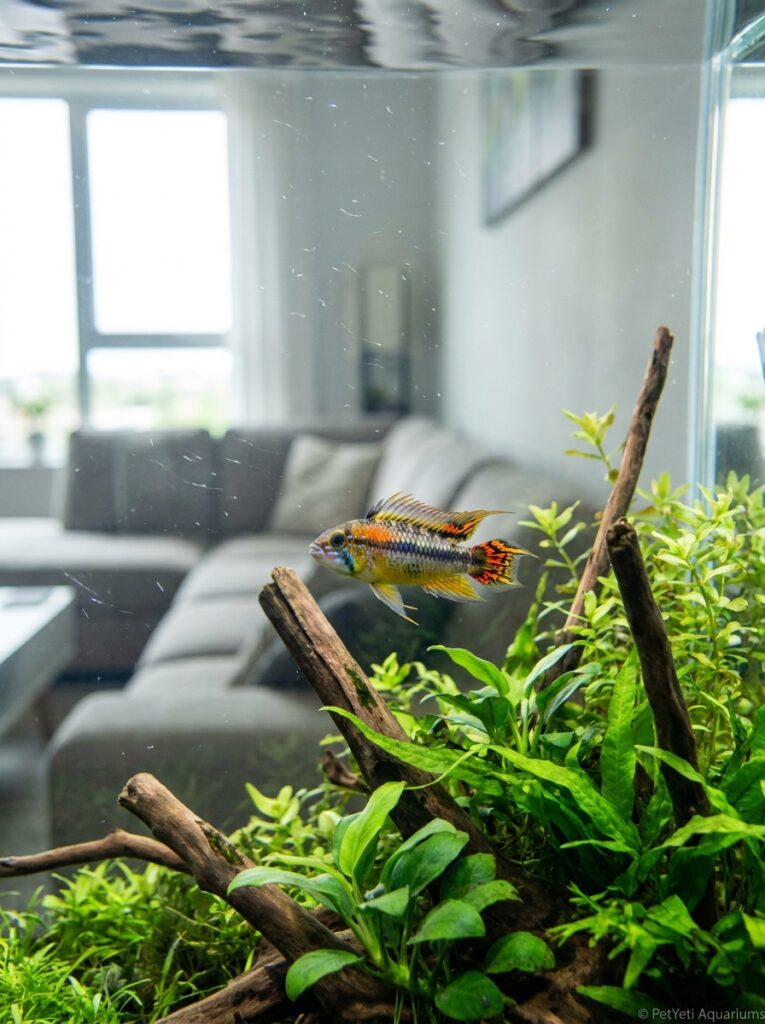
The filter return often creates surface movement, which helps oxygen move from the air into the water. If oxygen levels are low, fish may gather near areas with stronger water movement.
What to look for: Several fish gathering near the outlet, breathing rapidly, or gasping at the surface.
What to do: Increase surface agitation if it’s weak, and check the aquarium’s water quality. If several fish are gasping or breathing rapidly, treat it as urgent rather than assuming the filter area is simply their preferred spot.
PetYeti Pick: A simple Aquaneat USB Air Pump or Hygger Silent Mini Air Pump paired with a micro-bubble air stone will quickly raise oxygen levels across the entire tank and interacting with tank mates is often displaying completely normal behavior.
2. Water Quality May Be Poor
Ammonia and nitrite can harm fish and irritate their gills. Fish may change where they swim when water conditions deteriorate, but staying near a filter alone cannot tell you which parameter is responsible.
What to look for: Unusual breathing, lethargy, reduced appetite, or several fish behaving differently from normal.
What to do: Test ammonia and nitrite, especially after adding fish, overfeeding, cleaning filter media, or experiencing a filter problem. If either is detectable, take prompt corrective action with a partial water change using conditioned, temperature-matched water, and keep monitoring the readings.
- PetYeti Pick: Use an API Freshwater Master Test Kit to check for hidden ammonia or nitrite spikes accurately—it’s far more dependable than paper test strips oxygen availability elsewhere in the aquarium.
3. They Enjoy the Current
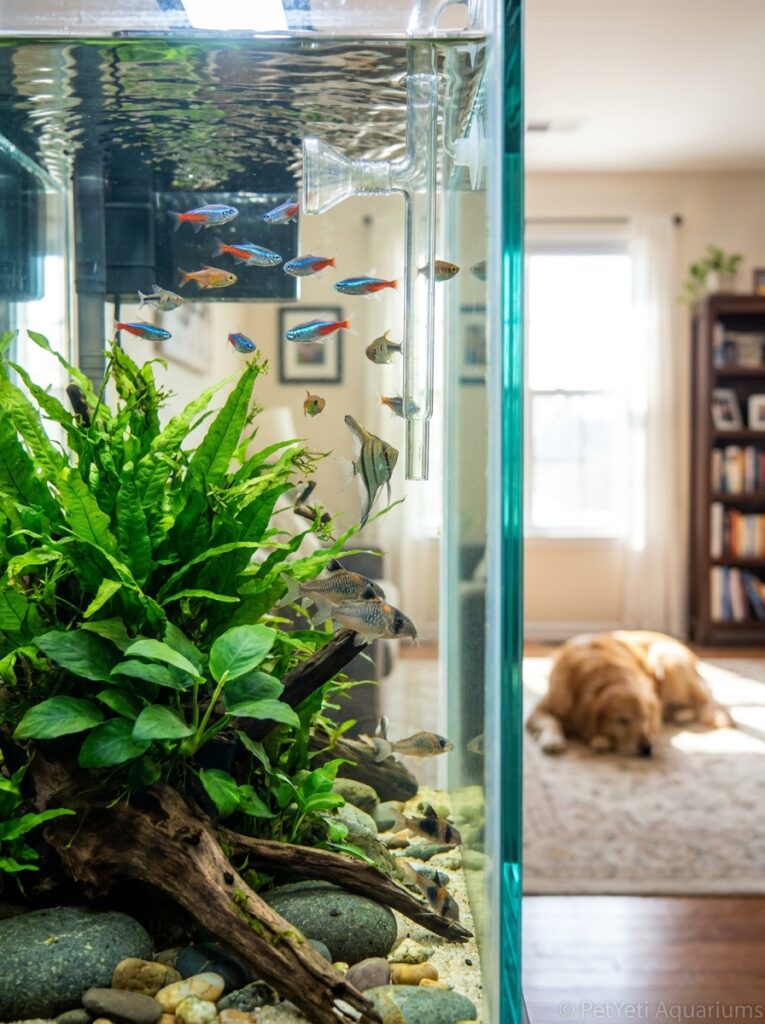
Some fish actively swim into a gentle current and then move away again. For them, the filter outlet can simply be an interesting place to explore.
What to look for: Your fish swim normally, eat well, and move freely around the aquarium rather than appearing trapped or exhausted by the flow.
What to do: If the behavior is normal for that fish and there are no other warning signs, you may not need to change anything. Make sure the current suits the species and doesn’t make it difficult for fish to rest or swim comfortably.
4. They May Be Hiding From Tank Mates or Strong Flow
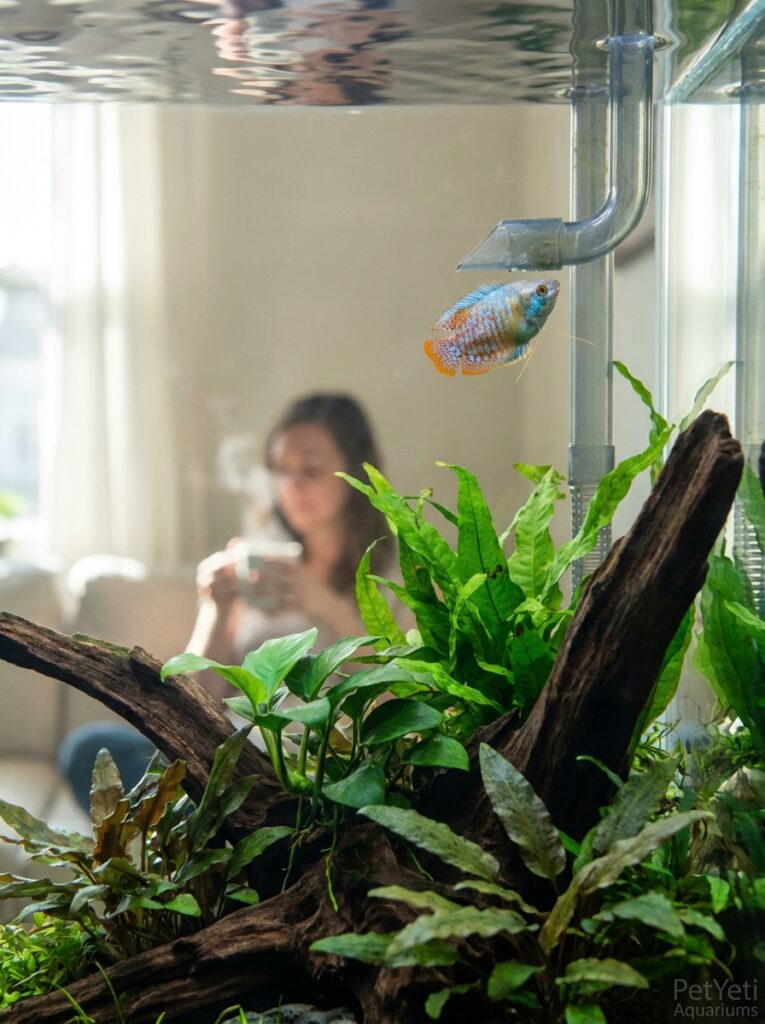
A filter intake or housing can provide a sheltered spot for a fish that feels exposed or is being chased. A fish may also remain near equipment because calmer water is available there.
What to look for: One fish repeatedly hiding, being chased or nipped, having difficulty swimming against the current, or getting pulled toward the intake.
What to do: Observe interactions between tank mates and check whether the flow is too strong. Add suitable cover or plants if the tank lacks hiding places, and use an appropriate intake sponge if suction could trap a fish or damage its fins. If aggression is the issue, address compatibility and separation where necessary.
5. Temperature or Circulation May Be Uneven
Fish may gather in a particular area if the aquarium temperature is unsuitable or circulation is uneven. However, the filter area isn’t necessarily warmer, and staying there doesn’t prove that your fish are cold.
What to look for: A thermometer reading outside the suitable range for your species, fish clustering near a heater, or a recent change in heating or water circulation.
What to do: Measure the actual aquarium temperature and compare it with the needs of your fish. Check that the heater and filter are working properly and that water circulates throughout the tank. Don’t move the heater or change the temperature based only on where the fish are gathering.
What to Do First: A 4-Step Checklist
If your fish are spending more time near the filter than usual, work through these checks before changing equipment or rearranging the tank.
1. Watch Their Breathing and Swimming
Look for rapid gill movement, gasping, clamped fins, unusual lethargy, or difficulty swimming. Check whether one fish is affected or several.
If multiple fish are gasping or breathing rapidly, act promptly rather than waiting to see whether the behavior stops.
2. Test the Water
Check ammonia and nitrite first, particularly if the aquarium is new or you’ve recently added fish, cleaned the filter, or noticed a change in water quality.
Also check the temperature and, when relevant to your setup, nitrate and pH. Clear water doesn’t necessarily mean the water is safe.
3. Check the Filter and Water Movement
Make sure the filter is running properly and the outlet isn’t creating a current that your fish struggle against. Look for blocked intakes, reduced flow, unusual noise, or other signs of equipment trouble.
If several fish are gasping, increase surface agitation to support gas exchange while you investigate the cause.
4. Review Recent Changes
Think about anything that changed shortly before the behavior started:
- A new fish or change in stocking
- A water change or filter cleaning
- A change in heater settings
- A filter adjustment or equipment failure
- New decorations, plants, or hiding places
Make one appropriate adjustment at a time when the situation is stable enough to do so. If fish show signs of serious distress, prioritize correcting unsafe water conditions or equipment problems immediately.
When Is Staying Near the Filter a Warning Sign?
Staying near the filter is not automatically a problem. What matters is whether your fish are behaving normally otherwise.
Pay closer attention if you notice:
- Rapid breathing or gasping: Your fish may be struggling with oxygen availability or poor water quality.
- Several fish gathering in one spot: Check water conditions and surface movement, especially if this behavior started suddenly.
- Loss of appetite or unusual lethargy: These changes can accompany water-quality problems or illness.
- Hiding or being chased: A fish may be avoiding aggressive tank mates or seeking shelter.
- Difficulty swimming: Strong current, weakness, or another health problem may be involved.
One symptom alone doesn’t identify the cause. Look at the overall pattern and test the water rather than guessing.
If multiple fish are gasping or breathing rapidly, check ammonia and nitrite, verify the temperature, and increase surface agitation while you investigate. Don’t wait for additional symptoms before addressing a possible water-quality or oxygen problem.
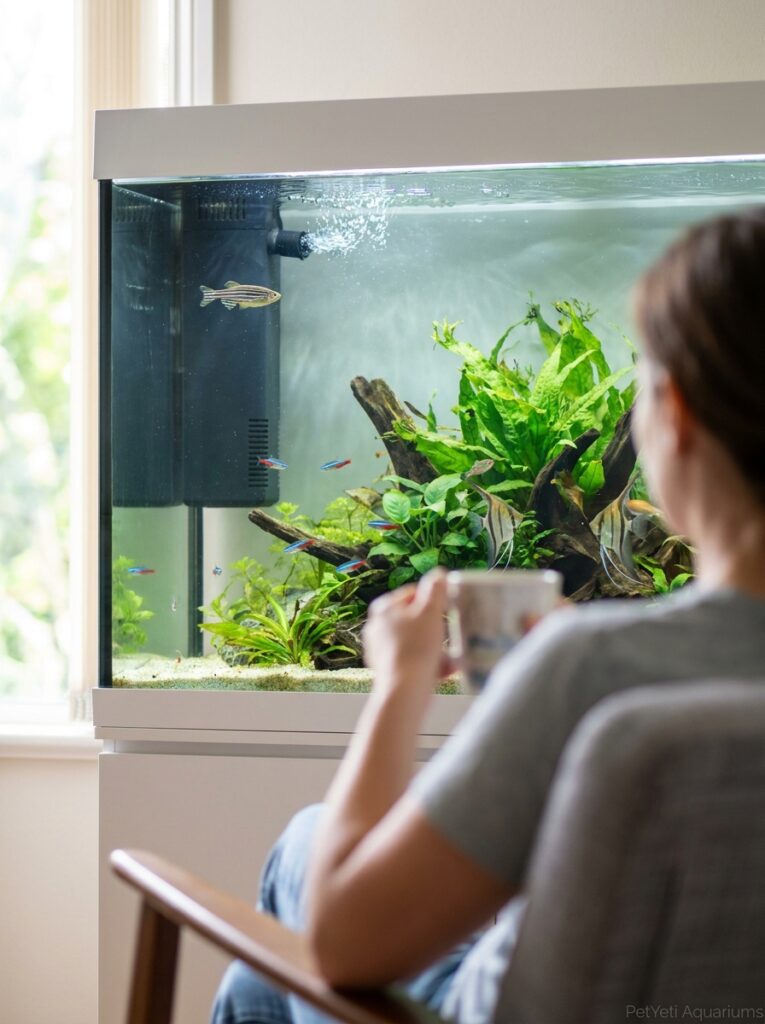
What Should You Do If Your Fish Stay Near the Filter?
The right response depends on what your fish are doing and what your checks reveal. Don’t change the filter or add equipment simply because your fish spend time near it.
If Your Fish Are Behaving Normally
If they swim comfortably, eat normally, and move around the aquarium, observe them before making changes. Some fish naturally prefer certain areas or enjoy swimming in a gentle current.
If Several Fish Are Gasping or Breathing Rapidly
Check the water temperature and test for ammonia and nitrite. Make sure the filter is running and the surface has adequate movement.
If you find unsafe readings, use a partial water change with conditioned, temperature-matched water and continue testing. If the fish remain in distress, seek help from an experienced aquarist or aquatic veterinarian.
If the Current Is Too Strong
Watch whether your fish struggle to swim, avoid exposed areas, or get pushed around by the flow.
Adjust the outlet if your filter allows it, or use a suitable flow-diffusing method. Keep enough circulation and surface movement for good gas exchange.
If One Fish Is Hiding
Look for chasing, fin damage, or competition around feeding and resting areas. Provide appropriate cover and check whether the tank mates are compatible.
If the fish is also losing its appetite, breathing abnormally, or becoming lethargic, check water quality rather than assuming it is simply shy.
If You Suspect a Filter Problem
Check the intake, outlet, and filter operation. Follow the manufacturer’s cleaning instructions, and avoid rinsing biological filter media under untreated tap water.
If the filter has stopped working, restore filtration as soon as practical and monitor water quality closely.
The goal is to identify the cause before making unnecessary changes. A fish that enjoys the current needs a different response from one that is struggling with poor water quality.
Related PetYeti Guides
Fish staying near the filter often connects to oxygen, water quality, stress, or strong water movement. These guides can help you check the most likely causes without guessing:
- Why Are My Fish Breathing Fast?
- How to Test Aquarium Water Correctly
- Do Aquarium Air Stones Really Help?
- Best Aquarium Air Pumps for Beginners
- Why Are My Fish Chasing Each Other? Normal or Aggression?
- Experiencing noisy equipment? Learn how to silence motor hum in our guide to quiet aquarium filters.
Conclusion: Why Are My Fish Staying Near the Filter?
Fish often stay near a filter because they enjoy the current, prefer that spot, or feel safer there. If the behavior is new, especially when several fish are affected, check water quality, temperature, and surface movement before assuming it’s harmless.
Watch how your fish breathe and swim, test ammonia and nitrite if anything seems unusual, and make sure the filter is working properly. If the current is too strong or a fish is being bullied, address those specific conditions.
The goal isn’t to stop your fish from visiting the filter. It’s to understand whether they’re choosing that spot comfortably or trying to cope with a problem.
FAQs
Why is my fish suddenly staying near the filter?
A sudden change in behavior is worth investigating. Check the filter’s operation, aquarium temperature, and water quality, especially ammonia and nitrite. Also look for rapid breathing, reduced appetite, or other unusual behavior.
Is it normal for fish to stay near the filter?
It can be. Some fish enjoy swimming in a gentle current or prefer that part of the aquarium. If they eat normally, swim comfortably, and show no other signs of distress, simply observe them.
Why are all my fish gathering near the filter?
When several fish suddenly gather in one area, check water quality and oxygen availability. Make sure the filter is working and the water surface has adequate movement. If the fish are gasping or breathing rapidly, respond promptly.
Can fish sleep or rest near the filter?
Yes. Some fish choose sheltered spots near equipment when resting. However, if a fish is constantly pressed against the intake, struggling to swim, or showing other symptoms, check the current and intake suction.
Can low oxygen make fish stay near the filter?
Low oxygen can contribute to fish gathering near areas with stronger surface movement, but the behavior alone doesn’t confirm an oxygen problem. Check for rapid breathing or gasping, improve surface agitation if needed, and test the water to investigate other possible causes.
Should I worry if only one fish stays near the filter?
Not necessarily. One fish may prefer the current or a sheltered resting spot. Watch for changes in appetite, breathing, swimming, or interactions with tank mates. If the behavior is new or accompanied by symptoms, investigate further.
Can stress cause fish to stay near the filter?
Yes. Bullying, unsuitable water conditions, strong currents, or a lack of hiding places can affect where fish spend their time. Observe tank-mate interactions and check the aquarium conditions before deciding which change is needed.
What should I check first if my fish stay near the filter?
Start by observing their breathing and swimming. If the behavior is unusual, test ammonia and nitrite, check the temperature, and make sure the filter is operating properly. If several fish are gasping or breathing rapidly, treat the situation as urgent.
Why does my betta rest against the filter intake?
A betta may choose the area as a resting spot, but strong suction can pull its fins or body against the intake. Check the filter flow and fit a suitable pre-filter sponge if needed to reduce the risk of injury. If your betta is weak, breathing abnormally, or struggling to swim, check water quality as well.