
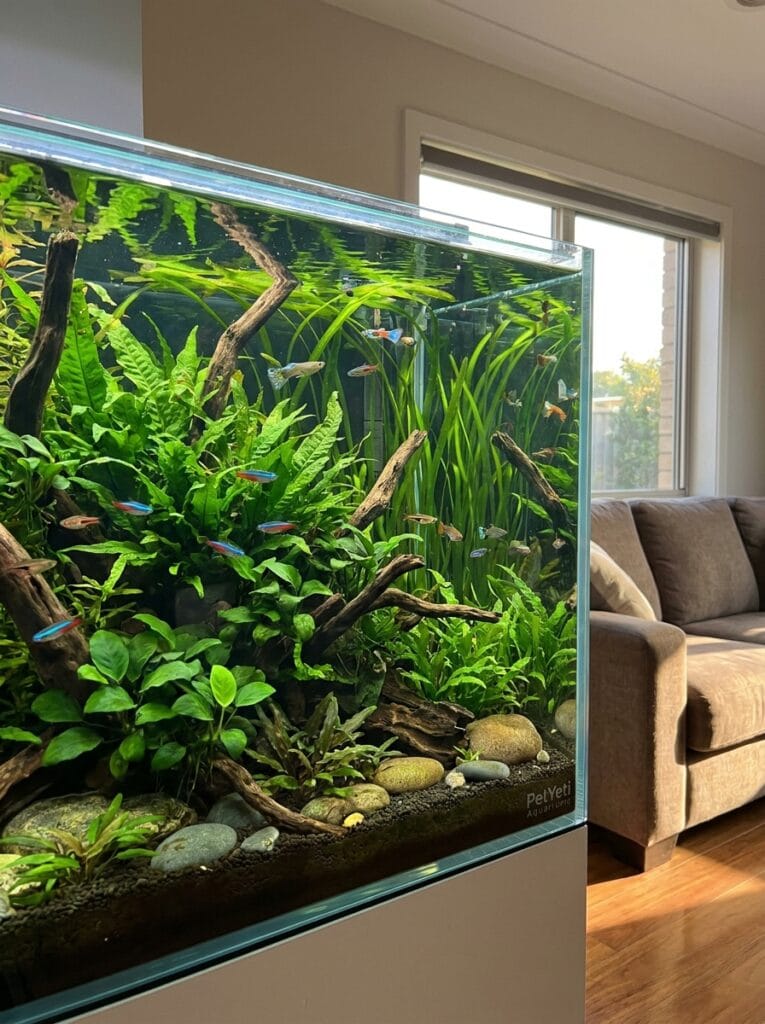
Selecting the best fish for heavily planted aquariums requires a slightly different mindset than stocking an ordinary community tank. In a lush aquascape filled with delicate stem plants, fine carpet greenery, and textured mosses, your fish aren’t just pets—they are active partners in a living ecosystem.
The wrong fish can quickly turn a peaceful slice of nature upside down by digging up fragile root systems, nibbling on soft new leaves, or clouding crystal-clear water with heavy biological waste. The ideal planted tank residents are gentle, plant-friendly species that weave gracefully through dense foliage, bring out rich green colors with their shimmering scales, and help keep plant leaves clean of nuisance algae.
PetYeti 10-Second Plant-Safe Stocking Rule
Zero Digging Behavior: Choose fish that graze gently off leaf surfaces or hover in open water columns without bulldozing aquasoil or uprooting shallow foreground carpets.
Low-to-Moderate Bioload: Planted setups thrive on balanced nutrients. Avoid large, messy fish (like Silver Dollars or large Cichlids) that overload biological filtration and trigger severe algae blooms.
Contrast & Movement: Small nano schooling fish (like Chili Rasboras or Cardinal Tetras) create a sense of vast depth and calm scale against tall stem plants.
- The Best Fish Species for Heavily Planted Aquariums
- 1. Nano & Small Schooling Fish (Mid-to-Upper Water Column)
- 2. Gentle Centerpiece Fish (The Living Focal Points)
- 3. Plant-Safe Cleanup Crews (Leaf Polishers & Algae Eaters)
- ⚠️ Fish to Avoid in Heavily Planted Tanks
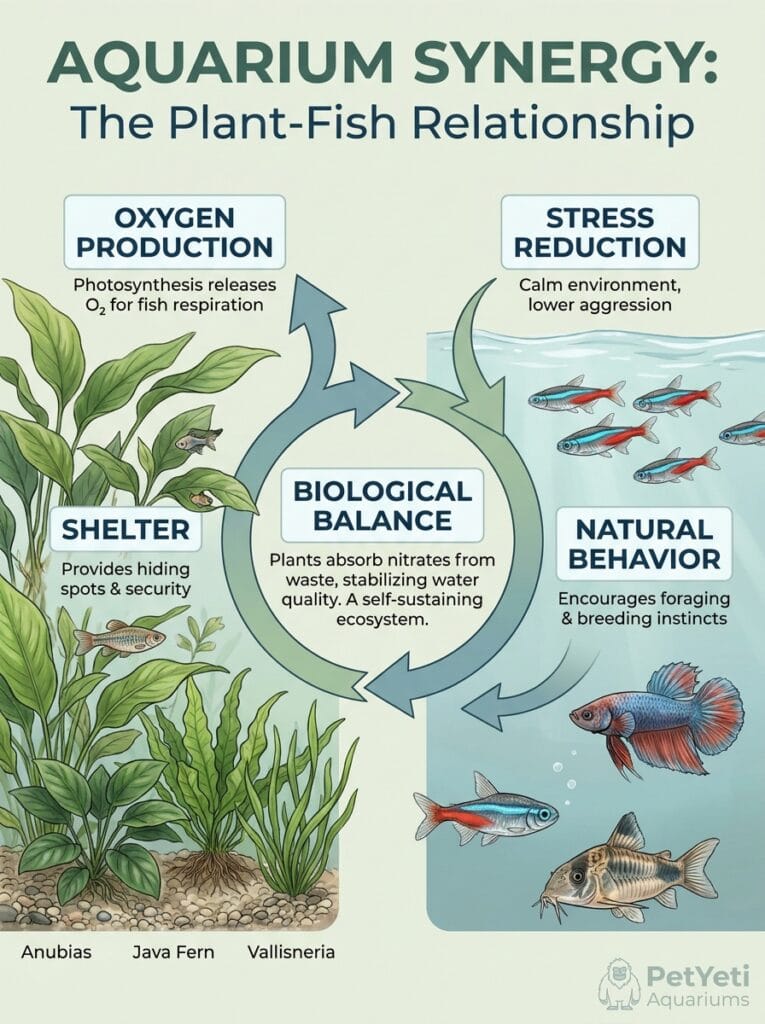
- Why Fish and Plants Work So Well Together
- Neon Tetras Look Incredible in Planted Tanks
- Harlequin Rasboras Thrive in Natural Aquascapes
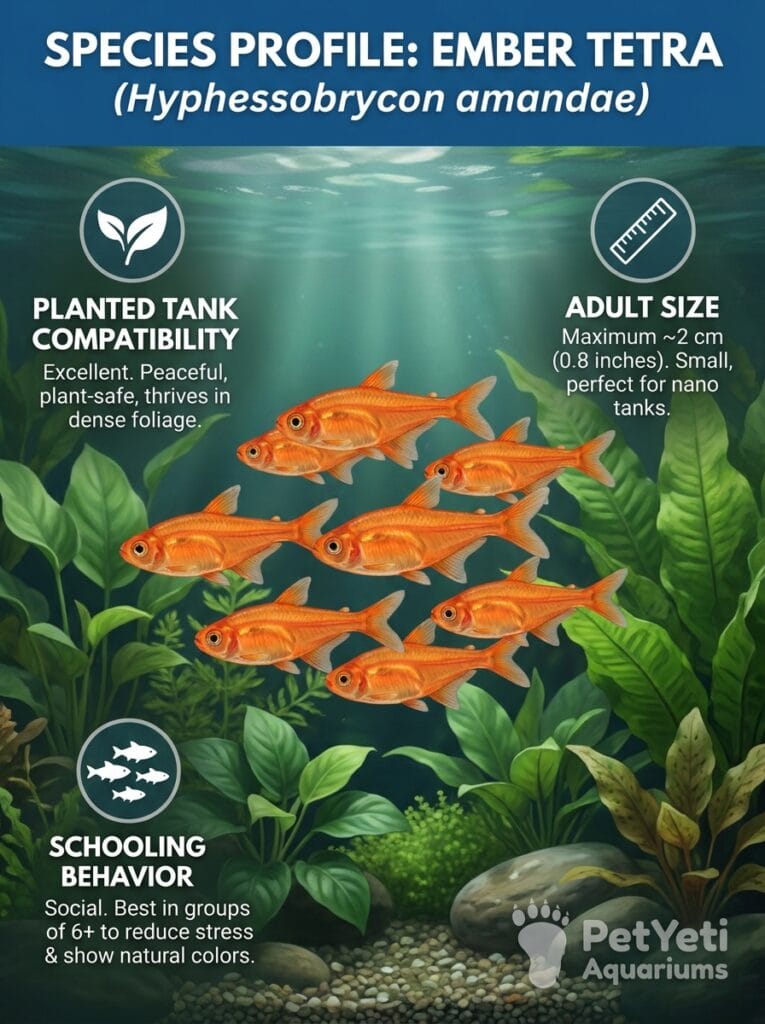
- Ember Tetras Add Warm Color Without Disrupting Plants
- Corydoras Catfish Respect the Aquascape
- Honey Gouramis Make Excellent Centerpiece Fish
- Otocinclus Catfish Are Perfect Plant-Friendly Algae Grazers
- Best Fish for Different Planted Tank Styles
- Fish That May Not Be Ideal for Heavily Planted Aquariums
- Common Mistakes When Stocking a Planted Aquarium
- Related PetYeti Aquarium Guides
- CONCLUSION
- FAQs
As an Amazon Associate, PetYeti earns from qualifying purchases. This comes at no additional cost to you and helps support the site. We only recommend products we genuinely believe can help create healthier and more enjoyable aquariums.
The Best Fish Species for Heavily Planted Aquariums
1. Nano & Small Schooling Fish (Mid-to-Upper Water Column)
Small schooling species provide breathtaking movement through lush stem forests without damaging delicate leaves or outgrowing your aquascape.
| Species | Ideal School Size | Plant Compatibility | Why They Shine in Planted Tanks |
| Cardinal Tetra | 8–12+ | 100% Plant-Safe | Vivid electric blue and neon red stripes create intense visual contrast against deep green foliage. |
| Harlequin Rasbora | 6–10+ | 100% Plant-Safe | Tight schooling behavior with warm copper tones that pop in Dutch-style or Nature Aquariums. |
| Chili Rasbora | 10–15+ | 100% Plant-Safe | Ultra-tiny size makes even a 10-gallon nano tank look massive and expansive. |
| Ember Tetra | 8–12+ | 100% Plant-Safe | Soft translucent orange bodies blend harmoniously with bright green mosses and foreground carpets. |
Real-Life Example:
A tight school of 12 Cardinal Tetras cruising through a dense thicket of Rotala Rotundifolia instantly turns an aquarium into living art. Because their bioload is tiny, they won’t trigger sudden ammonia spikes or algae outbreaks.
PetYeti Care Pick: Keep schooling fish vibrant and active by feeding Fluval Bug Bites Tropical Micro Granules—small enough for nano mouths to consume in seconds without polluting the substrate.
2. Gentle Centerpiece Fish (The Living Focal Points)
A centerpiece fish adds personality and interactive charm to a planted aquarium without harassing smaller tankmates or nibbling on tender aquatic sprouts.
- Honey Gourami (Trichogaster chuna): Inquisitive, slow-swimming, and exceptionally peaceful. They explore every plant corner using their delicate feelers without uprooting shallow stems.
- German Blue Ram / Bolivian Ram: Gentle dwarf cichlids that add brilliant pastel colors to the lower regions of the aquarium without digging large breeding pits.
- Dwarf Gourami (Trichogaster lalius): Bright neon blue and crimson striping that creates an eye-catching contrast against dark driftwood and green Java Ferns.
Real-Life Example:
While large cichlids will excavate gravel and destroy planted roots within hours, a pair of Honey Gouramis will gently glide between broad Amazon Sword leaves, picking off micro-organisms without tearing a single leaf.
3. Plant-Safe Cleanup Crews (Leaf Polishers & Algae Eaters)
A planted tank needs dedicated algae control to keep slow-growing leaves like Anubias and Bucephalandra free from diatom and green dust buildup.
- Otocinclus Catfish (Group of 4–6): The undisputed champions of planted tanks. They are 100% vegetarian and spend all day meticulously polishing broad leaves without ever damaging plant tissue.
- Amano Shrimp (Caridina multidentata): Tireless workers that consume hair algae, soft green algae, and decaying plant matter from delicate carpeting mosses.
- Nerite Snails: Excellent glass and hardscape cleaners that cannot reproduce in freshwater, preventing snail overpopulation.
- Pygmy or Habrosus Corydoras: Tiny bottom dwellers that sift gently through fine sand without disturbing fragile Monte Carlo carpets.
Real-Life Example:
If your broad Anubias Nana leaves start gathering a dull brown layer of diatoms, introducing a small group of Otocinclus catfish will typically buff the foliage completely clean within 48 hours.
- PetYeti Hardware Pick: Ensure your plants thrive and outcompete algae by pairing your tank with a programmable Nicrew SkyLED Plus or Fluval Plant 3.0 LED Light.
⚠️ Fish to Avoid in Heavily Planted Tanks
Not all aquarium fish respect your hard work. Keep these species out of delicate aquascapes:
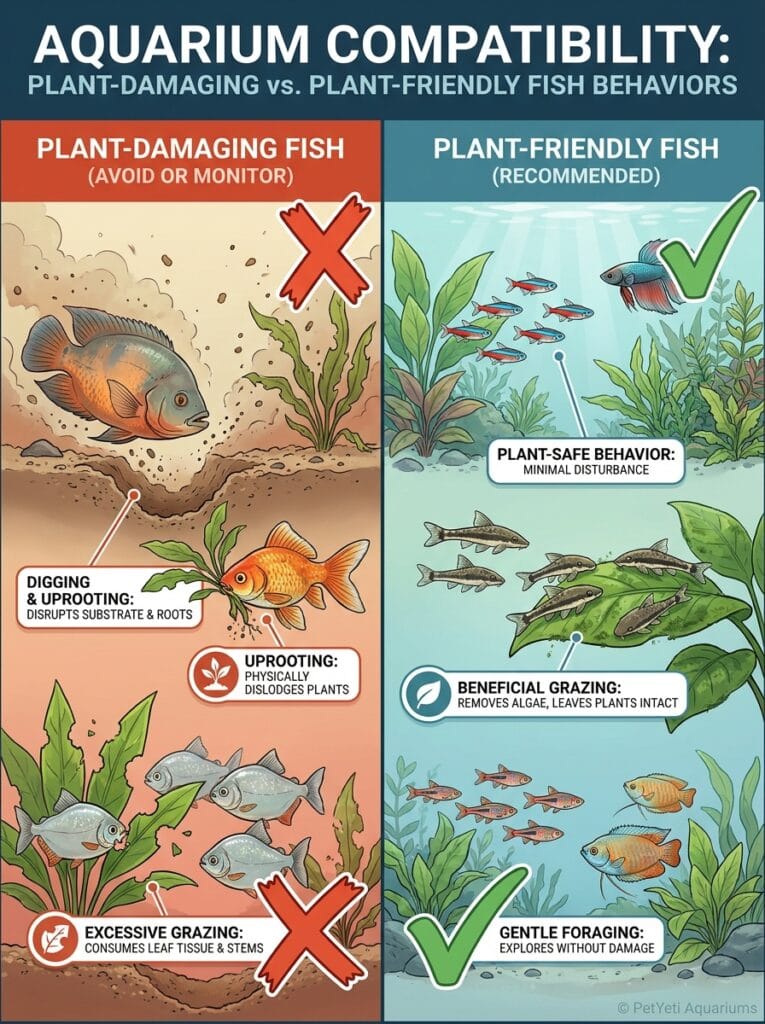
- Silver Dollars & Large Severums: Herbivorous fish that view expensive aquatic plants purely as a salad buffet.
- Goldfish: Enthusiastic foragers that uproot plants, chew tender foliage, and produce high amounts of waste.
- Large Cichlids (Oscars, Jack Dempseys, Convicts): Natural earth-movers that relentlessly dig up substrate and rearrange hardscape.
- Buenos Aires Tetras: Unlike other peaceful tetras, this specific species is notorious for eating soft-leafed plants like Hygrophila and Cabomba.
Why Fish and Plants Work So Well Together
Plants do much more than make an aquarium look beautiful.
They create shelter.
They break up lines of sight.
They encourage natural behavior.
They can even help fish feel more secure.
Many species become noticeably more confident when live plants are available.
Real-Life Example
Aquarium owners often notice shy fish spending more time in the open after adding dense plant growth because the fish feel protected by nearby cover.
What to Expect
A planted aquarium often encourages more natural behavior and reduces stress for many community fish.
Neon Tetras Look Incredible in Planted Tanks
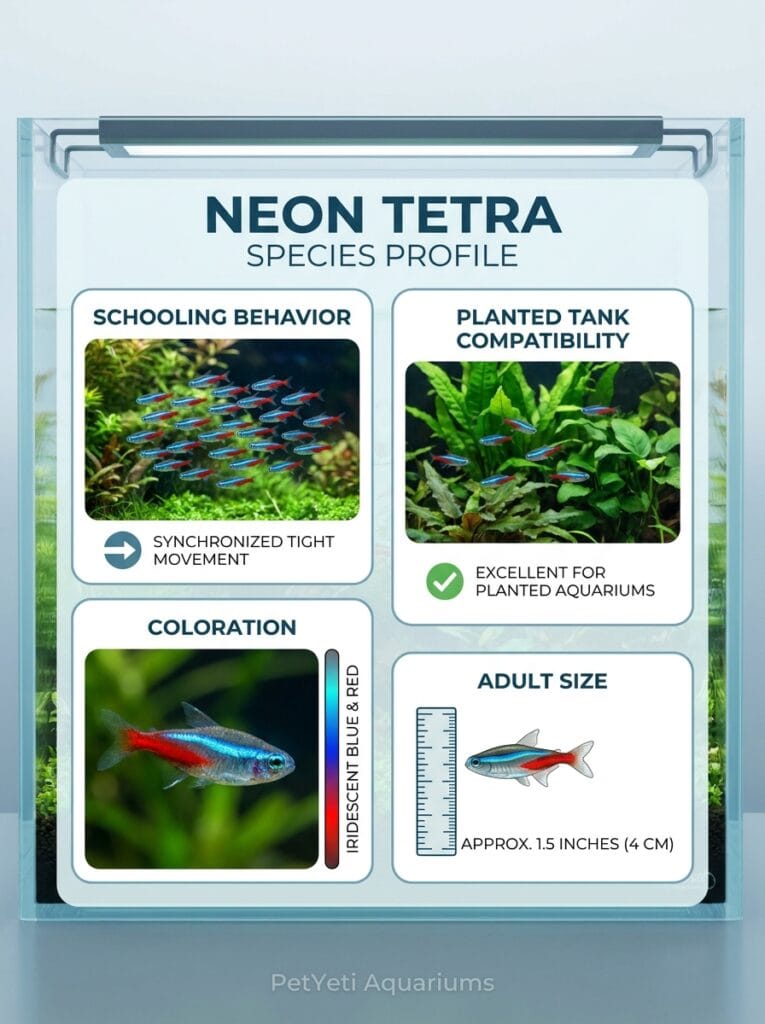
Few fish pair with live plants as naturally as Neon Tetras.
Their bright blue and red coloration creates beautiful contrast against green vegetation.
A large school weaving through dense plants is one of the classic images of freshwater fishkeeping.
Fish Snapshot
| Trait | Rating |
|---|---|
| Planted Tank Compatibility | ★★★★★ |
| Peaceful | ★★★★★ |
| Color | ★★★★★ |
| Beginner Friendly | ★★★★★ |
| PetYeti Fit | ★★★★★ |
Why We Like Them
They create movement and color without disturbing the aquascape.
Harlequin Rasboras Thrive in Natural Aquascapes
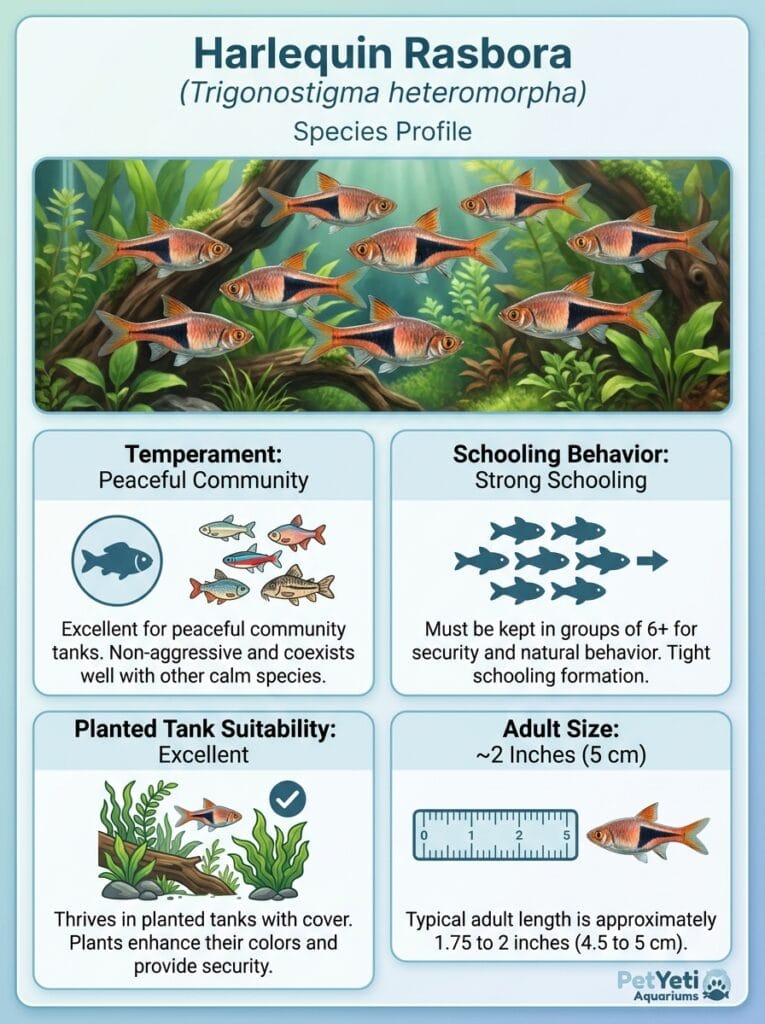
Harlequin Rasboras are often recommended for nature-style aquariums.
Their calm behavior and attractive copper coloration fit beautifully into planted environments.
Unlike more energetic species, they bring gentle movement that complements rather than dominates the aquarium.
Fish Snapshot
| Trait | Rating |
|---|---|
| Planted Tank Compatibility | ★★★★★ |
| Peaceful | ★★★★★ |
| Schooling Behavior | ★★★★★ |
| Beginner Friendly | ★★★★★ |
| PetYeti Fit | ★★★★★ |
Real-Life Example
Many aquascapers choose Harlequin Rasboras because they remain visible while allowing the plants themselves to remain a focal point.
Why We Like Them
They match the calm, natural atmosphere most planted tank owners want to create.
Ember Tetras Add Warm Color Without Disrupting Plants
Ember Tetras are a favorite among planted tank enthusiasts. Their small size allows larger schools without making the aquarium feel crowded.
Against green plants, their warm orange coloration can be surprisingly striking.
Fish Snapshot
| Trait | Rating |
|---|---|
| Planted Tank Compatibility | ★★★★★ |
| Peaceful | ★★★★★ |
| Color | ★★★★★ |
| Beginner Friendly | ★★★★★ |
| PetYeti Fit | ★★★★★ |
Why We Like Them
They add color while maintaining the peaceful aesthetic of a planted aquarium.
Corydoras Catfish Respect the Aquascape
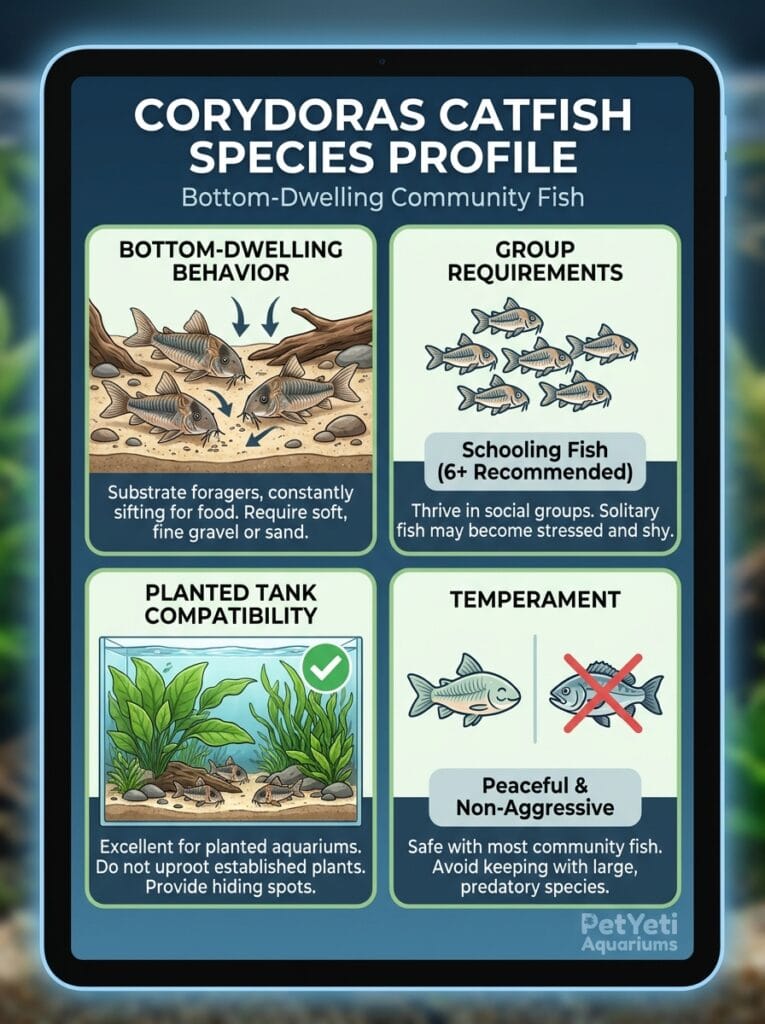
A planted aquarium needs activity at every level. Corydoras Catfish provide that activity at the bottom.
Unlike some larger bottom-dwelling species, Corydoras generally coexist well with live plants and don’t destroy aquascapes.
Fish Snapshot
| Trait | Rating |
|---|---|
| Planted Tank Compatibility | ★★★★★ |
| Peaceful | ★★★★★ |
| Community Compatibility | ★★★★★ |
| Beginner Friendly | ★★★★★ |
| PetYeti Fit | ★★★★★ |
Why We Like Them
They complete the aquarium by bringing life to the lower areas without damaging plants.
Honey Gouramis Make Excellent Centerpiece Fish
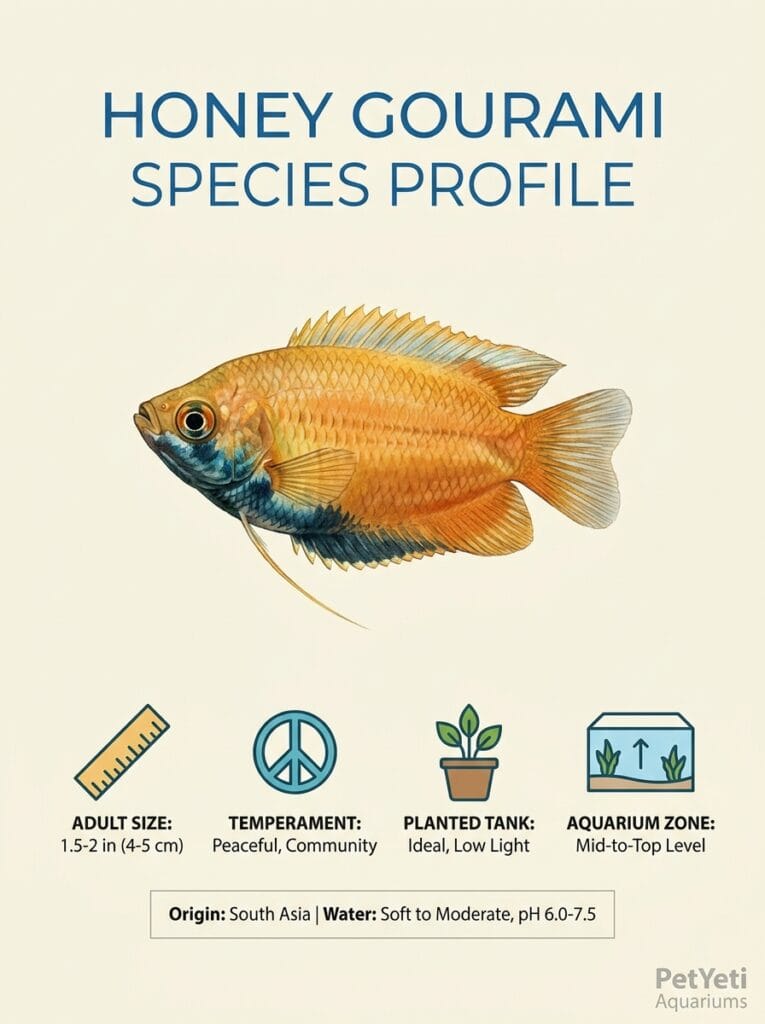
Most planted aquariums benefit from having a fish that naturally draws the eye.
Honey Gouramis fill that role beautifully.
Their warm golden coloration contrasts nicely against green plants, while their calm personality makes them suitable for peaceful community setups.
Unlike some larger gouramis, Honey Gouramis rarely dominate the aquarium.
Fish Snapshot
| Trait | Rating |
|---|---|
| Planted Tank Compatibility | ★★★★★ |
| Peaceful | ★★★★★ |
| Color | ★★★★★ |
| Community Compatibility | ★★★★★ |
| PetYeti Fit | ★★★★★ |
Real-Life Example
Many planted-tank hobbyists use a single Honey Gourami as a centerpiece fish surrounded by schools of smaller species like Neon Tetras or Ember Tetras.
Why We Like Them
They add personality and color without disrupting the peaceful atmosphere of a planted aquarium.
Otocinclus Catfish Are Perfect Plant-Friendly Algae Grazers
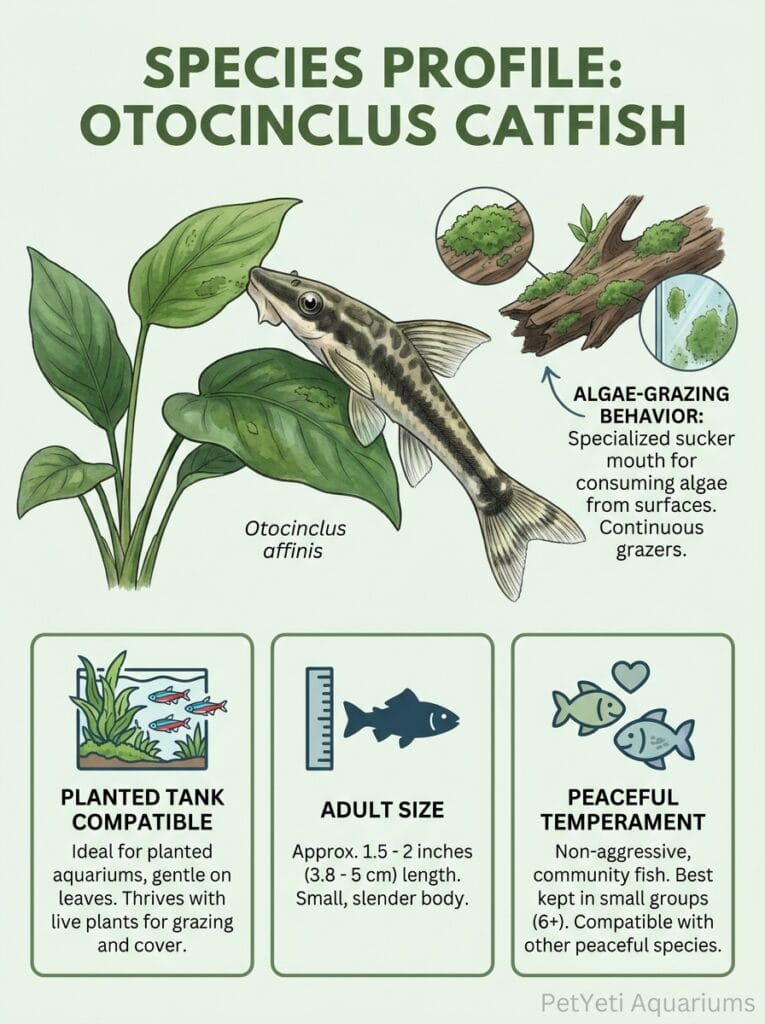
Otocinclus Catfish are often recommended for planted aquariums because of their gentle nature.
Unlike larger algae eaters, they stay small and generally leave plants alone.
They spend much of their day grazing on surfaces and exploring leaves, driftwood, and decorations.
Fish Snapshot
| Trait | Rating |
|---|---|
| Planted Tank Compatibility | ★★★★★ |
| Peaceful | ★★★★★ |
| Community Compatibility | ★★★★★ |
| Size Suitability | ★★★★★ |
| PetYeti Fit | ★★★★★ |
Why We Like Them
They fit naturally into planted aquariums without becoming disruptive or oversized.
Best Fish for Different Planted Tank Styles
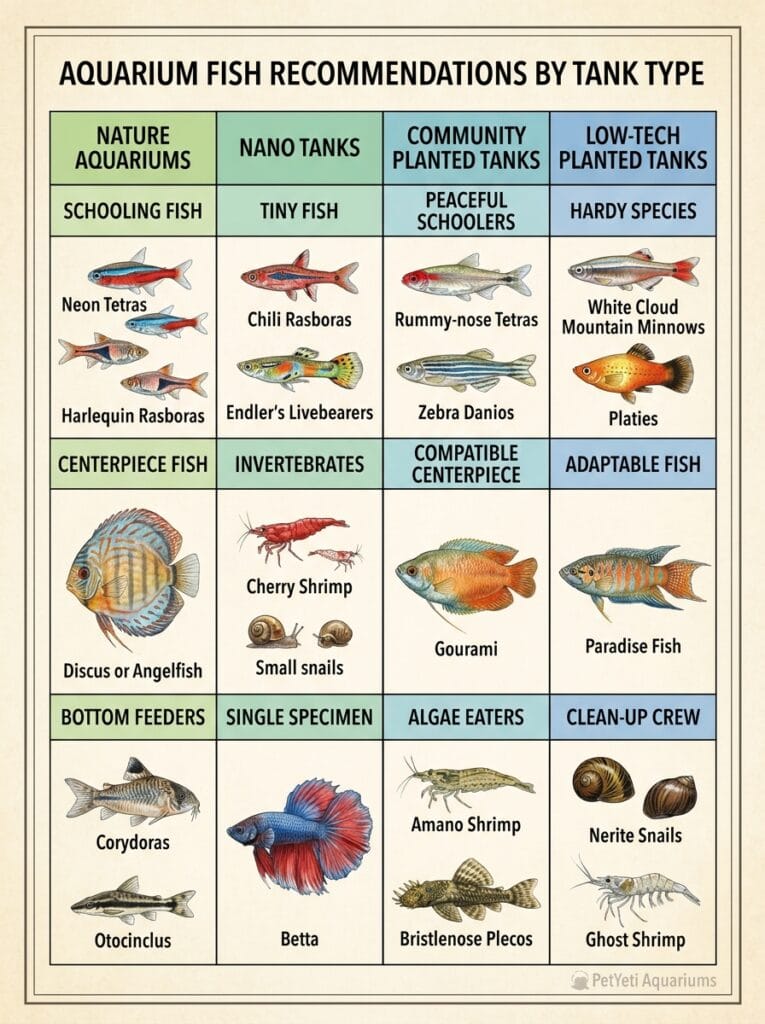
Different planted aquariums often benefit from different fish choices.
Quick Guide
| Planted Tank Style | Recommended Fish |
|---|---|
| Nature Aquarium | Harlequin Rasboras, Cardinal Tetras |
| Nano Planted Tank | Ember Tetras, Chili Rasboras |
| Community Planted Tank | Neon Tetras, Corydoras, Honey Gouramis |
| Low-Tech Planted Tank | Platies, Harlequin Rasboras, Corydoras |
Real-Life Example
Many aquascapers intentionally choose fish that complement the design rather than dominate it. The plants remain the star of the aquarium while the fish provide movement and life.
Fish That May Not Be Ideal for Heavily Planted Aquariums
Not every fish appreciates a planted environment. Some species regularly uproot plants, disturb the substrate, or damage delicate aquascapes.
Potential Challenges
❌ Large digging fish
❌ Species known for uprooting plants
❌ Oversized Plecos
❌ Certain cichlid species
❌ Fish that constantly rearrange the substrate
Why This Matters
A heavily planted aquarium often represents months of growth and maintenance.
Choosing compatible fish helps protect that investment.
Real-Life Example
A hobbyist spent months growing a lush planted aquascape only to introduce fish that repeatedly uprooted stems during feeding and territorial behavior.
Common Mistakes When Stocking a Planted Aquarium
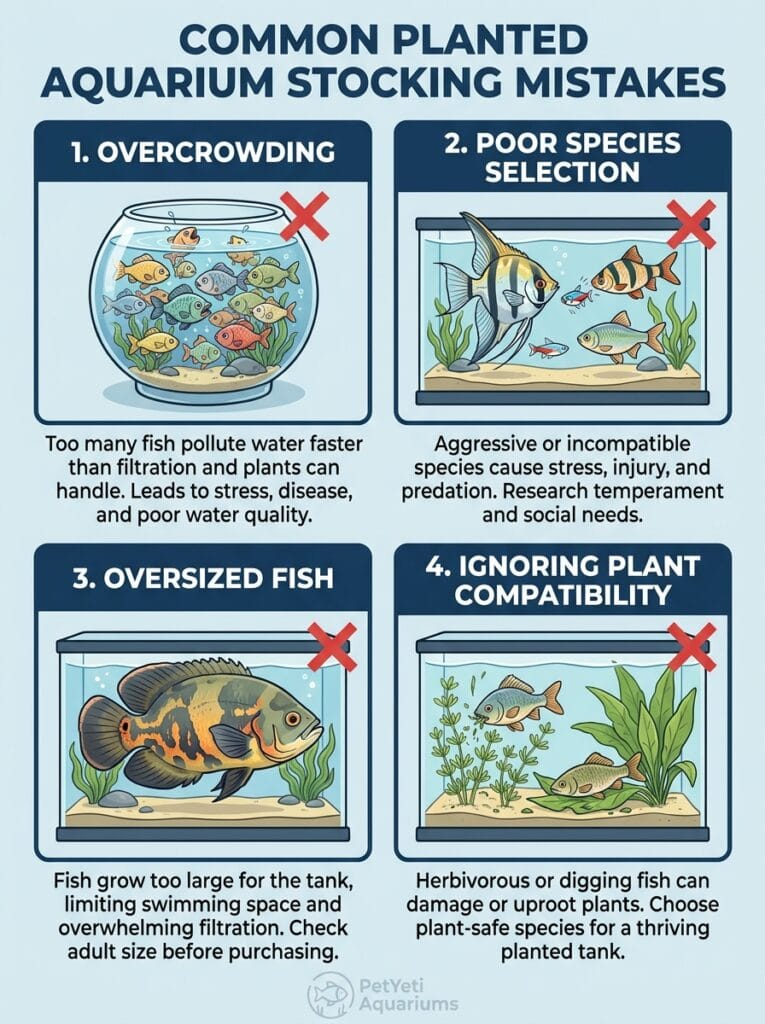
Even experienced hobbyists occasionally make mistakes when combining fish and plants.
Common Problems
❌ Choosing fish before designing the aquascape
❌ Overstocking the aquarium
❌ Ignoring adult fish size
❌ Selecting fish that damage plants
❌ Mixing incompatible species
Real-Life Example
One beginner added multiple colorful species without considering their compatibility with the planted setup. The result was constant disturbance and poor plant growth.
What to Expect
A slightly understocked planted aquarium often looks more natural and remains easier to maintain.
Related PetYeti Aquarium Guides
- Looking for easy, low-maintenance greenery? Browse our top best low-light aquarium plants for home aquariums.
- Designing a clean, uncluttered layout? Explore our favorite minimalist aquascaping ideas.
- Planning the right community size? Read our breakdown of the best fish for a 29 gallon aquarium.
CONCLUSION
A heavily planted aquarium is one of the most rewarding living displays you can build for your home. When you pair lush greenery with peaceful nano schoolers, a gentle centerpiece fish, and an industrious team of leaf-polishing cleaners, you create a self-sustaining slice of nature that looks stunning and stays biologically balanced.
Focus on species that respect your hardscape, maintain a sensible bioload, and let your aquatic flora and fauna thrive together in complete harmony.
PetYeti Quick Recap: The Ideal Planted Tank Community
To showcase a lush planted layout, combine a shimmering school of Cardinal Tetras with a gentle Honey Gourami centerpiece and a dedicated crew of Otocinclus Catfish and Amano Shrimp. Support plant growth and color vibrancy with a programmable Nicrew SkyLED Plus or Fluval Plant 3.0 light fixture.
FAQs
What fish are best for heavily planted aquariums?
Neon Tetras, Harlequin Rasboras, Ember Tetras, Corydoras Catfish, Honey Gouramis, and Otocinclus Catfish are among the best options.
Do fish like heavily planted tanks?
Many species do. Live plants provide shelter, security, and a more natural environment.
Can planted tanks have community fish?
Absolutely. Many community fish thrive in planted aquariums.
Are planted aquariums easier to maintain?
Healthy plants can contribute to a balanced aquarium, but maintenance is still required.
What fish should I avoid in heavily planted aquariums?
Fish known for digging, uprooting plants, or disturbing substrates may not be ideal.
Do planted tanks need special fish?
No, but choosing plant-friendly species generally leads to better long-term results.
Do live aquarium plants need fish to survive?
While plants can survive with liquid fertilizers and root tabs alone, fish play a crucial symbiotic role. They produce natural carbon dioxide (CO2) through respiration and generate organic waste that beneficial bacteria break down into natural macro-nutrients for plant roots.
Will schooling fish damage delicate carpeting plants like Monte Carlo or Dwarf Baby Tears?
No, small nano schooling fish like Chili Rasboras, Ember Tetras, and Cardinal Tetras swim in the mid-to-upper water levels and never dig into the substrate. To protect carpeting roots from getting dislodged, avoid large substrate-sifting fish and stick to gentle nano species, Pygmy Corydoras, or Amano shrimp.
How soon after planting an aquarium can I add fish?
Always ensure your aquarium completes a full nitrogen cycle (showing 0 ppm ammonia, 0 ppm nitrite, and safe nitrate levels) before introducing livestock. Adding live plants from day one actually helps stabilize water parameters and speeds up the cycling process by absorbing excess ammonia.