
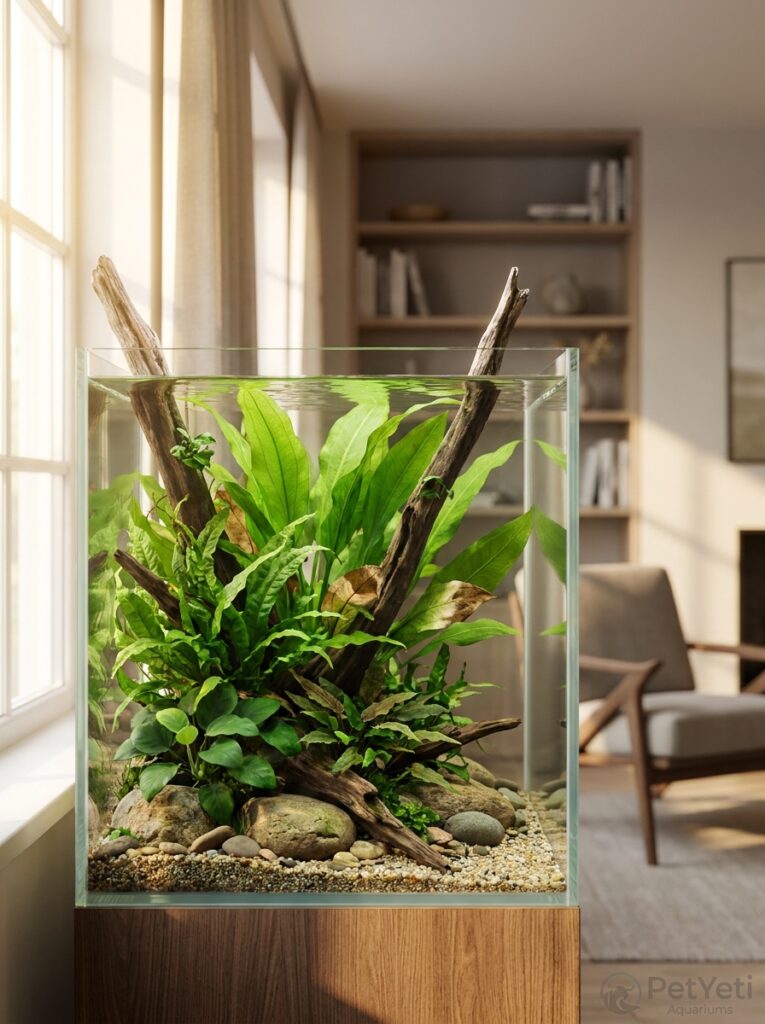
Few things are more frustrating for a beginner aquarist than watching healthy green plants slowly turn brown.
You carefully choose your plants, place them in the aquarium, and imagine a lush underwater garden. Then, days or weeks later, brown spots appear, leaves begin deteriorating, or entire sections of the plant start looking unhealthy.
The good news is that brown leaves do not always mean a plant is dying.
In many cases, aquarium plants simply need time to adapt to their new environment. Other times, browning can be caused by lighting issues, nutrient deficiencies, algae growth, or natural aging of older leaves.
The key is identifying the real cause before making drastic changes.
In this guide, we’ll explore the most common reasons aquarium plants turn brown, how to diagnose the problem, and the simple steps you can take to help your plants recover and thrive.
Are Brown Aquarium Plant Leaves Always a Problem?
Not necessarily.
One of the most common beginner mistakes is assuming that every brown leaf signals a dying plant. Aquarium plants constantly adapt to changing conditions, and some leaf loss is completely normal.
Many aquarium plants sold in stores are grown above water before being transferred to aquatic environments. Once submerged, these older leaves may naturally die off while the plant develops new underwater growth better suited to aquarium life.
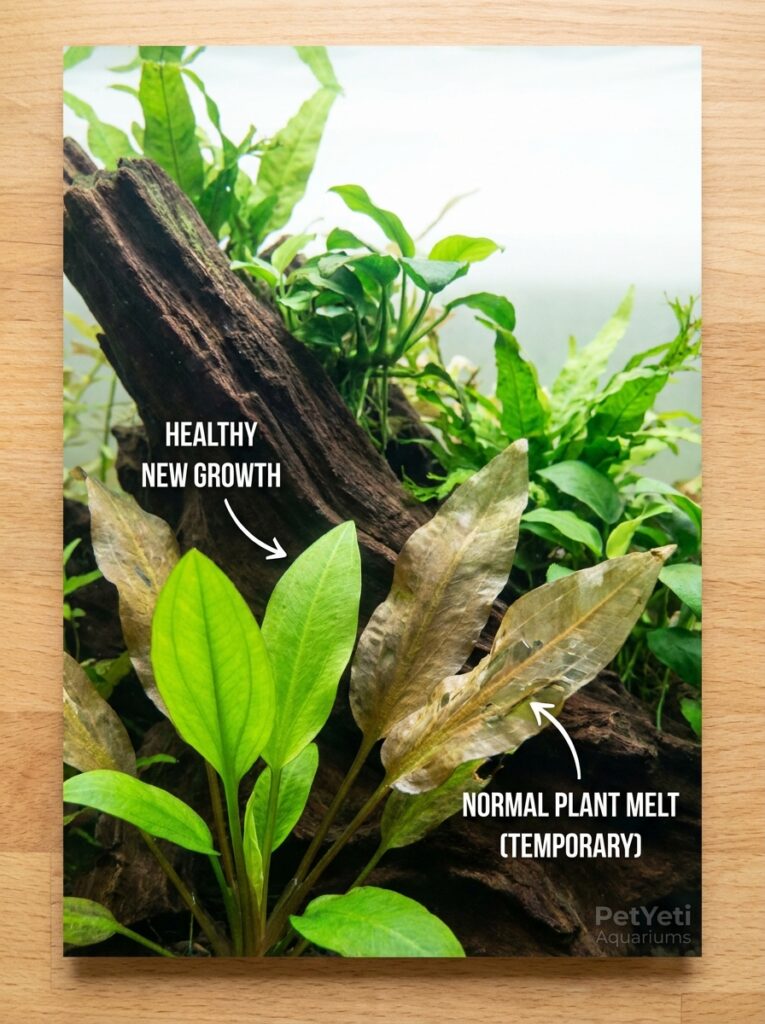
This process is often called “plant melt” and is especially common with plants such as Cryptocoryne species.
A few brown leaves during this transition period are usually nothing to worry about.
However, if multiple leaves continue browning over several weeks, growth completely stops, or several plant species begin declining at the same time, there may be an underlying issue that needs attention.
A healthy plant occasionally loses old leaves.
An unhealthy plant struggles to produce new ones.
Your Plant Is Adjusting to a New Aquarium
One of the most common causes of brown leaves is simple adjustment stress.
When aquarium plants move from a greenhouse, store tank, or shipping container into a new aquarium, they experience major changes in lighting, water chemistry, temperature, and nutrient availability.
Some plants respond by shedding older leaves and redirecting energy into new growth.
Cryptocoryne species are famous for this behavior. Aquarium hobbyists often refer to it as “Crypt Melt” because leaves may appear to deteriorate rapidly before healthy new growth emerges.
Amazon Swords and some stem plants can also go through similar adjustment periods.
The best solution is patience.
As long as the roots remain healthy and new growth begins appearing, avoid removing the plant or making major changes.
Give it time to settle into its new environment.
The Plant Is Not Getting Enough Light
Light is one of the most important factors for healthy aquarium plant growth. Just like garden plants need sunlight, aquarium plants need enough light to produce energy and maintain healthy leaves.
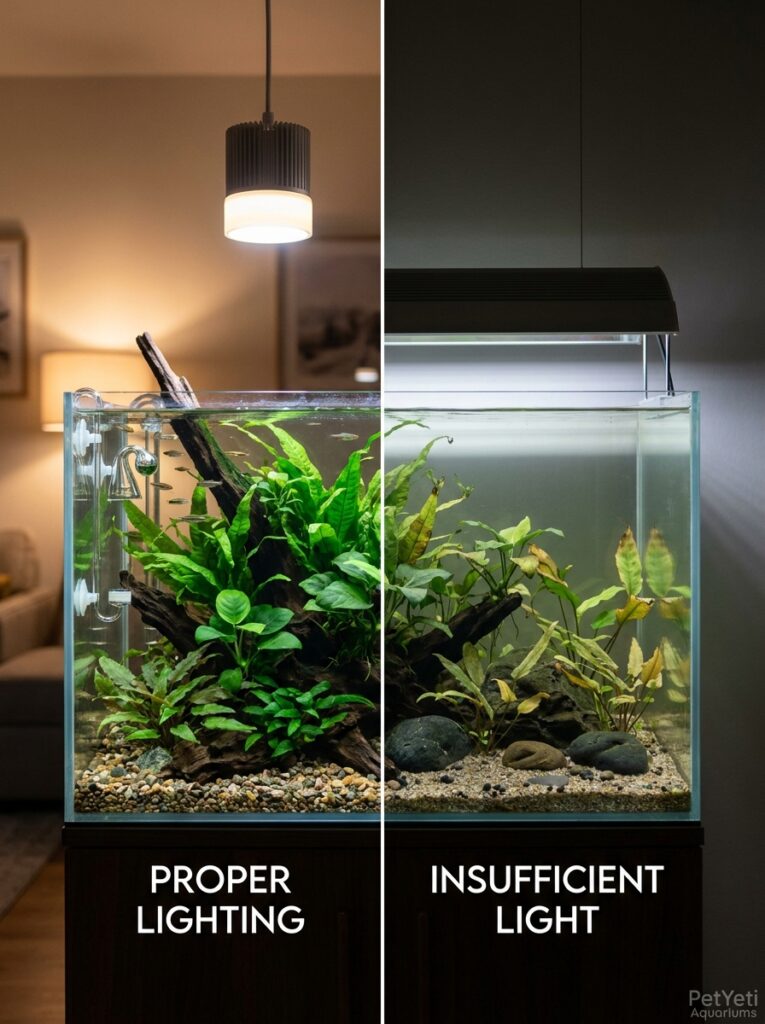
When lighting is too weak, plants often begin showing subtle warning signs before they completely stop growing. Older leaves may turn brown, develop transparent patches, or slowly deteriorate while the plant struggles to support new growth.
This problem is especially common in beginner aquariums where plants are chosen without considering their lighting requirements.
For example:
- Anubias and Java Fern are excellent low-light plants and can thrive under relatively modest lighting.
- Amazon Swords typically require moderate lighting and may struggle in very dim setups.
- Many stem plants need even stronger lighting to maintain healthy growth and vibrant colors.
A common mistake is placing demanding plants in areas of the aquarium that receive very little light. Tall decorations, driftwood, floating plants, or dense plant growth can create shaded zones where certain plants never receive enough illumination.
If you notice that:
- New growth is small or weak
- Leaves are turning brown from the edges
- Growth has slowed significantly
- Plants appear stretched or thin
insufficient lighting may be part of the problem.
The good news is that fixing lighting issues is often straightforward. In many cases, simply upgrading the aquarium light, increasing the lighting duration slightly, or choosing plants better suited to your setup can make a noticeable difference within a few weeks.
For beginners, it’s usually easier to match plants to your existing lighting rather than constantly upgrading equipment. That’s one reason low-light favorites like Anubias, Java Fern, and Cryptocoryne remain among the most recommended aquarium plants for new hobbyists.
Nutrient Deficiencies Are Affecting Growth
Even when aquarium plants receive enough light, they still need nutrients to grow properly.
Think of nutrients as the plant’s food supply. Without them, plants may survive for a while, but they often struggle to produce healthy leaves and strong new growth.
One of the most common signs of nutrient deficiency is gradual browning of older leaves. In some cases, leaves may also develop yellow areas, small holes, or weak growth that never fully matures.
Beginner aquarists are often surprised by this because the aquarium appears healthy overall. The water is clear, the fish are active, and the lighting seems adequate. Yet the plants continue declining.
This happens because aquarium plants rely on nutrients from two main sources:
- The water column
- The substrate around their roots
Different plants absorb nutrients differently.
For example:
- Amazon Swords are heavy root feeders and benefit from nutrient-rich substrates or root tabs.
- Cryptocoryne species also appreciate nutrients around their roots.
- Anubias and Java Fern absorb most nutrients directly from the water and often respond well to liquid fertilizers.
If your aquarium plants are turning brown while growth remains slow, consider whether they are receiving the nutrients they need.
Some common signs of nutrient-related issues include:
- Brown or yellowing older leaves
- New growth that appears smaller than normal
- Leaves developing tiny holes
- Slow or stalled plant growth
- Healthy roots but declining foliage
The solution is usually simple. A balanced fertilizer routine, root tabs for heavy root-feeding plants, or a more nutrient-rich substrate can often help plants recover over time.
It’s important to remember that plants do not recover overnight. Once nutrients become available, the goal is to watch for healthy new growth rather than expecting damaged leaves to turn green again.
Healthy new leaves are usually the first sign that the problem is being solved.
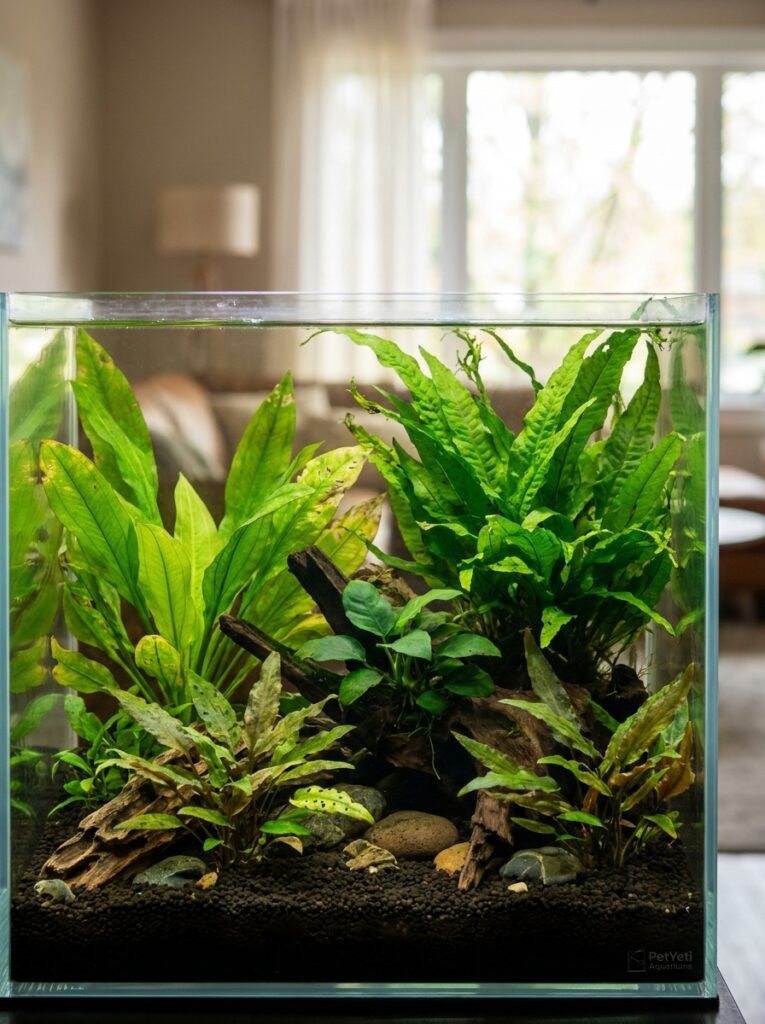
The Wrong Plant Is in the Wrong Location
Sometimes a plant isn’t struggling because of poor lighting or a lack of nutrients.
The real issue can be much simpler: it’s growing in a spot that doesn’t suit its needs.
This is surprisingly common in beginner aquariums. When you’re first building a planted tank, it’s natural to choose plants based on appearance. A plant looks attractive in the store, so it goes into the aquarium. The challenge is that aquarium plants grow very differently over time, and where you place them today can affect how healthy they look a few months from now.
Think of your aquarium like a small garden.
A tall tree wouldn’t normally be planted directly in front of shorter flowers, and the same idea applies underwater.
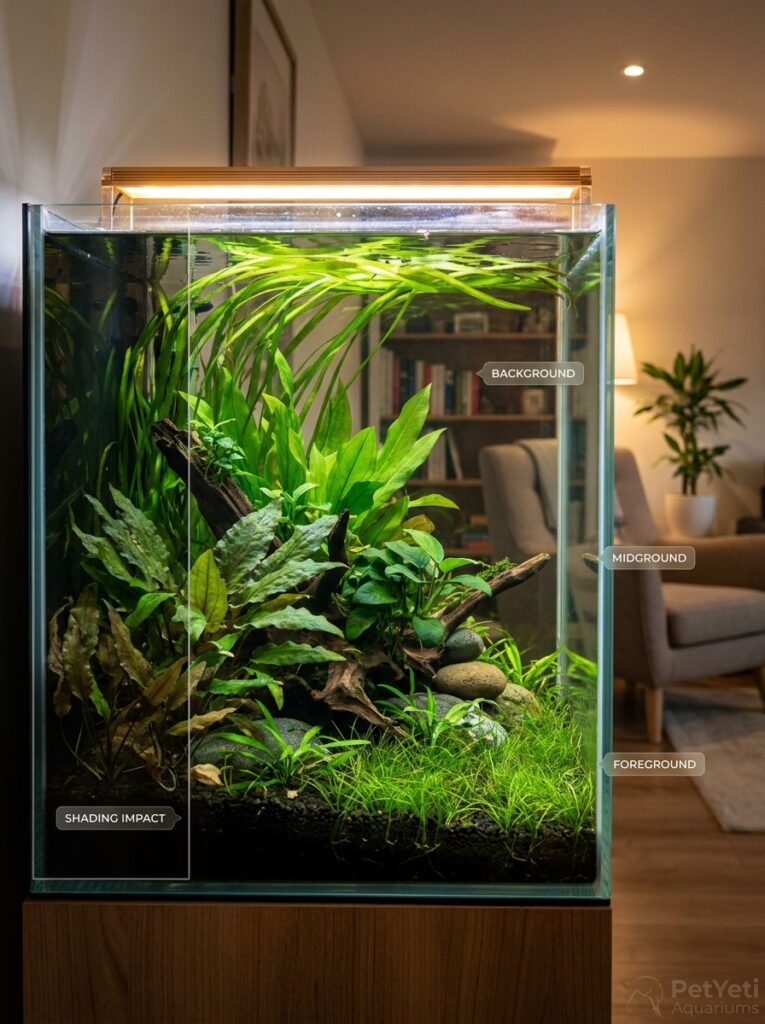
For example, plants such as Amazon Sword and Vallisneria can become much larger than many beginners expect. If they’re positioned near the front of the tank, they may eventually cast shade over smaller plants growing nearby. Those smaller plants receive less light, compete for space, and may begin showing signs of stress such as browning or slow growth.
On the other hand, compact plants like Anubias Nana, Cryptocoryne, and Bucephalandra often perform best when they have enough room around them and aren’t crowded by fast-growing neighbors.
Even floating plants can contribute to the problem. While they create a beautiful natural look, a thick layer of floating vegetation can reduce the amount of light reaching plants lower in the aquarium.
If you notice brown leaves developing, take a moment to observe the plant’s surroundings.
Ask yourself:
- Is it being shaded by larger plants?
- Does it have enough room to grow?
- Has another plant recently expanded into its space?
- Is it receiving the same amount of light it received when it was first planted?
Sometimes the solution is surprisingly simple. Moving a struggling plant to a brighter or less crowded area can help it recover without changing anything else in the aquarium.
A well-planned layout isn’t only about appearance. Giving each plant the space and conditions it needs often leads to healthier growth, fewer problems, and a more balanced aquascape overall.
Algae Is Smothering the Leaves
When most beginners think about algae, they focus on the glass.
But algae can also create problems for aquarium plants.
A small amount of algae is normal in nearly every aquarium. The trouble starts when it begins covering plant leaves faster than the plants can grow.
Imagine trying to grow a garden while someone keeps placing a blanket over the leaves. The plant can still survive for a while, but it becomes much harder for it to access the light it needs.
The same thing happens underwater.
As algae spreads across the surface of a leaf, it blocks light and reduces the plant’s ability to produce energy. Over time, growth slows, older leaves weaken, and browning may begin to appear.
This is especially common in newer aquariums where the tank is still finding its balance.
You might notice:
- Green algae coating plant leaves
- Brown dusty algae covering slower-growing plants
- Dark patches forming along leaf edges
- Healthy plants gradually losing their vibrant color
Slow-growing species such as Anubias and Java Fern are often affected first because their leaves remain in place long enough for algae to build up over time.
The good news is that algae on plant leaves doesn’t automatically mean the plant is unhealthy. In many cases, the algae is the problem—not the plant itself.
Gently removing affected leaves, improving maintenance habits, reducing excess light, and keeping nutrients balanced can often help restore a healthier environment.
When evaluating brown leaves, always take a closer look before assuming the plant is dying. Sometimes the leaf itself is still healthy underneath a layer of algae that’s preventing it from thriving.
A healthy planted aquarium isn’t necessarily algae-free. The goal is keeping algae under control so that your plants could remain the dominant growers in the tank.
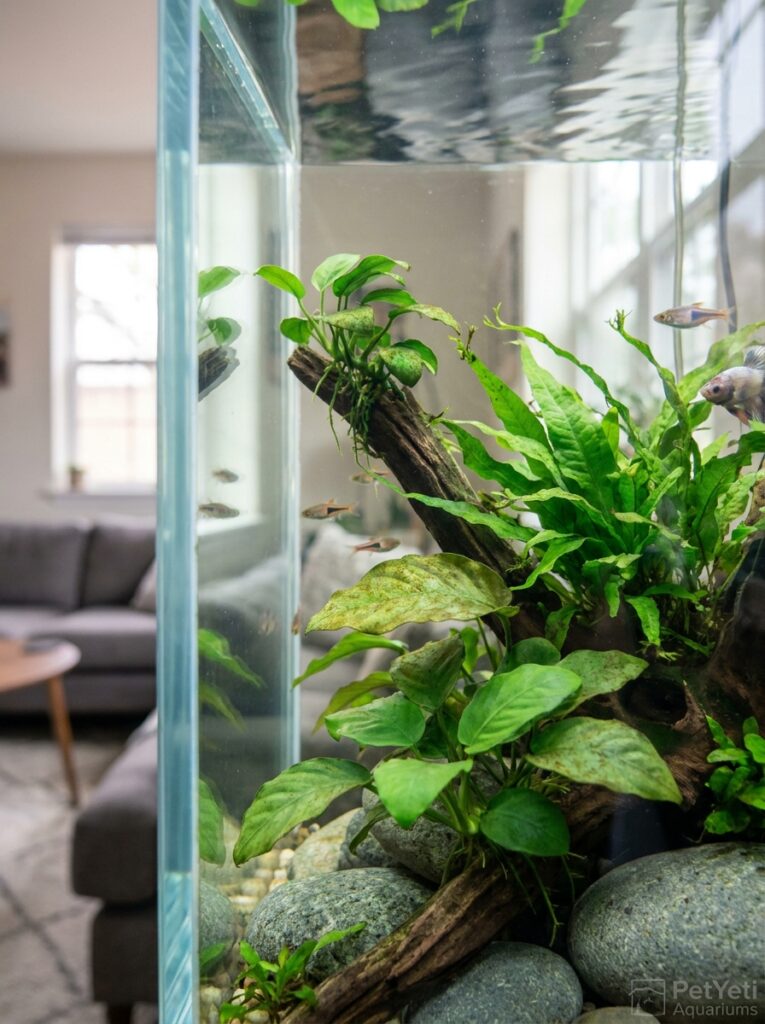
Water Conditions Are Causing Stress
Aquarium plants don’t need perfect water conditions.
What they do need is consistency.
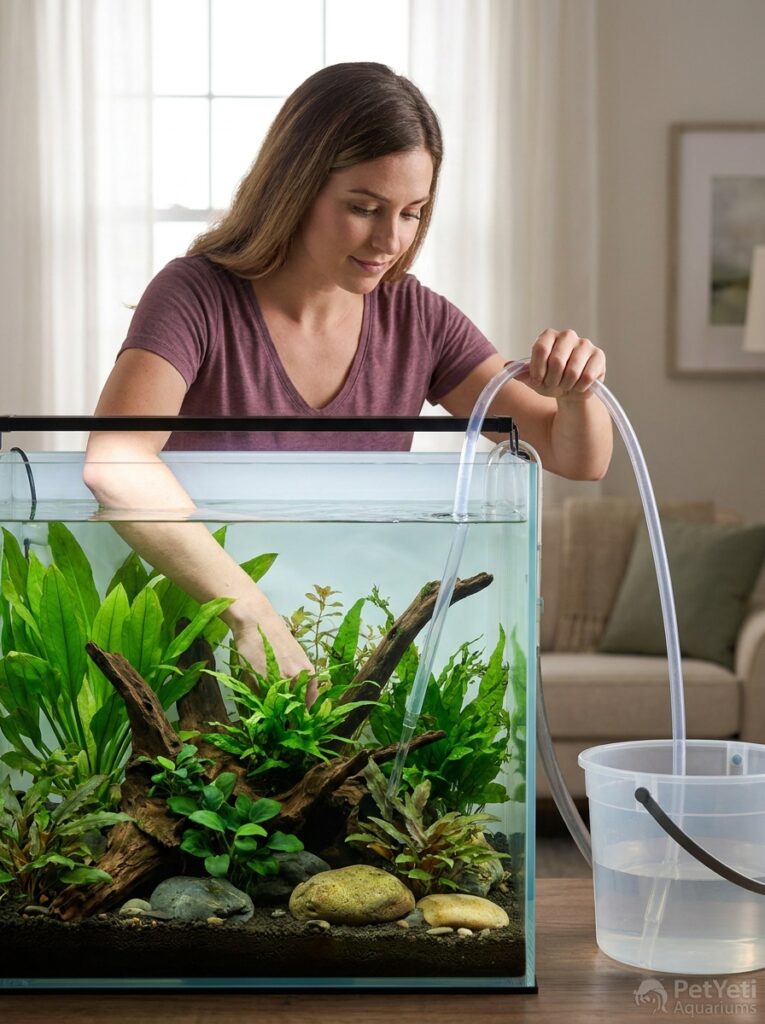
One of the biggest mistakes beginners make is constantly changing things in an attempt to fix a problem. A new fertilizer one week, a different light schedule the next, followed by a large water change or a complete tank rearrangement.
While each change may seem helpful on its own, the plant experiences a series of disruptions that can make it difficult to settle and grow.
Plants generally respond better to stable conditions than frequent adjustments.
For example, a healthy Amazon Sword can often adapt to a wide range of water parameters if those conditions remain reasonably consistent. However, repeated swings in temperature, lighting duration, nutrient levels, or maintenance routines can place unnecessary stress on the plant.
Sometimes the signs are subtle:
- Growth slows down unexpectedly
- Older leaves begin deteriorating
- Brown patches appear without an obvious cause
- New leaves emerge smaller than usual
In many cases, the issue isn’t a single water parameter. It’s the lack of stability over time.
Newly established aquariums are especially prone to this. During the first few months, beneficial bacteria, plants, and microorganisms are all adjusting and competing for balance. As the aquarium matures, conditions often become more predictable and plant growth improves naturally.
If your plants are turning brown, ask yourself:
- Has the aquarium experienced major changes recently?
- Have maintenance routines been inconsistent?
- Were several products or adjustments introduced at the same time?
Sometimes the best solution isn’t adding something new.
It’s allowing the aquarium time to stabilize.
A consistent maintenance routine, regular water changes, and patience often solve more plant problems than constantly chasing quick fixes.
Older Leaves Are Reaching the End of Their Life
Not every brown leaf is a sign that something is wrong.
Sometimes, it’s simply part of the plant’s natural life cycle.
Just like trees shed old leaves and houseplants occasionally lose older growth, aquarium plants continuously replace aging leaves with new ones. As a leaf gets older, the plant gradually redirects energy and nutrients toward fresh growth, allowing the older leaf to decline.
This process often starts slowly.
An older leaf may:
- Lose some of its vibrant color
- Develop brown patches around the edges
- Become thinner or more transparent
- Eventually detach from the plant
For beginners, this can look alarming, especially when only one or two leaves are affected.
The key is to look at the entire plant rather than focusing on a single leaf.
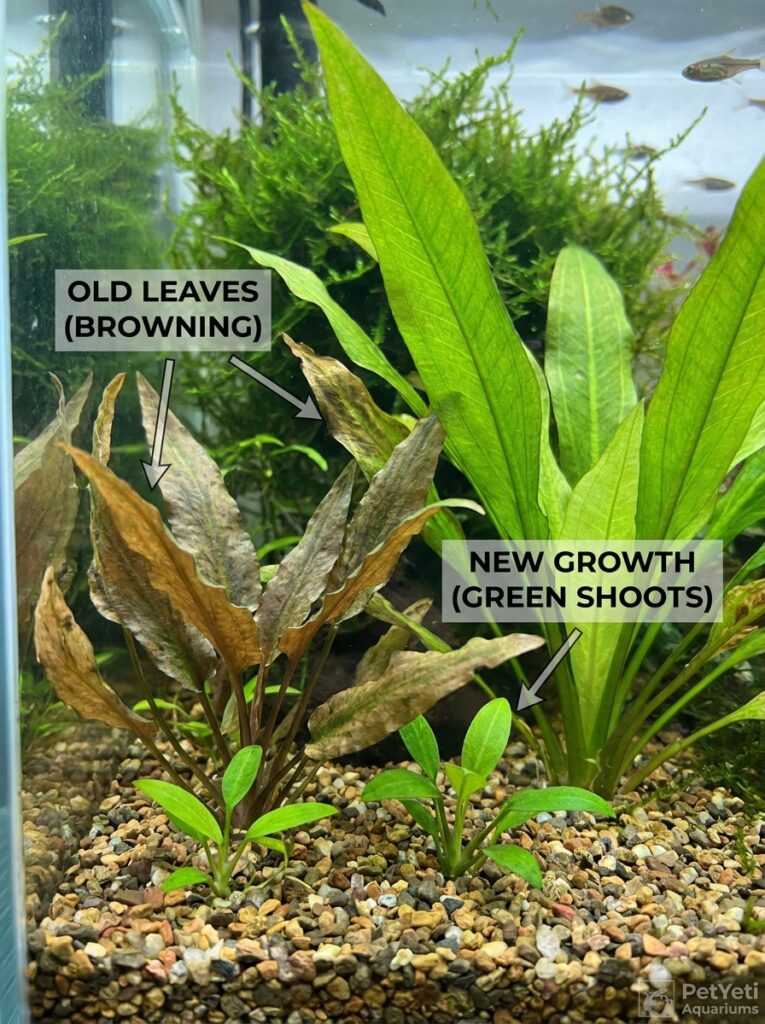
If the plant is producing healthy new growth while a few older leaves are fading away, that’s usually a sign of a healthy, functioning plant.
For example, an Amazon Sword may regularly replace some of its oldest outer leaves as new leaves emerge from the center. Cryptocoryne species often behave similarly, gradually cycling older foliage out as fresh growth develops.
A good question to ask is:
“What does the newest growth look like?”
If new leaves appear healthy, green, and well-formed, the plant is likely doing exactly what nature intended.
On the other hand, if both old and new leaves are browning, growth has stalled, and the plant appears to be declining overall, another issue discussed earlier in this guide may be responsible.
In many cases, removing severely damaged leaves can improve the appearance of the aquarium and allow the plant to focus its energy on healthy new growth.
Remember, healthy plants don’t keep every leaf forever.
Part of healthy growth is knowing when it’s time to let older leaves go.
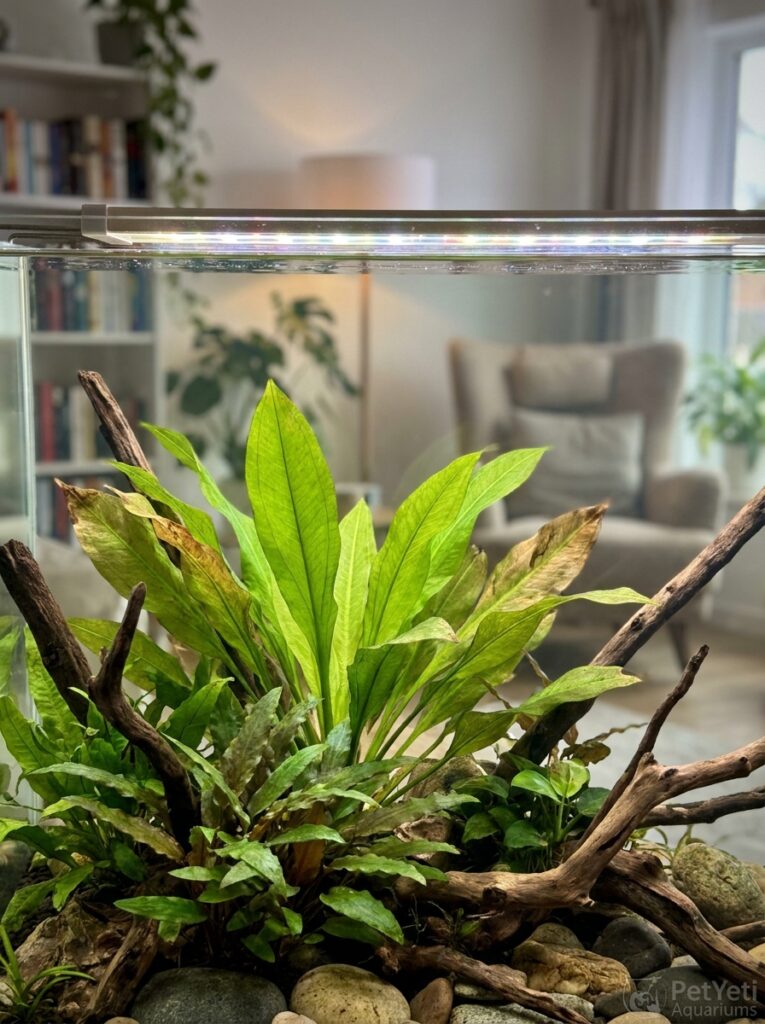
How to Help Brown Aquarium Plants Recover
If your aquarium plants are turning brown, the most important thing to remember is this:
Don’t panic and change everything at once.
Many beginners respond to plant problems by replacing lights, adding multiple fertilizers, adjusting water parameters, and moving plants around the tank within a few days. Unfortunately, this often creates even more stress for the plants.
A better approach is to identify the most likely cause and make small, deliberate adjustments.
Start by taking a close look at the affected plant.
Ask yourself:
- Is the plant newly added to the aquarium?
- Is it receiving enough light?
- Could it be lacking nutrients?
- Is it being shaded by larger plants?
- Is algae covering the leaves?
- Have there been recent changes in the aquarium?
- Are only older leaves affected?
Once you’ve identified the most likely cause, give the plant time to respond.
Healthy plant recovery is usually measured in weeks, not days.
As you monitor progress, focus on new growth rather than damaged leaves. Brown leaves rarely become green again. Instead, recovery is usually visible through fresh leaves that emerge healthier than before.
You can also help by:
- Trimming severely damaged leaves
- Removing algae from affected foliage
- Maintaining a consistent lighting schedule
- Following a regular maintenance routine
- Avoiding unnecessary changes
Most aquarium plants are more resilient than beginners realize. Given stable conditions and a little patience, many species recover surprisingly well.
The goal isn’t perfection.
The goal is steady improvement and healthy new growth over time.
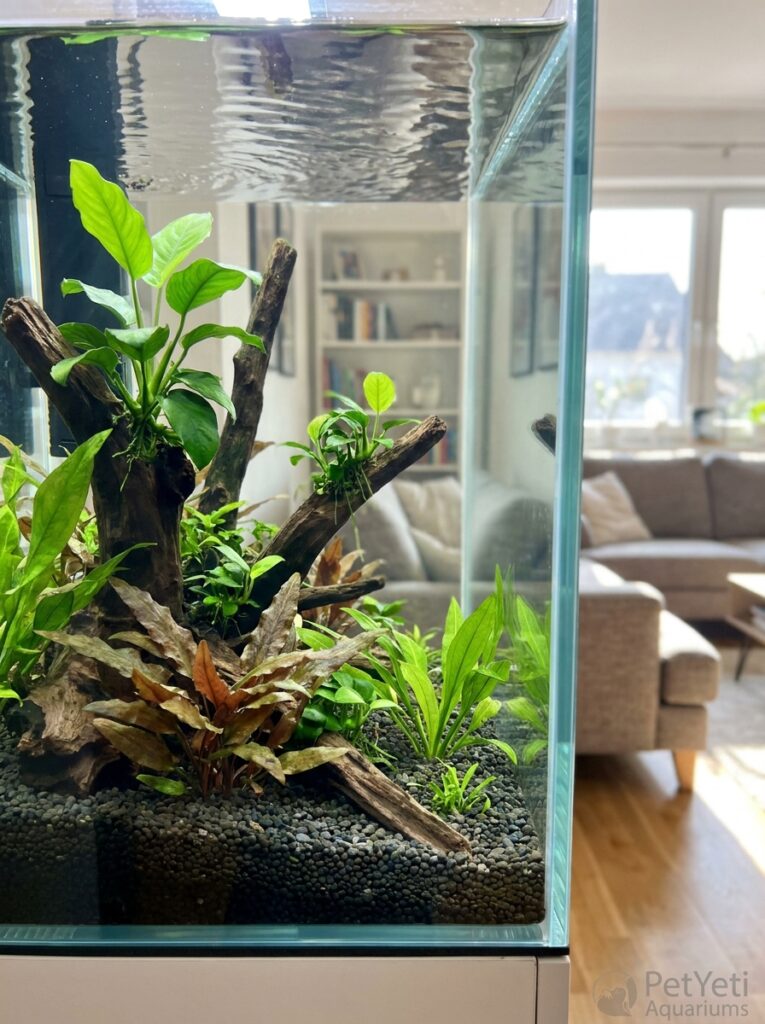
How to Prevent Brown Leaves in the Future
The easiest way to fix brown aquarium plants is to prevent the problem before it starts.
Fortunately, most plant issues can be avoided with a few simple habits.
Choose plants that match your aquarium’s lighting conditions rather than trying to force demanding plants into a low-light setup.
Give plants enough space to grow and avoid overcrowding the aquascape from the beginning.
Follow a consistent maintenance schedule so plants experience stable conditions from week to week.
Pay attention to early warning signs such as slow growth, algae buildup, or pale leaves. Small issues are usually much easier to correct than major ones.
Most importantly, resist the urge to constantly tweak the aquarium.
Planted tanks often reward patience more than intervention.
As the aquarium matures, beneficial bacteria establish themselves, plants adapt to their environment, and the entire ecosystem becomes more stable.
The healthiest planted aquariums are rarely the ones that receive the most adjustments.
They’re usually the ones that receive consistent care over time.
A little observation, a little patience, and a steady routine will solve most plant problems before they ever become serious.
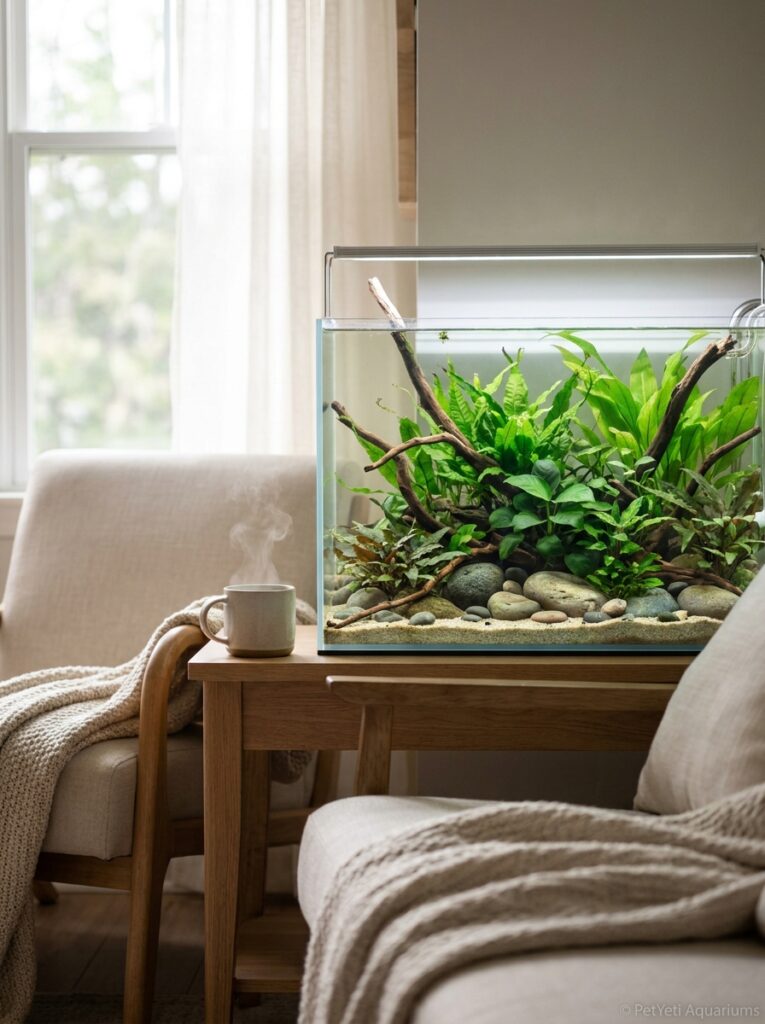
CONCLUSION
Brown aquarium leaves can be frustrating, but they don’t always mean your plants are dying.
In many cases, the cause is something simple: a plant adjusting to a new environment, insufficient lighting, a lack of nutrients, algae growth, poor placement, unstable conditions, or the natural aging of older leaves.
The key is to focus on the overall health of the plant rather than a single damaged leaf.
Look for healthy new growth, make thoughtful adjustments, and give your plants time to respond.
Most planted aquariums go through challenges from time to time. With patience and consistent care, many plants recover and continue growing beautifully for years.
Sometimes the solution isn’t a new product or a complicated fix.
It’s simply understanding what your plants are trying to tell you.
FAQ
Why are my aquarium plants turning brown after planting them?
Many aquarium plants are grown above water before being sold. When placed underwater, they often shed older leaves while adapting to their new environment. This process, sometimes called plant melt, is normal and usually temporary. Focus on new growth rather than the condition of older leaves.
Can brown aquarium leaves turn green again?
In most cases, no.
Once a leaf has become significantly damaged or brown, it usually won’t recover. Instead, look for healthy new leaves emerging from the plant. New growth is the best sign that conditions are improving.
Should I remove brown leaves from aquarium plants?
If a leaf is mostly brown, damaged, or covered with algae, it’s often best to trim it away. Removing unhealthy leaves can improve the appearance of the aquarium and help the plant direct energy toward new growth.
Why are my aquarium plants turning brown but still growing?
This often happens when older leaves are being replaced naturally. If you see healthy new growth while only a few older leaves are turning brown, the plant may simply be going through its normal growth cycle.
Can too much light cause aquarium plants to turn brown?
Indirectly, yes.
Excessive lighting can encourage algae growth, and algae may cover plant leaves, block light, and weaken the plant over time. A balanced lighting schedule is usually better than leaving aquarium lights on for long periods.
How long does it take aquarium plants to recover?
It depends on the cause.
Plants recovering from transplant shock may begin producing healthy new growth within a few weeks. Nutrient deficiencies, algae issues, or lighting problems can take longer to correct. Patience is important, as plant recovery is usually measured in weeks rather than days.
Why are my Anubias or Java Fern leaves turning brown?
Slow-growing plants such as Anubias and Java Fern are especially prone to algae buildup because their leaves remain in place for long periods. Browning can also result from aging leaves, poor lighting, or nutrient imbalances. Examining the leaf closely can help identify the cause.
Are brown aquarium plants dying?
Not necessarily.
A few brown leaves do not automatically mean the plant is dying. Many healthy aquarium plants regularly lose older leaves while producing new ones. The overall condition of the plant is far more important than the appearance of a single leaf.