
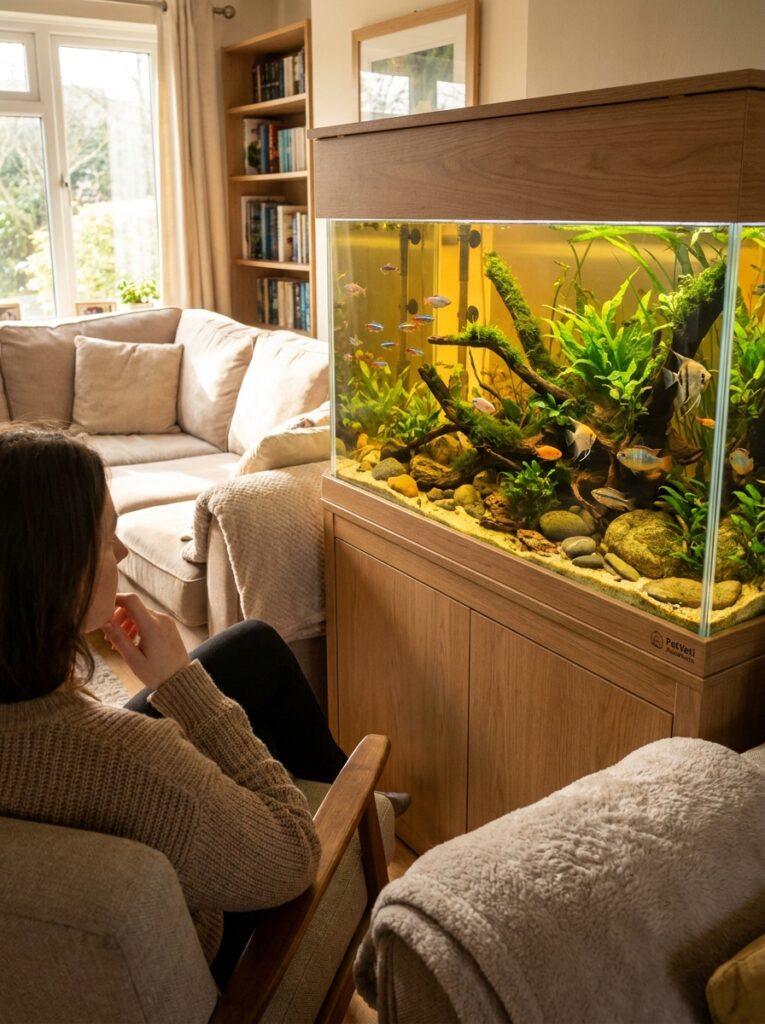
If you’re asking yourself why is my aquarium water turning yellow—whether it started with a light tea-colored tint or gradually turned into a murky amber—it can make an otherwise beautiful tank look dirty and neglected. The good news is that yellow water is rarely an immediate health crisis for your fish, but it is a clear message from your aquarium that something in the water chemistry or environment needs attention.
The key to fixing yellow water fast is figuring out whether the discoloration is coming from natural plant matter (tannins), built-up organic waste, or an old light bulb shifting spectrum.
PetYeti 10-Second Quick Diagnostic
- It’s likely TANNINS if: You recently added new real driftwood, the water looks clear like iced tea without floating debris, and your fish are swimming happily with healthy appetites.
- It’s likely ORGANIC WASTE if: The water looks dull or hazy yellow, your last water change was several weeks ago, food sits unconsumed on the gravel, or there’s a slight earthy odor coming from the tank top.
Quick Answer
Aquarium water usually turns yellow due to leaching tannins from natural driftwood, accumulated organic waste (excess fish food, decay, and fish waste), or dissolved organic compounds (DOCs). You can quickly clear yellow water by performing a 20% to 30% water change, adding activated carbon or Purigen to your filter, and gently vacuuming the substrate during regular maintenance.
- 5 Causes of Yellow Aquarium Water (And How to Fix It)
- 1. Leaching Tannins from New Driftwood
- 2. Built-Up Dissolved Organic Compounds (DOCs)
- 3. Old or Exhausted Activated Carbon
- 4. Overfeeding and Rotting Plant Leaves
- 5. Discolored Tap Water or Aging Aquarium Lighting
- When Yellow Water Might Be a Sign of a Problem
- Quick Troubleshooting Checklist
- CONCLUSION
- FAQs
WHAT TO CHECK FIRST
Before adding chemicals or doing a major cleanout, check these basics first:
✓ Test ammonia, nitrite, nitrate, and pH
✓ Check whether new driftwood, leaves, or botanicals were added
✓ Look for uneaten food, dead leaves, or hidden waste
✓ Make sure the filter is running normally
✓ Check whether the filter media is clogged or overdue for gentle rinsing
✓ Review your water change schedule
✓ Watch your fish for stress signs like gasping, hiding, clamped fins, or unusual stillness
As an Amazon Associate, PetYeti earns from qualifying purchases. This comes at no additional cost to you and helps support the site. We only recommend products we genuinely believe can help create healthier and more enjoyable aquariums.
5 Causes of Yellow Aquarium Water (And How to Fix It)
1. Leaching Tannins from New Driftwood
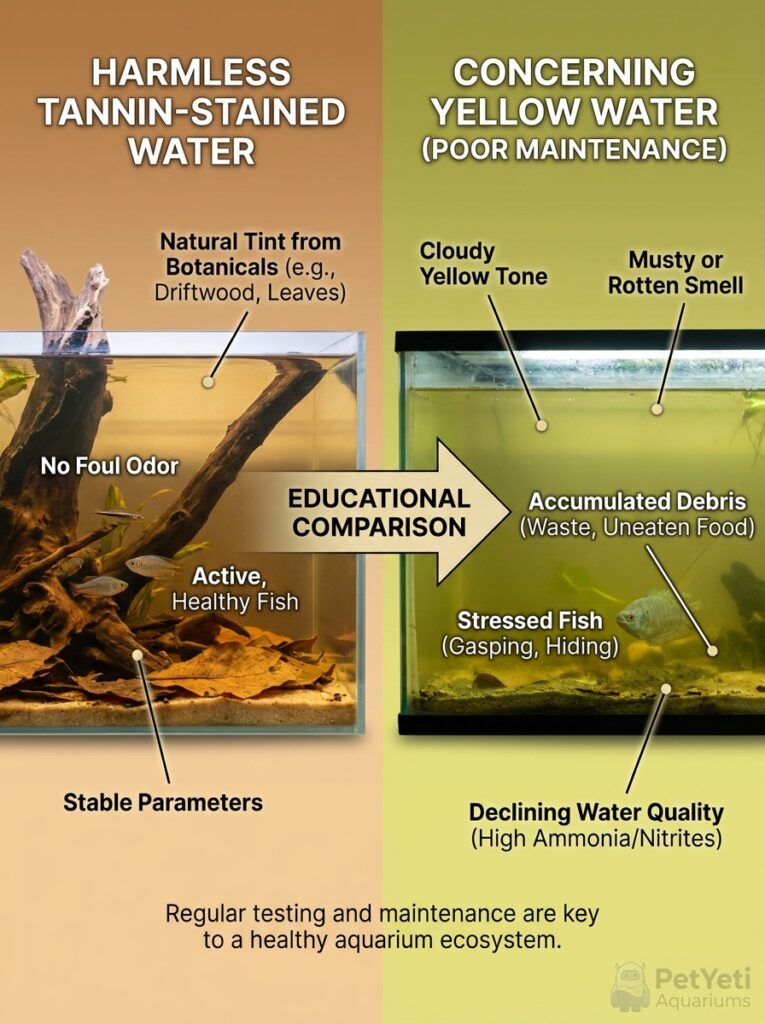
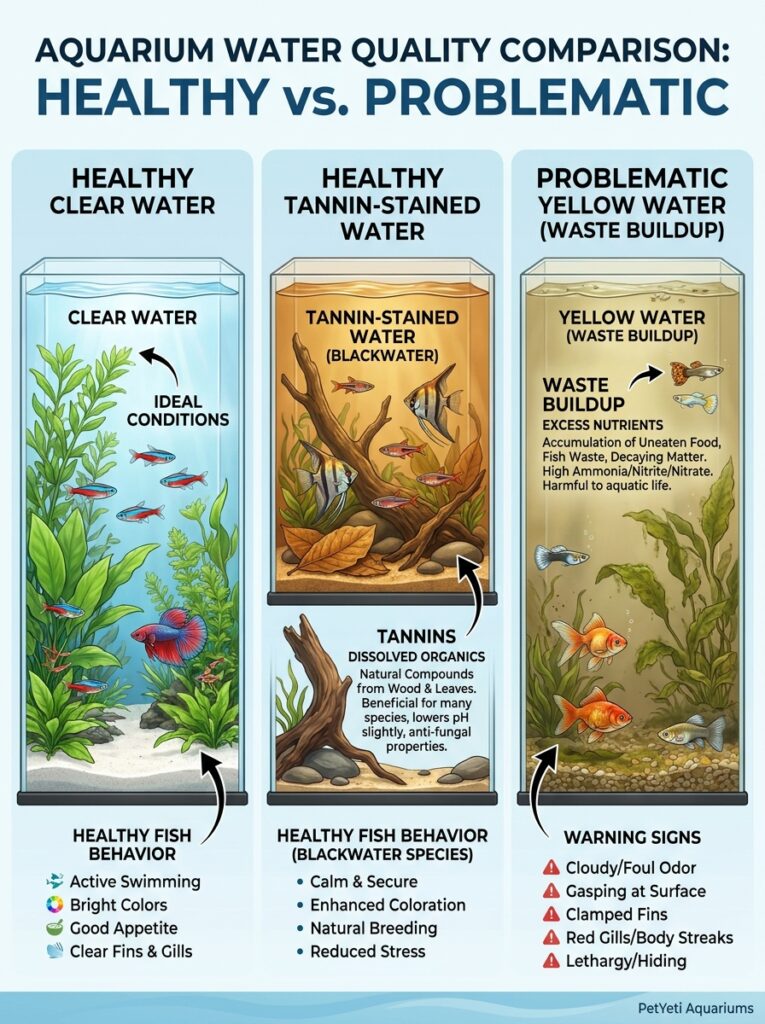
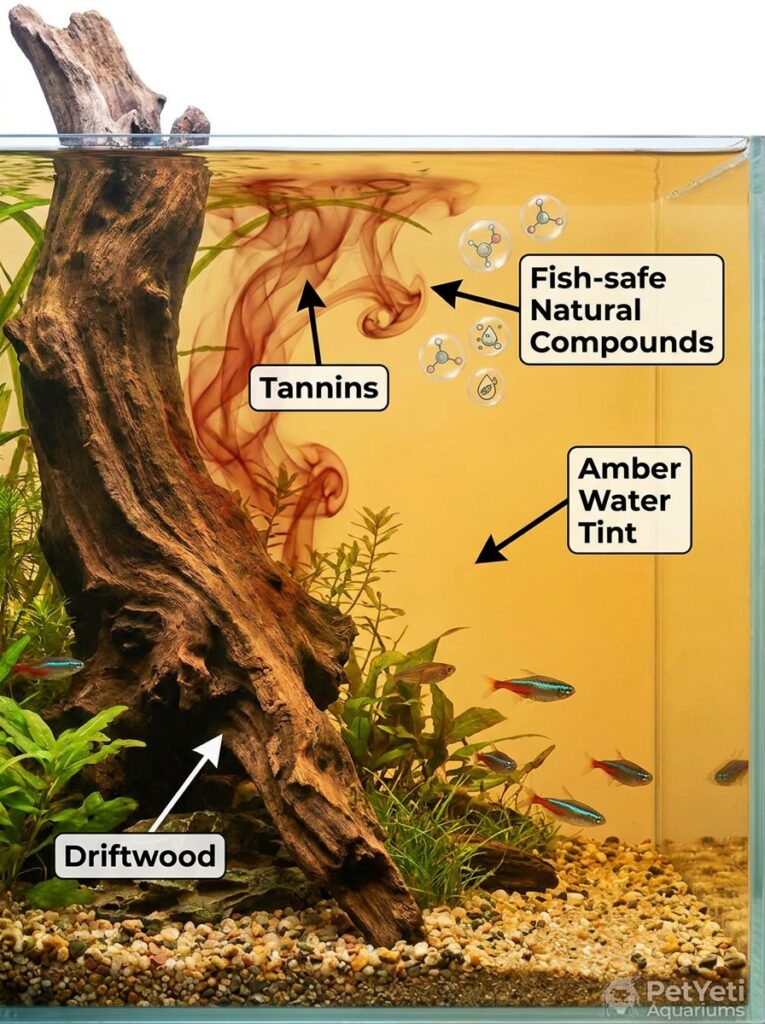
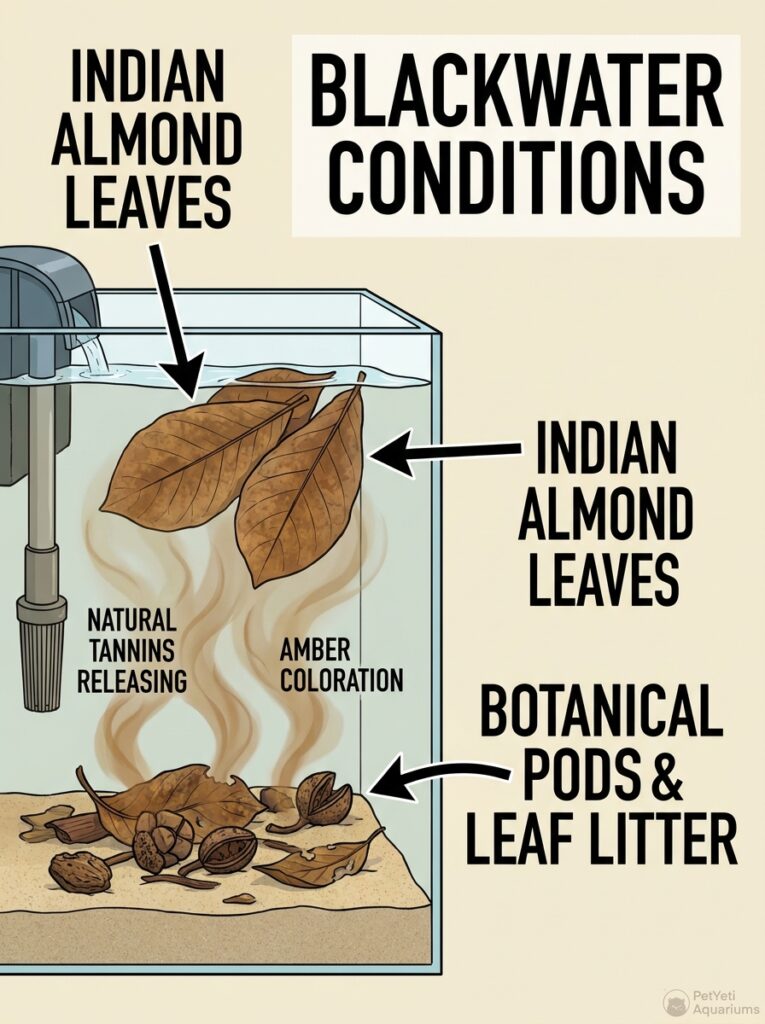
By far the most common cause of tea-colored water is driftwood. Natural woods like Malaysian driftwood, Mopani, and Spiderwood release organic compounds called tannins into the water. While tannins look a bit messy, they are actually beneficial for tropical fish like bettas and tetras—they lower pH slightly and mimic natural blackwater Amazon habitats.
- How to Tell: The water looks clear like brewed tea or apple juice, you recently added new real wood, and fish show zero signs of distress.
- The Fix: Boil new driftwood for 1–2 hours before placing it in your tank, perform partial water changes, or run chemical filter media to absorb the color.
- PetYeti Pick: Seachem Purigen is a synthetic macro-porous polymer media that polishes water to absolute diamond clarity by absorbing tannins without stripping trace minerals.
2. Built-Up Dissolved Organic Compounds (DOCs)
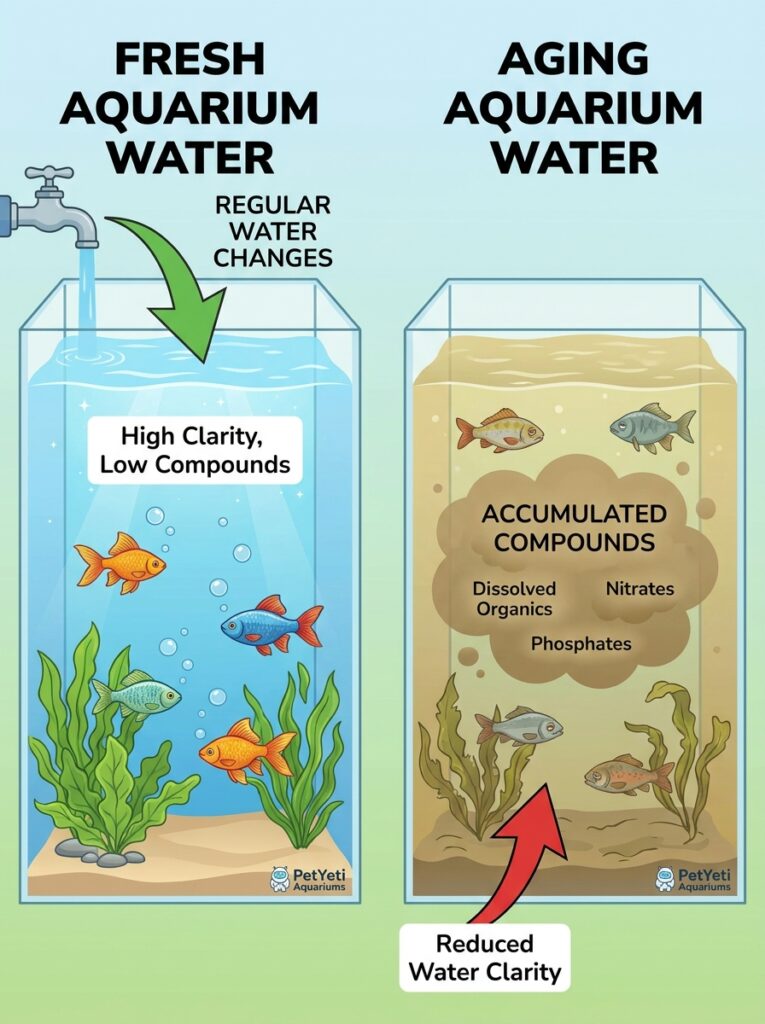
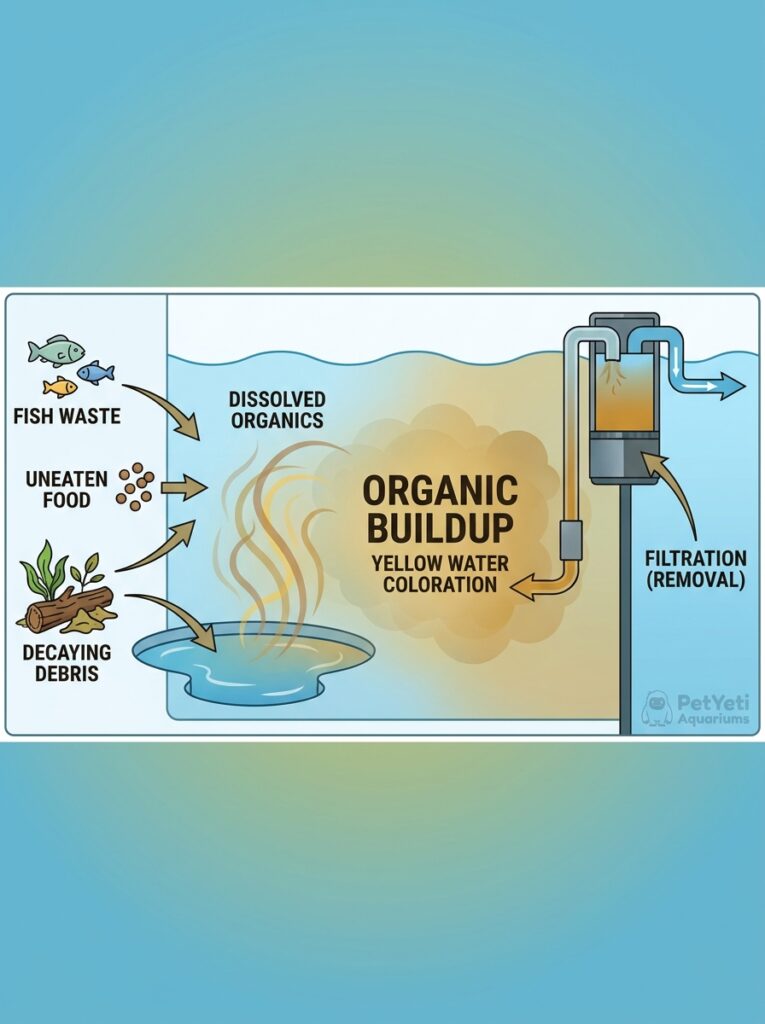
As unconsumed fish food, decaying plant leaves, fish waste, and plant detritus decompose in your substrate, they release dissolved organic compounds. Over time, if water changes are missed, these compounds accumulate and turn the water a dull, yellowish-brown hue, often accompanied by a faint odor.
- How to Tell: Water changes have been delayed, the substrate looks dirty, or there’s a light biofilm film on top of the water.
- The Fix: Perform a 25–30% water change using a gravel vacuum to lift trapped debris from the gravel, and refresh your filter media.
- PetYeti Pick: Use an AAwipes 8-in-1 Aquarium Test Kit to verify that nitrates haven’t spiked alongside built-up organic waste.
Beginner Mistake: Doing a Huge Water Change Too Fast
When water turns yellow, many beginners want to replace almost all of the water at once. That can shock fish, especially if temperature, pH, or water chemistry changes quickly. In most cases, a smaller partial water change is safer. Clean gradually, test the water, and avoid replacing all filter media at the same time.
3. Old or Exhausted Activated Carbon
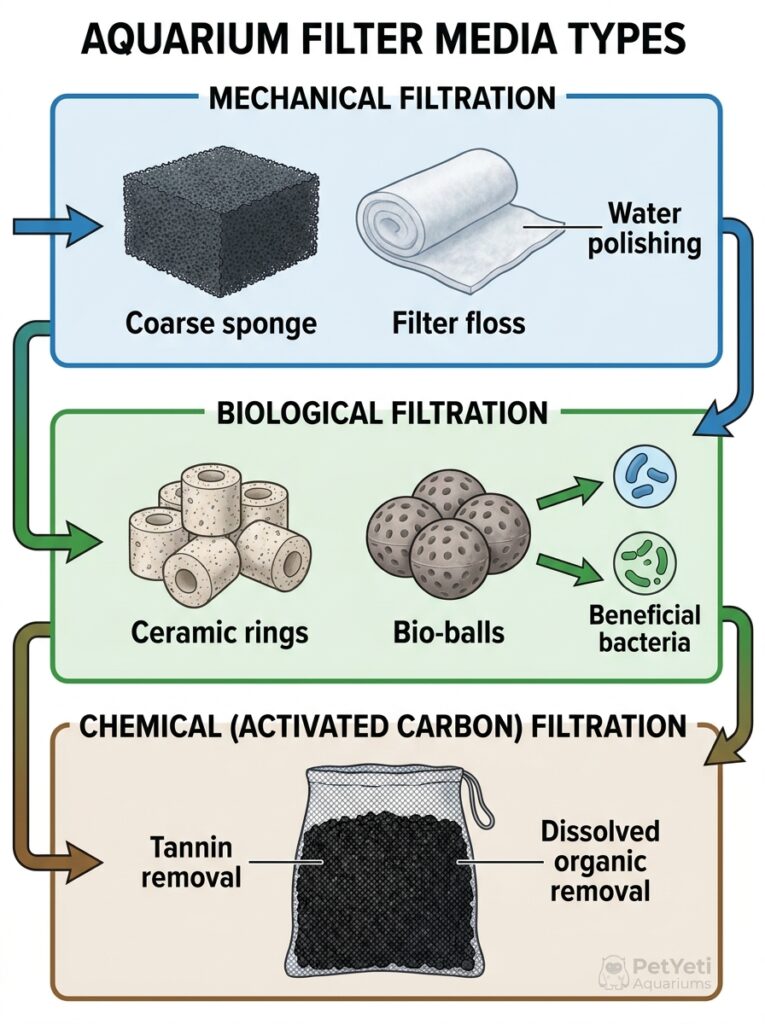
Activated carbon inside filter cartridges works like a sponge, pulling dissolved colors, odors, and impurities out of the water column. However, carbon has a limited lifespan—after 3 to 4 weeks, its microscopic pores fill up completely. Once saturated, it stops absorbing color, allowing yellowing agents to build back up.
- How to Tell: Your filter media or cartridge hasn’t been replaced or rinsed in over a month.
- The Fix: Swap out old carbon cartridges or add a mesh media bag with fresh premium activated carbon to your filter box.
- PetYeti Pick: Marineland Black Diamond Premium Activated Carbon removes yellow discoloration and foul odors faster than cheap standard carbon pads.
4. Overfeeding and Rotting Plant Leaves
Feeding more flakes or pellets than your fish can eat in 2 minutes creates a steady supply of rotting matter on the tank floor. Combined with melt from dead aquatic plant leaves, this decaying biomass releases discolored organic fluids directly into your water column.
- How to Tell: Uneaten food gathers in plant thickets or under rocks, and aquarium plants show yellow, dying leaves.
- The Fix: Trim off yellowing plant leaves with sharp aquarium scissoring tools and reduce daily feeding portions by half.
5. Discolored Tap Water or Aging Aquarium Lighting
Sometimes yellow water isn’t coming from inside your tank at all! Municipal tap water lines occasionally release iron or rust after pipe maintenance, giving tap water a yellow tint right out of the faucet. Alternatively, older fluorescent or cheap LED aquarium lights shift toward a warm, yellow spectrum as they age, making crystal-clear water look discolored under the light.
- How to Tell: Pour fresh tap water into a white glass cup—if it looks yellow before hitting the tank, your source water is the culprit.
- The Fix: Test tap water prior to changes, use a water conditioner, or upgrade to a modern full-spectrum LED light.
When Yellow Water Might Be a Sign of a Problem
Yellow water by itself isn’t necessarily concerning. However, it deserves closer attention when accompanied by:
• Excess debris
• Fish stress
• Declining water quality
• Visible maintenance issues
The color alone rarely tells the entire story.
That’s why it’s important to observe the aquarium as a whole.
Ask yourself:
Are the fish behaving normally?
Do water tests look acceptable?
Has anything recently changed?
If the answer to those questions is reassuring, the yellow tint may be harmless.
If you need a beginner-friendly testing option, see:
Best Aquarium Test Kits for Beginners
Real-Life Example
A fish keeper became worried about yellow water after reading online horror stories. Testing revealed stable parameters, healthy fish, and recently added driftwood. The discoloration was completely natural and required no major intervention.
What to Expect
The presence of additional warning signs is usually more important than the color itself.
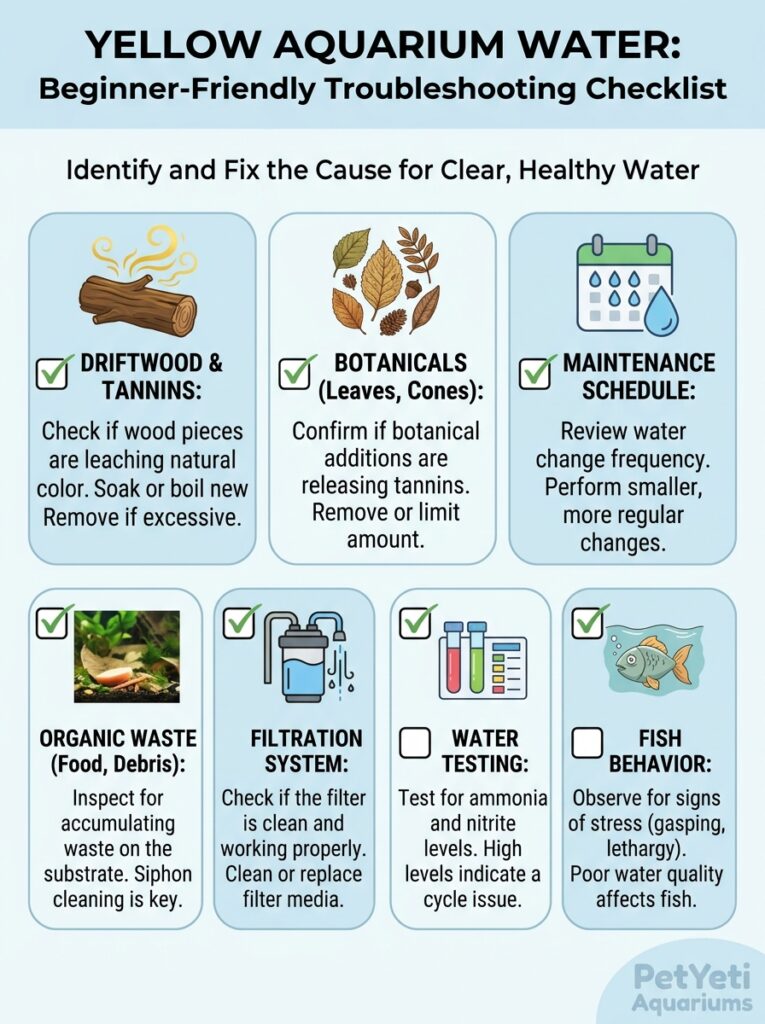
Quick Troubleshooting Checklist
If your aquarium water is turning yellow, work through this checklist:
✅ Check for driftwood
✅ Look for leaves or botanicals
✅ Review recent maintenance habits
✅ Inspect filter media
✅ Remove excess organic debris
✅ Observe fish behavior
✅ Watch for unusual odors
In many cases, the source becomes obvious once you systematically eliminate potential causes.
If waste is building up in the gravel, see:
Best Aquarium Gravel Vacuums for Beginners
Related PetYeti Guides
How to Test Aquarium Water Correctly
Best Aquarium Test Kits for Beginners
Why Does My Aquarium Water Smell?
Why Is My Aquarium Cloudy After a Water Change?
Best Aquarium Gravel Vacuums for Beginners
Aquarium Cycling Explained for Beginners
CONCLUSION
Yellow aquarium water can look frustrating, but it’s one of the easiest water quality issues to diagnose and resolve. Whether your tank has a soft tea-colored tint from new driftwood tannins or a dull haze from built-up organic waste, a routine gravel vacuum, fresh water change, and a pouch of Seachem Purigen or fresh carbon will have your aquarium sparkling clean in no time.
Take it one step at a time, test your parameters regularly, and enjoy the calm, crystal-clear view of your underwater world!
PetYeti Quick Recap: Best Choice for Crystal-Clear Water
To remove yellow water tint and organic odors fast, add Seachem Purigen or Marineland Black Diamond Activated Carbon directly to your filter media chamber. Combined with a 25% water change, your tank water will be polished clear within 24 to 48 hours.
FAQs
Is yellow aquarium water harmful to fish?
Usually, no. If the yellow tint is caused by natural driftwood tannins, it is completely harmless and actually mimics the natural Amazonian blackwater environments where bettas, neon tetras, and angelfish originate. However, if the yellowing comes from decaying organic waste or missed water changes, high nitrates can cause long-term stress and lower your fish’s immune system.
Why did my aquarium turn yellow after adding driftwood?
Many types of driftwood release tannins, which naturally tint the water amber or tea-colored.
Will yellow aquarium water go away on its own?
Tannin-related discoloration often decreases gradually over time, especially with regular water changes.
Does activated carbon remove yellow water?
Activated carbon can help remove some tannins and dissolved organic compounds, often improving water clarity.
Can fish waste make aquarium water yellow?
Yes. Accumulated dissolved organic waste can contribute to yellow discoloration if maintenance and filtration are insufficient.
How long does it take for driftwood to stop turning water yellow?
New driftwood can release tannins anywhere from a few weeks to several months depending on the wood type and size. Mopani and Malaysian driftwood leach heavy tannins for a long time, while Spiderwood settles down much faster. Boiling the wood beforehand or running Seachem Purigen in your filter eliminates the tint almost instantly.
Will water changes get rid of yellow water?
Partial water changes (20–30%) help dilute the yellow color, but if the source—such as fresh driftwood or exhausted carbon—remains in the tank, the yellow tint will return within a few days. Combining a water change with fresh activated carbon or Purigen delivers a permanent fix.