
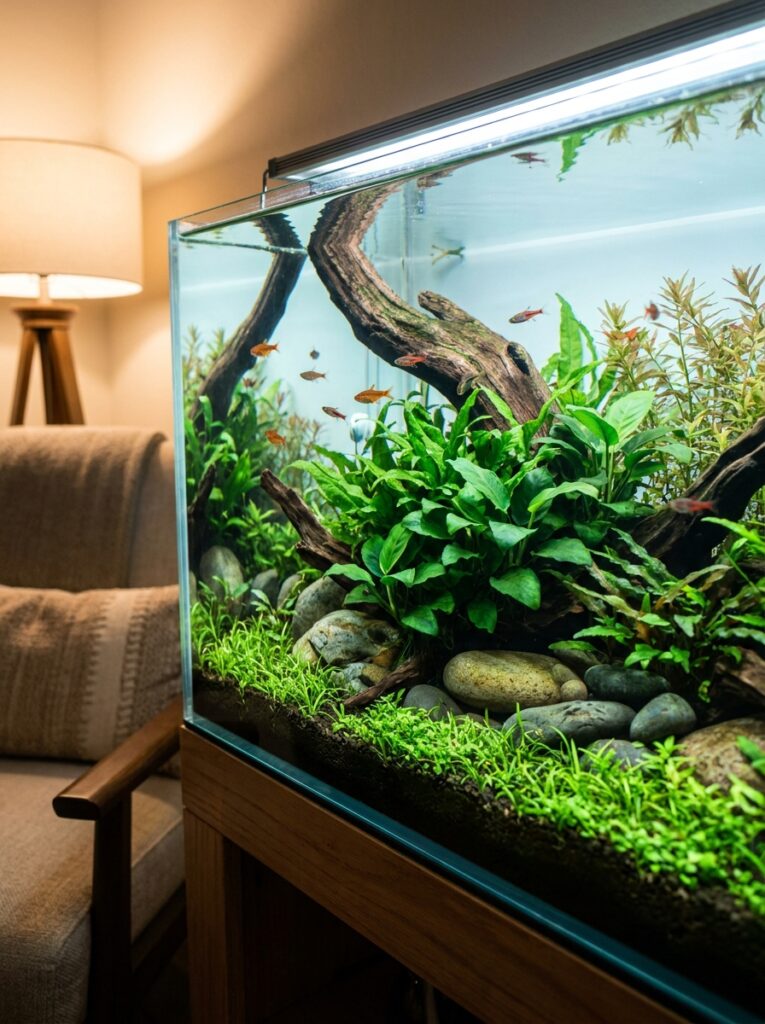
Choosing the best midground plants for beginner aquariums is the single best way to transform a flat, two-dimensional tank into a lush, natural underwater landscape. While low foreground plants cover the front sand and tall stem plants hide equipment along the back glass, the midground serves as the visual bridge that ties the entire aquascape together.
Without midground greenery, an aquarium often feels disjointed—leaving an awkward, empty gap between low carpets and soaring background stems. The ideal beginner midground plants are compact, slow-growing, and forgiving, adding texture, shade, and natural depth to your hardscape without requiring pressurized CO2 or constant weekend trimming.
PetYeti 10-Second Midground Selection Rule
The Golden Ratio of Height: Pick species that naturally top out between 4 to 8 inches (10–20 cm) so they frame your wood and stones without blocking the view of background foliage.
Know Your Planting Style: Divide your midground into Epiphytes (like Anubias and Bucephalandra, which must be glued or tied to hardscape) and Root-Feeders (like Cryptocoryne, which need nutrient-rich substrate or root tabs).
Low-Tech First: Stick to low-to-moderate light species that grow at a gentle, steady pace so you spend less time pruning and more time enjoying your aquascape.
- What Are Midground Plants in an Aquarium?
- Why Midground Plants Matter More Than Most Beginners Realize
- 5 Best Midground Plants for Beginner Aquariums
- 1. Anubias Nana & Anubias Nana Petite: The Perfect Midground Plant
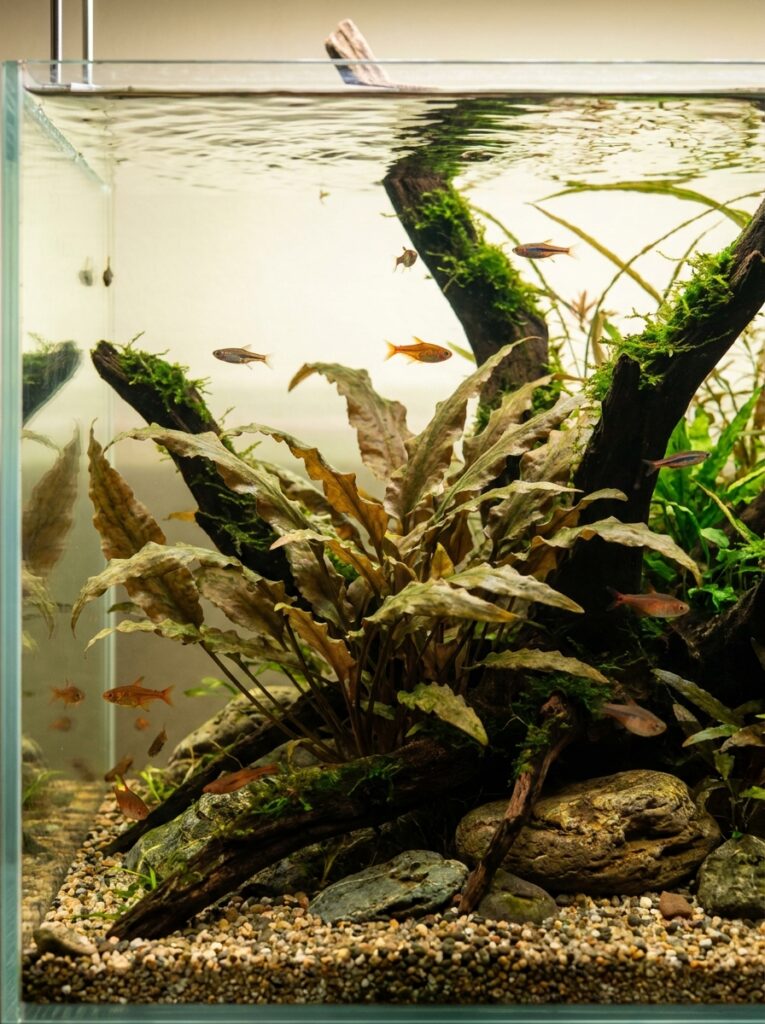
- 2. Cryptocoryne Wendtii for Natural Texture
- 3. Java Fern for Timeless Aquascapes
- 4. Bucephalandra (Assorted Varieties) for Detail and Character
- 5. Staurogyne Repens (S. Repens)
- Choosing the Right Midground Plant
- Common Midground Plant Mistakes
- Creating a Balanced Aquarium Layout
- Related PetYeti Planted Aquarium Guides
- CONCLUSION
- FAQs
As an Amazon Associate, PetYeti earns from qualifying purchases. This comes at no additional cost to you and helps support the site. We only recommend products we genuinely believe can help create healthier and more enjoyable aquariums.
What Are Midground Plants in an Aquarium?
Imagine looking at a beautiful landscape photo.
There’s usually something in the foreground, something in the distance, and something connecting the two. That middle area helps create depth and makes the scene feel complete.
The same idea applies to aquariums.
Midground plants occupy the space between low-growing foreground plants and taller background species. They help fill visual gaps while creating smoother transitions throughout the layout.
Many midground plants are medium-sized, which allows them to stand out without dominating the aquarium. They often surround driftwood, soften the edges of rocks, and help guide the eye naturally through the aquascape.
Without them, planted tanks can sometimes feel disconnected, as if different sections of the aquarium don’t quite belong together.
A good midground plant helps tie everything into a single, cohesive design.
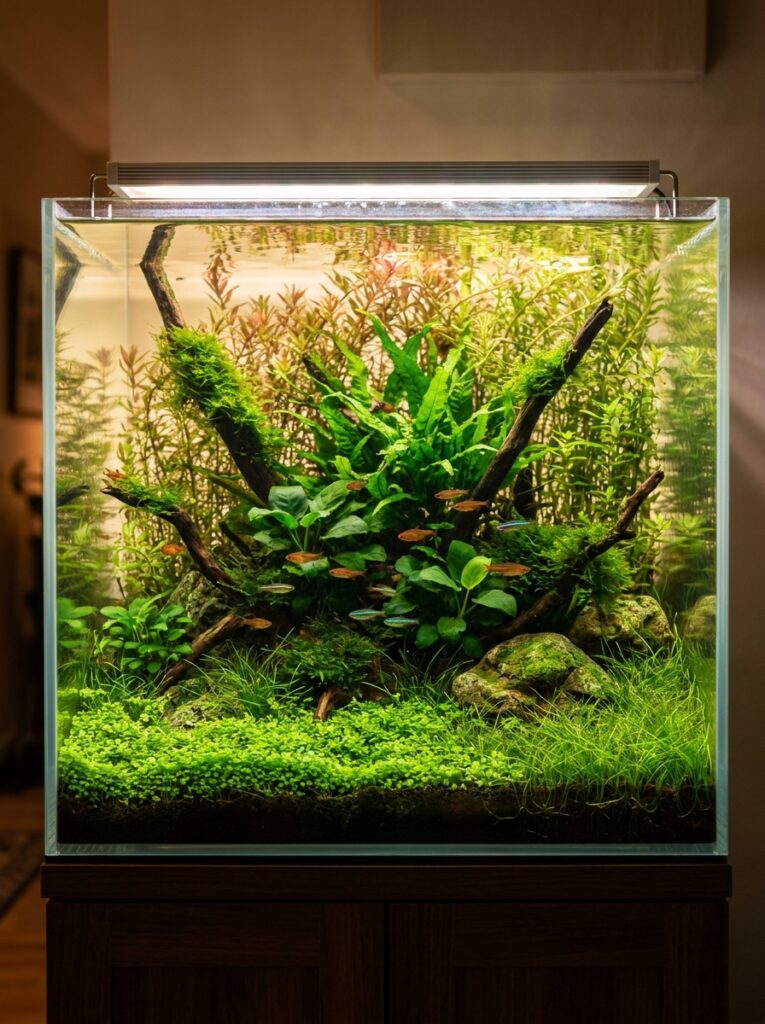
Why Midground Plants Matter More Than Most Beginners Realize
Many beginners focus on buying fish first and plants second.
That’s completely normal.
But once people start exploring aquascaping, they often discover that plant placement has a huge influence on how an aquarium feels.
Midground plants are often responsible for that feeling of balance.
They soften transitions between different areas of the tank, reduce harsh visual gaps, and create a more natural flow from front to back. They’re also excellent for partially hiding equipment, blending hardscape features into the layout, and creating focal points that draw attention without overwhelming the aquarium.
In smaller aquariums, where every inch matters, a thoughtfully placed midground plant can completely transform the look of the tank.
It’s one of those subtle details that people may not consciously notice, yet it has a major impact on the overall design.
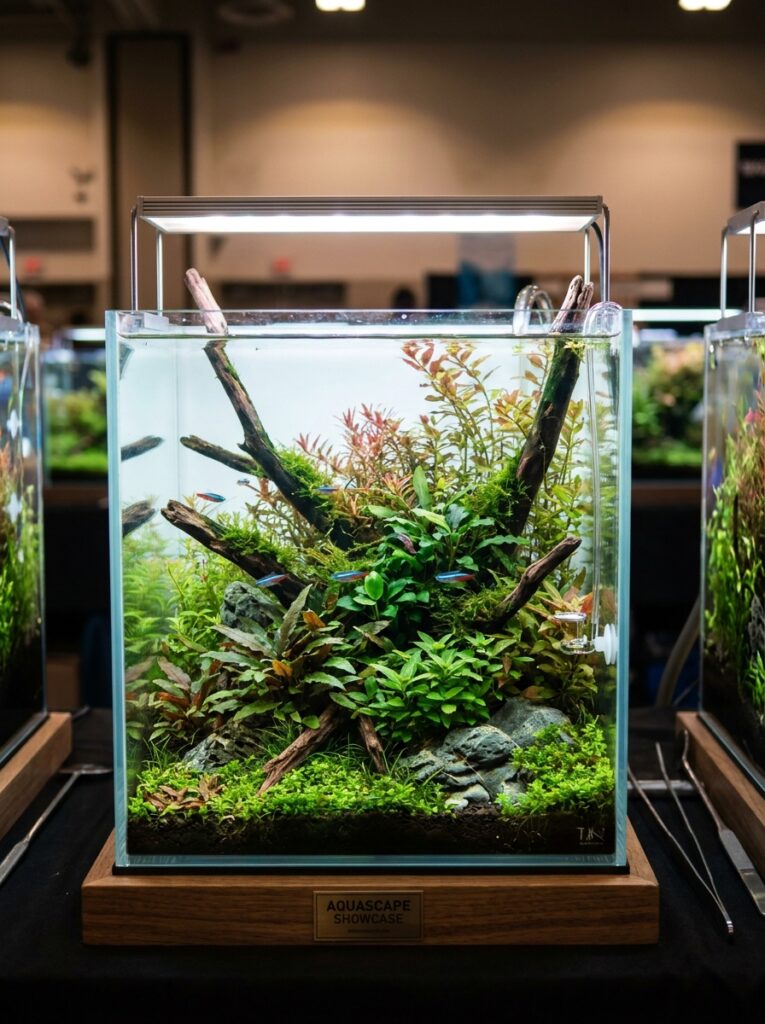
5 Best Midground Plants for Beginner Aquariums
1. Anubias Nana & Anubias Nana Petite: The Perfect Midground Plant
If there were an award for the most dependable midground plant, Anubias Nana would be a strong contender.
It’s one of those plants that seems to fit almost any aquarium style. Whether you’re creating a minimalist aquascape, a cozy betta tank, or a nature-inspired planted aquarium, Anubias Nana rarely looks out of place.
Its broad, dark green leaves naturally draw attention without overwhelming the layout. That’s exactly what makes it such a good midground plant.
Many aquascapers attach Anubias Nana to driftwood or rocks where it helps blend hardscape features into the surrounding aquascape. Instead of looking like separate pieces, everything begins to feel connected.
Another reason beginners love this plant is its forgiving nature. It grows slowly, adapts well to a variety of aquarium conditions, and usually requires very little maintenance.
For hobbyists building their first planted aquarium, Anubias Nana offers an excellent balance of beauty, simplicity, and reliability.
- Planting Style: Epiphyte (Attach to driftwood or stones; never bury the horizontal green rhizome in substrate).
- Average Height: 2 to 5 inches (5–13 cm).
- Why Beginners Love It: Herbivorous fish and snails won’t eat its tough leaves, and it requires zero CO2 or soil.
- PetYeti Care Pick: Use a tiny drop of WoldoClean Aquarium Super Glue Gel or cotton thread to secure Anubias rhizomes firmly to hardscape crevices.
Real-Life Example:
Tucking two or three small Anubias Nana plants directly into the junction where your driftwood branches meet a rock instantly softens harsh wood edges and makes the layout look like an established, aged riverbed.
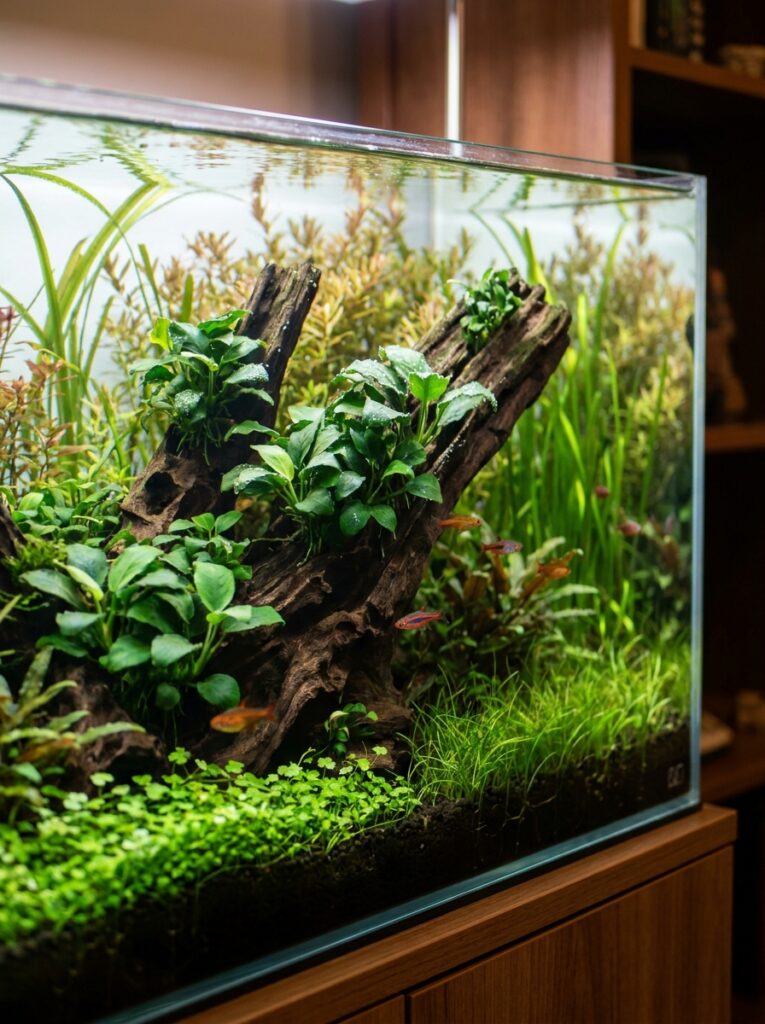
2. Cryptocoryne Wendtii for Natural Texture
Some plants stand out because they’re bold.
Cryptocoryne Wendtii stands out because it feels natural.
Its gently textured leaves and flowing growth pattern help create the kind of organic appearance many hobbyists are trying to achieve. Instead of looking carefully arranged, the aquarium starts to feel as though it developed naturally over time.
That’s one reason Cryptocoryne Wendtii has remained popular for decades.
As a midground plant, it works particularly well around rocks, driftwood, and transition zones where foreground plants meet taller background species.
Its moderate size allows it to fill empty areas without dominating the aquarium. In small and medium-sized tanks, that balance can be incredibly valuable.
Many beginners also appreciate that Cryptocoryne Wendtii often looks attractive even when it’s not perfectly trimmed or manicured.
For aquariums aiming for a relaxed, natural aesthetic, it’s one of the best midground choices available.
- Planting Style: Heavy Root-Feeder (Bury roots in gravel, sand, or aquasoil).
- Average Height: 4 to 8 inches (10–20 cm).
- Why Beginners Love It: It stays naturally compact in moderate light and handles low-light corners with ease.
- PetYeti Care Pick: Push a Seachem Flourish Tab deep into the substrate right next to the roots every 3 months to fuel steady, colorful growth.
Real-Life Example:
When first planted, a Crypt may drop a few melting leaves as it adjusts to your water chemistry (the famous “Crypt Melt”). Be patient and leave the root base alone—within two weeks, lush, new underwater-adapted leaves will sprout up faster and stronger.
3. Java Fern for Timeless Aquascapes
Few aquarium plants have earned the level of trust that Java Fern enjoys.
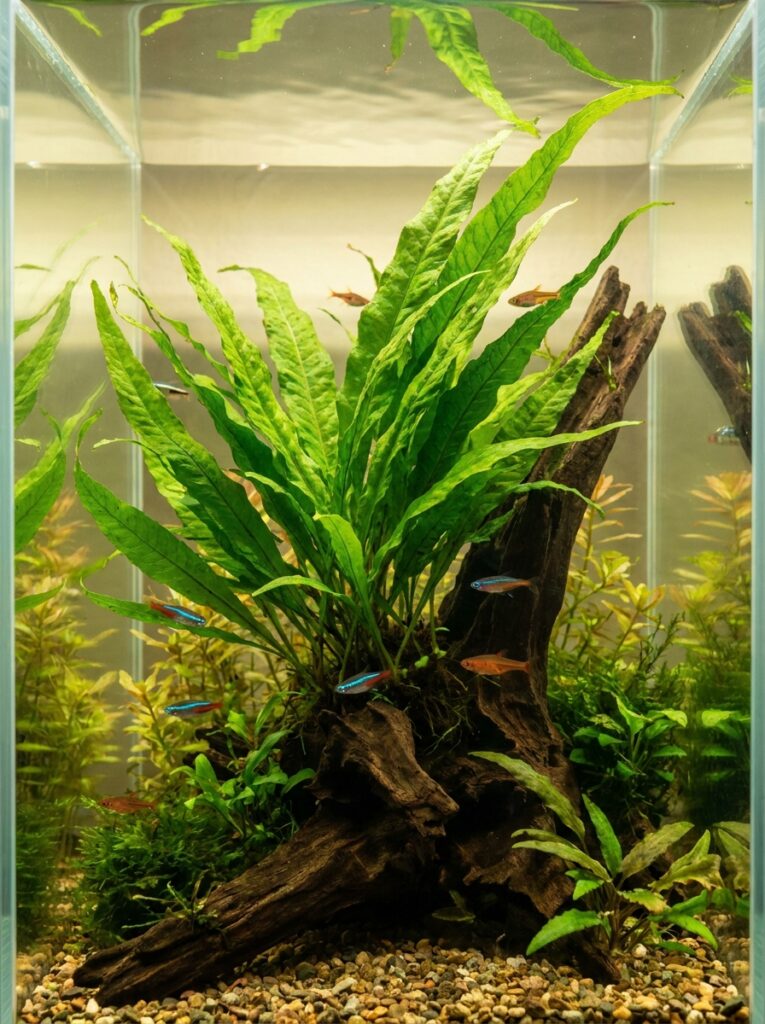
While standard Java Fern can grow quite tall, the ‘Windeløv’ variety stays wonderfully compact, featuring delicate, antler-like crested leaf tips that add intricate texture to the mid-tier of your tank.
It’s recommended to beginners again and again because it combines attractive appearance with remarkable durability.
As a midground plant, Java Fern excels at adding height and texture without creating the dense wall effect often associated with larger background plants.
Its long, elegant leaves naturally guide the eye upward while still allowing fish, hardscape features, and other plants to remain visible.
Many aquascapers attach Java Fern to driftwood or rocks rather than planting it directly into the substrate. This creates a more natural appearance and allows the plant to become part of the hardscape itself.
One of the reasons Java Fern remains so popular is that it looks equally at home in beginner tanks and advanced aquascapes.
It’s a classic plant that continues to earn its place in modern planted aquariums.
- Planting Style: Epiphyte (Attach to rocks or wood).
- Average Height: 4 to 7 inches (10–18 cm).
- Why Beginners Love It: It draws all its nutrients directly from the water column and is ignored by fin-nipping fish.
- PetYeti Care Pick: Dose a comprehensive all-in-one liquid fertilizer like Seachem Flourish once a week to keep the frilly tips bright green.
Real-Life Example:
Placing a bushy clump of Java Fern ‘Windeløv’ right at the base of a tall piece of Spiderwood creates a natural transition zone that guides the viewer’s eye smoothly from the substrate up into the swimming area.
4. Bucephalandra (Assorted Varieties) for Detail and Character
Bucephalandra is one of those plants that aquarium hobbyists often discover and then immediately want more of.
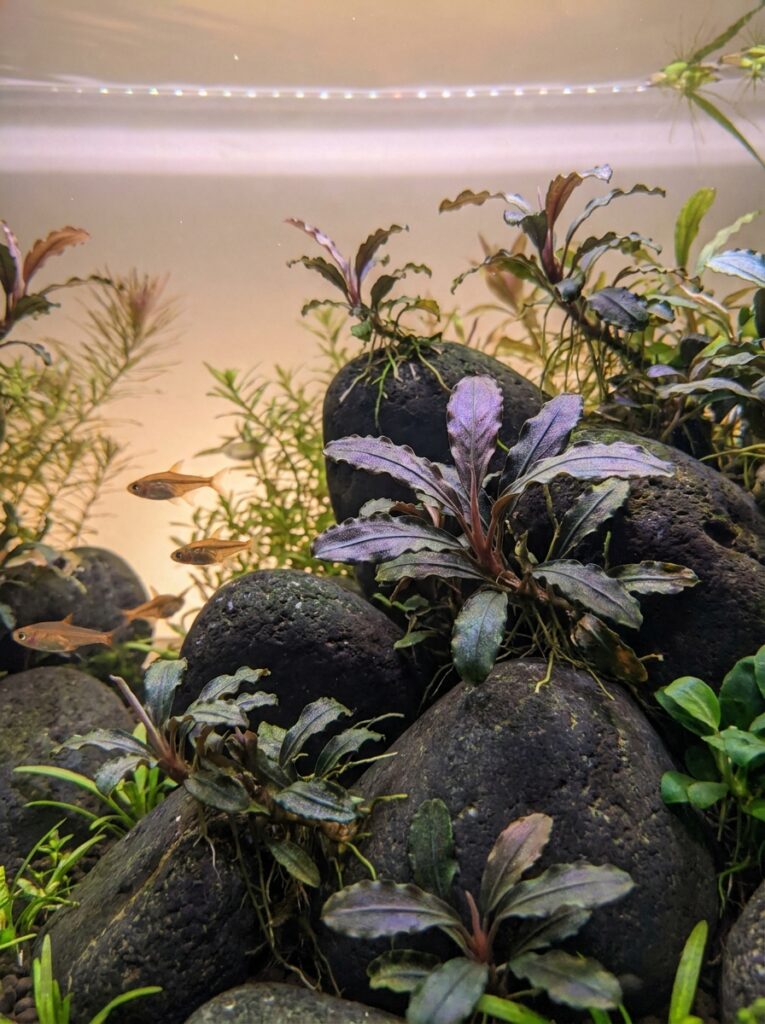
At first glance, it may seem subtle. But the closer you look, the more interesting it becomes. Hailing from the fast-flowing streams of Borneo, Bucephalandra (“Buce”) is a slow-growing gem known for its iridescent sheen, wavy leaf margins, and tiny white underwater blooms.
Different varieties can display unique leaf shapes, textures, and color tones, making Bucephalandra feel more like a collection of individual plants than a single species group.
In the midground, it works beautifully as an accent plant. Rather than filling large areas, it adds small pockets of detail that reward closer observation.
Many aquascapers place Bucephalandra around stones, driftwood, or focal points where its unique appearance can be appreciated without dominating the layout.
For hobbyists who enjoy adding personality and visual interest to their aquariums, Bucephalandra offers something truly special.
It’s proof that small details often make the biggest difference.
When placing midground plants to create natural contrast and height, pairing them with clean layout concepts like minimalist aquascaping ideas ensures your tank remains balanced and clutter-free.
- Planting Style: Epiphyte (Wedged or glued into hardscape gaps).
- Average Height: 2 to 4 inches (5–10 cm).
- Why Beginners Love It: Highly adaptable to low light and adds subtle metallic blue, red, and purple undertones to green setups.
Real-Life Example:
Gluing small clumps of Bucephalandra Wavy Green along the crevices of dark Seiryu or Dragon stone brings subtle sparkle and color depth that makes a nano tank feel like a high-end exhibition scape.
5. Staurogyne Repens (S. Repens)
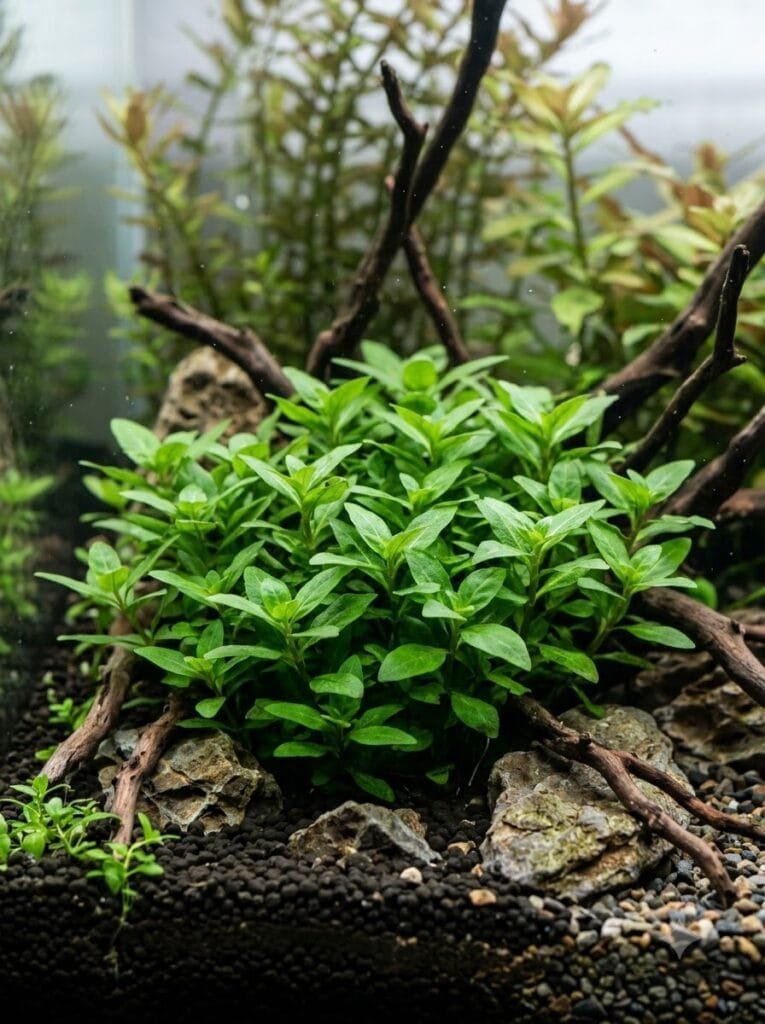
Staurogyne repens is a compact, hardy, bushy stem plant with bright green spade-shaped leaves. By trimming the vertical shoots, it forms a dense, neat bush that frames rocks and transitions beautifully into background stems.
- Planting Style: Stem / Root Feeder (Plant stems individually into substrate).
- Average Height: 3 to 4 inches (7–10 cm) with regular trimming.
- Why Beginners Love It: Provides the dense, lush look of a carpet plant without requiring high-powered CO2 systems.
Real-Life Example:
Trimming the top pair of leaves off an S. Repens stem encourages it to shoot out horizontal side branches, quickly filling in bare patches around the base of your hardscape with thick green foliage.
Choosing the Right Midground Plant
Choosing a midground plant is less about finding the “best” plant and more about finding the right fit for your aquarium.
Every planted tank has its own personality.
Some aquariums are designed around clean lines and simplicity. Others aim for a lush, nature-inspired look filled with texture and movement.
If you prefer a structured and tidy appearance, Anubias Nana is often an excellent choice. If you’re drawn to softer, more natural-looking layouts, Cryptocoryne Wendtii can help create that effect.
Java Fern works particularly well for hobbyists who want a plant that adds height and texture without becoming overwhelming. Meanwhile, Bucephalandra is ideal for aquascapers who enjoy small details and unique visual accents.
It’s also important to consider the size of your aquarium. A plant that feels perfectly balanced in a larger setup may become a dominant feature in a compact nano tank.
The goal isn’t to fill space.
The goal is to create harmony between plants, hardscape, and fish.
Common Midground Plant Mistakes
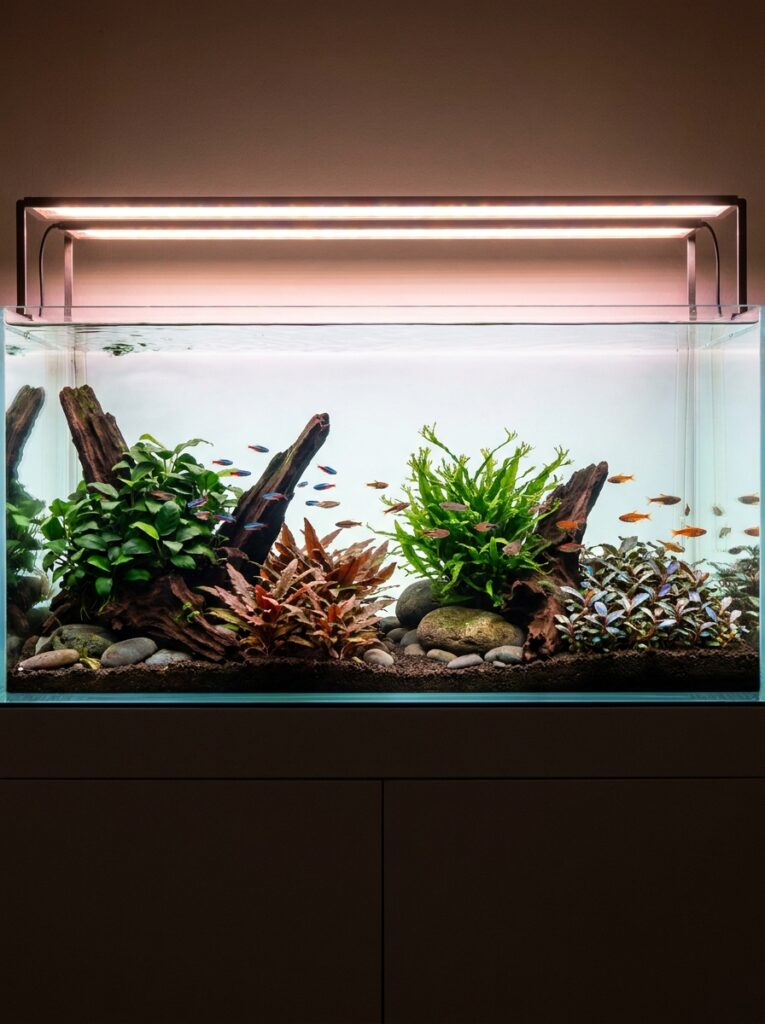
One of the most common mistakes beginners make is treating the midground as an afterthought.
They carefully choose foreground plants, select a few tall background plants, and then leave the middle of the aquarium almost empty.
The result is often a layout that feels disconnected.
Another mistake is choosing plants that grow too large for the available space. A plant that starts as a midground feature can eventually become a background plant if its growth habits aren’t considered from the beginning.
Many hobbyists also place plants in perfectly straight lines. While this may seem organized, it rarely looks natural.
In nature, plants grow in clusters, irregular groups, and varying heights. Mimicking those patterns often creates a more realistic and visually appealing aquarium.
Finally, some beginners add too many different species at once. While variety can be exciting, too many plant types can make a small aquarium feel cluttered.
A few carefully chosen plants usually create a stronger layout than trying to include everything.
Creating a Balanced Aquarium Layout
A beautiful planted aquarium is rarely the result of a single plant.
It’s the result of different elements working together.
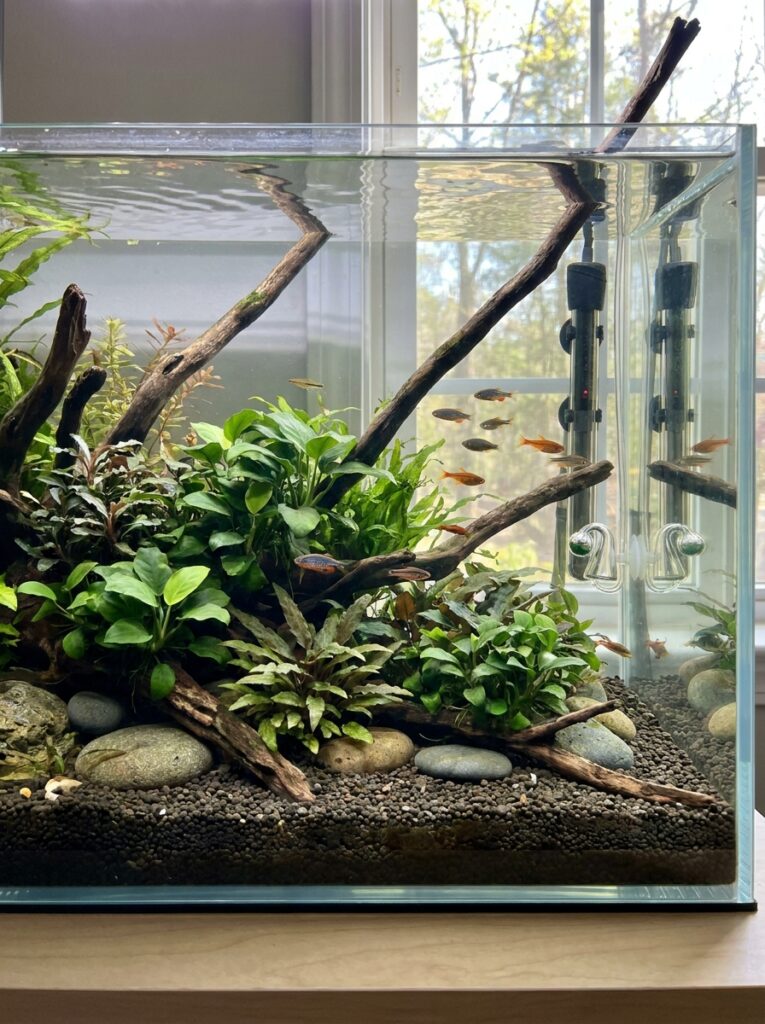
Foreground plants create the foundation. Background plants provide height and depth. Midground plants connect everything in between.
When these layers work together, the aquarium feels more natural, more spacious, and more visually engaging.
That’s why many experienced aquascapers think in terms of balance rather than individual plants.
A patch of Cryptocoryne Wendtii softening the edge of a rock. An Anubias Nana attached to driftwood. A Java Fern adding texture behind a focal point. A small Bucephalandra drawing attention to a particular area.
Each plant has a role.
And when those roles complement one another, the aquarium becomes more than just a collection of plants and fish.
It becomes a complete underwater landscape.
Related PetYeti Planted Aquarium Guides
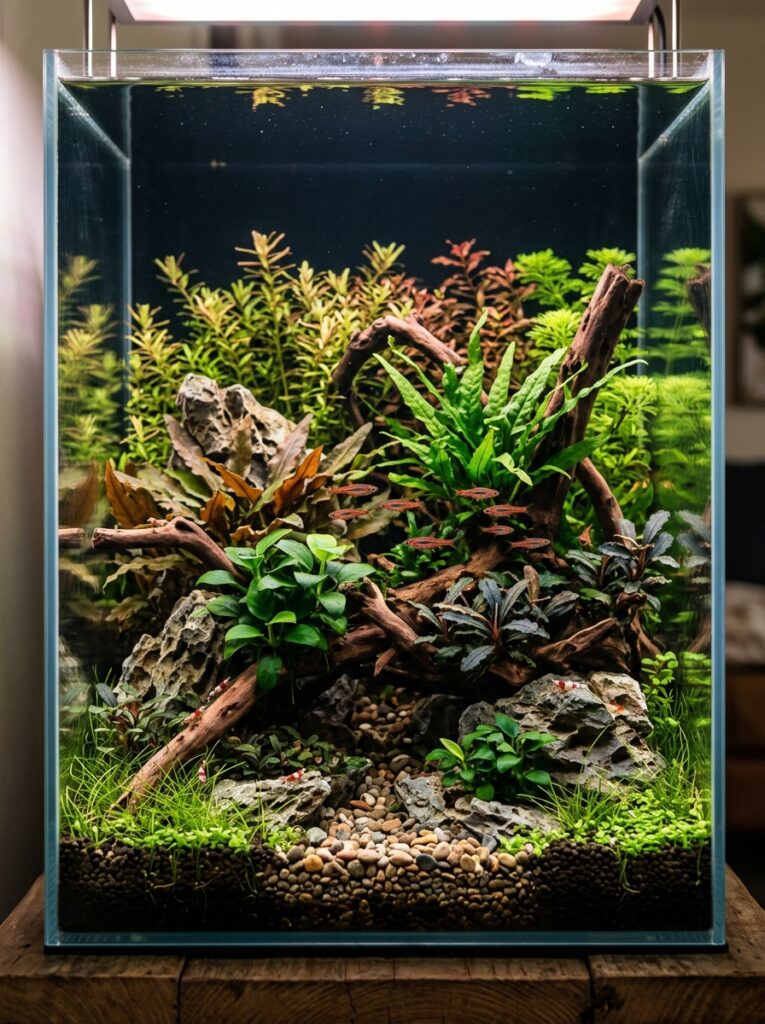
- Building out your entire planting layout? Check out our top best low-light aquarium plants for easy background and foreground ideas.
- Pairing plants with the right livestock? Discover the best fish for heavily planted aquariums.
- Designing a clean, uncluttered layout? Explore our favorite minimalist aquascaping ideas.
CONCLUSION
Midground plants are the unsung heroes of a balanced aquascape. By filling the visual void between low foreground carpets and soaring background stems, they create the natural depth, layers, and texture that make an aquarium feel like a living slice of nature.
Stick to reliable low-tech favorites like Anubias Nana, Cryptocoryne Wendtii, and Java Fern Windeløv. Give your epiphytes a sturdy piece of hardscape to cling to, nourish your root-feeders with occasional root tabs, and enjoy a lush, tranquil midground that stays vibrant with minimal effort.
PetYeti Quick Recap: Best Setup Picks for Midground Greenery
Secure Anubias and Bucephalandra to hardscape using Gorilla Gel Aquarium Plant Glue, and feed root-heavy Cryptocoryne varieties with Seachem Flourish Tabs. Keep your entire midground lush and vibrant with an all-in-one dose of Seachem Flourish liquid fertilizer under a programmable Nicrew SkyLED Plus light fixture.
FAQs
What are midground plants in an aquarium?
Midground plants are medium-sized aquarium plants placed between foreground and background planting zones to create smooth transitions and visual balance.
What is the best midground plant for beginners?
Anubias Nana and Java Fern are often recommended because they’re durable, attractive, and relatively easy to care for.
Can midground plants be used in nano aquariums?
Yes. Many midground plants work beautifully in nano tanks when chosen carefully and placed with scale in mind.
Why are midground plants important?
Midground plants help connect different parts of the aquarium, soften hardscape features, and create a more natural-looking layout.
Is Bucephalandra a good midground plant?
Yes. Bucephalandra is popular because of its unique leaf shapes, compact growth, and ability to add detail and character to aquascapes.
Do all planted aquariums need midground plants?
Not necessarily, but many aquascapes look more balanced and complete when midground plants are included.
What happens if I bury the rhizome of Anubias or Java Fern?
If you bury the horizontal green stem (the rhizome) under sand or gravel, it will slowly suffocate and rot, causing the plant’s leaves to detach and die. Always attach rhizome plants to wood, rock crevices, or decorative hardscape using plant glue or thread, leaving the rhizome completely exposed to the water flow.
Do beginner midground plants require pressurized CO2?
No! All five midground plants listed above (Anubias, Cryptocoryne, Java Fern, Bucephalandra, and S. Repens) thrive in standard low-tech setups without supplemental CO2. They only require moderate LED lighting, basic liquid fertilizer, and root tabs for heavy root-feeders like Crypts.
How do I prevent algae from growing on slow-growing midground leaves?
Because species like Anubias and Bucephalandra grow slowly, their broad leaves are prime targets for green spot or black beard algae under intense light. Place slow growers under the shade of taller background plants, keep your daily lighting cycle between 6 to 8 hours, and enlist algae eaters like Otocinclus catfish, Amano shrimp, or Nerite snails.