
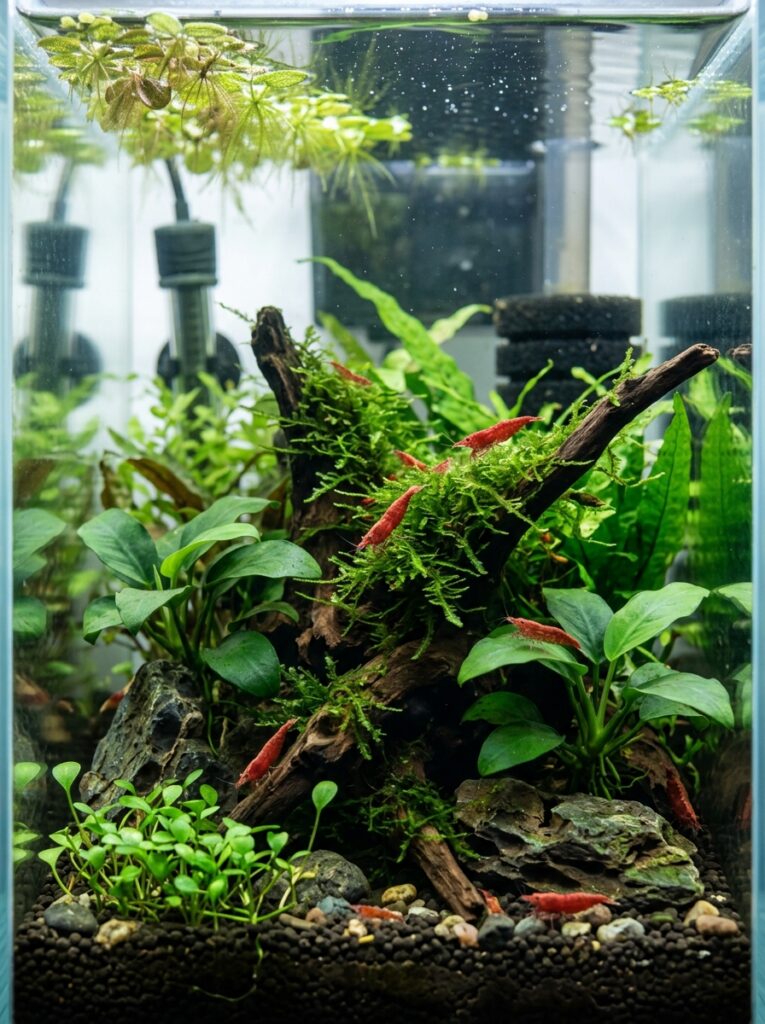
Creating a shrimp-friendly aquarium is about more than simply adding shrimp to a tank.
Freshwater shrimp thrive in environments that provide shelter, grazing surfaces, stability, and plenty of places to explore.
A well-designed shrimp aquarium often feels less like a traditional fish tank and more like a miniature ecosystem.
Plants, driftwood, rocks, and natural surfaces all play important roles in supporting healthy shrimp behavior.
The good news is that creating a shrimp-friendly aquarium doesn’t require expensive equipment or advanced experience.
With a few thoughtful choices, beginners can build an attractive planted aquarium where shrimp feel comfortable and active.
Let’s explore the key elements that help create an environment where freshwater shrimp can thrive.
Understanding What Shrimp Need to Feel Secure
Shrimp may be small, but they are constantly interacting with their environment.
Unlike many fish that spend most of their time swimming through open water, shrimp prefer to explore surfaces, investigate hiding places, and search for food throughout the aquarium.
Because of this behavior, a shrimp-friendly aquarium should provide a sense of security.
Dense plants, driftwood, rocks, and textured surfaces all help create an environment where shrimp feel comfortable moving about openly.
When shrimp have access to shelter, they often become more active and visible.
This may seem surprising at first.
Many beginners assume more hiding places will make shrimp disappear.
In reality, shrimp that feel secure tend to spend more time exploring because they know cover is always nearby.
Creating this sense of safety is one of the most important goals when designing a shrimp aquarium.
Why Plants Are the Foundation of a Shrimp-Friendly Tank
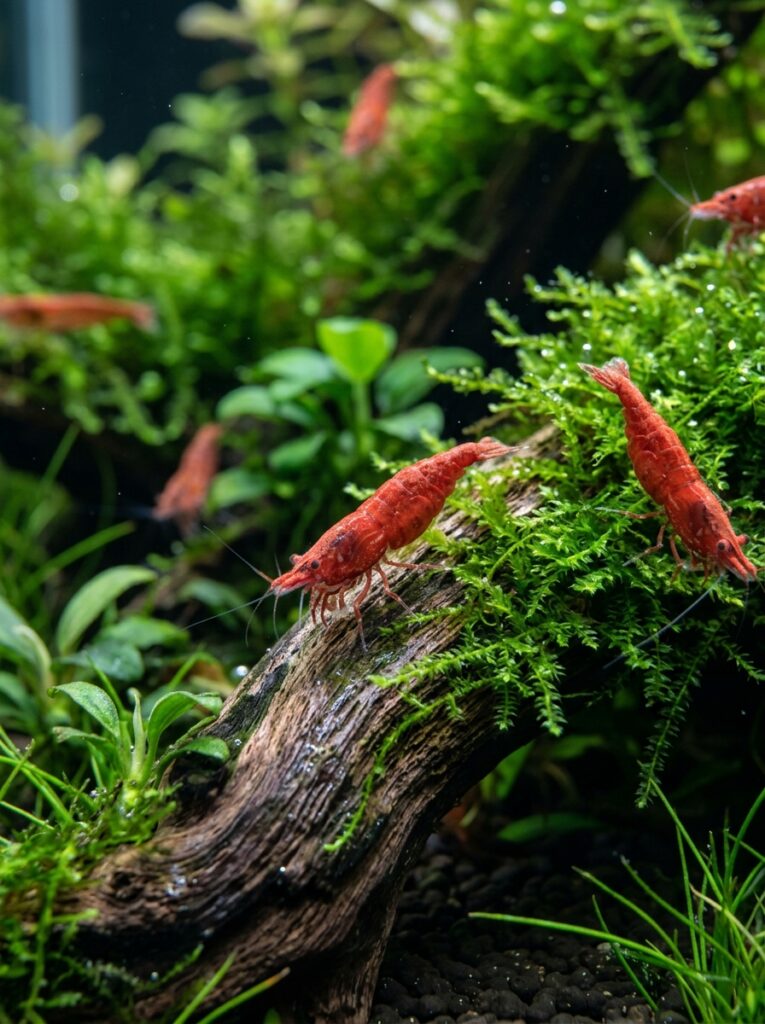
Plants are often the most important feature in a shrimp aquarium.
They provide shelter, grazing areas, visual barriers, and help create a more natural environment.
Species such as Java Moss, Anubias Nana, Java Fern, and Cryptocoryne are popular because they are easy to maintain while offering valuable benefits to shrimp.
Plants also help create complexity within the aquarium.
Instead of a simple open tank, shrimp gain access to multiple levels, surfaces, and pathways to explore.
Many aquarists notice that shrimp become more active once live plants are introduced.
This is partly because plants support biofilm growth, which shrimp naturally graze throughout the day.
For this reason, planted aquariums are often considered the ideal environment for freshwater shrimp.
Creating Shelter With Driftwood, Rocks, and Natural Cover
Plants are important, but they aren’t the only source of shelter in a shrimp aquarium.
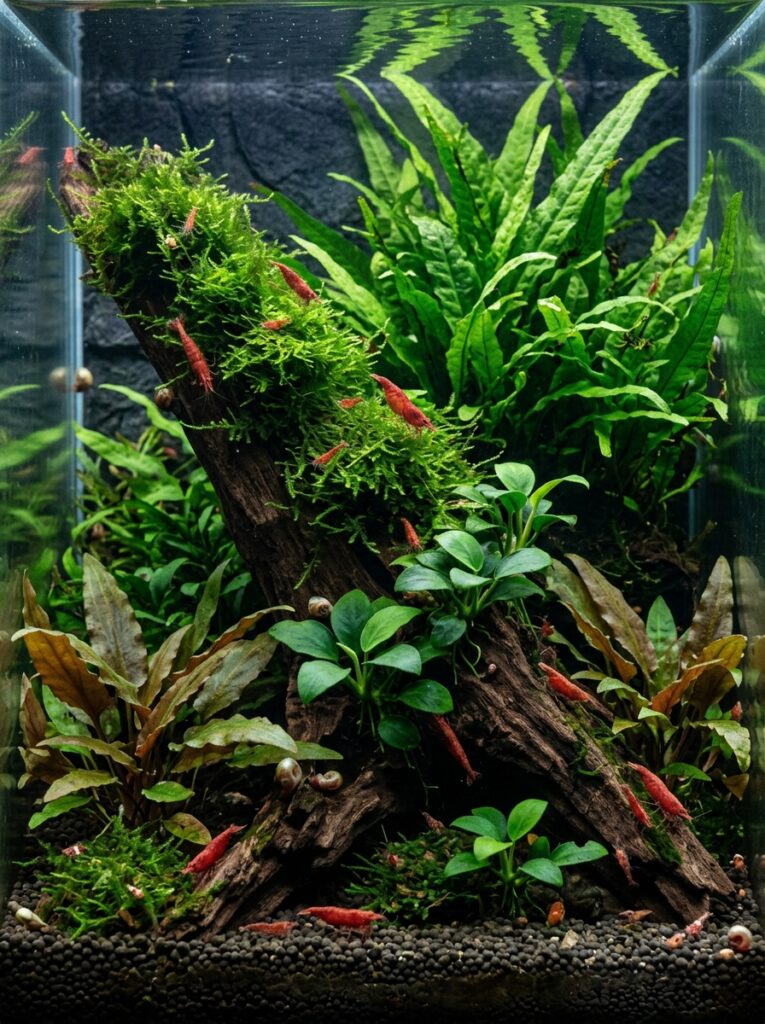
Natural hardscape elements such as driftwood and rocks help create a more complex environment where shrimp can explore, hide, and forage.
Driftwood is particularly valuable because it provides texture and surface area. Shrimp often spend hours investigating its crevices and grazing on the microorganisms that develop over time.
Rocks can serve a similar purpose.
When arranged thoughtfully, they create small caves, protected corners, and natural pathways that shrimp use throughout the aquarium.
The goal isn’t to fill the tank with decorations.
Instead, focus on creating a layout that offers a variety of hiding places while still maintaining an open and natural appearance.
A shrimp-friendly aquarium should feel like a miniature ecosystem rather than a display cabinet full of ornaments.
When plants and hardscape work together, the result is an environment that supports both beauty and functionality.
The Importance of Grazing Surfaces
One of the most fascinating things about shrimp is how they spend their day.
Rather than swimming continuously like many fish, shrimp are almost always searching for something to eat.
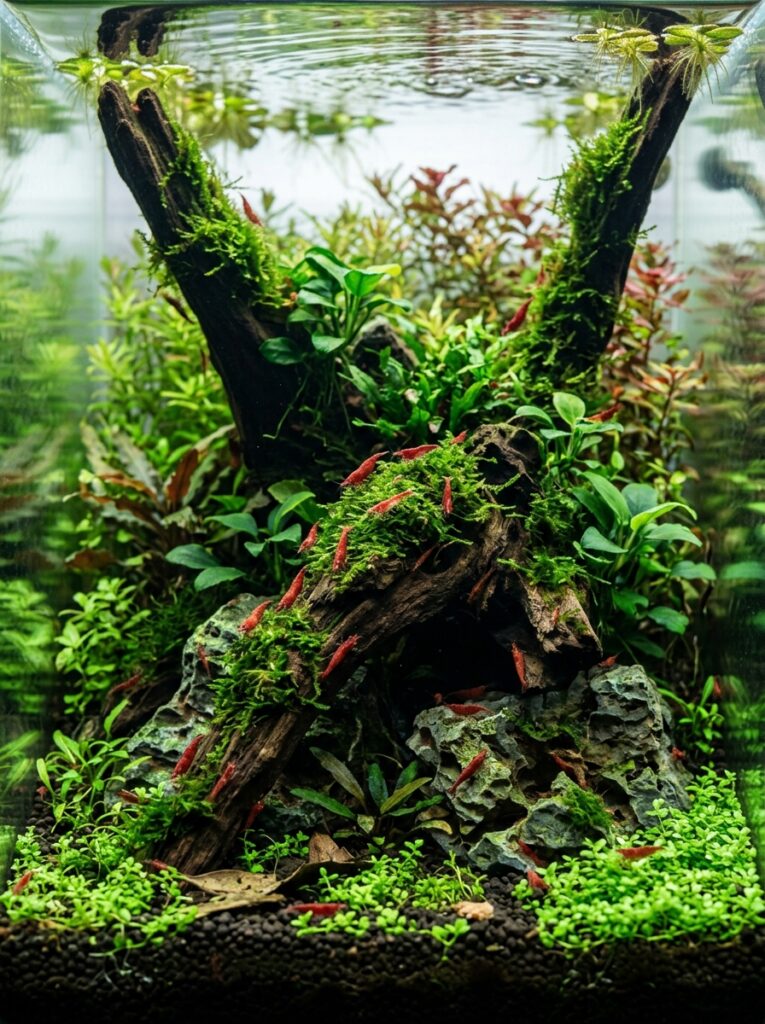
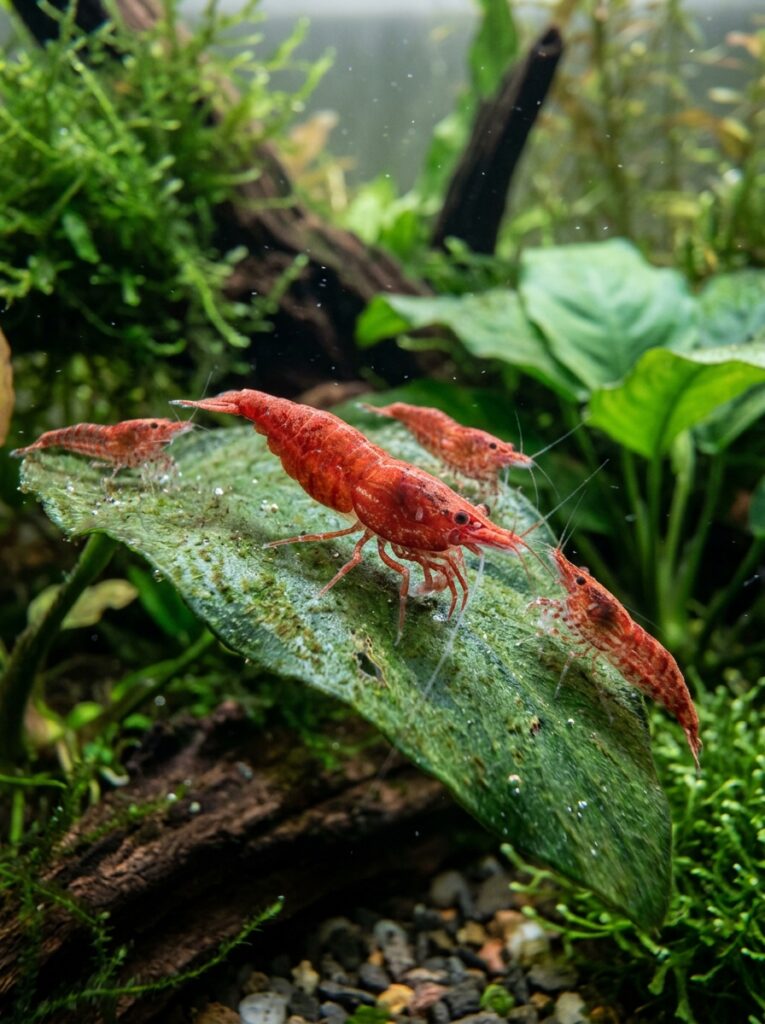
They move from surface to surface, picking at biofilm, algae, and tiny organic particles that develop naturally within the aquarium.
This is why grazing surfaces are so important.
Broad plant leaves, driftwood, rocks, mosses, and even floating plant roots can all become feeding areas.
A shrimp-friendly aquarium provides many different surfaces where this natural behavior can take place.
When these areas are available, shrimp remain active, engaged, and visible throughout the tank.
Watching shrimp graze is often one of the most enjoyable aspects of keeping them.
It’s also a reminder that successful shrimp aquariums are built around natural behaviors rather than simple decoration.
Choosing the Right Aquarium Size for Shrimp
Many beginners assume shrimp require large aquariums.
In reality, shrimp can thrive in surprisingly small setups when those environments are stable and thoughtfully designed.
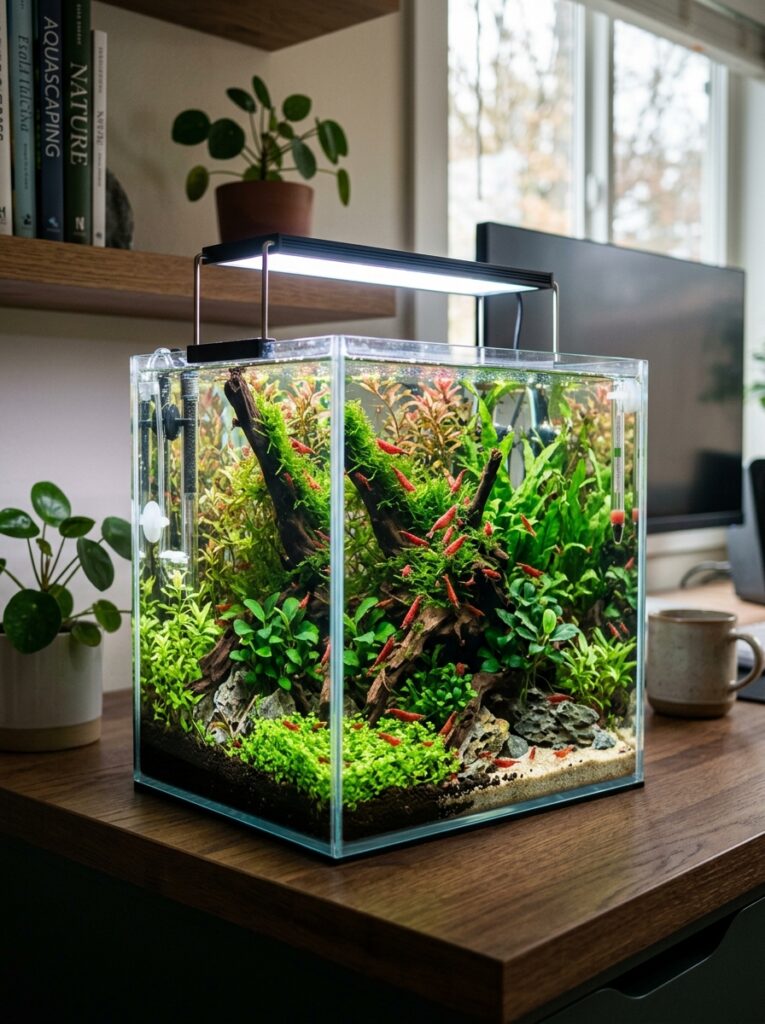
A well-maintained nano aquarium often provides more than enough space for a small shrimp colony.
What matters most is creating an environment that includes plants, grazing surfaces, shelter, and consistent conditions.
Larger aquariums do offer advantages.
They tend to be more stable and provide greater flexibility when designing the layout.
However, a small aquarium can still become an excellent shrimp habitat when proper planning is involved.
Rather than focusing solely on size, think about quality of the environment.
A thoughtfully designed small aquarium is often far more beneficial than a larger tank with little structure or cover.
For many beginners, nano shrimp tanks offer an enjoyable and manageable introduction to the hobby.
Why Stability Matters More Than Perfection
Many beginners spend a lot of time worrying about creating the perfect aquarium.
Perfect plants.
Perfect layout.
Perfect equipment.
But shrimp are often more concerned with stability than perfection.
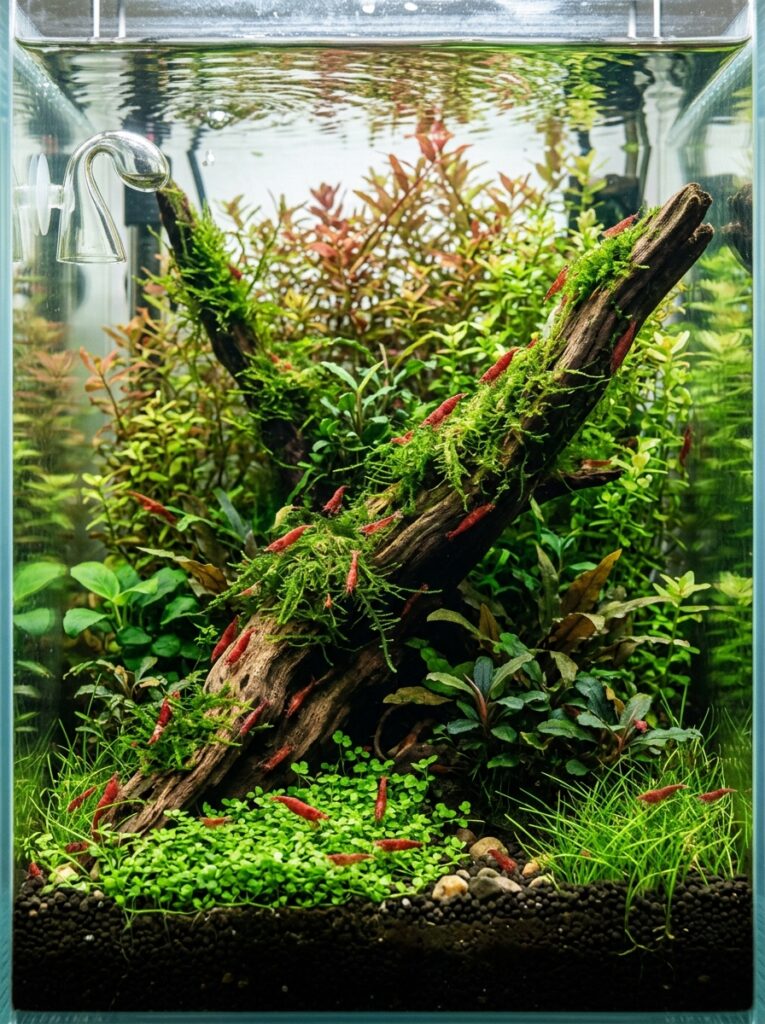
A stable aquarium provides predictable conditions that allow shrimp to adapt and thrive over time.
Frequent major changes can be stressful, even when the intention is to improve the tank.
This is one reason experienced shrimp keepers often recommend making adjustments gradually.
Allow plants to grow naturally.
Give the ecosystem time to develop.
Observe how shrimp interact with their environment before making significant changes.
A healthy shrimp aquarium isn’t necessarily the most impressive-looking tank.
It’s the one that remains stable, balanced, and supportive of natural shrimp behavior.
Patience is often one of the most valuable tools a shrimp keeper can develop.
Common Mistakes in Shrimp Aquariums
Most shrimp-keeping mistakes don’t happen because people don’t care.
They happen because beginners are eager to create the perfect aquarium as quickly as possible.
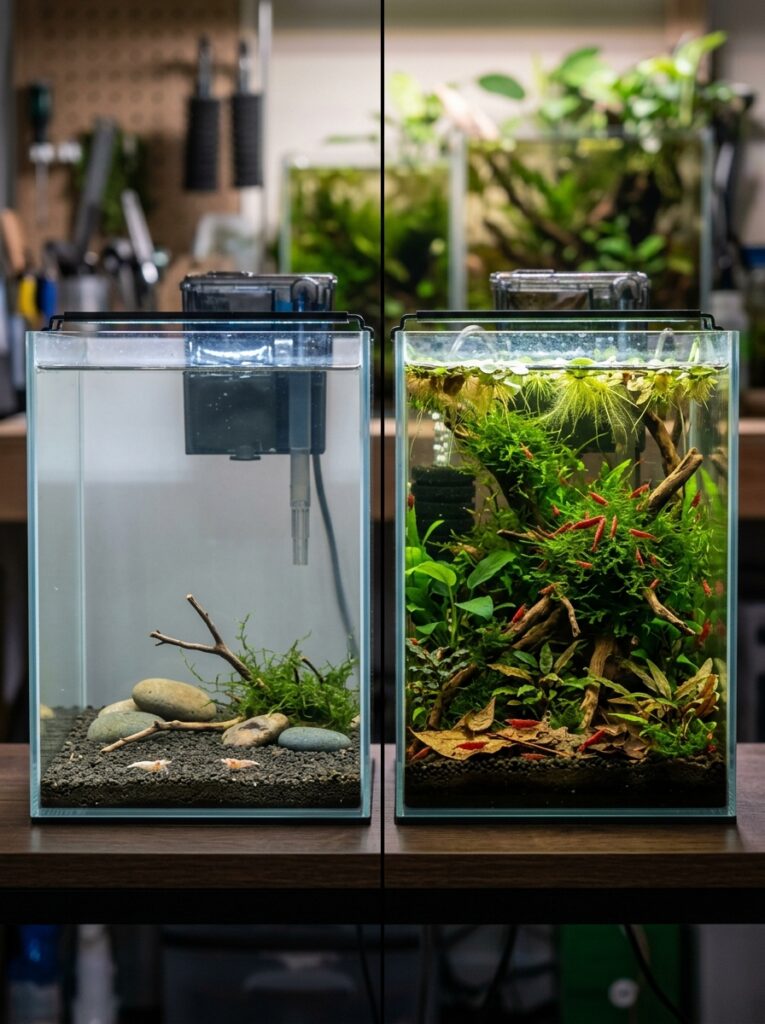
One common mistake is creating a tank with very little cover.
An aquarium may look clean and organized, but shrimp often feel more comfortable when plants, mosses, and natural hardscape provide plenty of places to explore and hide.
Another mistake is constantly rearranging the layout.
While occasional improvements are fine, shrimp generally benefit from a stable environment where they can establish routines and adapt to their surroundings.
Some hobbyists also underestimate the importance of patience.
New aquariums take time to mature. Plants need time to grow, biofilm needs time to develop, and shrimp need time to settle into their new environment.
Perhaps the biggest mistake is treating the aquarium as a decoration first and an ecosystem second.
Beautiful shrimp tanks are usually the result of healthy ecosystems—not the other way around.
When the environment functions naturally, the appearance often improves as a result.
Creating a Natural Ecosystem Instead of a Decoration
One of the most rewarding shifts in aquarium keeping happens when you stop viewing the tank as a decoration and start seeing it as an ecosystem.
In a healthy shrimp aquarium, everything works together.
Plants provide shelter and grazing areas.
Driftwood and rocks create structure.
Microorganisms develop naturally on available surfaces.
Shrimp interact with every part of the environment.
Instead of trying to control every detail, successful shrimp keepers often focus on creating conditions that allow the ecosystem to develop naturally.
As plants grow and biological activity increases, the aquarium begins to feel more alive.
This approach often produces aquariums that are not only healthier but also more visually appealing.
Nature tends to create a balance that artificial decorations alone cannot replicate.
The goal is not simply to build a beautiful aquarium.
It’s to build an environment where beauty emerges naturally from a healthy ecosystem.
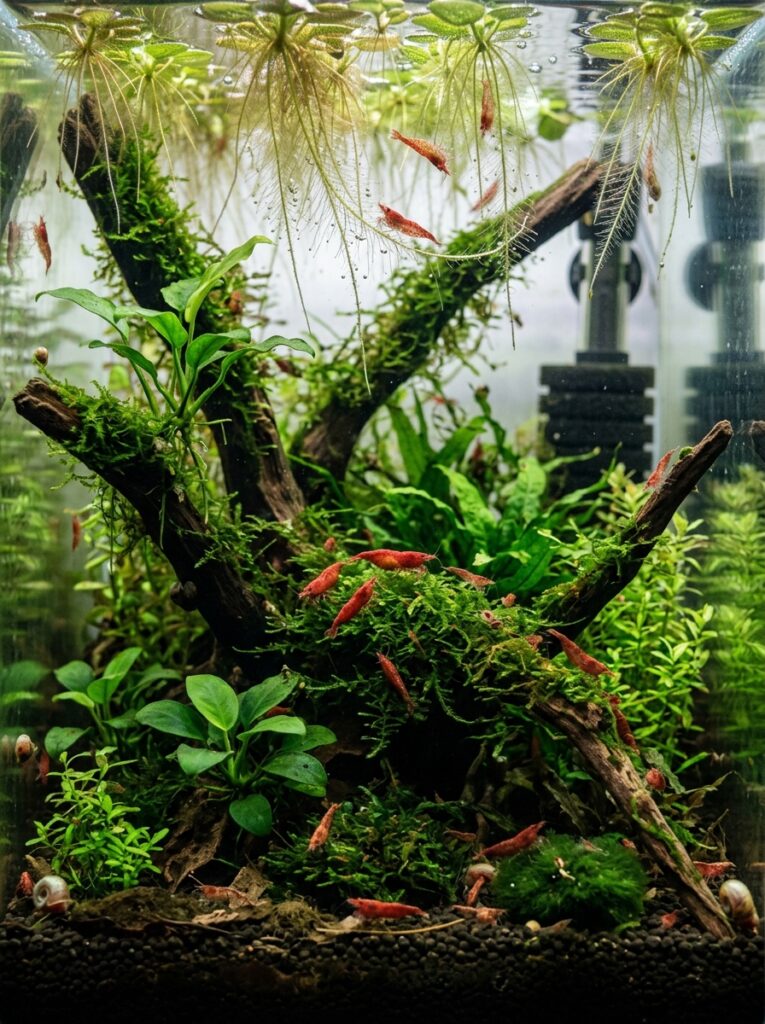
Enjoying the Unique World of Shrimp Keeping
Shrimp keeping is different from many other areas of the aquarium hobby.
The enjoyment often comes from the small details.
A shrimp grazing on a leaf.
A group exploring driftwood.
Tiny shrimplets appearing among the plants.
These moments may seem simple, but they are part of what makes shrimp aquariums so fascinating.
Unlike larger fish that often become the center of attention, shrimp encourage observation.
They invite you to slow down and notice the countless interactions taking place within the aquarium.
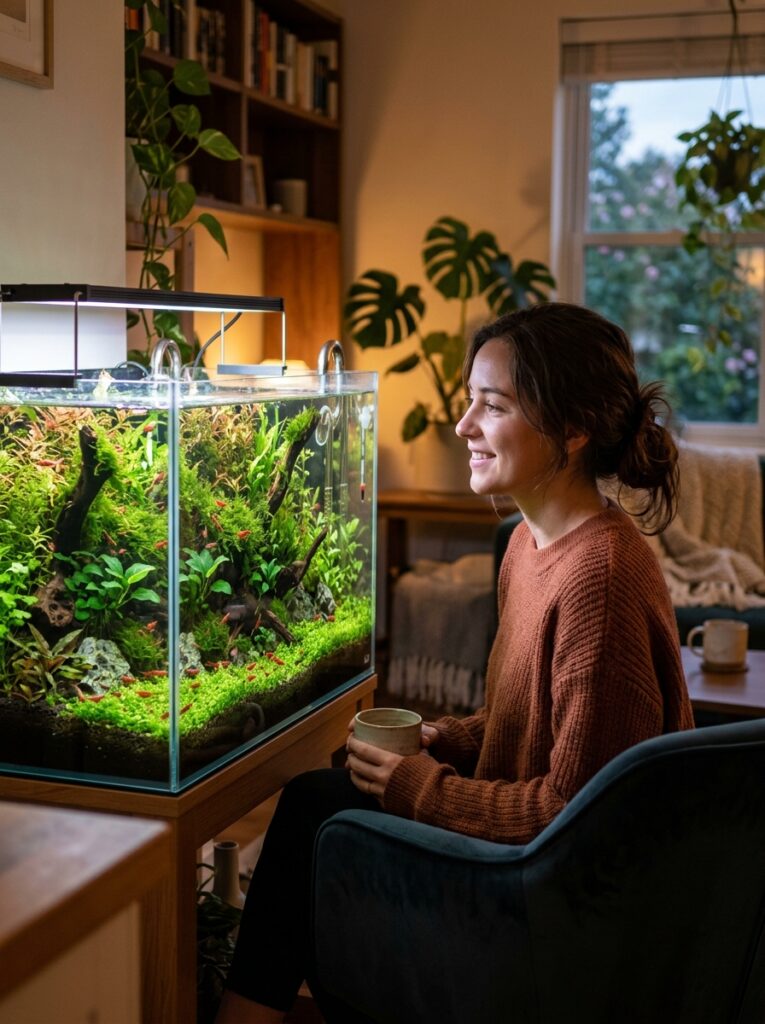
Over time, many hobbyists discover that shrimp tanks have a calming quality.
The combination of live plants, natural hardscape, and constant activity creates an environment that feels peaceful and engaging.
For beginners, creating a shrimp-friendly aquarium is not just about caring for shrimp.
It’s about building a living ecosystem that continues to surprise and reward you every day.
CONCLUSION
Creating a shrimp-friendly aquarium is less about buying special equipment and more about designing an environment that supports natural behavior.
Plants, driftwood, rocks, grazing surfaces, and stable conditions all contribute to a habitat where shrimp can thrive.
By focusing on shelter, ecosystem development, and long-term stability, beginners can create aquariums that are both attractive and functional.
The most successful shrimp tanks often grow more beautiful over time as plants mature and biological activity develops naturally.
Whether you’re starting your first shrimp tank or improving an existing setup, building a healthy ecosystem is one of the best investments you can make for your shrimp and your enjoyment of the hobby.
FAQ
What makes an aquarium shrimp-friendly?
A shrimp-friendly aquarium provides shelter, grazing surfaces, live plants, stable conditions, and plenty of areas where shrimp can safely explore.
Do shrimp need live plants?
Live plants are highly beneficial because they provide cover, support biofilm growth, and help create a more natural environment.
What is the best plant for a shrimp tank?
Java Moss is often considered one of the best options because it offers shelter, grazing surfaces, and protection for young shrimp.
Can shrimp live in a nano aquarium?
Yes. Many shrimp species thrive in nano aquariums when the environment is stable and properly maintained.
Why do shrimp like driftwood?
Driftwood provides texture, shelter, and surfaces where biofilm develops, giving shrimp natural areas to explore and feed.
How long does it take a shrimp tank to mature?
Most shrimp aquariums improve over several weeks and months as plants grow, microorganisms develop, and the ecosystem becomes more established.