
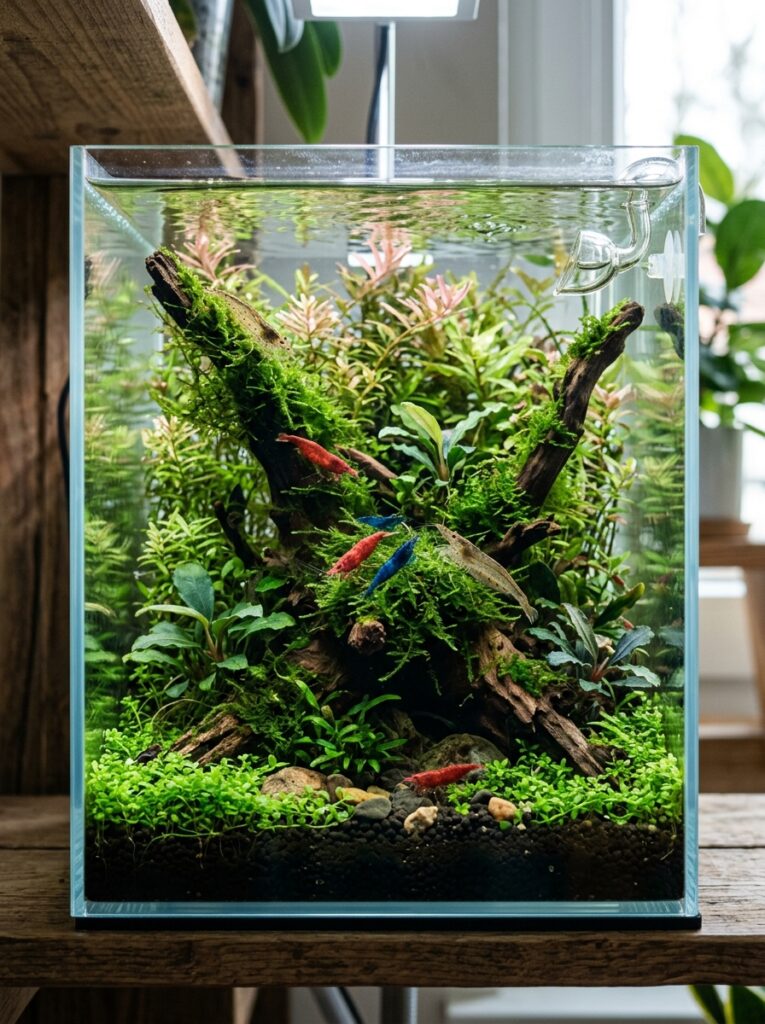
The best nano shrimp for small aquariums are peaceful, active, beginner-friendly, and comfortable in planted tanks with stable water.
They are colorful, fascinating to observe, and often thrive in aquariums where larger fish would feel cramped.
For many hobbyists, shrimp add a completely different dimension to the aquarium experience.
Instead of focusing on open-water swimming behavior, shrimp encourage observation of the small details. They explore plants, graze on surfaces, and constantly interact with their environment.
The good news is that several shrimp species adapt well to nano aquariums and are suitable for beginners.
However, not all shrimp species have the same care requirements, appearance, or behavior.
Choosing the right species can make your aquarium easier to maintain and more enjoyable to watch.
Let’s explore some of the best nano shrimp for small aquariums and why they have become favorites among aquarium hobbyists.
- Why Shrimp Are Perfect for Nano Aquariums
- What to Look for When Choosing Nano Shrimp
- Cherry Shrimp: The Beginner Favorite
- Amano Shrimp: Excellent Algae Helpers
- Blue Dream Shrimp for Vibrant Color
- Ghost Shrimp: Affordable and Interesting
- Can Different Shrimp Species Live Together?
- Common Mistakes When Choosing Shrimp
- Finding the Right Shrimp for Your Aquarium
- CONCLUSION
- FAQs
Why Shrimp Are Perfect for Nano Aquariums
One reason shrimp have become so popular is their ability to thrive in smaller aquariums.
Unlike many fish species that require significant swimming space, shrimp spend most of their time exploring surfaces, plants, driftwood, and rocks.
This makes them well-suited to thoughtfully designed nano aquariums.
Their small size also allows hobbyists to create detailed planted layouts without worrying about overcrowding.
Another advantage is behavior.
Shrimp are constantly active.
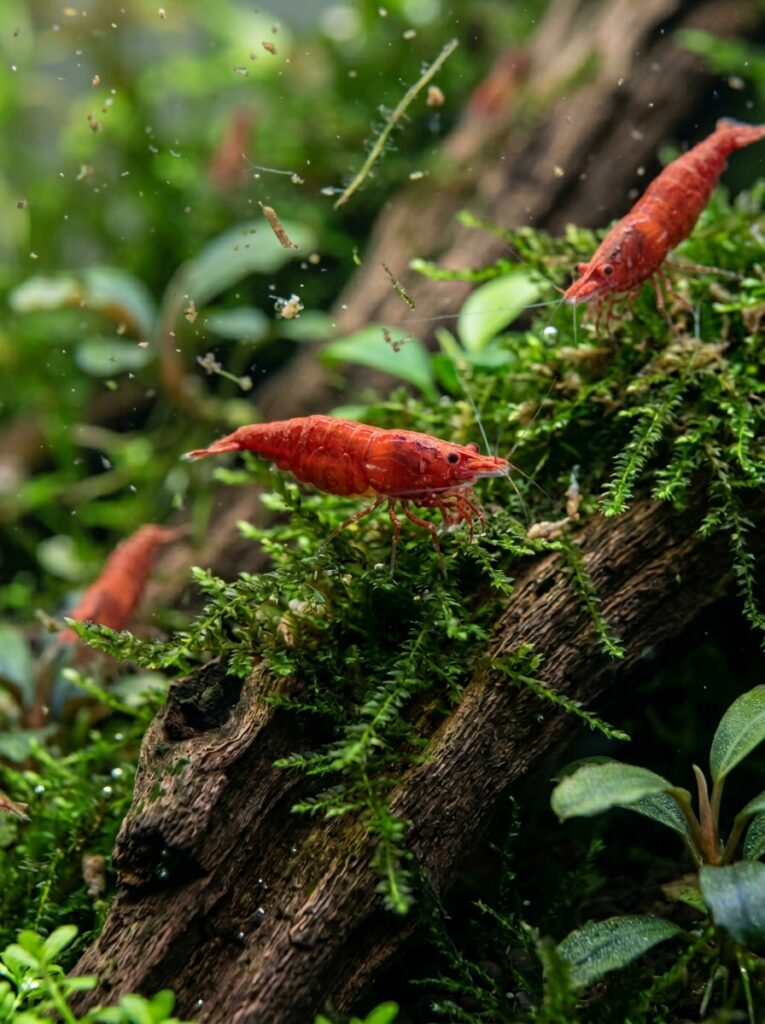
Whether grazing on biofilm, climbing through moss, or exploring driftwood, they bring movement and interest to nearly every part of the aquarium.
For aquarists who enjoy planted tanks and natural ecosystems, shrimp often feel like a perfect match.
They help transform an aquarium from a simple display into a living miniature world.
What to Look for When Choosing Nano Shrimp
Not all shrimp are equally suitable for every aquarium.
Before selecting a species, it’s helpful to consider a few important factors.
First, think about experience level.
Some shrimp are extremely beginner-friendly and adapt well to a wide range of aquarium conditions. Others may require more attention and stability.
Color can also influence your choice.
Many hobbyists enjoy creating planted aquariums where brightly colored shrimp stand out against green plants and natural hardscape.
Behavior is another consideration.
While most freshwater shrimp are peaceful, some species are more active, visible, or effective at algae control than others.
Finally, consider the overall goals of your aquarium.
Are you building a planted display tank?
A shrimp-only ecosystem?
A peaceful community aquarium?
The answers can help guide you toward the species that best matches your setup.
Cherry Shrimp: The Beginner Favorite
If one shrimp species deserves credit for introducing people to the hobby, it’s the Cherry Shrimp.
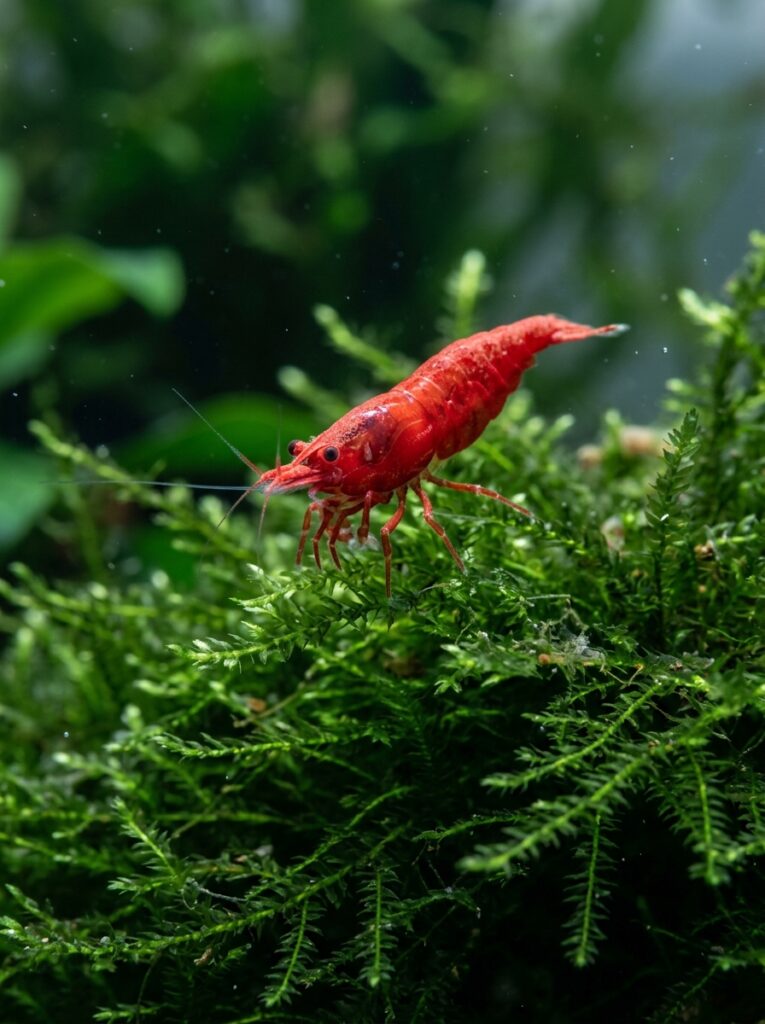
Known for their bright red coloration and beginner-friendly nature, Cherry Shrimp have become one of the most popular freshwater shrimp species in the world.
They adapt well to planted aquariums, remain active throughout the day, and often reproduce successfully in stable environments.
Their vibrant color also makes them easy to spot among green plants and natural hardscape.
For many hobbyists, this visual contrast is one of the biggest attractions.
Cherry Shrimp are constantly grazing on surfaces, exploring plants, and interacting with their environment.
This activity makes them enjoyable to observe even in small aquariums.
For beginners building their first shrimp tank, Cherry Shrimp are often the easiest recommendation because they combine beauty, activity, and relatively straightforward care requirements.
Amano Shrimp: Excellent Algae Helpers
Amano Shrimp are often recommended to aquarists who want both an interesting aquarium inhabitant and a helpful cleanup crew.
Named after the influential aquascaper Takashi Amano, these shrimp have earned a reputation for their strong appetite and active behavior.
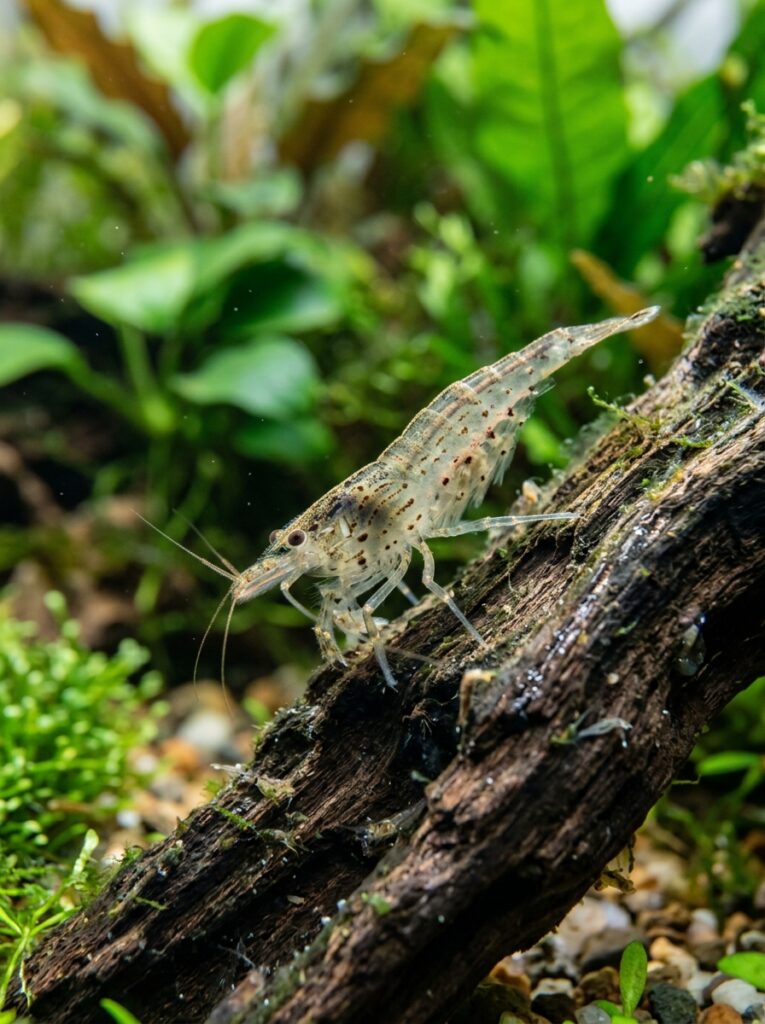
Unlike Cherry Shrimp, Amano Shrimp are generally larger and display more subtle coloration.
Their transparent bodies often feature delicate markings that become more noticeable upon closer inspection.
One reason they remain popular is their tendency to graze constantly.
They spend much of their time exploring plants, driftwood, rocks, and other surfaces in search of food.
This behavior makes them fascinating to watch in planted aquariums.
While they may not provide the bright colors of Cherry Shrimp, many aquarists appreciate their personality, activity level, and natural appearance.
For planted tanks, Amano Shrimp remain one of the most respected shrimp species in the hobby.
Blue Dream Shrimp for Vibrant Color
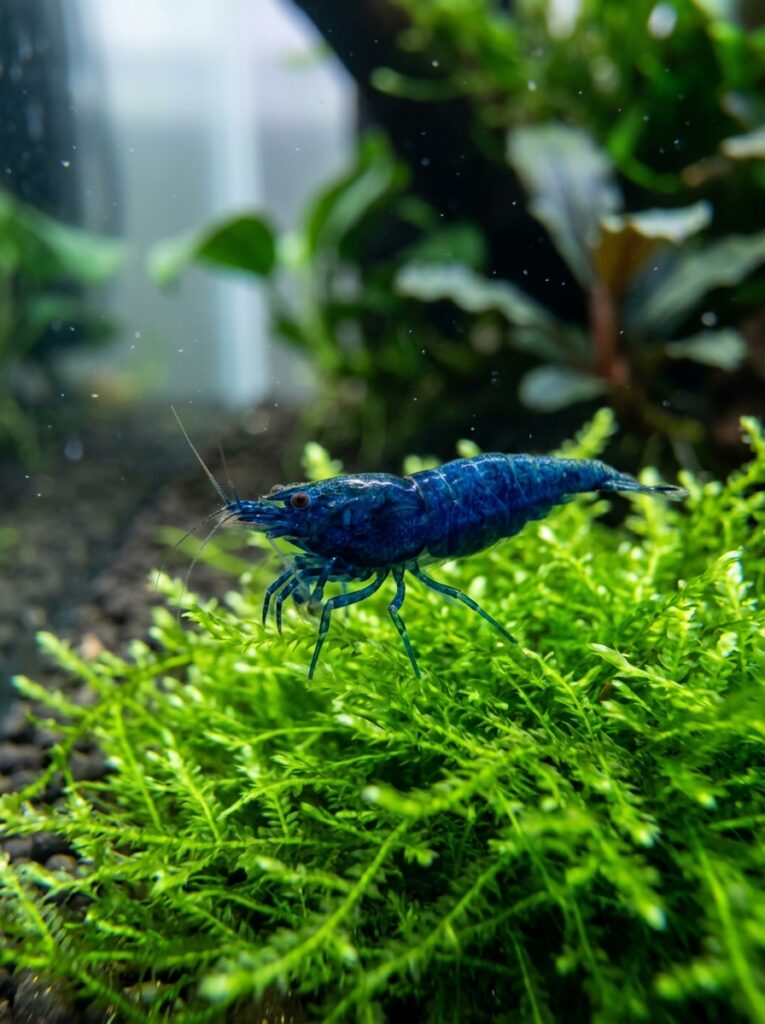
For aquarists looking to add something visually striking to a planted aquarium, Blue Dream Shrimp are often difficult to ignore.
Their deep blue coloration creates a dramatic contrast against green plants, pale substrate, and natural driftwood.
In a well-designed planted aquarium, Blue Dream Shrimp can become one of the most eye-catching elements of the entire layout.
Beyond appearance, they share many of the qualities that make other dwarf shrimp popular.
They spend their days grazing, exploring, and interacting with the environment much like Cherry Shrimp.
Many hobbyists enjoy using Blue Dream Shrimp as a centerpiece species in planted nano aquariums because their coloration remains visible from across the room.
For those who appreciate colorful freshwater invertebrates, Blue Dream Shrimp offer a unique alternative to traditional red varieties.
Ghost Shrimp: Affordable and Interesting
Ghost Shrimp are often among the first shrimp species beginners encounter.
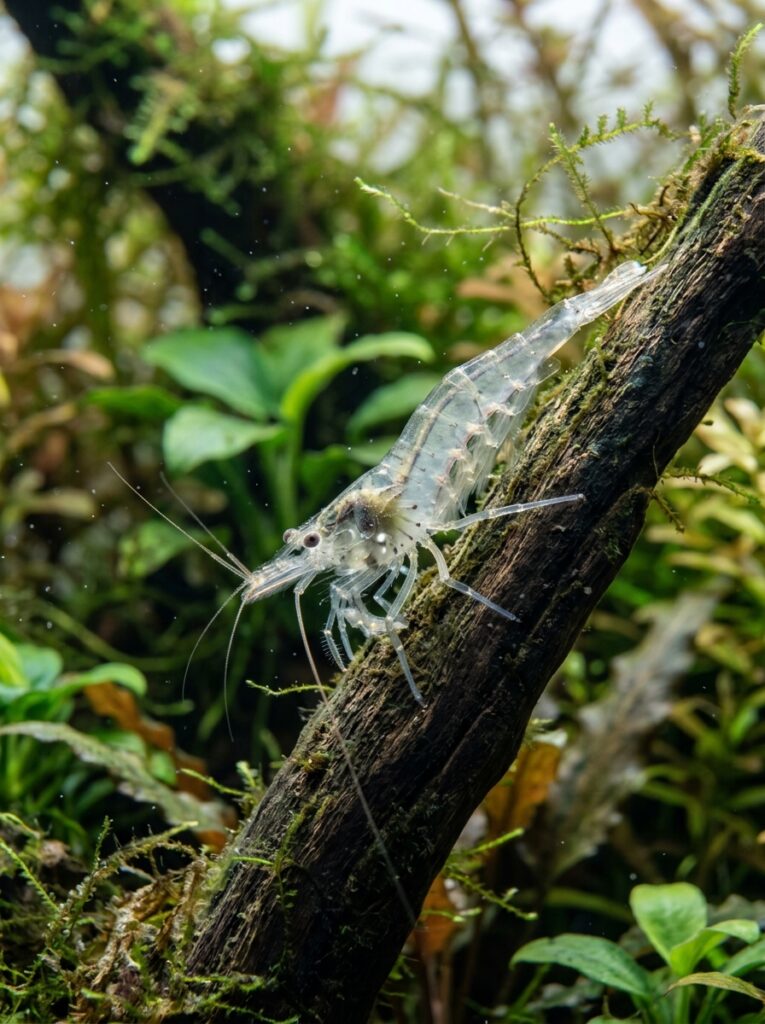
Their transparent bodies create a unique appearance that differs significantly from more colorful shrimp varieties.
Because much of their body is nearly see-through, observing Ghost Shrimp closely can be surprisingly fascinating.
You can often watch them move through plants, investigate surfaces, and interact with the aquarium in ways that reveal details hidden in more heavily colored species.
Ghost Shrimp are commonly available and often budget-friendly, making them accessible to beginners who want to experience shrimp keeping without a major investment.
While they may not attract attention through bright colors, they offer something equally interesting.
Their transparency allows aquarists to appreciate shrimp behavior and anatomy from a completely different perspective.
For hobbyists who enjoy observing small details, Ghost Shrimp can be a rewarding addition to a peaceful aquarium.
Can Different Shrimp Species Live Together?
One of the most common questions beginners ask is whether different shrimp species can share the same aquarium.
The answer depends on the species involved and the goals of the aquarium.
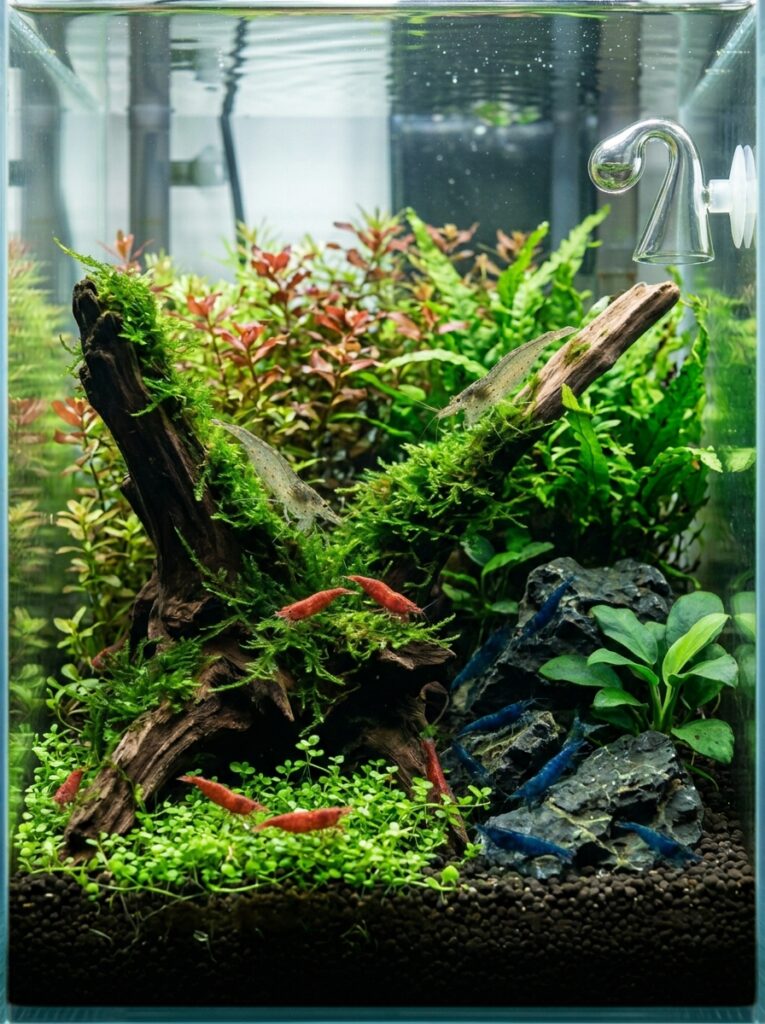
Many peaceful freshwater shrimp can coexist in a well-maintained planted tank, especially when there is plenty of cover and grazing space available.
However, compatibility is not always as simple as placing different shrimp together.
Some species may have different environmental preferences, while others may compete for food or preferred hiding areas.
Another consideration is breeding.
Many hobbyists who keep colorful shrimp varieties prefer to maintain a single type in a dedicated aquarium to preserve consistent coloration over time.
For beginners, starting with one shrimp species is often the simplest approach.
It allows you to learn their behavior, understand their needs, and observe how they interact with the environment before introducing additional species.
As experience grows, mixed-species setups may become easier to manage successfully.
Common Mistakes When Choosing Shrimp
Choosing shrimp is exciting, but beginners sometimes focus on appearance while overlooking practical considerations.
One common mistake is selecting a species without researching its needs.
Different shrimp species may vary in activity level, visibility, and environmental preferences.
Another mistake is choosing shrimp solely because they look attractive in photos.
A beautiful shrimp is always more enjoyable when it also suits the aquarium you’re building.
Some hobbyists also underestimate the importance of providing plants and natural cover.
Even hardy shrimp benefit from environments that allow them to explore, graze, and feel secure.
Patience is equally important.
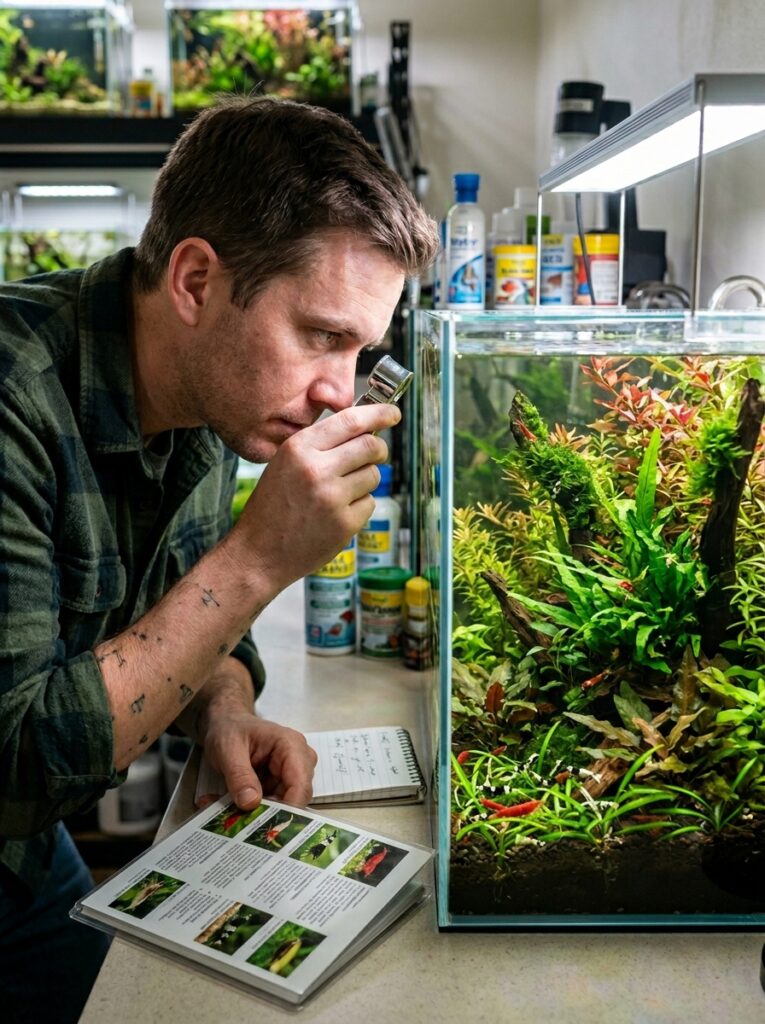
Many successful shrimp keepers spend time observing their aquarium before adding new inhabitants.
Taking a thoughtful approach often leads to a more stable and rewarding experience.
The best shrimp choice is not necessarily the rarest or most colorful species.
It’s the species that fits your aquarium and your goals as a hobbyist.
Finding the Right Shrimp for Your Aquarium
The best nano shrimp is not necessarily the most expensive or the most unusual.
It’s the one that matches your aquarium, your experience level, and the type of environment you want to create.
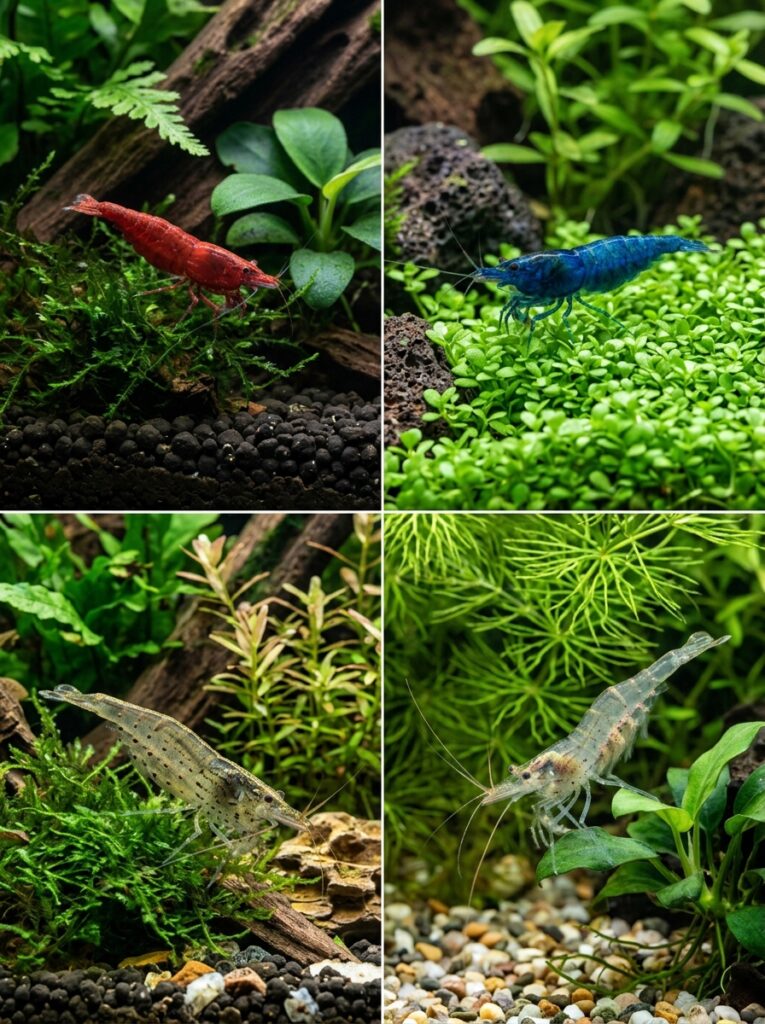
Cherry Shrimp are excellent for beginners who enjoy vibrant color and active behavior.
Amano Shrimp appeal to aquarists who appreciate constant activity and a natural appearance.
Blue Dream Shrimp provide striking color contrast in planted aquariums.
Ghost Shrimp offer a unique perspective through their transparent appearance and fascinating behavior.
Each species brings something different to the aquarium.
The good news is that all of them can contribute to a peaceful, engaging, and visually interesting nano tank when provided with the right environment.
Whether you’re building your first planted shrimp aquarium or expanding an existing setup, choosing a species that fits your goals is one of the most enjoyable parts of the hobby.
The right shrimp often becomes more than an aquarium inhabitant—it becomes part of the personality of the tank itself.
CONCLUSION
Nano shrimp are among the most rewarding inhabitants for small planted aquariums.
Their colors, behaviors, and constant interaction with the environment create a unique aquarium experience that differs from traditional fish keeping.
Cherry Shrimp, Amano Shrimp, Blue Dream Shrimp, and Ghost Shrimp each offer their own strengths and appeal.
The best choice depends on your goals, experience level, and the type of aquarium you want to create.
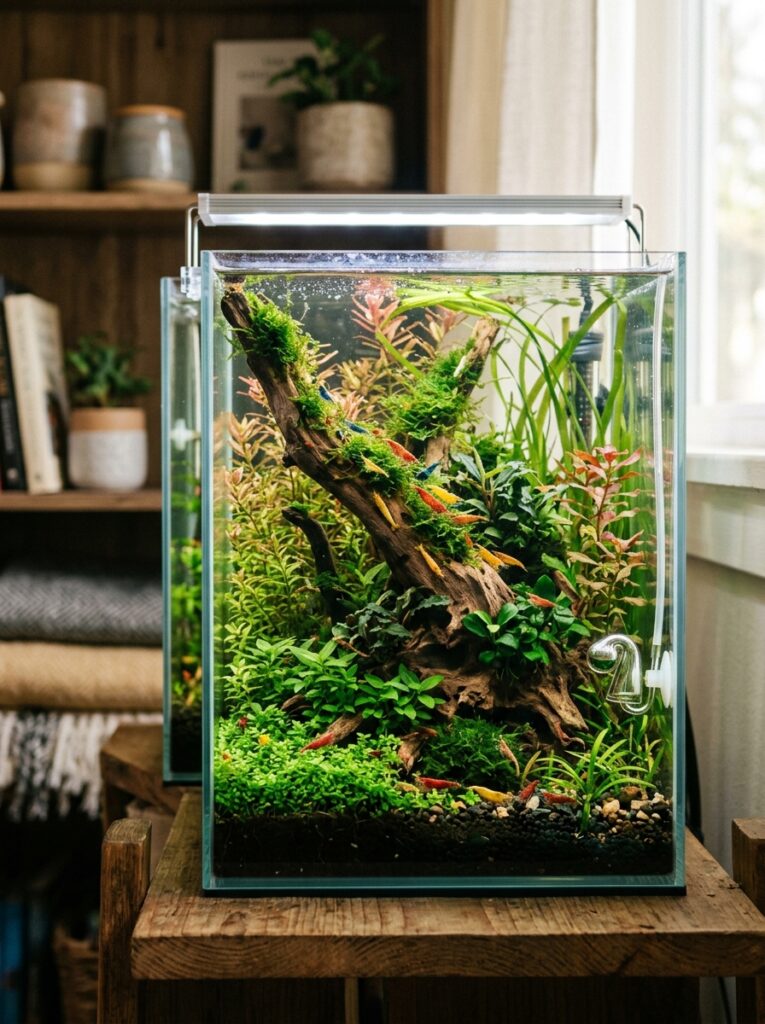
By combining the right shrimp species with live plants, natural hardscape, and a stable environment, even a small aquarium can become a thriving ecosystem full of life and activity.
For many hobbyists, shrimp are not just additions to an aquarium—they become the reason the aquarium is so enjoyable to observe every day.
FAQs
What is the best shrimp for a beginner aquarium?
Cherry Shrimp are often considered the best beginner shrimp because they are colorful, active, and generally adapt well to planted aquariums.
Can shrimp live in a small aquarium?
Yes. Many freshwater shrimp species thrive in nano aquariums when the environment is stable and provides plants, shelter, and grazing surfaces.
Are Amano Shrimp good for planted tanks?
Yes. Amano Shrimp are highly popular in planted aquariums because of their active nature and constant grazing behavior.
Do Blue Dream Shrimp require special care?
Blue Dream Shrimp have care requirements similar to many other dwarf shrimp and are often kept successfully in stable planted aquariums.
Can different shrimp species live together?
Some species can coexist peacefully, but beginners often find it easier to start with a single shrimp species before experimenting with mixed setups.
What plants are best for nano shrimp tanks?
Java Moss, Anubias Nana, Java Fern, Cryptocoryne species, and floating plants are commonly recommended because they provide shelter and grazing surfaces.