
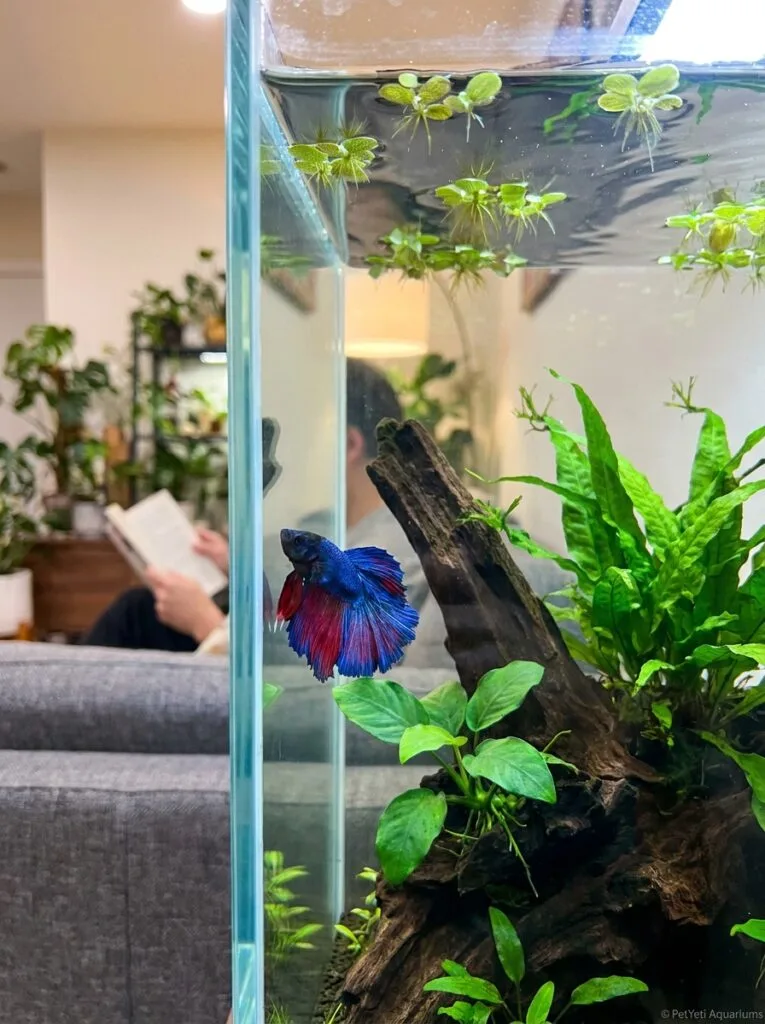
A betta fish that keeps swimming back and forth against the glass is often reacting to stress, reflections, water quality, strong current, or a new environment. In many cases, glass surfing is temporary and can be reduced once the underlying cause is identified.
The good news is that glass surfing does not always mean your betta is sick. Many bettas pace along the front of the tank when they are exploring a new aquarium, reacting to their own reflection, waiting for food, or feeling stressed by something in their environment.
In this guide, I’ll help you figure out whether your betta is glass surfing normally or showing signs of stress, what to check first, and what you can do today to help the behavior stop.
When Glass Surfing Is Normal vs When It’s a Problem
Not all glass surfing is a sign of illness. Many healthy bettas pace along the front of the tank for a few minutes, especially when they are exploring a new aquarium, reacting to movement outside the tank, or anticipating feeding time.
The behavior becomes more concerning when it is constant, repetitive, and continues for long periods every day.
| Behavior | Usually Normal? |
|---|---|
| Glass surfing for a few minutes after feeding | Yes |
| Pacing occasionally throughout the day | Usually |
| Exploring a newly set up aquarium | Yes |
| Constant glass surfing for hours | No |
| Glass surfing with clamped fins or heavy breathing | No |
| Glass surfing with poor water quality or low temperature | No |
If your betta still eats normally, responds when you approach the tank, and occasionally rests or explores other areas, the behavior is often temporary. If it is swimming back and forth against the glass for hours every day, treat it as a sign that something in the environment may be causing stress.
- When Glass Surfing Is Normal vs When It’s a Problem
- What to Check First (30-Second Diagnosis)
- Match What You’re Seeing
- Your Betta May Be Exploring a New Environment
- Filter Flow and Enrichment
- Reflections and Lighting
- Small or Bare Aquariums Can Increase Stress
- Your Betta May Be Reacting to Activity Outside the Tank
- Poor Water Quality
- Temperature and Tank Conditions
- Some Glass Surfing Is Simply Personality
- What to Do Today If Your Betta Is Glass Surfing
- When Should You Be Concerned?
- CONCLUSION
- FAQs
What to Check First (30-Second Diagnosis)
Before assuming your betta is sick, check these four things first. They solve a surprisingly large number of glass-surfing problems in beginner aquariums.
- Water temperature: Is it between 78–80°F (25.5–26.5°C)?
- Water quality: Are ammonia and nitrite at 0 ppm?
- Reflections: Can you see your own reflection clearly in the tank glass?
- Filter flow: Is the current strong enough to push your betta around the tank?
If the temperature is too low, the water quality is poor, or the fish is reacting to reflections or strong current, start with those issues before treating for disease.
Match What You’re Seeing
This quick guide can help you narrow down the most likely cause before reading the detailed sections below.
| What You See | Most Likely Cause | Usually Easy to Fix? |
|---|---|---|
| Glass surfing for a few minutes after feeding | Excitement or anticipation | Yes |
| Glass surfing in a new tank | Exploration and adjustment | Yes |
| Glass surfing near one side of the tank | Reflection in the glass | Yes |
| Glass surfing with rapid swimming and stress | Poor water quality | Urgent |
| Glass surfing while avoiding the filter | Strong current | Yes |
| Glass surfing with clamped fins or heavy breathing | Stress or illness | Sometimes |
Most cases of betta glass surfing are related to reflections, stress, water quality, temperature, or strong water flow, so start with those areas before assuming the worst.
As an Amazon Associate, PetYeti earns from qualifying purchases. This comes at no additional cost to you and helps support the site. We only recommend products we genuinely believe can help create healthier and more enjoyable aquariums.
Your Betta May Be Exploring a New Environment
One of the most common causes of glass surfing is simply curiosity. Bettas are intelligent, observant fish that often investigate new surroundings.
If you’ve recently:
- Set up a new aquarium
- Rearranged decorations
- Added plants
- Moved the tank
your Betta may spend extra time swimming along the glass while becoming familiar with the changes.
Finding out why is my betta glass surfing comes down to observing when the behavior happens—such as when room lights are on or right after a water change.
Real-Life Example
Many new Betta owners notice glass surfing during the first few days after introducing their fish to a freshly set-up aquarium. Once the fish settles in, the behavior usually decreases naturally.
Patience is often the best solution in these situations.
PetYeti Calm Tip
New Bettas often need a few days to settle into their surroundings. Keep the room calm, avoid tapping the glass, and give your Betta plants or soft hiding spots near the front and sides of the tank. A little cover can make the glass feel less exposed and help your Betta explore more calmly.
Filter Flow and Enrichment
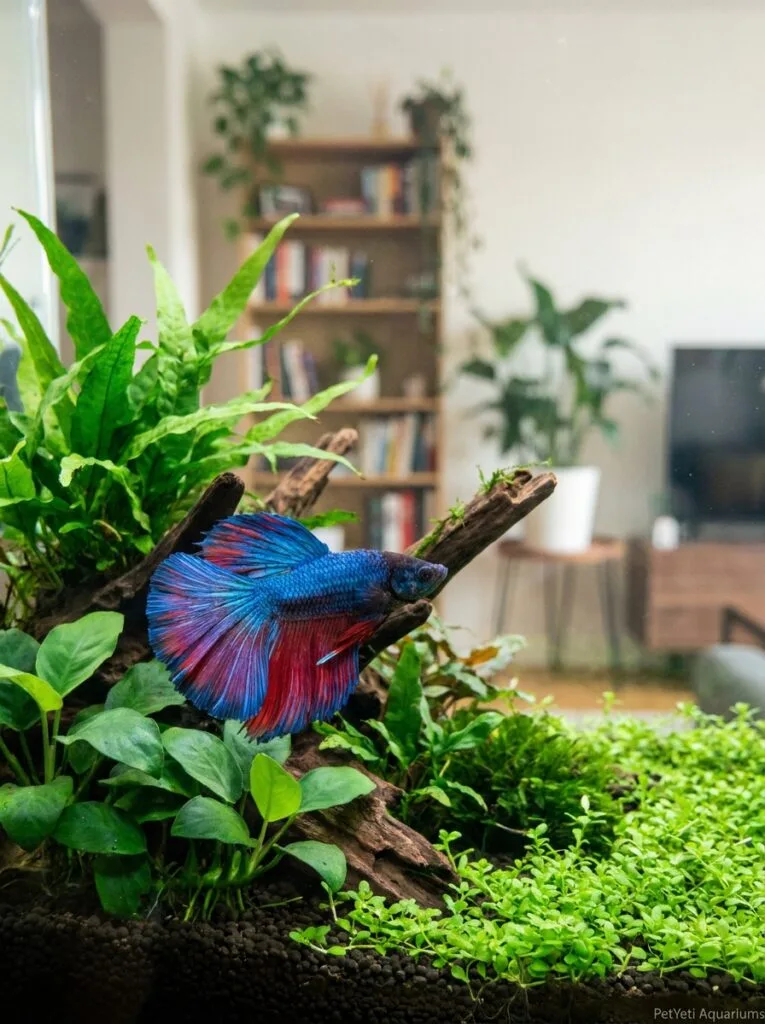
Bettas are not strong swimmers, and a filter that creates too much current can make them feel stressed and restless. Many bettas respond by swimming repeatedly along the glass, especially if they are trying to avoid a strong flow near the surface or in the center of the tank.
A tank that is too empty can also contribute to glass surfing. Without plants, resting spots, or areas to explore, some bettas spend much more time pacing the front of the aquarium.
Signs filter flow may be contributing:
- The betta avoids one side of the tank
- It struggles to swim near the filter outlet
- It is pushed backward by the current
- Glass surfing decreases when the filter is turned down temporarily
What to Do
Reduce the filter flow if possible, add plants, caves, driftwood, or floating plants, and make sure there are calm areas where the betta can rest. Even a few floating plants can make a surprising difference because they provide shade and reduce the feeling of being exposed.
PetYeti Pick
For bettas that seem bothered by strong current, a sponge filter with gentle air flow is often one of the quietest and least stressful filtration options for a small aquarium.
PetYeti Calm Tip
A betta that spends all day patrolling the front glass often becomes calmer once the tank has plants, hiding places, and a gentle area with little current where it can rest whenever it wants.
Reflections and Lighting
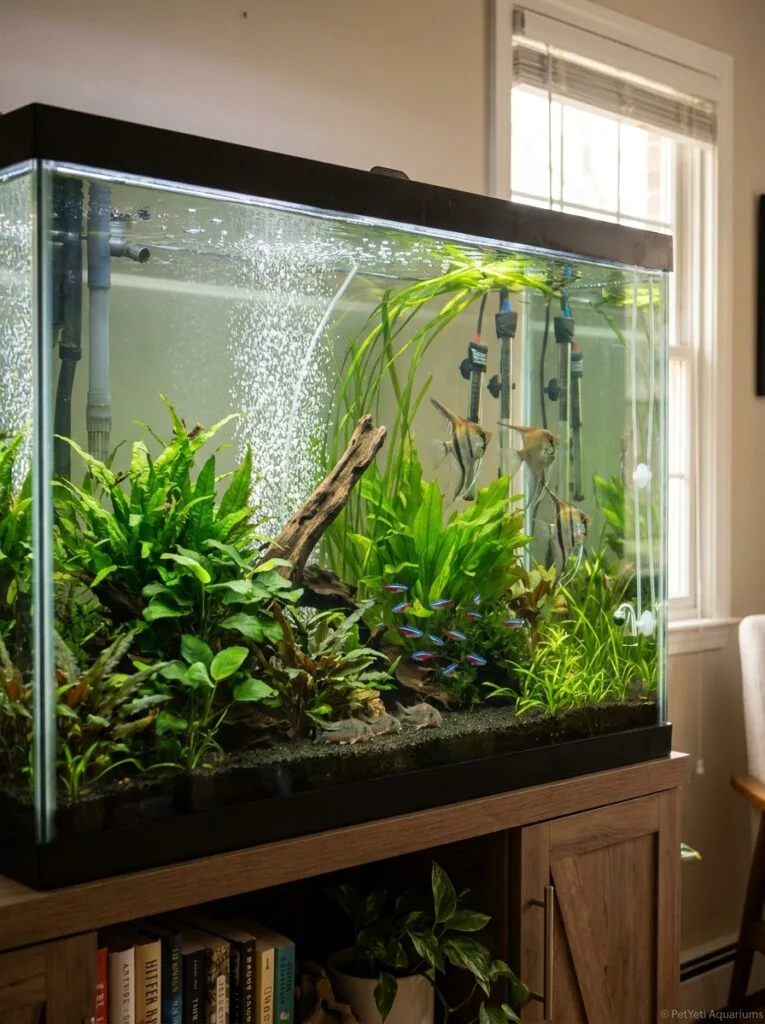
One of the most common causes of betta glass surfing is seeing its own reflection in the aquarium glass. Bettas are territorial fish, and many males will treat a reflection as another betta that has entered their territory.
This often happens when the tank light is much brighter than the room, when sunlight hits one side of the aquarium, or when dark backgrounds and surrounding objects create a mirror-like effect on the glass.
Signs reflections may be the cause:
- Glass surfing mostly along one side of the tank
- Flaring at the glass
- Becoming more active when the tank lights are turned on
- The behavior decreasing when the room becomes brighter
What to Do
Try turning on a nearby room light, reducing direct sunlight, moving the aquarium away from reflective surfaces, or adding plants or decorations near the area where the glass surfing occurs. Floating plants are especially useful because they soften overhead lighting and make many bettas feel more secure.
PetYeti Calm Tip
Before changing equipment, look at the tank from the same angle as your betta. If you can clearly see your own reflection in the glass, there’s a good chance your betta can see one too.
Real-Life Example
A Betta may spend significant time swimming along one particular side of the aquarium during the afternoon when sunlight creates stronger reflections. Later in the day, the behavior may disappear completely.
If glass surfing consistently happens near one panel of the aquarium, reflections may be worth investigating.
Beginner Mistake to Avoid
A common beginner mistake is assuming glass surfing always means the tank is too small or the Betta is sick. Sometimes the cause is much simpler, like strong reflections from bright room lights, sunlight, or a dark background behind the aquarium. Before making major changes, watch when the glass surfing happens and check whether lighting or reflections are triggering the behavior.
Small or Bare Aquariums Can Increase Stress
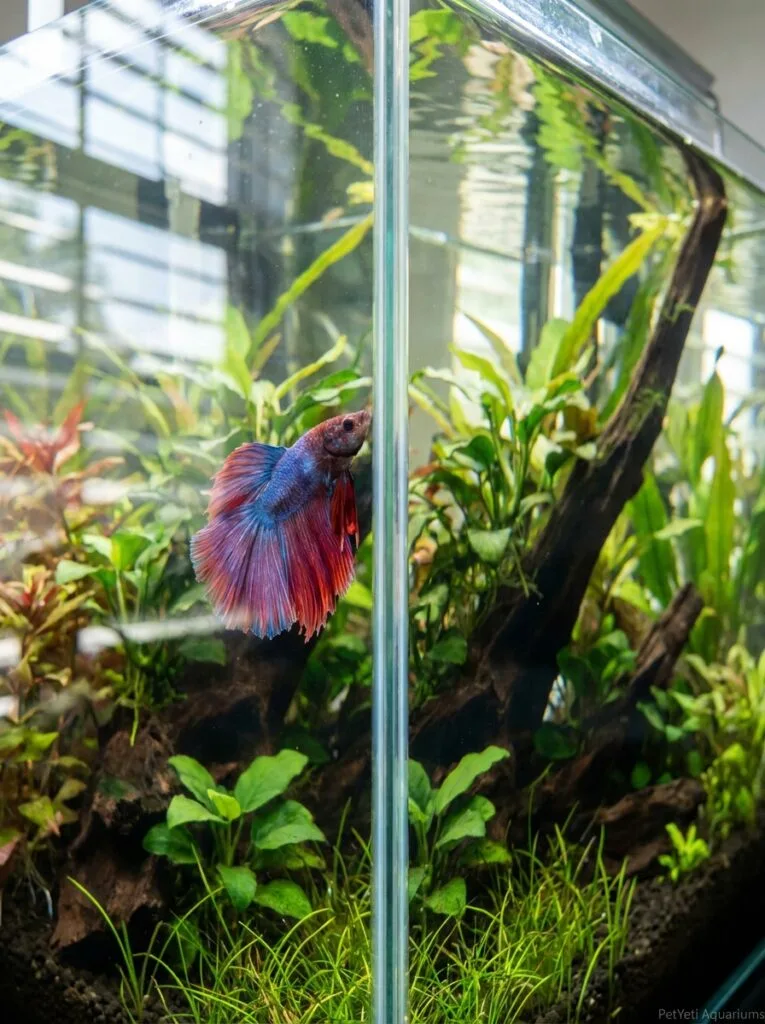
Bettas generally feel more secure when they have places to explore and rest. An aquarium that lacks plants, hiding spots, or visual barriers can sometimes leave a fish feeling exposed. This doesn’t mean every simple aquarium causes stress.
However, a thoughtfully decorated tank often encourages more natural behavior.
Real-Life Example
A Betta kept in a sparsely decorated aquarium may spend more time pacing the glass. After adding live plants and driftwood, many owners notice the fish begins exploring the aquarium more naturally.
This is one reason planted Betta tanks are so popular.
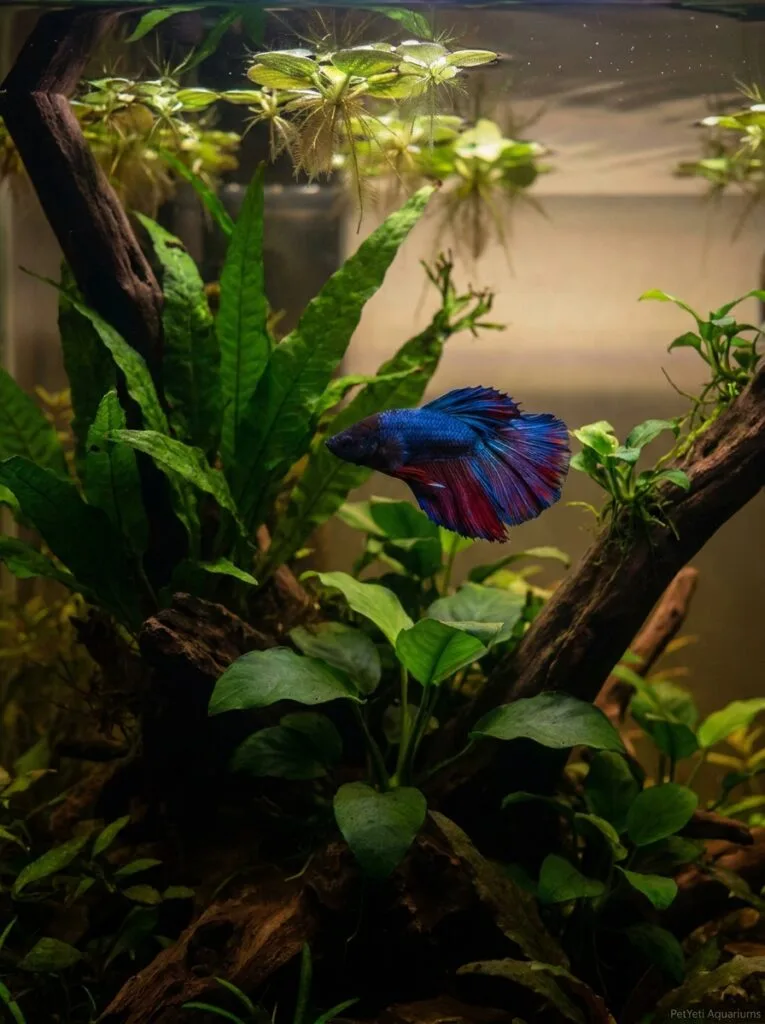
Your Betta May Be Reacting to Activity Outside the Tank
Bettas are surprisingly aware of what’s happening around them. Movement outside the aquarium can capture their attention.
Examples include:
- People walking by
- Other pets
- Television screens
- Bright lights
- Nearby windows
Sometimes what looks like stress is actually curiosity.
Real-Life Example
A Betta may repeatedly swim toward the front glass whenever family members enter the room, then return to normal behavior once the activity settles down. Observing when the behavior occurs often provides valuable clues.
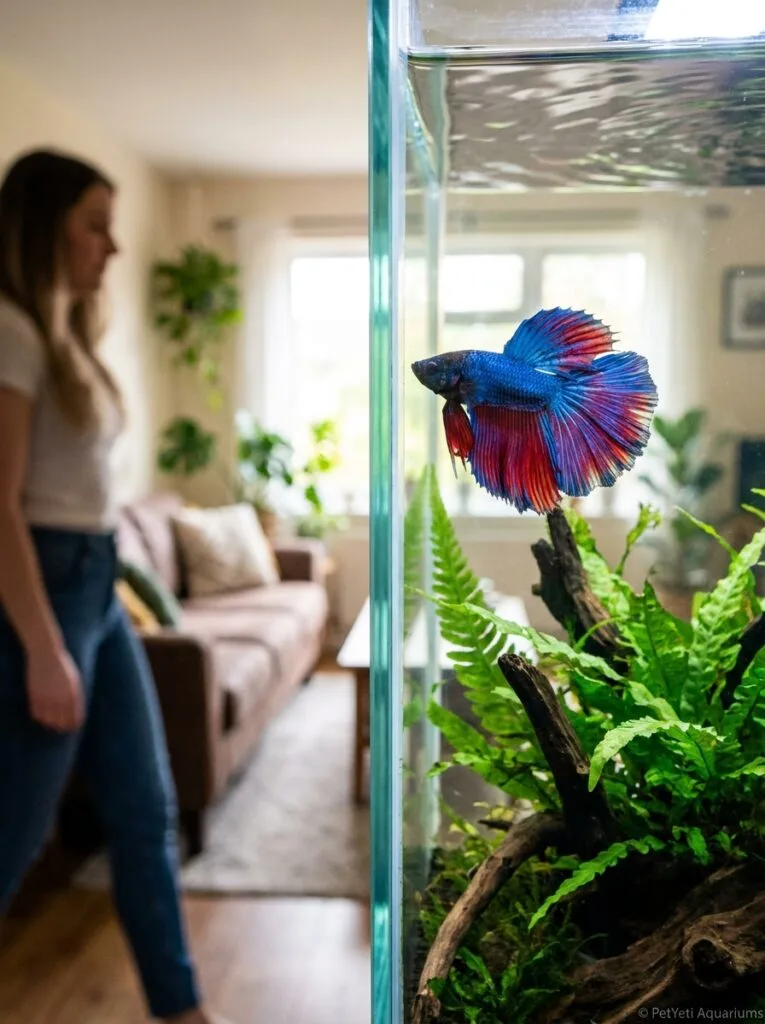
Poor Water Quality
Poor water quality is one of the most common reasons a betta becomes stressed and begins glass surfing. Even water that looks perfectly clear can contain ammonia or nitrite, and those compounds can irritate a betta’s gills and make it swim frantically along the glass.
In a healthy aquarium, ammonia and nitrite should always be 0 ppm. If either one is present, your betta may pace constantly, breathe more rapidly, lose interest in food, or become unusually restless.
Signs water quality may be the cause:
- Glass surfing for long periods every day
- Rapid or heavy breathing
- Clamped fins
- Loss of appetite
- Red or irritated gills
- Recent overfeeding or missed water changes
What to Do
Test the water as soon as possible. A liquid aquarium test kit is much more accurate than guessing based on appearance alone. If ammonia or nitrite is above 0 ppm, perform a partial water change, reduce feeding temporarily, and check that the filter is running properly.
PetYeti Pick
For most beginner betta owners, we recommend a liquid freshwater test kit because it allows you to check ammonia, nitrite, nitrate, and pH in a few minutes and gives much more reliable results than test strips.
PetYeti Tip
A betta can look stressed when the real problem is simply poor water quality. Testing the water is often the fastest way to rule out one of the most serious causes of glass surfing.
Real-Life Example
A Betta that suddenly begins pacing the glass after several weeks without maintenance may become noticeably calmer after a proper cleaning routine and water change schedule are restored. Consistent care often prevents small issues from becoming bigger ones.
Simple Checks for Betta Glass Surfing
If glass surfing appears suddenly, start with the basics before changing the whole tank. Check the water temperature, test ammonia and nitrite, look for strong reflections, and make sure the aquarium has enough plants or hiding spots to help your Betta feel secure.
Helpful PetYeti guides:
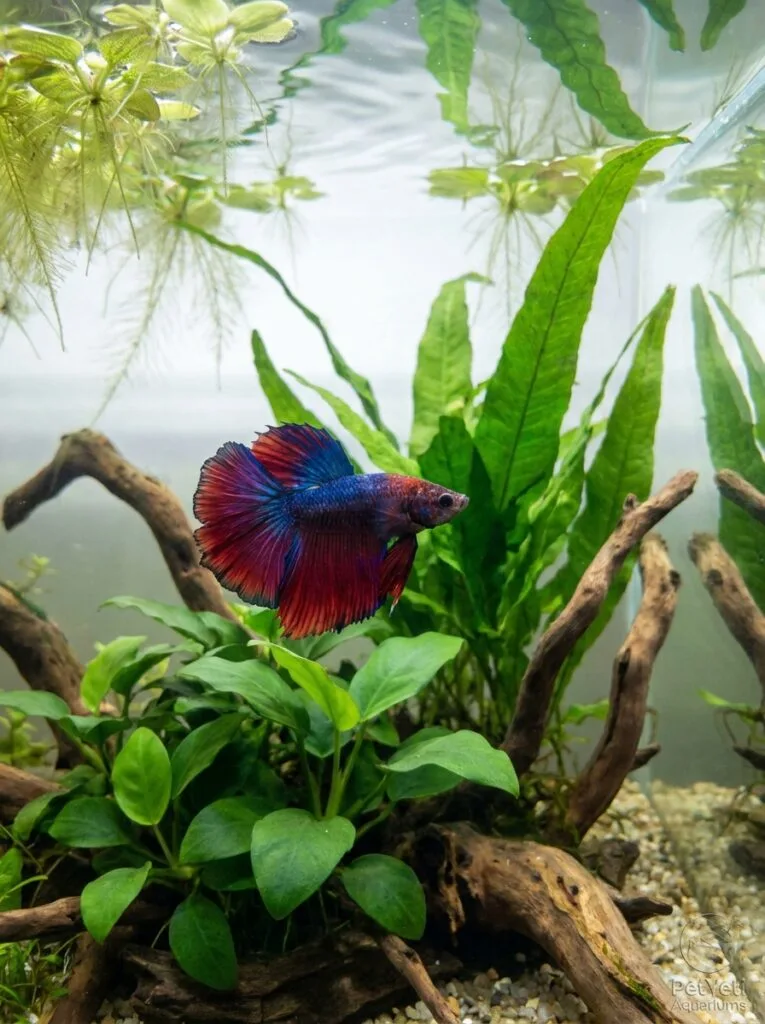
Temperature and Tank Conditions
Bettas are tropical fish, and water that is too cold can make them stressed, restless, and unusually active. While some bettas become lethargic in cold water, others respond by pacing the glass repeatedly, especially when the temperature fluctuates throughout the day.
For most bettas, the ideal temperature is 78–80°F (25.5–26.5°C). Water below 76°F (24°C) can affect metabolism, appetite, and overall behavior, making stress-related glass surfing more likely.
Signs temperature may be contributing:
- Glass surfing that becomes worse at night or in the morning
- Reduced appetite
- Clamped fins
- Spending time near the heater or warmer areas of the tank
- More active behavior after the water warms up
What to Do
Check the temperature with a separate aquarium thermometer rather than relying only on the heater dial. If the water is below the recommended range, gradually warm the tank using an adjustable aquarium heater designed for small freshwater aquariums.
PetYeti Pick
For most 5–20 gallon betta tanks, we’d choose a 50W adjustable aquarium heater because it provides stable temperature control and is easier to fine-tune than most preset heaters.
PetYeti Calm Tip
Sudden temperature swings are often more stressful than a slightly cool tank. Try to keep the water temperature stable throughout the day and night, especially during winter or in air-conditioned rooms.
Real-Life Example
A Betta living near an air-conditioning vent may become noticeably more active when room temperatures change throughout the day. Once the environment stabilizes, behavior often becomes more predictable.
Small environmental details can have a surprisingly large impact on fish behavior.
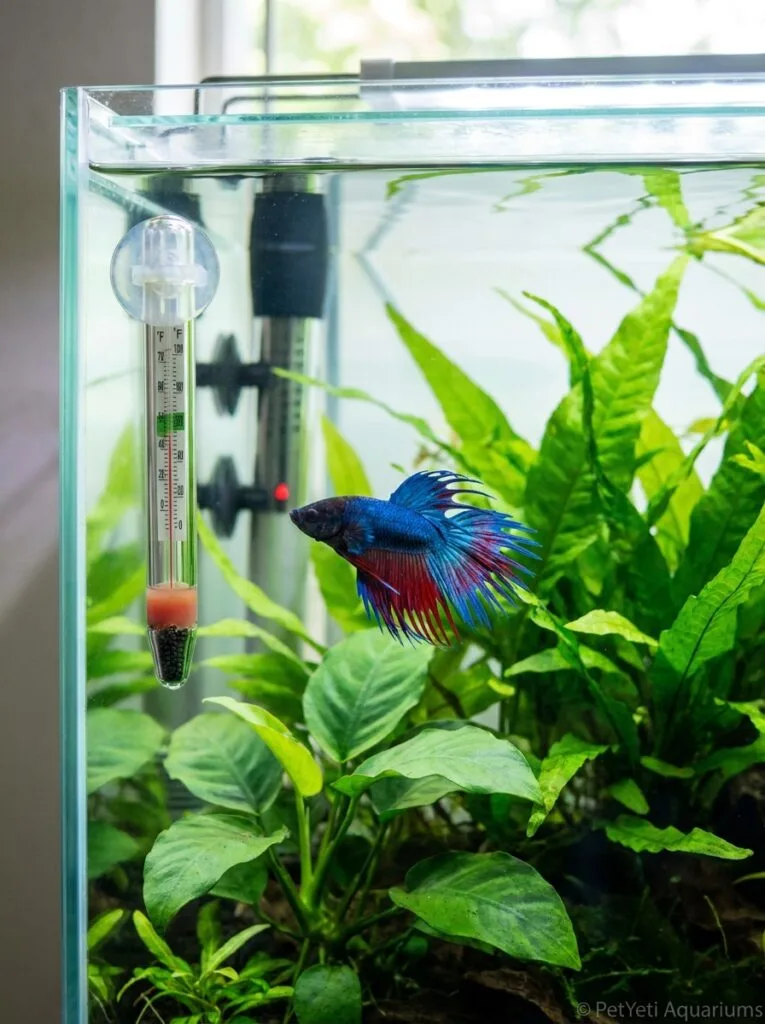
Some Glass Surfing Is Simply Personality
This is something many experienced Betta owners eventually discover. Not every behavior needs a problem behind it. Some Bettas are naturally more active, curious, and interactive than others.
They investigate everything.
They watch people.
They patrol their territory.
They greet their owners.
And yes, some occasionally glass surf simply because they’re energetic fish.
Real-Life Example
Two Bettas can live in nearly identical aquariums and behave completely differently. One may spend hours relaxing among plants while the other constantly explores every corner of the tank.
Fish have individual personalities too.
As long as your Betta appears healthy, active, and eats normally, occasional glass surfing may simply be part of its character.
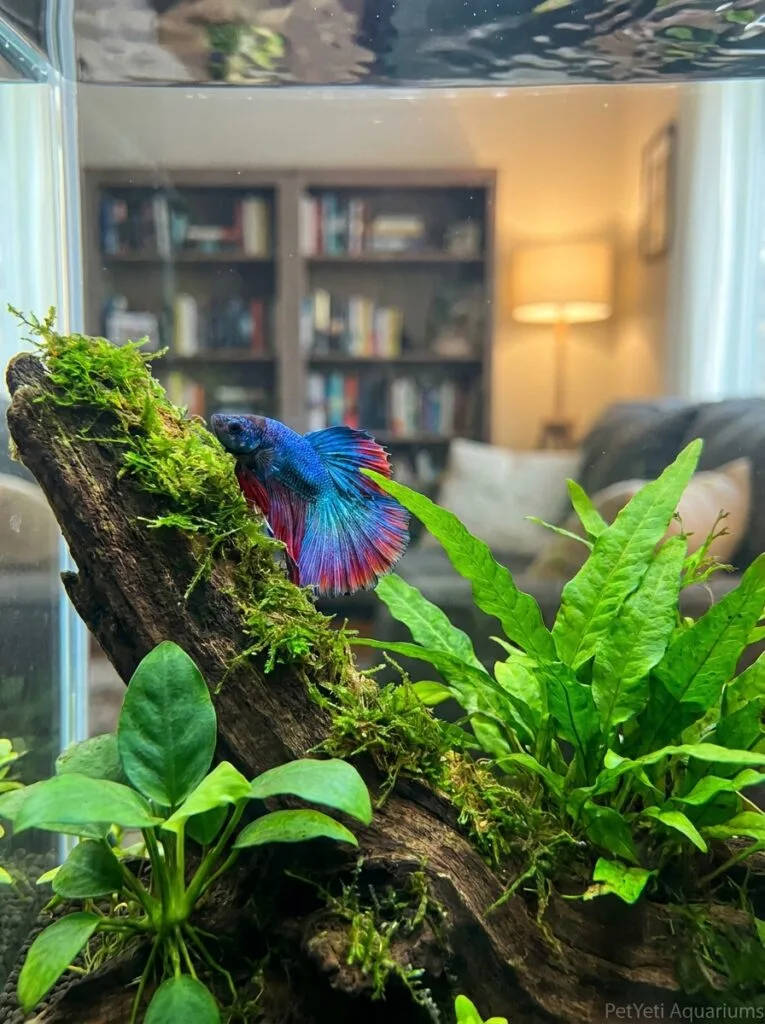
What to Do Today If Your Betta Is Glass Surfing
If your betta is swimming back and forth against the glass right now, this is the order I’d follow today.
- Check the water temperature and make sure it is between 78–80°F (25.5–26.5°C).
- Test ammonia and nitrite and confirm both are 0 ppm.
- Look for reflections by viewing the tank from the same angle as your betta.
- Reduce strong filter current if the fish is struggling against the flow.
- Add a few plants or hiding places so the betta has areas to explore and rest.
- Observe the behavior for the next 24–48 hours before adding medications unless obvious disease symptoms are present.
Many bettas stop glass surfing once reflections are reduced, the temperature is stabilized, and water quality is corrected. Starting with those three checks is usually the fastest way to figure out what is happening.
When Should You Be Concerned?
Most cases of glass surfing are temporary and harmless. However, it’s important to look at the complete picture.
Pay closer attention if glass surfing is accompanied by:
- Loss of appetite
- Rapid breathing
- Faded coloration
- Clamped fins
- Lethargy
- Other unusual behaviors
A healthy Betta that occasionally swims along the glass is very different from a fish that appears distressed and shows multiple warning signs.
Real-Life Example
A Betta that eagerly eats, explores plants, and occasionally swims along the glass is usually behaving normally. A Betta that spends all day pacing while refusing food deserves a closer look.
The behavior itself isn’t always the problem.
The surrounding symptoms tell the real story.
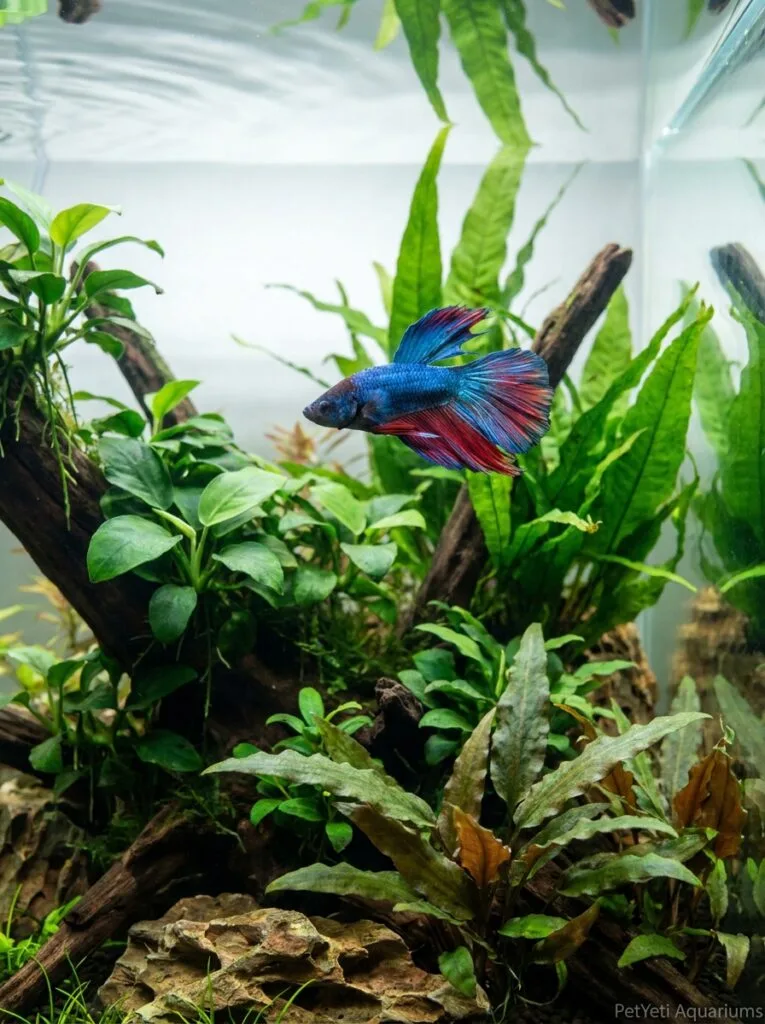
Related PetYeti Guides
Glass surfing is usually easier to understand when you look at the whole aquarium, not just one behavior. These related guides can help you check common Betta stress, water quality, and tank setup issues.
Why Is My Betta Staying at the Bottom?
Use this if your Betta seems tired, inactive, or spends most of the day resting low in the tank.
Why Is My Betta Laying on Its Side?
Use this if your Betta is resting strangely, floating oddly, or showing behavior that looks more serious than normal glass surfing.
How to Set Up a Beautiful Betta Fish Tank
Use this if you want to make the aquarium calmer, more comfortable, and easier for a Betta to explore naturally.
CONCLUSION
Betta glass surfing is not always a sign that something is seriously wrong. In many cases, it is a temporary behavior caused by reflections, a new environment, strong filter current, cold water, or poor water quality. The most important step is to check the temperature and water parameters first, because those two factors are responsible for a large percentage of stress-related behavior in small betta aquariums.
If I were helping a beginner today, I’d start by checking the water temperature, testing ammonia and nitrite, and looking for reflections in the glass. Many bettas stop glass surfing once those basic conditions are corrected and the tank feels calmer and more secure.
The good news is that glass surfing is often treatable without medication. Stable temperature, clean water, gentle filtration, and a few plants or hiding places usually make a dramatic difference in a betta’s behavior within a day or two.
Best first step for most beginners
If you’re not sure why your betta is glass surfing, start by checking the water temperature and testing ammonia and nitrite. A 50W adjustable heater and a liquid freshwater test kit are usually the two most useful tools for diagnosing this problem in a 5–20 gallon betta aquarium.
FAQs
Is glass surfing normal for a betta fish?
Yes. Occasional glass surfing is normal, especially in a new aquarium, before feeding, or when a betta is reacting to movement outside the tank. It becomes more concerning when it continues for long periods every day.
Why is my betta swimming back and forth against the glass?
The most common causes are reflections, stress, poor water quality, strong filter current, or a new environment. Check the water temperature and water parameters first before treating for disease.
Can a betta see its own reflection?
Yes. Bettas often react aggressively to their own reflection because they mistake it for another betta in their territory. Bright tank lighting and dark surroundings can make reflections much stronger.
How long should glass surfing last?
A betta exploring a new tank may glass surf for a few hours to a couple of days. If the behavior continues for several days or becomes constant, investigate water quality, temperature, reflections, and filter flow.
Can strong filter current cause glass surfing?
Yes. Bettas are not strong swimmers, and excessive water flow can make them pace the glass repeatedly while trying to avoid the current. Reducing the flow or switching to a gentler sponge filter often helps.
What is the fastest way to stop betta glass surfing?
The fastest helpful action is to check the water temperature, test ammonia and nitrite, reduce reflections, and lower strong filter current. Correcting those environmental factors often improves the behavior within 24–48 hours.