
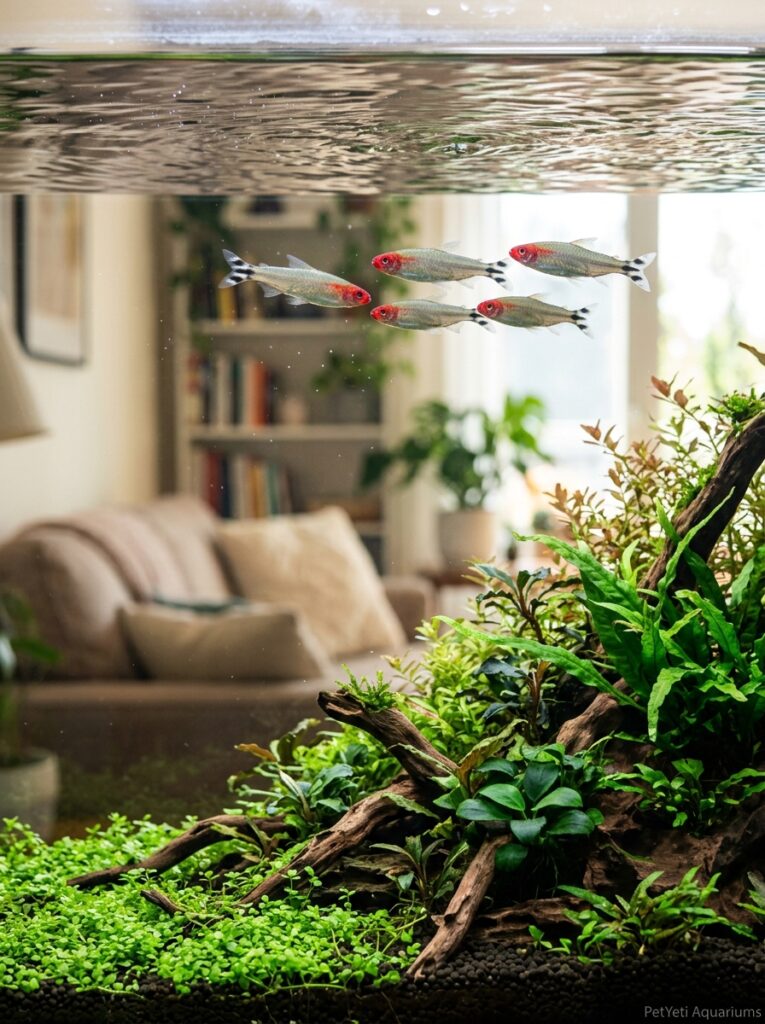
One day your fish are swimming normally throughout the aquarium.
The next day, several of them seem to be spending most of their time near the surface.
Naturally, questions start racing through your mind.
“Are they hungry?”
“Do they need more oxygen?”
“Is something wrong with the water?”
The answer depends on what else you’re seeing.
Some fish naturally spend more time near the upper part of the aquarium.
Others may move toward the surface because of feeding habits, environmental conditions, or changes inside the tank.
The good news is that surface swimming doesn’t automatically mean there’s a problem.
The key is learning how to distinguish normal behavior from warning signs.
Let’s look at the most common reasons aquarium fish spend time near the top of the tank.
Some Fish Naturally Prefer the Upper Part of the Aquarium
Not all fish use the aquarium in the same way.
Some species prefer the bottom.
Others stay around the middle.
And some naturally spend much of their time near the surface.
This is simply part of how they interact with their environment.
Real-Life Example
Many aquarium owners worry when surface-oriented fish spend most of their day near the top, only to discover later that the fish are behaving exactly as the species normally would.
Understanding your fish’s natural habits helps prevent unnecessary stress.
Your Fish May Be Anticipating Feeding Time
Fish are excellent observers.
Many quickly learn routines and recognize when food usually arrives.
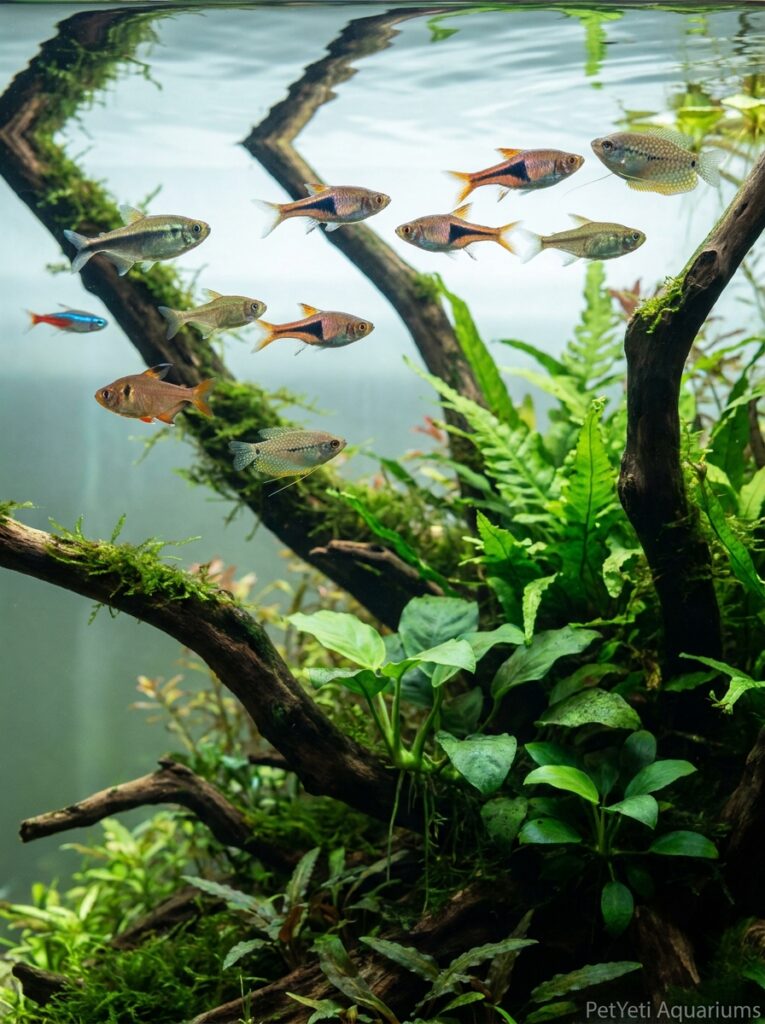
As feeding time approaches, they often gather near the surface where food typically enters the aquarium.
This behavior can look unusual if you’ve never noticed it before.
In reality, it’s often a sign that your fish are healthy, alert, and paying attention.
Real-Life Example
Many fish begin gathering near the top as soon as they see their owner approach the aquarium because they’ve learned to associate people with feeding time.
This type of surface activity is usually completely normal.
Warm Water Holds Less Oxygen
Most aquarium fish depend on dissolved oxygen in the water.
What many beginners don’t realize is that warmer water naturally holds less oxygen than cooler water.
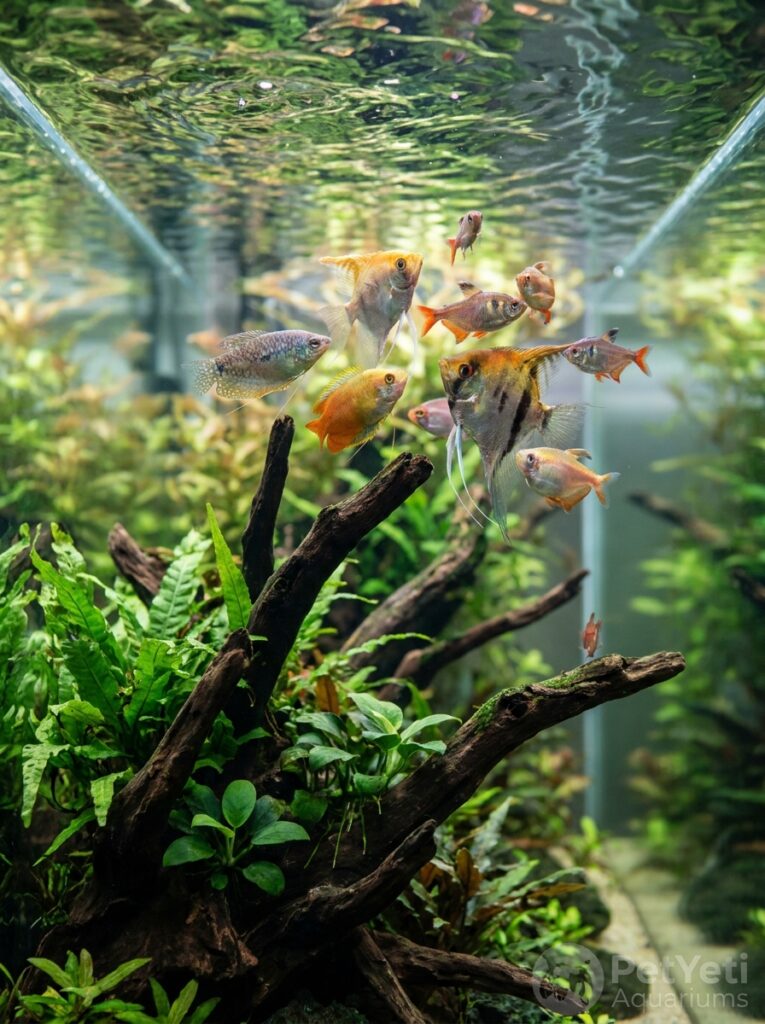
This doesn’t automatically create a problem, but in certain situations, fish may respond by spending more time near the surface where oxygen exchange occurs.
Real-Life Example
During a summer heat wave, an aquarium that normally runs perfectly may experience slightly lower oxygen levels. Fish that usually swim throughout the tank may start spending more time near the upper portion of the water column.
This is one reason temperature stability is so important.
Poor Water Circulation Can Affect Fish Behavior
Water movement plays a bigger role than many beginners realize.
Good circulation helps distribute oxygen throughout the aquarium and prevents stagnant areas from developing.
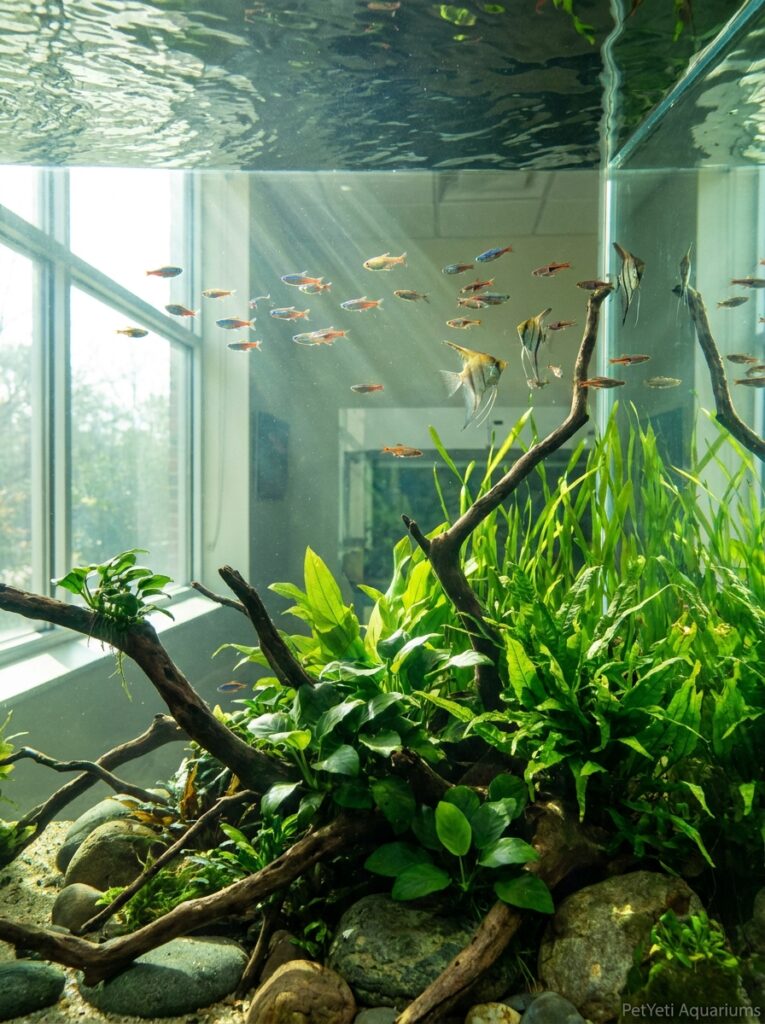
When circulation is weak, fish may gravitate toward areas where oxygen levels are naturally higher.
Often, that’s near the surface.
Real-Life Example
A hobbyist may notice fish spending more time near the top after a filter becomes clogged. Once the filter is cleaned and normal water movement returns, fish often resume using all levels of the aquarium.
This is why routine maintenance benefits both water quality and fish behavior.
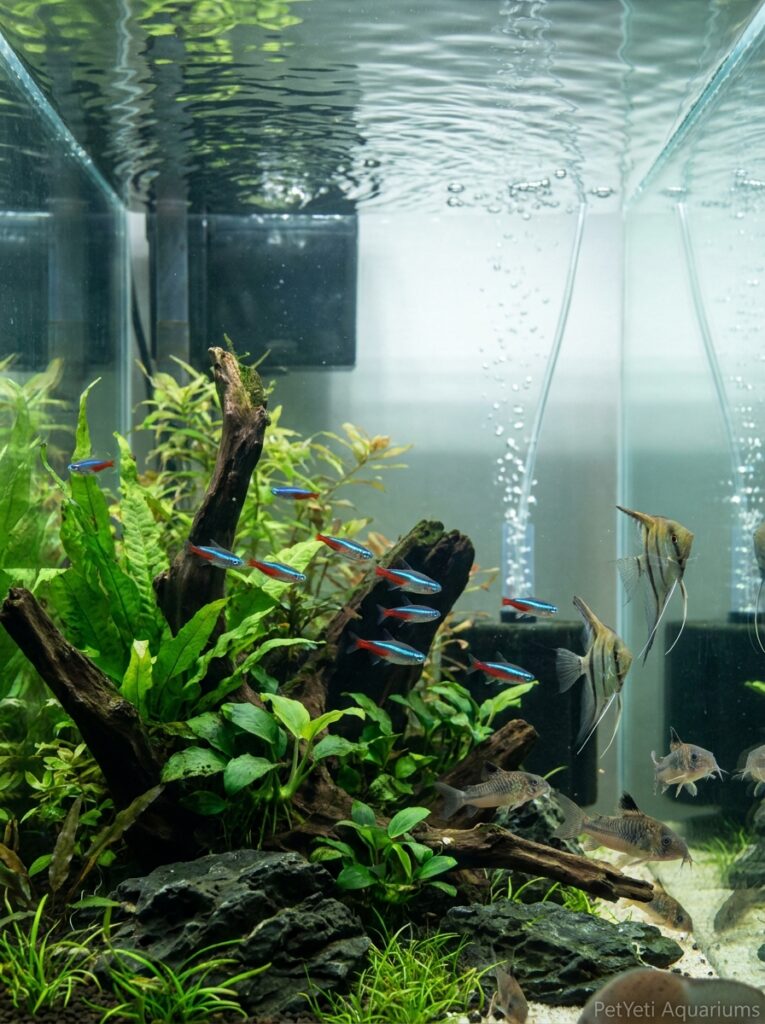
Water Quality Problems Can Encourage Surface Swimming
When water quality declines, fish often change their behavior before obvious physical symptoms appear.
Poor water conditions can make fish uncomfortable and may lead them to spend more time near the surface.
Common causes include:
- Excess waste
- Overfeeding
- Missed water changes
- An uncycled aquarium
- Filter problems
The behavior itself isn’t always the problem.
It’s often a clue that something else deserves attention.
Real-Life Example
A community tank that has gone several weeks without maintenance may show subtle behavior changes long before the water actually looks dirty. Fish spending more time near the surface can sometimes be one of the earliest signs.
Consistent maintenance remains one of the best preventative habits in fishkeeping.
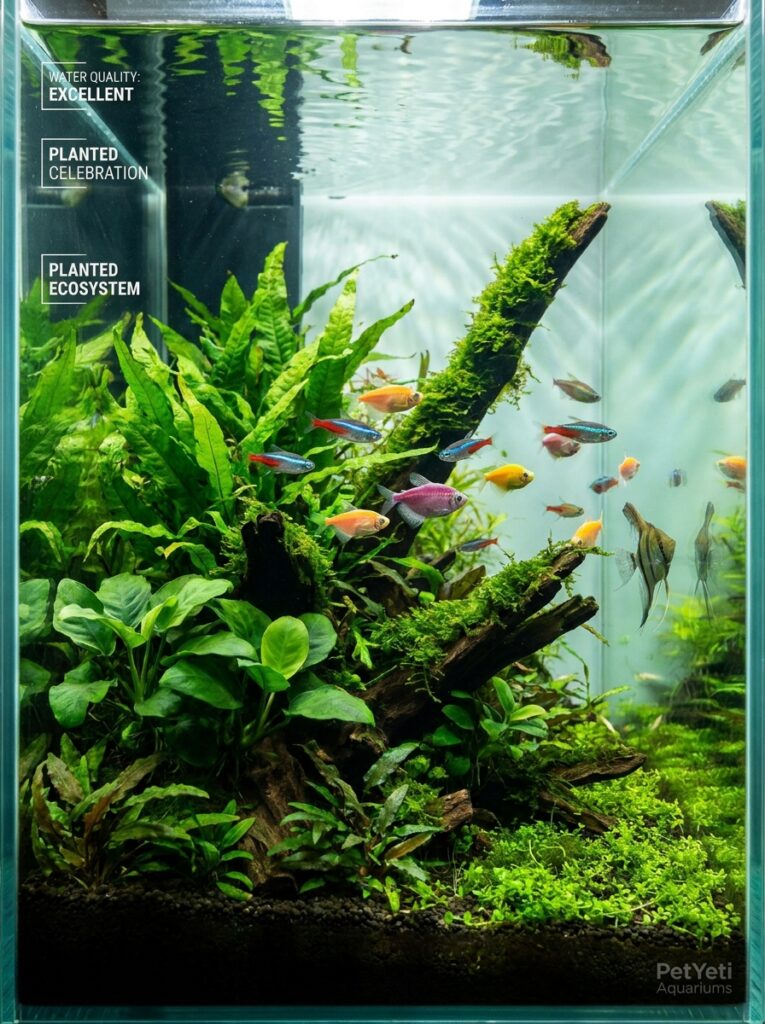
Stress and Environmental Changes
Fish pay attention to their environment far more than many people realize.
Changes that seem minor to us can temporarily affect their behavior.
Potential stressors include:
- Large water changes
- New tank mates
- Aquarium rearrangements
- Excessive noise
- Moving the aquarium
When fish feel uncertain, they may gather in certain areas of the tank while they adjust.
Real-Life Example
After adding several new decorations, fish may spend more time near the surface for a day or two simply because they’re assessing a changed environment.
Most healthy fish settle back into their normal routines once they feel comfortable again.

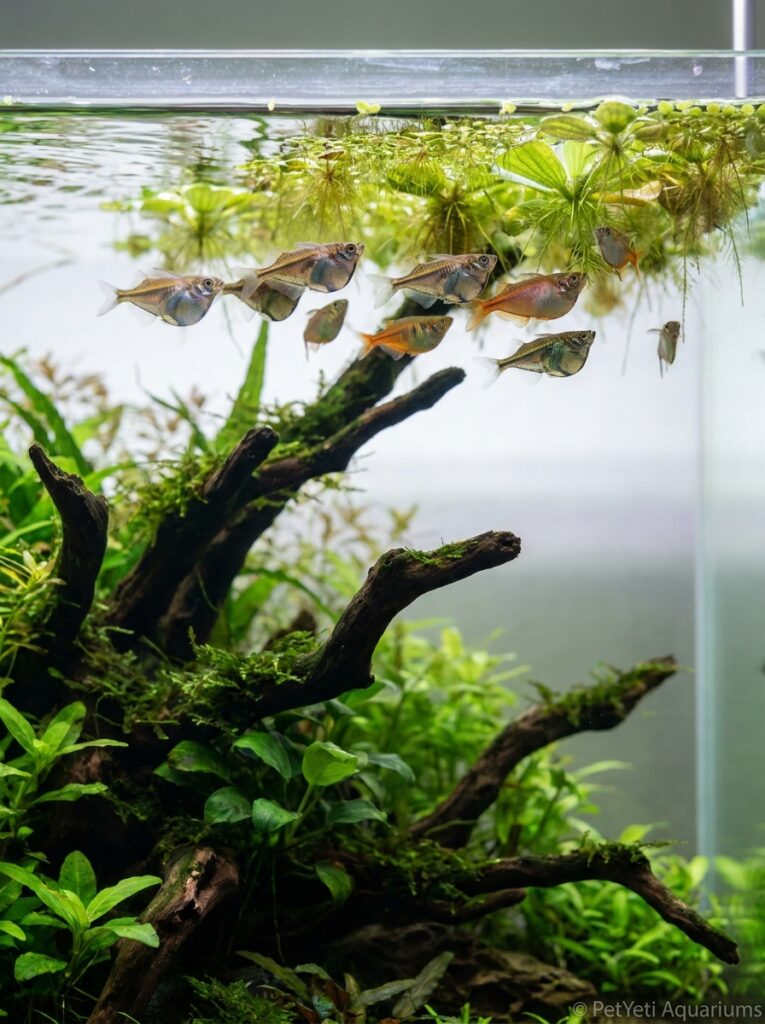
Some Surface Behavior Is Species-Specific
Certain fish naturally spend much of their lives near the surface.
For these species, surface swimming isn’t unusual at all.
This is why understanding the needs and habits of your specific fish is so valuable.
A behavior that signals concern in one species may be completely normal in another.
Real-Life Example
A beginner may compare two different aquariums and worry because one group of fish spends much more time near the top. In reality, the species may simply use different parts of the aquarium by nature.
Knowing what “normal” looks like for your fish prevents a lot of unnecessary anxiety.
When Should You Be Concerned?
This is where observation becomes important.
Fish swimming near the surface is not automatically a problem.
However, you should pay closer attention if surface swimming is accompanied by other unusual signs.
Watch for:
- Rapid breathing
- Loss of appetite
- Lethargy
- Clamped fins
- Multiple fish showing the same behavior
- Sudden changes in activity levels
Real-Life Example
A fish that occasionally cruises near the surface before returning to normal swimming patterns is usually behaving naturally. A tank full of fish lingering at the surface while breathing heavily is a very different situation.
The goal isn’t to panic every time a fish approaches the top of the aquarium.
The goal is to understand the context surrounding the behavior.
Healthy fishkeeping is often about recognizing patterns rather than reacting to isolated moments.
CONCLUSION
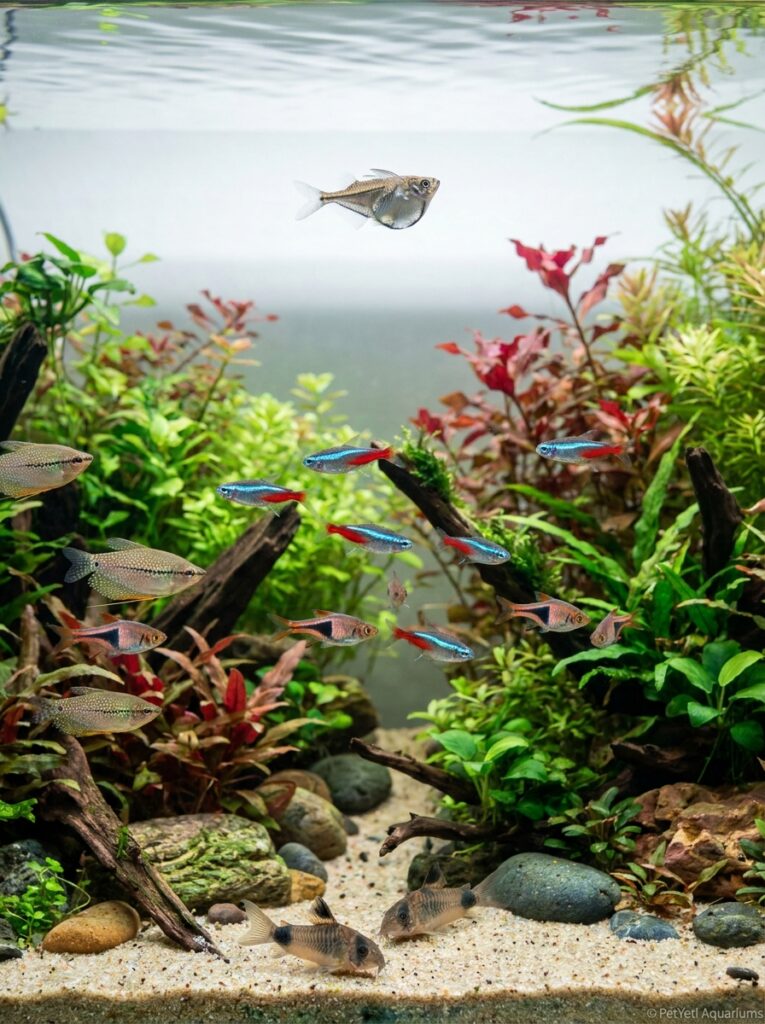
Seeing fish spend time near the surface can be surprising, but it isn’t always a sign that something is wrong.
Many fish naturally use different levels of the aquarium throughout the day.
Feeding routines, species preferences, environmental conditions, and temporary adjustments can all influence where fish choose to swim.
The most important thing is to look at the overall picture.
Ask yourself:
- Are the fish eating normally?
- Is their breathing normal?
- Has anything changed recently?
- Is water quality being maintained?
- Do they still behave normally at other times?
In many cases, the answers reveal that the behavior is perfectly normal.
As you gain experience, you’ll become more comfortable recognizing the difference between natural habits and genuine warning signs.
And that’s one of the most valuable skills any fishkeeper can develop.
FAQ
Is it normal for fish to swim at the top of the tank?
Yes. Many fish naturally spend time near the surface, especially during feeding or depending on their species.
Why are my fish swimming at the top after feeding?
Fish often remain near the surface because they associate that area with food and feeding routines.
Can low oxygen cause fish to stay near the surface?
Yes. Fish may spend more time near the surface if oxygen levels become lower than normal.
Does warm water affect oxygen levels?
Yes. Warmer water holds less dissolved oxygen than cooler water.
Can a dirty aquarium cause surface swimming?
Poor water quality can influence fish behavior and may contribute to increased surface activity.
Why are all my fish at the top of the tank?
If multiple fish suddenly gather near the surface, it’s worth checking water quality, temperature, and filtration.
Do some fish naturally prefer the surface?
Absolutely. Certain species naturally spend much of their time near the upper part of the aquarium.
When should I worry about fish swimming at the surface?
You should investigate further if the behavior is accompanied by rapid breathing, appetite loss, lethargy, or sudden behavioral changes.